Sign up for our newsletter to be notified of new posts!
From the Civil War that accompanied the Chinese Communist Party’s rise to power, through the Cultural Revolution and the recurring cycles of political persecution that have followed, the reach of political power into private life has been a persistent feature of China’s modern history. Millions of people have experienced persecution, imprisonment, forced labor, “reeducation” or exile, but Chinese society has never been able to fully reckon with the trauma of these events.
This panel discussion at Asia Society examined how China’s turbulent political history has shaped the way Chinese people understand authority, each other and themselves. What does it do to a society when political power can intrude into private lives, relationships and memories? What happens when friends, colleagues and family turn on each other? How do people learn to live with the dissonance between what they know privately and what can be acknowledged publicly? And how are the habits of mind formed under these conditions transmitted across generations?
Moderated by Sam Chetwin George, each speaker approached these questions from different angles. Orville Schell, Director of Asia Society’s Center on U.S-China Relations, drew on his new book Inside China’s Secret Prisons: An Undercover Exposé and Its Lasting Legacy to discuss China’s labor reform system of the early 1990s. Li Yuan, New York Times columnist and host of the Bumingbai podcast (不明白播客), drew on years of conversations with people inside and outside China, including the podcast’s recent series on the Cultural Revolution. And Jianying Zha, author of the forthcoming memoir, Trains: A Chinese Family History of Railway Journeys, Exile, and Survival, reflected on her family’s own experience of political repression and exile, and on the ways that China’s history continues to inhabit private and family life:
If you want to move on, there has to be some kind of reconciliation in society about how we should think about what happened, but in China there’s no discussion, it’s just don’t mention anything.
Li Yuan
Speakers
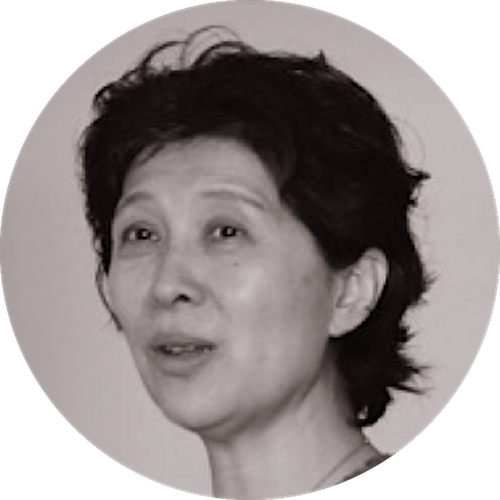
Jianying Zha (查建英) is a writer, journalist and cultural commentator in both English and Chinese. She is the author of two books in English, Tide Players (2011) and China Pop (1995), and six books of non-fiction and fiction in Chinese. Her work has appeared in publications including The New Yorker and The New York Times. Born and raised in Beijing, educated in China and the U.S., she lives between New York and Beijing.
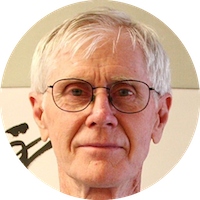
Orville Schell is the Arthur Ross Director of the Center on U.S.-China Relations at Asia Society, and co-publisher of the China Books Review. He is a former Professor and Dean at the University of California, Berkeley, and author of over ten books about China. He is a regular contributor to The New York Review of Books, The New Yorker, Foreign Affairs and other publications, and has traveled widely in China since the 1970s.

Li Yuan writes The New New World column for The New York Times, which focuses on the intersection of technology, business, and politics in China and across Asia. Before joining The Times in 2018 she worked at The Wall Street Journal in New York, Beijing and Hong Kong. She is a co-founder and host of the Chinese-language Bu Mingbai Podcast.

Sam Chetwin George is a Senior Fellow at the Asia Society’s Center on U.S.–China Relations, where his research situates contemporary China within the political and intellectual lineage of the Chinese Communist Party. Previously he was a Research Fellow at China Heritage. His writing has appeared in The New York Times, China Heritage, and The China Story Yearbook.
A video of this event was also posted at Asia Society.