Sign up for our newsletter to be notified of new posts!
This is an episode of the China Books Podcast, from China Books Review. Follow us wherever you listen to podcasts, including Apple Podcasts and Spotify, where a new episode lands on the first Tuesday of every month. Or listen to this episode right here, where we also post the transcript.
Taiwan is one of the more contentious topics when it comes to the Sinosphere and the idea of greater China. It’s an island of 23 million people with its own distinct history, peoples, language and culture, which has brought us everything from the films of Hou Hsiao-hsien to Din Tai Fung. Yet often it’s only talked about in relation to its neighbor China, in terms of national security, potential invasion, security of its semiconductor industry and so on. And often that talk doesn’t come from a thorough — or sometimes even basic — understanding of Taiwan’s history, how we got to where we are, and the complicated nature of Taiwanese politics and identity today.
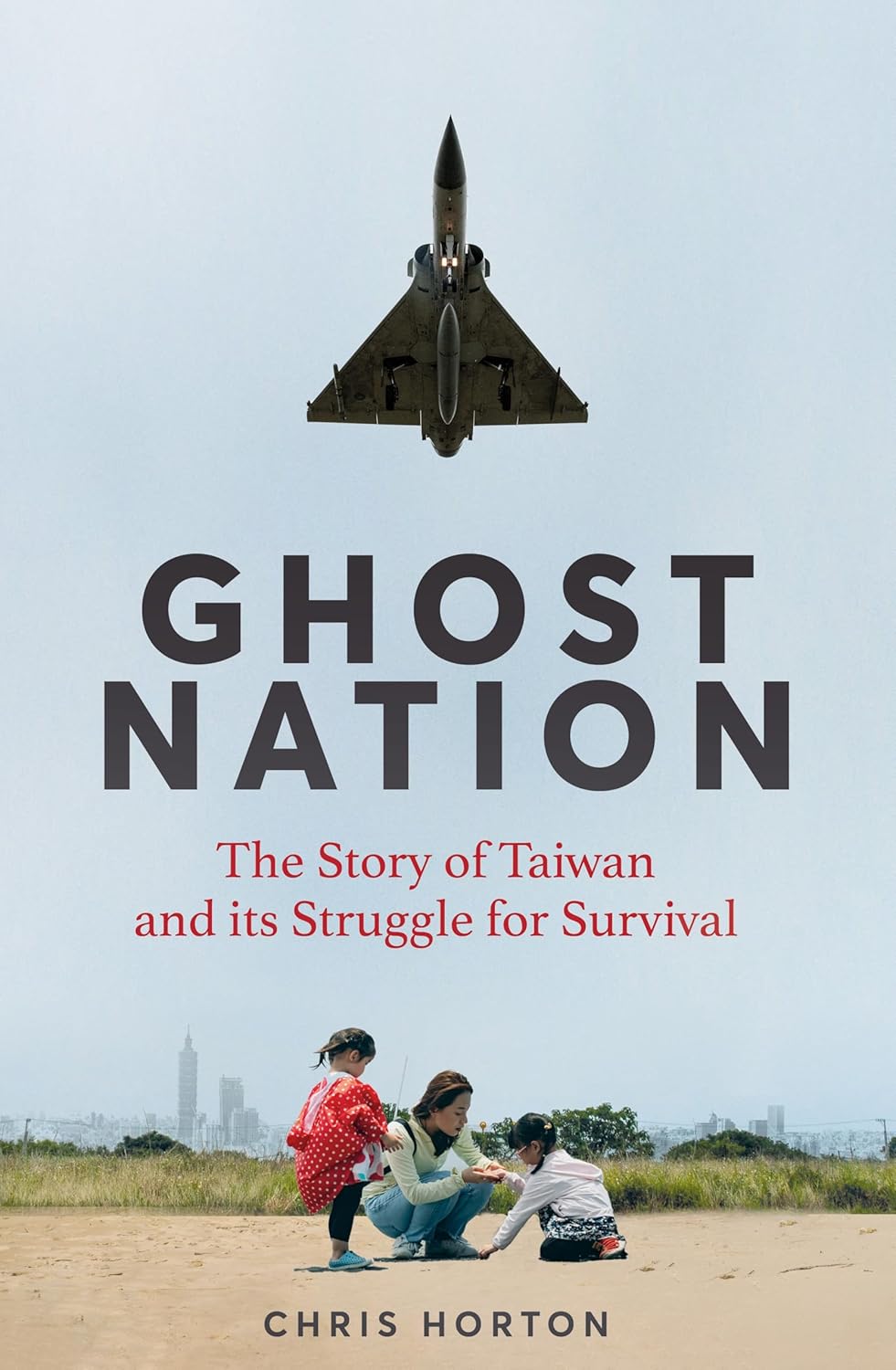
This month on the podcast we’re going to lay that groundwork with our guest Chris Horton, author of Ghost Nation: The Story of Taiwan and Its Struggle for Survival (Pan MacMillan, July 2025). The book threads the needle of Taiwan’s many faces and rulers over the years, then returns to the present to argue that the country today is a bit of a hungry ghost, shunned by many nations but deserving of our obeisance. Chris Horton has been a China-focused journalist and editor since 2003, has written for The New York Times and Bloomberg, and moved to Taiwan in 2015. We’re pleased to be joined by Chris over the wire to talk about Taiwan’s layered history, intricate present and fraught future:
Guest
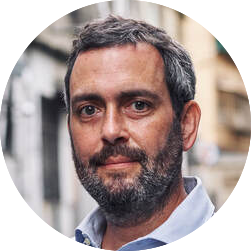
Chris Horton is a journalist based in Taiwan since 2015, covering the country’s foreign relations, domestic politics, economy, society and more. Previously, he lived in China since the early 2000s. His writing has appeared in The New York Times, Nikkei Asia, The Wire China and elsewhere. Horton is author of Ghost Nation (2025), about Taiwanese history and politics.
It always feels good if you live in a liberal democracy to say that China has erased Taiwan. But actually it’s the liberal democracies and their governments and their corporations and institutions that have erased Taiwan. We’ve done it at Beijing’s behest.
Chris Horton
Transcript
Alec Ash: So Chris, welcome to the pod.
Chris Horton: Hi Alec. Thanks for having me on.
So I’ve known you for a while. We first met in 2017 in Taipei. I previously knew you as a Yunnan guy before that. You lived in Kunming and Dali a long time, where I eventually ended up myself. Can you tell us just a very brief potted history of your own journey east, and how you ended up fleeing like Chang Kai-shek over the Taiwan straits?
Well, yeah, I studied Mandarin. It was my major in the late nineties at the University of Kansas. They sent me to China on an exchange scholarship to Zhengzhou, which was quite polluted and by the time winter hit late in the first semester of my scholarship, everyone started burning coal.
So I moved to Shanghai to escape the air pollution and get some fresh air. Eventually ended up in Yunnan, where I thought I was gonna live forever. But right around the time that Xi Jinping took power, it kind of felt like things were shifting a bit.
I decided to move to Hong Kong, where I arrived right before what would become known as the Umbrella Revolution, or the Umbrella Movement. And when I saw that it was dismantled by the Hong Kong government with no concessions to the peaceful protestors, I kind of figured Hong Kong had changed in its future, and it wasn’t gonna be positive.
I had never been to Taiwan. I went over there, and just immediately I was hit by, like how different it was from what I was expecting. And I couldn’t put my finger on it exactly, but I think later on what it was is I was looking at Taiwan through Chinese eyes or through a China lens.
I was totally baffled by these influences, such as the Japanese influence, but also the indigenous influence on Taiwanese identity. And it took a while for me to kind of learn about those things. But in general, I found that everything that I thought might be true about Taiwan was often the other way around. It was a real eye-opener. And one thing that I thought when I first got there was how it would be great to have a book that could just explain everything and get me up to speed, for like, what stories feed into that.
The more I learned about Taiwan and its different, its heroes, its villains, its different stories of courage and cowardice, I was kind of upset. I feel like we’ve all been denied so many amazing stories, because we’ve all basically erased Taiwan to appease Beijing.
So early in your book, you have a line, “Declaring Taiwan to be part of China is like saying North America belongs to Europe.” Can you explain that analogy to us? Because the U.S. hasn’t been British for a while now. But Taiwan was part of Qing China till just 130 years ago.
Right. With regard to the Qing, that was a Manchu empire. I think in general, Chinese considered a foreign empire or a foreign dynasty, just like the Yuan Dynasty. But getting back to your question, both, uh, the United States and Taiwan are kind of viewed through the lens of their settlers, the people who came over via colonialism but both have indigenous peoples that have existed for much longer than their successors or people who are running the show now in either country.
There are definitely connections between North America and Europe, just like there are between Taiwan and China just because these connections exist doesn’t mean that one country belongs to the other. For example, there’s lots of people of Chinese ancestry in Taiwan, whose ancestors arrived there from China, fleeing the collapse of the Ming Dynasty in the 1600s. For us to say that they’re Chinese, that’s like saying that I’m German or Italian. And I don’t speak German or Italian. I’ve never been to Italy. I’ve been to Germany once.
Once you get a generation or two removed, identities change. And I think you can see this as well with a lot of the people who are descended from the KMT (Kuomintang, or the Nationalist Party) and the people that came over with the KMT in the late forties to Taiwan. You know, there were 5 million Taiwanese in Taiwan at the time, 2 million Chinese came over, and they were Chinese when they arrived. Those people’s grandkids today probably identify more as Taiwanese than as Chinese. So there is a linguistic and a historical connection but it’s pretty loose. And having lived in both China and Taiwan, they’re very different identities.
Let’s go back a step to ask, who exactly are the Taiwanese for demographics? Can you tell us? What we mean by indigenous Taiwanese? And then what’s the difference between that and the benshengren (本省人, literally “people from this province”) born on the island, the Hoklo, the Hakka Taiwanese, as opposed to waishengren (外省人, literally “people from other provinces”) born outside, as you mentioned.
Sure. Yeah, so basically for 30,000 years, there have been Austronesian-speaking, indigenous Taiwanese peoples living in Taiwan. They now make up about 2% of the population, but there’s like maybe 16 officially recognized groups, but I think a lot more subgroups aren’t recognized. But these people are, they’re very much present in every part of Taiwan. And, a lot of Taiwanese people have some indigenous ancestry. For example, former President Tsai Ing-wen, she was part Paiwan (排灣). So the indigenous are the original inhabitants.
And then, when the Dutch arrived in 1624, you have what some historians have referred to as double colonization, because they, the Dutch East India Company, wanted to farm and make money, and they also were interested in deer pelts that they wanted to sell to Japan. But, the indigenous Taiwanese, they were fine on their own. They had zero interest in working for the Dutch. But the Ming Dynasty was collapsing. There were plenty of young men in Fujian just across the strait who wanted to go out in search of new opportunities. And so, so single young men from Fujian, the minnan (閩南) area in southern Fujian, they ended up going over. The first bit of migration of Chinese to Taiwan took place basically to fill in employment demand for Dutch farms in southwestern Taiwan.
And that’s where we get Taiwanese language, right? It’s sort of minnan, the Southern Fujian Hoklo dialect…
So what is called the Taiwanese language, I would call it a Taiwanese dialect of the minnan language, which originates across the strait in Fujian. Minnan is spoken all around Southeast Asia, and it’s developed in different ways. But in Taiwan, there’s a lot of loanwords from Dutch and Japanese, and it’s definitely mutually intelligible with minnan speakers from across the strait or elsewhere. But, it has developed in its own way, and it does have its own kind of Taiwanese identity.
Got it. So you had the Hoklo. You had the Hakka.
So the Hoklo, being the people from Fujian, they were second to the Dutch. When the Dutch got overthrown by Koxinga (Zheng Chenggong) after 38 years, that was when you first started having the first Chinese schools and the first kind of sinification of Taiwan. The first Confucian temple in China, for example.
Prior to that, Koxinga was a, he was a son of a Fujianese pirate and a Japanese woman. And, he overthrew the Dutch after failing to overthrow the Qing Dynasty. Well actually, after failing to overthrow Nanjing, he decided he would go for lower-hanging fruit. His father, as a pirate, had spent time in Taiwan. So he had heard of it and he knew things about it. He ended up going over there to overthrow the Dutch.
That’s in 1661.
Yeah, around then. So then you have for 21 years you have this Dongning empire, or dynasty under Koxinga, who died very quickly after overthrowing the Dutch. But then he was succeeded by his son and grandson.
But that was really the beginning of sinification. You know, you have these claims by Xi Jinping and other Chinese nationalists that Taiwan is, since time memorial, has been part of China. But the first schools in Taiwan in the 1600s, they didn’t teach Chinese. They taught the Roman alphabet and they taught Dutch. So the history and the claims don’t really match up very well.
So Taiwan’s long been this palimpsest of, you know, indigenous peoples, upon which is layered, foreign arrivals, colonials, including from China, you could argue.
Sure. The Manchu, you know, the Qing Dynasty, they came over from China and, I’m sure most of their soldiers were Chinese. But they overthrew Koxinga. And in the beginning, like for example, the Kangxi Emperor, he referred to Taiwan as like a useless ball of mud or something to that extent. But towards the end of their administration of Taiwan, which was mostly done through local Taiwanese gentry. Uh, there was an eventual realization that, oh, no, Taiwan it’s a stepping stone for others to threaten or potentially attack China, which actually ended up happening with the Japanese, who ended up taking over after the Qing.
But it was during the Qing that you had probably two major waves of Chinese immigration from mostly directly across the strait. That’s when you had the first groups of Hakka come over, too. And Hakka are 15% of the population today, but three of the five elected presidents in Taiwan have had some Hakka ancestry. They’re a group that punches above its weight, demographically, I would say.
Yeah, so you have all these different groups, and then they become Japanified. 1895 to 1945, Taiwan belonged to Japan after Japan had basically won it from the Qing who forfeited it in perpetuity.
It’s also worth noting that the treaty ports of Tainan and Tamsui were opened up by the Second Opium War Treaty. The British also had limited but significant access to Taiwan at that time. So, you know, you’ve had western powers and eastern powers both involved in Taiwan’s development.
But it’s really the Japanese, they were the first to rule all of Taiwan as an administrative unit. They conquered the coastal plain very quickly. It just took a few months. But most of Taiwan, the central third and the eastern third are very steep mountains, very rugged. And the Qing never ruled any of that. The Qing only ruled the coastal plain. And so, in the mountains, Japan spent 20 years of like brutal bloody wars, before they were able to finally subdue indigenous Taiwanese, compared with a few months on the coastal plane. But once that was done, you had for the first time, one government that was ruling all of Taiwan.
And, during that time, the Japanese denied political rights to Taiwanese people. They would lock up critics of the government. There were a lot of negative aspects to Japanese rule for sure. But, there were also some things that improved the lives of Taiwanese. So education, healthcare — a quarantine regime that kept diseases out — um, women’s education was a big thing. I believe women were educated in Taiwan by the Japanese earlier than they were educated in the home islands of Japan.
Yes, it was colonialism but it did change things. And that education and the rule of law that the Japanese brought, that would lead to a lot of friction with the arrival of the Republic of China (ROC) in 1945.
So this is the Chinese Nationalist Party, also known as the Kuomintang or the KMT. They had a very different management style from the Japanese.
Tell us, how the KMT arrived in Taiwan and the circumstances of 1945, Japan loses World War II.
Yeah. This is actually quite timely because, uh, October 25th is the 80th anniversary of the arrival of the ROC in Taiwan. So the Japanese announced that they would surrender in the summer. And then, in October of 1945, the U.S. brought the first Chinese governor of Taiwan to Taiwan. And, uh, that began the only four years, in all of human history where you’ve had a Chinese government based in China ruling or administering all of Taiwan. So there’s only been four years.
1945 to 49.
Right, and then you could argue that since ’49, it’s been a Chinese government in Taiwan that’s been administering Taiwan. So in that four years, from what I’ve read, and from what I understand from people I have interviewed, there was a lot of excitement about joining the Republic of China, because the U.S. had dropped lots of leaflets on Taiwanese cities, saying like, look, you’re gonna have freedom of expression, you’re gonna have democracy, you’re gonna rejoin the motherland. And, I think a lot of Taiwanese people thought like, wow, if they could defeat Japan in the war, then they must be quite impressive.
But when the ROC arrived on American boats, and you know, ROC soldiers were basically kicked off the boats. They were scared to land because there were still tens of thousands of Japanese troops. They weren’t in battle anymore, but there were a lot of well-rested Japanese troops there. So ROC soldiers were very wary of going onshore. But, uh, Taiwanese people saw this. They saw that the real power wasn’t the ROC, it was the U.S.
And there was wide scale looting. A lot of ROC soldiers were poorly paid or not paid, and so they would have to survive off of theft, off of looting, and taking stuff from people. But then you also had officers and generals higher up who were taking over, like these monopolies that Japan had set up, and taking some of the nicest residential properties and things like that. And it’s still an issue today that hasn’t been resolved.
There was all this theft. There was also a breakdown of just civil order in general. And you even had the return of bubonic plague and cholera. I think like in the first year that Taiwan had “returned to China,” people weren’t impressed by that.
But what really upset people was the lack of representation in the local government that had been promised by the Americans. And also, there was hyperinflation, the price of rice went up. And it was the first time that rice had become too expensive for many people in Taiwan’s history.
So there was a lot of anger. And an incident on February 27th of 1947, you had a woman who was selling contraband cigarettes smuggled from China — they weren’t part of this Taiwanese monopoly, so they were considered contraband and they were being confiscated by agents who were armed.
When the woman wouldn’t let go of her cigarettes, one of them pistol-whipped her. This was outside a crowded tea house, and a lot of people saw. Taiwanese people, they encircled the agents and were very angry. And one of them fired into the crowd, hitting a man in the stomach, who would die later that night. The crowd scurried away momentarily. The two agents ran to the nearest police station, and then the crowd followed them to the police station, demanded their release so they could inflict mob justice on them. The police told everyone to go home.
So the next day, February 28th, there was a big protest march that turned violent, with Taiwanese people killing Chinese people who were working at the Chinese Customs office, overturning cars, lighting bonfires…And then, they were going to what is now the Executive Yuan to present their petition for things that they wanted to see change under KMT rule.
And that was when KMT soldiers atop the building with machine guns fired into, they strafed the crowd, killing, maybe 10, 20 people.
But some of those people in the crowd ran to a radio station that had been established by the Japanese, but now is broadcasting only in Mandarin. It’s worth noting that Mandarin didn’t arrive until the forties in Taiwan. So people had only been used to hearing Japanese, and then suddenly they had to learn Mandarin. And these two people who broke into the radio station, they took over the studio and they announced in Taiwanese in real time what had happened. And they called on Taiwanese people to rise up. And that’s exactly what happened.
The next 24, 48 hours, there were violent, bloody rebellions by Taiwanese in every major city. And you could argue that for the following week, the KMT had been effectively overthrown by the Taiwanese people.
And so you have the KMT stalling for time. Chen Yi, the Governor General, he’s like, “Guys, there’s been a big mistake. Let’s talk about this.” But meanwhile, Chiang Kai-shek is sending soldiers across the strait to Keelung and Kaohsiung. And once they arrived, like a week after the initial incident, they went on a three-week murder rampage.
It was unpredictably violent, a lot of people just unluckily caught outside getting shot down and whatever. But also, there was a lot of targeting of potential Taiwanese leaders–so, lawyers, doctors, judges, civil servants and anybody that showed any sort of critical thinking or potential for leadership. They were all rounded up and executed.
And so, you have in a three-week period, uh, close to 30,000 people. That’s the current estimate. From what I’ve read in different places, I think it’s safe to say it’s a much higher number.
And that’s known as the 228 incident.
Yeah, some people say 228 incident, some say 228 massacre. I kind of like to use 228, because it was more than one incident, and it was more than one massacre. It happened all over the place. And really most of it wasn’t on 228, and Chinese, they usually just call it ererba (二二八, or 228).
So Taiwan and the KMT didn’t exactly get off to the best start. And you know, there’s this idea, especially in America of “losing China to the CCP (Chinese Communist Party)” or of Taiwan being free China after the establishment of the People’s Republic, which kind of implies that the KMT were the good guys, but Chiang Kai-shek, right from the start was really just as bad as, just as autocratic as Mao Zedong. After he arrived in Taiwan, of course, in 1949, after he lost the Civil War with the Communists, then implemented 38 years of martial law. So tell us about these first decades after Chiang arrived.
I think it’s worth pointing out that part of the reason that Chiang Kai-shek and the KMT lost China was because they were deeply unpopular there, and people didn’t really know much about the Communists. But they were willing to give them a chance, because they reviled, Chang and the KMT so much.
And so, yeah, they came over, they brought style of management from China over to Taiwan in December 1949. You have Chiang Kai-shek and his son Chiang Ching-kuo, who would later succeed him as head of the ROC. They flew out on a plane, gifted to them by the United States, from Chengdu, which was starting to become under siege by the PLA (People’s Liberation Army).
When they arrived in Taiwan, you have 2 million traumatized Chinese people who had just crossed the strait with the KMT, or some of them were KMT. And then also you have 5 million traumatized Taiwanese people who had gone through ererba, or 228, just a couple years earlier. And now they’ve got these very foreign people who are now with them. And, you know, they’re being in many ways treated better than the Taiwanese by this refugee government that had come along.
You know, I remember you using once the analogy to me when we were having a drink of the KMT as an octopus attached to the face of Taiwan. And I couldn’t get that image out of my head.
Well, yeah, it was the face of Taiwan for some time. When we talk about the Republic of China, it’s more than fair to call it a colonial government. It wasn’t invited. It showed up uninvited and without legitimacy.
While the Japanese kind of handed over control of Taiwan to the ROC to the KMT in 1945. They didn’t formally surrender until 1951, and that was through the Treaty of San Francisco. Basically, they renounced their sovereignty over Taiwan. But there was no recipient country. So this is the reason that the United States and other governments, and also a lot of Taiwanese people say, Taiwan’s political status is undetermined, but you have 38 years of martial law, beginning in 1949 with Chiang’s arrival.
And the first few years, there was a lot of killing. So this period was called the White Terror. And in the beginning, there were a lot more of these targeted killings of potential troublemakers, but they weren’t just Taiwanese anymore, they were also Chinese.
Chiang Kai-shek was terrified of the possibility of communist agents having been part of the 2 million Chinese that crossed the strait with him. And so any sort of, unapproved or, whatever the KMT would consider, uh, suspicious behavior or speech or thought, would often lead to Chinese people being locked up, being tortured, potentially being executed. So there was, keeping down the Taiwanese independence or the Taiwanese sovereignty folk, but also weeding through the Chinese and trying to find potential communist spies.
After the early fifties, executions started to taper off, but political imprisonment was very much an issue and executions did continue. You had land reforms that really ignited the economy and kind of a situation similar to China, where like politically it wasn’t very free, but economically it became a bit more open and freewheeling, and became an export reliant economy.
Things are getting better in terms of material wealth. But this is all under a cloud. I mean, it was almost North Korea levels. Getting in and out of Taiwan back then was a lot more difficult than it was during COVID. It was a very difficult place to enter or leave. And during that time, if you wanted to leave and go study abroad, you had to have like guarantors, you had to have people vouch for you and whatnot.
But it was those students that went abroad, and their parents had never told’em anything about 228. When they’re overseas, that’s when they kind of start learning about this stuff.
So let’s skip ahead to 1987, when Chiang Ching-kuo lifted martial law. He died for the next year, and we have Lee Teng-hui taking over and the democratization of Taiwan. It’s kind of remarkable how quickly Taiwan became a democracy. Can you walk us through that? And tell us how you think that was possible in such a short span, after such a brutal regime?
Yeah, well, 38 years of martial law…the martial law was different. And it had gotten, I guess much — I don’t know if it’s the right term — but much milder towards the end. It wasn’t so much soldiers administering the law as it was gangsters kind of working under plausible deniability for the KMT to put a chill in people.
So you’ve got like five years from the end of martial law to the first democratic elections at the legislative level in 1992. And during that time, you’ve got Lee Teng-hui, so he was the first Taiwanese-born President of the ROC and him getting selected to be Vice President by Chiang Ching-kuo was a very big moment for the ROC and the KMT. They were trying to bring more Taiwanese people into their fold, because they were getting old. You know, they’re a minority in Taiwan, and they realized that they needed to recruit more from native born Taiwanese.
And so Lee had studied in the U.S., focused on agricultural development. He was Vice President when Chiang Ching-kuo died, but there wasn’t an immediate succession, because a lot of the more hardcore members or hard-line members of the KMT, who don’t trust any Taiwanese at all, they thought that Lee Teng-hui was a Taiwanese independence activist dressed up as KMT.
And actually, they were more or less right. He was very quick to change things from how they had been under the Chiang Dynasty, basically. So, you have, introduction of Taiwanese history to Taiwanese school textbooks. Nobody learned Taiwanese history until Lee Teng-hui became president. It was only Chinese history. Lee Teng-hui was the first public official to acknowledge 228. I mean, this is decades after 1947. And, so he kind of unleashed a lot of what’s going on now in Taiwan, like Taiwan would not be what it is if it weren’t for Lee Teng-hui. And he also nurtured a lot of political careers, such as Tsai Ing-wen. You know, these people would go on and shape the Taiwan of today.
But, in 1990, at the end of the term that Lee Teng-hui was finishing, after taking over for Chiang Ching-kuo, there was a new election and he was voted in by just a few hundred KMT members, and there were student protests. This is probably eleven or so months after Tiananmen Square. And, you know, it was very similar. The students filled the big public square near the administrative part of downtown Taipei. And they demanded democracy. They demanded accountability, and they wanted to get rid of a bunch of aspects of the ROC that were just basically completely focused on China and had nothing to do with Taiwan.
And rather than have the ROC military clear the square the way that Deng Xiaoping did, Lee Teng-hui invited 53 student leaders of the protests into the presidential office building. He sat down with them, asked them what they wanted, and basically gave it all to them. I interviewed one of the students, Fan Yun (范雲), who’s now a legislator with the DPP (Democratic Progressive Party), and she said, going into that meeting, she didn’t know what to expect and they didn’t know if they could really trust Lee Teng-hui.
But at the same time, he said yes to everything. So they were kind of like, well, I guess we don’t need a protest anymore. And they went home. And so in 1992, the first legislative elections in Taiwan, and then 1996, you have the first democratic election of the ROC President. And that was won by Lee Teng-hui.
So that then set up the dynamic that we’re in today, which is where there’s two dominant parties. Can you talk us through that? There’s the DPP, the Democratic Progressive Party, known colloquially for greens, and there’s the KMT, the Kuomintang, known as the blues. How different are these two parties over the various elections that followed, especially in their position on cross-strait relations?
Well, there’s multiple green parties and blue parties, but the DPP is the biggest green party and the KMT is the biggest blue party.
But like when the DPP was founded in 1986, the last year of martial law. It was actually founded illegally, and it took them a while to get traction. But their real big moment was created by Lee Teng-hui himself, who chose Lien Chan, the unpopular and not very charismatic Lien Chan, as the KMT nominee for the 2000 election, skipping over James Soong, who was very popular. He totally would’ve won the election if it was just him against Chen Shui-bian of the DPP.
But James Soong was livid. He ran as an independent so that you have Lien Chan and James Soong splitting the blue vote. You’ve got some Taiwanese or some KMT voters who are kind of like, I like James Soong better, I’m gonna vote for him. But then, there’s others who are like, I can’t not vote for the KMT. And that split the blue votes in a way that allowed for Chen Shui-bian to win.
And so 2000, you have the first DPP presidency, the KMT still controlled the legislature, so he wasn’t able to get a lot of stuff done. He served two terms. He was reelected in 2004, and towards the end of his term, there were protests against him, allegations of corruption, and whatnot. Shortly after he stepped down in 2008, he was thrown into prison. A lot of green people would say that he was treated very unfairly, but there are also some green people who believe the allegations of corruption, some of which were later rescinded.
But, you know, it was the reelection of Chen Shui-bian in 2004, I think that was a moment where you really had both the KMT and the CCP realizing that, this Taiwanese identity — uh, the genie, it’s outta the bottle now, it’s outta the lamp! And rather than continue to be enemies, they had more interest in working together.
And so in 2005, both Lien Chan and James Soong went to China and they basically normalized KMT-CCP relations. And that was 2005, 60 years after Mao and Chiang Kai-shek kind of did a shot of baijiu in Chongqing. So a had passed in between. But the fact remains that the KMT, in Chinese, it’s known as the Zhongguo Guomindang (中國國民黨), it’s the Chinese Nationalist Party still. It hasn’t become a Taiwanese party. It still is a Chinese nationalist party.
They propose sort of closer relations with China now? Is that the —
— Well, I mean there’s different opinions inside the KMT itself. There are some who are pro-unification with the PRC (People’s Republic of China), and there are others who are like, let’s see how things go, but get closer. And then there are others who are like, once China democratizes, then we can reunify under the ROC. So there’s a lot of different opinions and some of them more reality-based than others.
But, there is a growing trend towards…KMT politicians kind of saying like, “Look, we are Chinese. Taiwan is China. And unification should be done.” The current KMT legislative leader Fu Kun-chi, last year, he led 17 KMT legislators on a delegation to Beijing, where they met in the Great Hall of the People with Wang Huning who’s in charge of Taiwan policy, of Xi Jinping’s approach to Taiwan. After they returned to Taiwan, they ended up introducing a lot of legislation that all just aligns more or less perfectly with CCP goals in Taiwan.
You said, Taiwan’s identity has changed. The reality has changed. The older generation might say that they’re Chinese, but most people identify not just as Taiwanese, but in opposition to China and China’s goals.
Sure. Yeah. And I mean, you know, some of these things it really, it says a lot. One of the things that they wanted to do is, they wanted to stop referring to China as China on the legislative floor. They wanted to switch it to make it mandatory to call it, uh, the mainland.
You know, there’s a lot of language that we’ve all kind of absorbed over the years. And, I think mainland is one of those things. It didn’t really exist as a term until, I believe the forties, when it was introduced to Taiwan by the Kuomintang. Taiwanese people called China Tang Shan (唐山, Ed: literally “the mountain of Tang,” referring to the Tang dynasty), back then. It was something that was very much over there for pretty much all of Taiwan’s history, until the arrival of the ROC.
Mainland makes a lot of sense when you’re talking about Hong Kong and the mainland, because they’re both part of the same political entity. I mean, of course, from a Chinese perspective, and you know, maybe some Chinese listeners, it’s controversial that the two of us are using the terms China and Taiwan, because in China they would see Taiwan as a province, Taiwan sheng (台灣省). So let’s talk about that a little bit, um, you know, the other perspective, because Taiwan is still seen as a part of China or in Beijing.
You quote Xi Jinping, giving a speech in 2024 for the 75th anniversary of the founding of the PRC, where Xi says, “Taiwan is China’s sacred territory. Blood is thicker than water, and people on both sides of a strait are connected by blood.” You perhaps slightly controversially draw a connection between that and a line by Hitler in Mein Kampf, saying, “German Austria must be restored to the great German motherland. People of the same blood should be in the same reich,” a comparison which probably doesn’t cool temperatures.
But, how does Taiwan, and in your impression, ordinary Taiwanese people, how do they live with that Sword of Damocles hanging over them? Now that we’ve talked about, laid the historical context, how does that impact the reality of the possibility of reunification?
Well, I think there’s three different kind of Taiwanese mindsets towards, like, if we‘re gonna generalize towards this whole thing, the Chinese threat. There’s people who are just like, it’s never gonna happen. If they could have done it, they would’ve done it by now. It’s all bluster. They can’t do it. It will destroy their economy, whatever their reasons are. There are people who are just adamant that it’s not gonna happen. Then there’s people who are just like, I don’t want to think about it.
I get both of these, I feel like they’re both coping mechanisms that are understandable. If you’re constantly being threatened for decades and, and nothing ever really happens, I mean, you gotta get on with your life, right? You can’t just be in a constant state of panic.
But then there’s also the people who are, I think much more aware of how things have changed in terms of China’s military capabilities and also just the general geopolitical landscape. And these Taiwanese people are very concerned. And especially since the second Russian invasion of Ukraine in 2022, you’ve got a lot of these people who are now involved in civil society, starting groups that are promoting civil resilience and trying to get people prepared for an invasion.
I think there’s definitely been a shift just in terms of like, when I talk to people in the government, the people who are working for like, say the National Security Council. Now I get a sense that there’s a lot more urgency than before. And, you know, that they’re expecting things to get worse before they get better, if they get better. And there is very much a sense of preparing to be attacked.
And the military now, especially since the exercises that the PLA conducted around Taiwan, following Nancy Pelosi’s visit in 2022, you’ve had this situation where you’re getting better training for soldiers. That had been a big issue. Now soldiers are getting paid more, and recruitment is up. That’s some recent, positive news in Taiwan.
I think just the idea now is, you know, Chiang Kai-shek wanted to retake the motherland, right? That’s where strategic ambiguity kind of came from. This US policy, that’s not really policy, the United States never said whether or not it would step in on Taiwan’s behalf, other than a few comments by Joe Biden. It’s always been this like, we might or we might not. And part of that was to keep China guessing, but also the U.S., Washington was afraid that Chiang Kai-shek would try to drag it into a war of reconquest of China.
But, things have changed a lot. And you know, the threat of Taiwan attacking or invading China is negligible to say the least.
That would be a surprise.
Yeah, now it’s, now it’s a totally defensive situation. And, you know, everyone’s relationship with the U.S. under Trump, is kind of a little less clear than it had been before. And so now Taiwan’s, doing a lot more for itself.
And it’s also coordinating more with the Philippines and Japan, two countries of about 120 million each that more or less flank Taiwan. And if Taiwan were to become part of the PRC, then you would have the People’s Liberation Army on both the Philippines and Japan’s doorstep. And that would be a major security issue for both countries. And they’ve, they seem to have realized that fairly recently, and there’s a lot of movement going on in that space.
In September of this year, an agreement went into effect between the Japanese and the Filipinos, where they can station their troops or military hardware on each other’s territory, given that eight decades ago, Japan invaded the Philippines and did not behave very well there. That shows how much China’s growing belligerence and all these territorial disputes that it has with pretty much all its neighbors are creating an impetus for greater intra Asian cooperation on Taiwan.
Why do you call your book “Ghost Nation”? We’ve talked about, Taiwan’s distinct history and status, but at the end of your book, you really draw out how, in many ways, it’s a sort of semi-visible liminal country on the world stage.
Yeah, well there’s multiple reasons for it. Originally I wanted to call it “Ghost Island,” but my editors were saying like, “Look, you’re talking about it being a country the whole time.” Well, I’m not a big fan of seeing Taiwan, which has all the features of a country — according to the Montevideo Convention — being called an island. It denigrates Taiwan’s sovereignty. And it makes it sound like it’s something other than a country. So me entitling my book Ghost Island kind of didn’t make sense. I agreed with my editors. We decided to go for Ghost Nation.
But “ghost island,” this term, it originated with the Japanese. They wouldn’t often go to Taiwan, but when they did, whoever would return would talk about, strong young men being felled by invisible diseases, you know, back then they didn’t know what the diseases were. Maybe they were ghosts, but also indigenous Taiwanese people who would literally cut your head off. It was kind of a frightening place.
Later on, when the KMT arrived in the forties, they used guidao (鬼島), this term ghost island. Ghost has a lot of meanings. I think in this term, it would be more like shit island or crap island. That was used to make Taiwanese people feel like, you’re lucky to be part of China. You’re just this little thing and you’re part of this much bigger thing and why don’t you be appreciative of it?
Later on, more recently, like in the last 10 years, “ghost island” has kind of been taken back. And now, young Taiwanese people with their dark sense of humor are owning it. And so like one of the biggest podcast companies in Taiwan now is called Ghost Island Media and the rapper Dwagie, I think it was like 10 years ago, he had a small hit song called, uh, “Welcome to Ghost Island” [Ed: It’s “Ghost Island”]. It’s like, it’s a ghost island, but it’s ours, you know. And, the political meaning around ghost island has, has changed a lot in the last few years.
But then there’s also, as you mentioned, you know, Taiwan, it’s a near G20 economy. It’s the supplier of the most important semiconductors to the world. It’s very much plugged into the global economy and everybody knows it’s politically important, but it’s kind of isolated. And people don’t like to bring it up if they don’t have to, especially at the UN (United Nations), with governments and corporations.
It always feels good if you live in a liberal democracy to say that China has erased Taiwan. But actually, you know, it’s the liberal democracies and their governments and their corporations and institutions that have erased Taiwan. We’ve done it at Beijing’s behest. It has gotten us in a situation where the world is now aware how important Taiwan is, but it’s super isolated.
That said, the semiconductor shortage, in the first year or two of COVID, that really I think was a wake up call for the rest of the world, where it was like, oh, right, we are super reliant on Taiwan, and if Taiwan, or especially TSMC (Taiwan Semiconductor Manufacturing Company) were to be destroyed in a Chinese invasion of Taiwan, that would really negatively impact us. So, like Bloomberg News, not known for wild speculation, they estimated that 10% of global GDP would just evaporate if China attacked Taiwan.
So how does Taiwan exorcise this ghost status? Or is it perhaps useful for it to be a little bit translucent and sort of slip under the radar, thus maintain its kind of status quo — defacto independence?
Yeah. Well, I think in general it’s not so useful for Taiwan to be on the outside of the international system. It’s basically like it’s in the Olympics, it’s in the WTO (World Trade Organization), it’s in APEC (Asia-Pacific Economic Cooperation)…and that’s about it. But, you know, it would be a lot more useful to Taiwan but also to the world, if it was in the United Nations and its associated organizations like the World Health Organization. Taiwan had a lot to offer during COVID, but wasn’t allowed to because it’s not allowed to interact with the UN. And that’s the UN’s own rules, after coming to certain unknown agreements with the PRC.
Getting back to the tech. I think that has, even though Taiwan’s still, all its interactions with pretty much any government are unofficial, the importance of TSMC, this money aspect to Taiwan’s continued sovereignty, really, I think has made Taiwan a lot more visible to governments and to organizations and corporations.
It’s an interesting time and one thing that Taiwanese are very good at is navigating very narrow, constrained situations. So that if they’ve got experience in anything, it’s really dealing with bad hands.
But yeah, in terms of its international space, I think Taiwan’s still going to be Chinese Taipei in the Olympics for the foreseeable future. It’s not gonna have a seat at the United Nations, but Taiwanese politicians, especially on the green side, they’re becoming more used to this idea of the construct of the Republic of China, Taiwan, which is like, it’s kind of the opposite of, or inverse of Hong Kong — which is like one country, two systems, right? — under PRC rule. In the ROC, in Taiwan, it’s one system, two countries. The system is the ROC. And for some people they live in the ROC, but other people, they live in Taiwan. And so yeah, you do have this kind of, even internally, Taiwan hasn’t totally figured out what it is.
And… it’s still democratizing. It’s a young democracy, but also, it’s the freest democracy in Asia. It’s the freest media environment in Asia, first country to apologize to its indigenous inhabitants, first country in Asia to legalize same-sex marriage. So, in terms of unofficial space, they’re doing everything they can. But as far as official space goes, I really don’t see that, uh, expanding anytime soon.
Well, let’s hope that Taiwan becomes more corporeal as a nation. So I started the podcast saying, how we focus on Taiwan and politics too much, and then I did exactly that myself.
It’s hard not to.
So, as a last question, I know your book isn’t really about this side of things, but, can you pick out just a couple of details about what you love about living in Taiwan? It could be a travel destination, a favorite food, anything.
My favorite thing about Taiwan is just getting on my bike and cycling away from Taipei. I love Taipei. But as a Taipei native friend joked to me once, he said, “Actually Chinese Taipei is a pretty good description of Taipei itself. It is the most Chinese city, in Taiwan.” And as soon as you cross the river and get into New Taipei city, you start to hear a lot more Taiwanese being spoken and less Mandarin. And the further south you go, the proportion starts swinging more towards Taiwanese.
And, yeah, I love cycling down the coast and just watching the, well first of all, like the west coast is where you’ve got 90% of Taiwanese people. And so it’s, it is really remarkable! That’s where you realize this is basically just one long city down the coast of a Belgium or Maryland sized country. And it’s one of the most important economies on the planet.
But then, you know, when you loop around to the east side, it’s much less populated. Way more nature, and spectacular, Pacific views and mountain views! It’s gorgeous and, and it’s much more indigenous over there as well. I think doing, so it’s called, uh, huandao (環島, literally “go around the island”) in Mandarin, but just cycling around the entirety of Taiwan. It’s one of those things. I’ve done it a few times every time. It’s special and I learn new things.
And I guess the thing about the Taiwanese that I really like the most is just how how open and hospitable and friendly they are. It’s a great friendly place and so often wonder if it weren’t so isolated, you know, would Taiwanese people be as friendly?
I’m clearly a foreigner. I’ve definitely heard Taiwanese people many times say, you know, thank you for visiting our country. I wonder how much of that friendliness is just natural to the people of Taiwan, and how much of it is kind of fed by this whole, like, we’ve been ignored for so long. It must weigh quite heavily on, on one psyche, like both individually, but as, as a nation.
Well, I’d love to do that bike trip someday today, myself, around the island. It’s a beautiful place. Thank you for sharing some of Taiwan’s history and precarious present with us today.
Thank you, Chris Horton, for coming on the podcast.
Alec. It’s been a real pleasure. ∎