Sign up for our newsletter to be notified of new posts!
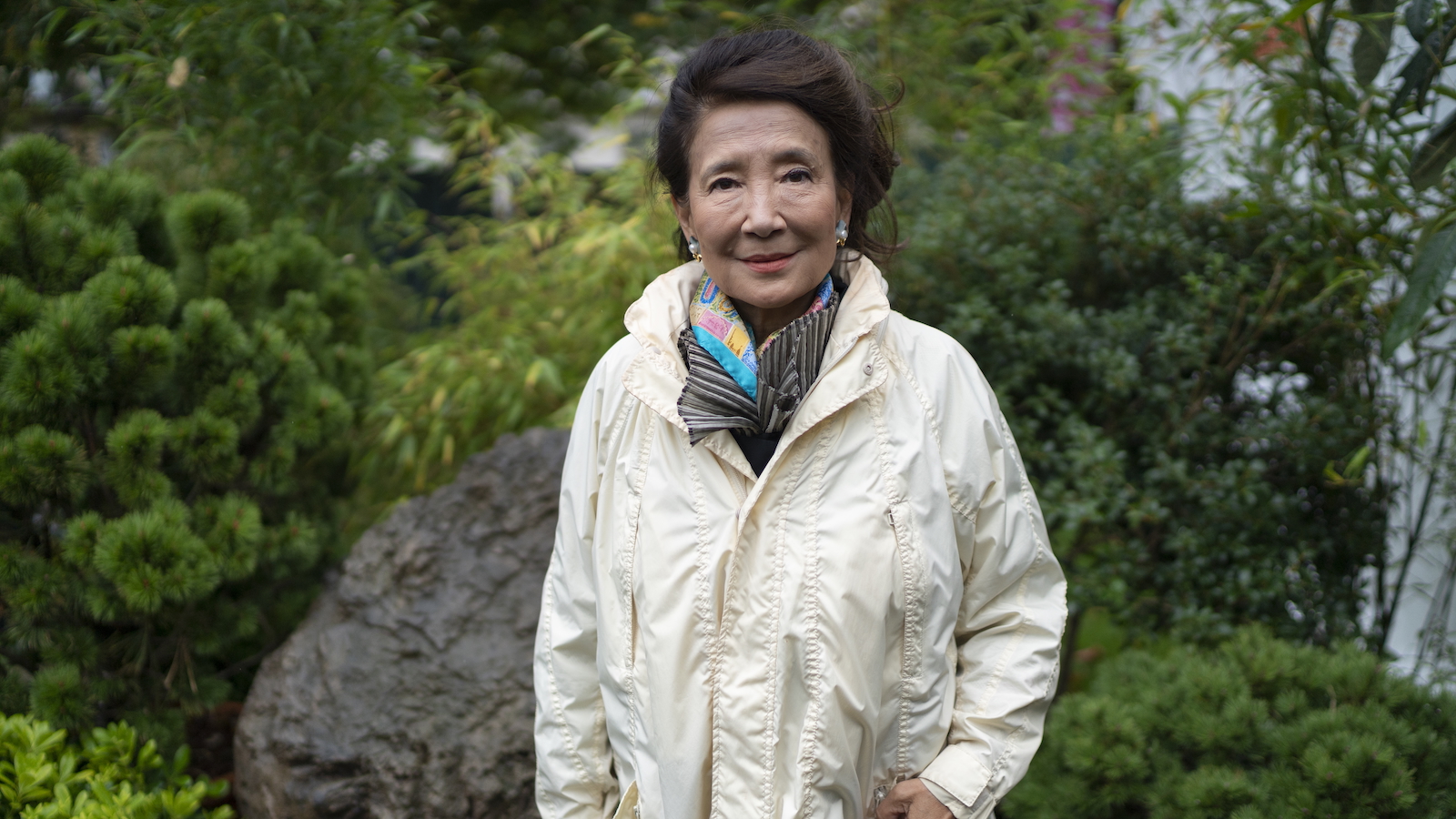
In 1988, when the Chinese-born writer Jung Chang had been living in the United Kingdom for ten years, she received a visit that would change the course of her career. It was her mother, a senior member of the Chinese Communist Party, who had never left China before but came to London for an extended stay to see her daughter. In the following months, the two women talked a lot. Mother began to open up to daughter in ways she hadn’t before. Far from the political pressures of her homeland, she shared stories from her life and the life of her own mother, once a concubine of a warlord. At some point, Chang began to record her mother’s memories on a tape recorder.
“Perhaps my mother really wanted me to understand her,” Chang told me. “Or perhaps she wanted to help me to fulfill my writer’s dream by providing these materials.” By the time her mother left at the end of that year, Chang had over 60 hours of recordings. “I said to myself: I’ve got to write this down,” she recalled.
She did, with the help of her husband, the Irish historian Jon Halliday. The resulting book, Wild Swans: Three Daughters of China (1991) was published by Simon & Schuster and became an international sensation, much to Chang’s surprise. A family memoir telling the stories of three generations of women, the book condensed a century of Chinese history into a deeply personal narrative of love and loss. Literary luminaries queued up to praise the book. Renowned novelist J. G. Ballard called it “immensely moving and unsettling: an unforgettable portrait of the brain-death of a nation.” It was translated into more than 37 languages and sold over 13 million copies, becoming one of the highest-grossing non-fiction paperbacks in publishing history.
Few books about China have had the same impact. At a time when hardly any stories about life in China — let alone those of women — circulated in popular Western culture, Wild Swans took the country into the mainstream. It encouraged tourists to flock to the country, and inspired some to study Chinese. It opened the gates to a flood of memoirs from China, such as Red Azalea (1994), Colors of the Mountains (2000) and Mao’s Last Dancer (2003). Julia Lovell, an award-winning British sinologist, told me that she became fascinated by China after reading Wild Swans. More than three decades after publication, it is impossible to overstate its influence.
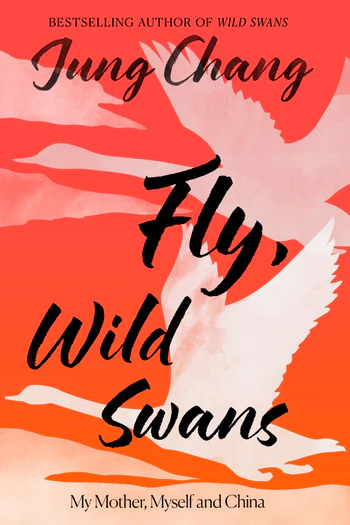
Thirty-five years later, Chang has returned with another memoir, Fly, Wild Swans: My Mother, Myself and China (Harper, September 2025), which picks up where the previous story left off. Wild Swans ends in 1978, with Chang leaving China, and leaves much of her mother’s later life unexplored. In the new book, those missing years take centre stage. We see her mother as a formidable Communist official navigating the shifting political tides of the post-Mao era, fiercely protective of her family yet loyal to the Party that had both empowered and wounded her. Chang describes their long-distance relationship, the strain of separation, and the guilt of pursuing freedom abroad while her mother remained behind. She also writes tenderly about meeting Halliday, their marriage, and the life she painstakingly built in Britain — a world of libraries, publishers, literary festivals and eventually fame.
The first third of the memoir revisits familiar ground — “a rather hasty recap,” as one reviewer put it. But the later chapters are intimate, filled with domestic details: arguments, reconciliations and finally the illness that now confines her mother to a wheelchair. “I wrote this book to spend time with her,” Chang writes in the author’s note. Reviews have been generally kind, though few expect it to match the extraordinary success of her first memoir. For Chang, the book is less a sequel than a reckoning: a chance to tell the second half of the story she began recording in that London flat more than three decades ago, when her mother first opened the floodgates of memory.
More than three decades after Wild Swans’ publication, it is impossible to overstate its influence.
I met Jung Chang last summer in the charming back garden of a restaurant near her home in the well-to-do neighborhood of Notting Hill, London. Though it was late May, she was bundled up in a purple Chinese-style jacket and a rather dramatic turban of the same color, which she removed to reveal a mass of curled hair stylishly piled on top of her head. Chang looked young for someone in her seventies, and radiated the confidence of someone certain of her place in the world. With her fine-featured face meticulously made up and her nails neatly polished, she appeared entirely at home in these genteel surroundings, where well-dressed men and women sipped coffee or freshly squeezed juice at tables covered with crispy white tableclothes.
In elegant English, tinged with a slight Chinese accent, she remembered her first day in London in 1978. She was in her mid-twenties, just off the plane from China and armed with a government scholarship. With her fellow students she went to Hyde Park, and Chang was thrilled to see the expanse of flowers and grass. “In those days, Britain felt like another planet,” she recalled. “Back in China, Mao had all the flowers and greenery.” She decided then and there that she was going to love this country — and she did, so much so that she never left.
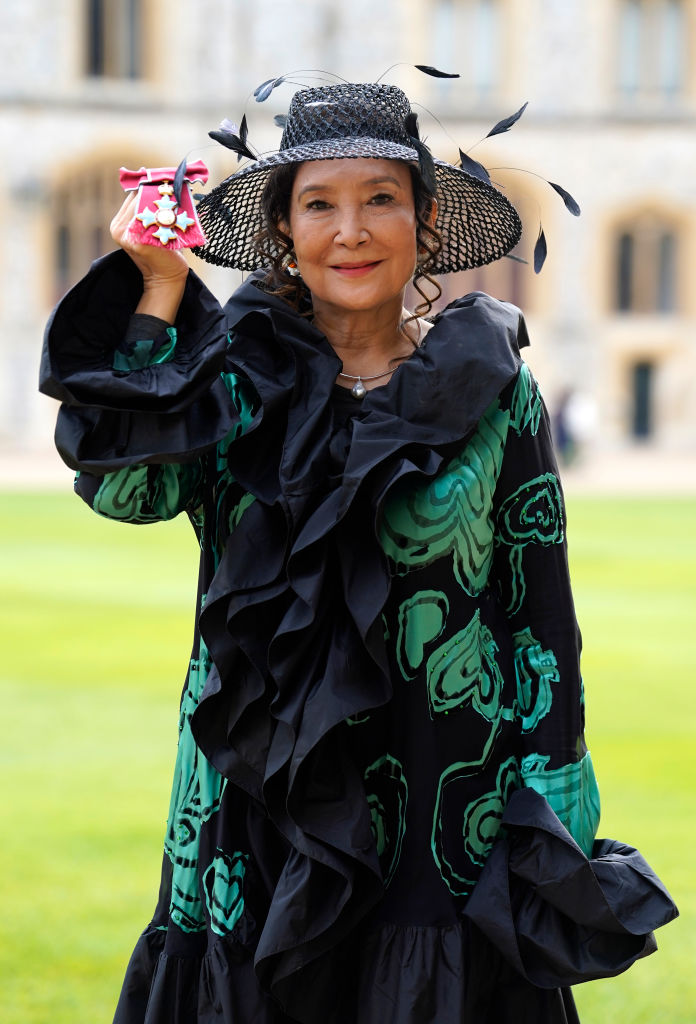
Her love for her adopted country has been requited. On the several occasions that I have met her in London, usually at book launches, she has always been surrounded by admirers. In March last year, she visited Windsor Castle to receive a CBE (Commander of the Order of the British Empire) for services to literature and history. Jung Chang always struck me as rather grand. Now she is officially grand.
Yet the affluent and urbane world of north London is a far cry from the world Chang hailed from. Born in 1952 in Yibin, Sichuan province, she did not grow up with all the finer things that she came to appreciate later in life, but did enjoy some privileges. The family lived in a walled compound, guarded by soldiers, and they were looked after by maids. This was due to her father’s position as deputy head of the Propaganda Department of Sichuan Provincial Government.
A lover of literature, her father encouraged his four children to read and learn. Once he bought a dictionary, a luxury item at the time, for each of them. The young Chang loved to spend time at her father’s library, where she read foreign children’s books in Chinese translation. “One story I remember vividly was A Little Match Girl,” Chang told me, referring to the literary fairy tale by Hans Christian Anderson. “This poor little girl died in the snowy street, cold and hungry while rich people were enjoying their Christmas dinner with roasted turkey,” she recalled. “I guess this story projected the right image of the cold capitalist world.”
As a child, Chang dabbled with poetry and made up ghost stories to scare her friends for fun. Through her father, she met some writers, including the novelist and essayist Yang Shuo, whose writings featured in school textbooks in that period. “I really appreciated his descriptive power,” Chang said. “You can imagine how awestruck I was when meeting such a revered author.” Back then, Chang added, writers were well-regarded in China; they were sometimes referred to, per Stalin’s lofty description, as “engineers of the human soul.” She set her heart on joining their ranks.
Mao’s launching of the Cultural Revolution in 1966 shattered that dream. Books became ticking time-bombs, as they might be deemed politically sensitive. In 1967, her father was ordered to burn his own books by the local rebel group enforcing Mao’s anti-intellectual agenda. He lit a fire in a large cement sink in their kitchen and threw piles of books into it. As they turned to ashes, he banged his head against the wall in despair. Seeing her father weep for the first time in her life, Chang’s own heart was broken. “After the bonfire,” she wrote in Wild Swans, “I could tell that something had happened to his mind.”
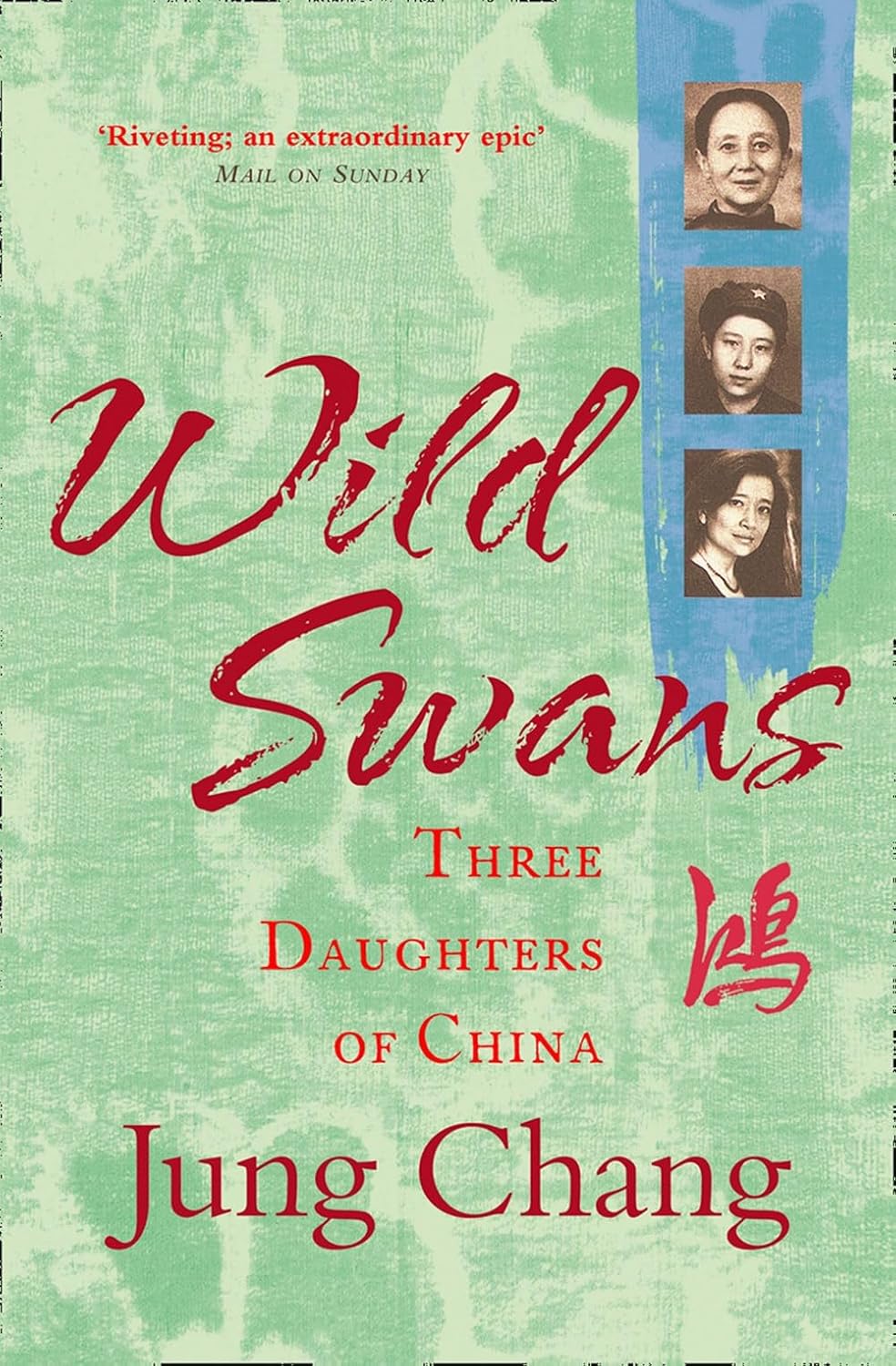
Having previously criticized Mao’s policies, Chang’s parents were singled out for torment and viciously attacked. Chang’s vivid descriptions of their persecution are some of the most emotionally charged — and difficult to read — passages in Wild Swans. They are the book’s dark center of gravity. During dozens of struggle sessions, they were forced to kneel down and wear insulting placards around their necks. They were screamed at, beaten, spat on. This public humiliation was followed by imprisonment.
As a teenager, Chang suffered far less than her parents during the Cultural Revolution. She joined the Red Guards and, like millions of Chinese youths, was “sent down” to the countryside to be re-educated by peasants. In a village on the edge of the Himalayas, she served as a so-called “barefoot doctor,” providing badly needed medical services to rural people. Later, she also worked as an electrician and a steelworker.
When I asked her how these experiences shaped her life, Chang replied, a half-smile playing on her lips: “These were eye-opening experiences. I had no idea how the ordinary people lived and how poor the farmers in the villages were. And I learnt new skills.” She elaborated that the basic medical training she was given back then has enabled her to take good care of her husband, who is 13 years her senior.
By 1973, as the revolutionary fever eased, some Chinese universities reopened. Chang entered Sichuan University as a “worker, peasant or soldier” (工农兵) student — the three social classes allowed to enrol — and was thrilled to be assigned English as a major (students were not given a choice). Always a keen learner, she thrived at the university and eventually won the scholarship that took her to London in 1978. There, she gained yet another scholarship and earned a PhD from the University of York, becoming the first person from mainland China in the post-Mao era to receive a doctorate from a British university.
From the outset of her writing career, Chang has been interested in the individuals who have shaped history, women in particular. Taken together, her work could provide evidence for a “Great Woman Theory of History.” Her first book, co-authored with Jon Halliday early in their courtship, was Madame Sun Yat-Sen (1986), a biography of Soong Ching-ling, the wife of Sun Yat-sen who is often called “the mother of modern China.” Chang is self-deprecating about the book. “It’s a very short book and not good since my heart was not in it,” she admitted. “I just wanted to work with Jon.” Writing the book did bring them together. The couple tied the knot in 1991, the same year that Wild Swans was published.
The runaway success of Wild Swans owes much to its compelling narrative and Chang’s knack for description. (My literary agent recommended that I study it as I set out to write Socialism is Great!, my 2008 memoir of my early adulthood working in a Chinese rocket factory). But she was also lucky with the timing. The book arrived just as the world was becoming interested in China, two years after images of bloodied students fleeing Tiananmen Square had flashed across TV screens around the world. Following decades of self-imposed isolation, China was experiencing rapid economic development, and as the post-Tiananmen sanctions applied by Western countries eased, many hoped for a more meaningful engagement with the country. At this moment, Jung Chang, charming and media-friendly, emerged as a prominent cultural bridge.
The success of the book brought wealth, which granted Chang the freedom to do whatever she wanted. She quit her teaching job at London’s School of Oriental and African Studies (SOAS), and became a full-time writer.
In 1967, her father was ordered to burn his own books. As they turned to ashes, he banged his head against the wall in despair.
Riding high, Chang and Halliday set out on a new project, even more ambitious than the multi-generational saga of Wild Swans: a definitive biography of Chairman Mao. “It seemed to be the obvious choice,” she explained. “Wild Swans is a family story. As I was writing it, Mao was always in the background. I realized that there were many facts I didn’t know about, for example, concerning the Great Famine. Why did so many people die? Where did the food go? I became very interested in Mao.” Halliday, who specializes in modern Asian history, was equally interested in Mao. The couple set out to conduct research, dividing the labor by language. Chang focused on the Chinese materials while her multilingual husband took on the rest.
“The 1990s were a golden era for historical research,” Chang declared. Yeltsin had opened the Soviet-era archives, and Halliday, a Russian speaker, dived enthusiastically into this trove of information. China, too, was beginning to expand access to the historical archive. At the end of the 1980s, Hu Yaobang, then Chairman of the Chinese Communist Party, had ordered the country’s provincial archives to compile and publish historical documents. The timing was right for other reasons, too. The pair spoke with many of Mao’s personal associates, who were by then in their old age. They interviewed Wang Guangmei, the wife of Liu Shaoqi, China’s president on whom Mao turned viciously during the Cultural Revolution. They also spoke to Yi Lirong, an artist who was one of Mao’s oldest friends. In the U.S., they interviewed Henry Kissinger and George H. W. Bush.
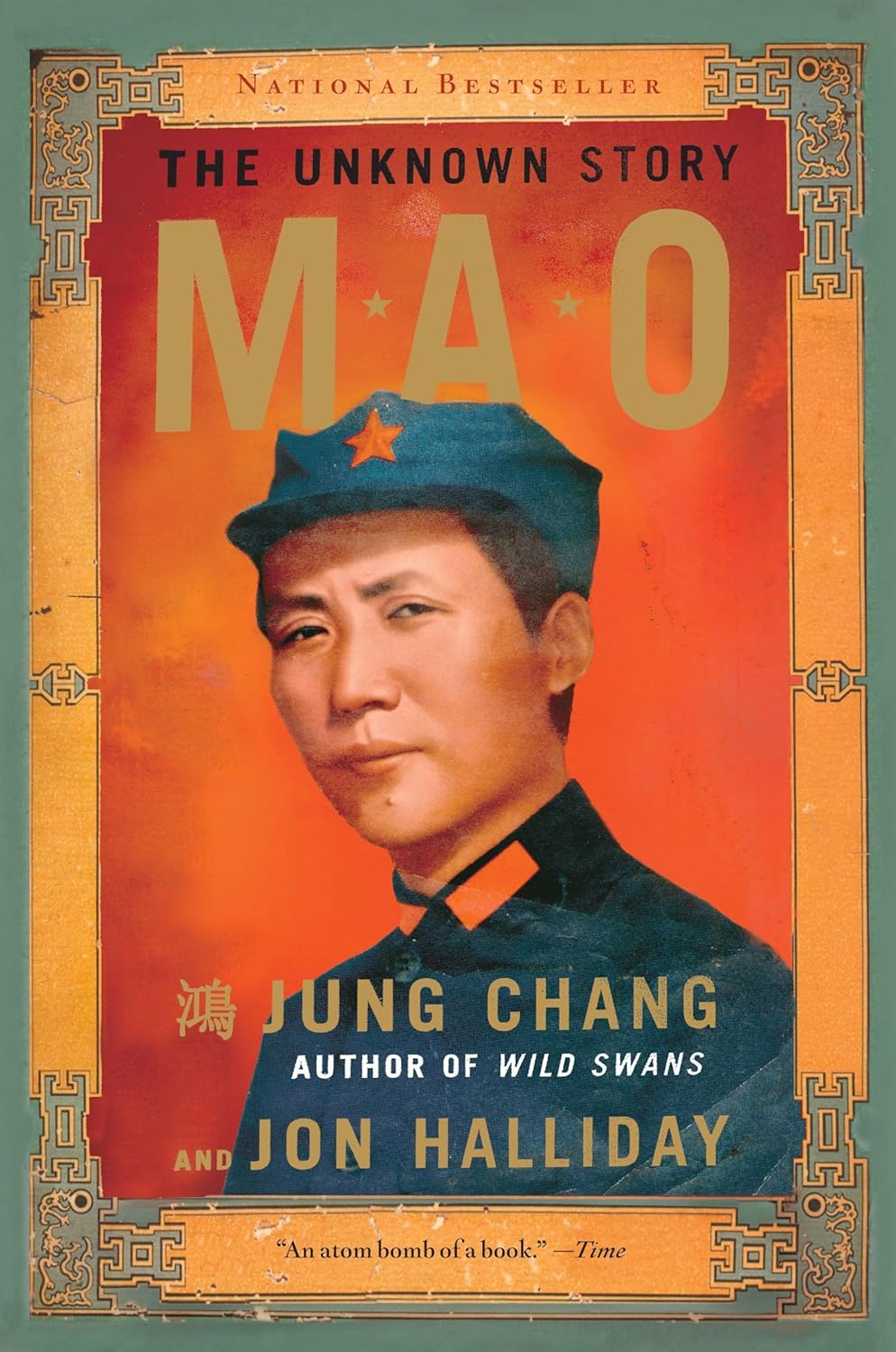
It took the couple twelve years to research and complete the nearly 1000-page biography, Mao: The Unknown Story (Anchor, 2005). The book portrays Mao as a monster: a power-hungry yet stupid liar; a manipulative, sadistic sex-addict and drug-peddler; a mass murder who cared nothing for his country or people. Chang and Halliday concluded that Mao was equal to, or worse than, both Hitler and Stalin.
Unlike Wild Swans, which enjoyed universally positive reviews, Mao proved powerfully divisive. Many newspaper reviewers were impressed by the book’s heft — it has 139 pages of references — but academics were overwhelmingly critical of its methodology. Summarizing the criticism in her own book Mao Zedong and China in the Twentieth-Century World (2010), historian Rebecca E. Karl wrote: “According to many reviewers of Mao: The Unknown Story, the story told therein is unknown because Chang and Halliday substantially fabricated it or exaggerated it into existence.”
Chang admitted that she was upset by some of the reviews, but she stands by her research. “I expected a different kind of debate. If they had pointed out some inaccuracies or mistakes, then I’d have been happy to discuss with them.” In her view, critics were quibbling over whether Mao was indeed the monster portrayed in the book — a question that she considered definitively settled, not least by her own family’s experiences. “Apart from Wild Swans,” she said, “there had been numerous other personal memoirs about life under Mao. If all of these stories had not moved [the critics] to the conclusion that Mao was a monster, then nothing I say could change their minds.”
Yet many reviewers were interested in more than just the question of Mao’s character, and made earnest attempts to point out inaccuracies in the book’s narrative. An assessment by George Benton and Steve Tsang, both top China experts, published in The China Journal, stated: “We find that the authors make numerous flawed assertions, both about Mao and the broader context. They misread sources, use them selectively, use them out of context, or otherwise trim or bend them to cast Mao in an unrelentingly bad light.” Benton later co-authored a book with Lin Chun, Was Mao Really a Monster? (2010), in which they compiled 16 responses to Chang and Halliday’s Mao by well-regarded China specialists.
Academic objections notwithstanding, Mao: The Unknown Story was a huge commercial success. The book sold handsomely, becoming a bestseller in Europe and the U.S., and was translated into more than 30 languages. As the debate she ignited about Mao’s historical legacy raged, Chang turned to her next project.
While her biography of Mao focused on the historical figure who shaped the lives of her mother’s generation, Chang’s next book described the woman whose legacy still dominated her grandmother’s lifetime: the Empress Dowager Cixi, who ruled China at the end of the Qing Dynasty. Chang had become intrigued by the “Dragon Lady” while writing Wild Swans; her grandmother, whose story opens the memoir, was born in 1909, the final year of Cixi’s rule. Early in her research, Chang discovered that Cixi was, in fact, the first Chinese ruler to have ordered the banning of foot-binding, in 1902. (The ban was later rescinded, and Chang’s grandmother was one of the final generation of girls to have her feet bound, in 1911). “I realized this was quite different from Cixi’s perceived image,” Chang told me, “of vicious, cruel and conservative.”
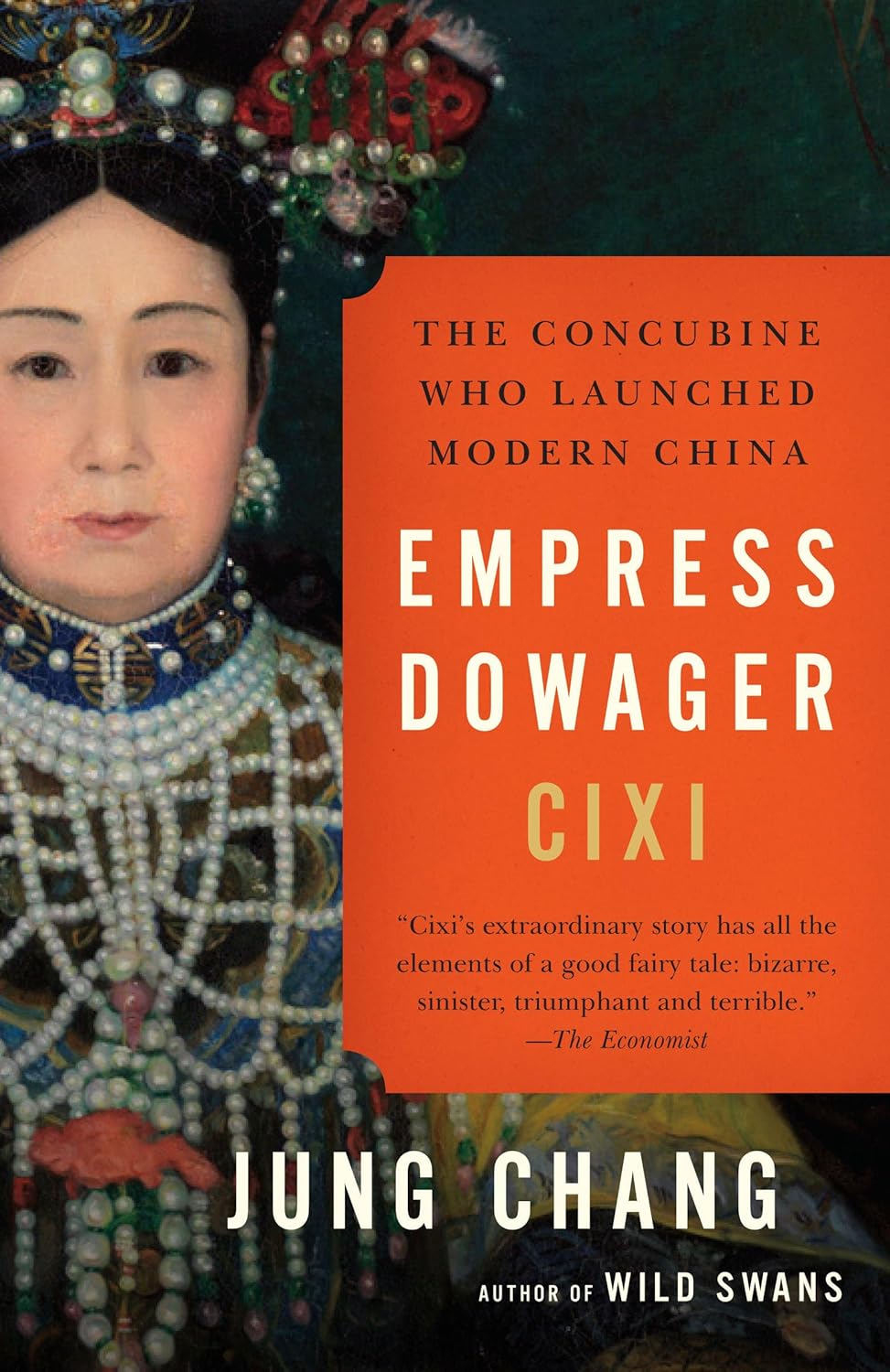
Chang’s revisionist approach in Empress Dowager Cixi: The Concubine Who Launched Modern China (Anchor, 2013), portraying Cixi as proto-feminist and a modernizer who “brought medieval China into the modern age,” once again aroused controversy. Some reviewers were impressed by Chang’s extensive use of Chinese-language sources, and by her detailed and vivid descriptions of court life. But many historians were unconvinced by Chang’s conclusions. Her praise for Cixi’s progressivism is hard to swallow given that it was the empress who crushed the Hundred Days’ Reform movement — a modernization drive that might have saved the Qing dynasty — in 1898. As Qing historian Pamela Kyle Crossley wrote in the London Review of Books: “Rewriting Cixi as Catherine the Great or Margaret Thatcher is a poor bargain: the gain of an illusory icon at the expense of historical sense.”
Chang is dismissive of such reviews. “I am pleased to say that for both the Mao and Cixi books, no one pointed out any inaccuracies,” she insisted. She believes that no other books have treated Cixi as a major figure who made national policies. “I believe I am the person who gave Cixi the place in history she deserved,” Chang said. “She was not a wicked woman with long fingernails who was only interested in indulging in her pleasure. She did China tremendous service — she brought modernization to China.”
In her most recent book, Chang came full circle, returning to the strong woman at the center of her very first book. Big Sister, Little Sister, Red Sister: Three Women at the Heart of Twentieth-Century China (Anchor, 2019) tells the story of the three illustrious Soong sisters: Ai-ling, Mei-ling and Ching-ling. These sisters were influential in their own right, as well as being married to the three most powerful men in Republican China (banker H.H. Kung, general Chiang Kai-shek, and revolutionary Sun Yat-sen, respectively). In the words of Mao, “one loved money, one loved power, one loved her country.”
Hitting the shelves six months before Covid hit the world, Big Sister, Little Sister, Red Sister didn’t garner the same attention as Chang’s previous three books. Chang wonders if the pandemic might have slowed down sales. Or perhaps, she surmised, the book lacked the mass appeal — and promise of lurid revelations — of the Mao and Cixi biographies. “The sisters married important men,” she said. “They made some differences, but not that much, certainly not in the same league as Mao or Cixi.” Either way, Chang’s books were making less of a splash.
In Chang’s view, critics were quibbling over whether Mao was indeed the monster portrayed in her book — a question that she considered definitively settled.
Hungry after talking for several hours at the restaurant, we finally ordered some lunch. Chang was interested in a red prawn dish and asked a waiter if the prawns were fresh. When the waiter said he couldn’t be sure, she ordered the beef tartare. As she demurely picked at her food, she mused that she had been lucky. “I have a happy life. I have published a few notable books. I have traveled. I have Jon, a wonderful husband, and I have my family.”
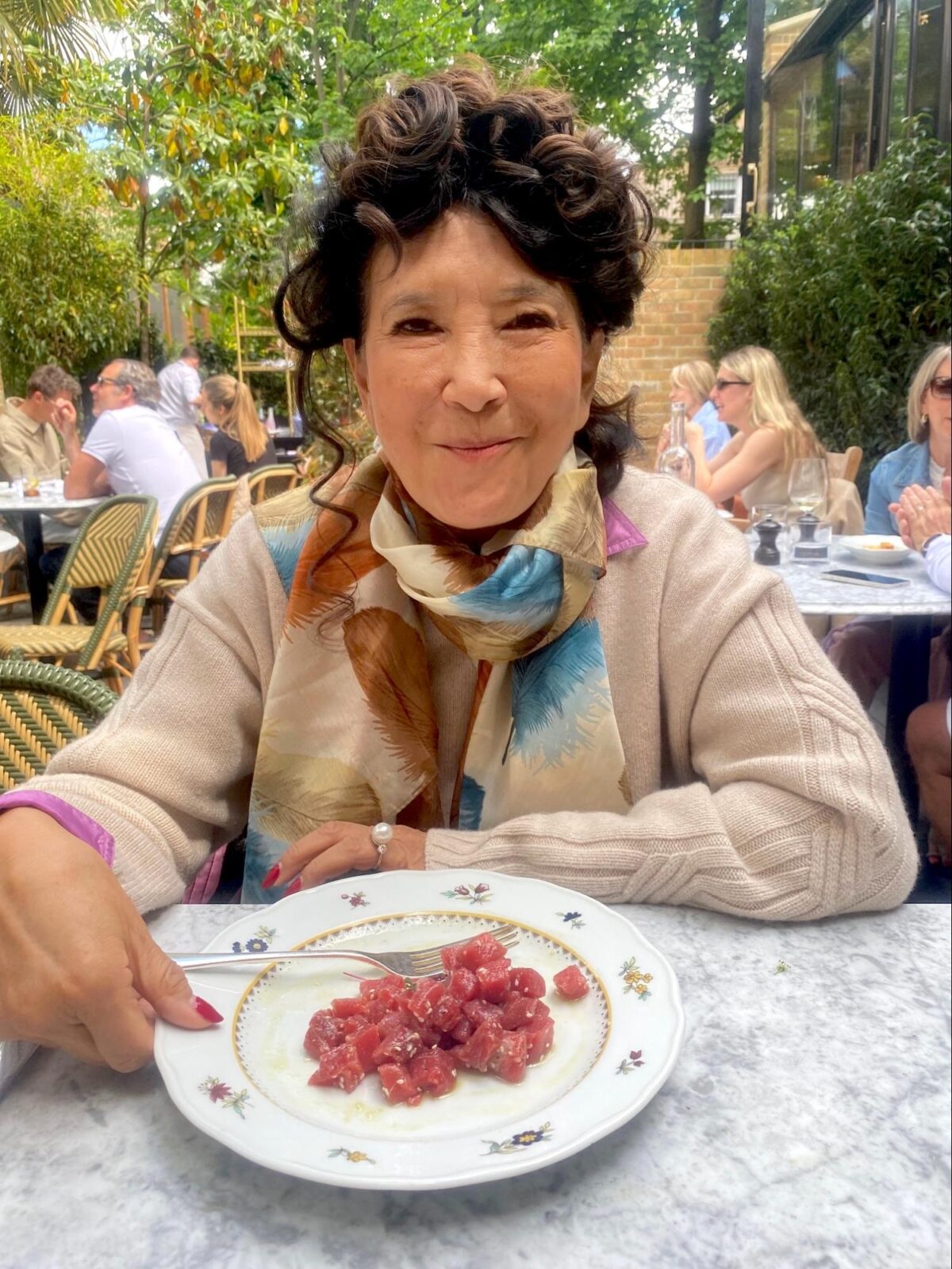
Her mother still lives in China, where Chang’s books are banned. Chang has been allowed to return, but not without trepidation. “The question is not whether I am allowed to go but rather whether I am allowed to get out,” she said, smiling warily. “China has become hostile to the west. So I am in no hurry to return.”
She may be in even less of a hurry after the publication of Fly, Wild Swans, in which she pulls no punches in criticizing Xi’s vision of a “neo-Maoist state.”
I asked if Chang feels she is ambitious. “I guess I am,” she replied. “I strive to achieve things within my control. But I don’t bother with things that are beyond my control, for example, winning awards or getting a good book review.”
She has every reason to feel proud of what she has achieved. When she published Wild Swans, she was one of only a few Chinese authors who wrote in English. She blazed a trail for the growing number of Chinese-born writers living abroad and writing in English today, notably Yiyun Li, Ha Jin and Guo Xiaolu. With her recent CBE, she now stands alongside writers such as Ian McEwan and the late Hilary Mantel. Yet for me, Chang’s position will always remain unique: as the writer who deeply acquainted the West with China at a time when ignorance about her homeland prevailed, cutting through cliché to tell China’s story as only she could. ∎
Header: Jung Chang at the Cheltenham Literature Festival, October 2019. (David Levenson/Getty)
Also read Andrew Peaple’s Q&A with Jung Chang at our sibling site The Wire China.
Lijia Zhang is a writer, social commentator and public speaker. Her articles have appeared in The Guardian, The South China Morning Post, Newsweek, and The New York Times. She is author of the memoir Socialism Is Great! (2008) about her journey from factory worker to writer, and the novel Lotus (2017), following a prostitute’s life in China. Zhang is a regular speaker on the BBC, Channel 4, CNN and NPR. She divides her time between London and Beijing.