Sign up for our newsletter to be notified of new posts!

In 2000, during a speech supporting China’s entry into the WTO, Bill Clinton compared China’s attempts to control its internet to “nailing Jell-O to the wall.” Yet over the last decades, Beijing has done exactly that — to varying degrees of success, while the game of cat and mouse between “netizens” and censors continues to this day.
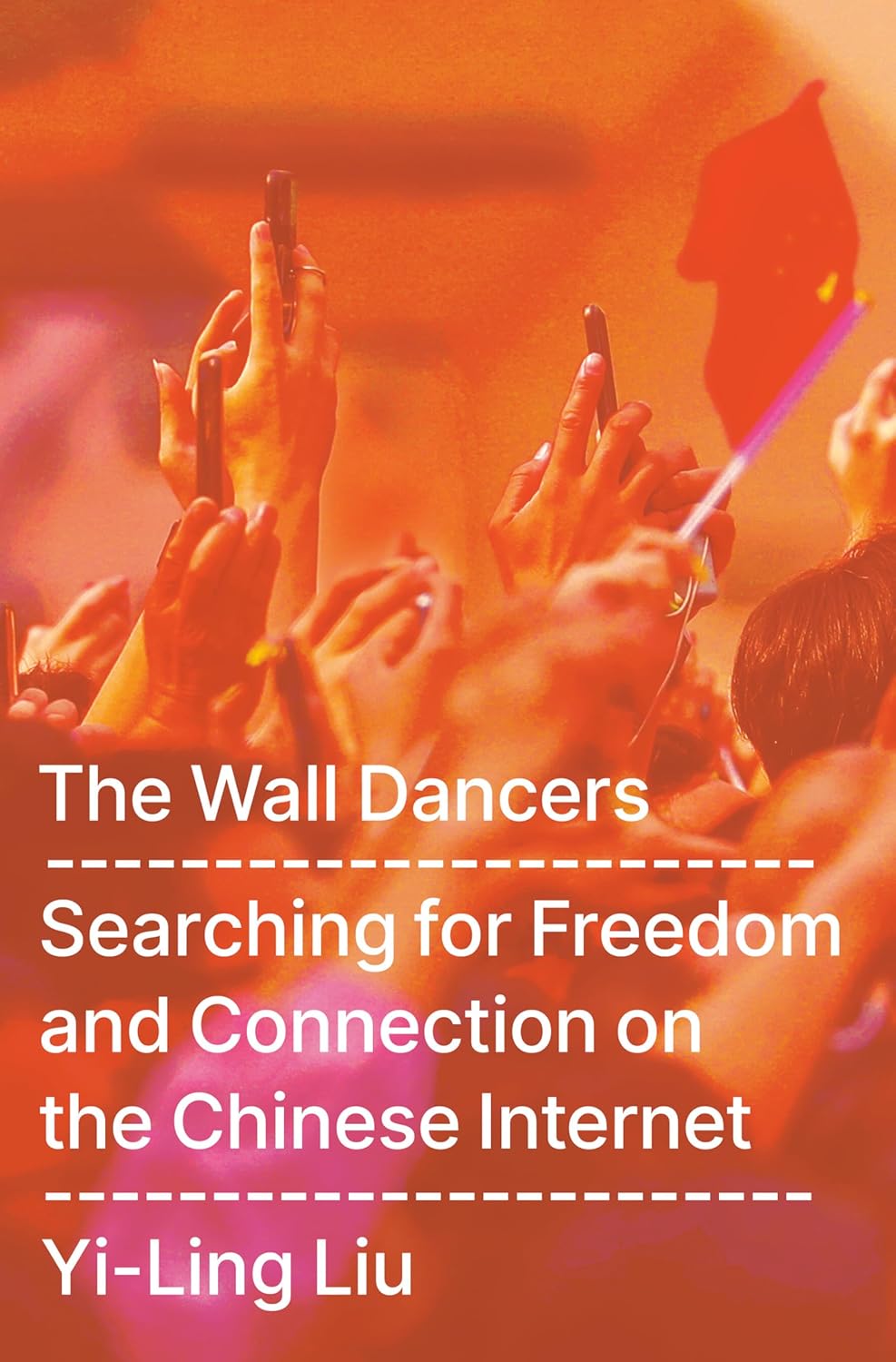
In The Wall Dancers: Searching for Freedom and Connection on the Chinese Internet (Knopf, February 2026), technology journalist Yi-Ling Liu tells the story of China’s carefully regulated internet, and what it shows about the broader national tension between freedom and control. This story begins in the late 1990s, as Chinese authorities began constructing the “Great Firewall” and “Golden Shield” systems that would censor and surveil unwanted content online. Yet behind the wall, China’s online space evolved into a world where Chinese citizens could connect with each other and spread news like never before, from group chats that fostered new subcultures to tech innovations that changed the face of Chinese society. Today, that diversity is still alive in China’s internet culture, yet the mechanics of surveillance and control are more sophisticated than ever as Beijing closes off its virtual borders.
Last week, we hosted Yi-Ling Liu at Asia Society in New York to talk about this transformational chapter of China’s contemporary history, and the individuals who shaped it, from entrepreneurs to activists, bloggers to censors. The conversation was moderated by the technology writer and podcast host Afra Wang. Watch the video here, and read a transcript below:
I use this term ‘dancer’ instead of ‘fighter’ or ‘dissident’ because I think those words don’t accurately describe that experience to begin with. … It’s creative. It’s dynamic.
Yi-Ling Liu
Speakers
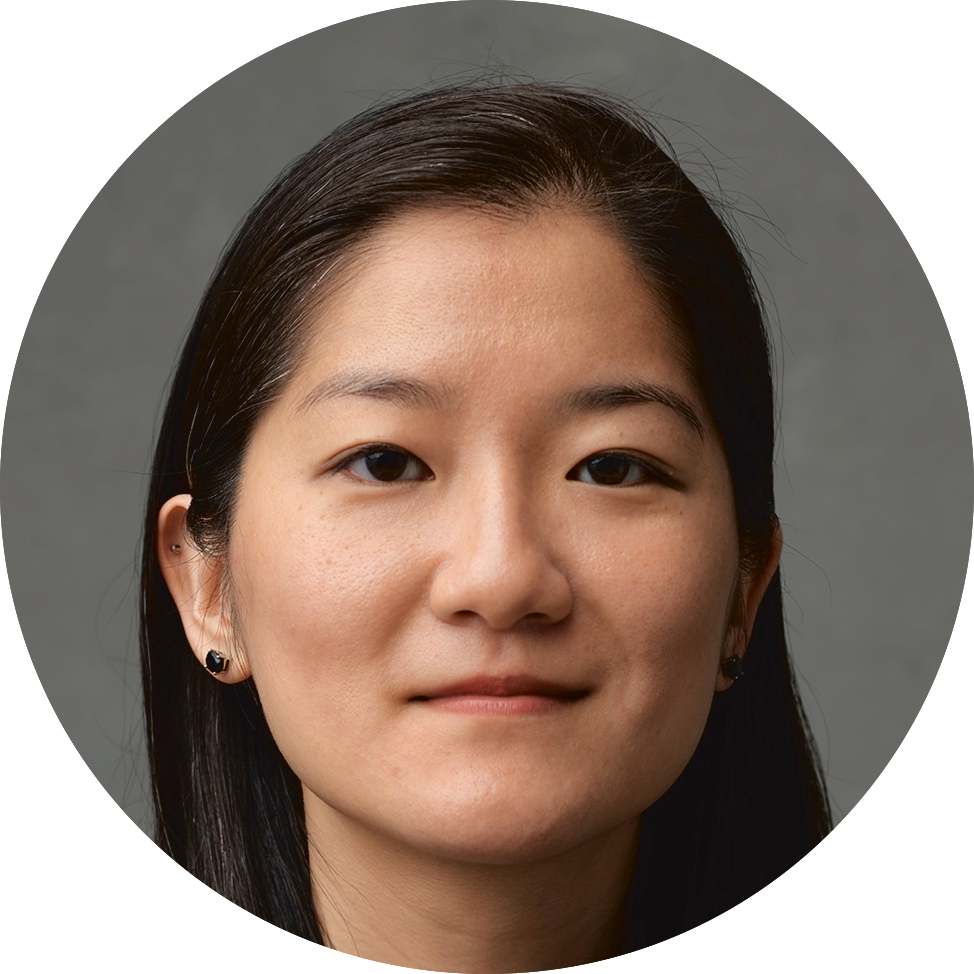
Yi-Ling Liu is a writer and editor covering Chinese society and technology. Her work has been published in The New Yorker, Harper’s and WIRED, and she is the author of The Wall Dancers (2026). Liu was the China Editor at Rest of World, and a recipient of the Matthew Power Literary Reporting Award. She is currently based in London, as a journalist-in-residence at the Tarbell Center for AI Journalism.
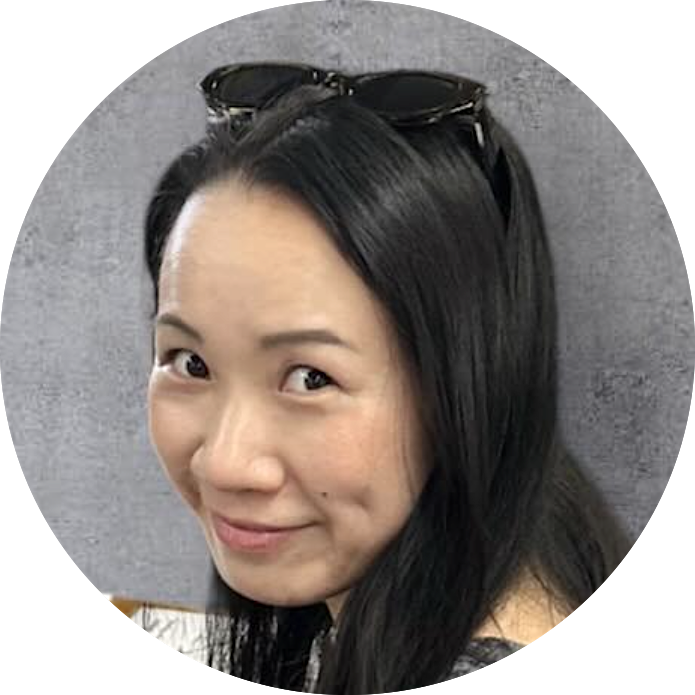
Afra Wang is a writer exploring the intersections of technology, China and Silicon Valley. She authors the Substack Concurrent and co-hosts the Mandarin-language podcast CyberPink. Born and raised in China, Wang spent six years working in Silicon Valley. She is a fellow at the Roots of Progress Institute and a winter fellow at the Centre for the Governance of AI (GovAI).
Transcript
The following transcript is an unedited AI transcription; there may be discrepancies with the video.
Afra Wang: Before we begin, I want to do an anthropological search. Raise your hand if you have a Weibo account, or had one in the past. Okay. Raise your hand if you have a WeChat account. Raise your hand if you have a Twitter account—or X. Raise your hand if you know Bluesky. Anyone? Okay, not many. Raise your hand if you have Instagram. Okay. And raise your hand if you think you’re a wall dancer.
Now we’re getting into the explanation of wall dancer. For the past 30 years, internet users in China have had no choice but to dance in shackles against the Great Firewall. This means they need to evade censors, build solidarity through coded languages, and carve out dignity in a surveilled internet. We’re familiar with the Me Too movement, which is also the Rice Bunny movement. We also know the white paper protest as a way of dodging censorship—because how can you censor something that’s not even written on the paper? This particular movement is a reactional way of people pushing against censors.
But watching America today, in 2025, 2026, when TikTok transferred ownership, people all of a sudden couldn’t search certain keywords. If they searched certain keywords such as Epstein, they found an empty feed—which is the day-to-day experience of a Chinese internet user. Yi-Ling and I had a conversation before this talk, and one line strikes me the most: Americans are going to have to learn how to be wall dancers too.
We’re talking about wall dancer as this artful, mindful, almost sometimes even joyful act between you as an internet user and the censorship itself. And sometimes when you’re dancing against the wall, dancing in the shackles, there’s a certain joy—like when you recognize the other one is dancing as well because you know these memes. You recognize certain messages the censors don’t know, the algorithm doesn’t know, but you kind of get it because they’re basically speaking certain truths. So I think let’s start with this metaphor, with the book title, The Wall Dancers. Why did you choose the word “dance” instead of, in other senses, “fighters” or “dissidents”?
Yi-Ling Liu: First, thanks so much for your question and thanks so much for coming out here on this very cold Thursday. I want to explain the title The Wall Dancers to all of the confused faces who looked back at us when Afra said, “Are you a wall dancer?” It comes from this Chinese phrase “dancing in shackles,” and it was first used by journalists in the early 2000s to describe the experience of writing and reporting under state constraints. After that it quickly became viral. It wasn’t just journalists who were using it—there were science fiction writers who were using it, musicians, software engineers.
This metaphor resonated with me in particular because it captured the experience of living in China and navigating Chinese society as a kind of dance, a dynamic push and pull between state and society. Here was a place where things were rich with innovation and yet rigidly constrained. Here was a society where a gay dating app could go public on the New York Stock Exchange one year and another one could get shut down the next year. Here was a society where hip-hop could go viral and mainstream one month and then get banned off television another month.
I found that the dynamic of this dance was most vibrant on the Chinese internet behind what we all know as the Great Firewall. So I use this term “dance” instead of “fighter” or “dissident” because I think those words don’t accurately describe that experience to begin with. And secondly, it’s creative. It’s artful, as you say. It’s dynamic. And I came to know the individuals who were particularly good at navigating this constantly shifting terrain—I came to know them as dancers, or wall dancers.
The Chinese internet is almost a little bit cursed because even if you’re someone like Hu Xijin, this notoriously famous big mouth who constantly says something pro-state, you still get cancelled as well. Hu Xijin’s account was suspended in 2024 for saying something wrong, judged by the wall that’s moving, that’s constantly looking for things to attack. Everyone needs to be a dancer if you want to just exist on the Chinese internet.
Now we can talk about the dancers. There are actually five main protagonists, five main dancers in Yi-Ling’s book. The first one is Ma Baoli, who went from being a police officer in Qinhuangdao to later founding Blued, which is China’s largest gay dating app. Eventually he shook hands with Premier Li Keqiang as this recognized entrepreneurial dream realized by a gay founder.
Then there’s Lü Pin, a feminist activist we all know, who was a state journalist and quit her job. When she quit her job, she said, “I’m the generation of 1989.” Later she started to build the native feminist movement in China, and in 2016 she moved to the US, in a sense becoming a political exile.
The third dancer is Kafe Hu, an underground rapper from Sichuan learning to toe the line between being a rapper, being provocative, and being permissible—getting recognition from the mainstream.
Then there’s Chen Qiufan, a former Google tech worker who later turned into a science fiction writer.
And the last one, I think the most interesting one, is Eric Liu—he is a Weibo censor himself, in a sense representing the wall.
So there are five very captivating characters. But why them? During your journalistic journey you definitely met and talked to many wall dancers, but why these five dancers in particular?
I met a lot of wall dancers, but I definitely had a certain way of narrowing my frame and my reporting gaze. I was particularly drawn to the margins—the underground, the subaltern, where alternative and imaginative dances bloomed. The queer communities, feminist activists, the hip-hop underground, science fiction writers.
I will say though, even though these subjects were very much on the edges of society in some ways, they were also part of the mainstream. A lot of them had one foot on the edges of society and one foot in the mainstream. A good example is Ma Baoli. He was a leader of the queer community and ran this underground gay website for many years, but he was also a policeman. He was a cop. So he really knew how to speak the language of authority. He could, like a lot of them, speak in tongues, code switch, wear many hats, and this allowed them to have creativity and adaptability and look for leverage points of change within the system.
Lastly, I would say a big reason why I was drawn to this particular set of characters is because we shared a set of personal questions. I was thinking through a lot of the questions that they were thinking through. We shared a sense of personal stakes. I was reaching out to the hip-hop artists as I was thinking about my own place as an artist within creative constraints in China. I reached out to the queer communities as I was thinking about my own place within it. I was reaching out to the feminist activists as I was thinking through what it meant to build solidarity amidst pandemic isolation. I sought out the science fiction writers as we were thinking through what it meant to find spiritual meaning and purpose at a moment when technological upheaval was completely disorienting. So I think that was also another unifying characteristic of all of the people that I decided to speak with.
I think there’s a particular craft in this book that I really admire because the freer, more chaotic, more permissible Chinese internet was part of my identity and is part of my formative memory. I still remember getting a lot of political awakening moments back then because back then you could actually talk about China’s political reform. You could talk about the air pollution issues. You could talk about peasant workers in the city who couldn’t get properly paid. You could talk about dislocation because of the Beijing Olympics. This civic space is gone.
But I think in your book somehow you restored a lot of those moments, a lot of that atmosphere, by giving a lot of details as well as—I almost feel like I was teleported to the past. There are certain moments I also cried because I genuinely felt connection with those characters in your book, such as Ma Baoli first learning that you can actually talk about being gay on the internet. And then he was freed after the night of reading Beijing Story—a famous online novel which is quite monumental to the Chinese LGBTQ community.
You did a lot of work in terms of crafting those scenes, taking us back to the Chinese internet that no longer exists. Can you talk about your crafting experience? What was your process of collecting the primary sources? What was the process of interviewing them and then the writing itself?
First, Afra, I’ll say you’re my favorite reader. I’m glad that it moved you. I hope that someone else wins this role of favorite reader.
My writing and reporting process—I will say that it was very, very long and involved. For example, let’s take Ma Baoli. Like a lot of the other subjects that I profiled, I had spent maybe weeks if not months, sometimes years, reporting and writing and researching about the things that they cared about, the communities that they were part of, before I even approached them.
Back in 2019, I was fascinated by Blued, this gay dating app, and I was fascinated by his story because cop-turns-tech-mogul is just a fascinating story. I reached out to the Blued PR team and said, “Hey, this is awesome. I would love to profile you for The New York Times Magazine.” We had a three-week-long negotiation at the end of which they said very kindly and gently, “No, we would not like to participate in your interview.”
I was disappointed, but I knew this story was too good to let go of. So I ended up pursuing the story anyway. I did what the journalist Gay Talese did—for those of you familiar with this nonfiction journalist, he wrote a profile about Frank Sinatra where Frank Sinatra wouldn’t agree to be interviewed, but he ended up interviewing every single person who knew Frank Sinatra. So I did that with Ma Baoli. I interviewed Blued users. I interviewed Blued investors. I interviewed Blued ex-employees. I interviewed people who were participating in LGBT civil society in Beijing, who were very much part of queer communities in Beijing. And I ended up having, I think, a much better story as a result. It wasn’t this straight business profile of a company, but this portrait of an online queer ecosystem.
Fast forward a year later, the story’s published. I go back to Ma Baoli and I’m like, “Okay, I’m still here. Would you be willing to be profiled for my book?” And he said yes, because he could see that I wasn’t going to go away and that I really cared about the story.
The other thing that I would say about my reporting process is that I never really saw myself as an investigative journalist digging for scoops and revealing information that had otherwise not been out in the world. A lot of the subjects that I interviewed were public figures and they’d shared a lot of their story online in social media and Chinese media interviews. I saw myself more as a scavenger, scooping all of these details together, weaving them into a coherent narrative, having them fill in the blanks and bring color and life and humanity into their stories.
With this scene that you mentioned—Ma Baoli goes into an internet cafe, he reads this story Beijing Story for the first time by an anonymous writer, and he realizes that he’s not alone—he’s talked about this moment many times on social media and in Chinese media. But I wanted to really bring it out in flesh and blood. So I sat him down and asked him many times: What did the internet cafe look like? Who was sitting next to you? What did the color of the sky look like? Were you crying? It was a hugely cathartic, revelatory moment and I wanted to really capture that.
A warning about that scene is you’re likely to cry because Yi-Ling and I both cried when we were reading that scene, and also some other portrayals of other protagonists and characters we know. For example, Lü Pin—this unyielding energy is exactly, if you know Lü Pin herself, this is exactly her energy.
Okay, so in Chinese policy as well as the internet in general, there’s this cyclical pattern called fang and shou—opening and tightening. Recently you wrote a Wired piece exploring this fascinating tension in China’s AI scene. The State Council started to announce this new registry system to register all the AI services, from large language models to other stuff. This is clearly a shou moment for the AI scene that the state has been fang for quite a long time. So how do you explain this shou and fang dynamic?
I guess I’ll step back a little and explain what exactly fang and shou is. For most of modern Chinese history, society has moved in cycles of what some scholars have called fang and shou, or opening and tightening. This goes as early as the Cultural Revolution. The repressive era of the Cultural Revolution was followed by this period of pragmatic loosening. The freewheeling period of the late 1980s was followed by the Tiananmen crackdown.
The basic idea is when the system and society closes up and becomes too rigid, calls for reform emerge and it provokes a loosening. And when the system opens up and becomes too destabilizing, authorities will step in and assert control. We see this dynamic even today, as you mentioned with AI, but also with the state’s relationship with its tech entrepreneurs.
If we think back to the mid-2010s, there was this very freewheeling period for a lot of tech moguls. The state was actively encouraging people to seize opportunities, for VC money to come in.
Everyone was doing entrepreneurial stuff.
Exactly. For a lot of people, for entrepreneurs during that period, this was a period of fang. But that was quickly derailed during the big tech crackdowns in 2021 when this dream of freewheeling entrepreneurship was pretty rapidly quashed.
It actually comes with the next question, which is China’s tech chuhai scene. I think chuhai is in a sense part of the result of China’s tech crackdown, and also just this newer consensus or newer collective consciousness that Chinese tech can and actually will win the global audience, can actually win global users and can actually in a sense beat Silicon Valley in certain dimensions. Chuhai literally means “going out to sea,” and the most successful case would be TikTok. And of course you also have Temu, you have Shein, you have Xiaohongshu—for example, last year all of a sudden welcomed a bunch of US internet exiles. That’s absolutely one of the most fascinating things that I witnessed. I remember spending days and nights reading the interactions between the American Xiaohongshu users interacting with Chinese users, having some genuine exchanges.
You profile a lot of tech workers and entrepreneurs who see chuhai, going overseas, as a way to regain one’s agency to make money, to fulfill their entrepreneurial dream, but also it is in a sense a pursuit of personal freedom. What do you think about the chuhai moment? And I also want you to relate it to the whole entrepreneurial generation that Ma Baoli represents. What do you think of the whole chuhai dynamic?
Chuhai, for context, is to go overseas. It’s the idea that you can create this homegrown tech product back home in China and take that product globally and sell it out there. Anyone who has been a China tech reporter or has been watching China tech over the last ten years knows that chuhai is a very important story to follow.
Go back to 2014. The narrative back then with Chinese tech was “China can’t innovate.” This idea that China is creating copycat apps—China is going to create Facebook but on its own domestic turf. Weibo is China’s Twitter. But very quickly, I think people realized that it was possible for innovation to take place on China’s own home turf. The classic example, the ultimate chuhai story that we’re all familiar with, is TikTok. ByteDance created it on its own home turf and now it’s globally one of the most popular social media apps in the world.
The same with a lot of the other examples that you mention. Not as famous as TikTok, but Xiaohongshu, Red Note—nobody knew what it was a couple years ago, but now it’s shaping culinary trends in Düsseldorf and tourism in Thailand. BYD, which is essentially a car plugged to the internet, is now making inroads in the Middle East and Southeast Asia. And then you have even AI companies at this point like Alibaba’s Qwen. I think at some point Airbnb’s CEO said something like, “I don’t use ChatGPT. We don’t use ChatGPT. We actually use Alibaba’s Qwen.”
So I think what’s fascinating to me about this chuhai story, this idea that Chinese tech companies are going abroad, is that on one hand we see the Chinese internet as contracting—it’s becoming more controlled, it’s becoming more censored, it’s becoming more constrained. But on the other hand, it’s expanding. It’s expanding way beyond its own borders such that many more people, not just Chinese users, are going to have to learn how to use the Chinese internet too. I have a friend in this room who’s ordering candles off Temu. And Temu has a Super Bowl ad. So it’s very much present in the American public consciousness.
I think though with TikTok, what I find fascinating about this particular narrative is that it has tried to go global and ByteDance has tried to establish TikTok as a global company just at the moment that the internet is becoming more closed and siloed. So it’s doing the ultimate dance, so to speak. ByteDance is doing the ultimate dance.
What’s more fascinating, I think, is what you were pointing out earlier, Afra, when you were talking about TikTok’s changed ownership. Recently in the news, TikTok is no longer owned majority by ByteDance, but it’s owned by American investors and American companies including Oracle. And the question is, given this change of ownership, does it still potentially suffer from political influence given its owner’s tight links to the present political power in this country? Does TikTok in fact continue to exist behind new walls? And I think that’s a fascinating plot twist to this particular chuhai narrative.
So I think this chuhai narrative also relates to this phenomenon I’ve observed: Silicon Valley’s China jealousy. Elon Musk has expressly said, explicitly said, “I want X to be something like WeChat” because he eagerly wants to build a super app like WeChat. And Mark Zuckerberg himself also expressed WeChat jealousy.
I think there’s this one narrative I keep instilling into my mind—that I left China to come to the US for school but also for freedom, also for the freedom on the internet. But I think in 2025 there’s this moment where you realize that the wall has in a sense dissolved a little bit, and a lot of content, a lot of aesthetic sensibilities, logic, memes start to appear on American social media timelines. The walls start to in a sense dissolve, but you see more walls being built up.
Lately there’s this weird phenomenon I think related to chuhai, related to certain China envy or China jealousy, which is called “China maxing.” I don’t know if you heard of China maxing. As a multinational brain-rotted person myself, I’ve definitely seen a lot of memes where people start to drink hot water and say, “Today I’m feeling very Chinese,” or people saying, “This is a very Chinese moment of my life,” and doing something that’s quintessentially Chinese, such as practicing tai chi in a park.
The younger me believed in this binary—the US has free internet and China doesn’t have free internet. This binary has already dissolved in my own mind. And I think this story that I constantly injected into my mind to justify certain things can no longer be justified. So back to you: what do you think of this China maxing moment? Because you read about the internet in both worlds.
I’m fascinated by it. I mean, it’s wild to me. But I think we can situate China maxing in this broader vibe shift that has taken place over the past year. For any of you who are hyper-online—Afra, you know, we’ve discussed this vibe shift. I think if I can trace its origins, it would probably be last January when DeepSeek released its AI model R1 and when the TikTok refugees were migrating to Red Note or Xiaohongshu. There was this collective “Oh my gosh, China is a technological powerhouse” that took place among—I would call the chattering class, the abundance policy wonks, perhaps the Asia Society eventgoers. But there was a sense, there was an intellectual reckoning I think among a lot of people who realized that China is really catching up and nipping at our heels.
I remember seeing a lot of Silicon Valley tech founders and New York Times op-ed pundits take these two-week trips to China and remark on “Oh my gosh, there are dancing humanoids.”
“This is China’s century.”
Exactly. There are Huawei cars and high-speed rail. Everyone became obsessed with high-speed rail. And then it burst into mainstream consciousness as well. You had influencers like Hasan and IShowSpeed going to Chongqing and being like, “Look at all these drones.”
And I think what I want to emphasize with this particular vibe shift and China maxing is it really doesn’t reveal anything about China at all. I think it says a lot more about Americans and the United States. I don’t think—when I talk to people in China and when I visit, I don’t think it suddenly became shinier and all this high-speed rail just built itself over the year. I think that Americans have essentially projected their own fears and envies and desires onto China as this two-dimensional mirror, so to speak, a rhetorical mirror. And Americans have become really fascinated by Chinese high-speed rail because they’re frustrated with their inability to build high-speed rail. I think it’s rooted in this frustration with dysfunction and the inability to build infrastructure in the physical world.
So I’m a bit torn about this China maxing dynamic. On one hand, I love the idea of people really engaging with and trying to understand China from a place of genuine curiosity and understanding. I am less psyched about and more wary about turning China into this rhetorical mirror to project one’s own fears and fantasies and desires.
There’s this fascinating moment where when the US is experiencing a China maxing moment, China is simultaneously experiencing an America doomer moment. A lot of internet users, people perpetually online in China, are very obsessed with “the decline,” the hellish scene in the US. There’s this popular term called jianxian or the “health line”—it’s a game term but eventually this terminology came to describe how fragile the American middle class is. Because if you get sick, if you get into a car accident, if you have anything, certain misfortune happens in your life, you can instantly drop below this health line and you will never be able to restore your previous social status or social class anymore.
And I remember when I was growing up, the US used to be the beacon, and Chinese people used to project a lot of their hope and aspirations and the good things about the US—because of the free speech, because of the entrepreneurial potential, and because of the personal agency that American people have and American society was able to give them. And now I think it’s really interesting to see this reversed—that some people in the US, especially the younger generation, start to see China in a sense as the beacon who’s building the future, building physical stuff, doing cool things. There’s this concept Kevin Kelly gave in his book called “Cool China”—this China that’s constantly producing stuff that people want to buy, want to emulate and want to follow.
A little bit tangent, but going back to your book, I think one theme that strikes me the most is you’re constantly talking about technology with private and personal life through certain political expression. A lot of people who are sitting here in this room are diasporas, and I do think when you become a diaspora, like a Chinese person living in the US, you actually never stay away from the wall. So my question is: how does distance create its own kind of dance? And how as Chinese diaspora specifically can we still participate in the meaningful actions that are happening on the Chinese internet? How can the diaspora dance?
How can the diaspora dance? How many in the room would identify as part of the Chinese diaspora? Okay, a good number. I’m glad you’re here and I’m glad that you asked this question, Afra, because being part of the diaspora—any diaspora, but in particular the Chinese diaspora—can be a pretty lonely and at times painful experience. You’re existing constantly in this state of transient uncertainty. You wonder if and when you’ll return home. You wonder where is home. You probably find yourself squeezed between two different sides—a home where you potentially can’t do the type of work that you find meaningful or can’t build the communities that you want to build, and then an outside world that increasingly looks upon the Chinese diaspora and Chinese nationals with fear and suspicion, with visas being a lot harder to get and people getting turned away at the border.
What to do about it? There’s a higher-level way to answer that and a more concrete way to answer that.
The higher-level way is to reject narratives that are imposed on you and imposed on the diaspora. To reject the idea that you have to be—and when I say you, I’m also addressing myself—reject the idea that you have to be a pawn in somebody else’s geopolitical game. Resist this myth that people are talking about all the time of an inevitable US-China race. Resist and push back against narratives that force you to demonize or, in the case of China maxing, glorify the other.
And I think instead of that—when people are talking about differences and races and opposition—look for shared experience and common ground. Lean into your role as somebody who has one foot in one world and one foot in another. Be a bridge builder and be a connector in a world where we’re seeing a lot of borders and hardened walls.
What does that look like concretely? There are many people in the room who are doing this every single day and I have so much admiration for them, yourself included, Afra. That could be starting a newsletter where you’re expressing your own unique voice as part of this diaspora. It could be launching a podcast like the beloved Loud Murmurs that we all loved, that amplifies voices that challenge this narrative of China as a monolith. Create a mutual aid group that spans WeChat and WhatsApp and Signal. And I think probably the most important thing would be to create physical spaces too, because I think physical spaces are really where people feel a sense of trust and belonging.
And I think one of the most important things that I’ve realized about this diasporic dance is that it’s really important to—and Lü Pin is one of these characters in my book who has done this really well—it’s really important to locate a sense of home and belonging that is not rooted in the nation-state. A sense of home and belonging that’s really rooted in the relationships that you nurture and the communities that you build.
Yeah. I do think in a sense, talking about diaspora, talking about dancing as a diaspora—Loud Murmurs, when I was reading about Lü Pin, it’s almost like reliving a past life. A flashback of how Loud Murmurs even got started. There was this sense on the Chinese internet where a lot of women started to talk in their own voice. I think it was such an empowering moment. And thank you to the Rice Bunny, the Me Too movement, where we realized the importance of just creating our own platform and just without any permission saying things we want to say. And I think that to me was like a homecoming moment almost.
Shout out to Loud Murmurs and the Loud Murmurs energy. Loud Murmurs is a brilliant podcast that Afra founded along with three other very talented women.
Okay. It’s really hard not to get a little bit sentimental, talk about all of this. But no crying, only at the book.
So I want to ask the last question and then after that the floor is yours. This last question is about dignity. So you write about these protagonists in your book, and a huge part of the book is they seek freedom and connection as the book title suggests. But there is this ultimate pursuit of dignity.
And at the same time I realized that a lot of American users, internet users in the West, start to lose this dignity that internet and technology used to empower us with. I found people are utterly disappointed and shocked when they’re trying to search certain keywords on the US-owned TikTok but couldn’t find anything. And they’re shocked and feeling ashamed when the algorithm silences them, shadowbans them.
And you told me that Americans are going to learn how to be wall dancers too. Americans need to learn from the Chinese wall dancers how to dance better. So can you tell us what do you mean by that and how can Americans better their practice, from the diasporic dance to the American dance?
I will say I was pretty surprised during the process of writing this book at the extent to which the US internet would begin to resemble the Chinese one. That was not how this book was supposed to end. But just as the romance of the Chinese internet, which I write about—this romance of the Chinese internet being this force of liberalization and freedom—has waned, so has the fantasy of the worldwide web as this free and open space.
We see this in the way that a lot of forces that have shaped the Chinese internet are hardly unique to the Chinese internet. You mention some of the things. We see the amplification of illiberal voices and nationalist voices. We see the retreat from the public sphere. We see the erosion of what Hannah Arendt called common sense—this common shared understanding.
One example that I like to give is if we were to look at Weibo, for example, the largest microblogging platform in China. Back in 2011, people called it this harbinger of free speech. And today, there was a Chinese intellectual who described Weibo as a “maggot-infested pile of shit”—completely overrun with patriotic incels and trolls. The same goes with Twitter. At some point it was described as this throbbing networked intelligence that was going to topple regimes across the world, and now it’s described by my fellow journalists as a hell site or a cesspool, and it happens to be also shaped by one of the most powerful men in the world.
So yeah, I find this pretty bleak, this sense that Americans are going to have to learn to be wall dancers too. What does it actually mean? What does it actually mean to dance? I don’t want to be prescriptive or dogmatic. I think it’s a deeply individual thing to decide how you want to negotiate your relationship with the state. When a media company decides they want to lay off their talk show host in fear of political backlash, what are its employees supposed to do? When the tech elite decides they want to kowtow to the current administration and align their rhetoric with their policies, what are its employees supposed to do? What are you supposed to do?
But I think at the very individual, granular level, we are all going to have to ask ourselves questions that the wall dancers have been asking themselves their whole lives. And I think those are questions like: What does it mean to really think for yourself and form your own opinion in an online landscape that’s completely warped by algorithmic control? How do I protect my private life, my relationships, my attachments, my beliefs from state encroachment? What does it mean to nurture solidarity and create community across borders and geographies at a moment when we’re increasingly polarized and siloed?
And I think it ultimately means that every day we need to be acting with the belief that even within these super powerful systems of technological control, it is possible for every person to carve out their own space of freedom, openness, dignity.
Well, that’s beautiful. I do think those of you who came to Asia Society, being here, being part of this book talk, is a way of reclaiming your mind and it is a way of practicing certain dignity, I would say. And now the time is yours. If you have a question, raise your hand.
Audience question: Thank you so much for writing this book. I have to say I wasn’t paid to promote it, but I just want everybody to buy it. It’s such a good book. The writing is beautiful, and like Afra I not only cried but also laughed out loud at one moment. It’s that particular moment when Ma Baoli shook hands with Li Keqiang and now you have the second most powerful man in China using the term “comrade,” which has been reclaimed by queer people in China in a sincere way. So I just really love all the characters and I think you managed to write a China that’s both very contradictory but also rendered with the kind of depth that can only come from someone who can navigate both China and the Chinese internet and also the rest of the internet.
And I really want to ask you, how did you decide when your own voice and when your own journey would come into the picture to let readers know who you are and what you paid attention to? Because there are a few moments and I found them all very appropriate, but I wanted to understand how you arrived at those.
That’s a great question and thanks so much for shouting out that scene. That’s one of my favorite scenes. Just for context, Ma Baoli is shaking hands with Li Keqiang and he says, “Greetings, Premier. I run a gay dating app.” And the premier says, “Thank you, comrade.” And “comrade” means tongzhi, and tongzhi has also been reclaimed by China’s queer community to mean “to be gay.”
So how did I bring in my own voice as a writer and a person in this world into this book? Very tricky. Very, very hard. I will say I knew right off the bat that I did not want to write memoir. This was not something I wanted to write. This was not my story. This was going to be a story about the subjects that I was fascinated by and the wall dancers in particular. But I realized that it was impossible to tell this story without revealing my own subjective experience. We sometimes believe that writers and reporters can be perfectly objective, fly on the wall, but I was so invested in this narrative—all of the things that I was mentioning earlier in terms of the shared stakes. So I think I always revealed my hand where I thought my own perspective was important and might shape the way people understand the story.
I am from Hong Kong. I am both connected to China and the US. I’m queer. And so all of these different components of my identity were crucial in how people treated me. A lot of people when I was asking them questions would just be like, “Who is this? Who is this cultural mongrel?” And so I think it was really important to reveal that sleight of hand.
I think another way of thinking about it was I was maybe like a 0.5 subject or maybe even a 0.2 subject. My full narrative arc was not completely present, but you also feel my sense of loss and heartbreak and discouragement when the romance of the Chinese internet wanes in the way that it does.
Audience question: Thanks for creating this physical space for us today. As a Red Note user who’s probably spent five hours in this app, I really resonated with a lot of what you said at the beginning of the book. You mentioned that last year when TikTok was banned temporarily here, a lot of users called TikTok refugees came to Red Note and talked to users on the Red Note app. It really fascinated me. I scrolled down the comment area seeing a lot of kind words between the two countries. I know a lot of people from my country, they haven’t really talked to Americans before, but I realized they’re so kind and so encouraging. They’re talking about nice words to their cats, dogs, and it was really sentimental to me. Our culture was really welcomed and exchanged in this moment.
But we also see the restriction and the increasing of the wall. Even Li Keqiang, as we mentioned, the premier, has died, and there are more restrictions coming out every day. I just wonder, do you see more opportunities like this? And also in terms of the younger generation—because we grew up with good times and bad times, we have seen US movies, Hollywood movies, and all the great things from outside the world. So we wanted to use VPNs and different ways, even to go abroad to study, to gain information from outside. But I was wondering, in your experience, do you talk to the education system in China today? For children who grow up today, do they have the opportunity or interest to know more about the outside world instead of looking at what was provided today on CCTV?
Thanks for your question. And I similarly felt delighted at the moment that TikTok refugees were meeting Xiaohongshu users for the first time, because you had people sharing their grocery bills and rental prices and talking about looking for their Chinese spy and asking them for a “cat tax,” which if anyone doesn’t know is a photo of your cat.
It seems like your question is, do young Chinese—I’m assuming like Gen Z or younger—do they feel inclined to reach out across borders and understand what experiences are unlike their own? You would maybe know better than me honestly. I don’t want to speak for all Chinese Gen Z. But there is this narrative—Afra, maybe you can chime in as well. There is this narrative of the younger generation being more patriotic. Alec Ash has written very excellently on this topic. They grew up in a moment when China was standing up to the world after the Beijing Olympics. They did not see the kind of period of the ’80s where everyone was obsessed with Friends, maybe, or the TV show, or saw the United States as this beacon. And so certainly there’s maybe more confidence and more patriotism among the younger generation. Obviously don’t want to generalize, and I’m sure there are people who are just as eager and excited to reach over the border and to reach over those walls and understand experiences unlike theirs. So I mean, that’s all I can say. I can’t really speak for that generation, but I am optimistic in their ability to connect.
Audience question: Thank you so much for the conversation. It’s so informative and very inspiring and I really enjoy both of you talking. It’s so musical. I have two questions if it’s okay. My first question is what made you want to become a journalist or a writer? And second question is, did you also have that moment like Ma Baoli when he finished reading Beijing Story and had that sense of freedom? Did you have that moment with this book to get inspired to constitute the idea for this book?
Thanks so much for those questions. I always wanted to be a writer and I wanted to be a fiction writer, and then I realized that to be a fiction writer, you have to be very lonely. And you spend large amounts of your time holed away in a room dreaming up characters without actually talking to real humans. And I love talking to real humans. And I realized that journalism was a way to tell stories while actually interacting with the real world and absorbing that and distilling those narratives into something equally as powerful as fiction. So that was my entry point to becoming a journalist.
As for a moment of awakening—though that might be too strong of a term—I kind of think of the origins of this book to when I was 15. And yeah, it’s been a long journey. I was interning at the time at a state media publication in Beijing, and I was writing an article about Hong Kong literary magazines. The editor of the magazine wanted to publish this story to coincide with the June 4th anniversary of the Tiananmen crackdown. And I wrote up this interview transcript, sent it to my editor at the state-run publication, and she said, “This is great, but please no references to June 4th.”
And I was a little stunned. It wasn’t that I was naive. I knew what you couldn’t touch. I knew that this wasn’t something that I’d ever be able to write about in a state-run publication. But this was the first time as someone who grew up in Hong Kong that the state line was on my own words. And I felt kind of both indignant—like how dare you take away my words—but also kind of intrigued because I was like, this must be a dynamic that people have to grapple with every single day. And what does it mean to write with truth and integrity while operating within these constraints? And I like to think of that as the beginning point for when this investigation began.
Audience question: Thank you both so much. Both of you are so articulate. It’s inspiring. But I wanted to ask—maybe it’s a little bit out of scope and also a two-parter question—but how are you viewing freedom when you’re asking the question of can freedom exist, not just on the Chinese internet? I guess I’m wondering, can freedom and connection exist on the internet? Through what lens are you defining freedom? And my second question is also, is there any way that the Chinese internet gets closer to achieving that freedom or connection in the way you’re defining it that we don’t experience in the West because of the state interplay with how society or users use the internet there?
Big question. How do I define freedom? I don’t have a definition of freedom. I think my definition of freedom is the ability for self-actualization. I’m not trying to cop out of your question, but I think freedom is to allow people to define for themselves what it means to be free. If it means to be free to love a certain way or express themselves a certain way or to behave a certain way, I think that’s really up to the individual.
As for your second question—is the Chinese internet in some ways freer than the American one?—I want to say no. But I will say that a lot of Chinese users and internet users that I’ve spoken with and myself included are much more aware of the walls that they operate within. I think a lot of American internet users assume and take for granted that the web they step into is one that’s free, when actually all of us are ensnared in these endless feeds and our attention is being extracted for profit. And now we’re being “attachment hacked”—that’s a word that I just learned—where AI companion bots are essentially keeping you bound and dependent on them by hacking your attachment systems.
So I think both internets are not free. The Chinese internet is very unfree in a lot of different ways, but a lot of Chinese internet users are at least aware of the shackles that they find themselves in.
Audience question: Thank you so much for the conversation. It’s very fascinating. My question is regarding more and more conflicts, especially after the pandemic, when people call for freedom of speech online and the pursuit to get rid of disinformation and combat disinformation. I grew up in China and I know that the Chinese government always loves to use the term “disperse the rumors” as this kind of excuse to crack down on freedom of speech. And we see this kind of rhetoric more and more obvious in the Western world, especially after the pandemic, both in the United States and in Western Europe. So how do you view this kind of conflict between disinformation and freedom of speech online?
It’s a tricky one. I wish we had hundreds of policymakers thinking about this question. And honestly, I don’t know how to strike that balance. I think that one of the things that we’re seeing right now in the internet with regards to disinformation is a lot of flooding—this dynamic where trolls, incels, people who potentially are paid by political power put a lot of information that is illiberal, nationalist, attacking someone in the hopes that they can drown out voices that they don’t like. And that used to be a dynamic that I saw mostly on the Chinese internet, but I see that today take place on Twitter all the time as well.
I think this is a clear example of something that perhaps should be regulated. How it should be regulated—that’s a problem that the current administration needs to think about, but unfortunately they seem to be proponents of it as opposed to people who are actually regulating it. So I think I feel pretty pessimistic about how people in power are answering that question. And at this point it really depends on us, people who are using the internet, to actually be able to discern what is disinformation, what is something that is truth that I can believe in and swallow. But I don’t know what the policymakers should be doing, to be perfectly honest.
Audience question: Thank you. This was such a great conversation and really insightful. One question I wanted to ask about—it’s this theme that I’ve noticed on the internet lately, this sense of people within a community censoring others within that same community. And it’s something I’ve noticed just across the board, on both the left and the right these past few years. I actually used to work in broadcast journalism briefly, and one of my biggest struggles was censoring myself and thinking about how will this material be perceived by others. And I know between that and a lot of this increasing distrust in journalism, it’s a pretty fraught environment for journalists right now. And I’m just wondering, with your upbringing in China and also seeing similar patterns of censorship within a community in America, do you struggle with self-censorship yourself in your material? How do you navigate through that?
Absolutely. Thanks so much for that question because I feel like I’ve had a lot of friends in the US tell me exactly the same thing. Because of the encroachment of state censorship and the political powers at large, because of their fear of backlash, they’ve raised the scalpel on their own words or have decided not to speak out. And it makes me quite sad because I always associated this with a uniquely Chinese experience, but seeing it unfold here is troubling.
I definitely experience it. I definitely feel like I have to self-censor, mostly because of fear of harming the people that I’m writing about or care about and the communities that they care about. And I think I can just tell you personally how I deal with it and how I think people should deal with it.
I think that fear is very corrosive and it’s literally harmful to your body and it feels really bad. And when you have something to say and you want to express it and it doesn’t come out, that’s a recipe for disaster. I think that it is possible to discern between what’s something that you want to write for yourself and a small readership and a small audience of trusted friends, acquaintances that will allow you to feel seen and heard, and writing for a public audience that will promote a certain message or get a certain story across to a wider readership. And you don’t always have to do the latter. You don’t always have to share your most intimate private thoughts on Instagram or Twitter or some public forum. It is okay to write purely for the sake of self-expression and community. And it is just as brave to do that as it is to write for a large and public readership.
And what that line is is really for you to decide. I think we shouldn’t expect people to have to blast their thoughts to a social media sphere that is hostile and violent.
Okay. And now Yi-Ling can sign books and you can all purchase the book. And based on my reading experience, I shall guarantee you this is much better than TikTok doom-scrolling. It’s more entertaining and more profound. And also I would love to invite everyone to give a round of applause to Yi-Ling for bringing this book to the world and showing us the power of writing and what is possible. ∎
The video of this talk was also posted at Asia Society.