Sign up for our newsletter to be notified of new posts!
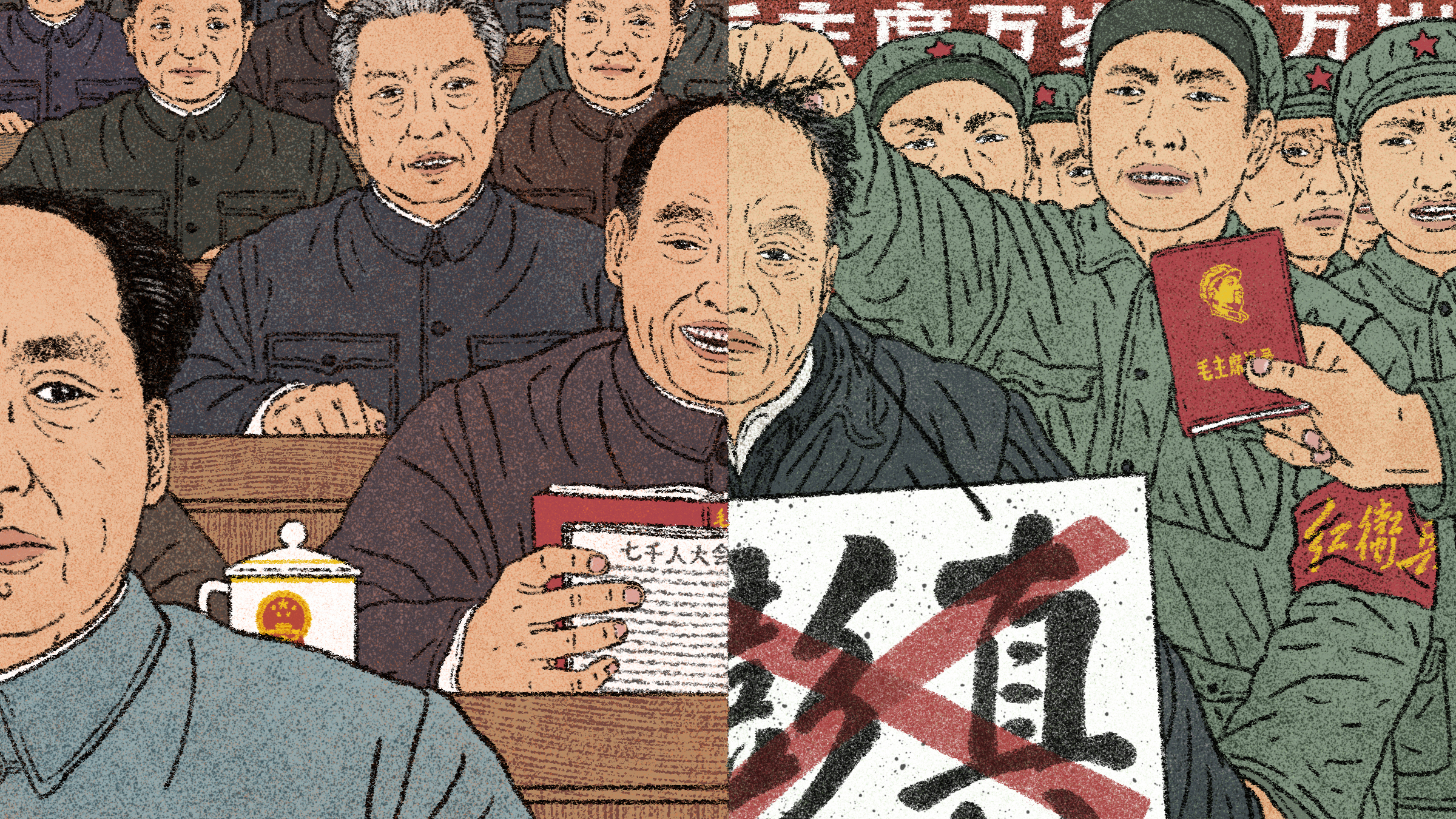
Reviewed: Peng Zhen: Mao Zedong’s “Close Comrade-in-Arms” (1941-1966)《彭真: 毛澤東的「親密戰友」1941-1966》by Yen-Lin Chung 鍾延麟 (Linking Publishing 聯經出版, December 2024, Taiwanese edition).
In the wake of the Great Leap Forward, a catastrophic economic campaign that led to the death of as many as 30 million people, more than 7,000 Chinese Communist Party (CCP) members met in Beijing to confer about the debacle. On January 18, 1962, Peng Zhen (彭真), a top Party official, addressed a session of the meeting’s report-drafting committee. His words would later be seen as one of the most forceful and significant criticisms that Chairman Mao Zedong ever faced:
Chairman Mao was not without any mistakes either. … Even if we don’t see Chairman Mao as like granite, he is still like sedimentary rock. Even if Chairman Mao’s prestige is not as high as Mount Everest, it’s still as high as Mount Tai. Even if you shovel off a few tons of dirt, it’s still just as high. In the Party there is now a tendency to not dare criticize or do self-criticisms, to believe that as soon as you do a self-criticism you’ll fall from power. If there is no self-criticism for even a tenth or a thousandth of Chairman Mao’s mistakes, then that would have a terrible influence on the Party. … From Chairman Mao to the lowest branch secretary, everyone has their own responsibility.
Most narratives of the origins of the Cultural Revolution, which launched in 1966, begin with Peng’s remarks at this so-called 7,000 Cadres Conference (七千人大会) of 1962. Here was Mao under attack, held to account by a mass gathering of central and regional officials. State President Liu Shaoqi, like Peng a former underground cadre in Nationalist-controlled “White areas,” also criticized the Great Leap Forward at this time. Was an anti-Mao faction, mobilized by the chairman’s incompetence and their own less radical policy inclinations, rallying to isolate the regime’s founder to pursue their own agenda? Did a beleaguered Mao launch the Cultural Revolution to win the Party back? This interpretation has shaped theorizing on the nature of authoritarian politics in China for decades, and it has affected how we interpret certain moments of the Xi Jinping era as well.
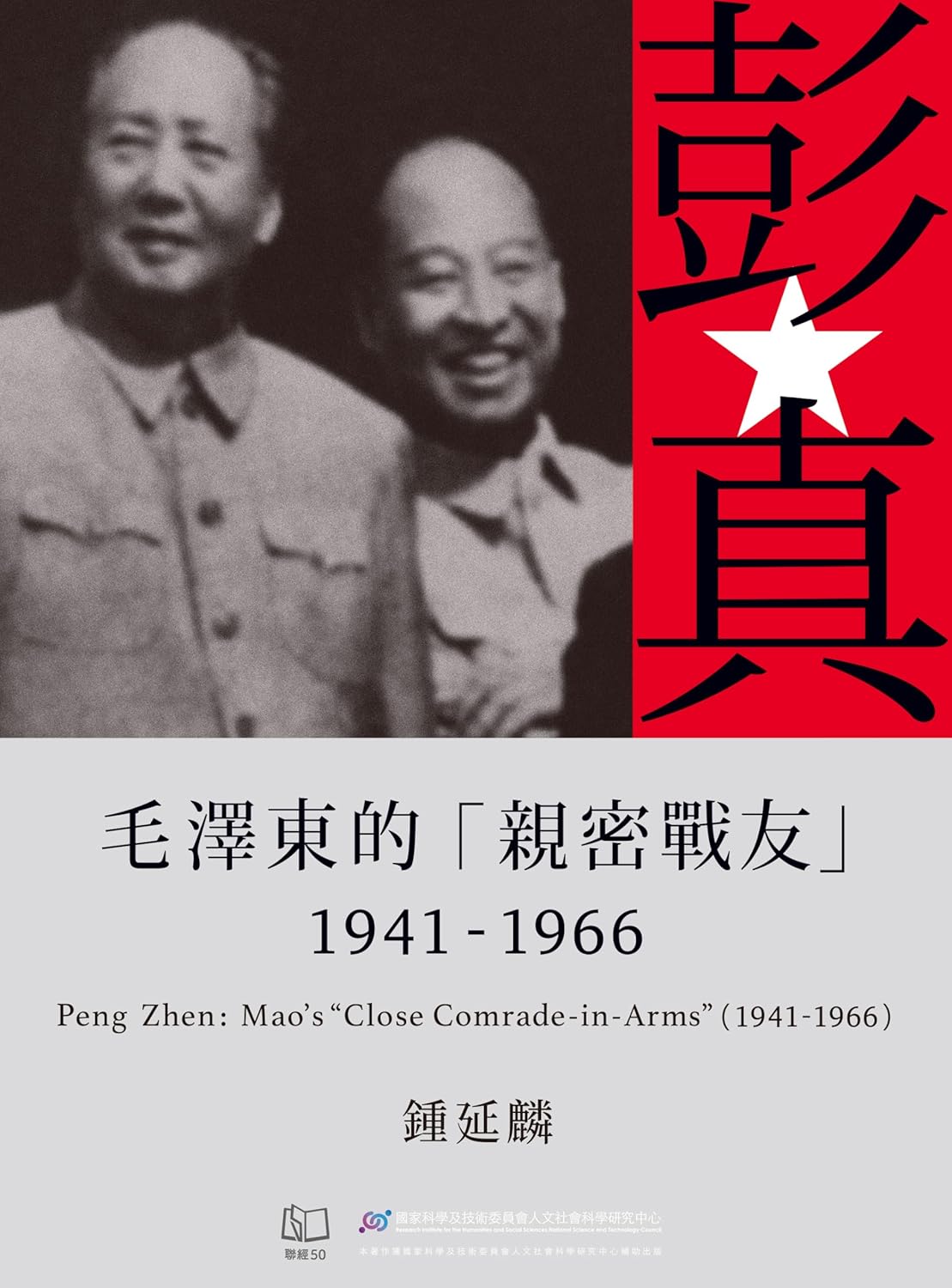
In a magisterial new biography of Peng Zhen, Peng Zhen: Mao Zedong’s “Close Comrade-in-Arms”, Taiwanese historian Yen-Lin Chung (鍾延麟) decisively puts to rest this dated historiography. He shows that the Cultural Revolution did not emerge from a dialectic of competing political forces, but from something much more surprising and tragic. At heart, his book explains the puzzle of why Peng Zhen — a man who long prided himself on being the first person to shout “Long Live Mao Zedong!”, intuiting and executing Mao’s wishes better than nearly anyone else — was nevertheless betrayed by Mao in 1966. It is the story of a man who helped destroy a legal system that might have protected him, and whose own belief in his intimacy with Mao led to self-destructive overconfidence.
Chung’s book is also a study in the interpretation and analysis of evidence. It reveals the power of biography, and the need to explain many things to understand one thing. Even as China becomes harder and harder to research, this book shows that much work can and should be done. Though a work of history, it challenges how we think about how the Party works today, and also has something to say about how scholars of China should treat each other.
Peng’s is the story of a man who helped destroy a legal system that might have protected him, and whose own belief in his intimacy with Mao led to self-destructive overconfidence.
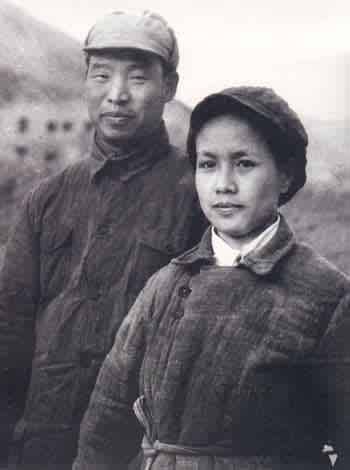
It is no surprise that Peng’s words in 1962 have been the focus of attention for so long — Peng was a major Party heavyweight. He first won Mao’s affection as a brutal enforcer during the 1942 Yan’an Rectification Movement, a political campaign that cemented Mao’s rule over the CCP before it came to power. At Mao’s behest, Peng publicly criticized senior figures including Zhou Enlai. Peng’s loyalty won him a position on the Politburo in 1945 — 10 years before Deng Xiaoping joined that august body. That stunning leap, however, soon led to a crushing defeat. Sent to Manchuria with other CCP leaders Lin Biao, Chen Yun and Gao Gang to fight the Nationalists in the Chinese Civil War that soon followed, Peng had a fateful falling out with his comrades.
Chung shows how the historical animosities that emerged from this dispute, long shrouded in mystery, would affect Chinese elite politics through to the 1990s. Mao wanted to immediately pursue an aggressive attack on the Nationalists in China’s northeast, but Lin, Chen and Gao quickly saw that such a tactic would be disastrous. Peng, who did not understand military affairs, ignored their objections under the impression he was doing what Mao wanted (although his opponents claimed the same). When the chairman decided that a more cautious approach was indeed necessary, Peng took the blame and was removed. It was a shattering blow to his career.
Peng knew how to win back some of his lost power: by executing Mao’s wishes better than anyone else, even when it earned him more enemies within the Party. In 1956, facing intense opposition from Lin Biao and Chen Yun, Peng was not given a seat on the newly formed Politburo Standing Committee. Yet Mao did allow Peng to attend its meetings, and, more importantly, assigned him to assist Deng Xiaoping with running the Secretariat, a powerful CCP body which had been created to manage the Party’s affairs. Since Deng was not detail-oriented and liked to spend as much time as possible playing cards, Peng, a workaholic night owl, essentially ran the Secretariat. When Mao, furious at Zhou Enlai’s State Council for not pursuing growth quickly enough, turned over control of the economy to the Secretariat around the beginning of the Great Leap Forward in 1958, Peng’s power and authority grew to an awesome level.
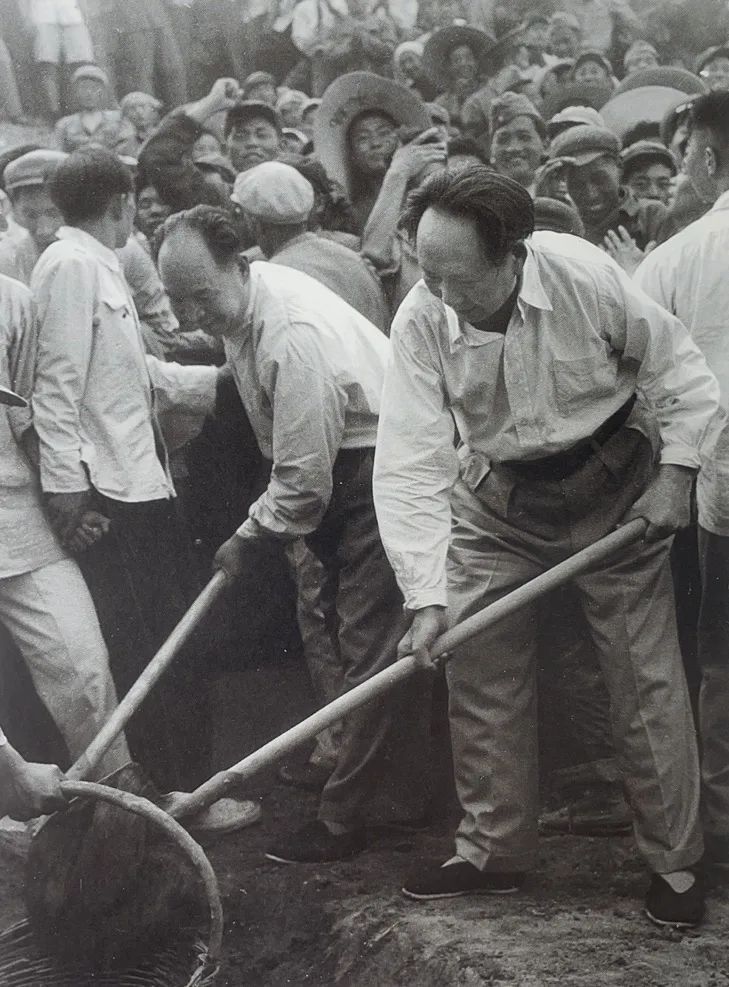
For someone like Peng to “attack” Mao naturally caused a furor. Apparently taking Peng’s words at face value, even Chen Boda, Mao’s secretary, immediately attacked Peng. But Bo Yibo, a vice premier at the time, would later praise Peng for his bravery. Gao Wenqian, a former Party historian who has published a worthy biography of Zhou Enlai outside mainland censorship, asserts that it was Liu Shaoqi who arranged for Peng to hold Mao responsible. If Party insiders and serious Chinese historians understood Peng’s behavior in this way, it is hard to blame Western historians for doing so as well: Peng’s actions fit a typical understanding of the political arena as a place where mistakes have consequences and everyone is a power-maximizer.
Yet a close read of even the very brief outline of Peng’s career provided here might already raise questions about what exactly he meant in January 1962. Here was someone whose rise to power was a direct result of serving as Mao’s hatchet man and helping to build Mao’s personality cult. Peng’s loyalty was only partly about hitching his ride to Mao’s wagon, however. Peng believed that Mao was a genius. In 1958, the Secretariat was put in charge of the Great Leap Forward instead of the State Council because Mao hoped that Deng and Peng would enthusiastically pursue higher production targets. Mao was right: Peng often wanted to move even faster than Mao. Peng was hardly a “rightist” — Party-speak for someone unwilling to act with zeal and daring. After mass starvation became too widespread to ignore, Peng tried to make Mao feel better by sending historical materials on famine during the imperial era, making it seem like such death was nothing new.
There is another reason to be suspicious about Peng’s criticism of Mao, one rooted in an understanding of the Leninist system as an organizational weapon. This was a nation in total crisis. Doubt was spreading among the Party as the extent of the famine’s horror became more and more obvious. Would the Party be held responsible by the Chinese people? Would enemies from abroad or hidden enemies from within the Party take action against it? What Lenin called the “Party of a new type” was built to handle precisely this kind of challenge. The Chinese Communist Party had a “core,” in the form of a top leader, to weather existential dangers. Why would anyone throw a gauntlet at Mao when circling the wagons was the surest path to salvation for the regime? And why would anyone risk irking the chairman at a moment when Mao might be most worried about someone exploiting the situation? Crucially, Peng’s statement was made in a particular context: Mao himself had summoned the 7,000 Cadres Conference.
While a savvy researcher may have questioned the conventional understanding of Peng’s remarks, there was no smoking gun. Chung, however, provides one. Shortly before the 7,000 Cadres Conference, Deng Xiaoping and Peng Zhen wrote a self-criticism for the Secretariat, taking full responsibility and affirming Mao’s “correct” leadership, and sent it to Mao. When Mao saw it, he was unhappy. On January 11, Deng told the Secretariat that Mao had replied:
Your report treats me like a saint. There are no saints. Everyone has deficiencies and makes mistakes. It’s just a question of how many. Do not fear to talk about my deficiencies.
Mao thought it was politically expedient to portray himself as someone willing to acknowledge errors, making him seem magnanimous and facilitating broader retrospection within the Party (the second goal was explicitly mentioned by Peng). In other words, Peng, ever the obedient servant, was doing what Mao wanted him to do. Moreover, Peng’s “criticisms” included not just Mao but the Party leadership as a collective — including Liu Shaoqi, who, unlike the chairman, was present at that session. It was an act of attempted loyalty to Mao, not dissent.
If Party insiders and serious Chinese historians understood Peng’s behavior in this way, it is hard to blame Western historians for doing so as well.
What happened next is also relevant context for interpreting Peng’s words. In the months after the 7,000 Cadres Conference, frontline deputies such as Liu Shaoqi, Deng Xiaoping and Chen Yun moved forcefully with a “rectification” of Party policy in the wake of the Great Leap Forward. Peng Zhen, however, was one of the few top leaders cautious about moving too quickly away from certain Great Leap policies. When, later that year, Mao decided that Liu, Deng and Chen had gone too far, Peng felt vindicated.
In the following years, Mao distanced himself from day-to-day decision-making and kept changing his mind. Meanwhile, sometimes Liu Shaoqi was too far to the “right” (by moving too quickly with rectification) and sometimes he was too far to the “left” (with a brutal attack on grassroots cadres in the 1964 Socialist Education Movement). Mao grew increasingly paranoid about his control over the Party, watching as Party officials swiftly enacted what Liu Shaoqi told them to do. Mao’s attitude was, of course, unfair to Liu: were Party members — who were instructed to always uphold Party discipline — supposed to oppose Liu when there was no evidence that he was not enacting the chairman’s will?
It was a nightmarish political environment for anyone to manage. The problem was not a weakened Mao, but an inability for his subordinates to read him. When figures such as Liu Shaoqi and Deng Xiaoping failed to interpret Mao’s wishes correctly, they tried to convince him of their loyalty and worked even harder to win back his affection. Yet Peng Zhen did not have that problem. He seemed to always be right, either by intuiting what Mao wanted or just guessing correctly. According to Chung, Deng later said that by the beginning of the Cultural Revolution, it was only Peng who got along easily with Mao.
That led to the overconfidence that destroyed Peng. One of the reasons Mao was so aloof during this period was that he was spending so much time thinking big thoughts about culture and ideology. He increasingly linked all his concerns about the Party’s direction to class struggle. Peng, convinced Mao was right, delighted the chairman with stubborn attacks on “revisionism” during meetings with Soviet officials in the early 1960s as the split between the two countries got worse. Yet Mao was not sure what to do about the problem. Peng understood that Mao supported criticism of cultural products like movies, plays and novels, yet opposed overly radical methods. On one occasion, Chung writes, Mao even told Peng that his wife Jiang Qing “was a little too leftist.”
Then Mao changed his mind. In 1965, he supported a vicious salvo from Shanghai intellectual Yao Wenyuan against Wu Han, a Beijing vice mayor who had written a play called Hai Rui Dismissed from Office, about an honest official in the Ming dynasty dismissed unfairly by a corrupt, paranoid emperor. Years earlier, Mao had in fact called for more to be written about this historic figure. Now, applauding Hai Rui was seen as an attempt to rehabilitate Peng Dehuai, the Minister of Defense who had been purged in 1959 for his critical remarks about the Great Leap Forward.
Since Peng Zhen was mayor of Beijing, the assault on Wu Han was a challenge to his own territory. Peng was also second-in-command at the Secretariat and fully in charge of the Cultural Revolution Small Group, an informal group that Mao had created in January 1965 to study trends in the cultural realm. The fact that Shanghai officials had not informed him before the attack on Wu Han was a breach of organizational discipline. Peng thought that he understood Mao better than the officials in Shanghai, so Peng criticized Shanghai’s CCP leadership and ignored their assault on Wu. Mao saw the problem very differently: Peng was not on board with the new radical approach! Furthermore, to launch the Cultural Revolution, Mao needed Defense Minister Lin Biao and the People’s Liberation Army. But Lin Biao hated Peng Zhen because of Peng’s defiance 20 years before on the hills of Manchuria.
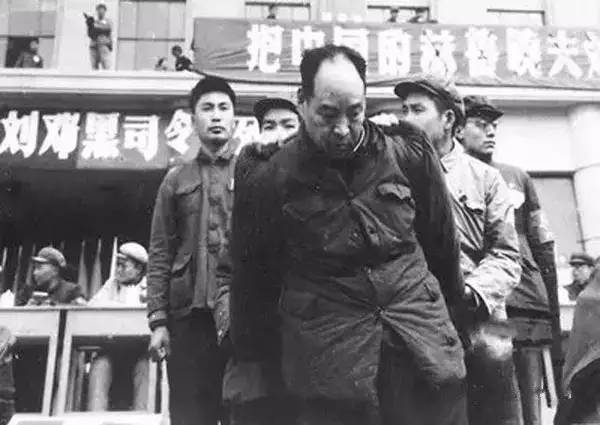
Peng was the target of attack in the enlarged Politburo session that heralded the beginning of the Cultural Revolution with the May 16 Notification of 1966. According to Chung, Peng mournfully shouted, “Who was the first person to yell long live?!” Even so, he still bent the knee. Years later, he said:
The May 16 Notification was about persecuting me. But I still raised my hand in support. At the time, I thought the Chairman was still right.
Peng blamed himself for not keeping up with his beloved idol. And the chairman wondered who could understand him if even his “closest comrade-in-arms,” a weighty appellation bestowed on Peng Zhen by Mao himself, could not. Soon, nearly the entire Party leadership — none of whom had stood up for Peng — would fall at Mao’s hands.
In any reasonable court of law, the accusations against Peng would have failed serious scrutiny. But, in an ironic twist, Peng’s bailiwick had also included legal affairs. One of the most interesting insights of Chung’s book is how seriously the Party considered a shift away from political campaigns to the rule of law during the 1950s. That goal was made explicit by Dong Biwu, head of the Supreme People’s Court, at the Eighth Party Congress in 1956. Peng himself was instrumental in the crushing of those dreams, opposing any policies that would infringe on the ability of Party leaders to exercise total control over investigation and punishment.
Between 1966 and 1975, Peng was subjected to more than 200 public denunciations and seven years of incarceration at the notorious Qincheng Prison in Beijing. Even after Peng was released in 1975, Zhou Enlai — likely still upset about Peng’s attacks on him at Yan’an — called him a traitor and proposed his expulsion from the Party.
It was a nightmarish political environment for anyone to manage. The problem was not a weakened Mao, but an inability for his subordinates to read him.
In the old truism: The system had devoured someone who helped to create it. Even the most casual reader of Chung’s book will come away struck by these enduring characteristics that marked the Party over time. At the same time, Chung reveals something just as important: the power of unintended consequences, iterative effects, contingency and opacity, as well as the unexpected, heavily contextual ways that continuities combine to produce specific outcomes. History simultaneously provides both a powerful theoretical lens for understanding the present and a cautionary tale about how much even Party insiders, let alone Western observers, are left guessing what is really happening.
The 7,000 Cadres Conference happens to be one of the most prominent historic case studies recently used to understand contemporary China. In May 2022, Premier Li Keqiang addressed 100,000 Party cadres from all over the country by video conference. China was beset by the stresses of Zero-Covid policy and a collapsing growth rate, and Li told his audience that they needed to focus on saving the economy. Was Li pursuing a different “political line” than Xi Jinping, who allegedly cared more about Zero-Covid? Had Xi’s political position been adversely affected by a resurgent Li, who was taking advantage of the crisis and Xi’s errors? The echoes of the old interpretation of what transpired at the 7,000 Cadres Conference are immediately obvious.
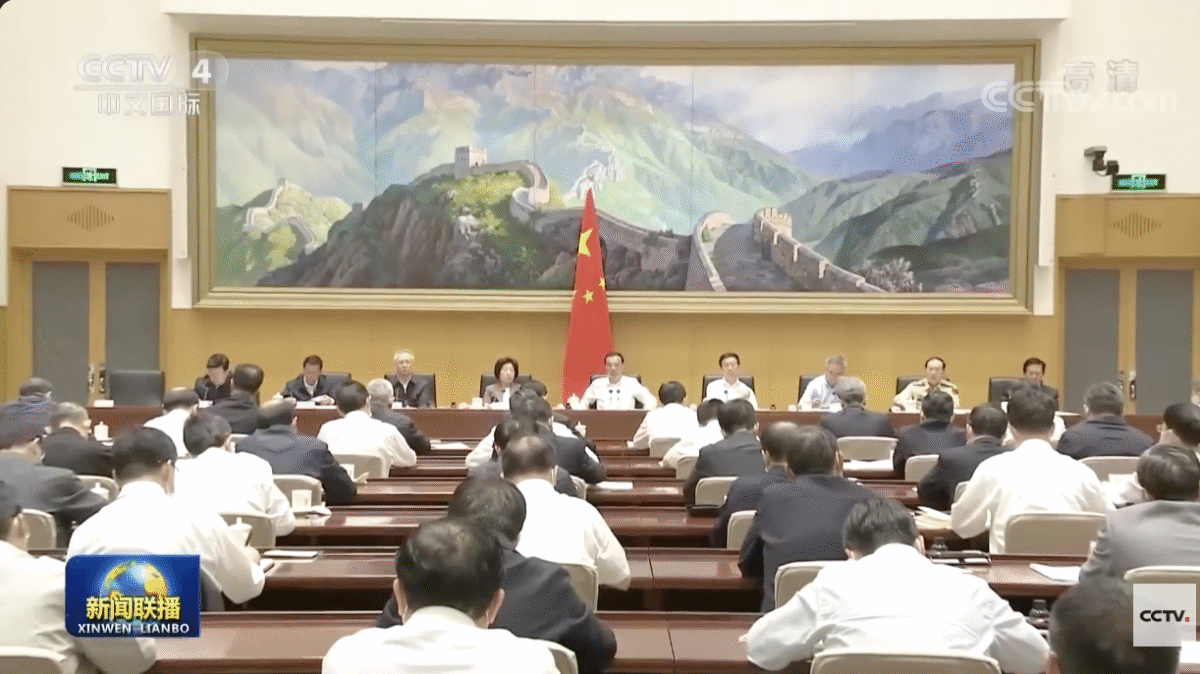
No one knows exactly how Li’s “100,000 Cadres Conference” should be understood. Whispers about what Li may or may not have been up to cannot simply be denied. Yet Chung’s revised historiography of the 7,000 Cadres Conference equips us with a set of competing hypotheses. Had Li been empowered by Xi to pursue a course correction, just like Mao had given the green light to his deputies in 1962? Would Li have dared to openly challenge Xi at such a delicate moment? An appreciation for what people got wrong about the 7,000 Cadres Conference and its aftermath raises other questions as well. Even if Li was doing what he thought Xi wanted, is that what Xi thought? And what did Xi make of all the chatter about Li pursuing his own agenda, even if it was not true that he was?
Xi’s recent purges of China’s top military leaders have also raised eyebrows. As Chung’s book shows so powerfully, who is purged and why, and the form of punishment, is an extraordinarily complicated choice that is usually mysterious to almost everyone except the top leader. Nevertheless, the book also demonstrates why it is not surprising when deputies with longstanding ties to the leader lose favor. To put it simply: Those individuals who are closest to the top need to be the most careful, yet those same people can put too much faith in their ties with the leader. Mao was shocked when someone as near to him as Peng did not intuit what he wanted.
In the old truism: The system had devoured someone who helped to create it.
Chung is not the first person to challenge the old historiography. He builds on the work of mainland Chinese scholars, but also older English-language books by Frederick Teiwes and Warren Sun, such as China’s Road to Disaster (1998). Chung’s work proves that Teiwes and Sun essentially got it right, an impressive feat given how much more evidence has come to light since their treatment of the Great Leap Forward and its fallout. Chung also adds invaluable new wrinkles to the story. But will anyone listen? Do the old, wrong tales of Chinese elite politics ever really go away?
Typically, they do not. Teiwes and Sun had already determined that Mao was not pushed aside at the 7,000 Cadres Conference. Their revisionist history The Tragedy of Lin Biao (1996), which depicted Lin Biao, the Minister of Defense, as reactive and loyal as opposed to hungry for power and willing to buck Mao, does not get the attention it deserves. Similarly, in Prestige, Manipulation and Coercion (2022), my research found evidence that Hua Guofeng, Mao’s initial successor, was on board with reform, consensus-oriented, popular and competent — yet this has not fully sunk into the public consciousness.
These are not simple asterisks to history. It matters that Hua did not face an elite revolt over ideological differences at the famous 1978 Third Plenum, when the Party shifted from class struggle to economic modernization as the overriding priority. It means that those analysts who hope the CCP Central Committee will force a course correction on Xi Jinping can find no historical antecedents.
Certainly, much of Party history remains open to interpretation. Scholars should debate one another, because for evidence to be meaningful it needs to be interpreted. However, it is precisely because facts do not speak for themselves that scholars need to keep an open mind. Individual speeches or anecdotes are meaningless if they are not properly contextualized.
The case of Peng Zhen at the 7,000 Cadres Conference is a powerful lesson about the interpretation of political language. Chung’s treatment shows just how many dynamics and pieces of evidence a scholar needs to master to correctly analyze one paragraph of text. In this case: Peng’s historical relationship with Mao; old Party animosities; Peng’s political style and ambitions; bureaucratic infighting; the politics of course correction in a leader-friendly system; and Deng’s communication to the Secretariat on January 11. Lionizing so-called “reformist” Party figures, or the judgments of the titans of China studies, puts the brakes on a research agenda that should be continuously evolving.
Blind respect is not what the great historians of modern China want, anyway. They never put their own prestige and status ahead of their curiosity. This is not surprising: they, better than anyone else, know how hard it is to get Party politics right, and it has been this drive for the truth that makes their research so enduring. As he describes in his acknowledgments, Chung talked about his book project with the late professor Roderick MacFarquhar in his Harvard office, a few years before MacFarquhar’s death in 2019. Chung’s conclusions about Peng differed from what MacFarquhar wrote in Mao’s Last Revolution (2006), his classic treatment of Chinese elite politics, but MacFarquhar was not offended. “You’re probably right,” he said.
To paraphrase Peng Zhen, even if “a few tons of dirt” are removed from the towering heights of MacFarquhar’s opus, he is still a Mount Everest — not because he got everything right, but because he really wanted to get it right, even if it meant empowering his mentees, or “deputies,” when they disagreed with him. ∎
Joseph Torigian is an academic and author focused on Chinese Party politics. He is a senior fellow at the Council on Foreign Relations, and an associate professor at the School of International Service at American University. Torigian is the author of Prestige, Manipulation, and Coercion (2022) and The Party’s Interests Come First (2025).