Sign up for our newsletter to be notified of new posts!
Join us on October 28, 6:30pm at Asia Society in New York, to hear Emily Feng talk about Our Hearts Burned For Home: Uyghur Militants in Syria’s Civil War, from which the below is excerpted, in conversation with journalist Michael Forsythe. Register now with code CBR15.
The Uyghur fighters rode into Damascus on tanks and armored vehicles, waving their guns and light blue East Turkestan nationalist flags. Syrians danced and sang in the streets. They threw candy at the Uyghurs. “People came up to us and kissed our faces,” said Anas, one of the fighters. “They made us feel we were beautiful, and it was only when I looked in the mirror later that I realized how dirty we were.”
Around him, his fellow fighters were weeping. Many of them had spent most of their adult lives fighting in the war. They had seen friends and family die. But they were not crying for their losses. All of them were thinking of home. “I thought, if only it were Hotan, or Aksu, or Urumqi,” said the Uyghur commander Choghtal. “Whenever I picked up my weapon, that was the thought that came to my mind,” he continued, his voice tight. That night, Choghtal gave an impromptu speech in Damascus, still dressed in his battle fatigues and carrying his rifle: “Here in Syria, in Homs, in Hama, in all the places, we fight for Allah. We will continue to do this in the cities of Ürümqi, Aksu, and Kashgar in the future. We will chase the Chinese infidels off of our lands.”
Some fighters cried tears of joy. They had begun the war as ultimate underdogs. For years, victory in Syria had seemed out of reach. Now nothing seemed impossible. “One day, maybe we will be able to liberate our own lands and enter our own capitals like this,” thought Abu Borhan, one of the commanders. One fighter was so overjoyed that when entering Latakia he began hallucinating. “The people in Latakia treated him with such respect and hospitality that he felt he had returned to his homeland,” Abu Borhan said. Unfortunately, the fighter suffered from an old heart condition. “Out of excitement, the heart disease came back, weakened his heart, and he passed away later in the hospital.”
None of the Uyghur fighters had ever seen Damascus before. The old regime had always controlled much of the city during the war, and the Uyghurs had always been stationed in Aleppo or Idlib. Nor had Damascenes ever seen Uyghurs before. Curious Syrians approached the Uyghurs, asking to take photographs with them and asking them where they were from. “The people did not know who we were, so they would start by speaking English with us,” Sayed, the trainer, said. The day after the Assads were whisked to Moscow, Sayed and some other Uyghur fighters stood guard outside and on the roof of Damascus’s central bank, to prevent looting. The next day, all the Uyghurs were called back to Idlib.
Less than two weeks earlier, the Uyghurs had been small-time players in Syria, just one of many groups within a scrappy, rebel coalition that had eked through more than a decade of war in part due to foreign support. Now, as loyal fighters, they would be part of the new government, which, under Ahmed Al-Sharaa’s aegis, would soon give them a real seat at the table. The changes were head-spinning, even a little frightening. All they had known in Syria was war. War had given them a purpose. Now that war was over. What were they to do next?
The Uyghurs had been small-time players in Syria, just one of many groups within a scrappy, rebel coalition.
With the regime gone, the Uyghurs were now contending with a public relations challenge: outside of Idlib, no one knew who they were. In general, the legions of muhajirin, or foreign fighters who fought in the civil war, were perceived with suspicion and even hostility across Syria. Choghtal made sure to travel to Latakia, traditionally a regime-held stronghold and the home to minorities like Christians and Alawites, in the first days following the Assad regime’s ousting. “Today is the first time we meet, but we have been here since 2012,” he told a crowd of Syrians inside a mosque. The Uyghurs were not here to cause trouble. “We are your brothers,” he reassured them. “We had to leave behind our families [in China] … but in Syria we found a [new] family.”
The Uyghurs also needed to make money. Peacetime brought with it new expenses, things like scholarships for Uyghur teenagers, who now qualified for university; new housing construction costs for growing families; and much needed salary increases for Uyghur-language teachers.
Peacetime brought new opportunities. Uyghur commanders like Abdulaziz and Choghtal now held senior positions within Syria’s reconstituted defense ministry. The Turkestan Islamic Party (TIP) had been dissolved and formally incorporated into the new national military as its 84th Brigade. This means their fighters’ salaries are directly paid from the defense ministry’s coffers, and they attend regular trainings alongside Syrian soldiers. Syria’s public schools and universities have fully reopened, and Uyghur students can enroll for free if there are open spots. There is serious discussion about granting them Syrian citizenship.
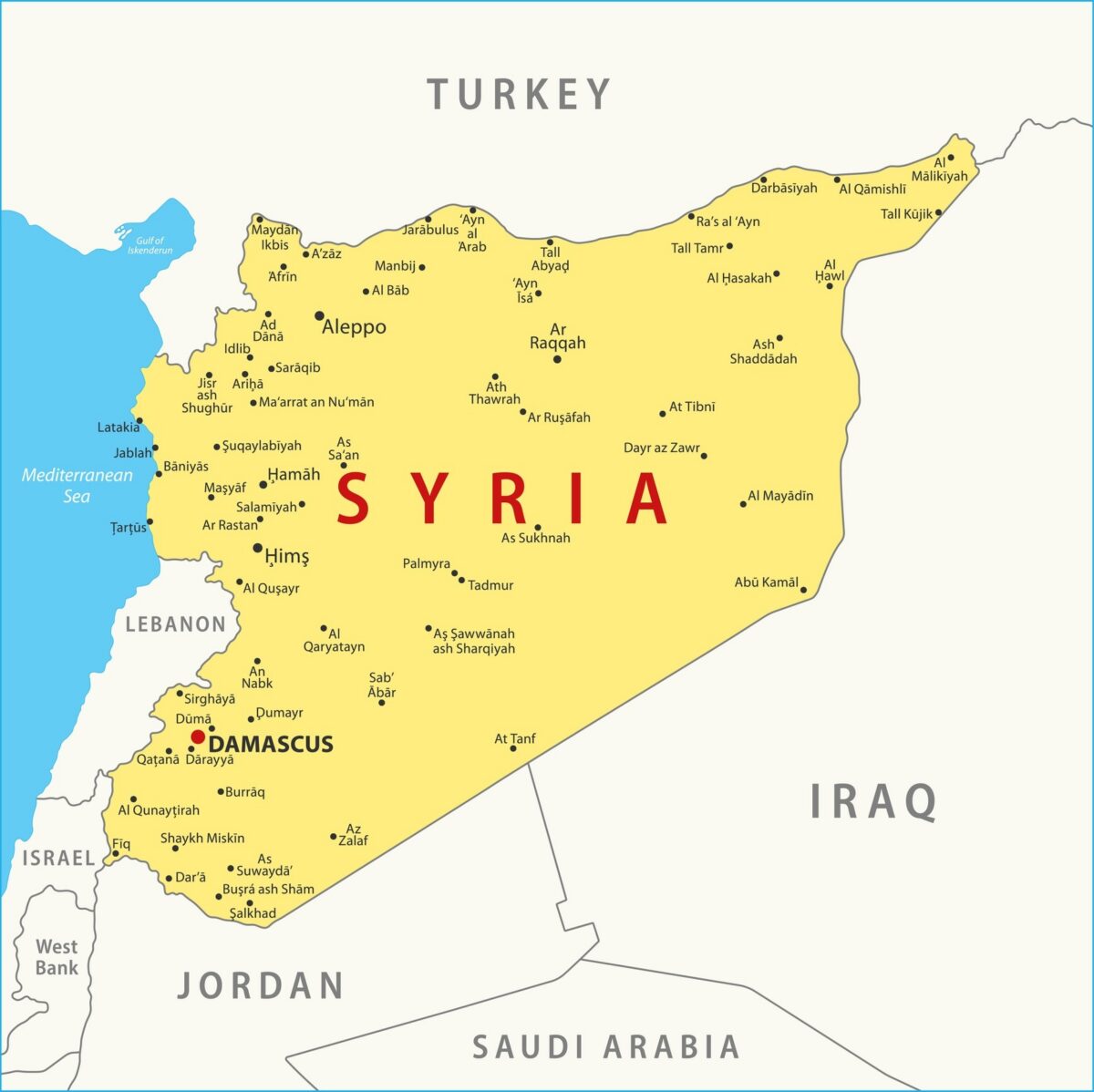
In Idlib, the Uyghurs had already integrated themselves into Syrian society as doctors, students and entrepreneurs. Now they have the opportunity to grow into the rest of the country and to build a resilient Uyghur community capable of shoring up political power and economic wealth. The prospect was exhilarating but also intimidating for the new immigrants. “I used to love going new places and meeting new people,” said Gul, a Uyghur doctor. “Now, I am not sure why, but I don’t want to. I just want to live my life quietly. Before, everything was done collectively. Now the jama’a, the community, is encouraging us to develop on our own, as individuals. It’s scary suddenly having all this freedom.”
Syria was meant to be a temporary refuge, a place from which the Uyghurs would learn all they could before fighting their way back home. “Even if it takes until the end of our lives, if only we could return to our homeland, liberate it, and live there — to be buried in the earth of our homeland — that is what we dream of,” Anas said.
But a comfortable inertia had settled across the community, which had grown substantially even during the harsh wartime years to about 20,000 people, Choghtal said. When I described the consternation I had heard from some quarters of the Uyghur community about how much longer they might stay in Syria, he sighed. “Whether to stay, and how long to stay has always been a big issue and will continue to be a big issue.” The question of whether to stay or to go had only taken on a greater urgency after the war ended. “When you live in a place for more than ten years, you start to understand it and to develop a connection to it,” said the commander Abdulhey.
Word of an established Uyghur community in Syria attracted more Uyghurs in the postwar period from nearby Turkey, where they still struggle to obtain residency and are increasingly at risk of deportation. Some, like Nurmemet, had previously fought in Syria. He had quit TIP and left Syria for Turkey in 2018, disillusioned with the civil war. In Istanbul, he opened a moderately successful restaurant and put his children through school. Half a year after the Assad regime had crumbled, however, he decided to move back to Syria with his family. He said he was heartened by the changes he had seen. “Before, TIP mainly focused on religious education but with their reforms, they now offer formal education for the Uyghur children,” he said.
He also completed a month-long refresher military training course and found it more standardized and advanced than previous trainings. In fact, he was so enthused that he had just spent the equivalent of $6,000 building a new house for his family in northern Syria. Nothing too fancy, he assured us, because you never knew when the call would come to attack China and they would have to leave it all behind.
Syria was meant to be a temporary refuge, a place from which the Uyghurs would learn all they could before fighting their way back home.
Many fighters fret that the longer they stay in Syria, the weaker their children’s connection to their homeland becomes. Some fighters had come to Syria with their families, but many more married for the first or second times, often to war widows. All of them had children in Syria, meaning a large minority of the current Uyghur diaspora in Syria have never been to Xinjiang. From an early age, their parents instill in them a generational mission to return to their homeland. “We do not want our children to wander in foreign lands all their lives,” Anas said. “Even if we ourselves cannot achieve it, then maybe one day our children can.”
For some Uyghurs brought to Syria as children, acclimatizing to a new country in the midst of war was disorienting. “I don’t want to live in Syria anymore,” said 18-year-old Qamerdan, who had been seven years old when he left Xinjiang, brought by his parents who wanted to join TIP. His father now ran the only Uyghur grocery store in the village of Darkoush. “It’s not our land. Our land is East Turkestan.” He aspired to be a surgeon one day, but despite having spent more than half his life in Syria, he barely spoke Arabic, a requirement in any Syrian medical academy. Bullying in Syrian schools was also common. “It was especially bad for kids who went to public schools,” said Osama, 22, who had come to Idlib when he was 12.
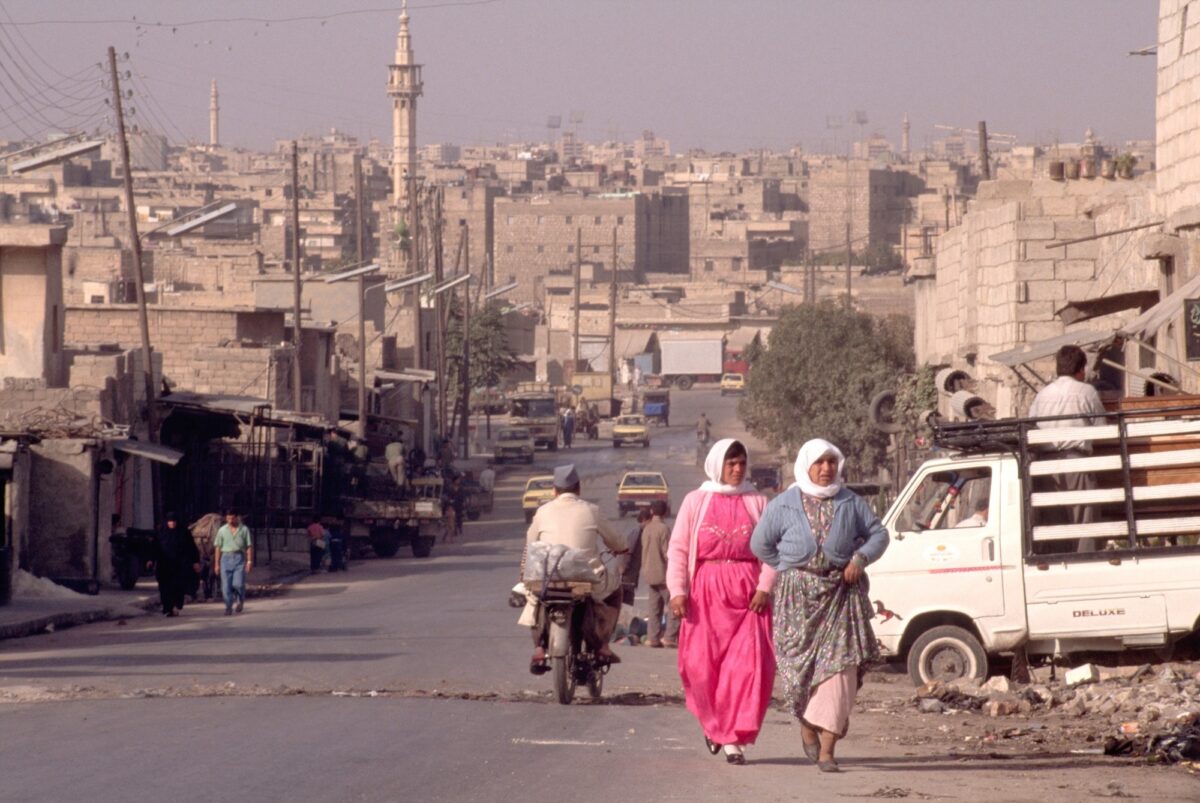
But for Uyghurs born in Syria, Syria was all they had known. Osama had been something of an exception. Born and raised in Canada before being brought to Syria, he felt more Syrian than Uyghur and had eagerly joined the Syrian military after the fall of the regime on December 8. “Syria has a new government. It’s a new country. And I believe by sitting with the Syrian army, I’ll be able to help more,” he said. Inspired by the use of drones in Ukraine, he had enrolled in a mechatronics course at Idlib University. He felt a calling to contribute to Syria: “Of course, Turkestan is important, but while we’re in Syria, Syria is just as important as Turkestan, so if we have to defend Syria, we will defend Syria.” As a child, Osama had listened, rapt, to his elders’ memories of Xinjiang, but the stories didn’t resonate with him the way they clearly did with older Uyghurs. He had none of the firsthand pain, he realized, that the other Uyghur fighters had brought with them to Syria.
During the war, the Uyghurs’ collective trauma had been a strength. It bonded them, and it gave them motivation to fight. The shared pain gave them a way to weather long periods of death, hunger, and cold — after all, nothing had been worse than life in China, they agreed, and any future war in China would be far more arduous than this.
But with the war over, some Uyghurs wonder how much they are defined by their trauma and perhaps limited by it. Bilal, a former hairdresser turned fighter, felt his children were more gregarious and more trusting than Uyghur children raised in Xinjiang. He noticed that two of his children, taught by Uyghur teachers, remained more introverted than his two younger children, who he had enrolled in Syrian schools. “Those Uyghur teachers’ experiences were all China, where they learned to live in fear. And in Syria, they still live with that fear and that trauma. They cannot liberate themselves. That fear causes people to become timid and shy, even when teaching,” a timidity that he believed they passed on to their students. He didn’t fault them for it: “They are carrying the burden of their pasts. It’s really hard to shed the past.” The way he had overcome his fears and reclaimed his dignity was to take up arms.
In Syria, he was torn with how much to burden his children with stories about his life in Xinjiang; about the two years of prison time he had spent in China; or about his arduous journey through Malaysia to get to Syria. They were happy, and he didn’t want to spoil their childhoods. Yet without making them understand his pain, he wondered whether Xinjiang would ever mean to them what it meant to him. When he asked his youngest daughter to point to where her home was on a map, she guilelessly pointed to Idlib. Bilal moved her hand to get her to point to the Silk Road city of Kashgar, in Xinjiang. She pointed back to Idlib.
“I think when I tell my children about East Turkestan, they think I’m just telling them made-up stories, as if they are not about real people or a real place,” fretted Abdulhey, the commander. Some of his older children seemed to grasp that his stories about his homeland were about an actual, physical place, “but I sense that they still did not really understand. I don’t think they feel the stories in the same way that I do. But we keep telling our stories, and maybe when they grow older, they will understand more.”
Ahmed, the logistics commander, had 15 children in total, 10 of them born during the decade he had spent in Syria. His oldest child is now 22 years old and served with him in the Syrian army in the 84th brigade’s special forces. His youngest child, a daughter, is less than a year old. Their lives will surely be very different, he said: “The biggest difference will be that the youngest one will be able to live in East Turkestan.”
Other Uyghurs are more resigned to the fact that their youngest generation seemed less attached to the idea of returning to Xinjiang. Zubeyr, a fighter from Ghulja, sees this in his children, who he sent to Arabic-language school. “They speak Arabic at school, but they speak Uyghur at home, and I try my best to keep their identities Uyghur. I hope this exile does not last very long, because they will become more and more Syrian.”
The Uyghurs hoped to attract people of all backgrounds and build a community in Syria that will one day rival the large diaspora in Istanbul, Turkey and Virginia.
Uyghur leaders in Syria maintain a careful balance. Publicly, their belief that they will soon return to Xinjiang is unassailable. To admit that doing so might be out of reach within their lifetimes is almost heresy. Yet most senior fighters now agreed that the idea of attacking China in the near future is foolhardy, even counterproductive, for preserving their Uyghur community.
Instead, they say they are waiting for Beijing to overextend itself, and during that moment of critical weakness, they would be ready to move in militarily. “I believe the Chinese Communist Party will collapse one day, just like I believe in the sun and the moon,” said Choghtal. It might come during a future Chinese invasion of Taiwan or conflict in the South China Sea, drawing China’s military resources away from the mainland. But until such an opportunity presents itself, they will have to make do in Syria.
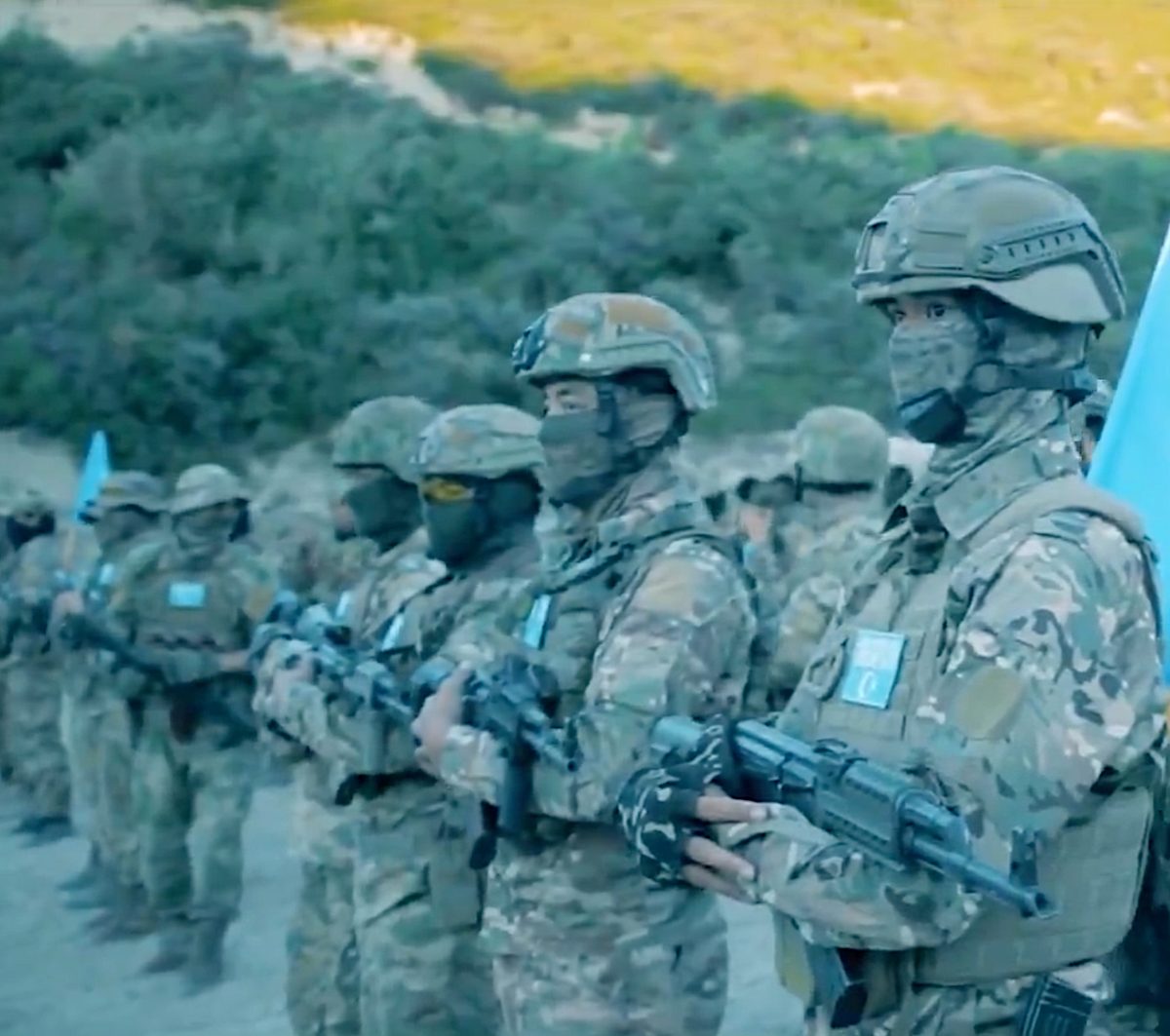
Violence in and of itself, the Uyghurs had concluded, was useless. “I learned that we cannot solve our problem with only force. We need to learn and to educate ourselves. We need to study science and military strategy. We need economic power, media power, and technological power,” said Ebu Muhemmet, a fighter who was now living on the outskirts of Aleppo. “I can be the one who fights with weapons, but we need more people behind us, to lobby politically and to work in the media.” During the war, more than a hundred people he personally knew had died. More than once, he had wished the Uyghurs had better medical facilities, more money, and dedicated political advisors to manage relations with other Syrian groups. “People who hold guns cannot solve any of these problems,” he concluded.
To strengthen themselves, the Uyghurs hoped to attract people of all backgrounds and build a community in Syria that will one day rival the large diaspora communities in Istanbul, Turkey and Virginia, in the United States. “We Uyghurs now have soldiers. We have intellectuals. We have businessmen. We have students. We have writers, like yourself,” Choghtal told me. “If everyone were to work towards a single goal and move toward it together, our freedom would become reality.” Their ambitions to rapidly acquire scientific, technological and diplomatic expertise is reminiscent of China’s own May Fourth movement, a series of student protests after World War I that argued for reforms to modernize the country in both knowledge and behavior. The Uyghurs, Choghtal argued, can learn a lot from China: “China didn’t do it one day, either. … Even though China is our enemy, we need to know what they are doing and understand how they did it.”
During the war, several young Uyghurs left to pursue higher education outside Syria. Now, the Uyghur community is organizing funds for students to be transported and housed in Idlib to attend Syrian universities. For the first time, Uyghur children can pursue real educational pathways outside of military training. “Yes, I want my children to be fighters, but that does not mean that they cannot also be a doctor or a professor,” said Mary, the wife of one of the Uyghur commanders. “My son, he wants to be a warplane pilot to bomb Beijing,” said Zulhaya, her green eyes unblinking. “My daughter said she wanted to be a doctor so that she can treat many people in war zones. You need so many female doctors.”
During the war, the Uyghurs had to effectively build a state, because in the near-total absence of state institutions they had to be self-reliant. “We first formed an interim government. Schools, administration — everything, even roads — we built and prepared all of it,” said Yasir, a fighter. Now, in peacetime, the Uyghurs in Syria remain a state within a state, capable of self-governance and intentionally at a remove from Damascus. Syria had given them a place to learn how to fight, but it also had become “a place where we learn, where we study politics, where we learn how to organize people.”
Uyghurs now operate their own schools, businesses, welfare services and internal security functions. Their self-sufficiency gave them the space to preserve their language and identity. Short of returning to Xinjiang, they say this is the best they can hope for. “Syria is like a different world. In East Turkestan, we were always oppressed and we couldn’t practice our culture. But here we are practicing our religion and culture freely. If I were still in East Turkestan, maybe I would have been arrested and imprisoned or even executed,” said Abu Zuheir, an elderly Uyghur. His son was killed fighting in the war, and his lined face creased even more when he thought about his death. “But I survived. I am alive, and I’m living a peaceful life here now.”
Perhaps unexpectedly for Sunni Muslim fighters, many of the Uyghur fighters are unabashedly admiring of the Jewish people. When charting their future, they frequently cite Zionism as the example they emulate. “We learned that before World War II — even before that — the state of Israel did not exist at all. Yet the Jewish people worked with their whole being until now; they strengthened themselves in every field — their people, their economists, everyone contributed. Whatever they needed to do, they did, restored their unity, and built a state. Their population was small; they had no homeland, no authority of their own. But through cooperation among themselves, they established their state. Compared to the Jewish people, we are more numerous. We even had our own independent state once. If we also strengthen ourselves from every side, like they did, I believe we could build a state — perhaps even stronger than the one they built,” Abu Mohammad said.
But the longer they stayed in Syria, the more their circumstances might come to resemble those of the Palestinian people, displaced and stateless — or even those of the Kurds, double-crossed and abandoned by outside powers intent on playing them against other regional entities. The Syrian Uyghurs have permanent residency documents that let them live long-term, buy property, study, and work in Syria, and a few have Turkish passports. But the vast majority are effectively stateless, having smuggled themselves out of China without documentation or having let their Chinese passports expire.
Still, the Uyghurs hold out hope. “Nobody imagined Syria would ever be liberated, but we have a free Syria right now,” Abdul Haq said. “Our day will come, just like the day of Syrian liberation came. Maybe it will be tomorrow, maybe even the day after tomorrow. But what can we do each day? All we can do is prepare so one day we can fight as a nation.” ∎
Adapted from Our Hearts Burned For Home: Uyghur Militants in Syria’s Civil War by Emily Feng, published by Columbia Global Reports. Copyright © 2026 by Emily Feng.
Would you like to respond to this article? We occasionally publish reader letters that engage in conversation with what we publish. To submit a letter, please email info[at]chinabooksreview.com, with 100-250 words in response, including your name and a one line bio.
Emily Feng is an award-winning international correspondent for NPR covering China, Taiwan and beyond. Previously a foreign correspondent for The Financial Times, she lived in Beijing from 2015 to 2022, and then Taiwan from 2022 to 2024. Recipient of the Daniel Schorr Journalism Prize and the Shorenstein Journalism Award, Feng is the author of Let Only Red Flowers Bloom (Crown, 2025). She lives in Washington D.C.