Sign up for our newsletter to be notified of new posts!

Endymion Wilkinson is a British sinologist and diplomat who was E.U. Ambassador to China and Mongolia from 1994 to 2001. He is author of the multi-edition Chinese History: A New Manual, an authoritative guide to Chinese culture and history from ancient China to 1976, as reviewed in these pages (the 7th edition is now also available as an e-book across online platforms, and on Pleco). In this latest installment of our occasional bookshelf column, we caught up with Wilkinson to ask about his collection of China-related books, and for a selection of five interesting titles from his shelf.
When did you start collecting books on China, and how did your shelf expand?
At Cambridge University, bored with lectures on the Tudor constitution, I was looking for something totally different when I came across Peking University’s Modern Chinese Reader (1958). A waiter at the local Chinese restaurant agreed to be my teacher, and in the summer of 1962 I took the first course in spoken Chinese offered in the UK. The instructor was a friend, Jonathan Mirsky (later China correspondent for The Times of London). I switched to Chinese studies, and after graduating in 1964 I took the Trans-Siberian Express to China.
Beijing bookstores in the two years before the Cultural Revolution were not overflowing with interesting reads (mostly the Chairman’s selected writings alongside works by Marx, Engels, Lenin, and Stalin in Chinese translation). My collection of Chinese books remained small while I was doing a PhD at Princeton and teaching at SOAS, University of London. It only started to grow when I quit academia and became an EU diplomat posted to Japan in the late 1970s, then EU ambassador to China in the 1990s, often with books gifted by Chinese scholar friends. Following retirement from the EU in 2001, I taught at Harvard, Peking University and Tsinghua, and maintained two collections — one in Beijing and one in Cambridge, MA.
Where is the collection now, and how do you organize it?
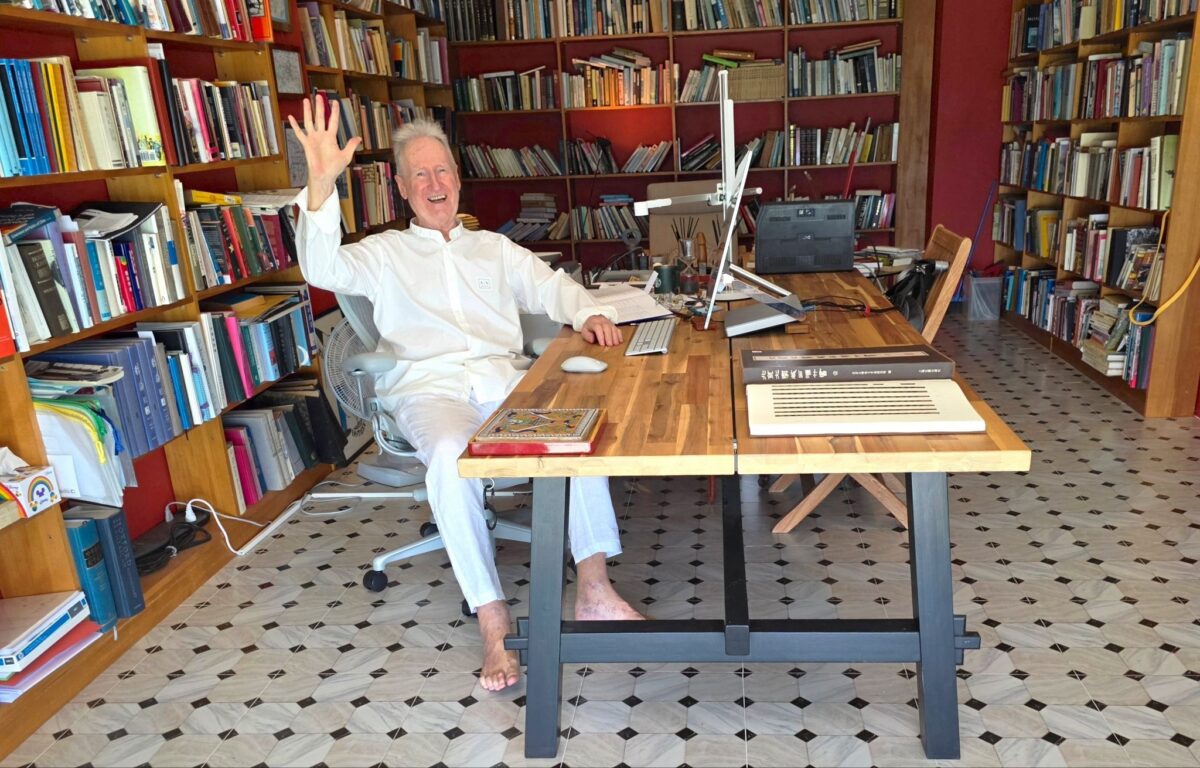
My collection of 4,500 books is now housed in a purpose-built library in a duplex penthouse 100 meters above the shoreline in a fishing village in Phetchaburi Province, Thailand. The library has floor-to-ceiling, teak wood shelving attached to three of the ox-blood red walls. The fourth side of the room is a glass wall facing east overlooking the sea. Its two panels slide open at dawn to allow the collection to breathe before the heat of the day. The floor has cool, white tiles.
In principle, chronology dictates the arrangement of the books — from prehistory to the present — but there are exceptions for subjects, such as law or war, that tend to cluster together. Another exception is the space behind my writing desk, where there are shelves for reference works and unread books. Also within reach is everything I need for the current project of my memoirs. I can usually find the book that I am looking for. But the system breaks down when research or writing intensifies, because books and journals pile up on the floor or on side tables instead of being reshelved in their proper place.
What else lives on your bookshelf?
It is the books that furnish the library. But there is a special section of framed maps of the subway systems that I know best — Paris, London and Tokyo. There are also portraits of my family on high shelves. While working I do not look at them, but their presence is comforting. To write, I sit facing the library door (set into the bookshelves on the opposite wall). The desk is a heavy, Thai acacia wood (jamjuree) trestle table which I struggle to keep clear except for an all-in-one computer with a high definition, 27-inch screen.
My collection of 4,500 books is now housed in a purpose-built library in a duplex penthouse 100 meters above the shoreline in a fishing village in Phetchaburi Province, Thailand.
Endymion Wilkinson
Endymion Wilkinson’s book picks
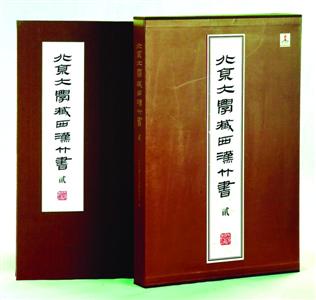
Peking University Western Han Bamboo Books, Vol. 1
北京大學藏西漢竹書, 苍颉篇
The excavation of early Chinese manuscripts written on bamboo, wood or silk (from the late Warring States to the Three Kingdoms) is upending previous accounts of early Chinese history. The Cang Jie Pian is one of them, developed as a primer to teach standardized forms of Chinese characters, and impart simple knowledge written in four-character rhyming lines. The bamboo scrolls at Peking University (dated to about 100 BCE) are the most complete version discovered to date. It provides the thrill of being able to read the ancestor of Chinese primers and dictionaries for the next 2,000 years. Like most printed publications of ancient Chinese manuscripts this edition provides everything you need to be able to read it: actual-size color photos of the 30cm long bamboo slips, supplemented with magnified and infrared images of unclear characters, as well as transcriptions, annotations and scholarly analysis.
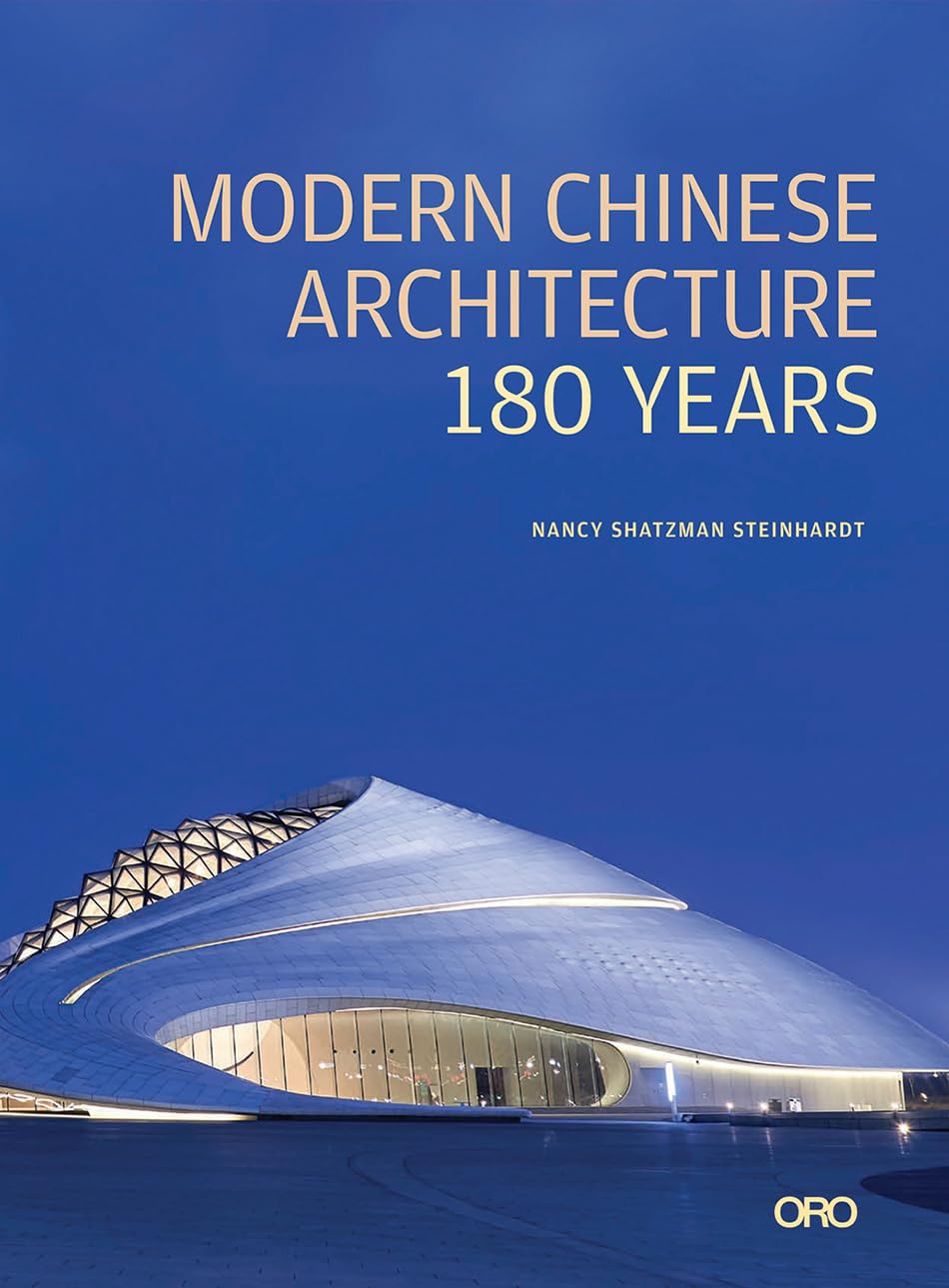
Modern Chinese Architecture
180 Years
Many Chinese architects in the 20th century set themselves the impossibly difficult task of retaining elements of traditional Chinese architectural style (mostly single-story dwellings using wood, stone, clay tiles and rammed earth) while designing multi-story buildings (built with reinforced concrete, steel and glass). One short-lived solution, in the 1940s and 50s, was to build Western-style buildings with the new materials, capped with Chinese tiles and eaves to decorate the roof (“matching a Western suit with a Chinese skullcap”). Things have moved rapidly since then as architects have experimented with subtle international styles or with no evocations of the past at all. The strength of this coffee-table book is the photographs of 212 Chinese buildings that Steinhardt features. I found in it new things about familiar buildings, and discovered architectural wonders that I never knew existed. But beware the historical background notes: elementary mistakes are as thick as the leaves of Vallombrosa.
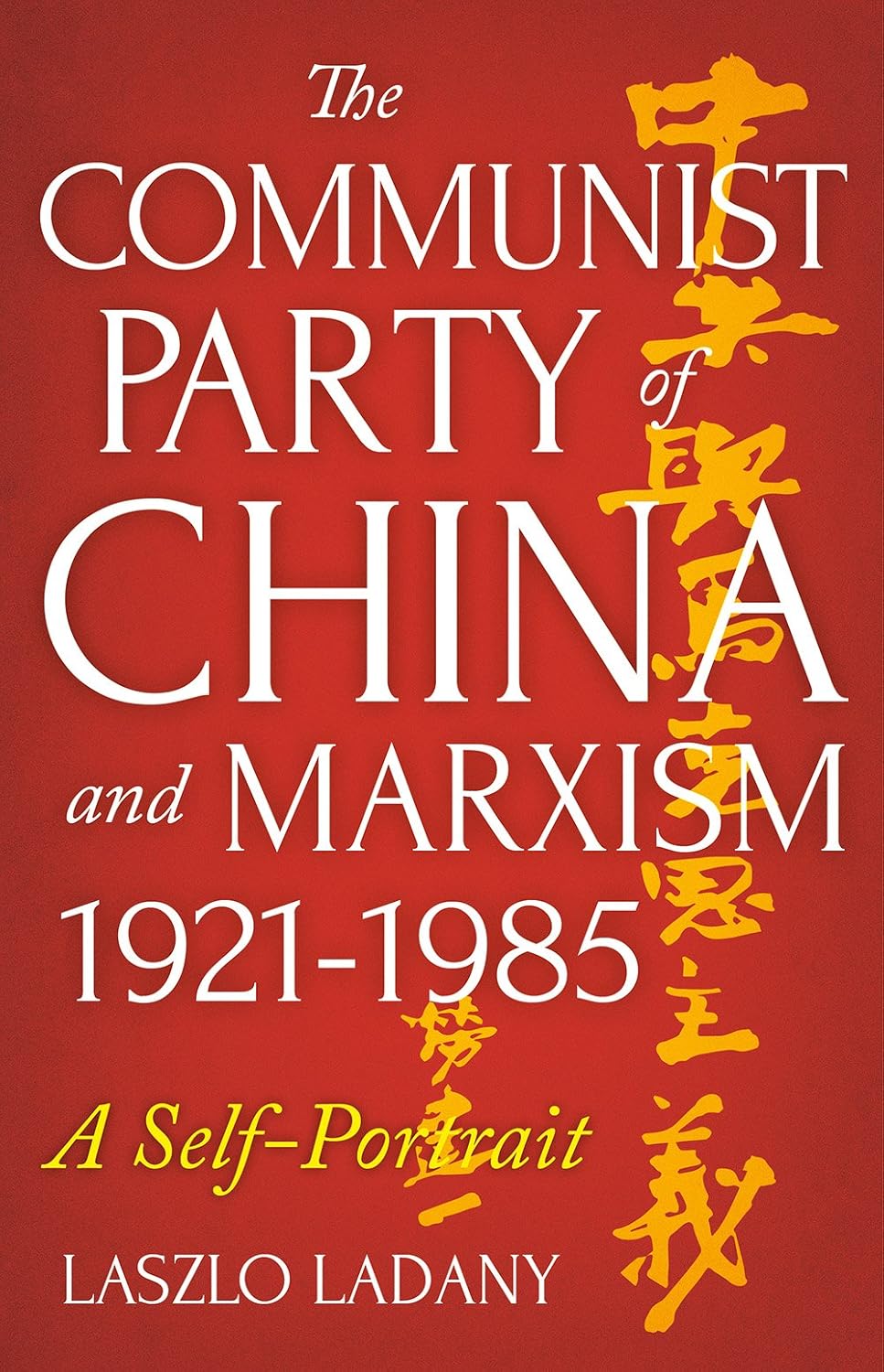
The Communist Party of China and Marxism, 1921-1985
A Self-Portrait
The author, a Hungarian-born Jesuit China-watcher, authored this book on his retirement from editing China News Analysis from 1953-1982, a newsletter that he based on his close reading of official PRC news and photos. Here is a typical Ladanyi quip: “Zhou Enlai was one of those men who never tell the truth and never tell a lie. For them there is no distinction between the two.” Simon Leys (as featured in my next pick) summed up Ladanyi’s work neatly in a 1990 NYRB essay that characterizes CCP dialectics as “the jolly art that enables the Supreme Leader never to make mistakes — for even if he did the wrong thing, he did it at the right time, which makes it right for him to have been wrong, whereas the Enemy, even if he did the right thing, did it at the wrong time, which makes it wrong for him to have been right.” Both the book and the review make fascinating reading on the Chinese Communist Party in its first 60 years.
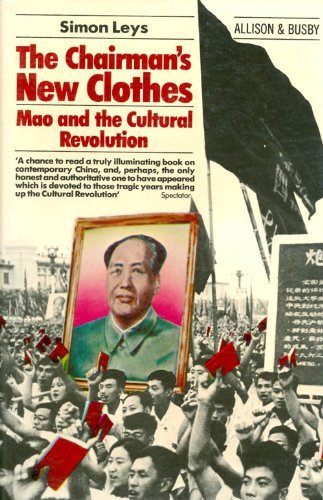
The Chairman’s New Clothes
Mao and the Cultural Revolution
Pierre Ryckmans adopted the pen name Simon Leys for this and subsequent books so as to avoid problems getting a China visa. Before making his name as a Sinologist, he worked in the Belgian consulate in Hong Kong monitoring the Chinese press during the Cultural Revolution. The Chairman’s New Clothes has the distinction of being the first work to declare that the Cultural Revolution was a chaotic power grab with “nothing revolutionary about it except the name, and nothing cultural about it except the initial tactical pretext.” It was exceedingly unpopular among Maoists, especially in Paris, and of course it was never published in China. Although French is his first language, Leys was famous for his mordant wit in English. Various of his essays were also reprinted in The Hall of Uselessness: Collected Essays (2011).
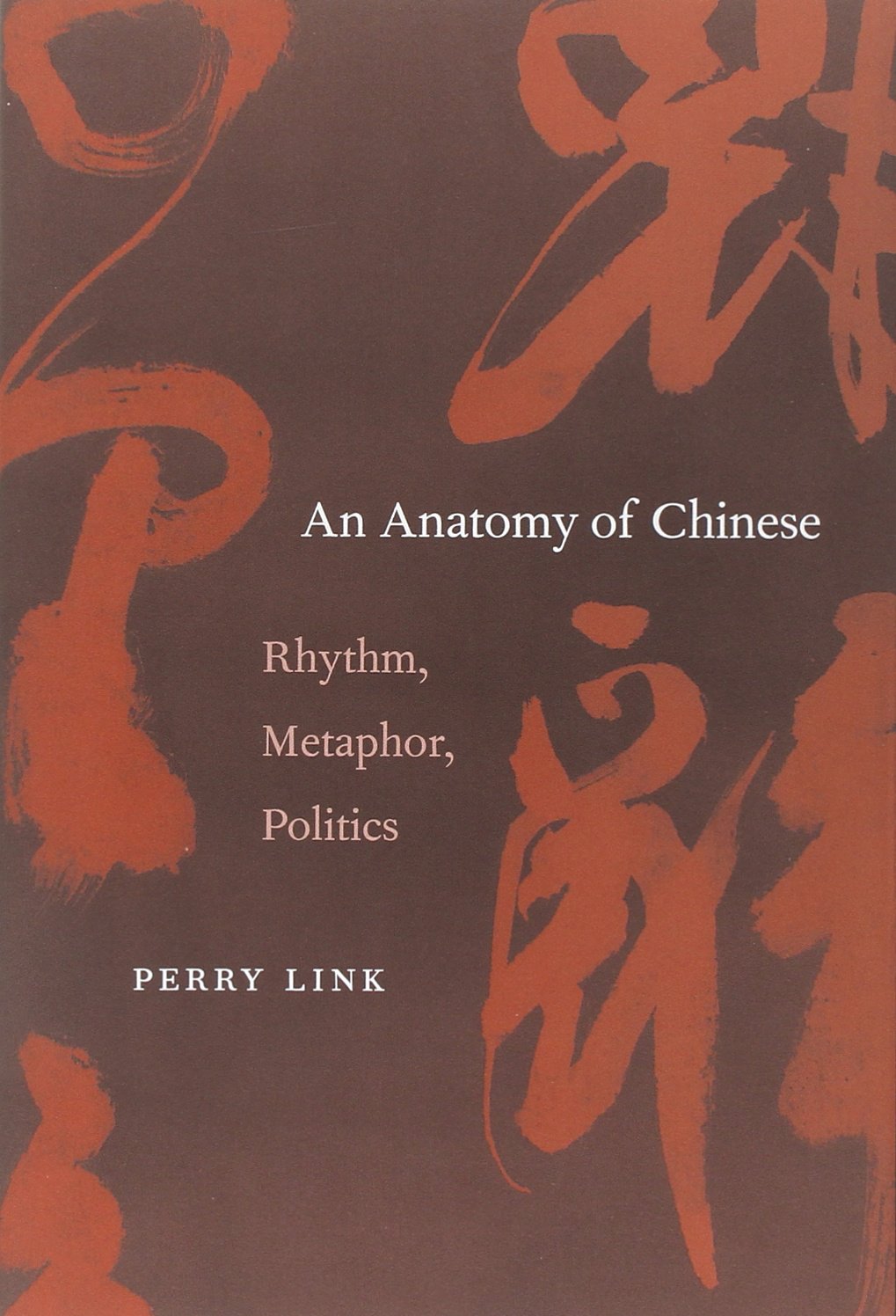
An Anatomy of Chinese
Rhythm, Metaphor, Politics
Modern Chinese is packed with neologisms, and there are plenty of specialized dictionaries to help keep up with them. In this analytic study of classical rhythms (such as wuyan 五言) in everyday speech and political slogans, Link goes a step further, describing the characteristics of political language before and after the rise of the internet. There is as yet no detailed study in any language of the development from the numbered sets of the Confucian, Daoist and Buddhist traditions (the Three Bonds, Four Greats and Three Treasures respectively) to the political slogans of today, also expressed in numbered sets (the Four Modernizations, Three Represents, Four Comprehensives). Yet Link is suggestive of it, and Yin Xiaolin (尹小林), while still a youthful artillery officer, has also compiled a dictionary of 2,760 classical Chinese mnemonic number sets, Hanyu Shumai Cidian 汉语数目词辞典 (Zhonghua Shudian, 1993). ∎