Sign up for our newsletter to be notified of new posts!
The novelist J. G. Ballard’s literary legacy is so impactful that his surname has become an adjective, connoting “dystopian modernity, bleak man-made landscapes and the psychological effects of technological, social or environmental developments.” But to understand where Ballard is coming from — where his imagery is rooted — we have to go back to his formative experiences as a boy in Shanghai in the 1930s and early 1940s, where he was also held with his family in an internment camp during World War II. The deeper we dig into Shanghai’s history, the more we truly appreciate the meaning of “Ballardian”.
Modernity, machinery, mass media, paranoia and a world collapsing into chaos were among Ballard’s leitmotifs as interpreter of England’s troubled zeitgeist of the 1960s and 70s. And he saw America as a vast, hallucinatory psychological landscape, a culture of desperate escapism and rampant consumerism that blinded it to its own pathologies and imperial ambitions. (So, no change.) But in his Shanghai childhood, J. G. Ballard emerged from China’s most Americanized city of skyscrapers, Buicks and ice cream parlors. This literary triumvirate of pre-war Shanghai, post-modern America and post-imperial England is the fulcrum of his work.
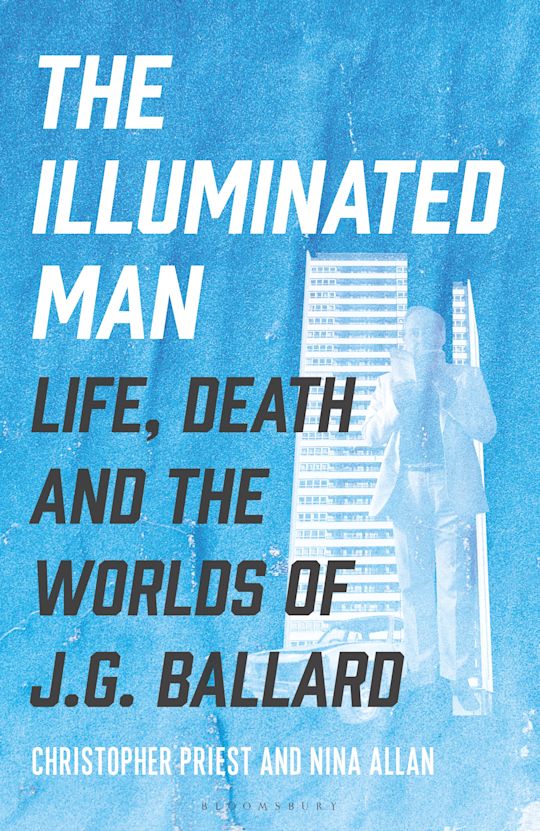
A major new biography of Ballard, The Illuminated Man (Bloomsbury Continuum, April 2026), by the speculative fiction writers Christopher Priest and Nina Allan, asks us to reassess his life and writing. Ballard’s own memoir, Miracles of Life: Shanghai to Shepperton (2008) was particularly interesting about his early life in China. But it was generally thought that a full biography was required to provide a fitting monument to one of the most powerful and original voices of 20th century English literature. As one review criticizes, “This is not it.” The book does contain most of the facts of Ballard’s Shanghai youth, but it misses some of the more esoteric impacts of the International Settlement and the Lunghua Civilian Internment Camp on Ballard’s later oeuvre.
J. G. Ballard’s writing is entirely suffused with Shanghai. Not just his novelized memoir Empire of the Sun (1984) and its lesser-read follow up The Kindness of Women (1991), but all his major works of fiction, most notably (when thinking of Shanghai) Concrete Island (1974), High-Rise (1975) and Running Wild (1998).
When researching my own book City of Devils (2018) about Shanghai’s “Solitary Island” (孤岛) period of 1937-1941, when it was neutral ground surrounded by Japanese-occupied territory, I explored Ballard’s old neighbourhood around Panyulu, Xinhualu and Dingxilu, just beyond the International Settlement and French Concession. As the city spiraled into war and chaos, that neighborhood would become Shanghai’s “Badlands,” which Ballard lived in and roamed on his bicycle as a boy. Discovering that he had witnessed key moments of that history only more deeply confirmed to me the lifetime impact of Shanghai on his psyche and writing.
It is his borderline experience of Shanghai’s deracinated edgelands that informed Ballard’s dystopian visions.
J. G. (James Graham) Ballard was born a Shanghailander in 1930, in the now bulldozed Shanghai General Hospital on the banks of Suzhou Creek. He was a child of ex-patriate English parents, lived in a mock-Tudor house — a lifestyle he described as “American” — and attended the ultra-British Cathedral School on Kiukiang Road (Jiujianglu). As he writes in Empire of the Sun (which repeatedly switches from fiction to memoir) he was left largely to his own devices to explore the city.

Yet being born in Shanghai only partially explains Ballard’s curious upbringing. Shanghai’s lesser-known histories reveal his childhood to be even more Ballardian than we might think. He didn’t actually grow up in either the International Settlement or the French Concession, but rather on Amherst Avenue (Xinhualu) in the semi-legitimate and liminal Western External Roads: the area the Chinese called huxi (沪西歹土), that became the Badlands of Shanghai in tabloid headlines. The Western Roads initially had been where the wealthy lived, just beyond the borders of the Settlements but with all the amenities and a decent level of security.
By the late 1930s, all that changed. The Japanese invaded the Chinese portions of Shanghai, and the Western Roads became a lawless no-man’s land. Gates went up where privileged foreigners once held garden parties, manned by armed guards to protect against the rising anarchy outside. Where once Shangailanders had lounged by the pool of the Columbia Country Club — an easy stroll from Ballard’s home — the club was now empty, its pool drained. Ballard’s own home had a pool that his parents never filled. And on his cycling trips around war-torn Shanghai, he encountered drained pool after drained pool. In Miracles of Life Ballard acknowledges the empty pools of Shanghai that struck him as “strangely significant in a way I have never fully grasped.”
These adolescent experiences are the genesis of some key Ballardian imagery, oft-repeated in his novels. In Empire of the Sun, the protagonist young Jim imagines Mr Maxted (an art deco architect who symbolizes carefree pre-war Shanghai) falling into an empty pool. Consider also the pool in High Rise, a story of dystopia and anarchy in one luxury block of suburban London flats:
The water had long since drained away, but the sloping floor was covered with the skulls, bones and dismembered limbs of dozens of corpses. Tangled together where they had been flung, they lay about like the tenants of a crowded beach visited by a sudden holocaust.
Or that in his post-apocalyptic novel Hello America (1981):
Each evening they left the road and spent the night in one of the hundreds of empty motels and country clubs along the route, resting around the drained swimming-pools that seemed to cover the entire continent.
It’s the Columbia Country Club and all those Western Roads pools, over and over again. And those skulls and bones and dismembered limbs? Perhaps Ballard was merging two images from his childhood: the desolate swimming pools of Shanghai, and what he later saw on the streets and fields nearby. In Empire of the Sun, Jim encounters a field of bones, having just stepped away from a party in a large house (the swimming pool drained of course) near the disused Hungjao Aerodrome. He reflects on being
struck by the contrast between the impersonal bodies of the newly dead, whom he saw every day in Shanghai, and these sun-warmed skeletons, every one an individual. The skulls intrigued him, with their squinting eye-sockets and quirky teeth.
Walking through chaos and surveying ruins is a Ballardian pastime. Ecological disasters, rampant dehumanizing urbanization, technology gone wrong — the myriad dystopias of modernity. All of it arguably stemmed from his walks and bike rides through Shanghai, then Asia’s modern city of neon shimmer, jazzy cacophonies, foreign movies, traffic jams, instant celebrity, passing trends and obsessive fads. This is all encapsulated in his science fiction novel The Drowned World (1962), where the present is the ruined past of the future: a desolated metropolis with abandoned skyscrapers patrolled by lurking carnivores — perhaps symbols of marauding Badlands gangsters or the invading Japanese.
Make no mistake: Ballard’s boyhood sanctuary of Amherst Avenue had become dangerous. Near those Mock-Tudor houses, warring gangs from gambling-dens fought each other on Avenue Haig (Huashanlu). The nearby Fa Hwa Village became a haven for drug dealers. A Danish neighbour of Ballard’s was shot in a gangster shoot-out crossfire on leaving his Amherst Avenue home to go to work at 10am. Sometimes the young J. G. — not quite in his teens, setting off on bicycle explorations through a besieged Western Roads district — would stumble across things he only half understood.
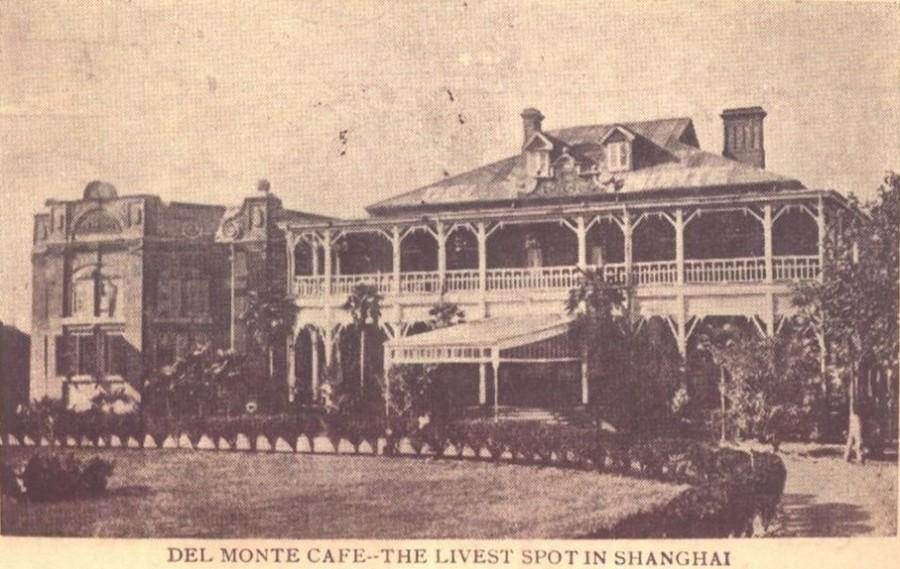
The veteran Shanghai correspondent Peter Finch, a regular visitor to the Del Monte, a famous club on the Western Roads, recalled its wide lawns, Versailles-inspired statuary and naphtha-lit driveway. In Empire of the Sun, Ballard recalls December 1941, when he ventured out alone from Amherst Avenue, past the desperate beggars and barbed-wire barricades, to an abandoned structure. He dared himself to walk through the gutted building, its floor “strewn with busted-up roulette tables and toppled smashed statues that could have come from the gardens of Versailles.” That imagery of the former luxury and indulgence of Shanghai, now abandoned and in ruins, would remain an enduring and repeated image in Ballard’s dystopian fiction. Now we know exactly where he was standing.
Abandoned buildings, privileged communities barricading themselves, human remains slowly succumbing to nature, those drained and cracked swimming pools. All these images from Ballard’s fiction came from his own youth in a war-torn, violence and crime-ridden Shanghai falling into anarchy. Ballard’s Shanghai was not the usual Shanghailander experience in the relative security of the International Settlement or French Concession, but the far less stable and more dangerous outer district of the Western Roads. Not wholly colonial Shanghai, nor fully part of Nationalist China. Largely unpoliced, descending into the chaos and debauchery of the Badlands as the territory’s legal vacuum filled with vice and murder. It is surely this borderline experience of Shanghai’s deracinated edgelands that informed Ballard’s later dystopian visions.
J. G. Ballard died in 2009, but has never ceased being relevant. The urban high-rise nightmare; the growth of McMansions and gated communities; floodplains destroying villages; raging conflagrations devastating California and Australia; a global pandemic; conspiracy theories and fake news run riot. The last decade has felt like a dystopian experience, at times. Ballard nailed it all in multiple science fiction novels, from The Drowned World to Atrocity Exhibition (1970). What would he have made of AI, TikTok and internet influencers? They’d have inspired some great dystopian scenarios, I imagine. But none of his visions of the future would have been imagined without his past in Shanghai, caught between worlds and eras in a truly Ballardian time. ∎
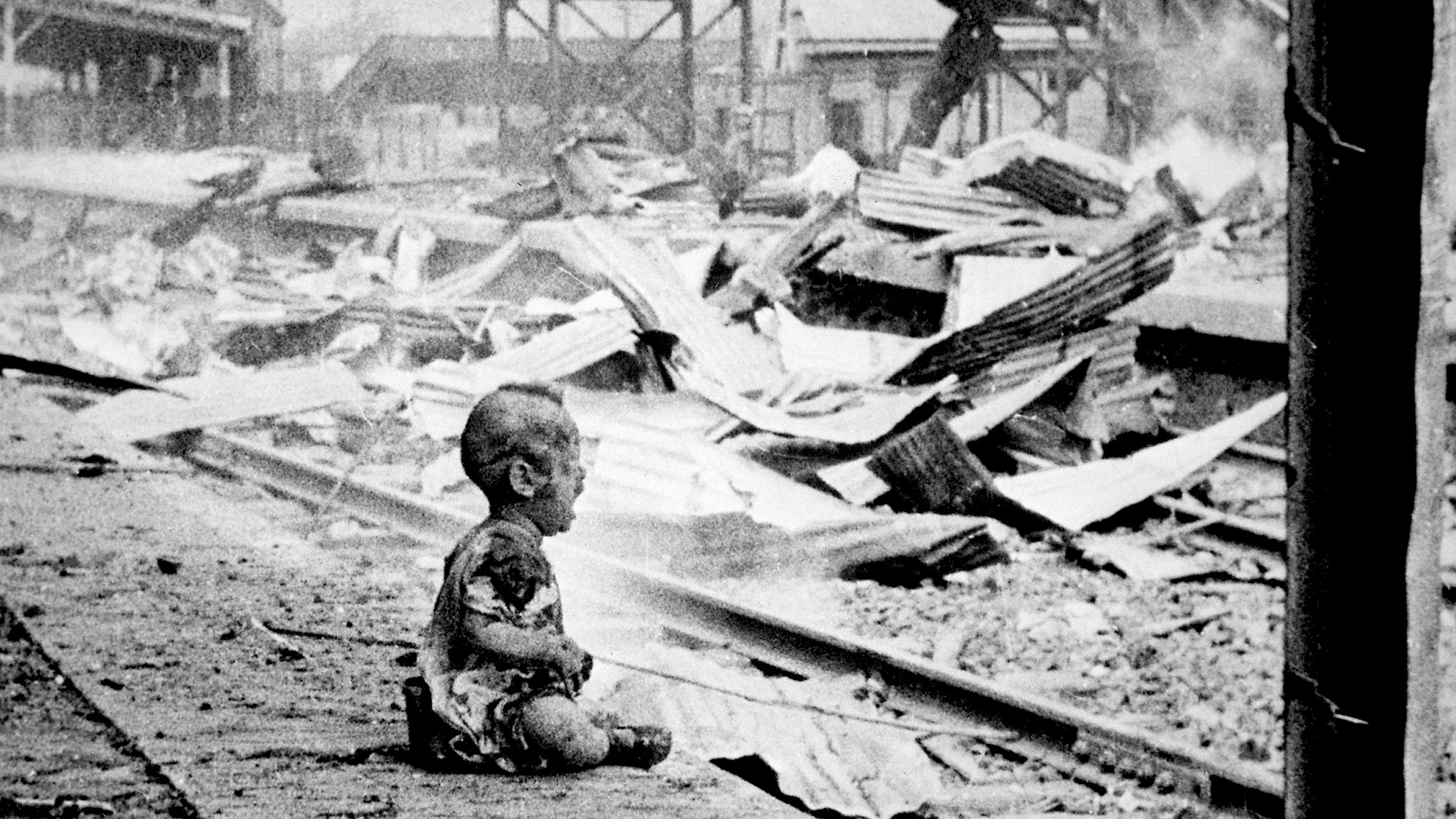
Header: “Bloody Saturday,” a famous photograph by H.S. Wong of a baby crying on a platform of Shanghai’s South Station after aerial bombing by Japanese forces, August 1937. (Wikicommons)
This is an expanded version of an article first posted at the LARB China Channel.

Paul French lived in Shanghai from the 1990s to 2014, running the market research publisher Access Asia. He is the author of Midnight in Peking (2012), a New York Times bestseller, City of Devils (2018) and other titles. His most recent book is Her Lotus Year (2024).