Sign up for our newsletter to be notified of new posts!
When Western leaders describe the geopolitical landscape that lies before them, they invariably reach for the language of upholding the liberal international order. Such framings suggest, somewhat hopefully, that the turmoil and disruptions of present times might recede if people start respecting the rules again. Their nightmare scenario is that Beijing will replace the Pax Americana with a Pax Sinica — an alternative China-led world order.
However, Chinese thinkers tend not to focus on laying out the details of what a China-led order might look like. Instead of seeing this as a time for grand designs, they expect the world to endure a protracted period of disorder, reflecting Xi Jinping’s “great changes unseen in a century” (百年未有之大变局). They direct their energies into finding ways for China to survive the turmoil and position itself for a new era in international relations. They are not interested in preserving the status quo, but they do not want to replace the United States as a global policeman either.
Some of the most interesting debates among Chinese thinkers are focused on fleshing out notions of struggle and survival in times of uncertainty, drawing on Chinese history and nationalist sentiment to do so. They have taken up the contours of official policy which aims for “holistic national security.” As part of this, they are seeking to build security from the ground up rather than rely on global institutions. And they have launched the idea of “democratizing the global order,” as part of an asymmetrical response to what they perceive as Washington’s system of international alliances.
This effort rests on the judgment that China has few formal allies, and so must turn weakness into strength — that Beijing must take advantage of the “great changes” that will arise from the disorder of the coming decades. Policymakers are already attempting to put Chinese thinkers’ ideas into practice by winning over countries, especially in the Global South, to their preferred way to conduct international relations.
Beijing’s new quest for power begins with sustaining the ability of the Chinese Communist Party (CCP) and its regime to survive and guide the nation; to shield the country from internal and external threats while maintaining prosperity; and to reshape the existing international order so that it is less defined by Western hegemony. China has spent billions on modernizing its military and preparing for different scenarios with Taiwan, but these issues are politically sensitive and less part of the academic and intellectual debates. First, we must tell the story of the evolving thinking about China as a power — both as an end goal in the international order, and as the means to achieve it.
Some of the most interesting debates among Chinese thinkers are focused on fleshing out notions of struggle and survival in times of uncertainty.
Xi Jinping’s famous phrase “great changes unseen in a century” arose from academia rather than a Party document. The first person to apply it in relation to China’s place in the modern global order was a political scientist called Yuan Peng (袁鹏), a former president of the China Institutes of Contemporary International Relations (CICIR), the top foreign policy think tank in China, which has close links to the Ministry of State Security. He originally used the phrase in various essays written after the global financial crisis in 2009, but it came to great prominence in the title of his book Changes Unseen in 400 Years: From Westphalia to a New World Order (Citic Press, 2016).
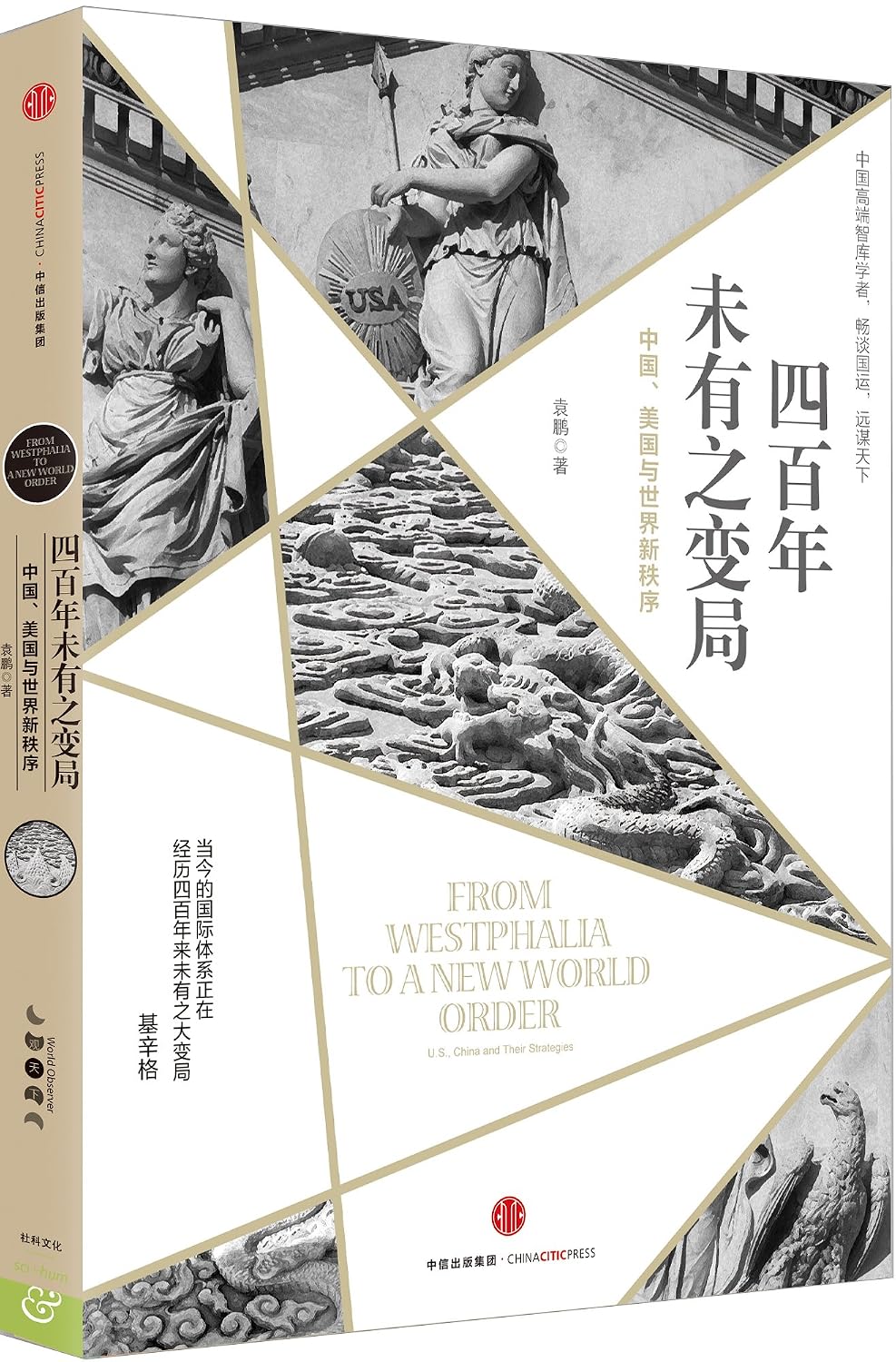
In the book, Yuan explains the title’s “400 years” as the time that passed since the Peace of Westphalia. He describes this as the first major event in the formation of the world order as it is known today, followed by the Treaty of Versailles and the Yalta Conference, each of which concluded world wars. Yuan goes on to argue the world is now going through a fourth historic change embodied by revolutions in global populations (Africa’s and Asia’s population growth), technology (a fourth industrial revolution), climate (an energy transition) and power (a shift from West to East). This forms the backdrop to the rivalry between China and the U.S. and the disorder that accompanies it. The outcome of this rivalry will be as consequential for international relations as its historic predecessors.
The wording of “great changes unseen in a century” also has strong echoes of the writings of intellectuals 150 years ago, when China experienced what it came to call the “century of humiliation” (百年国耻) — a period of imperial decline, wars, rebellions and semi-colonization by Western powers and Japan. In the aftermath of the Opium Wars, the late Qing statesman Li Hongzhang (李鸿章) described the threat to the Chinese empire from encroaching Western powers as “unprecedented changes unseen in millennia” (数千年未有之大变局).
The difference between then and now is that many Chinese thinkers believe both time and fortune are on China’s side — and that it is the U.S. which risks becoming the victim of global transformations. The phrase has re-emerged at a moment when the official rhetoric is replete with talk of American decline, how “the sun rises in the East and sets in the West” (太阳从东边升起,西边落下). In the past decade, the use of the phrase “great changes unseen in a century” has skyrocketed. In 2017, it was officially incorporated into CCP rhetoric by then state councilor Yang Jiechi (杨洁篪), when he declared it to be a guiding tenet of Xi Jinping Thought on Diplomacy. Soon afterwards, Xi himself endorsed the phrase in a speech to the 2018 Central Foreign Affairs Work Conference.

As is often the case, this official articulation quickly translated into heightened interest among China’s intellectuals catering to the system’s needs. Academics and think-tankers embarked on a mission to give more practical meaning to Xi’s guiding idea. Until 2017, very few articles containing the phrase “great changes unseen in a century” had been published in China, but about 3,700 such pieces appeared in 2018. By the end of 2022, around 40,000 articles featuring the phrase were available in the China Integrated Knowledge Resources System.
This flurry of activity sought to identify the drivers of these great changes, which include the geopolitical, technological, demographic and ecological shifts the world is going through. Analysts present these as harboring both opportunities and threats, with deep implications for the CCP’s domestic logic and international strategy. Much of the debate about global politics in Chinese academia thus centers on how China can prepare for this period of changes, and benefit from it.
The idea of survival crops up time and time again — that China should concentrate on holding its own and protecting itself during this period, rather than attempting to overthrow the entire international order. Alongside this, thinkers are developing a new idea of security which encapsulates all the vulnerabilities of living in a volatile and highly interdependent world. Finally, they argue for China to have an approach to global relationships that contains the power of the U.S. alliance system and turns China’s perceived weaknesses into strengths.
Much of the debate about global politics in Chinese academia centers on how China can prepare for this period of changes, and benefit from it.
In the late Qing period of the 19th century, when talk of “changes unseen” first emerged, another important Chinese narrative thread emerged — that of “struggle” (奋斗 or 斗争). This grew out of a Social Darwinist view of China’s development path which held that, like all living organisms, China had to “struggle for survival” (争存). If it failed to adapt to the unprecedented changes by reforming and modernizing, it would find itself subjugated.
A key figure in popularizing this Western idea in China was Yan Fu (严复), who became famous for translating into Chinese the works of Thomas Huxley, one of Darwin’s close associates (and the grandfather of Aldous Huxley). In the 1870s, Yan became one of the first Chinese students to enroll at the Royal Naval College in London. He introduced the concept of “survival of the fittest” (适者生存) to China, and argued that the Chinese people needed to struggle for social progress and the survival of their nation. Laying the foundations for today’s nationalist revival, he observed that “history records nothing but the endless struggle between established nations and rising powers.” This led not only to a new type of socio-political discourse rooted in the ideas of the necessity of fierce competition and adaptation, but also in an analytical framework of great power competition that remains popular to this day.
Today, scholars once again echo the ideas of struggle and survival. The struggle concept has changed over time. During the Maoist era, it was a purely Marxist-Leninist term, evoking the idea of “class struggle” (阶级斗争) between the reactionaries and the proletariat. At the height of the Cultural Revolution, political struggle became both a form of youth emancipation and the legitimizing force behind mass violence. In the reform and opening era, the idea of struggle became much more individualistic, a “personal struggle” (个人奋斗) in line with the dominant idea that “to get rich is glorious” (致富光荣), memorably, if apocryphally, credited to Deng Xiaoping. This was about the individual helping make China rich and powerful after the disastrous policies of Mao Zedong, which left the country vulnerable in the superpower competition of the late Cold War era. Today, the sense of struggling to survive as a sovereign state remains central to how Chinese political and intellectual elites view the world.

Prominent think-tanker Wang Honggang (王鸿刚), vice-president of CICIR, has written explicitly about the “survival of the fittest” and its application to China. He argues that “it is the essence of Chinese culture that the more frustrated you are, the stronger you are.” Wang links the nation’s struggle to the inevitable big power competition between China and the U.S. In a 2019 essay on this strategic competition, he predicted that the U.S. would have the upper hand in the short term, but that China would likely prevail over the longer term. China’s struggle with the U.S. may have forced the country out of what Wang calls its “comfort zone,” but, he believes, the intensification of this sense of crisis will help it “find the most powerful source of motivation for its great transformation.”
Wang’s work depicts a world of hostile forces that are attempting to undermine China’s rise. He advises the Chinese leadership to maintain a high degree of vigilance, warning that the great power competition “acts ruthlessly as a crisis clearing and survival of the fittest, contributing to the continuous evolution of the world system.” In other words, the essential battleground in the new competition is not just the international sphere, but also in the ability of every great power to develop the resilience to cope with great changes. Wang says that the foundation of dealing with great power competition is to do a good job at home. He thinks that only by “making proper investments in [itself]” (by undertaking “economic, political, social and civilisational” reforms) can China best navigate international competition.
Another scholar, speaking off the record, went even further than Wang in showing the extent to which security is seen in today’s China in defensive terms. He contrasted the current period with the Cold War to show how insecure all the great powers have become. During the Cold War, he argued, outward-looking superpowers with expansive ideologies competed to define the future of the planet. But today’s competition is taking place between two troubled, nostalgic, inward-looking giants, whose foreign policy is driven more by their domestic (identity) politics and security concerns than any grand vision.
The turbulence of Chinese history over many centuries means security has never been far from the minds of Chinese leaders and thinkers. But the way they think about this has fundamentally changed over the last 15 years — a period where spending on internal security has outstripped spending on national defense. As hundreds of millions of Chinese people escaped from poverty and China became the second-largest economy globally, the guiding concept for navigating the country’s place in the world has moved from one focused on economic growth to one fixated with the idea of maintaining security, even at a significant cost.
Under Xi Jinping, China has entered the “security first” era of its development. As so often with the ideas ecosystem of modern China, scholars have responded to the central policy ambition declared by the Chinese leadership. In 2014, many years before Western security establishments became obsessed with the security implications of data, energy and food, Xi set out to broaden the definition of security with his concept of “holistic national security” (总体国家安全). In parallel with debates about Chinese solutions on economics, he talked of the need to develop “national security with Chinese characteristics.” This was to be defined by a holistic approach because the threats ranged against China are themselves now so diverse.
In his 2014 speech, Xi said:
The national security issues facing China encompass far more subjects, extend over a greater range, and cover a longer time scale than at any time in the country’s history. Internally and externally, the factors at play are more complex than ever before.
Xi’s goal was to develop an approach that integrated traditional and non-traditional ideas of security, including political, military, economic, cultural, social, science and technology, information, ecological, resource, nuclear and more. He was keen to develop a new notion of security that starts not only with guns, planes and missiles but with the capacity of governments to withstand challenges from information warfare and cyber-attacks to technology controls and economic decoupling.
As a result, new academic and policy institutions have sprung up to make sense of this. Perhaps the most important is the new Research Center for a Holistic Approach to National Security (or the National Security Centre), which was inaugurated in April 2021. Based in CICIR, with Yuan Peng as secretary general, the Center’s mission was to give life to this notion of “holistic national security.”
The sense of struggling to survive as a sovereign state remains central to how Chinese political and intellectual elites view the world.
By far the biggest “unseen change” affecting the world today is a shift in the global balance of power — and this is also the biggest challenge to Chinese security. From the Chinese perspective, the biggest source of instability is the way that the U.S. is reshaping global order to counter its relative decline. Many Chinese scholars I interviewed believe that the U.S. has moved from a mix of engagement and containment to a stance of total competition with China. Indeed, it is not putting too fine a point on it to say the Chinese intellectual and political class is obsessed with Washington and its response to Beijing’s challenge to its hegemony.
Many Chinese intellectuals are convinced that the U.S. is intentionally polarizing the world as a way of keeping its edge over China. They especially focus on what they perceive as its ability to mobilise allies in pursuit of this goal. And they think that the U.S. — faced with the prospect that China might overtake it in economic terms — is trying to reframe the contest into one between democracies against autocracies: a contest pitting China against an America that is aligned with Australia, Europe, India, Japan and South Korea. In the minds of Chinese intellectuals, America’s inspiration for this strategy is the Cold War.
Chinese thinkers have been considering how to respond to this. A decade ago there was an active debate in Beijing about whether China should abandon its policy of “non-alignment” and seek to develop formal alliances. But with only North Korea as a formal ally, Beijing knows it cannot hope to win a battle of alliances against Washington. So it is trying to counter this situation by adopting an asymmetrical approach towards its opponent. This involves doubling down on “non-alignment” by not forging Chinese alliances, but making a big show of offering to help countries protect their sovereignty and avoid being forced to join blocs or accept diktats from great powers. Here, China uses its links with developing countries that are particularly sensitive about these issues. It wants to pose as the champion of a new movement towards “non-alignment” or “multi-alignment.”
Meanwhile, Beijing seeks to portray U.S. attempts to restore the power and international appeal of liberal democracy as a display of “Cold War mentality” (冷战思维). In countless speeches made by Xi, his officials and state-affiliated media, they argue that this mindset threatens to destroy the current reality of globalization and interdependence, and must be rejected.
In support of this, Chinese thinkers increasingly depict global politics as a contest between two ideas of democracy. They argue that the U.S. focuses on the internal governance of countries and tries to unite liberal democracies against autocracies such as China and Russia. They contrast this with China, which they say focuses on the distribution of power in international governance, which is still too strongly defined by the hegemony of Western ideas. China’s offer is to “democratize international relations” (国际关系民主化) by creating a space for non-Western countries to have more of a voice. In their telling, Beijing’s answer to America’s “Cold War” against China should be to ramp up engagement with third countries, especially in the Global South and in China’s own neighborhood.
Rather than suggesting that third countries should take China’s side, Chinese scholars often talk about how China can offer to protect their sovereignty and meet their desires for multi-alignment, echoing the tradition of the Non-Aligned Movement as a “third way” for countries situated between the main power blocs. This position is the basis of what some Chinese scholars call “conquering the two-camp imagination” — an attempt to go beyond Cold War-style dividing lines. One Chinese foreign policy strategist told me that China is in a strong position to contend in this face-off:
The US isn’t declining, but it is only good at talking to Western countries. The big difference between now and the Cold War is that then the West was very effective at mobilizing developing countries against the USSR in the Middle East, South-East Asia and Africa.
Chinese foreign policy thinkers such as Chu Shulong (楚树龙), a scholar at Tsinghua University, have conducted research that supports this overall framing. Chu has argued for some time that Chinese strategists should not underestimate the power of the U.S. and assume that it will decline. He nevertheless maintains that recent events show Washington is losing sway in many parts of the world. In an article published in 2022, he claimed that the Western bloc contains as few as 33 countries and that 167 countries are refusing to be drawn into Western circles. He attributes this to these states’ negative memories of the Cold War, a period when their sovereignty and identity were squeezed.
The CCP has used this broad underpinning to communicate the idea that countries should treat each other as equals whatever their political differences. This is also known as “equal-footing diplomacy.” To put this “democratization of international relations” into practice, Beijing has set up a number of initiatives, which might be termed “non-alignment 2.0.” These initiatives include well-established frameworks such as the Belt and Road Initiative (BRI), the Shanghai Cooperation Organisation (SCO) and the BRICS group, alongside some newer formations. But the most recent attempts to create inclusive new international groupings are the “3Gs”: the Global Development Initiative (GDI), Global Security Initiative (GSI) and Global Civilization Initiative (GCI). These are all pet projects of Xi Jinping that grew out of the lessons learned from his previous endeavours, such as the resistance met by the BRI. The 3Gs are deliberately loose endeavours that bring together mutually reinforcing dimensions of Beijing’s current international strategy: development, security and normativity.
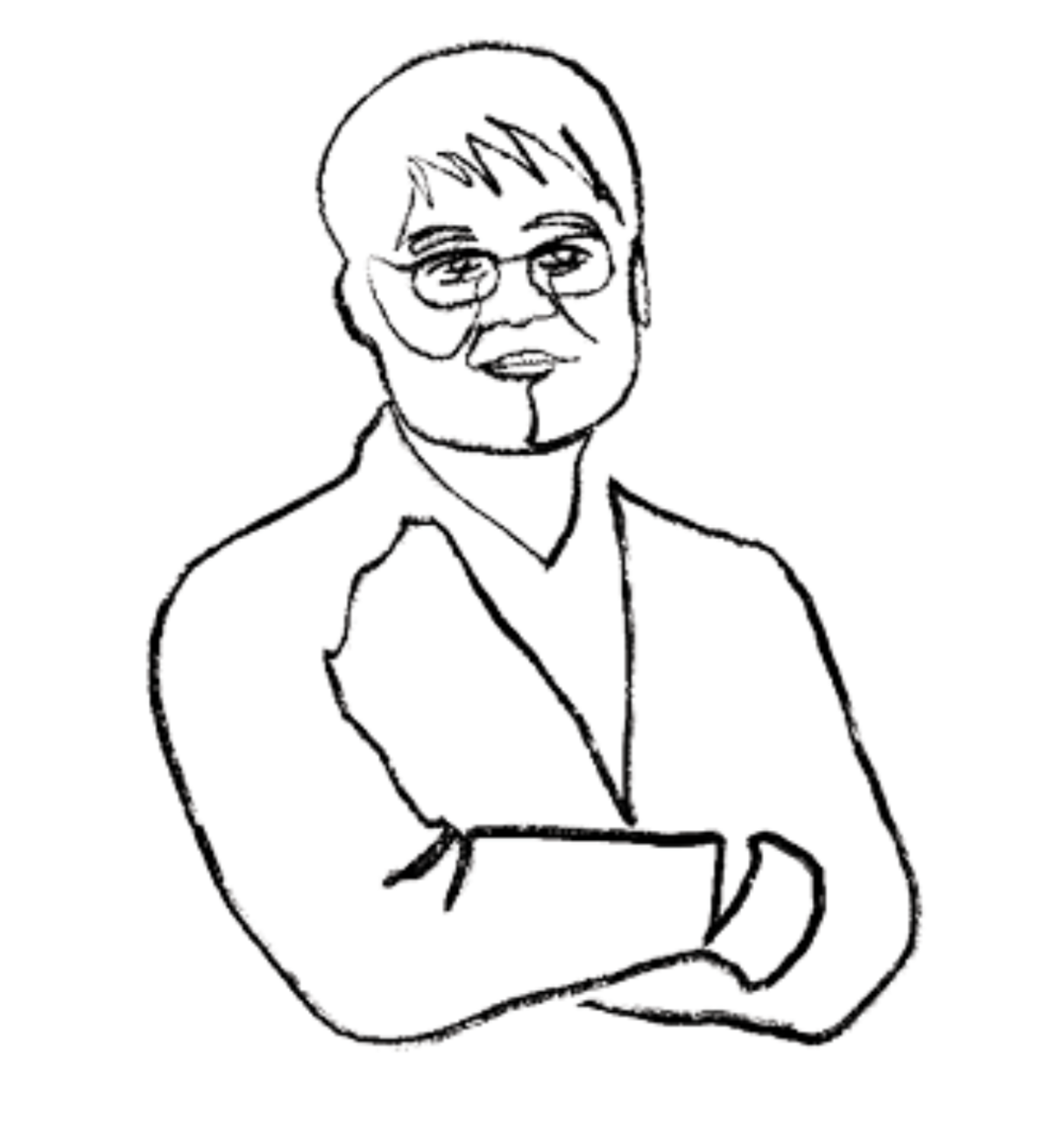
Twenty years ago, scholar Wang Jisi (王缉思) coined the term “hot peace” to describe the competitive nature of China-U.S. relations. Wang is founding president of the Institute of International and Strategic Studies at Peking University, and many believe him to be the intellectual inspiration behind the BRI. Wang’s analysis has long centered on the idea that the international order is falling apart, and that China has a big opportunity to reach out to countries ignored by the U.S., rather than confronting it directly. He has sought to encourage the Chinese government to avoid escalating its competition with Washington, to manage the bilateral relationship carefully, and to expand into spaces which are less contentious. Today, Wang argues that this “hot peace” has intensified, becoming “much hotter in many dimensions” such as economic competition, cybersecurity, military activities in the South China Sea, human rights and the potential hot spot of Taiwan. He has made many trips to the U.S., and is trying to keep channels open even as the competition intensifies.
Wang explains that, with its “3G” initiatives, Beijing is working to present principles that will be attractive to others rather than laying down specific plans for how to act. He said:
The Chinese way of proposing principles is based on an understanding that these principles will not be opposed by any country. So it is about principles, it is not specific, like the condemnation of Russia. … After all, it is more abstract, and this is the Chinese way of thinking.
The last few years have strengthened many Chinese scholars’ belief that change and disorder — rather than order — are coming to dominate the world. The major wars taking place in Ukraine and Gaza, and now Iran, have reinforced this view and provided opportunities for thinking about how their ideas can be applied in practice. These conflicts have also enabled Chinese leaders to test-run their thinking. Intellectuals have been keen to show how Beijing’s responses should lean into the disorder and promote the “democratization of international relations.”
While the West is trying to preserve the rules-based order, China’s goal is to be able to survive without order.
All these academics are part of the Chinese system, but there are nevertheless frustrations with official policy on Ukraine, the BRI and the tone of Chinese diplomacy. Nonetheless, the difference of perspectives between China and the West extends to many other sets of issues: how to cope with pandemics and counter-globalization; how to deal with great power competition; and how to respond to war. The reconstruction of the Chinese state after Covid, and its evolving relationship with the Global South, are fundamental to the CCP’s long-term resilience and regime survival.
In each of these areas, the Chinese possess an analysis and a set of strategies which is in sync with a great number of countries around the world. The West is often seen as trying to preserve an order that has lost legitimacy — even as it asks other countries to take sides in a bipolar world — but China is positioning itself as protecting their sovereignty and allowing them to take back control of their affairs. Understanding China’s perspective on the current geopolitical changes and related challenges is thus necessary to understand Beijing’s long-term goals.
What emerges from the thinking of Chinese intellectuals is a fundamentally different way of thinking about the state of the world, and how the international order is changing. While the West is trying to preserve the rules-based order, China’s goal is to be able to survive without order. ∎
Excerpted from The Idea of China: Chinese Thinkers on Power, Progress, and People by Alicja Bachulska, Mark Leonard and Janka Oertel (European Council on Foreign Relations, July 2024). Mark Leonard’s latest book Surviving Chaos: Geopolitics When the Rules Fail (Polity Press, April 2026) is available now.
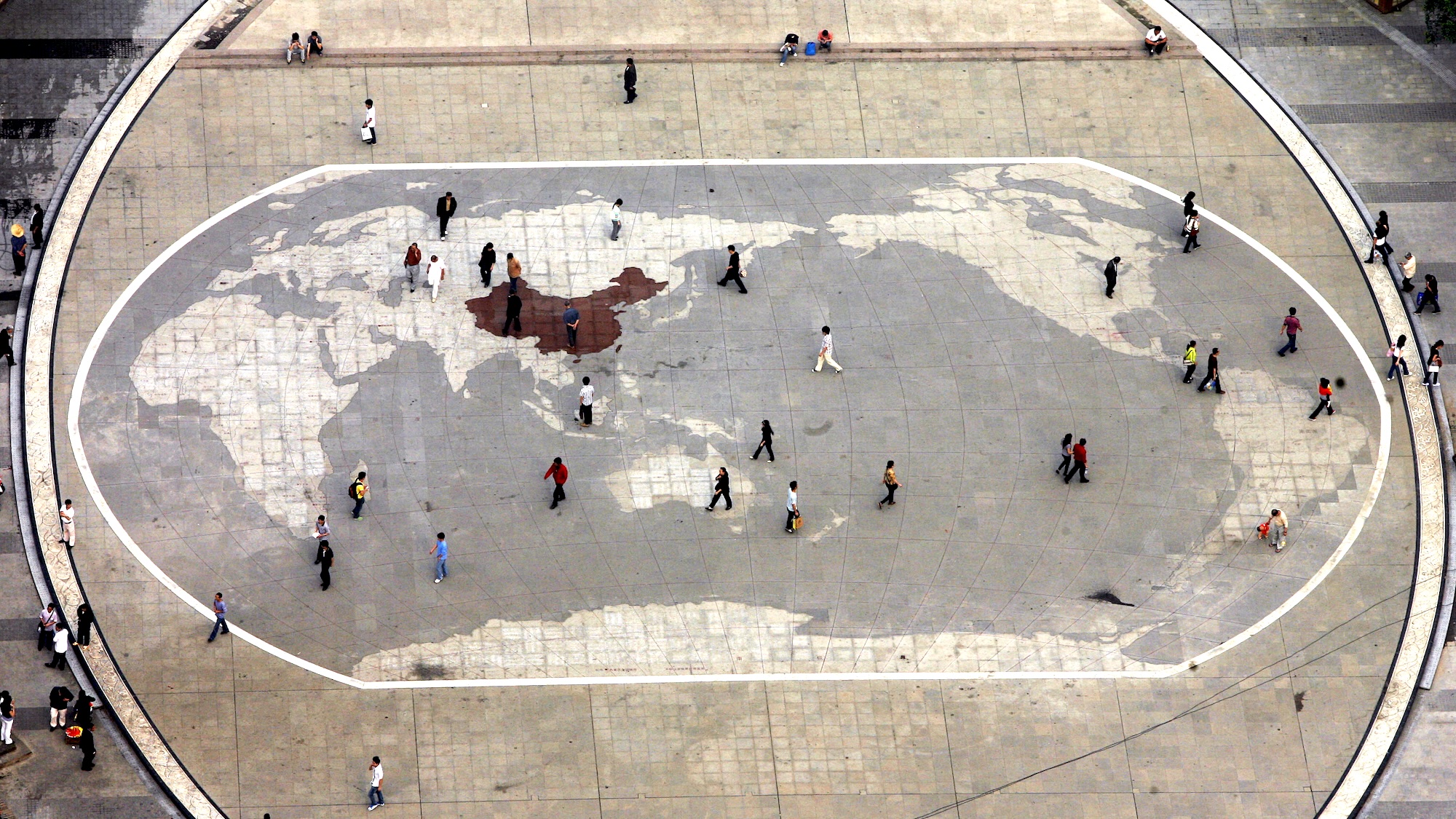
Feature image: Visitors walk over a world map carved onto stone at a plaza in Chongqing, May 2010. (STR/AFP/Getty)

Mark Leonard is Co-founder and Director of the European Council on Foreign Relations (ECFR), as well as the Henry A. Kissinger Chair in Foreign Policy and International Relations at the U.S. Library of Congress. He is author of What Does China Think? (2008), The Age of Unpeace (2021) and Surviving Chaos (2026), and contributes to Foreign Affairs and other publications on geopolitics, China and EU politics.