Sign up for our newsletter to be notified of new posts!
Reviewed:
• Under the Nuclear Shadow: China’s Information-Age Weapons in International Security by Fiona Cunningham (Princeton University Press, January 2025).
• The Untold Story of China’s Nuclear Weapon Development and Testing by Hui Zhang (The MIT Press, November 2025).
• Youth in the Forbidden Zone 禁地青春 by Shijie Wei 魏世杰 (Beihang University Press, 2019, Chinese edition).
In 1964, China joined the nuclear weapons club. For decades after, China maintained a small nuclear arsenal and cultivated a reputation for restraint in its nuclear ambitions. In recent years, though, China has embarked on a historic nuclear buildup. According to U.S. government assessments, its arsenal grew from about 200 warheads in 2019 to 600 by 2025, and will exceed 1,000 warheads by 2030. The opacity of China’s nuclear buildup has heightened anxiety among other states. This risks igniting a global arms race — or worse, nuclear war — and is one of the most consequential and least understood developments in world politics.
History illuminates murky futures. To understand the dangers of China’s nuclear expansion, we must understand its origins. Three recent books — a study of China’s advanced weapons posture by an Australian scholar in the United States; a technical history of China’s weapons program from a Chinese-American nuclear scientist; and a rare autobiographical novel from a Chinese scientist who participated in the program — offer distinct windows into the roots and trajectory of China’s nuclear program, and the dangers that lie ahead. Collectively, these books offer a nuanced understanding of China’s nuclear evolution, and make it clear that the country’s approach to nuclear weapons has not been as philosophically unique as once thought.
The belief in China’s special wisdom regarding the sufficiency of a small arsenal does not, in the end, hold up. Instead, its nuclear trajectory has consistently been shaped by material constraints, copycat stratagems, the pull of China’s own military-industrial complex, and the intuition of leaders like Mao Zedong and Xi Jinping. China’s recent nuclear acceleration marks a convergence with the practices — and pathologies — of other major nuclear powers, particularly the United States, and is rendered more troubling by the scale of its consequences and a striking lack of public reflection.
The opacity of China’s nuclear buildup … is one of the most consequential and least understood developments in world politics.
China’s first-generation leaders, Mao Zedong and his inner circle, are frequently celebrated for the purported insight that nuclear weapons are difficult to use in practice and thus wouldn’t be a game changer in warfare. Mao called the bombs “paper tigers.” Yet this view was hardly unique. After the U.S. atomic bombings of Japan, Joseph Stalin similarly downplayed the decisive military significance of nuclear weapons. The atomic bomb was not “as serious a force as certain politicians are inclined to think,” he remarked, adding: “Atomic bombs are intended for intimidating the weak-nerved, but they cannot decide the outcome of war.” For leaders of non-nuclear states, such statements were strategic efforts to prevent the United States from feeling emboldened by its nuclear monopoly.
Mao’s call for building only a small nuclear arsenal is frequently attributed to this so-called insight. What this interpretation obscures is that Mao did not demonstrate confidence in a nuclear taboo in warfare. In 1969, as Mao worried about the possibility of a Soviet nuclear strike after Sino-Soviet border clashes, the political report of the Ninth Party Congress urged the country to “prepare to fight major nuclear wars” with both “the United States and the Soviet Union.” Mao himself led the drafting of a directive instructing the People’s Liberation Army (PLA) to “prepare for an early war, a large-scale war, and a nuclear war.” In that era, Chinese leaders publicly downplayed nuclear weapons even as they prepared extensively for their use.
Instead, Mao’s embrace of a small nuclear arsenal was a reflection of the perceived unbridgeable gap between China’s nascent, resource-strained nuclear program and the massive arsenals of the superpowers at the time. As Mao put it, there was little point in “a beggar competing with a king over treasures.” Accordingly, Chinese leaders reconciled themselves to an existential form of nuclear deterrence, built on a small arsenal and significant uncertainty over whether China’s nuclear forces could survive a disarming strike and retaliate effectively.
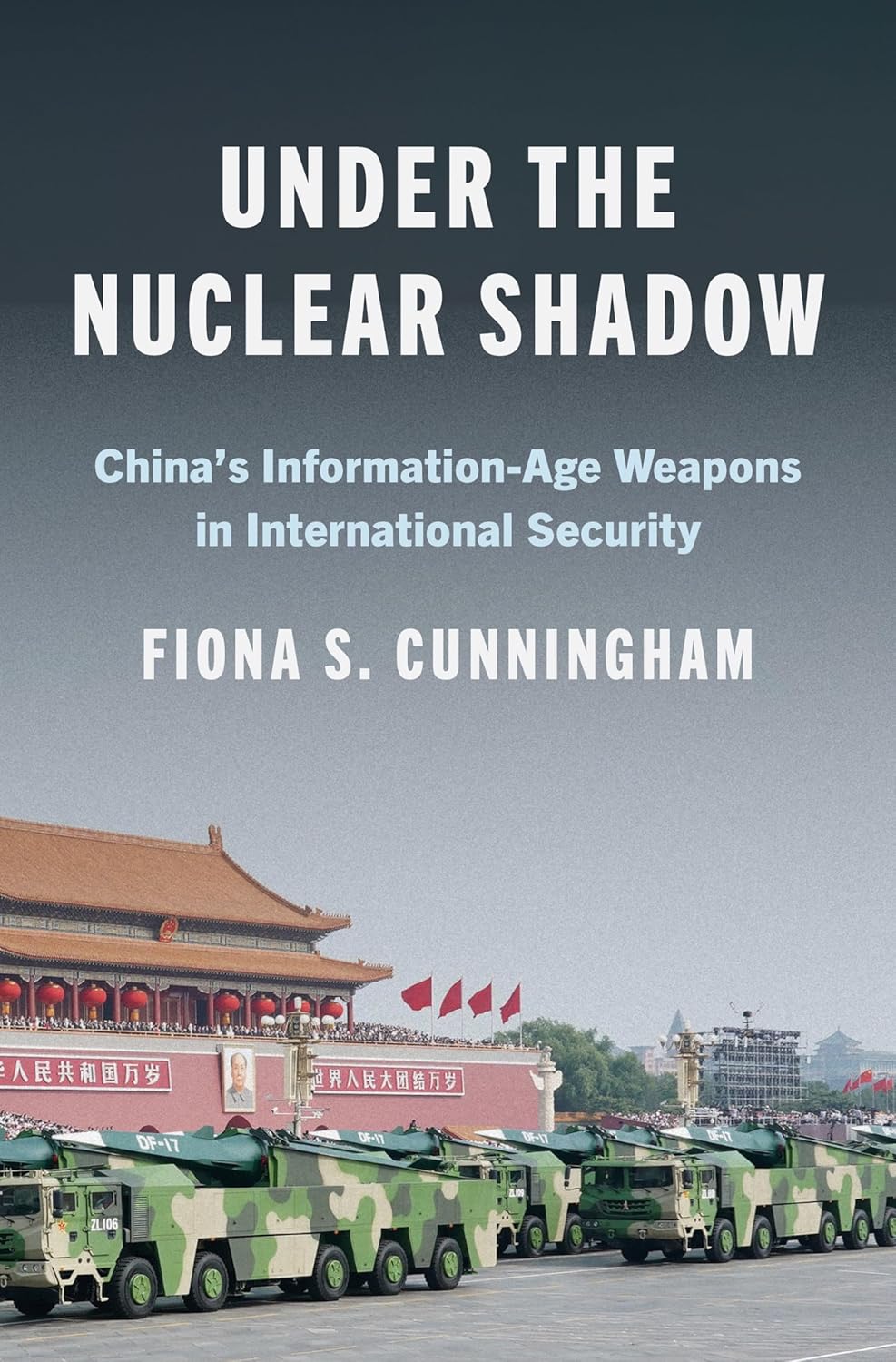
As China has grown rich and powerful, its adherence to its earlier, more restrained nuclear doctrines has weakened. From the 1980s onward, the PLA has exhibited little doctrinal resistance to Western nuclear concepts, including more nimble nuclear forces, rapid-launch capabilities, and the development of missile defense and the nuclear triad — the ability to deploy land-, sea- and air-based nuclear forces. Fiona Cunningham’s recent book Under the Nuclear Shadow (Princeton University Press, January 2025) is an exposition on how China’s nuclear policy has evolved alongside its non-nuclear capabilities. Cunningham, an Australian scholar based in the United States, offers the most thorough analysis to date of a key shortcoming in China’s nuclear posture: that the high threshold for nuclear use renders nuclear weapons a blunt and ineffective instrument for escalating conventional conflict without risking catastrophe. Instead, she argues that China is relying on non-nuclear strategic weapons such as conventional missiles and counter-space capabilities to manage escalation below the nuclear threshold.
China’s nuclear modernization progressed gradually during Jiang Zemin’s tenure (1989–2002) and gained momentum toward the end of the Hu Jintao era (2002–2012). Under Xi Jinping, the PLA faces few barriers to pursuing its long-desired greater nuclear capabilities. The Chinese military has moved away from the restraint of earlier Chinese nuclear strategy and toward adopting positions long embraced by the United States and Russia — but previously criticized by China — including launch-under-attack, a posture that would allow China to order immediate nuclear retaliation after detecting an enemy strike but before enemy warheads detonate over Chinese territory. This is widely regarded as carrying heightened risks of false alarms and inadvertent nuclear war.
The shift in China’s approach to nuclear weapons underway today is the delayed realization of the PLA’s long-held doctrinal aspirations. The same is true when it comes to China’s approach to managing a potential nuclear crisis. Historically, Chinese thinking tended to rest on a stark dichotomy: either no nuclear war at all or an all-out nuclear exchange. China’s traditional strategy of massive nuclear retaliation was intended to deter any nuclear attack, but it also implied that a failure of deterrence could trigger an immediate, large-scale nuclear war.
In recent years, however, Chinese military thinking has moved closer to the American approach, which has long emphasized escalation management in the event of deterrence failure. One of the key findings of Cunningham’s book is that PLA strategists are seeking capabilities that would allow them to control escalation below the nuclear threshold. By developing a range of strategic non-nuclear capabilities, China has expanded its options for managing escalation in conventional conflict without immediately resorting to nuclear weapons. Similarly, China has reportedly added more diverse capabilities across multiple rungs of the nuclear escalation ladder, including lower-yield, theater-range systems intended for limited strikes against regional targets such as U.S. military bases in East Asia. Despite the substantial numerical gap between China’s arsenal and that of the United States (which has around 3,700 operational warheads), in terms of force structure and weapon types China is increasingly adopting the kind of nuclear strategy it once loathed.
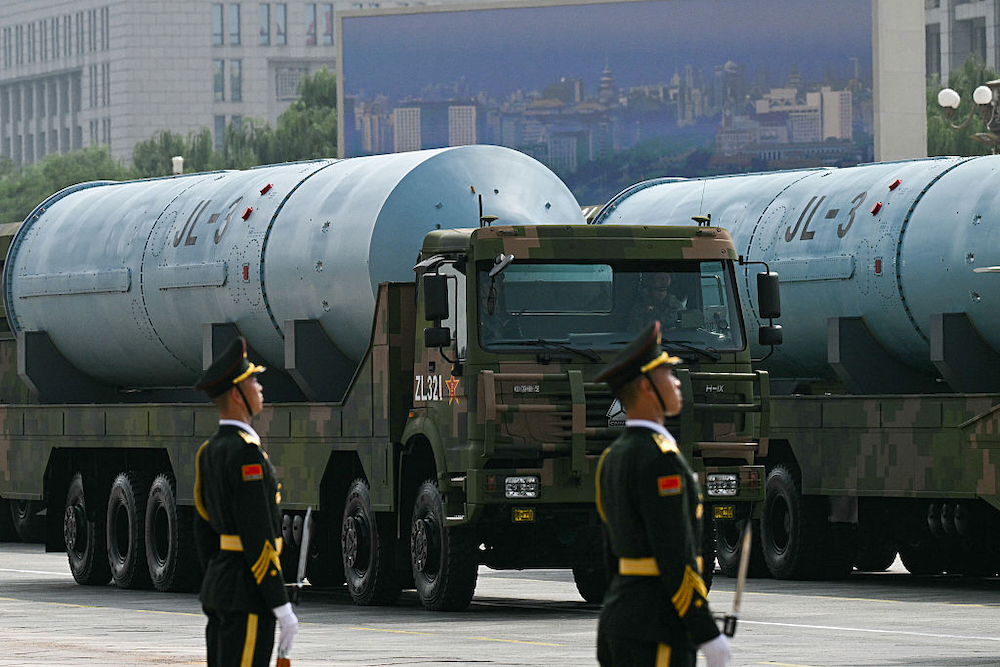
What’s more, China is not immune to the pull of its nuclear military–industrial–scientific complex. Indeed, China’s centralized political system may face even greater difficulty than more democratic systems in constraining the internal influence of its nuclear establishment, given its extreme secrecy and state-fostered prestige. State media extols the leaders from the early 1960s who, in the face of acute economic hardship, prioritized resources for the nuclear program, despite widespread opposition among government officials to the continuation of the costly program that depended on mobilizing the nation’s entire resource-industrial base.
China’s nuclear complex has developed a self-reinforcing collective identity grounded in narratives of noble sacrifice and sustained by state-bestowed honor and recognition. Stationed in remote and rugged regions such as Qinghai, Xinjiang or northern Sichuan, and confined to closely guarded, largely self-sufficient communities, the children of many first-generation nuclear scientists and technicians entered the same research and production system. This intergenerational continuity, captured in the oft-cited slogan “Devote your youth, then devote your whole life; then, devote your descendants,” renders critical reflection on the consequences of such devotion particularly difficult.
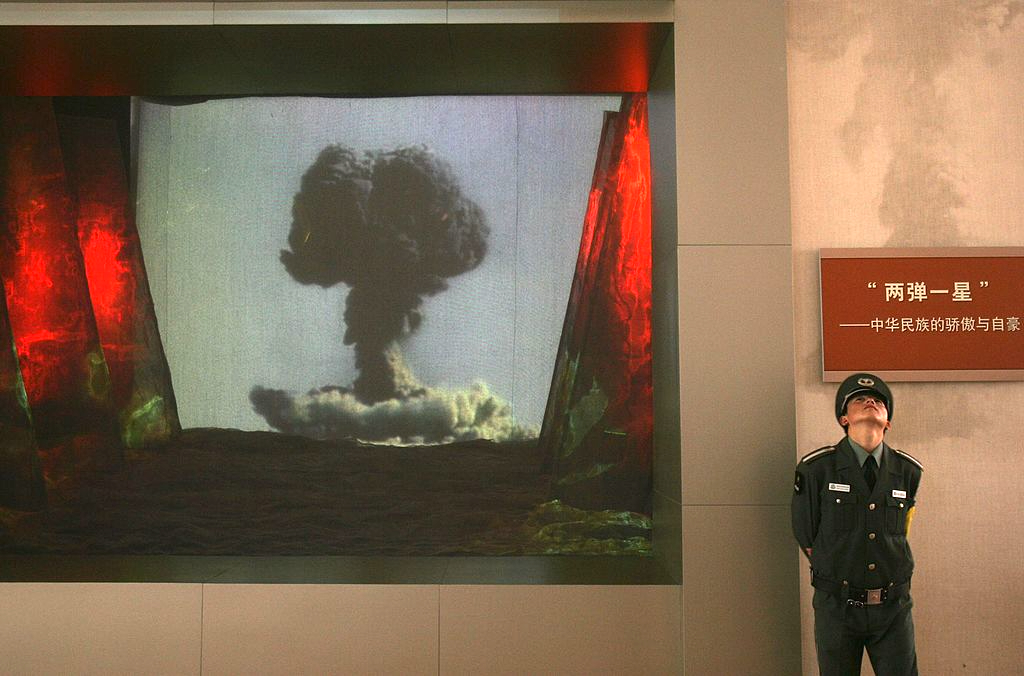
Since the late 1990s, the Chinese state has elevated nuclear weapon scientists as paragons of patriotism through the promotion of the “Two Bombs, One Satellite” Spirit — a Party ethos celebrating China’s nuclear and high-tech programs. The sanctification of the nuclear weapons program as the foundation that allows China to “speak with a spine” on the world stage has helped secure both the program’s long-term development and the nuclear community’s enduring prestige, cohesion and sense of self-worth.
As with other nuclear-armed states, China’s interest in maintaining nuclear deterrence has gradually become self-perpetuating. After its first nuclear test in 1964, China asserted that it aimed to spur the “complete elimination of nuclear weapons” by “breaking the nuclear monopoly” of existing nuclear powers. Decades later, nuclear disarmament remains largely absent from any practical considerations of China’s contemporary nuclear policy. As recently as 2025, Beijing again called for an international legal instrument to “completely prohibit and thoroughly eliminate nuclear weapons.” Yet when the international community succeeded in negotiating the Treaty on the Prohibition of Nuclear Weapons in 2017, China proved no less reluctant than other nuclear-armed states to embrace it. Beijing did not participate in the treaty’s negotiating process and declined to join when it entered into force in 2021.
As China has grown rich and powerful, its adherence to its earlier, more restrained nuclear doctrines has weakened.
Despite the perception that China excels at implementing decades-long strategic plans, the country’s nuclear program is highly susceptible to the influence of individual leaders. Major shifts are often subsequently internalized and rationalized in ways that make them appear far less discontinuous than they actually were.
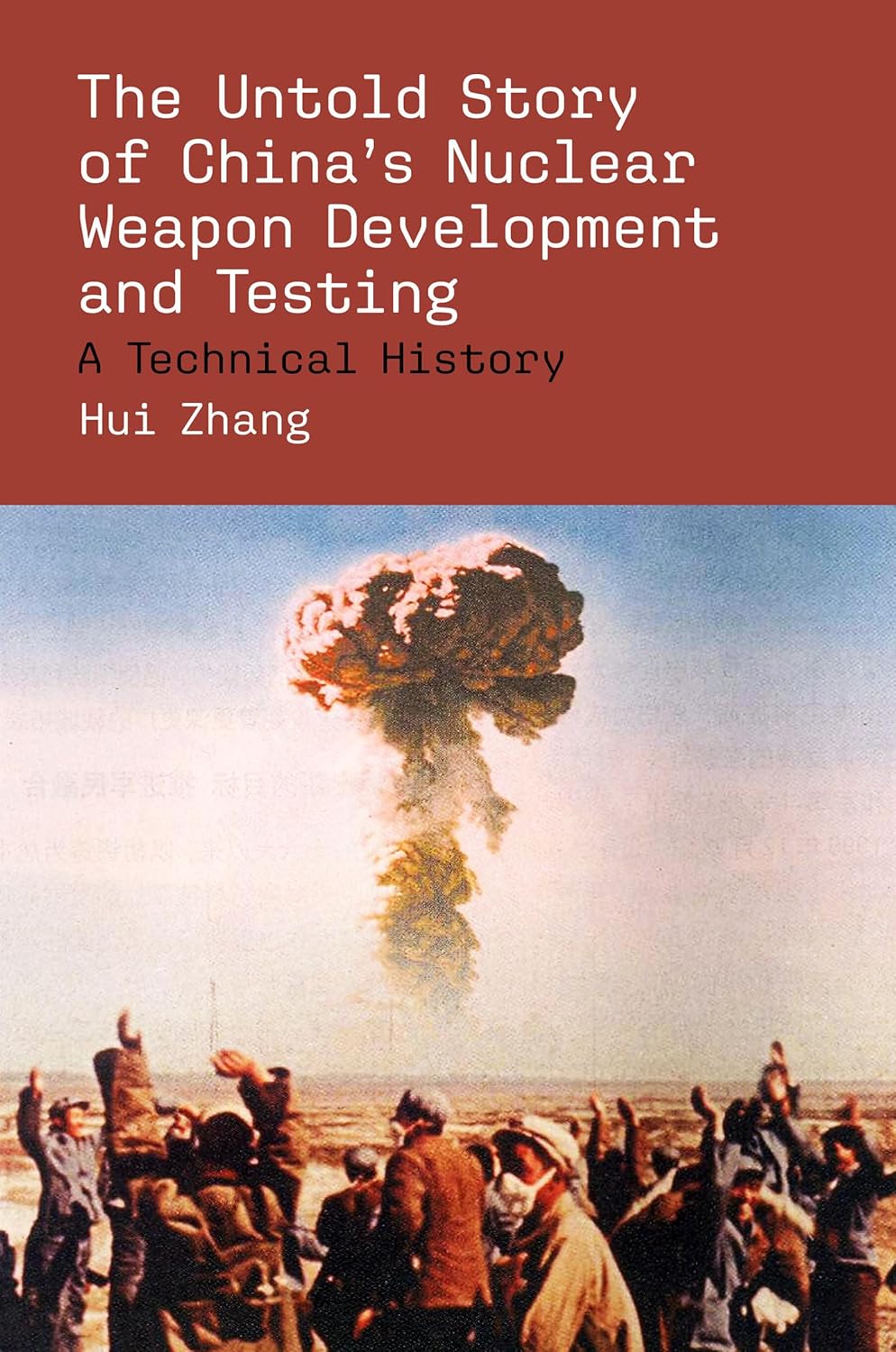
Hui Zhang’s book The Untold Story of China’s Nuclear Weapon Development and Testing (The MIT Press, November 2025) sheds important light on this dynamic. Zhang, a Beijing-trained nuclear physicist, is now a researcher at Harvard’s Belfer Center. His book is an accomplished study of the technical history of China’s nuclear weapon program. Using open-source information, Zhang reconstructs in remarkable detail the aims and accomplishments of each of China’s 46 nuclear tests from 1964 to 1996. Zhang’s work builds on the pioneering work China Builds the Bomb (1988) by another Chinese-born scholar in America, Xue Litai (with co-author John Wilson Lewis), on the engineering history of China’s atomic bomb and nuclear submarines. Whereas Western researchers often focus solely on the technical specifications of China’s nuclear weapons program, The Untold Story maps the roles, relationships and interactions among individual scientists, military officials and political leaders, underscoring the particular strengths of overseas Chinese experts. This human dimension, though harder to observe from outside China, often reveals more about Chinese thinking on nuclear arms than its technical capability alone.
Given the technical details that Zhang reveals about China’s nuclear program, the Chinese government may not view his book kindly. Yet the transparency his research provides could help defuse controversies that have poisoned Beijing’s relations with its neighbors, and residents of Xinjiang, where Uyghur communities have long suspected that fallout from tests conducted at Lop Nur have caused significant environmental and health effects. Former Kazakh president Nursultan Nazarbayev has also repeatedly protested the damage that these large-yield tests caused in Kazakhstan (and to the ethnic Kazakh population in Xinjiang). In his widely cited 2009 book Nuclear Hazards in the World, Japanese professor Takada Jun argued that radioactive fallout from China’s high-yield atmospheric tests in the 1960s and 1970s likely killed at least 190,000 people and left more than 1.2 million others seriously ill with conditions such as leukemia and cancer.
These are staggering figures, but Zhang’s book may refute them. His research provides more precise estimates of detonation altitudes for China’s atmospheric nuclear explosions and suggests that the largest-yield tests were not surface bursts, as earlier public data implied. Surface bursts, detonated on the ground, draw large amounts of soil into the fireball and therefore generate especially heavy radioactive fallout. Zhang’s research shows that China’s megaton-class atmospheric tests were conducted at roughly 3,000 meters or higher, with only one at around 2,000 meters. At these altitudes, fallout would have been dramatically lower than in surface explosions — meaning that Takada Jun’s estimates likely need substantial downward revision. If external assessments of Chinese nuclear fallout have been exaggerated, Beijing has no one to blame but itself: the vacuum created by its own excessive secrecy all but guarantees suspicion.
This secrecy means that China’s collective memory of its nuclear program has been erased — including Mao’s extraordinary views on the risks of nuclear war. Soviet leadership was averse to uncompromising nuclear confrontation with the capitalist bloc. Mao, however, was willing to think the unthinkable: a nuclear war that could annihilate half of the world’s population in exchange for the total victory of socialism. Alarmed by Mao’s recklessness, Nikita Khrushchev decided in 1959 to terminate Soviet support for China’s nuclear weapons program. This reversal is remembered primarily inside China as an unwarranted humiliation. Zhang notes that Chinese leaders designated their nuclear weapons effort “Project 596” to mark the Soviets’ decision (made in June 1959) and to bolster the resolve of scientists and technicians to build an indigenous nuclear arsenal. The trigger of Moscow’s change of course is elided in China’s mainstream narrative.
Mao’s high risk-tolerance was again on display during the Cuban Missile Crisis in 1962. Through People’s Daily editorials, he voiced the strongest opposition among socialist leaders to Moscow’s reconciliation with Washington and offered vehement support for Fidel Castro’s uncompromising stance, including Havana’s insistence on retaining Soviet nuclear weapons in Cuba. Archival evidence suggests that the Cuban leadership were genuinely willing to risk their country’s total destruction in an all-out nuclear war in pursuit of global revolutionary goals — an attitude that echoed Mao’s own view.
Deng Xiaoping, by contrast, rejected Mao’s approach to global revolution and the perceived necessity of preparing for a nuclear war. After Mao’s death in 1976, Deng redirected China’s priorities toward economic development and away from ideological struggle and large-scale military investment. As Zhang’s book shows, Deng and other like-minded senior officials terminated the development of two types of tactical nuclear warheads and ultimately decided against deploying China’s neutron bomb after it had been successfully developed in 1988, judging that the low threshold of their use conflicted with China’s need to focus on deterrence. During Mao’s tenure, such tactical nuclear weapons were considered necessary to defend against a Soviet invasion. Under Deng, the central government did not even allocate sufficient funding to ensure that the DF-5, China’s sole intercontinental ballistic missile at the time, could reliably reach the U.S. homeland. In 1985, Deng explicitly instructed that “the military should be patient.”
Xi Jinping has again effected a quiet but consequential shift in China’s strategic orientation — away from liberalization and toward great-power competition under the authority of a supreme leader. Casting himself as the heir to Mao’s achievement of establishing the People’s Republic of China and Deng’s achievement of making China rich, Xi frames his own mission as making China strong. Central to that ambition is the transformation of China’s economic wealth into a world-class military, including a substantially more powerful nuclear force. The PLA Rocket Force’s new mandate to achieve “strategic counterbalance” reflects Xi’s intuitive — yet largely unscrutinized — belief that a stronger nuclear arsenal will favorably shape China’s strategic environment and stabilize relations with its principal rival, the United States.
Like Mao, Xi embraces a fatalistic worldview in which U.S. hegemony reflects an inherent drive for dominance, countered only through credible strategic capabilities and political resolve. This worldview closely echoes Mao’s vision for global security on the eve of the Great Leap Forward in 1957, when Mao declared:
Ultimately, what we must strive for is 15 years of peace. By then, we will be invincible in the world; no one will dare to fight us, and the world will thus be able to enjoy lasting peace.
Many of China’s own nuclear policy experts are excluded from internal state deliberations about nuclear strategy, sowing confusion about the trajectory and implications of its nuclear expansion. Even many senior Chinese officials outside Xi’s small inner circle are ill-informed. In 2019, Fu Cong, then director general of the Foreign Ministry’s Arms Control Department and now China’s ambassador to the United Nations, apparently did not know that China was pursuing a launch-on-warning capability. At an international conference, he stated with confidence that such a posture would be incompatible with China’s no-first-use policy. The PLA evidently does not share this view.
My own conversations likewise indicate that senior Chinese diplomats are often unaware of authoritative PLA documents that explicitly contemplate threatening nuclear use to deter conventional strategic strikes — a form of nuclear signaling that would violate the spirit of no-first-use. This lack of internal transparency fosters self-righteousness in foreign-policy thinking and weakens China’s policymakers’ capacity to understand how other countries perceive and respond to its growing nuclear capabilities.
Like Mao, Xi embraces a fatalistic worldview in which U.S. hegemony reflects an inherent drive for dominance, countered only through credible strategic capabilities and political resolve.
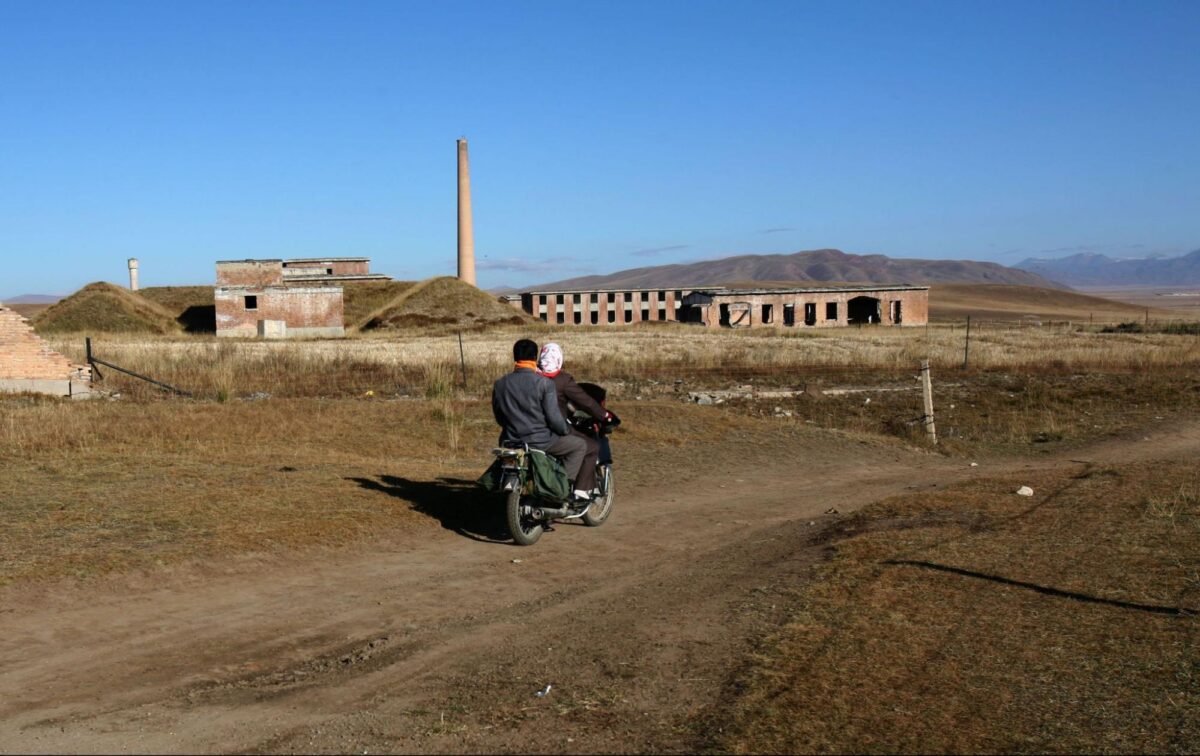
Shijie Wei was a 23-year-old physics graduate from Shandong province when, in 1964, he was tapped to join Base 221, a secret Los Alamos-style plant in remote Qinghai where China conducted its nuclear weapons research. Wei’s account of his 26 years within China’s weapons program, recorded in his autobiographical novel Youth in the Forbidden Zone 禁地青春 (Beihang University Press, 2019, Chinese edition), offers an extraordinary look at the price ordinary Chinese paid for the weapons that transformed China’s relationship with the wider world.
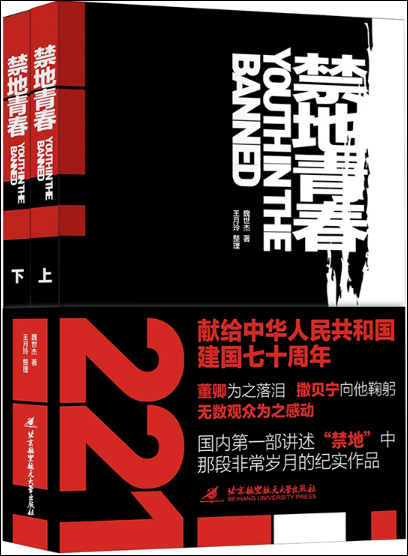
Originally published on a messaging board in serialized form from 2009, Youth in the Forbidden Zone was collated and published by Beihang University Press in 2019. The protagonist, a thinly veiled stand-in for Wei, is assigned work in Qinghai and Sichuan provinces, enduring harsh and isolated conditions. There, his passion for technical research and his pride in contributing to China’s defense are tempered by political campaigns that upend both his work and personal life.
Wei describes how he and his colleagues received salaries several times higher than other physicists outside the nuclear program, and enjoyed access to luxury items including Maotai, a tightly rationed liquor, even while working in the remote and impoverished hinterlands of northwestern China. Lavish investment in the nuclear weapons program continued through the Great Leap Forward (1958–1962), at the same time that at least 30 million Chinese citizens starved to death. Between 1965 and 1979, the program reportedly consumed more than half of the country’s defense research and development budget.
Yet Wei’s account also suggests severe and unnecessary suffering, as do other first-hand accounts. Soldiers providing logistical support to the nuclear test site in Lop Nur were never informed of radiation risks, likely because of concerns about secrecy, and were thus exposed to serious hazards. Investigations by foreign journalists have uncovered official statistics indicating significantly higher cancer rates in areas surrounding test sites than elsewhere in China. Even for scientists and technicians, protective measures might have been inadequate.
The most severe suffering endured by members of the nuclear program, however, stemmed from wanton political decisions. Mao’s launch of the Cultural Revolution in 1966 engulfed even the remote nuclear research and manufacturing base. Between 1969 and 1971, roughly 80% of managerial personnel within these facilities, and about 90% of senior- and mid-level scientists and technicians, were persecuted. Wu Jilin, director of the nuclear research and manufacturing base, was killed, as were many of the nuclear program’s most capable experts. Shijie Wei and many of his colleagues were detained and sent down to so-called “quarantine and investigation” programs, accused of fabricating secret assassination and sabotage groups. These episodes — cruel, absurd and revolting — defy belief and illustrate how unchecked political movements left even the system’s most valued contributors vulnerable and helpless.
Not every detail or episode in the novel should be read as literal history. I have found no publicly available evidence, for example, to substantiate a serious radiation accident in a Beijing laboratory that allegedly caused severe illness among researchers and led to the eventual death of Wei’s fiancée. Various character portrayals may be artistic embellishments. Yet the core events depicted in the novel correspond closely with available historical records, and Wei’s human-centered lens remains exceedingly rare in China’s government-dominated public narratives.
After retirement, Wei has struggled to keep his loved ones afloat. His only son was born with an intellectual disability, and his only daughter developed severe mental health problems — outcomes Wei himself occasionally wonders may be linked to the work undertaken by both him and his wife, who was also employed in the program. Many soldiers who supported the test site were silenced when they sought medical care, as their public appeals were deemed threats to domestic stability.
With rare exceptions like Wei, most direct witnesses to this extraordinary history left little record of their experiences behind. In their place, selectively curated “positive energy” stories have come to stand in for the whole history, carefully enforced as the only permissible way to remember what happened. Even Wei himself, despite preserving his memory through an autobiographical novel, is frequently invited to recount officially sanctioned stories of patriotic sacrifice at schools and media outlets across the country — unwittingly helping to bury the fuller history his book seeks to recover, and the very spirit of reflection it aims to sustain.
Soldiers providing logistical support to the nuclear test site in Lop Nur were never informed of radiation risks, likely because of concerns about secrecy.
China’s nuclear expansion unsettles many international observers, has become a driver of renewed nuclear competition, and significantly undermines the credibility of China’s “peaceful rise.” For China’s leadership, however, the buildup is a necessary stabilizing force in U.S.-China relations and a contributor to peace. The widening gap between these perceptions shows no clear path toward resolution.
Fears in Washington that Beijing seeks nuclear parity — or even superiority — to the U.S. intensify its belief that China aims to overthrow the existing international order, and harden perceptions of bilateral competition as zero-sum. U.S. efforts to strengthen its own nuclear forces and missile defenses, such as Donald Trump’s “Golden Dome,” can be seen in this light. The consequences for the architecture of global arms control are severe. The post-Cold War trajectory of U.S.-Russian nuclear reductions is likely to be reversed. U.S. restraint in homeland missile defense continues to erode. The risk of a renewed global nuclear arms race has markedly increased, with profound opportunity costs as global military spending surges and international security deteriorates.
As Fiona Cunningham shows in Under the Nuclear Shadow, Beijing increased its investment in a range of non-nuclear strategic capabilities following a series of perceived humiliations, including the 1995–96 Taiwan Strait Crisis, the 1999 NATO bombing of the Chinese embassy in Belgrade, and the 2001 collision between Chinese and U.S. military aircraft over the South China Sea. Yet with the exception of the Taiwan Strait Crisis, these episodes were fundamentally political crises triggered by military incidents, rather than military confrontations in which Beijing suffered from specific capability shortfalls.
In other words, the impulse of China’s leadership to strengthen its military capabilities was driven less by concrete deterrence failures than by a broader belief that U.S. assertiveness toward China was enabled by a perception of Chinese weakness. From this perspective, the most effective response was to prioritize the development of certain strategic capabilities — the so-called “assassin’s mace” (杀手锏) — that could provide asymmetric and quick counterbalances to U.S. military superiority. As with its conventional missiles, counter-space weapons and cyber capabilities, China is increasingly emphasizing its nuclear weapons, which carry even greater weight in American assessments of strategic power. The logic underpinning these investments is aimed as much at remedying discrete operational gaps as at undermining U.S. confidence in its overall dominance. This framing, however, pushes China further toward military competition with the United States, one that is difficult to bound or stabilize.
One defining feature of China’s nuclear program is the near-total absence of public input. The Chinese people — the so-called “masters of the country” — have essentially no role in nuclear decision-making and have not been informed of even the most basic facts about their country’s nuclear arms development. Many Chinese might be unsettled to learn that Mao made remarks treating the death of half of humanity as a tolerable outcome if the revolutionary goal were sufficiently grand. Many young Chinese today have difficulty imagining that the Kafkaesque experiences endured by figures such as Shijie Wei could ever have occurred, only to be systematically erased from public memory.
Transparency is a fundamental requirement of a government’s accountability to its people. China’s nuclear history fostered a culture of sacrifice without reflection — devoid of the public debate, moral unease and institutional self-questioning that a project of such stakes demands. Today, as the ruling party further commits to “strengthening and enlarging” its strategic deterrent capabilities in the next five-year plan, China no longer lacks the material means to pursue nuclear parity with the United States, should it choose to do so. What it lacks are public voices willing or permitted to question the underlying logic of this buildup, and to ask whether greater nuclear power will truly make China safer.
Unlike in the 1960s, the Chinese people no longer need to prove their talent and strength to the international community through the development of weapons of mass destruction. There are better ways to do so. With the power China now possesses, its citizens can dare to imagine what the country might look like if it focused on more constructive goals: strengthening domestic social welfare; reconciling with former adversaries; promoting arms control; and leading international efforts to free humanity from a renewed nuclear arms race.
Each Chinese citizen should reflect on Beijing’s nuclear weapons program — past and present — and consider the change they might demand. That would be a real “positive energy” needed for a future worthy of hope. ∎
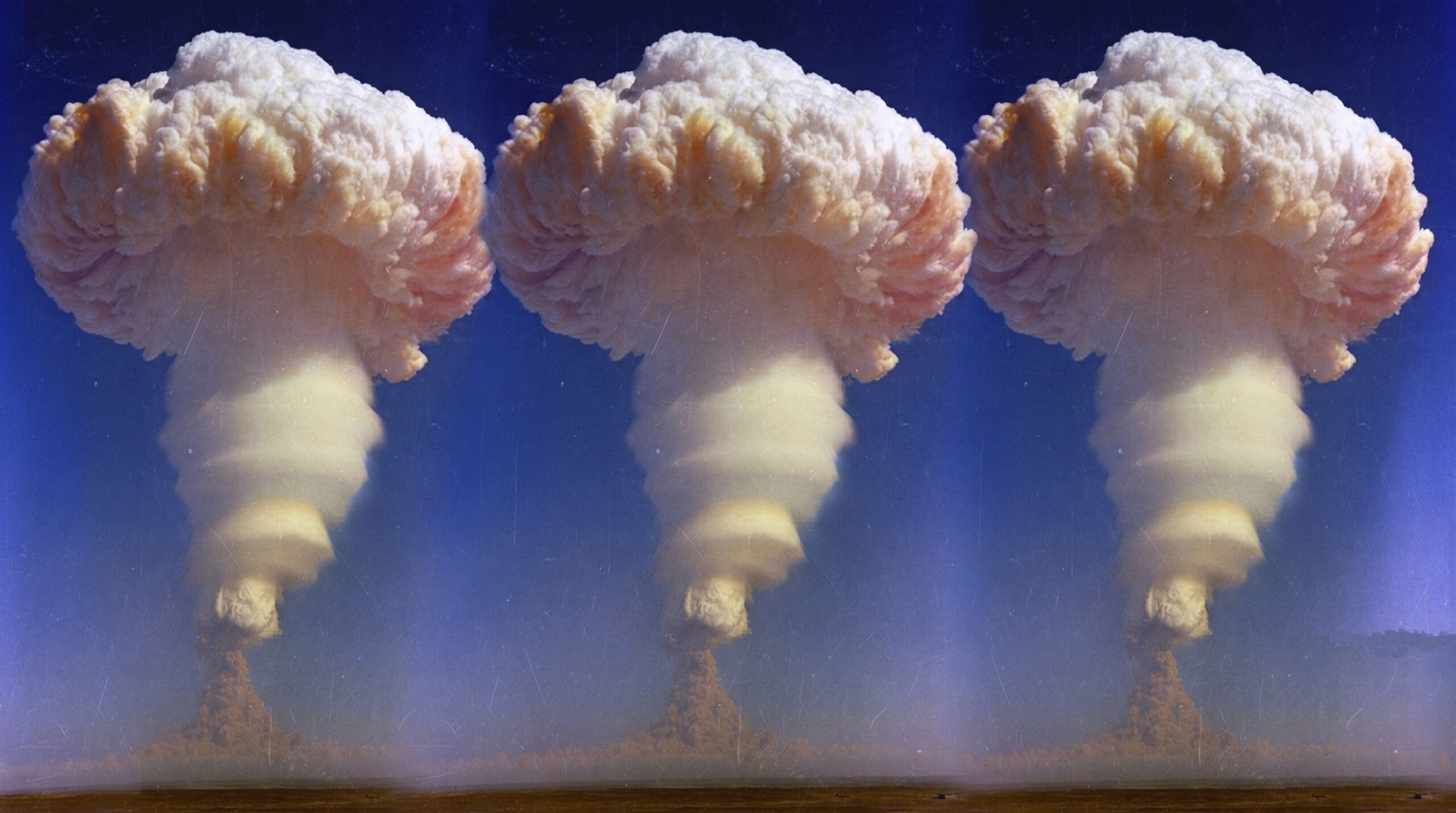
Feature image: Collage inspired by Test No. 6 at Lop Nur on June 17, 1967, China’s first test of the hydrogen bomb. (Atomic Archive)
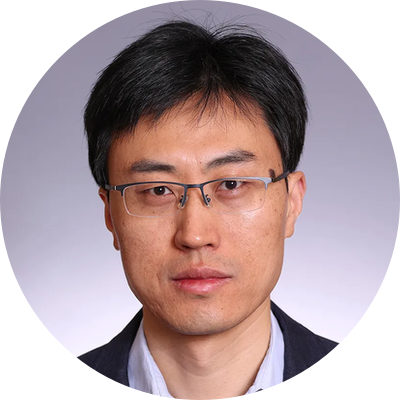
Tong Zhao is an academic focused on China’s nuclear policy. He is Senior Fellow at the Nuclear Policy Program and the China Center of the Carnegie Endowment for International Peace, and a nonresident researcher with Princeton University’s Science and Global Security Program. He holds a PhD in science, technology and international affairs from the Georgia Institute of Technology.