Sign up for our newsletter to be notified of new posts!
Reviewed:
• I Deliver Parcels in Beijing by Hu Anyan, tr. Jack Hargreaves (Astra House, October 2025).
• Adrift in the South by Xiao Hai, tr. Tony Hao (Granta, April 2026).
China used to be poor but equal, mostly. Over the past half-century, since the Reform era started in 1978, it has grown to be a lot richer and a lot less equal. Shanghai’s wealthiest may bolster the bottom lines of Italian fashion brands, but hundreds of millions of working-class Chinese scrape by on subsistence wages.
One might expect that a population raised on socialist ideals would not look kindly on excessive wealth. But when American and Chinese scholars conducted a series of surveys between 2004 and 2014, they found that Chinese people largely accepted the situation. All you needed to get ahead, survey participants responded, was talent, a good education and hard work. Others had already succeeded, but their day would come.
When the scholars repeated their research in 2023, however, the answers changed dramatically. Among the reasons given for why people are poor, “unequal opportunity” and “unfair economic system” had risen to the top. The population had lost the belief that effort and ability alone would get them where they wanted to go. With China’s decades of breakneck economic growth now in the past, the road ahead suddenly no longer looked to only be going up. The possibility of one’s life stagnating or backsliding looked more plausible than ever, and society’s ills loomed larger.
To better understand these ills, Chinese readers have turned to a once-niche genre of writing: workers’ literature (工人文学). Fiction, nonfiction and poetry written by and about the Chinese working classes have seen a surge of attention in recent years — online but also on the page. The past few years have seen a flurry of books published in China about life as a lower-class laborer — from delivering meals (赶时间的人, 2023), cleaning floors (我的母亲做保洁, 2023), driving taxis (我在上海开出租, 2024) or working in a factory (在工厂梦不到工厂, 2025).
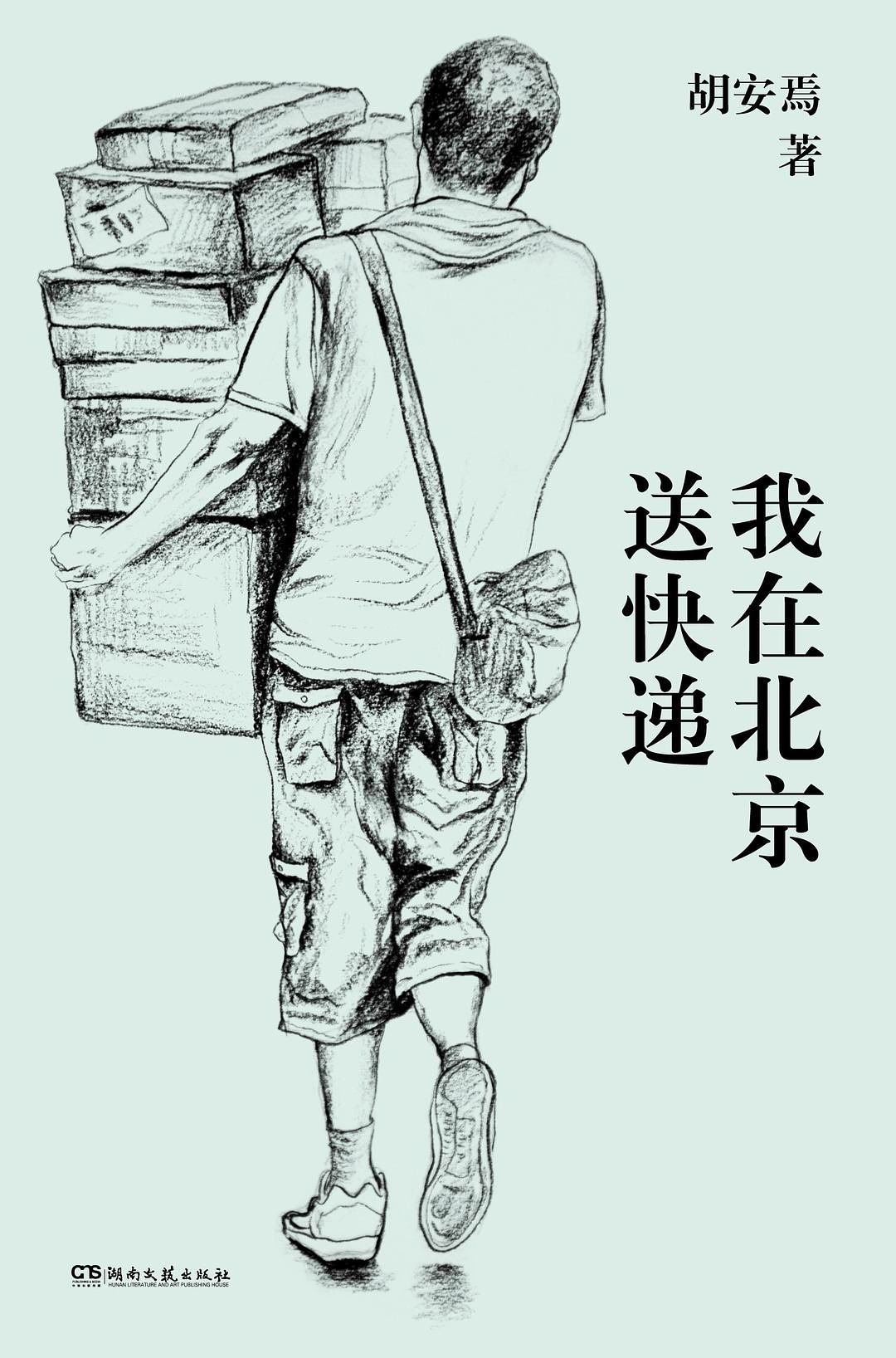
The most prominent example yet is the 2023 book I Deliver Parcels in Beijing (我在北京送快递), a domestic bestseller about the daily grind of gig work by the writer Hu Anyan (胡安焉, a pen name). Hu first gained widespread attention in China when readers devoured his 2020 online essay “My Year on the Night Shift at Deppon Express” (我在德邦上夜班的一年), praising his candid descriptions of working in a logistics company warehouse, and his lucid writing. The book that followed has now gone global. Foreign rights sold in 16 countries, and late last year it was published in English, translated by China Books Review columnist Jack Hargreaves.
The growing appreciation for workers’ literature stems in part from the pandemic, when people paid attention to the lives of delivery workers. During the various lockdowns, “they kept the nation running,” said Ping Zhu, literature professor at UC San Diego and editor-in-chief of the journal Chinese Literature and Thought Today, in an interview. Another factor is the anxiety of China’s middle class, who consider their status precarious now that China’s economy is past its boom years. They read about lower-class experiences in part to reaffirm their own standing in society, and in part “to find out what would happen to them if they lost their social position,” said Zhu. Layoffs or illness could leave them no option but to start delivering parcels themselves.
This remarkable growth in readership is an unlikely new chapter in the history of the genre — which is also known as migrant workers’ literature (民工文学), new workers’ literature (新工人文学) and “battler” literature (打工文学). It traces its roots to the Communist Party’s early period when based in Yan’an, said Zhu. Under Mao, artists were encouraged to highlight class-conscious topics such as labor exploitation, and to make works that would be understandable to the masses — who were glad to have alternatives to elite literary styles.
In the genre’s more recent revival, laborer-writers now stand on a different footing. No longer empowered as the masters of the nation, they now express disempowerment, marginalization and isolation, said Zhu. The government, not keen on labor unrest that might develop into broader political mobilization, keeps a close eye on them. Much workers’ literature is limited to self-publishing, which reaches few readers, or the internet, where it can be deleted in an instant. An essay by Beijing migrant worker Fan Yusu about being a nanny for a millionaire’s illegitimate child went viral in 2017, but the original essay disappeared soon after.
Given the limitations of publication censorship, the books that do make it to market may not offer the most scathing social critique, but they are nevertheless insightful. Readers know not to trust Chinese state media, which serves obviously unrepresentative stories about delivery workers who struck it rich or retired with a generous pension. And so they seek out authentic accounts from writers such as Hu Anyan.
The growing appreciation for workers’ literature stems in part from the pandemic, when people paid attention to the lives of delivery workers.
I Deliver Parcels in Beijing opens with a version of Hu’s breakthrough essay, describing his experience sorting and repacking parcels in a giant distribution center in Foshan, Guangdong province, for ten months in 2017-18. It is harrowingly hard work, made all the harder by Hu being on the night shift. His hours on the clock are sweaty and grimy, and the rest of his days are filled with anxiety about catching enough shuteye. The room he rents is hot, the neighbors noisy and he drinks to fall asleep. When that fails, as it often does, he has to work the next shift while exhausted and still tipsy.
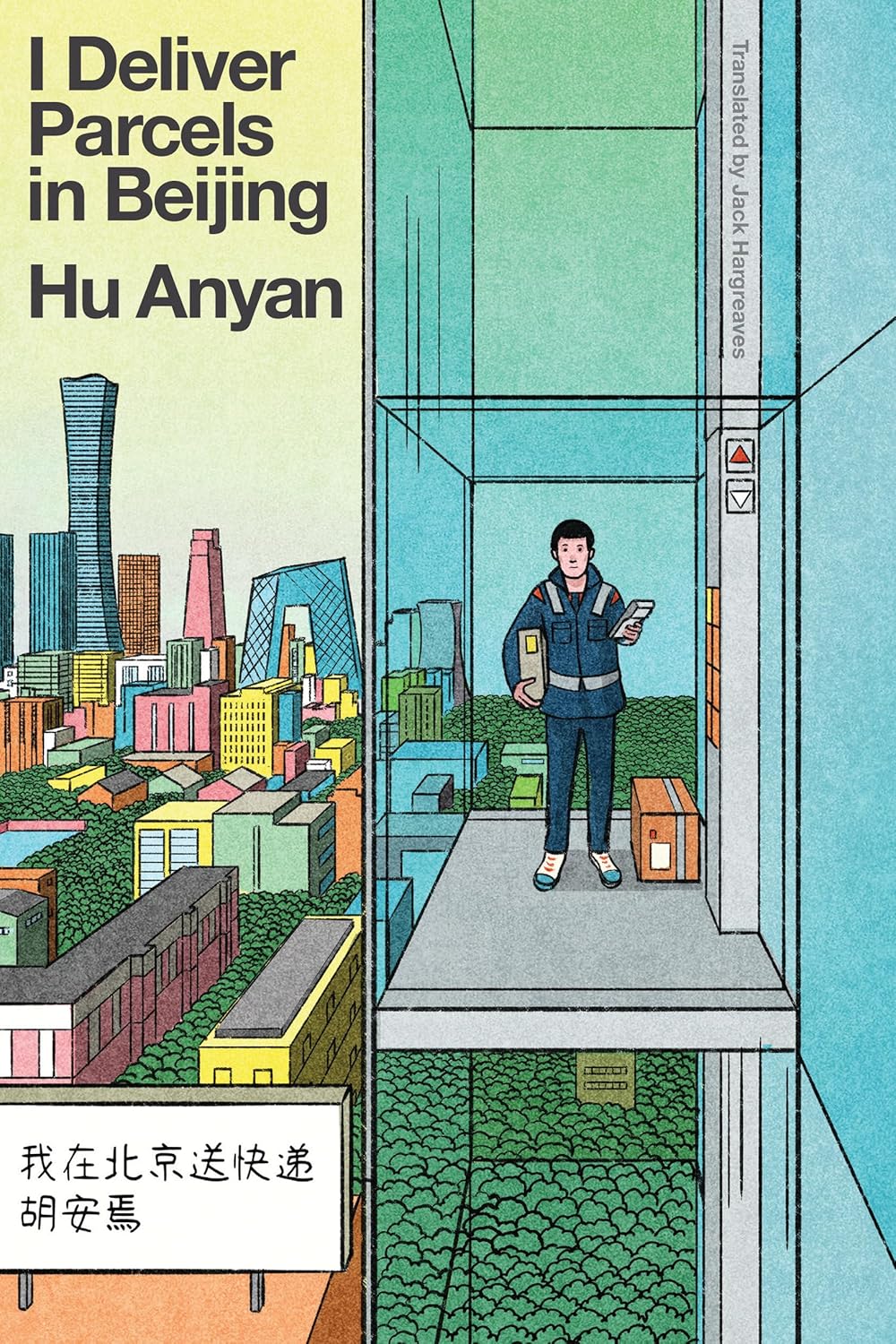
Romance brings Hu to Beijing in March 2018. Mere hours after he uploads his resume to a jobs app, 58.com, he is called to interview with a parcel delivery company (dubbed “S Company” in the English and revised Chinese text, but originally identified as Shunfeng 顺丰, one of China’s largest delivery firms). Between that moment and Hu actually being paid to deliver parcels stand days of Kafkaesque bureaucracy. He describes this maddening ordeal as dispassionately as the book’s title might suggest. This, I suspect, is why Hu’s writing has found a large audience and rave reviews. He seems to have no agenda, no angle, no narrative. He is just telling his story — calmly, clearly, almost as a neutral observer to his own life.
Hu has to shuttle between the company’s headquarters, the depot where his boss’s office is and the depot where he is to work. A physical check-up, necessary for being hired, has to be redone because one blood value is slightly too high. A form cannot be found, then has to be filled out again because it expired. His ID has to be verified at the police station, but their response is delayed because of a national holiday. All the while, the administrative staff is as icy toward him as the Beijing winter weather. When he is finally onboarded after many instances of “come back tomorrow,” he discovers the depot has no electric tricycle left for him to use.
Despite it all, Hu remains stoically optimistic — even when the trike he ends up with is a beaten-up hand-me-down that malfunctions on the first day. “I’m a firm believer of making the most of any situation,” he writes. An overpriced repair later, Hu is ready to be assigned an area of the city that will become his domain. But as a new hire, he draws the short straw, and is assigned to a neighborhood full of working people who are never home, making deliveries arduous and time-consuming. For another address within his territory, the giant construction site for Beijing’s Universal Studios theme park (which opened in 2021), Hu has to wait outside the gate while workers who ordered packages take their sweet time walking over to pick them up.
The job affects Hu’s mood, making him irritable and quick to anger. The cost of any mishap, such as an improperly returned item, comes out of his pocket. From time to time, he has to deal with unreasonable customers, whose poor review is a cudgel he cannot risk. One dissatisfied man reprimands, “The customer is king, do you not understand?” To which Hu replies, “But there should only be one king. I have to serve hundreds every day.” After delivering packages from early morning to evening, the work isn’t yet done. Hu then has to text customers to ask for five-star reviews, to make sure he doesn’t end up at the bottom of the depot’s leaderboards and earn a talking-to from his manager during one of his endless evening speeches.
Dividing his average daily salary by the number of minutes in a working day, Hu calculates that he earns 0.5 yuan (7 cents) per minute. Given his average fee to deliver a single package — 2 yuan (28 cents) — he figures he has to hit one delivery every four minutes, or he’d be running at a deficit. In that frame of mind, a meal costs more than just the food, so he starts skipping lunch. Bathroom breaks now have a price. A customer’s thoughtless “Could you come back to deliver it tomorrow?” incurs a debt.
After half a year, Hu switches employers to Pinjun, a smaller delivery firm. Soon after, his career as a courier crescendoes during the Singles Day or “Double 11” (November 11) online sales event, when the number of daily packages he must deliver doubles, then triples. But Pinjun folds in December 2019 after the e-commerce platform it delivered for switches courier services (coincidentally to “S Company,” where Hu had previously worked), and Hu loses his job.
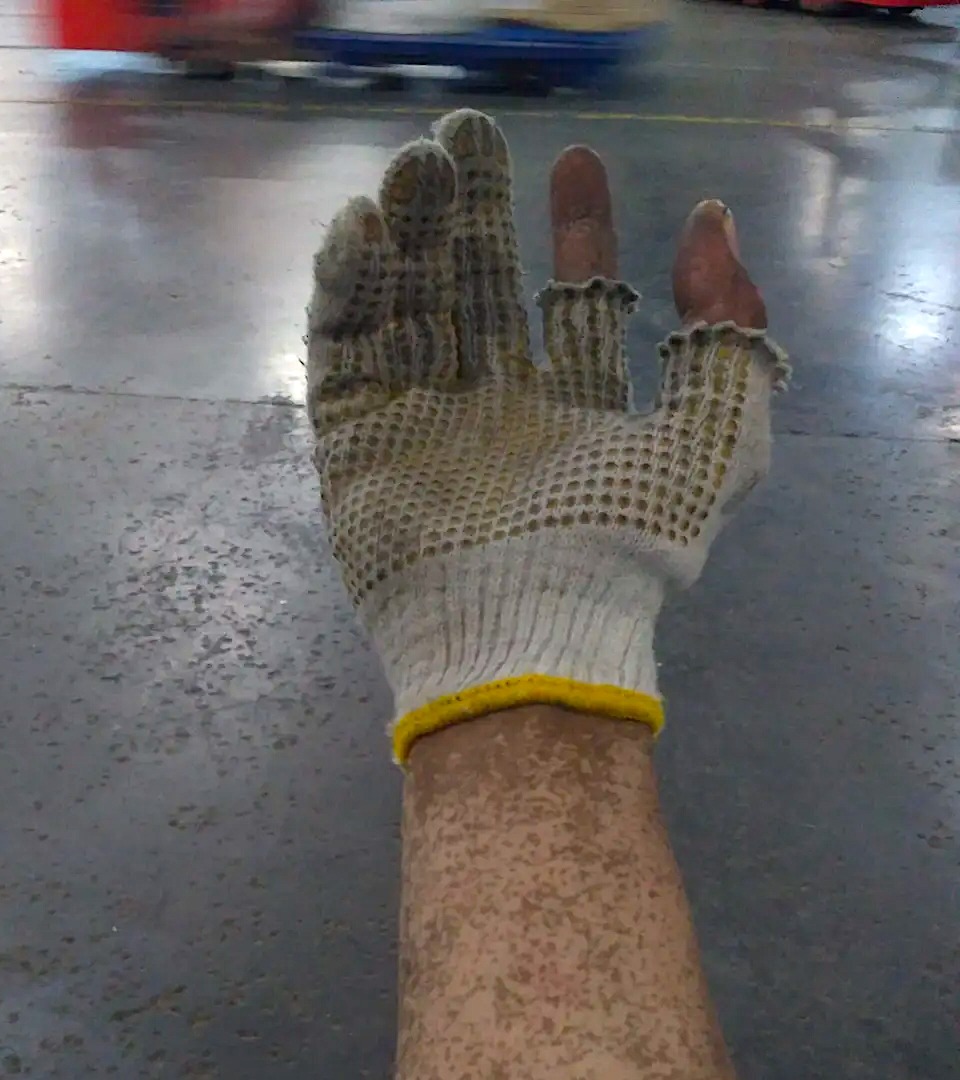
At this halfway point, the book loses some of its power. The remaining chapters describe the 16 other jobs Hu worked between graduating high school in Guangzhou in the late 1990s and his nightly warehouse job in Foshan that opened the book. While engaging, they feel somewhat tacked-on to pad the work out to book length. His observations, no doubt due to the larger distance in time, are less sharp. And Hu’s lack of agenda, otherwise a strength, shades into him having little point to make.
None of these “odd jobs” — mall security guard, apprentice baker, fashion store proprietor, cycle shop cashier — are as gripping as his work as a delivery driver. Perhaps that is because in the gig economy, delivery work exemplifies the precarity of an economy’s lowest rungs like few other jobs can. Delivery drivers in China brave the urban jungle with little health insurance and even less respect, while an exploitative algorithm dictates their every decision. As a job where monetary incentives have almost entirely replaced human decency, it is the perfect encapsulation of the on-trend term “late-stage capitalism.”
Between his various jobs, Hu intermittently worked on his writing — which has now become his full-time focus following his success. In the two years between the publication of the Chinese and English versions of I Deliver Parcels in Beijing, he has already published two other memoirs: I Mature Later Than the World (我比世界晚熟, 2024), about how he has long felt disconnected from society; and Life in Low Places (生活在低处, 2024), about his youth and family. Hu is now working on his first novel, he told ArtReview. In a way, through his writing he is still serving the same middle-class customers who used to pester him for parcels. But his minutes are no longer valued at just half a yuan.
Delivery drivers in China brave the urban jungle with little health insurance and even less respect, while an exploitative algorithm dictates their every decision.
While Hu remains remarkably even-handed despite the maddening experiences he describes, another recent addition to the Chinese workers’ literature genre takes a different approach. Adrift in the South by Xiao Hai (小海, the pen name of Hu Liushuai 胡留帅) is also a memoir recounting two decades working low-paid jobs, and it too spawned from an essay that caught readers’ attention: “I Was Once a Tiny Cog in Shenzhen’s Development” (我曾是深圳发展的一颗小螺丝钉), which was published online in 2024 and translated in Granta later that year, leading to this book deal. But unlike Hu’s stoic attitude, Xiao Hai’s pages drip with disappointment about wasting his best years on factory floors.
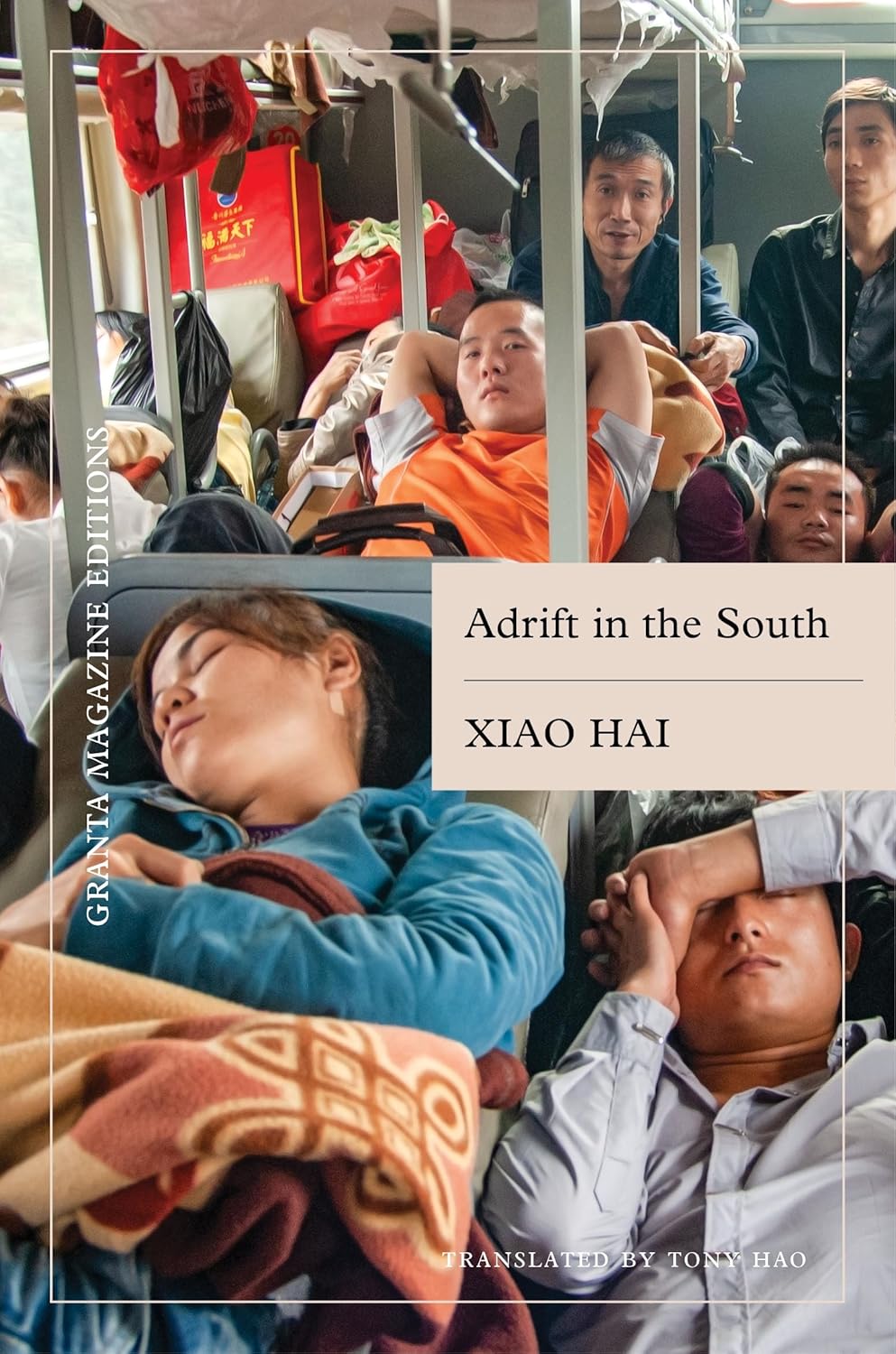
Xiao Hai left home, a village on the plains of Henan province, in 2003 at the age of 15. His parents, farmers with four children, told him and his brother that they could only afford for one of them to attend high school. Xiao Hai passed in favor of his brother, who had better grades. He instead joined a one-month sewing course at a “vocational school” that in practice operated as a recruiter of rural youth for coastal factories. A “teacher” took him and others to a factory in Shenzhen that makes language-learning devices. Thus, Xiao Hai writes, “began a new chapter of my life, one in which I transformed from a fifteen-year-old knucklehead into a jaded man in his thirties.”
As is common among Chinese factory workers, Xiao Hai hops from one job to the next, always in search of something less numbing, less predictable, and less underpaid. He yearns for a life that is different, but is unsure what that might be. He lacks the credentials to be hired in any other industry than garments or electronics manufacturing. He feels unmoored. His first call with his first mobile phone brings news that his brother — for whose education he had dropped out, and for which he had been sending money home — has also quit school.
Xiao Hai’s vexation doesn’t stop outside work hours. After a night shift in the summer of 2006, while eating pork-filled buns for breakfast, he is dragged into a minivan by police officers who demand to see either a temporary residence permit or a 300-yuan ($44) bribe. Without a phone or local friends who would be willing to post bail, and afraid to end up in a forced labor situation, Xiao Hai decides to run for it, escaping the police station and not stopping until he can hide in a bamboo forest. He later reflects on how, three years after Guangzhou police beat a designer at a garment factory to death in a case that caused a nationwide uproar, the police still see internal migrants as walking stashes of cash.
Xiao Hai finds a more peaceful existence working in a small factory on an island near Ningbo, just south of Shanghai, where there are few workers, few rules and Sundays off. A small local library there awakens in him a love for poetry that slowly takes over his mind. Inspired by the classics he commits to memory, he begins writing verses about his bleak prospects:
The greenest years of youth
Shards of dreams arriving late
Adrift for thousands of li—
Where will I end, and how?
The island’s only downside is its lack of young women. His parents pressure him to find a bride, and after a sexual awakening — the factory owner’s octogenarian father shows him what he’s missing out on by giving him a handjob — Xiao Hai too longs for companionship. He leaves the island to join a larger factory with a sizable female workforce. After some prodding by his older colleagues, Xiao Hai hits it off with a Sichuanese co-worker, but her mother objects to her dating a man from another province. The day she takes a train to leave, he quits the factory. This failed bid for romance, and his enduring failure to find a partner in the rest of the book, adds to the bitterness that Xiao Hai feels about his drifter life.
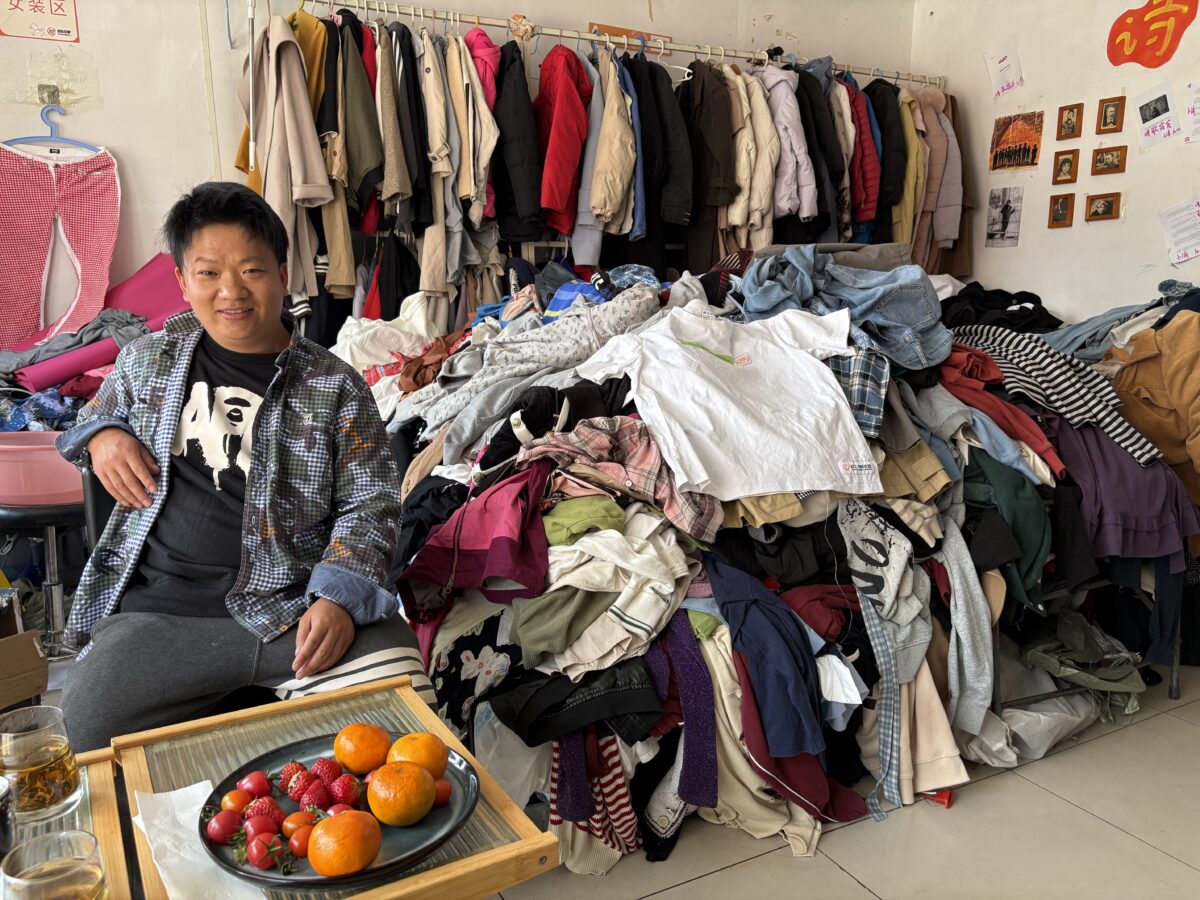
After a few fruitless attempts at other odd jobs — real estate agent, roast duck cook, popcorn vendor — Xiao Hai again works at a succession of factories. By now he won’t deny himself his longing for poetry. Job performance be damned, he carries a pencil and scraps of paper to catch sparks of inspiration, writing to escape the feeling of his “youth being devoured by the machines around me.” On a whim he sends poems to some of his favorite musicians, one of whom suggests he contact people in Picun, a village on the outskirts of Beijing where artist-laborers congregate and which houses the Museum of Migrant Workers. Here Xiao Hai finally flourishes and becomes a published poet. In Adrift in the South, his lyrical way with words is evident through the translation.
Though Xiao Hai ends up in a place where he feels “like a bee long astray who had at last flown into a garden of blooming flowers,” the book concludes on a downbeat note. In 2023, large parts of Picun are condemned, with the dreaded character 拆 (demolish) painted on the warehouse where he works, the migrant workers’ museum and many other buildings. Xiao Hai attributes this to the local government seeking to optimize the use of its land. Other writers saw it as yet another victim of Beijing’s ever-tightening restrictions on civil society. As Xiao Hai tallies up the state of his life in the final pages, he is alone, sad and without the cultural center that had felt like home. He still works as a manual laborer, finding loading trucks an increasing challenge for his middle-aged body. But he has at least found dignity in the written word.
Xiao Hai hops from one job to the next, always in search of something less numbing, less predictable, and less underpaid.
Both Hu Anyan’s and Xiao Hai’s books — their literary resumes of itinerant employment — provide a sobering insight into China’s economy. In 2010, China outstripped Japan as the world’s second-largest economy. Its ability to manufacture everything from cheap trinkets to industry-leading high-tech remains an object of global envy. From a top-down view, the Chinese economy looks set for many more years of success. But seen from below, through the eyes of these two writers, the inescapable conclusion is that China boomed in part because it provided no better prospects to its migrant workers than struggling through one low-paid job after another. China runs on hundreds of millions of Hu Anyans and Xiao Hais, but their share of the country’s riches has been meager. They toiled away during decades of unprecedented progress but have little to show for it. It was a time, Xiao Hai writes, “when everyone was riding the tide of China’s economic growth — except for us blue-collar workers.”
The prospects for change aren’t promising. China’s economy, while growing and producing more than it can consume, is failing to create enough stable jobs. Its construction and education industries no longer employ as many people as they once did. Manufacturing is increasingly being done by robots. As a result, parcel delivery, ride-hailing and other gig work is on the rise, as the Wall Street Journal recently reported. Such an increase in competition is likely to make this work even less secure.
As the ranks of the precariously employed expand, workers’ literature in China looks to only grow in relevance. Writers who want to evade censorship and reach a large audience may have to express their grievances indirectly, according to Zhu, the UC San Diego scholar — but attentive readers will still come away with a growing awareness of China’s labor issues. The Chinese edition of Adrift in the South will be published later this year by One-Way Street (单读), but it remains to be seen how much of Xiao Hai’s dejection at his life as a Chinese migrant worker passes the censors. At the very least, the picture that workers’ literature paints of how China’s economy truly works will continue to contrast with the official version.
Last November, Chinese state broadcaster CCTV and e-commerce behemoth Meituan published a short video with, they hoped, a positive message. In it, a woman named A Lan quits her desk-bound graphic designer job for something with a bit more freedom: riding around Dali, the city of China’s escapist dreams, delivering meals, flowers and medicine for Meituan. Sometimes she has to brave the rain, but mostly her new life is full of sunshine. Her manager is helpful. Customers are thankful. During rides, A Lan has time for her photography hobby, stopping to take artful pictures of traffic lights, cute dogs and tourists looking for more than a simple selfie. Her income allows her to buy a new camera, which leads to a photo exhibition. “I wanted to share the moments I had captured while delivering food,” she explains.
The backlash was fierce. Online commenters found the suggestion that couriers enjoy such relaxation and self-actualization laughable, to say nothing of the salary implied by the purchase of an expensive camera. Faced with a public unpliable to its positivity, CCTV took down the video. ∎
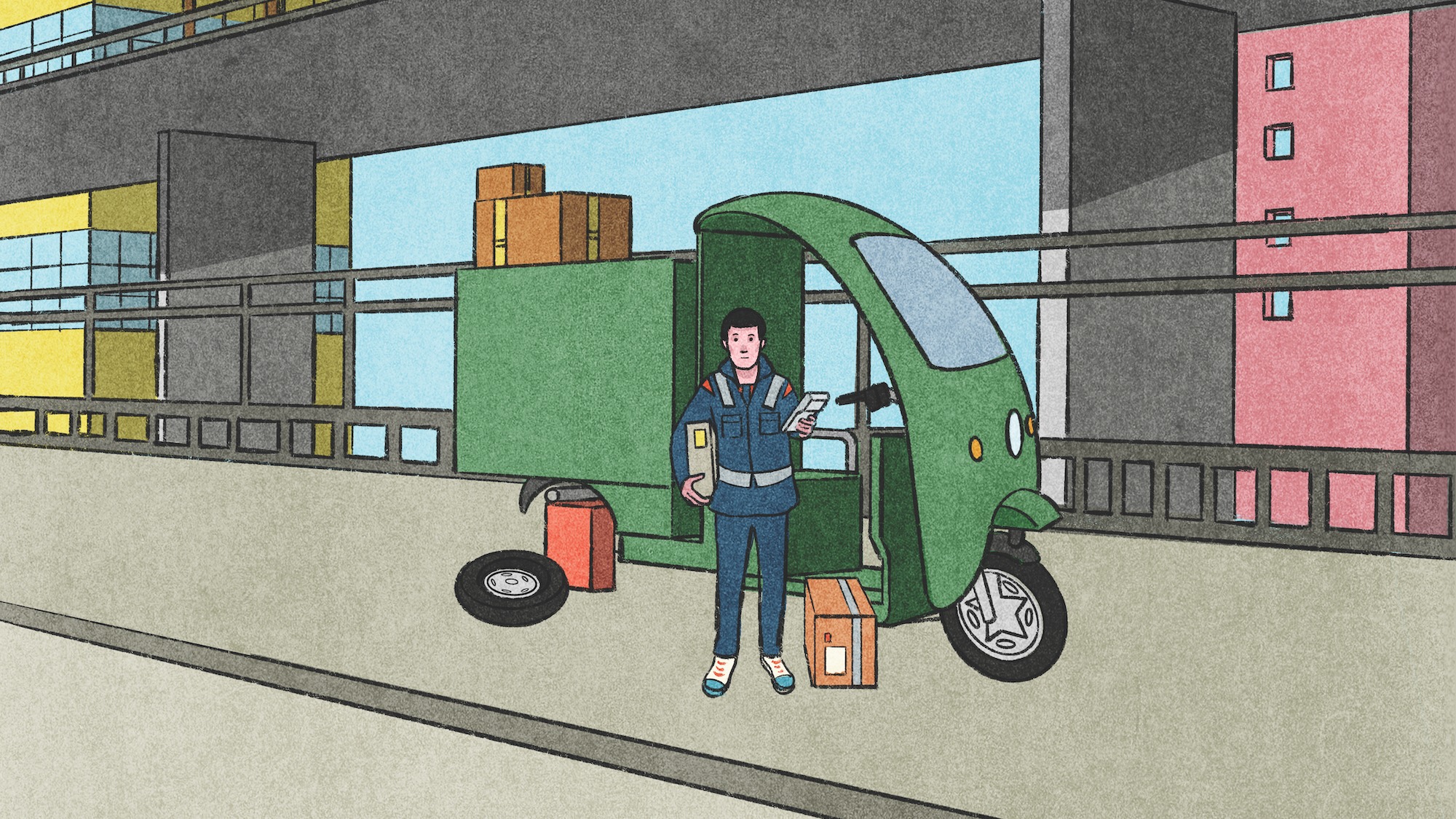
Feature image: Illustration by Klaus Kremmerz, courtesy of Astra Publishing House.

Kevin Schoenmakers is a New York-based freelance reporter and editor. He was previously a founding editor of Sixth Tone in Shanghai, China correspondent for Dutch news wire ANP, and Features Editor at Rest of World.