Sign up for our newsletter to be notified of new posts!
Reviewed:
• Looking for Tank Man by Ha Jin (Other Press, 2025).
• The Crazed by Ha Jin (Vintage, 2002).
• Beijing Coma by Ma Jian (Picador, 2008).
In the opening scene of Ha Jin’s new novel Looking for Tank Man, the protagonist Lulu joins a gathering on the campus of Harvard University to welcome a visiting Chinese premier in 2008. The cheering crowd is confronted by a lone protester, a middle-aged woman who holds up a sign that reads, “We Won’t Forget the Tiananmen Square Massacre!” Lulu is a Chinese sophomore at Harvard who grew up in Beijing, and she had never heard of this “Tiananmen Square Massacre.” The bewildering encounter leads her down a path of immense personal and professional consequences: she breaches a sealed episode in the national record, and unearths the buried family secret that both her parents were Tiananmen protesters.
Lulu and I are the same age. Both of us were born in China several months after the unspeakable date of June 4, 1989, when over 180,000 Chinese troops crushed a student-led pro-democracy demonstration, killing hundreds, possibly thousands, of protesters and Beijing residents on the way to Tiananmen Square. Like Lulu, I did not know about the event until I moved to the U.S. for school. For Chinese people my age or younger, finding out what happened that day marks a moment of political awakening. But now, 37 years after the protests and crackdown, referred to in the West simply as “Tiananmen,” the memory of that day is preserved in fiction as much as in fact.
Before any novelist put pen to paper, the Chinese government was the first to fabricate stories about Tiananmen. In a series of books, articles and television specials released shortly after the crackdown, the authorities did not deny that a calamitous event took place, but framed it as a successful military operation to quash a “counter-revolutionary riot” (反革命暴乱), where passionate students and “the masses who did not know the truth” (不明真相的群众) were led astray by “a very small number” (极少数) of bad actors consisting of vagrants, former convicts and foreign agents. In this narrative, the People’s Liberation Army soldiers who enforced martial law were the primary victims, and dozens of them sacrificed their lives to minimize civilian casualties during fierce street battles with the rioters, who had concealed themselves within the beguiled masses.
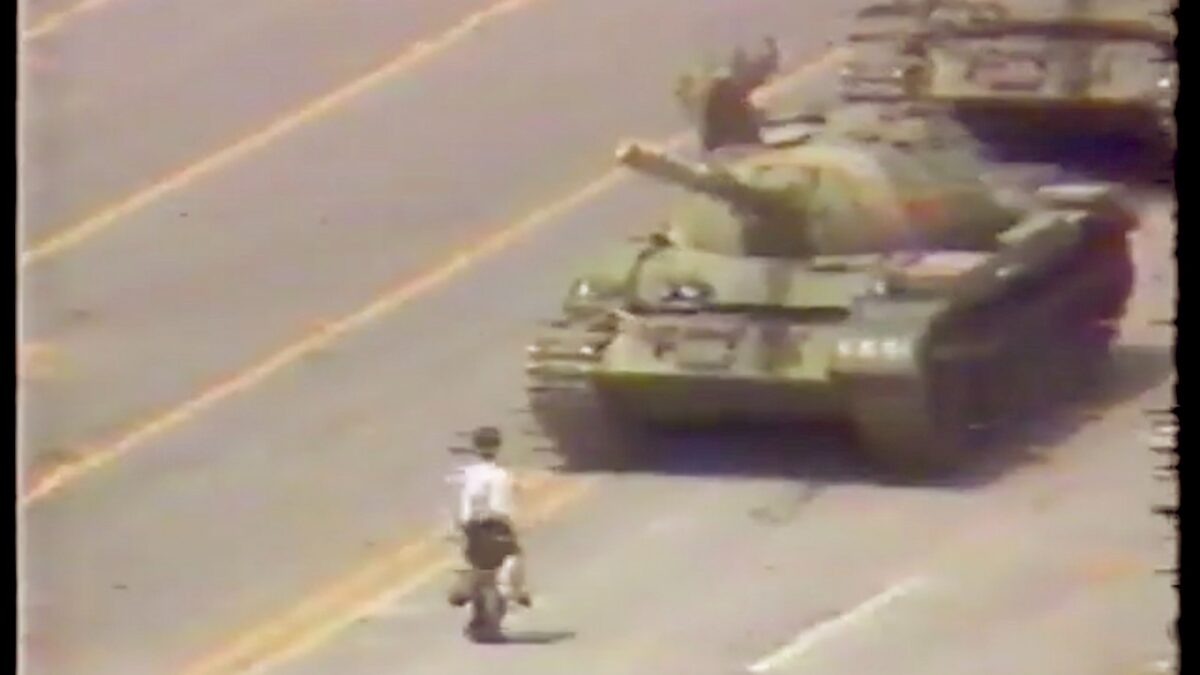
Several of these official accounts showcased “Tank Man,” the unknown individual who stood in front of a column of tanks to block their progress down Chang’an Avenue (Avenue of Eternal Peace) on the morning of June 5, a day after the massacre. Narrators on state TV hailed this moment as proof that the Chinese military exercised maximal restraint, and some observers even speculated that the iconic scene was actually staged for government propaganda. In Looking for Tank Man, Lulu decides to study this mystery figure for her PhD dissertation. She makes a bold suggestion: Tank Man was indeed a set-up, but “the propaganda skit might have been a subversive gesture from within the regime” to covertly “display the civilians’ defiant spirit.” Many state media workers had joined the demonstrations at Tiananmen, and subsequent TV programs ostensibly denouncing the protests as dangerous and unruly also included extensive, authentic footage of peaceful, joyous crowds calling for free expression and democratic reform.
Regardless of whether the state’s propaganda response to the crackdown had been sabotaged from within, its indoctrination effort proved a total failure. Unable to convince the people of the narrative it had spun, Beijing changed its strategy around 1991, two years after the massacre, and instead pretended that nothing had happened. Every mention of events related to June 4, including the government’s own propaganda materials, was erased from the public record.
When the state forces the people to forget, writing about Tiananmen is not just a creative choice; it can be a moral obligation and a form of resistance. In addition to memoirs, documentaries and academic works that feature firsthand testimony and scholarly analysis, dramatized portrayals of the Tiananmen movement also appear in fictional films and literature. The scholar and translator of Chinese literature Michael Berry, in his 2008 book A History of Pain, writes, “Beijing 1989 has become one of the most popular time-space coordinates onto which overseas Chinese writers project their fictional worlds.”
Some of the authors — like the Chinese-American Ha Jin, who was born in China but has lived in the U.S. since the 1980s — write directly in English. Other Tiananmen novels were written in Chinese and have been translated into other languages. In both cases, these books circulate primarily in English and outside of China, where Tiananmen has not been censored and veritable information abounds. This political and linguistic distance from the site of the event raises thorny questions on who gets to write about Tiananmen, for whose consumption, and to what end. Being outside of Beijing’s grip does not mean one can simply create without inhibition. Any writer must contend with market forces and the limits of their imagination, and those from a minority also need to navigate the uneven terrains of power in world literature. For both author and reader, journeying through the page to place oneself in Tiananmen Square in 1989 is an act of fictional witnessing. The real question is not whether historical accuracy can give way to poetic license, but what deeper truths are sought and revealed by the imaginary accounts.
Before any novelist put pen to paper, the Chinese government was the first to fabricate stories about Tiananmen.
During the spring of 1989, supporting the Tiananmen Square movement was a rallying point for the global Chinese diaspora. Thousands marched in solidarity in their respective cities, and many donated money and supplies to the demonstrators in Beijing. In the tragic aftermath, Tiananmen Square continues to be an important site for artists of Chinese descent to assert their ethnic identity and reconnect with their cultural heritage. By writing about Tiananmen, these diasporic Chinese authors create a fictional return to their ancestral homeland, seeking to better understand their immigrant elders or relatives who still live in China.
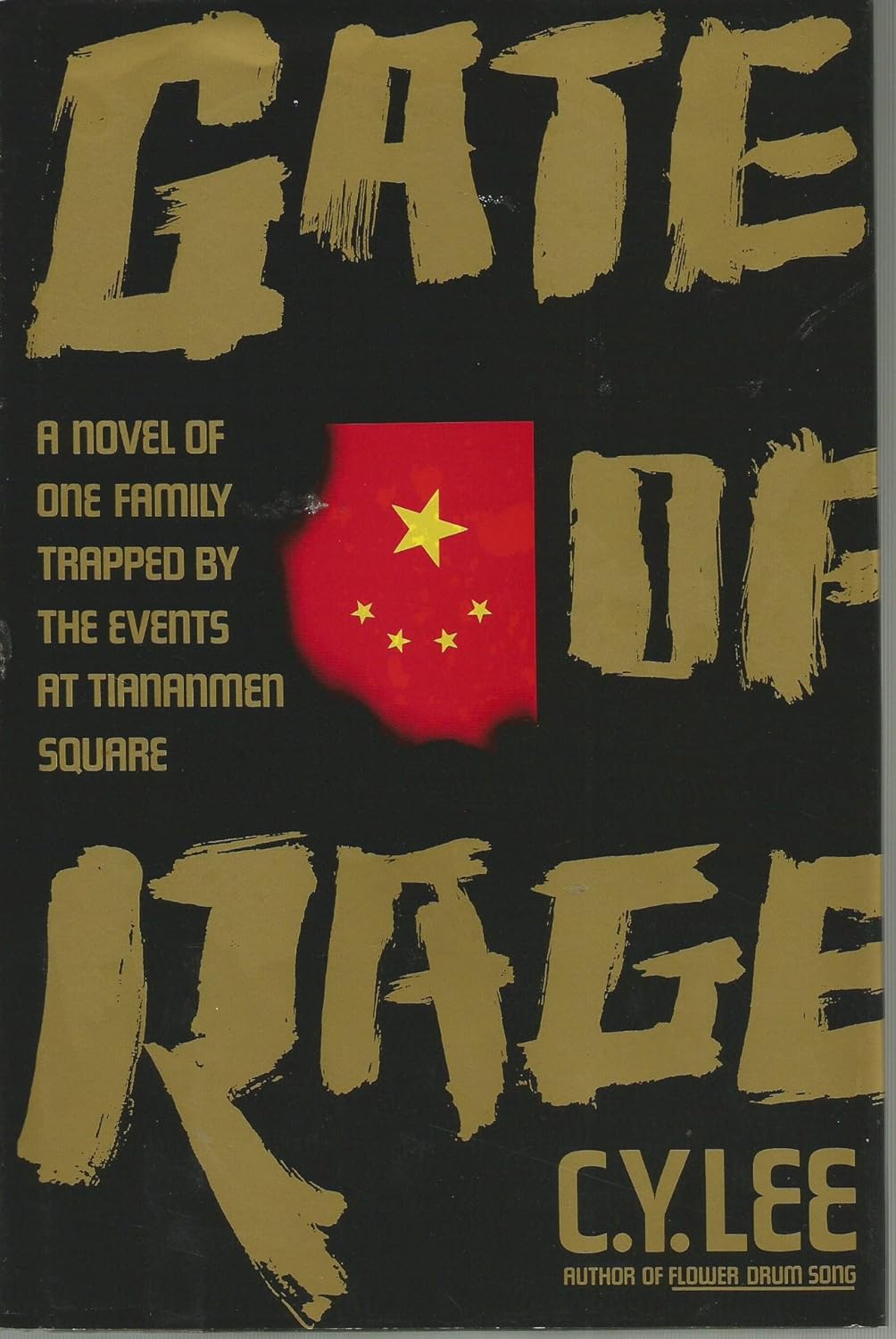
One of the earliest fictional works on Tiananmen is Gate of Rage: A Novel of One Family Trapped by the Events at Tiananmen Square (1991) by Chinese-American writer C. Y. Lee (黎锦扬). Born in 1915 to a prominent family in Hunan province, Lee moved to the U.S. in 1943 and wrote the bestselling novel The Flower Drum Song (1957) about Chinese immigrants in San Francisco. In Gate of Rage, the protagonist is a Hong Kong-based real estate tycoon who fled the mainland before the Communist takeover. He returns to China decades later to pursue business opportunities in the Reform Era and to reunite with the son he left behind. The latter gets involved with the Tiananmen protests, and the family is once again torn apart.
For the Taiwanese-American novelist Terrence Cheng, Beijing was the birthplace of his parents, who followed the Nationalist government to Taiwan in 1949, then moved to America in 1973 when Cheng was one year old. As a teenager in New York, he watched coverage of the Tiananmen protests and crackdown on TV. In the same year, his grandfather was also dying. “It was only when my grandparents started to die that I began to think about China and my family’s story,” Cheng writes in the foreword to Sons of Heaven (2002), his novel set during the 1989 protests. The story revolves around three main characters: siblings Lu and Xiao-Di, and China’s paramount leader Deng Xiaoping. Lu is a soldier who takes part in the crackdown, while his younger brother Xiao-Di, a graduate of Cornell University, is a protester later revealed to be Tank Man. Cheng makes a laudable effort to render diverse perspectives through a sympathetic lens and portray all three men as victims of Chinese politics (even Deng Xiaoping, for how his family suffered in the Cultural Revolution). Yet Xiao-Di, the only one speaking in the first person, reads less like a child of Mao Zedong’s China than an Asian-American youth with identity issues and a hero complex. The exoticized China that emerges from the book seems to exist only in a Western imagination.
In Madeleine Thien’s 2016 novel Do Not Say We Have Nothing, which was shortlisted for the Booker Prize, diasporic distance and degrees of unknowing are skillfully applied for literary effect. Like Thien, the narrator Marie is a second-generation Canadian, born to immigrant parents with Chinese roots. Marie is 10 years old in 1989 when her father suddenly leaves for Hong Kong, where he takes his own life. A year later, a young Chinese woman named Ai-ming, whose father was a schoolmate of Marie’s, shows up at Marie’s home in Vancouver for temporary refuge. In the following years, Marie searches through family archives and seeks mutual acquaintances to untangle her connections to Ai-ming. The quest leads Marie through the fervors of the Cultural Revolution, when her father denounced Ai-ming’s, to the bloody night in 1989, when Ai-ming’s father Sparrow was killed. Burdened by decades of guilt, Marie’s father committed suicide. Thien’s poignant prose veils historical events with mythical allure. In her telling, Tiananmen, like the stories of earlier wars and upheavals, becomes part of a national legend.
For ethnic Chinese writers like Lee, Cheng and Thien, the desire to use Tiananmen as a portal to transport their fictional selves to a country they left long ago, or never lived in, exposes a fault line between homeland and diaspora writers. For native Chinese authors, Tiananmen is not a window for an imagined return but a visceral point of departure. Instead of suturing a frayed familial lineage, their works bare the wounds of severance.
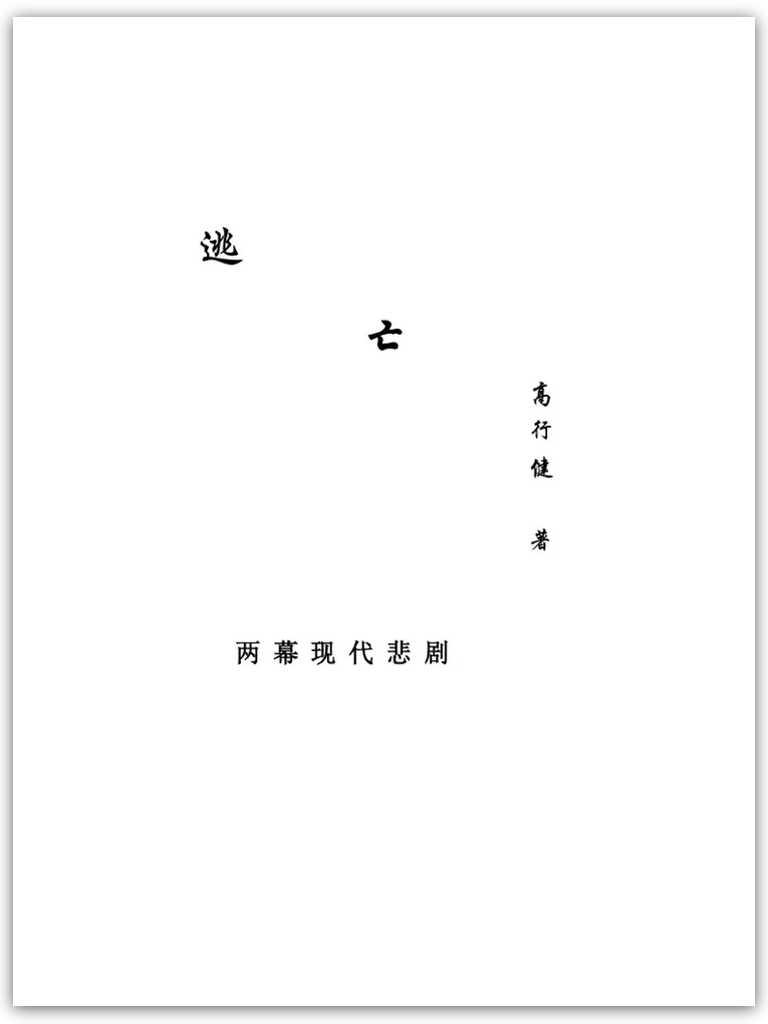
This sense of abandonment, and the necessity of flight, are palpable in Nobel laureate Gao Xingjian’s 1989 play Fugitives (逃亡, translated into English by Gregory B. Lee in Chinese Writing and Exile), beginning with the title. Born in 1940, Gao was a successful novelist and playwright in China when he moved to Europe in 1987 for professional opportunities. He publicly denounced Beijing’s actions after Tiananmen and wrote Fugitives that fall in Paris, where he still lives. In the play, three people are hiding in a dark, damp warehouse amid sounds of gunfire outside: a young man and a young woman who are both student protesters, and a middle-aged intellectual who is wanted by the authorities for signing his name to political manifestos. The young man and the middle-aged man argue over the efficacy of the protest, and the latter chastises the students for their naivete. “I’m escaping from all so-called collective will,” the weary intellectual declares, echoing Gao during his lecture to accept the 2000 Nobel Prize in Literature, when he proclaimed “literature can only be the voice of the individual.”
Gao’s homeland has disowned him and banned his works. Ironically, when the Chinese government was still trying to shape rather than erase the discourse about Tiananmen, Fugitives was published in full in its Chinese original by a state-owned press in Beijing, as part of a book titled “Elites” on the Run and Their Deeds (亡命“精英”其人其事, 1991). The propaganda volume includes an essay admonishing Gao for “malicious fabrication” in his fictional play, while the bulk of the critique is aimed at the three characters for their sexual improprieties (the married middle-aged man has sex with the young woman, and later the young man forces himself on her).
Despite the state’s paternalistic preaching about virtue and chastity, changes in Chinese society post-1989 prove that politics is more dangerous than sex. After quelling popular demands for political liberalization, the government diverted the masses’ attention to material consumption and physical fulfillment. The pursuit of corporeal pleasures in the face of suffocating state oppression is a recurring theme in fictional works related to Tiananmen, appearing in films like Stanley Kwan’s Lan Yu (2001) and Lou Ye’s Summer Palace (2006) — which are analyzed in detail in literature scholar Thomas Chen’s impressive book, Made in Censorship (2022) — as well as in several novels.
In Summer of Betrayal by Hong Ying (1997, tr. Martha Avery), the poet Lin Ying “fled through a city alight with flames” on the morning of June 4, only to find her lover in bed with another woman. Betrayed by both her government and her man, and frustrated by the impotency of language, Lin Ying reclaims her autonomy by embracing her sexuality. Lili by Annie Wang (2001) revolves around the eponymous protagonist’s relationship with American journalist Roy, where the pair act out the stereotypes of the native informant and the Western explorer in late-1980s Beijing and neighboring villages, before both take part in the Tiananmen protests. More recently, in Tiananmen Square (2024) by Lai Wen (a pseudonym), the narrator Lai is inspired to activism by her boyfriend Gen. Lai’s friend Anna, in stage costume, turns out to be Tank Man.
All three authors are Chinese women who were living in Beijing in 1989 and later moved abroad, where they wrote the books. Summer of Betrayal was written in Chinese and translated, while Lili and Tiananmen Square were written in English. The Orientalist gaze that permeates the latter two cannot be blamed on the authors’ unfamiliarity with China. The exotification of their homeland, fetishization of Asian women and foregrounding of the Tiananmen protests are designed to appeal to Western audiences. In an Anglophone publishing market that treats both knowledge about China and the female body like commodities, Tiananmen has become a marketing ploy, elevating sappy love stories to putative moral heights.
By writing about Tiananmen, these diasporic Chinese authors create a fictional return to their ancestral homeland, seeking to better understand their immigrant elders.
Tiananmen gets a worthy treatment in fiction in Ma Jian’s Beijing Coma (2008, tr. Flora Drew). The protagonist Dai Wei bears silent witness to both the bloodshed on June 4 and the social transformations in the years after. A biology student at Peking University during the protests, he is shot in the head in the crackdown and spends the next decade lying in a coma, cared for at home by his widowed mother. Seemingly unconscious and left behind by a rapidly-changing society, Dai Wei’s comatose body preserves a forbidden record against historical erasure. The sprawling novel takes place inside Dai Wei’s mind along two interwoven timelines: in the first, he sifts through fragments of memory to reconstruct his life from early childhood to the night of the massacre; in the second, he keeps up with the developments after Tiananmen by listening to conversations and the news on TV.
Ma Jian was born in China in 1953 and has lived in the UK for over two decades. By 1989, the rebellious author had moved to Hong Kong to escape Chinese authorities who condemned his work as “spiritual pollution,” but he traveled back to Beijing to take part in the demonstrations. Unlike other novels of Tiananmen, where the characters become spokespersons for their respective social groups, Beijing Coma’s nuanced portrayals do not render easy judgment. In painstaking detail, Ma describes a student movement where courage is coupled with vanity, idealism is compromised by in-fighting, and calls for democracy in China are contradicted by the protesters’ own propensity for hierarchy and top-down control.
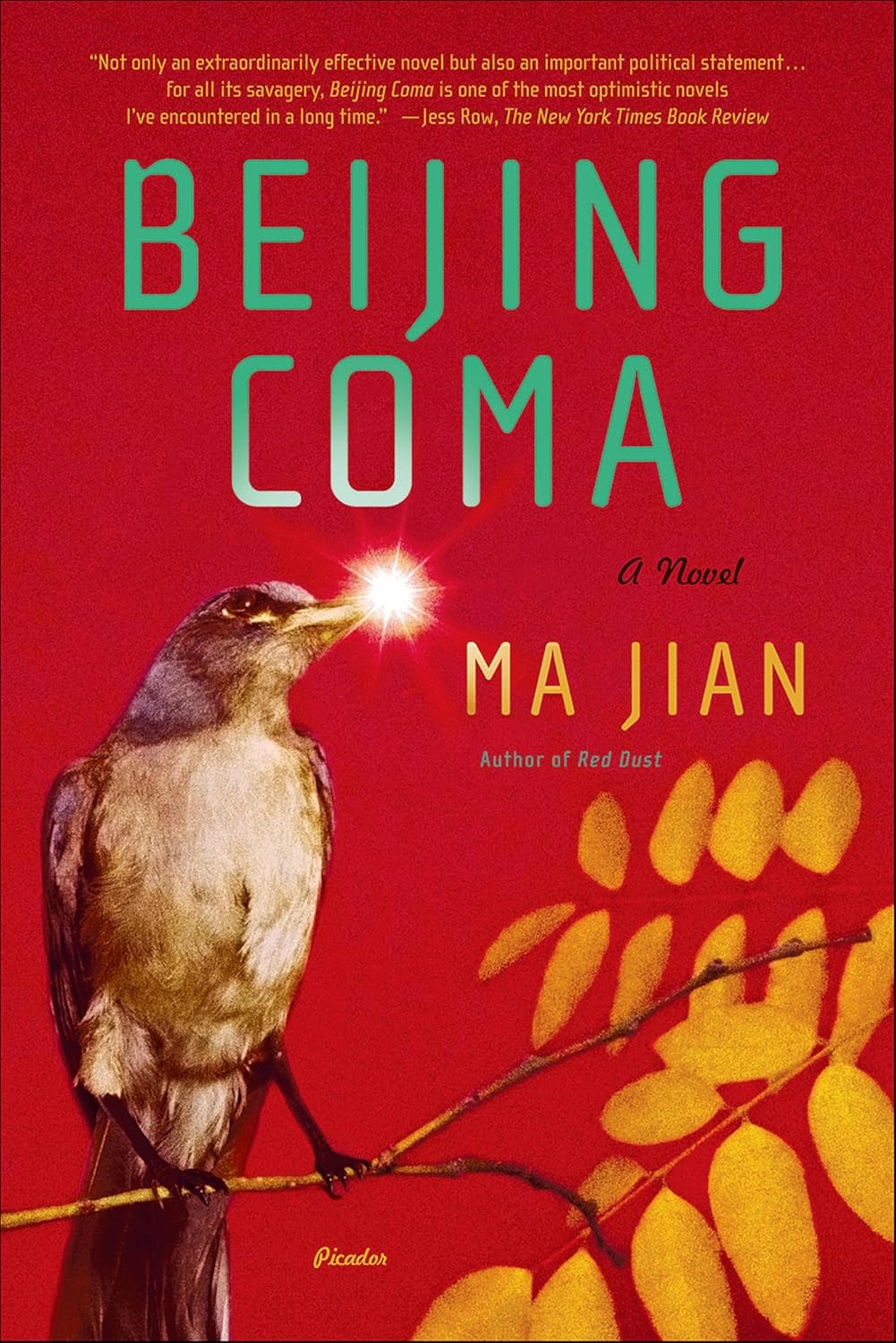
The novel in Chinese was originally titled “flesh earth” (肉之土). The graphic phrase is a depiction of the massacre, where tanks ran over bodies, as well as the cannibalistic nature of Chinese society. As Dai Wei recalls, political prisoners of the labor camp where his father was sent ate the corpses of fellow detainees in order to survive the famine caused by the Great Leap Forward (1958-1962). But recollections of Mao-era disasters, which also appear in other Tiananmen novels, risk ossifying Chinese history into an unbroken chronicle of terror and tyranny. Ma avoids this essentializing trap by also detailing the Reform Era post-Tiananmen, when cravings for wealth have numbed political afflictions. Struggling with her son’s medical bills, especially since the state has cut healthcare subsidies, Dai Wei’s mother Huizhen markets her son’s urine as a miracle drug, and sells one of his kidneys to a colliery boss for 8,500 yuan.
The very existence of Dai Wei refutes Beijing’s denial about the massacre. For years, Huizhen stubbornly seeks treatment for her son, and suffers constant surveillance from state security. Once a loyal defender of her government, she emerges at the end of the novel a fierce dissident. As part of Beijing’s Olympic bid at the turn of the century, her apartment building is slated for demolition. But Huizhen refuses to leave. After all adjacent structures have been torn down, what remains of her flat is “no more than a windy corridor” high above ground, “like a bird’s nest hanging in a tree.” The Tiananmen mother flies a national flag from her balcony and shouts, “The people will be victorious! Down with Fascism!” — echoing the cries of “Fascists!” from Beijing residents toward the troops during the crackdown in 1989.
As the scholar Belinda Kong points out in Tiananmen Fictions outside the Square (2012), her study of how Tiananmen politicized the Chinese literary diaspora, the tanks never left the square, “except now bulldozers replace tanks [and] the Square is everywhere.” In the 1980s, China’s messy transition out of socialist planning to embrace capitalist development led to rampant corruption and widening inequality. Material discontents, not just abstract demands for democracy, ignited the nationwide protests of 1989. The tanks at Tiananmen crushed the people’s dreams for a freer China; they also paved the way for the country’s economic transformation, where interests of the state, aligned with capital, continued to trample human rights.
Recollections of Mao-era disasters, which also appear in other Tiananmen novels, risk ossifying Chinese history into an unbroken chronicle of terror and tyranny.
In The Crazed (2002), Ha Jin’s earlier work inspired by Tiananmen, the protests loom in the distance. Set outside Beijing in the northern Chinese city of Shanning, the story begins in the spring of 1989, when Professor Yang suffers a stroke. The narrator Jian is a student of Yang’s and engaged to Yang’s daughter Meimei. A scholar of literature, Yang was persecuted during the Cultural Revolution, and kept his sanity by reciting Dante’s The Divine Comedy when enduring torture. Now, crazed and confined to a hospital bed, Yang has imaginary conversations with past lovers, rails against his imprisonment, and recites poems in foreign languages at night.
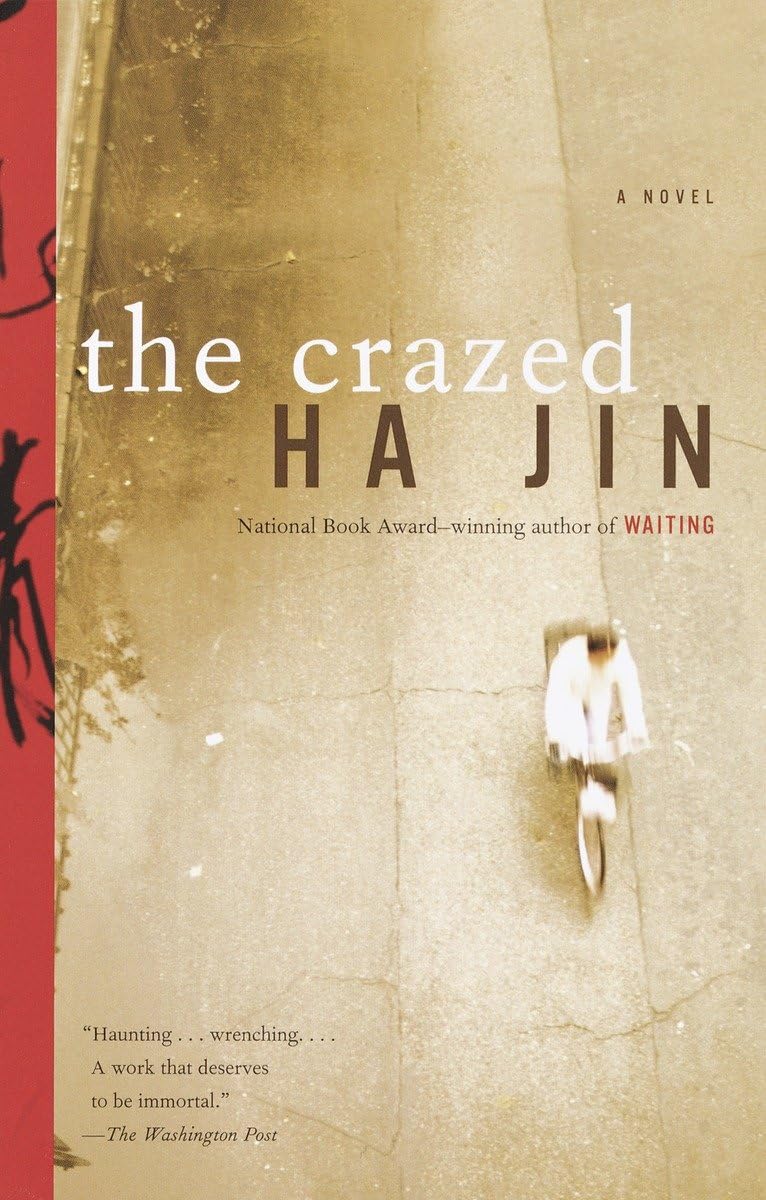
Born in northern China in 1956, Ha Jin drew inspiration for Yang from his own experience as a student at Shandong University, when a teacher of his became demented and spoke without inhibition. The raving professor also invokes the central figure in Lu Xun’s classic 1918 short story “Diary of a Madman” (狂人日记). Ha Jin has cited Lu Xun as a literary influence and wrote a short story imagining Lu Xun’s process of composing “Diary of a Madman”: “[I]n a crazed voice the narrator could speak his mind freely,” the fictional Lu Xun thinks to himself, “because madness might justify stark candor.”
In the preface to Call to Arms (呐喊, 1923), the collection in which “Diary of a Madman” appears, Lu Xun famously compared Chinese society to a windowless iron house, where most people are fast asleep and oblivious to their imminent suffocation. In The Crazed, Yang makes a reference to this. He tells a colleague that Jian “had better leave this iron house soon so that he won’t end up a mere scribe here.” Scholars in his country, according to Yang, are “all automatons without a soul.” Contrary to romanticized depictions of the 1980s in China as a time of intellectual ferment before the arrival of tanks, Ha Jin paints a deeply pessimistic picture of social stagnation and bureaucratic abuse. The reality was a combination of both, manifesting unevenly across major cities and poorer provinces.
In the novel, Jian agrees with his professor and decides to forgo plans for a PhD in literature at Peking University. When he informs his fiancée Meimei, a medical student in Beijing, she breaks up with him. For weeks, Jian has been following the protests in Tiananmen Square through Meimei’s letters and Voice of America broadcasts, and has encountered local demonstrations in Shanning. In a fit of anger, he decides to go to Tiananmen with a group of schoolmates. They board a train in the early morning of June 3 and arrive in Beijing at dusk, right before the capital city turns into a zone of slaughter (around 10 p.m.).
Separated from his group amid the chaos and with no cars or buses available, Jian tries to walk to Tiananmen Square, but he gets lost dodging bullets and running away from soldiers. He helps carry a wounded boy to the hospital, and takes the first train back to Shanning. Ever since that night of carnage, a terrible vision haunts the once-idealistic young man: “I saw China in the form of an old hag so decrepit and brainsick that she would devour her children to sustain herself.” The evocative description is also a callback to Lu Xun. In “Diary of a Madman,” the narrator discovers that while Chinese history has “virtue and morality” scrawled over every page, if one reads between the lines, the entire volume is filled with two words: “Eat people.”
On that fateful night in 1989, Ha Jin was pursuing his PhD in Anglophone literature in the U.S., with a teaching position waiting for him at his alma mater, Shandong University. He had served in the Chinese military for several years in the 1970s, and the sight of the People’s army brutalizing the people was an unforgivable betrayal. He never returned to China and writes exclusively in English, partly as an act of protest against the Chinese regime. In a 2009 essay for The New York Times, on the 20th anniversary of Tiananmen, Ha Jin explained his exile from both his motherland and mother tongue: “I cannot leave behind June 4, 1989, the day that set me on this solitary path.”
Outside of China, Tiananmen is not at risk of being forgotten, but awareness does not equate understanding.
More than two decades after publishing The Crazed, Ha Jin has returned to Tiananmen in Looking for Tank Man. For the author and his protagonists in both novels, the square in 1989 is a site of intense longing yet lies beyond reach. Unlike Jian — who never makes it to Tiananmen Square — Lulu, the Harvard student, only learns about the massacre after leaving China. The distance between her and Tiananmen is both geographical and temporal. She tries to piece together what happened in her hometown of Beijing shortly before she was born through secondhand sources: witness testimony, academic archives, and her mother’s journal from that momentous year.
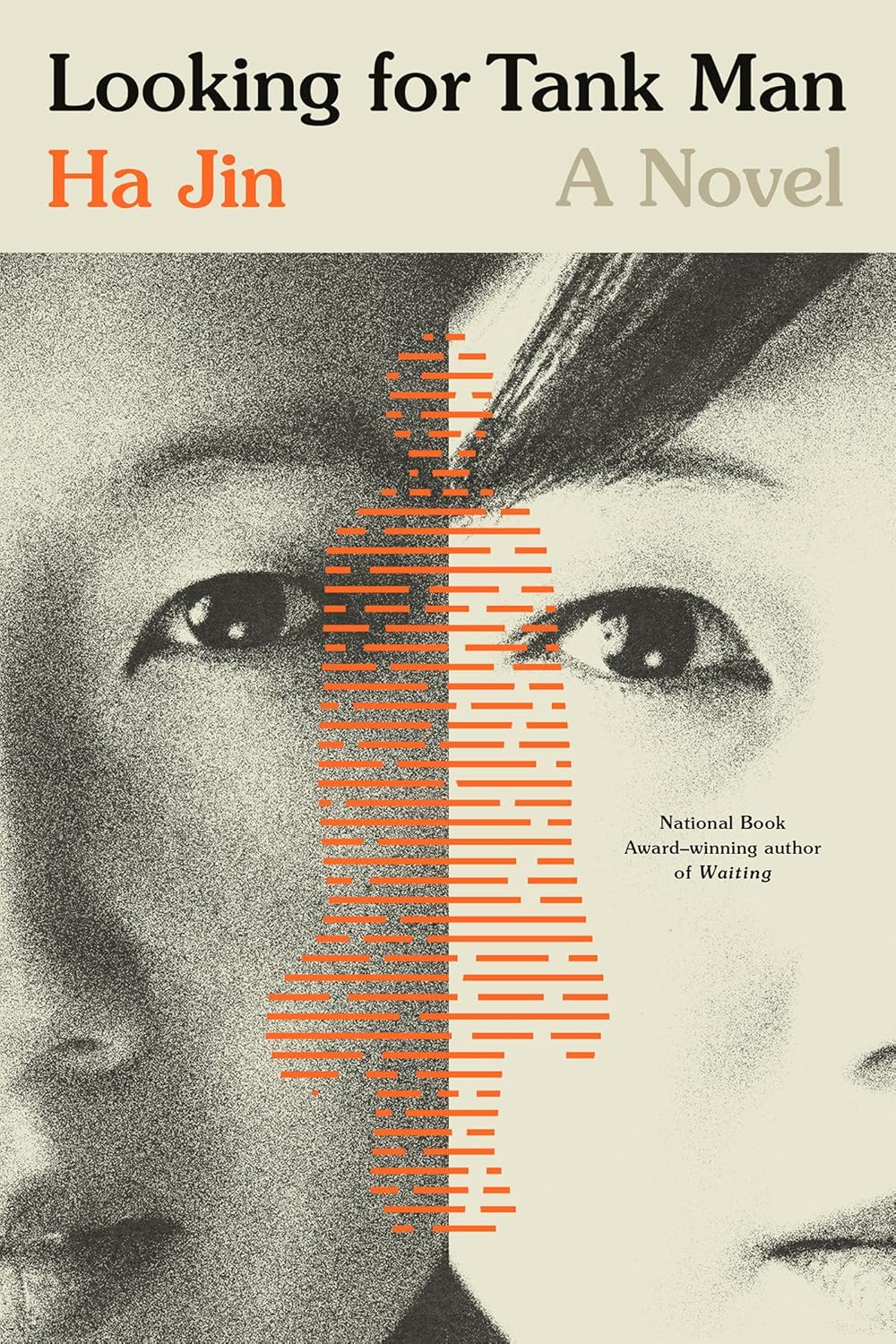
As a student at Peking University, Lulu’s mother Anmin was a protester in 1989 and took part in the hunger strike. Lulu’s father, an artist, helped build the Goddess of Democracy statue, an homage to the Statue of Liberty, which was erected at the square. Lulu was conceived shortly after the crackdown, as her parents sought solace and safety in each other. “This means I am a fucking Tiananmen baby!” Lulu yells at her mother after uncovering the family secret. Both her parents had decided it would be safer if Lulu did not know anything about Tiananmen, let alone her family’s involvement.
While earlier Tiananmen novels also feature passionate youths and their jaded elders, like the young man and the middle-aged intellectual in Gao Xingjian’s Fugitives, or Dai Wei and his mother in Ma Jian’s Beijing Coma, Looking for Tank Man is set in the present, when fresh-faced protesters in 1989 are now middle-aged, and their children are about the same age as the students at Tiananmen. This generational shift contains a painful constant: both then and now, the elders have tried, and failed, to protect the young from a merciless state.
Constructed as a campus novel, Looking for Tank Man explores the afterlives of Tiananmen through Lulu’s keen observations. An American schoolmate worships Tank Man and hangs a photo of the iconic stand-down in his locker. Lulu’s former teacher at Harvard, an immigrant from China, devotes her career to keeping the memories of June 4 alive. An exiled dissident, who had served three years in prison for his role in the Tiananmen protests, fails to adjust to life in the U.S. and dies in destitution. After graduating from Harvard, Lulu pursues a PhD in Chinese history at Columbia University and writes a dissertation on Tank Man: the creation of the iconic image, its dissemination and reimagination by Western artists (including Michael Jackson in a 1997 performance of “Earth Song”), and its suppression in China. She even translates her manuscript into Chinese and gets it published by a diasporic Sinophone press based in the U.S.
For Lulu, politics is always personal. Toward the end of the novel, she comes to terms with the cost of writing a book on Tiananmen: barred from entering China, she “might have to live in exile.” She strikes a defiant note. “Believe it or not, I have found him,” she tells a schoolmate about her search for Tank Man. “I’ve found him in me.”
The statement feels anticlimactic. After years of studying the origins and evolution of Tank Man for her PhD, and despite her misgivings that the moment might have been staged, Lulu cannot resist the cliché of picturing herself as a hero of Tiananmen Square. This disappointing conclusion to the novel also indicates the exhaustion of a common narrative about Tiananmen in the West, repeated in fiction and non-fiction alike. Both the historical event and its aftermath are collapsed into hollow binaries: courage and cowardice, resistance and suppression, knowing and not knowing. It is easy to proclaim “Never Forget” from an ocean away, but what is actually remembered?
37 years ago, the protests that emanated from Tiananmen Square drew support from all walks of society, especially workers, who were lauded as the nation’s backbone in the socialist era yet faced discrimination and disenfranchisement during market reforms. The state deemed labor organizing more threatening than student protests, and the workers and ordinary residents of Beijing bore the brunt of the crackdown. Even the government’s own propaganda betrayed an elitist bias, blaming the “dregs of society” (社会渣滓) for jeopardizing innocent students. The class hierarchy that manifested during and after Tiananmen extends to its artistic remembrance. In most fictional works about the movement, the protagonist is a student or from an intellectual background — perhaps because only the relatively privileged can leave China and write about Tiananmen from the safety of distance, where they must also speak in the language of Western liberalism to reach a broader audience.
Writing fiction as a form of protest against one’s home government permits the Chinese state to shape the landscape of literary imagination; authoritarian states are not the only force capable of erasure. For those of us who are spared the firsthand trauma of 1989, venturing into the forbidden is only the first step. Outside of China, Tiananmen is not at risk of being forgotten, but awareness does not equate to understanding. To honor the legacy of June 4, we must reject the temptation to indulge in melancholia and reduce history to a spectacle. Instead, we must rescue the truth of Tiananmen from the distortions of Orientalism, and interrogate the protesters’ demands beyond mere slogans. As children of Tiananmen Square, we owe it to the dead as well as to the living. ∎
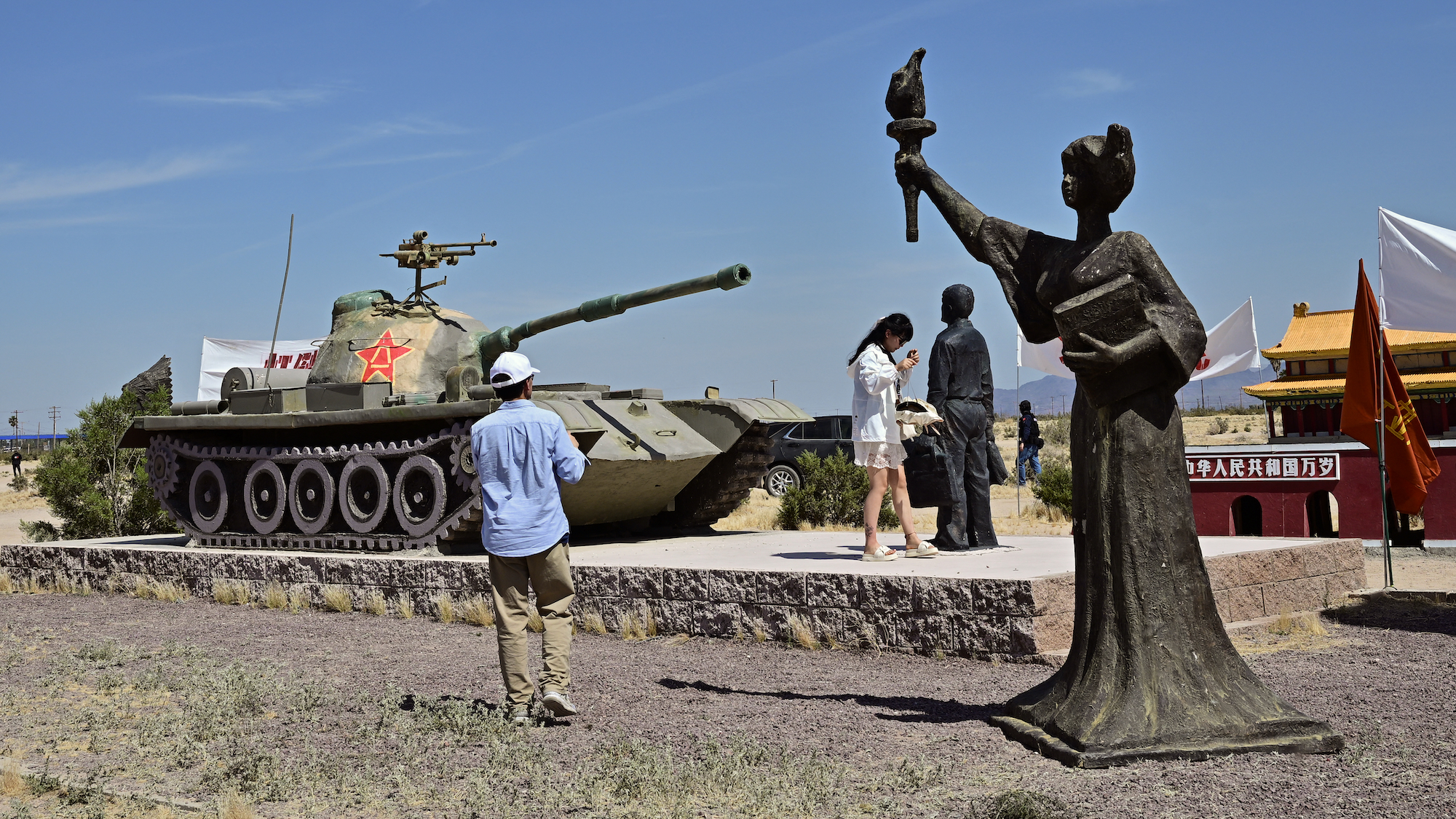
Header: Tourists view Chen Weiming’s art works “Tank Man” and “Goddess of Democracy” at the Liberty Sculpture Park, Yermo, California, 2024. (Frederic J. Brown/AFP/Getty)

Yangyang Cheng is a writer and scholar whose research focuses on the history of science in China, and U.S.-China relations. Her award-winning essays have appeared in The New York Times, The Nation and elsewhere. Born and raised in China and trained as a particle physicist, she worked on the Large Hadron Collider for over a decade.