Sign up for our newsletter to be notified of new posts!
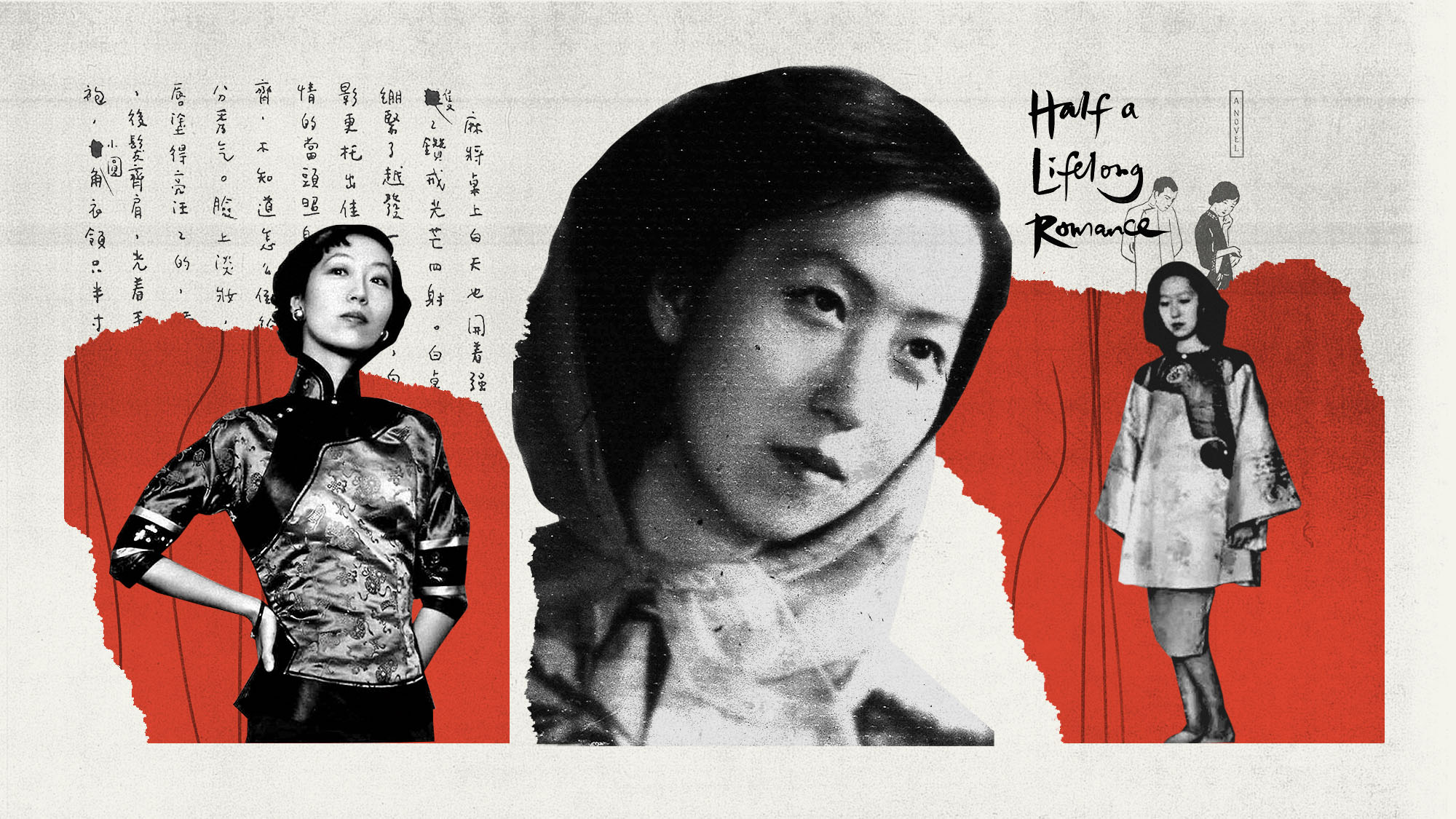
Three decades after her death, Eileen Chang (张爱玲) is still one of the world’s bestselling Chinese writers. She sells hundreds of thousands of books a year, mostly in Chinese, according to her Taiwanese publisher and global representative, Crown Culture. Her sales are far greater now than they ever were during her lifetime. Yet as early as the mid-1960s, Chang was called “the greatest Chinese writer since the May Fourth Movement” by one of her early champions, the critic C.T. Hsia. For Chinese youth today, reading Eileen Chang is “part of the literacy of growing up,” University of Hong Kong scholar Nicole Huang told me: “She definitely was the brightest literary star of her time.”
Chang’s posthumous fame in China has evolved into a mythology perhaps comparable to that of Hemingway in the U.S. But like all powerful myths, its meaning depends on whom you ask. Chang has been called both a traditionalist of the last days of dynastic China, and hailed as a modernist of liberated individualism. She has been labeled at various times as bourgeois, anti-communist, anti-modern, a writer of romance, a writer of anti-romance and a feminist icon. She has been adopted into Taiwan’s literary canon, though she never lived there. She has weathered denouncement and obscurity in China before returning to fame there. And she has been embraced in Hong Kong, Taiwan and throughout the global Chinese diaspora. Scholars have even wondered if, given that the last four decades of her life were in the U.S., she can be classed as a Chinese-American writer.
For decades, Chang’s champions have proclaimed her uniqueness in the field of Chinese writers. When her first stories were published in the 1940s, most writers in China had been forced to take political sides, either with Chiang Kai-shek’s Nationalists, who clamored for “national salvation,” or with the Communists, who demanded that art and literature serve the revolutionary cause. Yet Chang chose to remain in Japanese-occupied Shanghai and Hong Kong, where — oddly safe in the eye of the storm — she found freedom to write about China’s jarring transition from the household-bound traditionalism of the feudal aristocracy to urban modern life. Eva Hung, a Hong Kong-based translator, has noted in Renditions magazine that in terms of language, Chang effected a fusion of “classical and modern vernacular traditions.”
Others have extolled Chang as the first Chinese writer to present female characters with both agency and psychological depth. Women’s magazines in Taiwan, Hong Kong and mainland China continue to hold her up as an archetype of modern femininity. A 2021 headline in the Taiwanese edition of Harper’s Bazaar read: “Eileen Chang’s Twenty Most Venomous Sayings On Marriage.” (Number one: “If marriage is merely a stratagem for survival, then it’s nothing more than long-term prostitution.”)
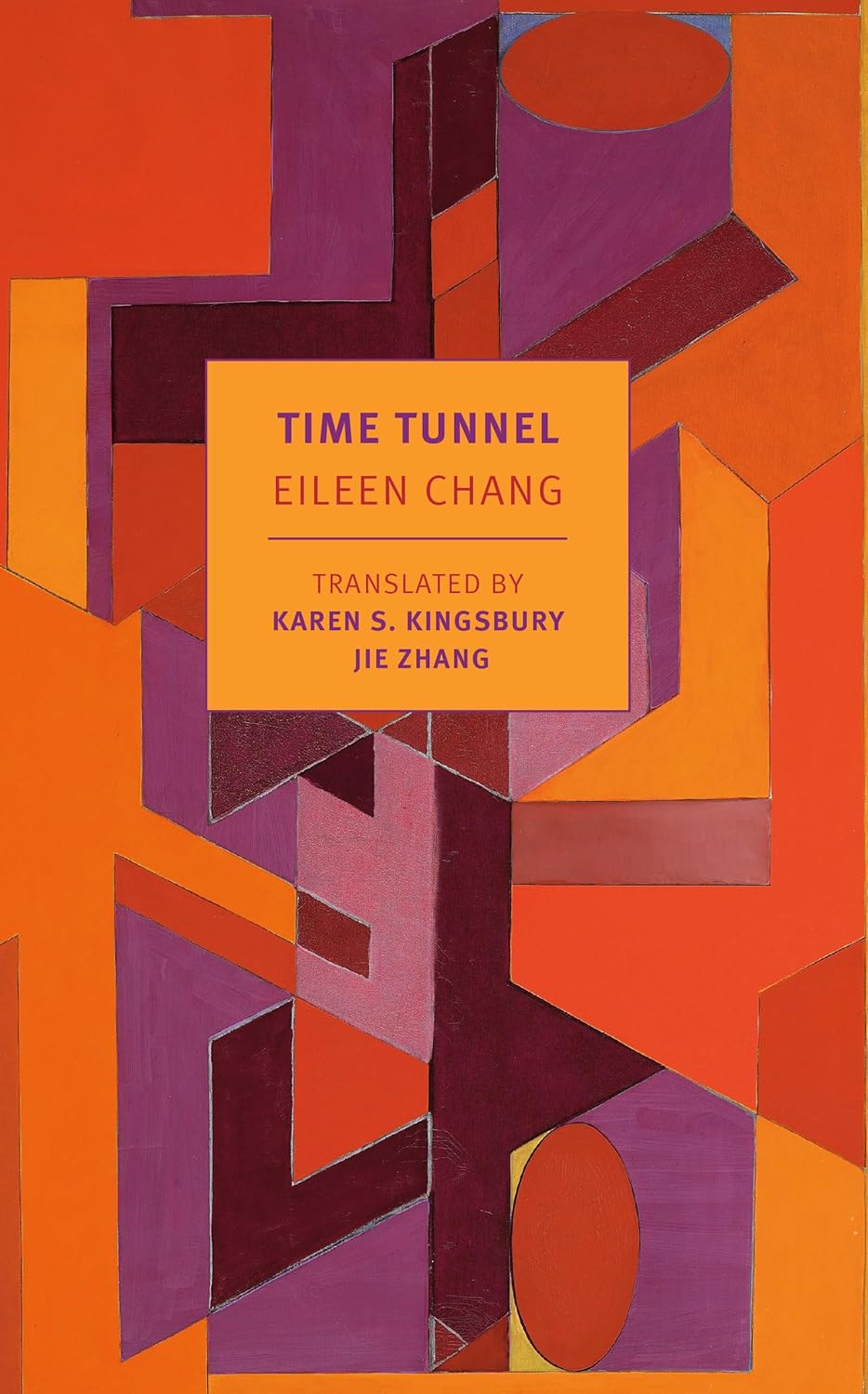
Yet Eileen Chang’s elite status is more assured in the Chinese-speaking than Anglophone world. Roland Soong, the executor of Chang’s literary estate, told me he has collected over 200 Eileen Chang biographies in Chinese. Yet there is only one biography in English: The Lives of Eileen Chang (2022) — a self-published e-book by a non-academic author with one customer review on Amazon. Previously untranslated writing by her continues to appear in English for the first time, most recently in the wonderful collection of stories and essays Time Tunnel (2025), translated by Karen Kingsbury and Jie Zhang, and Written on Water (2023), a nonfiction collection translated by Andrew Jones, both published by New York Review Books.
Though Chang’s work now has more reach than ever, it is important to remember that for a period of time, her oeuvre nearly vanished from print and she was in danger of being forgotten as a writer. And though the details of her life have become well known — much of her fiction is autobiographical — her publishing history remains fairly obscure. Like Chang’s own life, it is a story filled with personal drama and political turbulence. As her translator Karen Kingsbury wrote to me in an email, it’s “a story very much intertwined with Sino-American relations, the 20th century Chinese diaspora, and the formation of Asian-American identity.” Or in Chang’s own description of her work in the 1944 essay “On Childhood,” a saga of “lovable yet miserable times.”
Chang’s posthumous fame in China has evolved into a mythology perhaps comparable to that of Hemingway in the U.S.
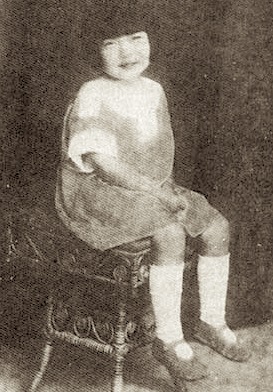
Eileen Chang was born Zhang Ying (张煐) in Shanghai in 1920 to an aristocratic family that, like China itself, sat on the precarious edge of the old and the new. Her great-grandfathers included the famed Chinese statesman Li Hongzhang, who negotiated with the British during the Opium Wars, and a Qing dynasty naval commander, Huang Yisheng.
Yet her parents were both dilettantes. Chang’s father, Zhang Zhiyi, was an opium and morphine addict who kept concubines. His fictionalized character Ned in her novel Little Reunions (2009) was a bookworm who “spent his days in his room, pacing around in circles like a caged animal, memorizing and reciting books.” But he also had an unpredictable, violent side. During Chang’s teen years, he physically beat her and refused her medical care during a six-month bout of dysentery. As recounted by Chang in “On Childhood,” in one fit of rage he “proclaimed that he would kill me with one shot from his pistol.”
Chang’s mother Huang Suqiong, who went by the Western name Yvonne, was a poor match for this dissolute aristocrat. Free-spirited and worldly, she had bound feet but nevertheless managed to ski in the Alps, live for extended periods in Paris and London, and attract a string of lovers, including several Western men. Chang’s parents divorced in 1930 when she was ten. Through the eyes of her autobiographical character Julie in Little Reunions, she would look back on this as a progressive act, noting that she “felt smug, knowing that her family had achieved something as thoroughly modern as producing a scientist.”
Through her teens and early 20s, Chang shuttled between her father, her mother and her mother’s sister, Zhang Maoyuan or “Aunt Mao,” who became so much her main parent figure that she began referring to her mother as “Second Aunt.” In one letter, Chang remarked on her mother’s erratic presence during those formative years: “My life is like a stalk of bamboo with its nodes marking the intervals of my mother’s comings and goings.”
Chang’s English-language education began from around the age of 11 at St. Mary’s Hall, one of Shanghai’s “Christian Schools for Noble Maidens.” By the end of her college years, she noted that she had been using English for so long that she now tested poorly in Mandarin. She would oscillate between Chinese and English for the rest of her life, publishing in both languages and often writing stories or essays in one language before translating to the other. For university, though Chang was accepted to study at the University of London, she was forced by the outbreak of World War II to enroll instead in the University of Hong Kong, where she joined the English Literature Department. When the Japanese attacked the British colony in 1941, she weathered the bombardment huddled up with a popular novel of the 1920s, A Family of Distinction by Zhang Hengshui.
In the summer of 1942, Chang returned to Japanese-occupied Shanghai. “Shanghailanders believed Shanghai, even under occupation, was the best place to be no matter what,” she later wrote in Little Reunions. Within months she began to publish film reviews in an English-language newspaper, The Times, as well as longer, more thoughtful essays in an English-language magazine, The XXth Century, helmed by a German editor.
Chang’s next three years, from 1943 to 1945, can be considered one of the most prolific and creative periods of any writer in modern literature. In May 1943 she published her first Chinese-language short story, “Aloeswood Incense: The First Brazier,” then published stories and essays at an astonishing rate in at least four Shanghai magazines. Her brother later described her as writing almost continuously. In September 1944, ten of her stories and novellas were compiled in the volume Chuanqi (传奇) — there is no equivalent volume in English, though its title is generally translated as Romances. It became an instant bestseller, and featured some of her most enduring fiction, including The Golden Cangue (a late-Qing family drama of Chekhovian subtlety that C.T. Hsia called “the greatest novelette in the history of Chinese literature”) and Love in a Fallen City (set against the 1941 fall of Hong Kong, mismatched lovers vacillate as they are torn between their emotions and family pressures).
In December 1944, Chang also published a volume of around 30 essays, Written on Water (流言, first released in English in 2005). A striking element of this collection is the incredible array of literary references that Chang employs, from classical and modern writers in both West and East: Tolstoy, Nietzsche, Bernard Shaw, H.G. Wells, Eugene O’Neill, Henrik Ibsen, Lao She, Zhou Zuoren, Gu Mingdao, Lu Yishi, Hu Shih, Du Fu, Su Shi, Cao Xueqin.
Chang allowed herself a distinct sense of triumph during this literary blitzkrieg. In her essay “On Being a Modern Writer,” she declared:
The literati of the past relied on the ruling class for their daily bread, but things are a little different nowadays. I am delighted that the guardians of my living are neither emperors nor kings but the magazine-reading masses.
Looking back in her later years, however, she wondered if it was all a bluff. Her alter ego in Little Reunions confides: “I’m twenty-two and writing love stories without ever having fallen in love — no one can know that.”
Chang herself entered into her life’s first major romance when she was 24. Still hopelessly naive, she fell for the charismatic writer Hu Lancheng, who was 15 years her elder and already married. Hu was also a collaborator with Japan’s wartime puppet government of China, serving as a propaganda official under its head, Wang Jingwei. He separated from his first wife to marry Chang in 1944, but following Japan’s 1945 defeat and the end of World War II, he was forced into hiding. His relationship with Chang was fraught from beginning to end, and within four years they divorced. Chang would later write of Hu’s serial philandering in Little Reunions, though the book would not make it into print during either of their lifetimes.
According to Roland Soong, her estate manager, Chang completed Little Reunions in 1974 and sent it to his father, Stephen Soong, a close friend who acted as her informal agent. The elder Soong, however, “chose not to publish it to avoid reprisals from Hu Lancheng,” who had fled to Tokyo following the war, where he wrote an autobiography, This Life, These Times (今生今世, 1958), describing his marriage to Eileen Chang. After Little Reunions first came out in Chinese in 2009, Roland Soong wrote that Stephen, his father, had “argued that Chang’s entire oeuvre could potentially be banned in Taiwan as a result of publishing this single work.”
She would oscillate between Chinese and English for the rest of her life, publishing in both languages and often writing stories or essays in one language before translating to the other.
With the end of World War II, Eileen Chang’s golden period wound to a close. She published a few works in the postwar years, including her first full-length novel Eighteen Springs (十八春) in 1950, later revised and republished as Half a Lifelong Romance (半生缘, 1969). But as Communist control spread across China, her name appeared less and less in print. In 1951, when her brother asked about her plans for the future, she was said to reply: “I certainly won’t be wearing anything as boring as a Mao suit.”
When I asked Roland Soong about that period in Chang’s life — from the end of World War II through the Communist takeover of China in 1949 and the writer’s final departure from China three years later — he answered simply that the entire stretch was a “dark spot” in which “she probably decided to stay off the radar.” Chang finally left China for Hong Kong in the summer of 1952, where she joined the British colony’s teeming community of refugees and exiles. It was there that she met Stephen Soong, who hired her to translate American literature into Chinese — her first assignment was Hemingway’s The Old Man and the Sea (1952) — for an American propaganda office called the United States Information Service (USIS).
Chang also wrote screenplays for Hong Kong film studios, and two original novels: Naked Earth (赤地之戀, 1954, later self-translated into English) and The Rice-Sprout Song (秧歌, written in English in 1955 and later self-translated into Chinese). Both describe the establishment of communes in rural China and the ensuing suffering of the peasants. According to C.T. Hsia, they “present the Communist horror in humane rather than dialectical terms” and focus Chang’s “attention on ordinary humanity as it struggles helplessly to maintain its loyalties and affectations under the crushing weight of an alien system.”
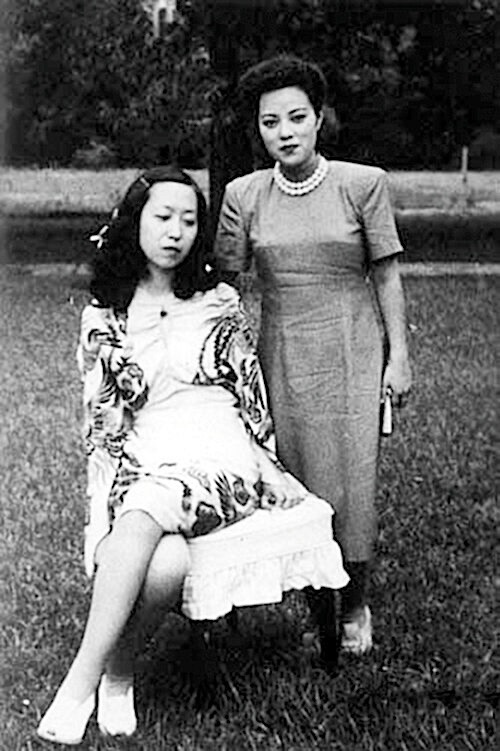
After only three years in Hong Kong, however, Chang came to see the city as a dead end. The writing game there was a low-paid rat race, and as a mainlander she struggled to integrate among the Cantonese. Feeling that she could succeed writing in English, and not wanting to be stuck in Hong Kong nor wishing to go back to China, she decided to emigrate to the United States. Using her connections at USIS, she applied to a refugee program and in 1955 departed Hong Kong by ship, eventually making her way to New York City, where she found company in other exiled Chinese writers including Hu Shih (胡适). She would only return to Asia once more in her life, a trip to Taiwan and Hong Kong of several months in 1961 and 1962 that she wrote about in the essay “Return to the Frontier,” collected in Time Tunnel.
Yet in America, writing primarily in English, Chang failed to find the same success that she did in China. Neither Naked Earth nor The Rice-Sprout Song elicited strong reaction. U.S. publishers of the 1950s and 1960s could only imagine a China of noble peasants, and were not ready for what her translator Karen Kingsbury describes as the country’s “interiorized, sometimes complex urban experience of modernity.” She only managed to publish one novel in the U.S., Rouge of the North (1967), the story of a young, beautiful woman married into an aristocratic Shanghai family, only to find her husband is an invalid and that she must suffer abuse at the bottom of the family hierarchy. Chang did write several long autobiographical novels during this period, but they were only posthumously published: Little Reunions (小团圆, 2009), translated by Jane Weizhen Pan and Martin Merz in 2018, The Fall of the Pagoda (雷峰塔, 2010) and The Book of Change (易经, 2010).
Chang also married and lost another husband during these years. In 1956, when she was 36, she wedded the 65-year-old American screenwriter Ferdinand Reyher and moved to California. She recorded almost nothing of their relationship outside of private letters, though she wrote in Little Reunions about an unplanned pregnancy early in the marriage, for which they chose to have an abortion. “Every woman’s destined to risk her life,” she wrote. When Reyher fell ill, Chang supported him in his final years until he died in 1967, and never remarried.
Now calling herself Eileen Reyher, from 1972 until her death in 1995 she lived a solitary, reclusive life in Los Angeles. Though she had by this time achieved popularity in Taiwan, she was averse to the limelight, refusing invitations to Taiwanese literary conferences and publicity events. In a city of highways, Chang never learned to drive. She also increasingly complained of ill health, and moved frequently during her final decade, staying in at least 14 apartments and motels. This was partly out of hypochondria, but she was also dodging the Taiwanese press, which was trying to track her down. In 1988, a Taiwanese reporter went so far as to rent an adjacent apartment and snoop through her garbage — an incident reminiscent in its American context of Bob Dylan and J.D. Salinger. The reporter discovered only that Chang ate both Chinese and American food.
One of Chang’s most memorable short stories of this period is “Those Old Schoolmates, They’re All Quite Classy Now,” written in the late 1970s and recently translated in Time Tunnel. One of the few stories to describe Chang’s life in America, it captures the self-doubt of a writer in her mid-40s who fears her life may have entered a terminal cul-de-sac. After having tea with a fellow emigre who is the wife of an American diplomat, the struggling writer-protagonist feels a sense of resignation. Later, she hears news of the 1963 assassination of John F. Kennedy, then ruefully muses: “Kennedy is dead. I’m still alive, even if I’m only washing the dishes.”
When Chang died on September 8, 1995, she was 74 years old and living alone in her Los Angeles apartment. Her body was reportedly found on her living room floor. She had minimal possessions, but near her apartment door, she had left bins of neatly organized letters and manuscripts, with more in a nearby storage facility. According to her will, there was no public funeral; a small group of friends scattered her ashes over the Pacific Ocean. The scholar Nicole Huang, then a graduate student at UCLA taking a seminar on Eileen Chang studies, recalled: “When she died in 1995 and her last address was exposed … none of us knew that she was just two blocks away. It was really a goosebumps moment.”
In America, writing primarily in English, Chang failed to find the same success that she did in China.
The story of Chang’s publishing history is as much a roller coaster as that of her life. By the 1960s, her writing had fallen into relative obscurity. Her books were not published in Mao’s China as they were seen to represent the old “feudal” order. In Hong Kong, her first collection Romances was reprinted in one small edition, but the market there was then too small to support her as a writer. The place that saved her career, said Roland Soong, was Taiwan. “That’s where her sales were.”
After Mao closed China to the world in 1949, Taiwan, under Chiang Kai-shek, gradually developed into the world’s single most important Sinophone market and a cultural powerhouse. Taiwanese literary circles first learned of Eileen Chang through scholar C.T. Hsia’s landmark survey of 1961, A History of Modern Chinese Fiction: 1917 to 1957, written in English, in which he declared Chang “the best and most important writer in Chinese today.” According to Roland Soong, Hsia’s book propelled Chang “from being a nobody to being elevated into a temple where she was suddenly adored.” In 1966, Chang signed with Taiwan’s Crown Publishing (now Crown Culture), a rising literary imprint that would within a decade represent three of the most important Sinophone women writers of the 20th century: Eileen Chang, Sanmao and Qiong Yao. Chang’s Taiwanese royalties, in combination with her contributions to the island’s periodicals, would provide her with a modest yet steady income for the rest of her life. “That was the time that she pretty much gave up on publishing in English,” commented Nicole Huang, “and realized that her primary readership was still in Chinese-speaking communities.”
Chang’s death in 1995 brought a sudden deluge of attention to the writer’s life and career, setting off a chain of events whose ramifications are still being felt in literary circles today. Beyond the initial flurry of press coverage in Taiwan and Hong Kong, the coming years saw a significant number of Chang’s unpublished manuscripts unearthed, the start of her widespread recognition in English translation, and her re-entry to the China market, which accounts for the lion’s share of her sales today. The translator Karen Kingsbury, who completed her doctorate on Eileen Chang under C.T. Hsia at Columbia University, told me that at the time of her death, Chang was still basically unknown in the West. Even in the Chinese language, “In terms of word count,” she said, “the amount of material released after her death is of a similar magnitude to what was published during her lifetime.”
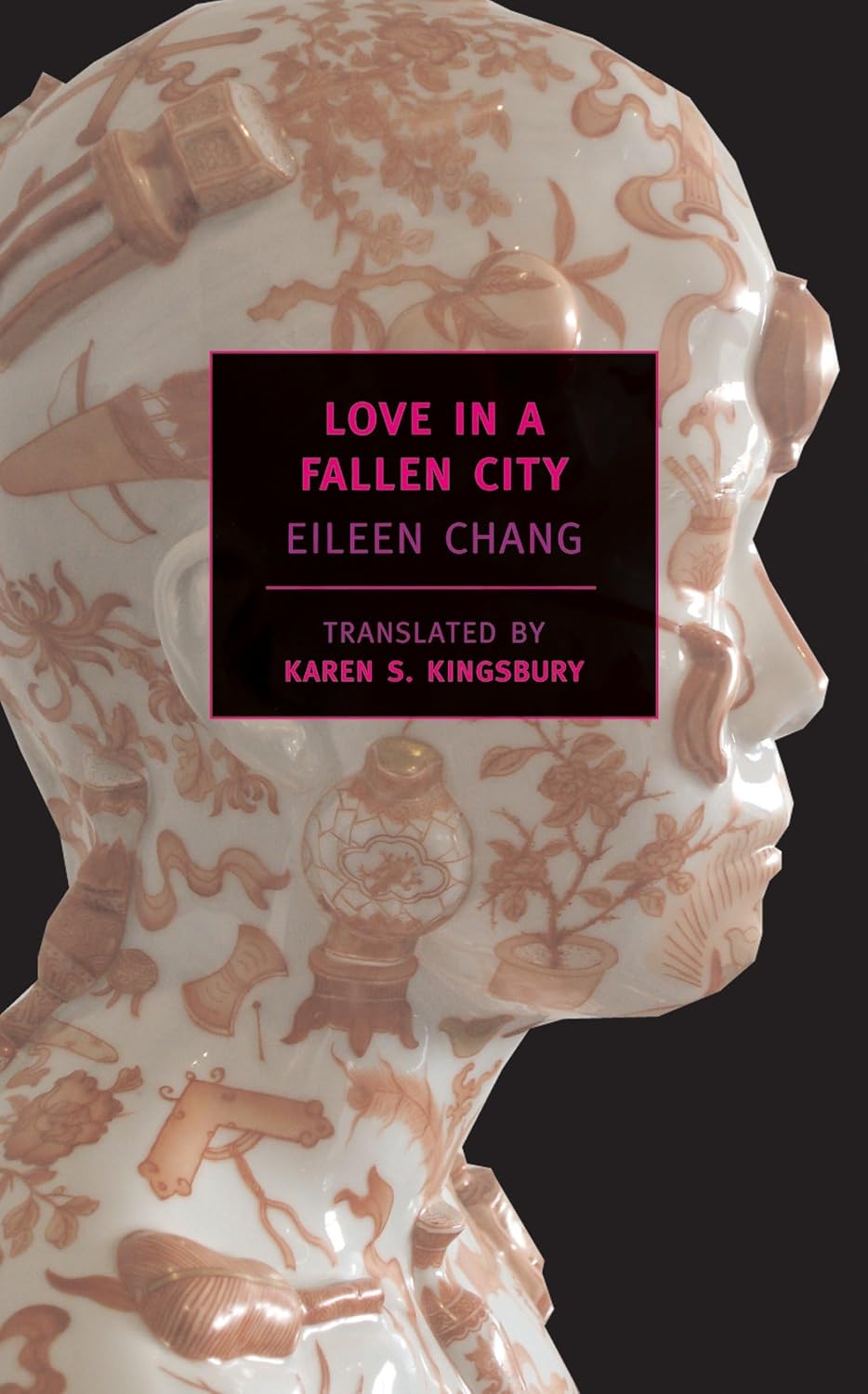
Chang only became an international name after the publication in 2006 of Love in a Fallen City, a collection of short stories taken from Chang’s 1944 Romances, translated by Kingsbury, including the eponymous novella. Arguably more impactful was the release of Ang Lee’s 2007 film Lust, Caution, adapted from Chang’s 1978 novella (色,戒), about a young woman in 1940s Shanghai who loses herself in a head-over-heels romance with a collaborator (an allusion to Chang’s affair with her first husband, Hu Lancheng). The film was full of steamy sex scenes and became an international arthouse hit, grossing $67 million worldwide.
As Chang had no children and was survived only by a brother — a retired schoolteacher who had never left China — she willed her manuscripts and literary rights to her closest friends in Hong Kong, Stephen Soong and his wife Mae Fong Soong. After they passed, their son Roland Soong took full control of Chang’s literary estate in 2007, and began releasing unpublished portions of Chang’s oeuvre. Each release sent a wave through the Sinophone literary world, starting in 2009 with publication of the autobiographical novel Little Reunions — the manuscript Stephen Soong advised Chang not to publish out of fear of reprisals from Hu Lancheng, and that Chang later asked him to destroy. (Stephen did not accede to her wish, and Roland defended the novel’s publication, saying that once a writer has departed, the obligation is “to tend to their legacy”).
In China, Chang’s death also sparked a sudden Eileen Chang fever in the late 1990s. Andrew Jones, one of Chang’s translators, was living in Beijing at the time. He told me that while her work had been appreciated in literary circles from the 1980s, “generally speaking she was not widely known [in China]” before her death. In the final years of her life, Chang had only taken the first steps to re-entering the mainland market. She authorized a minor Chinese publisher, Harbin Press, to reprint some of her books, with royalties going to an aunt living in China. As a regional publisher, it lacked both the heft for nationwide sales and the legal prowess to protect against rampant piracy. Other publishers began printing Chang’s work without permission, notably the Anhui Art and Literature Publishing House, whose largely female editorial staff was bowled over by Chang’s depictions of the complexity of women’s lives.
When Roland Soong began to take a hand in managing Chang’s estate, he visited Beijing’s largest book emporium, the Wangfujing Bookstore. There, he found “an entire shelf of Eileen Chang books, hundreds of books by more than 30 different publishers,” he told me. “And I’d only authorized one publisher. I said to myself, ‘Oh, my God! This is insane!’” He continued, “The good thing about having 30 different publishers pirating your books was that they were all advertising their version. … So because of all these people pushing this product, everybody knew who she was.” Soong eventually went to court to take out the pirates, and switched to Thinkingdom (新经典), a nationwide publisher listed on the Shanghai Stock Exchange. By the end of 2011 Chang’s books had sold over 3.8 million copies in China, according to Thinkingdom, and they continue to coast along a high plateau, with no sign of interest in the Sinophone world abating.
This interest persists despite the fact that Chang is neither taught as standard reading in Chinese grade schools, nor classed as a canonical writer like Lu Xun; her popularity is largely a grassroots phenomenon. In Taiwan, by contrast, Chang is very much considered a national writer. At Taipei First Girls High School, Huang, the scholar, told me, “the teachers are all Eileen Chang fans” and present the writer to their students as “somebody you must worship.” She is also held as a national treasure in Hong Kong. In 2024, Roland Soong donated his physical archive of Chang-related books and manuscripts to Hong Kong Metropolitan University, which continues research into the author.
But what really is the magic of Chang’s legacy? Why do her stories continue to resonate? From both my own experience with her books and conversations with those in the Eileen Chang universe, I’ve found that her readers are first and foremost her fans. Sinophone readers can certainly see themselves in her stories of modern individuals in conflict with traditional obligations, but this is something that Western readers can identify with too. As Nicole Huang told me, “her readership just continues to generate itself and remains young. It’s almost like one must read her as part of the experience of coming of age.” While immersed in her words, one continues to find sentiments that ring true. “Our generation is hopeless,” Chang wrote in 1952. “We reject the old ways and the new ones are beyond us.” At the time, she was commenting on China’s vast social upheavals. Today, as the world seems to be tilting on the cusp of a new technological era, it’s a statement that is just as bracing. ∎
Reader response:
David Frazier’s article is an excellent round-up of Eileen Chang’s life and literary output, yet she often gets Persil-ed for her early associations. As Frazier says, she started out in Shanghai writing essays for “an English-language magazine, The XXth Century, helmed by a German editor.” It’s worth noting (but nobody does as it begins to shatter the Chang myth) that The XXth Century was financed by the Nazi-controlled German consulate in Shanghai, and Joseph Goebbels’ Reich Ministry of Public Enlightenment and Propaganda. It openly featured pro-Hitler politics, Nazi propaganda, antisemitism, anti-Slavic rants and calls on the Chinese people to submit to Japan. Its editor, Klaus Mehnert, was a key instrument of the Third Reich’s apparatus in Japanese-occupied China, operating as a high-level propagandist and collaborator. Chang was introduced to Mehnert in Shanghai by Hu Lancheng, her collaborationist husband. She knew the magazine was Nazi-associated and funded, and that Mehnart was employed by Goebbels. None of this apparently mattered to her at all. This is not to say that Chang was a Nazi herself, or necessarily a collaborator. But when we look at her life and career, we should understand that she was not coerced. She knew she was writing for a fascist, German-funded publication and that her husband was part of a brutal collaborationist pro-Japanese puppet regime. If we really want to understand and appreciate Chang and her life’s work, we need to look closely at her wartime experiences and decisions. (10/22/26)
— Paul French, author of The Last Emperor of China
Would you like to respond to this article? We occasionally publish reader letters that engage in conversation with what we publish. To submit a letter, please email info[at]chinabooksreview.com, with 100-250 words in response, including your name and a one line bio.

David Frazier is a freelance journalist based in Taipei since 1995. He writes about Taiwan and the Asia region for the Taipei Times, South China Morning Post, Nikkei Asia and others. He is author of the Wallpaper Guide to Taipei.