Sign up for our newsletter to be notified of new posts!
Reviewed: “Avec toi au pouvoir, je suis tranquille” – Hua Guofeng (1921-2008) by Stéphane Malsagne (Les Indes Savantes, 2022); The Great Transformation: China’s Road from Revolution to Reform by Odd Arne Westad and Chen Jian (Yale University Press, 2024).
When Mao Zedong died on September 9, 1976, his People’s Republic was in rough shape. Wages were lower than in the 1950s, half of Chinese iron and steel mills produced next to nothing, and the majority of the population remained functionally illiterate. Even food consumption was no better than it had been in the early years of his rule. The task ahead of his designated successor, Hua Guofeng, then Premier and head of the Party’s domestic security arm among other things, was enormous.
Over the next five years, Hua steered the nation away from the worst excesses of the Cultural Revolution and laid the groundwork for its economic reconstruction. Yet, he was treated harshly by history. For decades, he was disparaged as a mere apparatchik, a minor figure who rose to the top thanks to his devotion to Mao. But when the Party was at its weakest, rudderless after the Great Helmsman’s passing, torn between the radicals of the Gang of Four and the reformists backing Deng Xiaoping, it was Hua who kept it together.
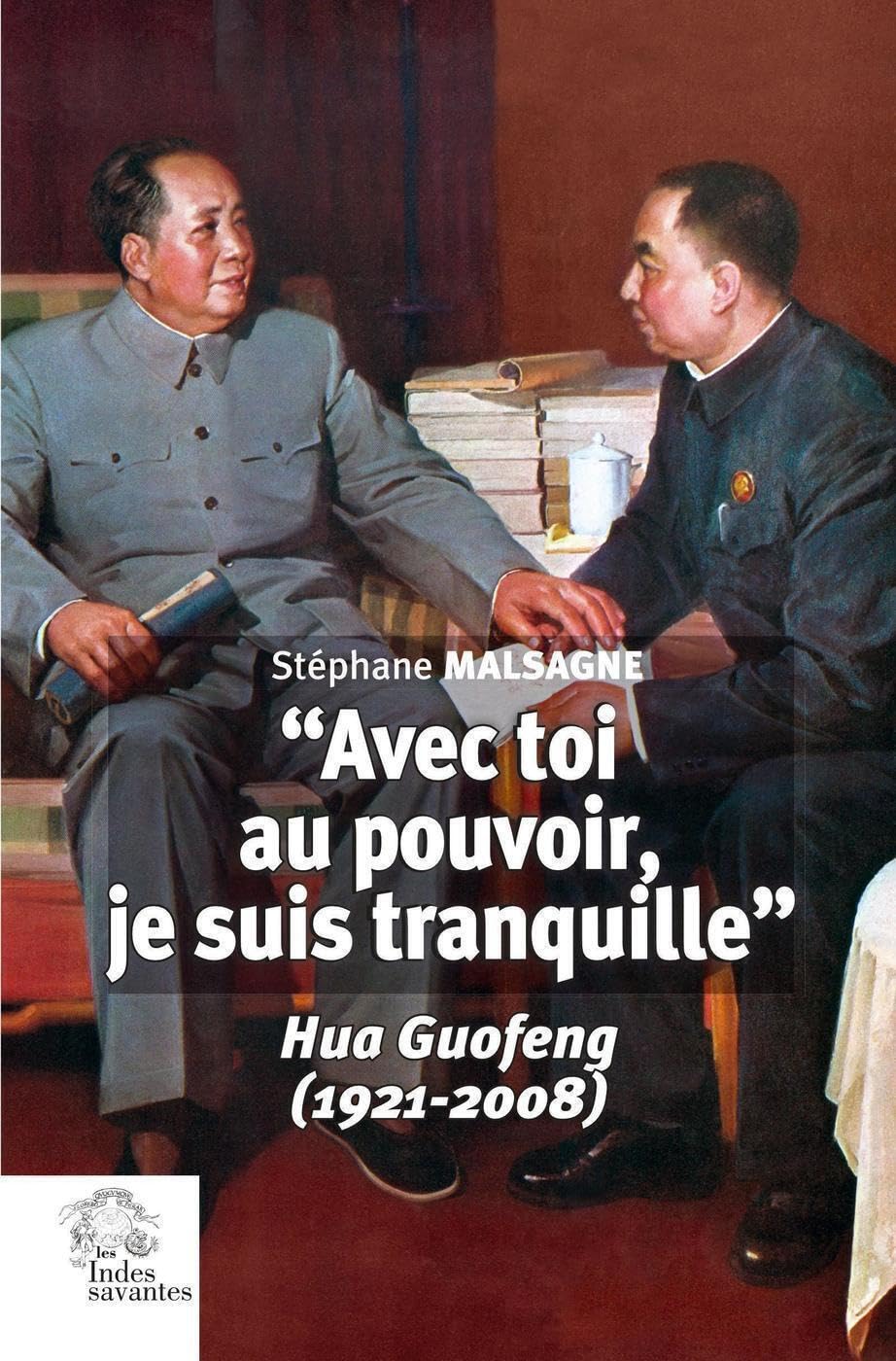
In his extensively researched and perceptive French-language biography, the most detailed in any Western language, “Avec toi au pouvoir, je suis tranquille” – Hua Guofeng (1921-2008), Stéphane Malsagne, a professor of history at Sciences Po in Paris, brings Hua’s role into sharp relief. This was no small task. Writing about senior CCP figures is fraught with difficulty, as much of the material is hagiographic or self-serving. Malsagne combs official sources with a critical eye and sifts through the Chinese-language memoirs of key participants to reconstruct, in copious detail, Hua’s interregnum. The result is a gripping blow-by-blow account of a pivotal moment in contemporary Chinese history.
Hua’s priority upon assuming power was dealing with the Gang of Four: Wang Hongwen, Zhang Chunqiao, Yao Wenyuan and Mao’s widow, Jiang Qing. For years, the foursome had wreaked havoc on the country from the cockpit of the Cultural Revolution. In their eyes, Hua was an illegitimate successor who had taken advantage of the Chairman in his twilight years. They were powerful and not to be underestimated: all of them sat on the Politburo, while Wang and Zhang were also on the Standing Committee, China’s highest decision-making body. Although they were hated by large segments of the population, they retained a base of support across the country. Crucially, they opposed economic reform. If Hua wanted to enact change, he had to get rid of them first.
He lost little time. On September 11, two days after Mao breathed his last, Hua approached Li Xiannian, a Long March veteran in charge of the Ministry of Finance, as well as Wang Dongxing, the commander of an elite security unit. Both immediately offered support to remove the notorious quartet, but cautioned that buy-in from the People’s Liberation Army (PLA) was essential. Li was close to Minister of Defense Ye Jianying, a feisty, six-time married, no-nonsense Hakka who had little patience for the Gang of Four. Unlike Hua, who had minimal influence within the PLA, Ye was a battle-hardened general who commanded respect. He was also Vice Chair of the Central Military Commission, the country’s top defense body. As such, he sat near the apex of the chain of command, and his support would almost guarantee that the PLA would stay on side. On September 21, Li cautiously approached Ye, who responded positively. The core unit of plotters was in place.
The plan they hashed out was straightforward. With little advance notice, Hua would call an urgent late-night meeting of the Standing Committee in Zhongnanhai, the restricted compound in central Beijing where top Party leaders reside. That would draw in Wang Hongwen and Zhang Chunqiao. Yao Wenyuan, not a member of the Standing Committee, was tricked into attending on the pretext that the gathering would vet the final proofs of the last volume of Mao’s Selected Works and the building of his memorial hall. Wang Dongxing and his men would arrest each as they arrived, while Jiang Qing would be picked up at her residence nearby.
The palace coup went surprisingly well. Of the Gang of Four, Wang Hongwen was the only one to resist. In a burlesque scene, he punched, kicked and screamed while Hua read out the reasons for his arrest — conspiracy to usurp power, crimes against socialism, violations of Party rules. Zhang Chunqiao did not utter a word. Yao called for help, but a guard immediately shoved a piece of cloth in his mouth to keep him quiet. Jiang Qing, seemingly expecting this outcome, offered but token verbal resistance. Within a few hours, and less than a month after Mao’s passing, the Gang of Four was behind bars.
Hua and his accomplices had worried about a worse outcome. In Beijing, they had deployed troops around Tsinghua University, a haven of radical activism, to prevent students from marching out. Elsewhere in the country, they had directed the military to detain more than 500 people known for their association with the ideological vanguard. In Shanghai, a bastion of the hard left, the situation remained surprisingly quiet, but in Sichuan, Malsagne points out, there was a “quasi-insurrection” of leftists that plagued the province for months and led to tens of thousands of deaths. The authorities also worried about fake directives from central organs floating around the provinces, some purportedly from Mao before he passed. Still, everything went as well as they could have hoped. Hua had passed his first test.
In the eyes of the Gang of Four, Hua was an illegitimate successor who had taken advantage of Mao in his twilight years.
Hua Guofeng was born Su Zhu (苏铸) on February 16, 1921, in Jiaocheng, Shanxi province, about 500 km southwest of Beijing. We know little about his early years, though there is plenty of gossip — some of it racy, all still unproven. One story claims his mother was a prostitute. Another, even more fanciful, holds that young Su Zhu was the product of a dalliance with Mao. Malsagne gives little credence to these rumors, surmising instead that Su Zhu’s mother was the daughter of an artisan, probably a tanner, while his father was an apprentice in the same shop.
The future leader was raised in modest circumstances — at the time, Shanxi was one of the country’s poorest provinces. The passing of his father when Su Zhu was six created additional financial challenges. The young boy’s patriotism was awakened early, however, largely in reaction to Japan’s invasion of northern China in 1931 and its predatory policies elsewhere. Already in his mid-teens, Su Zhu was raising money for the war effort. He might also have received basic military training.
The summer of 1938 was a turning point. Outraged by Japanese atrocities in his native province, Su Zhu left home, without informing his mother, to join the CCP. It was then that he adopted a new identity, a common practice among the underground resistance inspired by the Soviets: Lenin, Stalin and a number of revolutionary Chinese leaders such as Zhu De, a famed military commander, and Kang Sheng, a notorious figure connected to China’s security organs, are all known to us by their noms de guerre. Su Zhu chose the name Hua Guofeng (华国锋), literally “China’s National Vanguard,” from the slogan “Vanguard of the Chinese People Resisting Japan for National Salvation” (中华民族抗日救国先锋). Not very poetic, perhaps, but it fit the mood of the time.
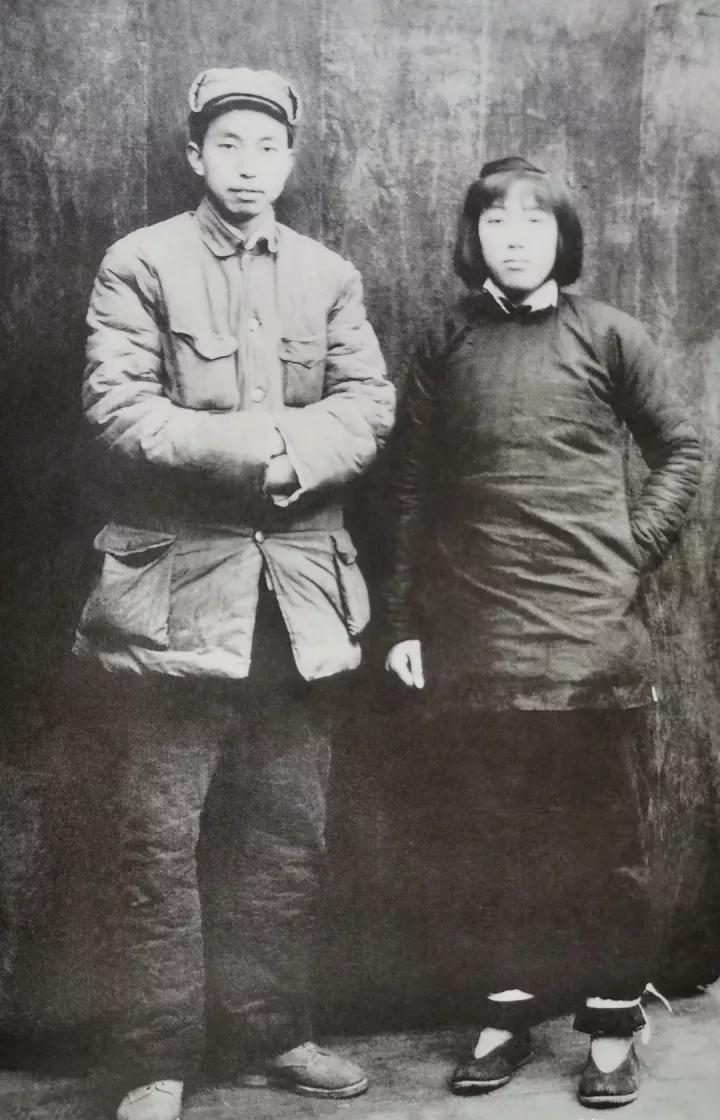
Hua spent the war years in and around Shanxi, away from the front. Though he might have organized guerrilla units and planted mines in some areas, he supported Party work mostly from the rear, through education and propaganda. Official accounts from that time describe him as a zealous and supremely disciplined student who, at one point during the war against Japan, struck by typhoid, bedridden and unconscious, “used his rare moments of lucidity to study Mao’s writings, word by word, phrase by phrase.”
Hua also had an artistic bent. He became involved in writing plays and organizing tours of actors across the countryside to foster patriotic education. The woman he later married, Han Zhijun, had similar inclinations: they met in a theater where she appeared on stage in a male role. She was 10 years his junior and hailed from Shanxi, too. They wed in 1949 after a short courtship. In stark contrast to Mao, his hero and role model, Hua remained faithful to his wife until the end.
That same year, Hua’s career shifted irrevocably. With the civil war all but over, the Party began deploying tens of thousands of cadres to “liberated areas” to firm up its rule. Hua was sent to Hunan, Mao’s home province, where he spent the following 22 years. He began near the bottom of the ladder, as the Party Secretary of a district near the provincial capital Changsha, but soon transferred to Xiangtan county, the location of the Chairman’s hometown, Shaoshan.
The Shanxi native was enthusiastic about agricultural cooperatives — and keen on collectivization later on — and by the middle of the decade, Malsagne writes, he had turned his county into a model for the entire province. That got the Party’s attention, and in 1958, he was appointed Deputy Governor of the province. He was praised for his “honesty” and described as a “promising” cadre. In 1969, at the height of the Cultural Revolution, he was nominated to the 170-strong Central Committee. Hua, then 48, was approaching the center of power.
Hua was a competent administrator whose loyalty to Mao and the Party was beyond reproach. But there were many others in the same situation. Why did he vault to prominence? And then, in the spring of 1976, why was he anointed heir to the paramount leader? The answer boils down to fortune, favor and flair.
Start with the latter. Spending 22 years in Mao’s home province offered ample opportunities for recognition, and Hua grabbed these shamelessly. In the mid-1960s, for instance, he sponsored several projects in the Chairman’s hometown: a railway to facilitate access, a memorial for the leader’s parents, the restoration of his childhood school. Mao, who visited the region annually, noticed — and did not forget.
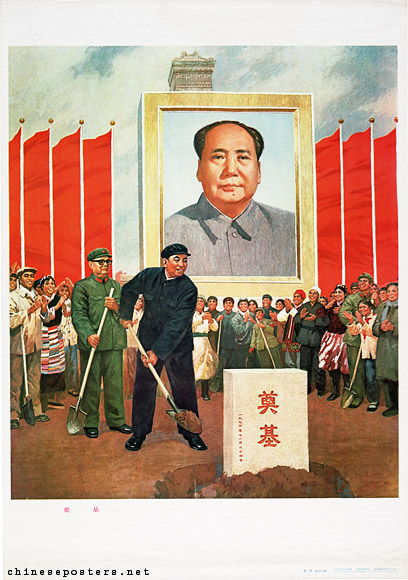
Sucking up to the boss could only get him so far, however, so a bit of luck was needed. At the end of the Cultural Revolution, the Party was deeply polarized. On one side was the Gang of Four and the hard-left radicals. On the other stood reformers who wanted to break with the recent past — the class struggle and internecine warfare of the Cultural Revolution — and nurse the economy back to health. Hua had links to the two camps, but belonged to neither. He was thus seen as a compromise candidate by both wings. In short, Malsagne writes, Hua rose to the top owing less to his leadership qualities than to political circumstances. He was a skilled technocrat in the right place at the right time.
Then there was favor. Much of Hua’s claim to power rests on Mao’s now famous endorsement of April 30, 1976, “with you in charge, I am at ease” (你办事我放心), which the Chairman allegedly expressed on the day his dauphin was confirmed as Premier and First Vice-Chair of the CCP. While the quote appears genuine, Malsagne believes it was taken out of context. Mao’s comment likely referred to a particular task, which Hua hijacked to justify his rule more broadly. The fact that Hua was alone with the ailing dynast at that crucial time warrants additional caution. At least there is physical evidence of a sort: Mao was no longer able to speak by 1976 due to what we now believe was amyotrophic lateral sclerosis (ALS), or Lou Gehrig’s disease, so he communicated in writing, and Hua kept the scraps of paper. One nagging question remains, though: why did he wait until after Mao’s death to reveal the endorsement? Is there a remote chance that Mao’s scribblings were forged? Malsagne provides no such indication, but stranger things have happened within the walls of Zhongnanhai.
Hua rose to the top owing less to his leadership qualities than to political circumstances. He was a skilled technocrat in the right place at the right time.
With hindsight, neutralizing the Gang of Four was the easy part. Charting a new way forward was rather more complex. The monumental task ahead of Hua is covered ably by Odd Arne Westad and Chen Jian in The Great Transformation: China’s Road from Revolution to Reform, a romp read through the country’s recent modernization. They depict a weary nation hungry for change, but one where support for the leftist policies of the Gang of Four had not entirely disappeared. In fact, the quartet still had plenty of allies. Westad and Chen point out that most Party members by then were relatively recent recruits who had joined during the Cultural Revolution, and just under a third of the seats in the Central Committee, and as many in the provinces, were still held by cadres who shared the leftist perspective of Jiang and her ilk. Crafting policy prescriptions that all could support was going to be tricky.
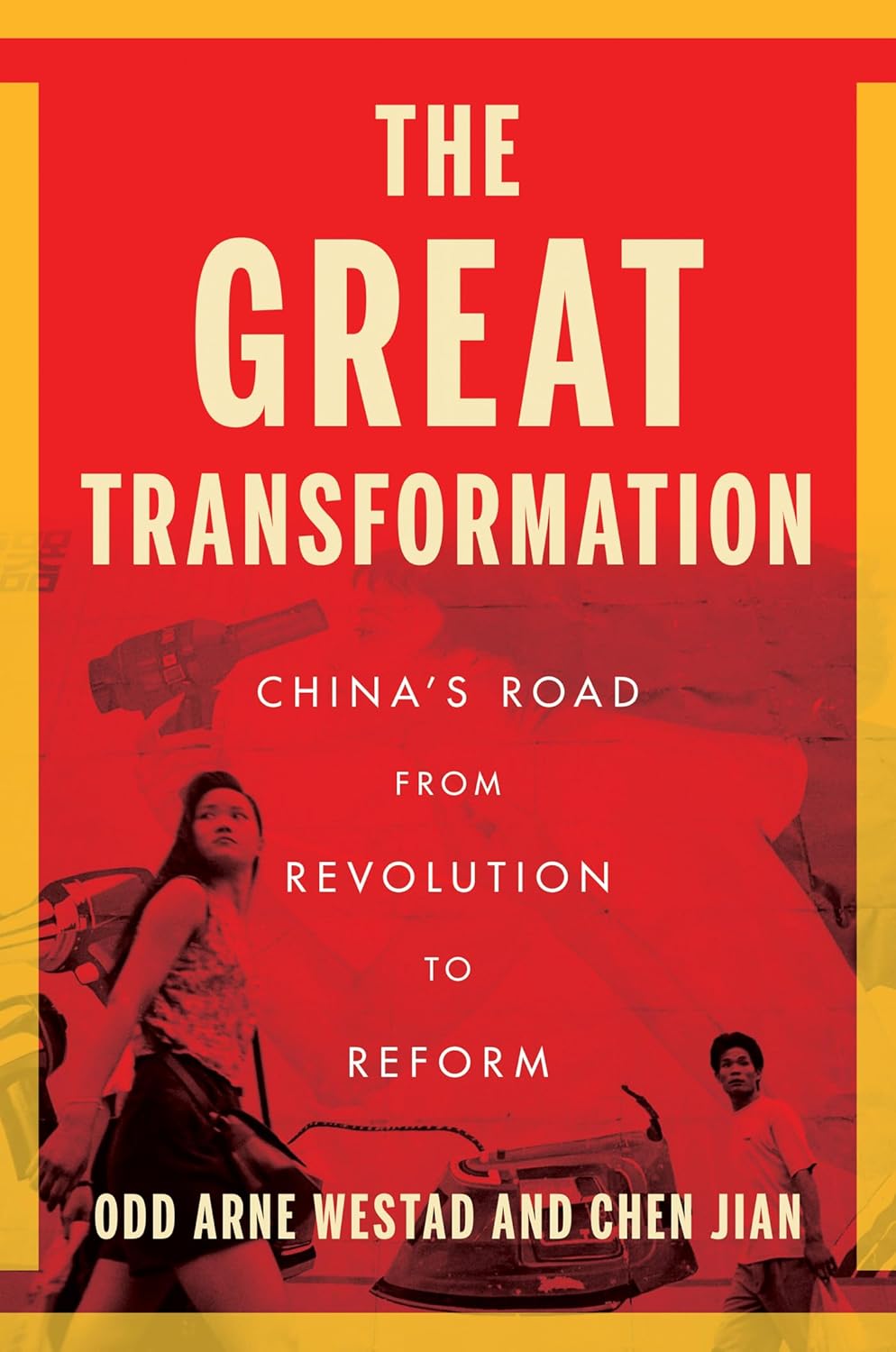
Despite his almost obsessive adoration of Mao, Hua realized the importance of juicing up the economy. He supported trade with the West and even favored the introduction of material incentives to boost production. When the first two Special Economic Zones were proposed in 1978, for Zhuhai and Shenzhen, he immediately defended the policy. But he never entertained the possibility of a transition to capitalism. His goal was to improve the productivity of China’s planned economy, not to dismantle it.
Deng Xiaoping, a popular cadre twice purged during the Cultural Revolution, had just returned, and he was ready for a decisive economic break with the past. The authors of The Great Transformation relate an anecdote illustrative of his state of mind. While traveling to the US for a state visit in 1979, the Sichuan native told his aides: “All those countries that were with the United States have become rich, whereas all those against the United States have remained poor. We shall be with the United States.”
While Party honchos debated the way forward, many Chinese already knew what they wanted: economic liberalization. Chen and Westad write that even before Mao’s death, some enterprises had started bartering or selling surplus production, though “such activities remained strictly illegal.” Smuggling with Taiwan also boomed, with ships from both sides meeting at sea to exchange goods. By 1974, in Shishi, a city near Quanzhou in Fujian province, there were “almost a thousand shops […] selling products from Taiwan.” The momentum for a loosening of economic rules was slowly but relentlessly building from below. People were tired of being poor.
Despite their differences, particularly on the focus and speed of economic reform, Deng and Hua had much in common. Both were rabidly anti-Soviet and favored a rapprochement with the U.S. — and Japan — in order to stabilize Beijing’s foreign relations, which they held to be essential to realize the Four Modernizations of agriculture, industry, science and technology, as well as defense. Both wholeheartedly believed in Mao Zedong Thought, with the nuance that Deng was ready to separate the man’s ideas from his destructive actions in order to draw a line with the recent past without undermining the ideological foundation of the state. Most important, neither envisioned a diminished role for the Party.
Hua’s greatest strategic blunder was probably his failure to grasp the mood of the country. The majority of the population wanted a fresh start. Yet, Hua’s personal adoration of Mao and perception of his duties as successor left him out of step with the times. One of his first policy offerings was the “Two Whatevers” (两个凡是), phrased as:
We will resolutely uphold whatever policy decisions Chairman Mao made, and unswervingly follow whatever instructions Chairman Mao gave.
Hua also maintained the deeply unpopular sent-down youth program — as late as 1977, the year university entrance exams resumed, nearly two million youngsters were dispatched to rural areas — and he was still extolling the initiative two years later. He refused to criticize the Cultural Revolution and continued to celebrate class struggle, exalt the fight against revisionism, and praise the dictatorship of the proletariat. The best that can be said about his public pronouncements is that they were tone-deaf.
But the caricatures of Hua as a stiff dogmatist are incorrect. He did adjust over time, if slowly. In a speech in May 1979, for instance, he warned against considering Marxism-Leninism and Mao Zedong Thought immutable doctrine. That would be a “dead end,” he said, and it would hamstring China’s ability to solve its problems. For Hua, it was a remarkable statement, one he would never have uttered three years earlier.
Alas, it was too late. Hua was merely a passenger on the reform train. Had he successfully positioned himself as its driver, he might have been able to shore up his leadership and make up for other political mistakes, such as his attempt to promote a personality cult of his own, or his support for Jiang Qing’s April 1976 crackdown on mourners gathered on Tiananmen Square to commemorate the late Zhou Enlai.
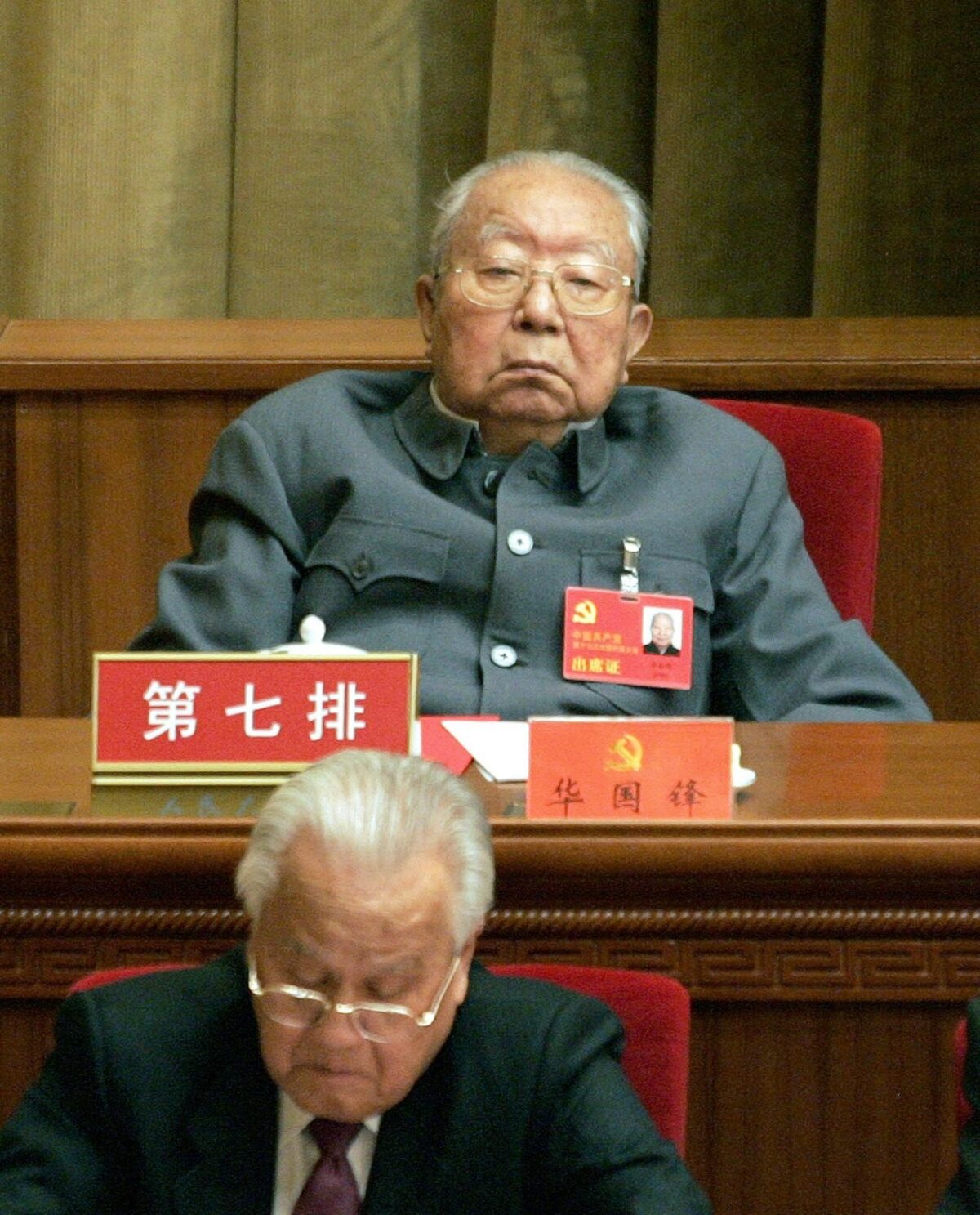
Tactically, Hua erred most grievously by allowing Deng Xiaoping to return, which amounted to letting the fox into the henhouse. The old cadre was a shrewd operator, with widespread support across the bureaucracy and the PLA, who, after Mao’s passing, would not play second fiddle to anyone. On top of that, he was holding a grudge, though he had the wiles to hide it: in the spring of 1976, the Gang of Four had launched a vicious campaign against him, which Hua initially supported. Deng never forgot.
Hua did not approach power as a ruthless zero-sum game and he had a collegial view of leadership. So when Deng slowly but relentlessly moved against him, he did not seriously push back. This is probably what saved him. Unlike others — think of how Xi gave the boot to his rival Bo Xilai — Hua was neither purged nor sent to prison. Instead, he was given a soft landing. In September 1980, the National People’s Congress appointed Zhao Ziyang, a Deng protégé, to replace Hua as Premier. The reason: after the excesses of Maoism, it was necessary to separate Party and state roles.
A month later, Hua’s portraits, which until then had been ubiquitously displayed alongside those of his mentor in government offices around the country, were removed. Thenceforth, the rationale went, cults of personality would be a thing of the past. Hua must have understood where all this was going, so in June 1981, he resigned from his two most important positions, Chair of the Central Committee and Chair of the Central Military Commission, though he was able to retain a seat on the former until his final retirement, in 2002.
The parallels with the career of Xi Jinping are intriguing. Like Hua, China’s current leader built his career away from Beijing and its nest of intrigue. In 1982, Xi left a cushy job his mother had arranged in the office of Minister of Defense Geng Biao to take a low-level assignment in Hebei province. Three years later, he relocated to Fujian, where he moved up the ranks. By 2002, aged 49, he was Governor of the province and a full member of the Central Committee. The big difference with Hua, of course, is that when Xi reached the top, he was able to consolidate his power and turf out his rivals. Hua was cut from a different cloth: he put the Party ahead of personal ambition and had a collegial approach to leadership. When faced with a stronger or more determined opponent, his inclination was to yield rather than fight lest it weaken the organization.
Hua was never a popular leader, and his departure was met with a collective shrug. But the Party should be grateful: he kept it together after the death of Mao. Given how fractured the CCP was at the time, Westad and Chen observe, “this was no mean feat.” Today, the Party appears strong and reliably in control, but just below the surface, anger is simmering. What will come next is anyone’s guess. But one thing is sure: Xi has too many enemies to hope for a soft landing. ∎
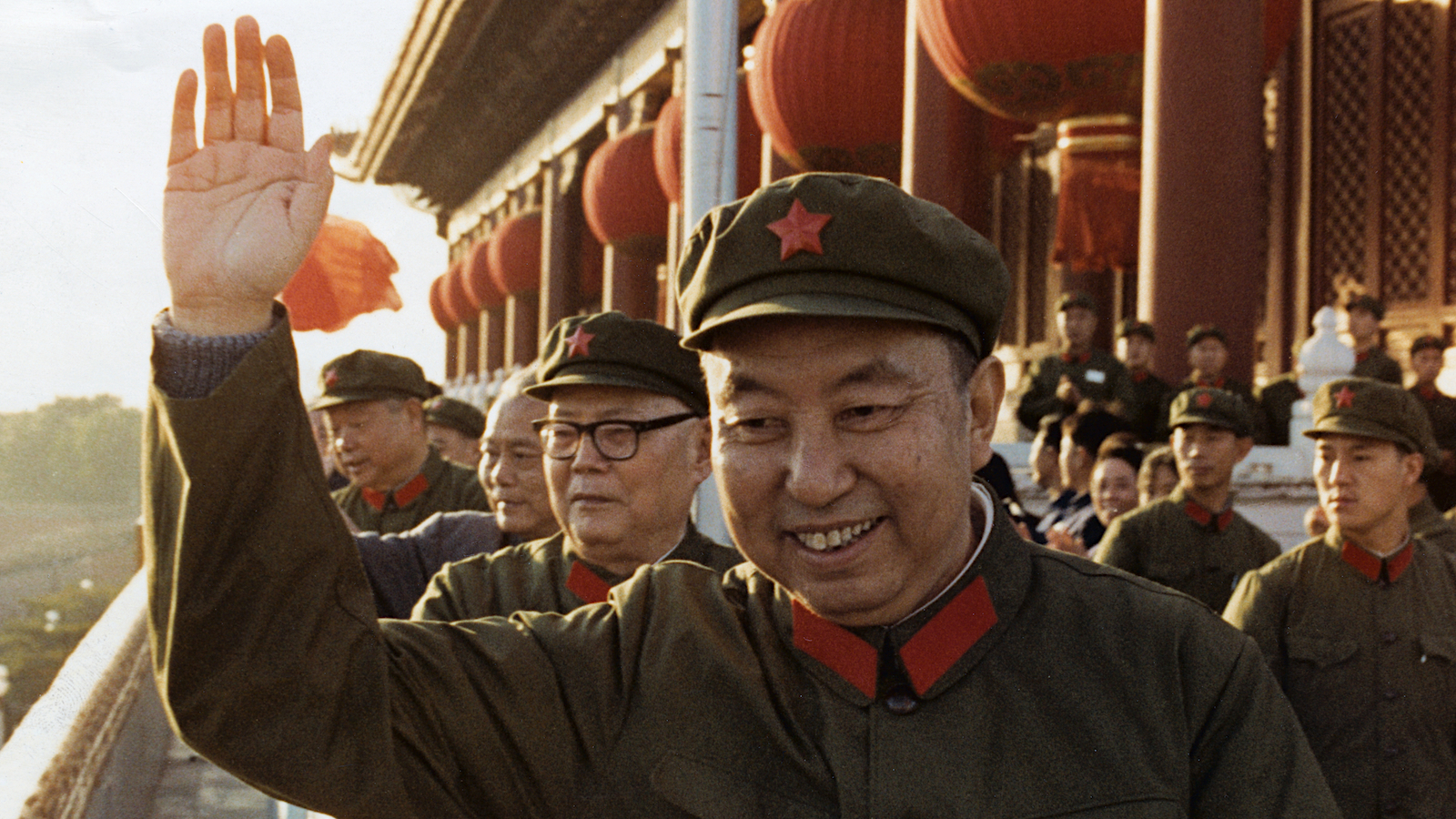
Hua Guofeng waves to spectators in Tiananmen Square during a rally celebrating his elevation to Party Chairman, Beijing, November 1976. (Bettmann/Getty)
Martin Laflamme is a Canadian diplomat, currently posted to Tokyo, his second assignment in Japan. He previously served twice in Beijing, as well as in Taipei and Kandahar. The views presented here are his own.