Sign up for our newsletter to be notified of new posts!
Reviewed:
• Defending Taiwan: A Strategy to Prevent War with China by Eyck Freymann (Oxford University Press, April 2026).
• The Taiwan Tinderbox: The Island-Nation at the Centre of the New Cold War by J. Michael Cole (Polity, November 2025).
• Contested Taiwan: Sovereignty, Social Movements, and Party Formation by Lev Nachman (University of Washington Press, July 2025).
There have long been voices arguing that the defense of Taiwan is not a core American interest. As far back as 1950, Secretary of State Dean Acheson told the National Press Club, “The defensive perimeter runs from the Ryukyus to the Philippine Islands,” excluding not only Korea but Taiwan. In 1971, Henry Kissinger told Zhou Enlai, “On the political future of Taiwan, … we … would accept any political evolution agreed to by the parties.” More recently, Jennifer Kavanagh and Stephen Wertheim argued in Foreign Affairs in 2025, “Washington must make a plan that enables Taiwan to mount a viable self-defense, allows the United States to assist from a distance, and keeps the U.S. position in Asia intact regardless of how a cross-strait conflict concludes.” In an essay for the Quincy Institute the same year, Michael Swaine labeled Taiwan “an important but not vital U.S. interest.”
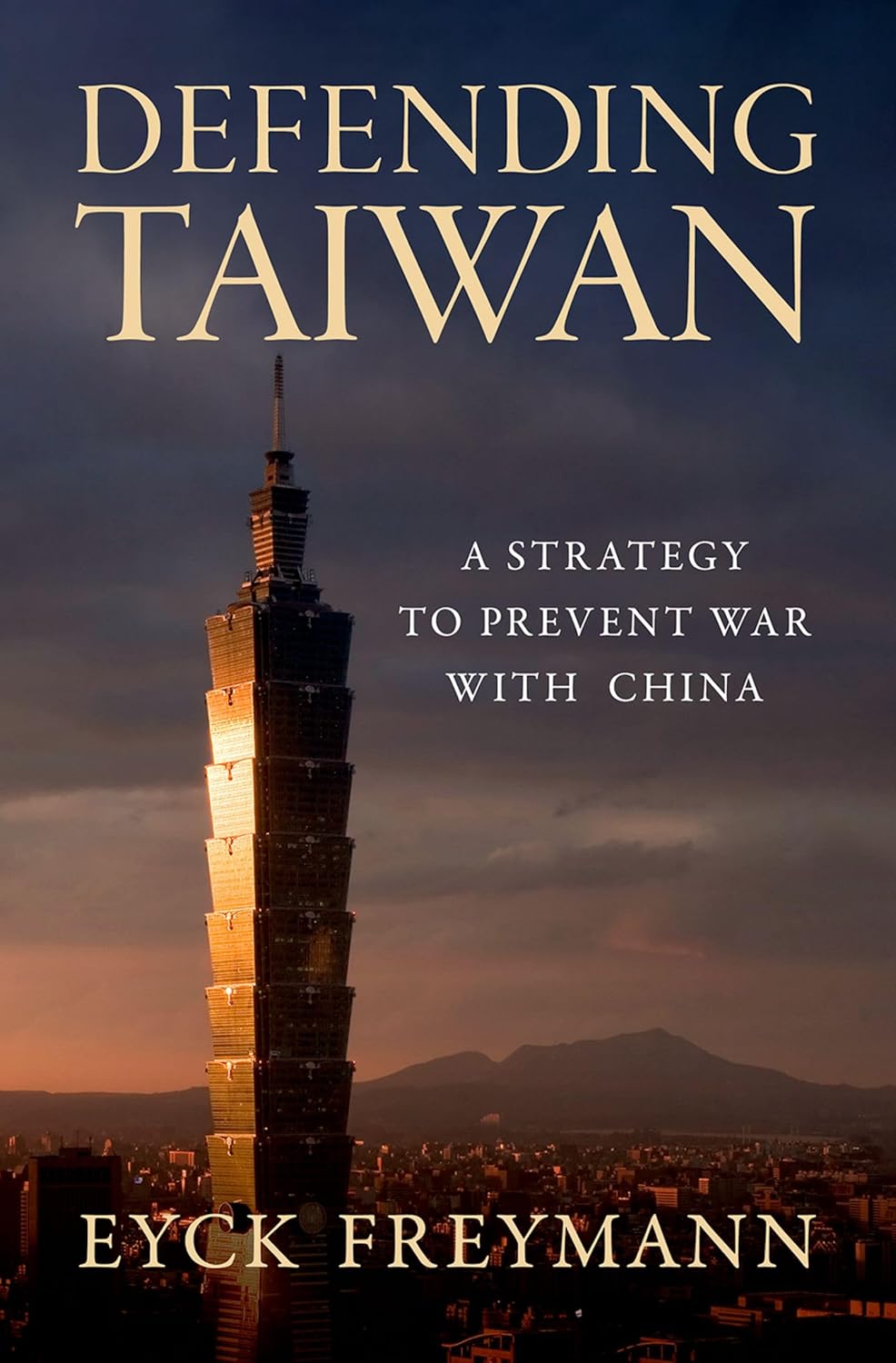
In his new book Defending Taiwan: A Strategy to Prevent War with China, Eyck Freymann explains why this position is wrong. Freymann, a scholar at Stanford University’s Hoover Institution and a commentator on China and national security issues, identifies four ways in which Taiwan’s exclusion from mainland China’s control benefits American strategic interests.
First, China’s huge navy is ringed in by a series of U.S.-allied or -aligned islands, known as the “first island chain,” that range from Japan in the north through Taiwan and the Philippines, to Brunei and Indonesia to the south. This cordon could be activated in a crisis to hamper China’s access to the high seas. By contrast, control over Taiwan would enable China’s navy to exit the South China Sea at will through the Miyako Strait to Taiwan’s north and the Bashi Channel to its south, deploying its navy — the world’s largest — to all the world’s oceans.
Second, although the U.S. abrogated its defense treaty with Taiwan in 1979 when it established diplomatic relations with the People’s Republic of China, the 1979 Taiwan Relations Act created a de facto political commitment to prevent a coerced takeover of the island of Taiwan. U.S. credibility has already declined dramatically as a result of Donald Trump’s threats to pull out of NATO, among other actions. Yet a failure to fulfill the political commitment to Taiwan would fatally erode U.S. credibility in Asia. It would drive Japan, South Korea, the Philippines and other Asian allies and partners to face the hard choice of either yielding to Chinese domination or arming themselves to confront China on their own, perhaps even with nuclear weapons.
Third, continued access to Taiwan’s advanced chip-making capacity is essential to America’s technological competitiveness and economic health. Fourth, the global trade routes that pass around Taiwan are crucial to the prosperity of the U.S. and its allies not just in Asia but around the world. Freymann also classifies a fifth interest — the survival of a well-functioning Asian democracy — as “important but not vital,” in an echo of Swaine’s phrasing.
Unfortunately, the reasons why the U.S. cannot abandon Taiwan are the same reasons why China must control Taiwan. To be sure, Beijing has historic and legal claims that it wants to vindicate, as well as cultural and emotional motives that it seeks to satisfy. But Freymann emphasizes Beijing’s compelling geostrategic motives. First, it needs access to Taiwan in order to break the ring of American containment along the first island chain. Second, pushing the U.S. out of Taiwan would open the way to Chinese dominance in its region, and would free the Chinese military for other missions around the globe. Third, control over Taiwan’s chip industry would give Beijing leverage over all the other economies in the world. Fourth, control over Taiwan would give China control over Asian trade routes. Finally, it would eliminate an alternative political model that flourishes in a culturally Chinese society.
Freymann shows that China has three generic options for using force against Taiwan: quarantine, blockade and amphibious attack. Yet the actual conflict might not be a pure example of any of these methods of hostility. A quarantine is technically a police action rather than an act of war; China could declare that it is enforcing some trade or health rule, even one that it makes up, and on this basis try to restrict maritime and air traffic to and from Taiwan. This would dare Taiwanese and foreign transport companies to resist and the U.S. to escalate, and would test the ability of the Taiwan population to survive with diminishing supplies of food and fuel.
A blockade, cutting Taiwan off from the rest of the world by sea and air, would be an act of war that carries similar risks and benefits. Either a quarantine or a blockade would be less costly than an invasion, but would also probably take more time to work, thereby giving more time for Taiwan to resist and for the U.S. to intervene. An amphibious invasion of Taiwan — across the 100-mile Taiwan Strait against what Chinese planners have to assume would be Taiwanese and American resistance — is universally characterized as the most difficult military operation that can be imagined, and one that risks either dangerous escalation or decisive defeat. But with skill and luck on the Chinese side, an invasion might produce a quick, decisive victory.
An amphibious invasion of Taiwan is universally characterized as the most difficult military operation that can be imagined, and one that risks either dangerous escalation or decisive defeat.
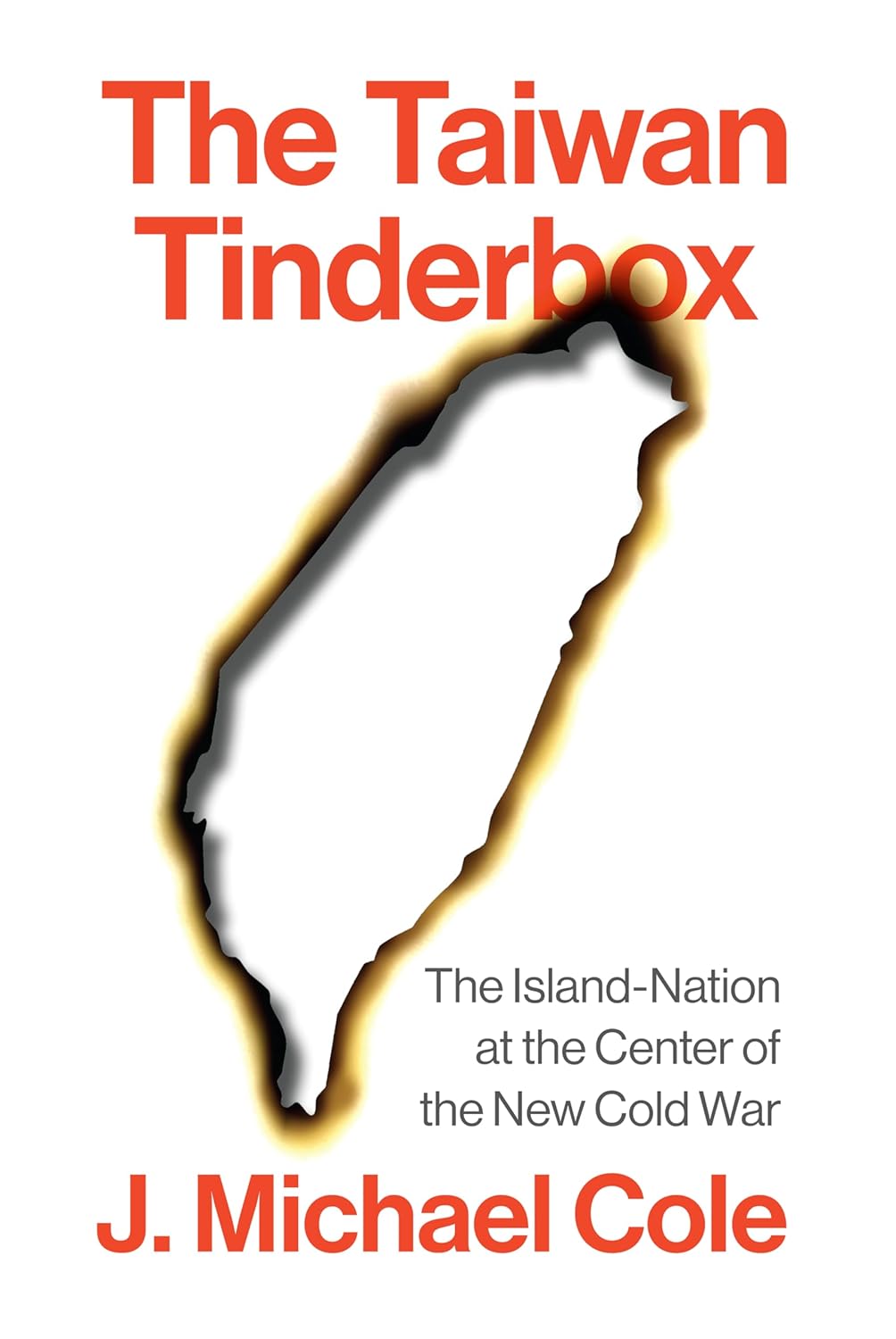
The risks and costs of any of these options would be great, but China is openly acquiring the weaponry and carrying out the training to launch such operations upon command. In The Taiwan Tinderbox: The Island-Nation at the Centre of the New Cold War, the Taipei-based policy analyst Michael Cole reviews the reasons why many analysts think Xi Jinping might try one of these options relatively soon. For example, Xi’s statement in 2013 that the Taiwan problem “cannot be passed on from generation to generation,” and his order in 2023, according to then U.S. ambassador Nicholas Burns, that the People’s Liberation Army (PLA) be prepared by 2027 to take Taiwan. Another argument is the “peak China” theory proposed by Michael Beckley and Hal Brands in Foreign Policy in 2021, which argues that the growth rate of China’s economic and military assets is slowing, creating an incentive for China to attack sooner rather than later. Then there is diversionary war theory, which argues that Xi might launch a war to distract attention from China’s domestic problems.
Freymann, however, does not think that Xi Jinping will take military action in the near future. He points out that once Xi launches a blockade or attack, failure to win would likely spell the end of his regime. Even a victory would be extraordinarily costly in military and economic terms. It would trigger sanctions and diplomatic condemnation from most of the developed world, damage Taiwan’s crucial semiconductor industry, and leave China ruling over an angry population that it would have to try to control with its familiar tools of repression. Xi’s recent purge of top PLA generals is another reason to think that a major military move is not imminent.
For now, Xi’s main purpose is to deter Taiwan and its American backers from strengthening Taiwan’s de facto autonomy (by intensifying Taiwanese identity at home or gaining wider diplomatic support abroad) and its resistance capacity (by obtaining better weapons or fortifying its domestic political will to resist). China’s instruments for enforcing this stop-loss policy are a wide range of “gray zone” tactics, including ceaseless harassment of Taiwan with military planes and ships, “co-optation” of some Taiwan elites, and the use of what Cole calls “cognitive warfare” to erode Taiwanese confidence in its capacity to resist and in the American commitment to come to its aid. These tactics bring to mind the classic Sun Tzu strategy of winning the war without fighting the battle.
For this reason, as Freymann argues, “Taiwan’s will to protect its autonomy is essential.” If the Taiwanese public were to resist a blockade or fight an invasion, their actions would make it harder for any Chinese strategy to work, and give time to build pressure on the U.S. to intervene. Demonstrating the will to resist would also help to deter a Chinese attack in the first place.
On this question of will, the Taiwanese public is confused and divided. On the one hand, over 60% of Taiwan residents identify as Taiwanese rather than Chinese, according to regular and oft-quoted surveys of Taiwanese public opinion by the Election Study Center at National Chengchi University. Nearly 90% of Taiwanese wish to maintain the status quo rather than move toward either unification or formal independence. Yet according to the 2025 Taiwan National Security Survey hosted at Duke University, when asked “What would you do if war breaks out between Taiwan and mainland China?” only 36.6% said they would engage in some form of resistance (support the government, join the army, “resist,” protect the country, provide logistical support, or give money). Another 36.7% said they would “let nature take its course” (顺其自然), while 11.1% said they would flee; other answers included surrender, hide, protect oneself and one’s family, and (in the answer of just one respondent) pray.
Nearly 90% of Taiwanese wish to maintain the status quo rather than move toward either unification or formal independence.
Taiwan’s multi-party political system, full of different factions, reflects this ambivalence. Local elections are usually fought on local issues, or even around the issue-free mobilization of local networks. National elections vet many important issues, including how to reform the pension system, whether to resume the use of nuclear energy, labor rights, the death penalty, LGBTQ+ rights, animal protection and indigenous welfare. But the defining issue in national elections is how to handle cross-strait relations.
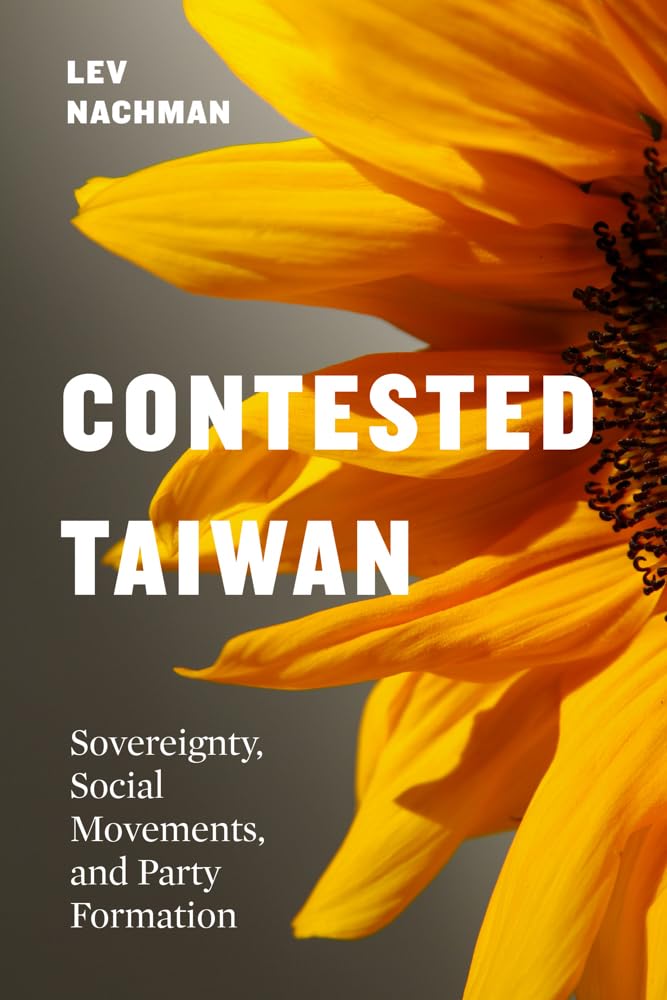
As Lev Nachman points out in Contested Taiwan: Sovereignty, Social Movements, and Party Formation, the main cleavage in Taiwan politics is not left-wing versus right-wing but over Taiwanese identity and cross-strait strategy. This issue is passionately fought, despite the fact that the mainstream factions of the three main political parties agree on two central points: To claim independence would trigger war, while to accept unification would invite repression. The parties, like the public, want to preserve the status quo, understood as de facto autonomy — what some call tianran du (天然獨), or independence as a fact of nature.
What the political parties disagree over so vigorously is how to handle relations with the mainland in order to maintain the status quo. As Nachman recounts, the Democratic Progressive Party (DPP, 民進黨), which currently controls Taiwan’s presidency and cabinet but not the Legislative Yuan (unicameral parliament), was once a pro-independence (Taidu 台獨) party, but since 1999 has adhered to a position some call Huadu (華獨), meaning that Taiwan does not need to declare independence because it is the current embodiment of the Republic of China (中華民國), which has enjoyed sovereign statehood since 1912. A small portion of DPP supporters want to declare Taiwanese independence now, but the party’s mainstream position is to prolong the status quo until the time when, if ever, formal independence becomes possible. To do this, the DPP seeks to entrench Taiwanese identity and to increase Taiwan’s resilience in the face of Chinese pressure, while avoiding radical moves that might provoke a Chinese attack.
The Kuomintang (KMT, 國民黨), Taiwan’s former ruling party which currently cooperates with the Taiwan People’s Party to control the Legislative Yuan, takes the view that Taiwan is part of an entity called China whose nature is subject to a variety of interpretations. This position is along the lines of the “1992 consensus,” a reported informal agreement between Beijing and Taipei that there is “one China” but the two sides differ over what “China” means: the People’s Republic of China (PRC, 中华人民共和国), the Republic of China (ROC, 中華民國), or even some potential third identity that the two sides could create in the future.
By accepting the idea that Taiwan is part of China, the KMT hopes to reduce Beijing’s anxiety that Taiwan will go independent and thus preserve peace across the Taiwan Strait. A small faction within the KMT wants unification now, but the party’s mainstream position is to keep open the long-term possibility of unification as a way of reducing China’s near-term incentive to launch a war. The KMT (dubbed “blue” for one of its flag’s colors) criticizes the DPP (known as “green” for its own emblem) for policies it believes will provoke China to attack Taiwan, while the DPP criticizes the KMT for weakening Taiwan’s will and ability to defend its autonomy.
The smaller Taiwan People’s Party (TPP, 台灣民眾黨), founded in 2019, in turn labels itself as “white.” The TPP currently votes with the KMT to frustrate DPP programs, but on mainland relations it defines a middle position, criticizing both the DPP for increasing cross-strait tension and the KMT for being overly conciliatory to China. Instead, it claims it could reduce tension with China through dialogue, but the details of how this would work are vague.
Chris Horton, author of Ghost Nation, discusses Taiwan’s history on the China Books Podcast
There are also around 30 minor parties in Taiwan, which cannot realistically compete at the national level and which made infinitesimal showings in the most recent local-level elections in 2022. One of them, the Chinese Unification Promotion Party (中華統一促進黨), which advocates outright for unification, is widely discredited as a front for the Bamboo Union gangster organization and has little public support. Another, the Taiwan Obasang Political Equality Party (小民參政歐巴桑聯盟), focuses on women’s and children’s rights instead of cross-strait relations.
Nachman focuses on two small pro-independence parties, the New Power Party (NPP, 時代力量) and the Social Democratic Party (SDP, 社會民主黨), that emerged in 2015 to advocate for the pro-independence position that the DPP abandoned in 1999. Conducting extensive field observation and over 100 interviews, Nachman found that these two parties arose out of the 2014 Sunflower student movement, which occupied the Legislative Yuan to protest the KMT-dominated parliament’s approval of a Cross-Strait Service Trade Agreement that President Ma Ying-jeou’s KMT administration had negotiated with China. Generalizing the Taiwan case, he theorizes that “contested states” (such as Taiwan) give rise to “movement parties” (like the NPP and the SDP) when activists perceive existing parties (the DPP) as ineffective in resisting the efforts of the contesting state (China) to exert internal influence through co-optation (of the KMT). An additional factor was movement activists’ perception that the DPP had become riddled with corruption. In the eyes of the movement activists, Nachman writes,
the DPP went from a party that was pro-independence and campaigned on anti-corruption to one that no longer stood for pro-independence while also becoming the focus of major corruption scandals.
Formed in this way, the new parties were inevitably more militant than the DPP on the issue of independence. In short, Ma Ying-jeou’s arguably sensible strategy to get China to ease pressure by expanding economic cooperation with Beijing triggered a protest movement against the KMT. Then some of the protest movement’s members turned against the DPP (the party they had formerly aligned with) because they considered it to be no better than the KMT in its policy toward China.
The story Nachman tells ends with these new parties’ formation, but their later histories have been anticlimactic. The NPP won three seats in the 2020 Legislative Yuan elections, but lost them in the 2024 election. Today it has five seats in local city and township councils. The SDP holds one seat in the Taipei city council. Nor have other minor parties established a strong foothold. Even the TPP, which holds eight Legislative Yuan seats out of 113, has been weakened by the arrest of its charismatic leader, Ko Wen-je, on corruption charges.
The emergence and decline of small movement parties is one of several features of a remarkably fragmented political system. Nachman identifies one cause of this fragmentation as the shift of the younger generation toward a stronger Taiwanese identity. A second is what he calls the “domestic co-optation threat” or what Cole calls China’s “sharp power toolkit.” This includes the carrots and sticks that Beijing uses to gain various forms of cooperation from Taiwanese politicians, business and religious leaders, as well as media and entertainment figures and criminal networks. Nachman and Cole also note that Chinese institutions organize summer camps, exchange programs, academic conferences and cultural events to soften China’s image among Taiwanese youth and academics.
A still deeper cause is the country’s complex electoral system. National and local elections are held in different years; different parties can control the executive and legislative branches; the prime minister is appointed by the president rather than the legislature; the legislature is elected by a combination of first-past-the-post, party-list and multi-member districts. These electoral arrangements provide opportunities for small political groups to win seats with small vote banks. But perhaps the greatest factor is the impossible position in which Taiwan finds itself, facing an existential threat from a giant neighbor and relying for protection on an unreliable, distant ally. Each party and faction looks for a way out of the trap, but the way seems blocked in every direction.
The Taiwan situation affords neither a solution nor a compromise that can satisfy all sides; it is a zero-sum game.
If Taiwan’s public were sure of American backing, surveys unsurprisingly show that their will to resist would be stronger.1 But Freymann argues that the U.S. ability to defend Taiwan has deteriorated in the face of China’s military buildup. The bulk of his book is devoted to explaining how to restore what he calls “the pillars of deterrence.” Two of the pillars are relatively familiar, though Freymann lays them out with commendable detail and clarity. The first is “political deterrence”: deepening U.S. engagement with Taiwan, as well as strengthening coordination with key allies that share U.S. interests in Taiwan. This involves developing a more assertive version of the long-standing U.S. policy of strategic ambiguity, without shifting to the dangerously provocative policy of “strategic clarity” recommended by some analysts and warned against by others.
The second pillar, “military deterrence,” is described in the chapter “Strengthening Conventional Deterrence” (co-authored by LSE Ph.D. candidate Harry Halem and drawn from Freymann’s and Halem’s 2025 book The Arsenal of Democracy: Technology, Industry, and American Leadership in the Indo-Pacific). In the face of rapidly expanding Chinese military capabilities, Freymann and Halem recommend extensive and urgent improvement of American surveillance and reconnaissance, long-range strike capabilities, logistics and space power, as well as the acquisition of more surface vessels, submarines and aerial drones, and the strengthening of its defense industrial base. Although Freymann focuses on U.S. capabilities, American advisors have also pushed Taiwan for years to develop asymmetric “porcupine” capabilities as a complement to U.S. deterrence.
Freymann’s more innovative proposals include expanding the concept of “strategic stability.” This concept was developed to explain how to balance opposing powers’ nuclear arsenals in such a way that neither side would be tempted to launch a preemptive attack on the other. Freymann proposes to expand the idea to address the threat of new and emerging technologies that, like nuclear weapons, could theoretically “trigger crises leading to general institutional collapse” in a target society. These include various types of chemical, biological, radiological and cyber attacks, but Freymann says that the most worrisome of the new strategic threats is artificial intelligence. In this chapter he both endorses the need to modernize the American nuclear arsenal and discusses how to maintain the lead in AI.
Finally, there is “economic deterrence.” In two chapters co-authored with Hugh Bromley (building on their 2024 Hoover Institution monograph On Day One: An Economic Contingency Plan for a Taiwan Crisis), Freymann explains how to roll out economic sanctions on China step by step to avoid damaging American and allied economic and financial interests — a complex puzzle given the unprecedented level of interdependence between China and the rest of the world. They call their proposal “avalanche decoupling,” because if China invaded Taiwan, the West would have to detach itself from China in a series of intricate steps in order to preserve the elements of global economic order that are crucial to the interests of the United States and its allies.
In a world full of dangers, Taiwan is often described as “the most dangerous place on earth.” China cannot give up its drive to control the island, because it needs that control for its own national security. The Taiwanese people do not want to live under Chinese control because it would bring an end to their way of life. If U.S. leaders rationally consider their country’s national interest — which is not a given — they cannot afford to abandon Taiwan, which is a hinge of the competition for global dominance in the 21st century. The Taiwan situation affords neither a solution nor a compromise that can satisfy all sides; it is a zero-sum game.
Xi Jinping will not give up his Taiwan ambitions, nor will his successors. Maintaining the status quo depends on the Taiwanese will to resist and the American will to assist, both of which must be grounded in realistic military capabilities. If Washington appears weak, the Taiwanese public will lose hope; if the Taiwanese public wavers, decision-makers in Washington will lose interest. At the moment, the U.S. position is weakening and the Taiwanese political system is fragmenting. Freymann argues that it is not too late for policy-makers in both countries to right the balance. But doing so will require major investments of political and military capital that neither is currently making. ∎
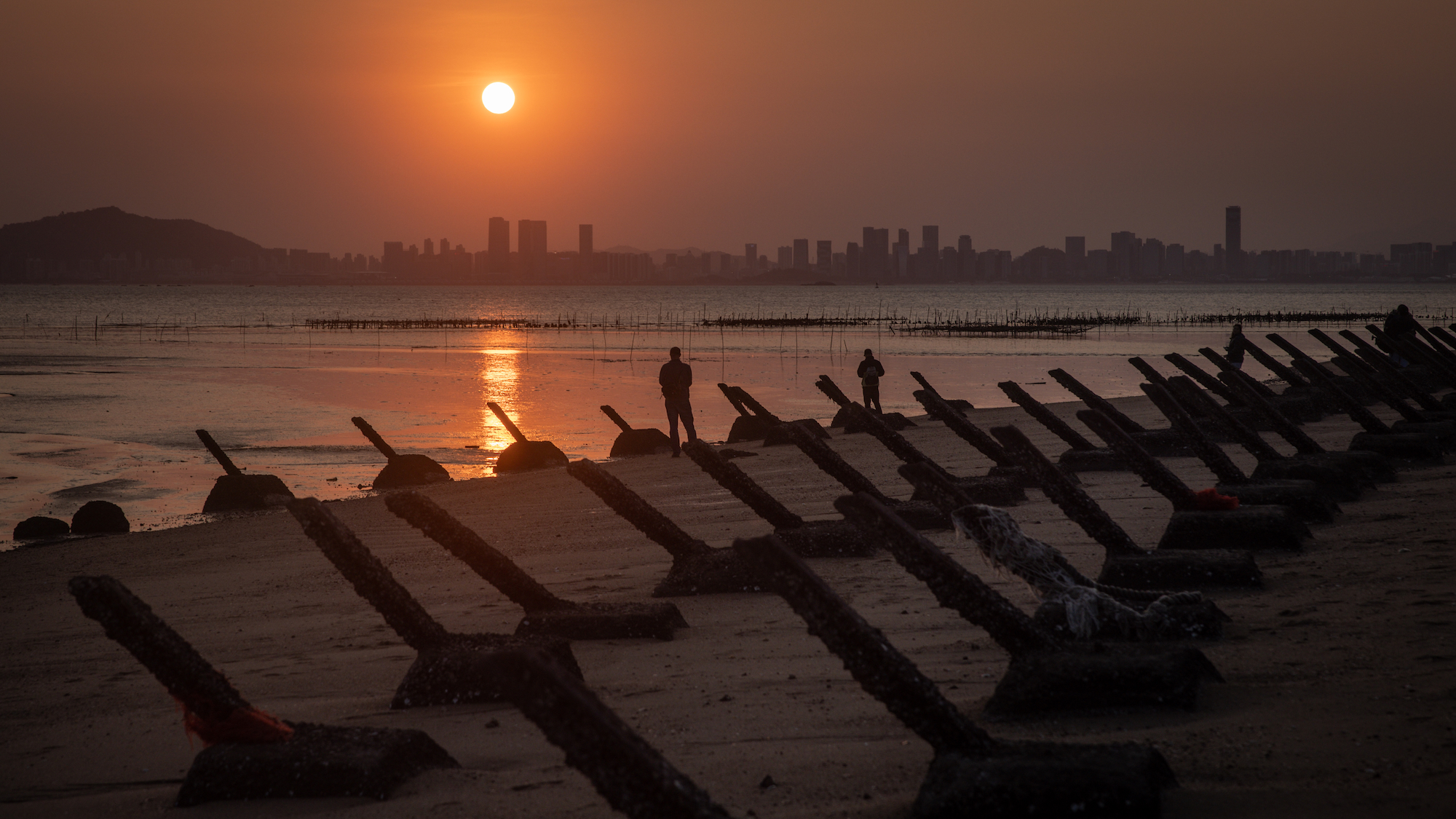
Header: Wartime anti-tank fortifications in Kinmen, a Taiwanese island three miles off the coast of the Chinese city Xiamen. (Photo by Chris McGrath/Getty Images)
- Also see Yao-Yuan Yeh and Charles K. S. Wu, “When war hits home: Taiwanese public support for war of necessity,” International Relations of the Asia-Pacific 21 (2021), pp. 265–293. ↩︎

Andrew J. Nathan is Professor of Political Science at Columbia University. He studies the politics and foreign policy of China, political participation and political culture in Asia, and the international human rights regime. Nathan’s books include Chinese Democracy (1985), The Tiananmen Papers (2001) and China’s Search for Security (2012).