Sign up for our newsletter to be notified of new posts!
Welcome back to What China’s Thinking, our interview column with Chinese public intellectuals and authors on the ideas that impassion them. Our previous Q&As were with Zhang Feng and Liang Hong.
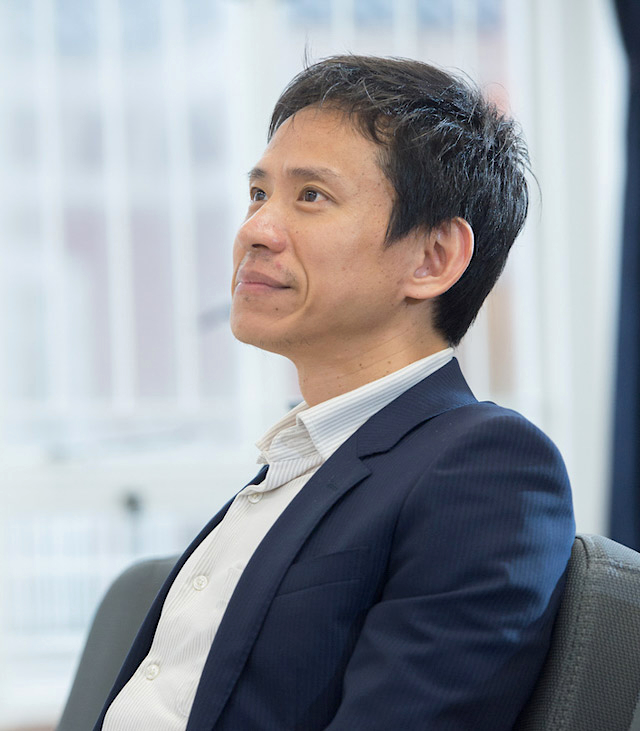
Xiang Biao is one of the most widely read anthropologists in China today. He was born in 1972 in Wenzhou, a port city in Zhejiang province, one of the earliest cities to embrace private enterprise upon the advent of reform — an environment that shaped his early interest in observing social life. At Peking University in the 1990s, he studied a community of Wenzhou merchants in Beijing, Zhejiang Village, which became the book Transcending Boundaries (跨越边界的社区, 2000; tr. Jim Weldon, 2005). Later, he received a PhD in social anthropology from the University of Oxford, where he also taught for many years. He is now the director at the Max Planck Institute for Social Anthropology in Halle, Germany.
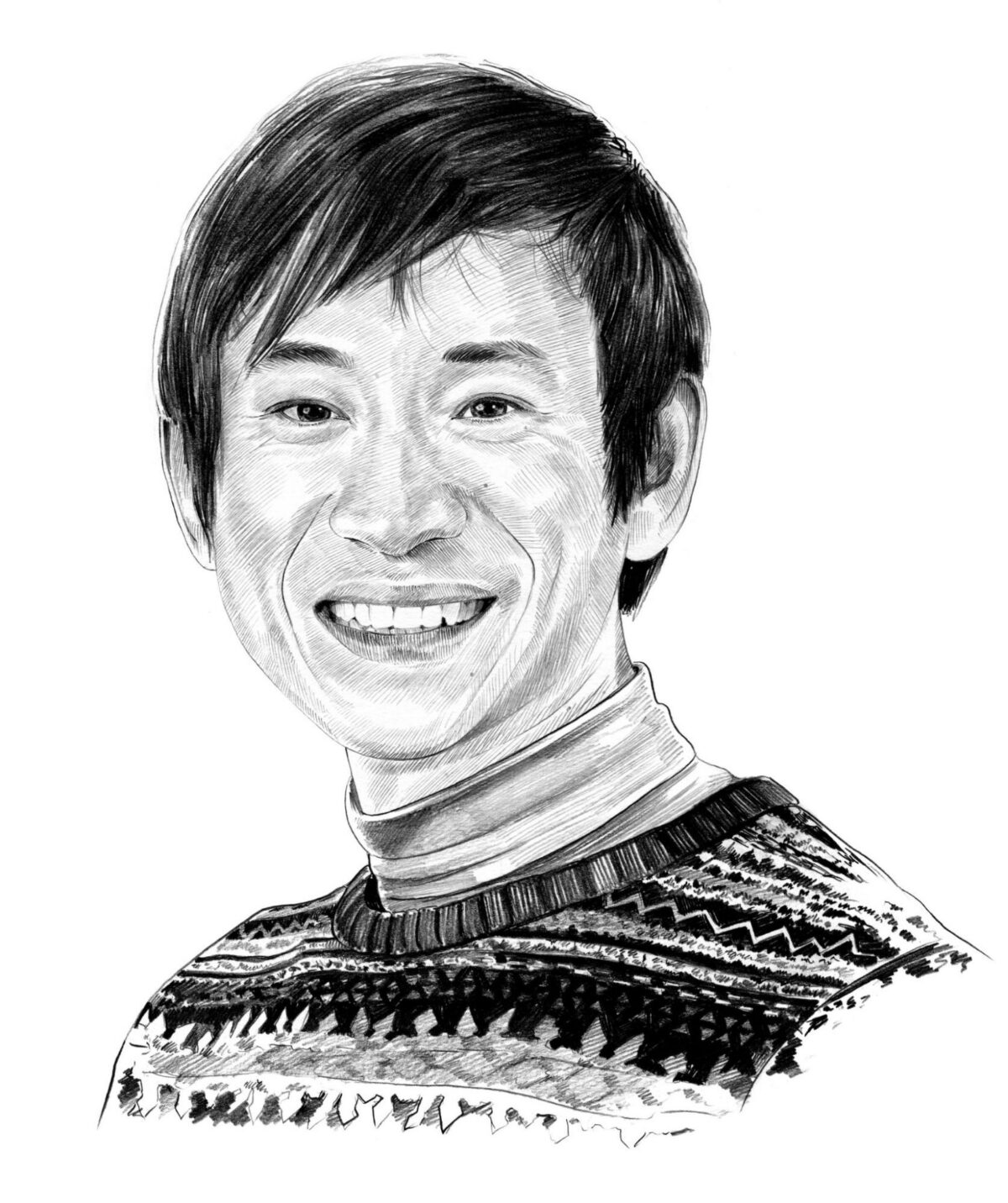
Xiang has popularized several terms that have come to dominate China discourse over the past decade: “involution” (内卷), “lying flat” (躺平), “hummingbirds” (蜂鸟) and “suspension” (悬浮). These expressions capture the precarious emotional and material conditions of contemporary Chinese life, in a society more educated and materially well-off than ever before yet increasingly constrained by economic slowdown, limited mobility and a lack of political agency. In response, many turn inward, seeking meaning on a more individual scale — which is not a uniquely Chinese condition but part of a broader global pattern.
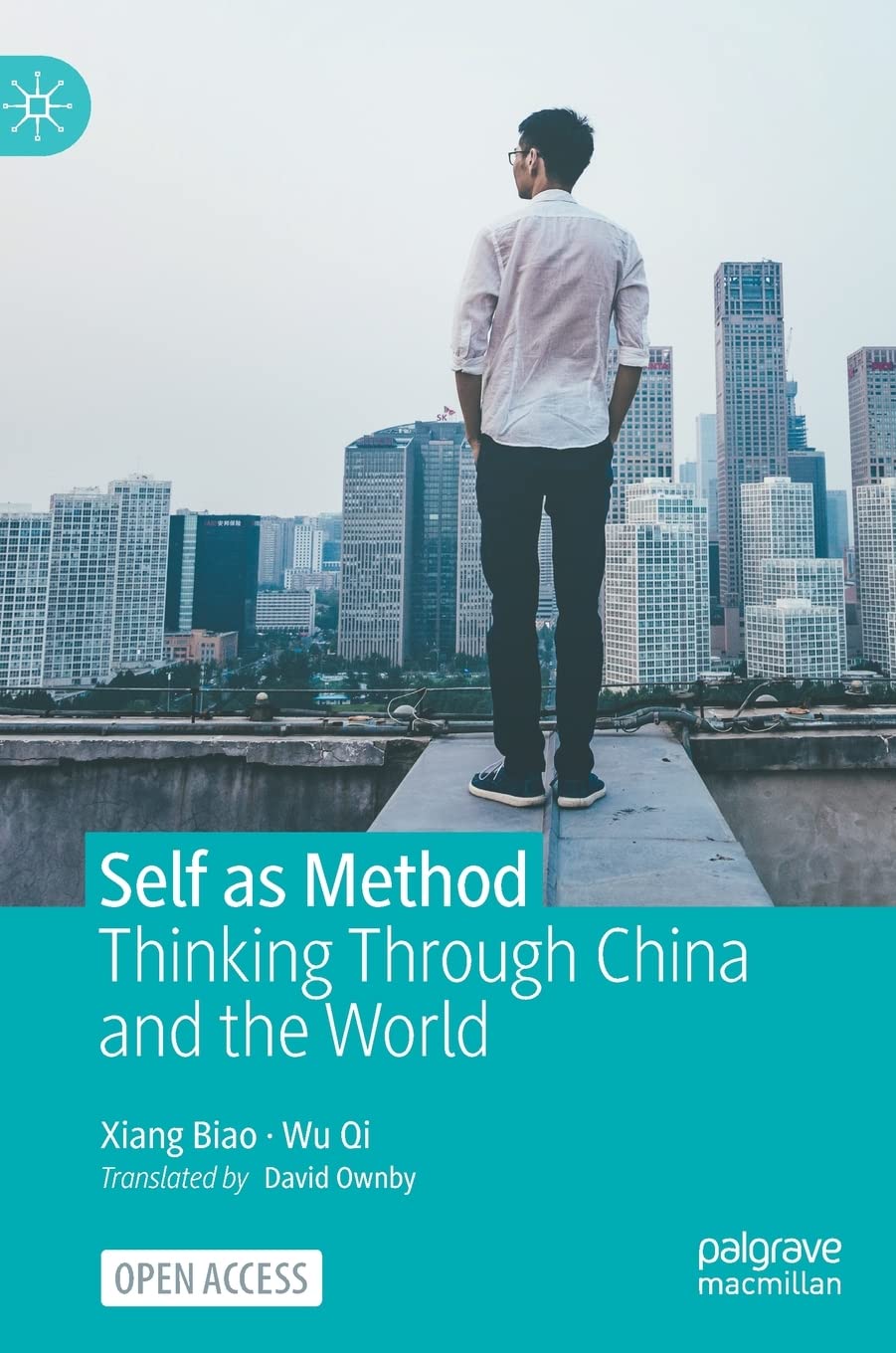
Xiang sees a way out of this impasse, and he has found a wide following among younger audiences in China. Part of the appeal lies in his ability to describe, with unusual clarity, a sense of disillusionment among young people, while also pointing — without directly confronting censorship — to ways of coping at a personal level, through understanding one’s own social world and strengthening everyday connections. His co-authored book with Chinese writer Wu Qi, Self as Method: Thinking Through China and the World (把自己作为方法, 2020; tr. David Ownby, 2022), was named one of the most influential books in China in 2020 by Douban.
Earlier this year, I spoke with Xiang over a video call that lasted several hours. He was in Berlin, and at one point, he turned his camera to show me the snow in his courtyard. We spoke about his upbringing and intellectual evolution, the structural “imprisonment” of China’s hierarchical society, why the term “suspension” caught on, and on “communication collapse” in our digital age.
Yi Liu: How did your upbringing shape your career choices?
Xiang Biao: I was born in the 1970s. By the 1980s, the regimentation of everyday life — that feeling of being squeezed tighter and tighter — became quite pronounced. This was happening nationwide, but where I’m from it had a local flavor. Wenzhou’s commercial culture was highly developed — it’s a place far from the center of power. People cared about politics, but a lot of the reforms that mattered were about the wet market: whether or not farmers were allowed to sell vegetables and fish, things that directly affected ordinary people’s lives.
I grew up at my grandfather’s house, and I was always hearing these discussions — what’s going on with prices at the market today? In the late 1970s, there was constant inflation, mainly because goods were scarce. State-run shops held their prices steady, but there was nothing on the shelves. Private shops had things, but the prices were steep. That’s what people talked about.
So this was my earliest education in how society works. People in Wenzhou cared about politics, but compared to the rest of China, their reading of politics was intensely pragmatic. They’d discuss commodity prices and vegetable prices, and they’d talk about how to judge the Cultural Revolution, but they could connect the two. I later realized that a lot of political talking sessions elsewhere in China were basically palace intrigue — they never came down to the level of how goods were actually distributed in ordinary people’s daily lives.
Then there was school. That period was probably the most normal stretch of schooling that China had had in a century or two. There wasn’t much pressure — compared to now, the competition wasn’t so fierce. It felt natural. School let out at three or four in the afternoon, even in high school. Things changed drastically later. I noticed that in other parts of China, by the late 1980s high schoolers already had mandatory evening study sessions, but Wenzhou was a bit unique — it wasn’t as intense, seemingly.
Wenzhou was a place where the private economy was growing vigorously from the bottom up. Our neighbors, our own relatives — people ran workshops across all kinds of light industry. At first it was all hush-hush, because it wasn’t allowed. I watched how people talked about it. I saw smuggled goods from Taiwan — clothes, or those big boomboxes — being sold on the sly. Teresa Teng’s songs: when you played them, you drew the curtains, afraid someone might hear.
Back then I witnessed a whole world of semi-underground economic and social activity. I watched it surface — not only gaining recognition but eventually being encouraged and praised as a driver of economic development. That kind of observation made me deeply interested in social phenomena. Then in high school, during the “culture fever” of the 1980s, there was the documentary River Elegy [a 1988 CCTV documentary that critically examined Chinese cultural symbols] and I was exposed to that kind of radical thinking. So I was quite lucky: a fairly normal, stable school life, combined with a very active observation of society.
In your book Self as Method, you describe how the Chinese economy was steadily rising in the 1980s — one of the big events was your family buying an electric fan — and you were absorbing more radical ideas. Then in the 1990s you entered Peking University to study sociology. Why did you choose that major?
My first choice was political science, but my parents flatly refused. They said it was the one major I absolutely could not pick. I entered university in 1990, the Tiananmen Square protests had just happened. The major was too sensitive. When the semester started, Peking University couldn’t hold normal classes. We were all sent straight to a military training academy in Shijiazhuang for a full year of drills.
How did you get through that year?
It was incredibly boring. Endless drilling — marching, posture, that kind of thing. My deepest impression was of hierarchy. In the military, the relationship between superior and subordinate is absolute. I felt it viscerally: my instructor was just our class leader, but the desire to please him was overwhelming. Friendships between teenagers became extremely weak, because everyone was focused on pleasing the person above them in order to feel safe, to get a small advantage. This affected me profoundly. We were all 17- or 18-year-old kids — the supposedly smart ones, the good students. But what I saw left a deep mark: under a hierarchical system, people become extraordinarily fragile and distorted. For instance, everyone was counting down to the end of the year. Whenever you bumped into someone and asked how many days were left, the answer would come instantly — “125 days” or whatever it was. I had classmates who drew grids on paper and crossed off each day. But we rarely talked about any of this with each other. Everyone understood without saying so, but there simply wasn’t the space or time to sit down and naturally open up about what we were going through.
These things seep into a person’s existential condition. My research now is driven by the same hope — that our shared social concerns, what I mean by “common sense,” that our analyses can get down to the level of how people actually live. That’s what being concrete really means.
Friendships between teenagers became extremely weak, because everyone was focused on pleasing the person above them in order to feel safe.
After that you finished your undergraduate degree, did your research on Zhejiang Village, went to Oxford for your PhD, and eventually taught at Oxford. But I’ve seen you mention that after going to Oxford, there was a period when you felt lost and anxious — like you’d failed. Why?
Yes, and actually it lasted a long time — from after I finished my PhD. The PhD itself went fairly happily, but the biggest problem after that was having to prove myself as a credible scholar working on the international stage. I’m not very good at the kind of textual spadework — getting really fluent in the literature — that is required. It’s not my strong suit.
The articles and literature everyone was discussing were genuinely interesting, but they didn’t bear much direct relation to my own lived experience. Other scholars could make them sound compelling, as though the material was personally relevant to them too. Neoliberalism, the individual, diffuse power relations — you could talk about any of it and it would hang together. But you couldn’t quite reach it. You could borrow their language to talk about our own situations, but you couldn’t speak from our situations and produce something that truly engaged in an effective dialogue.
On top of that, you had to chase whatever everyone considered the cutting edge and elbow your way in. But I couldn’t elbow in, couldn’t absorb it — it just felt very hard. Of course I put in a lot of time, but I could tell the writing wasn’t flowing. And under the intense pressure of academic politics — I’m talking about Britain here, not politics in the political sense, but the academic system — you couldn’t even sense that there might be another way. So I was very busy, quite worn down, and carried that feeling of failure for a long time.
I finished my PhD in 2003, and the next decade or so was pretty painful. My breakthrough came in 2014, in an interview with the outlet Jiemian. I used the image of a hummingbird [for a life where you keep going, but never feel you can truly stop or rest] and proposed the concept of suspension [in which people pause their preferred life to work intensely or move location]. It was actually a concept I’d first come up with as an undergraduate, when I went to Dongguan to interview migrant workers. In that interview I was fairly relaxed. I wasn’t thinking of it as an academic dialogue. I was just talking about what was happening in Chinese society, what Chinese people’s existential condition actually looked like. How were Chinese people, through their own lived experience, feeling the changes happening around them? What did those changes mean to them?
So the hummingbird, suspension — these images look like a striving toward the future, but in fact they’re a negation of the present. The real force driving you is fear, not hope. Your feet are dangling in midair. You’re always trying to surpass yourself, to negate yourself, instead of seeing where your strengths and distinctive qualities lie and cultivating your own vitality from there. It didn’t sound like academic discourse — it was about subjective feeling, and I just said it naturally.
Why is it like this? The whole Chinese model of solving the problems of development with more development, the chase for high speed — at the macroeconomic level it’s the same state of suspension. Quality doesn’t matter much. Local GDP-ism: grow first, ask questions later. Everyone chasing the next trend. Politically, whoever delivers the best GDP numbers gets promoted. So political points matter, quality doesn’t. Nobody dares to invest in the long term. It’s all tied to the broader political economy.
After I said all this, I felt it had come out smoothly. By 2014 WeChat already existed, and China’s mobile internet was developing at breakneck speed, quickly overtaking desktop traffic. The piece suddenly got a huge readership, and it gave me a feeling: I actually can talk like this. There seemed to be a response. It showed me that there was another way to think, to narrate, and to engage in public dialogue. From 2014 to 2022, I gradually integrated public dialogue and academic work into a single, unified practice. After moving to Germany and taking up my new position, my conviction was that I had to find a path that brought the two together.
You mentioned the hummingbird concept struck a deep chord. My sense is that even though you’re a scholar, you and a worker at Foxconn might share similar feelings — despite your vastly different backgrounds.
Yes — this is what I mean by shared concern, shared relation. A lot of people ask: what do you mean by “shared”? People in the social sciences usually start with class analysis — inequality. I personally think this has become a very rigid lens: inequality determinism, the idea that your birth determines everything. This is a problem in how young Chinese people see things. What do I mean? Many people insist that middle-class anxiety and working-class anxiety can’t possibly be the same thing. If you say they are, that’s irresponsible — and this reflects the over-politicization of academia today. Scholars feel they have to publish quickly, even if they haven’t fully thought through the problem, because if they wait any longer they won’t get promoted, they might even lose their jobs. So they publish first, figure it out later.
I was talking once to a taxi driver — this was an example that really startled me. He was in his forties, his back was shot, but he was still driving 12-plus hours a day. I said, you need to think about your health. He said, health — that’s for later. How can I worry about my health right now? It wasn’t a lack of medical knowledge. Everyone knows that if you’re in your forties and you wreck your spine, it’s only going to get worse. But that’s what he said. This is the hummingbird’s state of suspension. He’d split the question of his survival away from his natural, physical condition, and put everything else on hold — family, his own body. His logic? I’m making money now. I need to work myself to the bone now, and later I’ll buy my health back with cash.
Civil servants, officials — they say the same kind of thing. Maybe this policy is wrong, but if I make a fuss about it, I’ll be made a fool of. I just need to demonstrate total loyalty and secure my position first. These are very different people. But as human beings, they live in the same larger society. Of course you can’t deny that they differ enormously in economic standing, life opportunities, living standards, and in their children’s prospects — that’s inequality, and obviously it’s real. But many of people’s most fundamental anxieties and feelings do, at times, connect.
So our shared anxiety doesn’t mean that everyone has the same concerns. What I’m saying is that when you dig deeper, you find points of connection — emotional, experiential connection. And from a systemic, structural perspective, you also find that everyone is imprisoning everyone else. Because you keep doing this, other people’s situation becomes that. And because they keep doing that, you become their prisoner too. To say this within a larger context of inequality is to affirm something of our shared humanity — not to deny that inequality exists, but to insist that within this unequal landscape, something can still be done. People’s agency, people’s capacity for reflection — those are still there.
Suspension — migrant workers are actually very willing to use this concept to describe themselves. It’s intuitive: they can’t settle in the city, but they feel there’s no hope if they go back to the countryside either. Young people feel they’re floating in midair. In the past, that floating was more of a “who knows what the future holds, let’s play it by ear” feeling. But today’s young people are different. They’re educated. They float in midair and it produces an anxiety that wasn’t there before, not in my surveys of migrant workers in the 1990s. The anxiety that’s appeared now: they’re not making money, they don’t aspire to build a house back in the village, they’re just drifting through the city with no direction — aimless, accompanied by a deep anxiety and pain. This psychological suffering has been increasing in recent years, and that’s why I’ve felt more and more strongly that shared concern needs to be the topic.
You have a series of public online lectures. Besides “suspension,” you use the words “involution” (内卷), “run” (润), “spite” (戾气) and “the nearby” (附近) to represent the daily experience of ordinary Chinese people. Why did you choose these terms?
Because I’m familiar with them. “Involution” is used with extraordinary frequency. It represents a particular kind of relationship between the individual and the structure: you’re endlessly compelled to work, to compete furiously. This matters because it explains why China developed so fast, why household living standards rose so quickly, and at the same time why people feel so exhausted and hollow — and whether this model is sustainable. I think the concept refracts a lot of these big questions.
What does “spite” mean? It’s a kind of viciousness, an irritability — it’s social contradictions that can’t effectively resolve themselves. On the surface everything looks perfectly stable, because there’s governance. But underneath there are deep social tensions that can’t be defused, yet they also don’t accumulate into an explosive event. The reasons, at least so far: first, there’s no large-scale survival crisis; second, social control keeps getting tighter. So the tensions transform into spite — people become hair-trigger sensitive, unable to stay calm. This spite often gets transmitted to the next generation; there’s an intergenerational transfer that puts an enormous psychological burden on children. By the time it reaches the kids, it’s no longer spite — it manifests as fear. Society feels terrifying to them. They become extremely withdrawn. This spite is what parents bring home with them, and it puts children in an unhealthy environment to grow up in.
Run became a trending term in the later stages of the pandemic, especially in Shanghai, Guangzhou and Beijing. Over a longer time horizon, run really captures an anguish that many young people carry: should I leave or shouldn’t I? Its meaning is a bit different from traditional emigration. Emigration is destination-oriented — I want to emigrate to America or Japan. Run isn’t destination-oriented. Sometimes you don’t even know where you’re going. A lot of people went to Thailand and places like that, only figuring out what those countries were actually like after they arrived. So run comes from a mindset of leaving — driven by all kinds of anxiety and uncertainty.
Now it’s entered a new phase: a feeling that nowhere in the world is any good, that it’s hard to imagine a place you’d call home. For today’s young people, leaving — run itself — isn’t really the hard part. Their English is decent, they have some assets or some way to manage it. Compared to 30 years ago, when going abroad to live and hustle was an enormous undertaking that only a tiny minority would even consider, the physical act of leaving and moving around isn’t the issue. The issue is: where will I actually find a place where I can feel at peace, put down roots, pour my life’s energy into — a place to shelter from the storm? Concretely: start a family, raise children, plan their education, build a long-term career. And looking ahead, since so many of today’s young people are only children, there’s also the question of how to take care of aging parents.
So run sounds like a very concrete behavior — whether or not to go abroad. But in the current context, you could say it’s a kind of inversion of the 1990s globalization. The 1990s vision was: the world is full of opportunity, everywhere is great, look outward, roam the globe. Now it’s: nowhere in the world is good — but at the same time, people feel they can’t stay put anywhere either. They just keep drifting.
In this context — and I’m fairly optimistic by nature — I’m in Germany, in Berlin, and I see a lot of young Chinese people. Very few of them came with the idea of settling in Germany or building a long-term life here. But they’re doing all kinds of interesting things: putting on exhibitions, opening their own bookshops, constantly in dialogue, running Chinese-language film festivals. The formation of a new community of educated Chinese in Europe is, I think, quite interesting.
Finally, there’s “the nearby” — what I’m getting at is: what can we do when we can’t change the big structural picture in the short term? The idea is that amid all these layered contradictions, how do you first get your own footing? Today’s young people are highly educated, they have access to enormous amounts of information, and they get easily swept up in large-scale, highly emotional, ideological, morally charged debates — same as in the U.S. But the things right around you: I’m not even saying you have to care about the people nearby, just observe them. Then you start to understand how society is actually constituted — your society is put together in very concrete ways. Your grasp of life becomes more grounded, more specific, and your thinking about your own problems and your relationship to society becomes more concrete too. So “the nearby” is a kind of — it sounds like an exit, though it’s not necessarily an exit. It means: first, get steady on your feet. Don’t let it flatten you.
The tensions transform into spite — people become hair-trigger sensitive, unable to stay calm. This spite often gets transmitted to the next generation.
You mention in your book that you think the unhappiest group in China is young people from relatively well-off families — urban, middle-class, well-educated. Why?
Of course there’s no way to quantify this objectively. But after 2015, as China’s economy began to slow, this group of kids had been raised with very high expectations. They’d received good educations from a young age, their families had invested heavily in them — usually they’re only children, urban, genuinely well-educated. Their whole understanding of life, from childhood, was: study hard, and you’ll glide smoothly into a middle-class lifestyle. But when they graduated, they found that was gone. No jobs. Undergrads now have to take entrance exams for master’s programs, PhDs, or the civil service — for them, the gap between expectation and reality is enormous. Their material lives are still much better than those of lower-class young people, but the drop from what they expected is the most devastating thing. They tend to be so-called “second generation” — their parents were the first generation to become middle class, the success stories. But these parents tend to place extraordinary emphasis on education, invest heavily, and are extremely strict.
“Haidian moms” [helicopter parents in Beijing’s wealthy university district] are the extreme case, but plenty of parents who haven’t reached the Haidian tier have exactly the same mentality. So of course they love their children — these parents do everything: tutoring, homework, they sit with the kid until whatever hour. But the pressure on the child, accumulated over so many years, that in the end can’t be converted into a job and a career — that’s where the real weight falls.
I’ve seen a lot of young people on social media discussing birth determinism — the idea that your background decides everything. It’s 2026, and young people are turning to this: you work hard but you still don’t get promoted, can’t find a job, so it’s your origins that matter most. It’s somewhat ironic, because in the 1960s and 70s China was very much opposed to this kind of thinking. Now it seems to be coming back. How do you explain it?
It’s an objective response to the current situation: people feel there are no opportunities. Before, if you worked hard, your salary actually went up — you felt recognized, your value was affirmed. Now you work hard and your salary doesn’t budge. You can’t find work. We used to think success meant refusing to accept your fate — changing your destiny. But “changing your destiny” is itself a problematic notion: class ascent, regarded as the definition of success since the 1980s. But what does class ascent mean? No matter what, most people will always be in the lower strata.
I think this regression actually started in the 1990s. Since the French Revolution, one of the great changes in human society has been the idea that we are the lower class and we transform the lower class — that’s what revolution and reform in modern society mean. Before that, everyone wanted class ascent — to become a landlord or whatever; the Ah Q mentality, the rebel impulse of Liu Bang and Xiang Yu, which has always existed. But the modern idea born from the French Revolution is: we are at the bottom, and the bottom has dignity. That’s what gave rise to Marx’s writings on the proletariat — and in modern Chinese history this took deep root. Even though China didn’t have a proletariat or working class in the classic sense, working-class consciousness was deeply embedded in intellectual circles. The idea of standing with the bottom, transforming it from below, liberating all people through the bottom, because the emancipatory energy of the lowest is the greatest.
This ideology has completely receded from public consciousness. Once it receded, can it be reinterpreted and connected to the very specific problems young people face today, so they feel it can still explain their situation? That’s work I haven’t done yet, but I can see the tension within it. This regression didn’t start in the last two years — it goes back to the 1990s. But in the 90s, because the economy was broadly growing, it created the impression that you really could change your destiny, that class ascent was possible. Now the situation has changed. Class ascent is no longer very likely, and that’s when people start talking about birth determinism.
The next step: can we get people to think about something like accepting your lot without conceding defeat? Maybe you’re at the bottom, but you refuse to give in. You keep working, you keep cultivating your own life force, your own creativity. And it’s not about dragging anyone else down — it’s about living with more dignity and helping others live with more dignity too.
I think it’s mainly a shift in ideas. A lot of people say: hard work doesn’t beat good choices, and good choices don’t beat good origins. But the people saying this are still working hard. They haven’t actually given up entirely — they’re still anxious about exams and all of that. When they say these things, they’re not declaring total surrender. They’ve arrived at a more intense, more penetrating awareness of inequality, and what they mainly want to express is a sense of powerlessness.
The biggest change compared to our time is not from effort to no effort. Overall, I think people today work no less hard than we did — the pressure on kids is still immense. The main change is this: effort driven by hope has become effort driven by fear. When we said work hard and you can change your fate — it was naïve, almost muddled, but people genuinely believed it. You looked around and there seemed to be examples of it working, so you worked hard. Now it’s: if you don’t work hard, you’ll be tossed out entirely. Your origins are already bad, you have no choices, so you have to work. And then they add: hard work doesn’t actually help — but they don’t dare stop.
So what I see is a shift from hope-driven to fear-driven effort. It’s compulsory competition — you want to opt out but you can’t. The compulsion pushes effort to extremely high levels, even higher than before. The studying, the working at this intensity, no weekends — the degree of effort is greater than before. Why? Because fear and entrapment are more powerful drivers than hope and aspiration.
You said this is an era of unprecedentedly advanced communication tools, but also an era of communication collapse — extreme information abundance but disordered meaning and that therefore we need a new cultural order. Can you give me an example?
If you look from the 1980s and 90s through the 2000s and 2010s — the first years of Chinese social media — the effect is very clear, globally. The simplest example, for a Western readership, is the Arab Spring [which began in 2010]. Facebook was in its heyday. Why did the Arab Spring happen? Because of Facebook. It was seen as a revolution made by social media, because social media could effectively circumvent censorship and enable massive amounts of free information exchange and mobilization.
Before that, the internet utopia was that the internet would promote information exchange, and then we’d have citizen journalism — you were perhaps at The New York Times at the time, this was discussed a lot. Everyone would be a reporter, information would be completely liberated, equalized. This was the internet utopianism people were talking about as early as 1994–95, then citizen journalism, then Facebook and the Arab Spring — roughly a 20-year arc.
Then look at Twitter, Elon Musk taking over, the global relationship between authoritarian governments and social media, the relationship between Trump’s elections and social media. Social media as a communication tool has developed at breakneck speed technically. But the communication and debate it produces isn’t just fragmented — it’s polarized, and sometimes polarized for the sake of polarization. More concretely: information bubbles, which have now become extremely sophisticated. The constant push of content, so seamless you don’t even notice. There are information bubbles, and now it’s extraordinarily difficult to tell real from fake — the truth of a huge amount of news is very hard to verify. So more and more, what shapes your consciousness is emotional capture, clickbait, the seizure of first impressions.
Elon Musk is perhaps the most emblematic case: what was once considered one of the most effective tools for promoting democracy and freedom — the free flow of information — has become a highly effective instrument for authoritarian, right-wing politics. Europe is the same: the far right uses social media far more skillfully than mainstream or left-wing media, because it operates primarily on emotion. So my understanding is this: the tools for information exchange are unprecedentedly advanced, but the quality of information exchange has actually dropped considerably. It’s become extremely emotional and headline-driven, and its effect is not the formation of shared understanding but increasingly sharp division, increasingly explicit mutual hostility and polarization.
But the examples you just gave — Facebook, Twitter — are both blocked in China. Is the situation the same there?
I think so. In China, WeChat is now the dominant platform, of course along with Toutiao [今日头条, a news aggregation app] and others. In our own friend circles we lament this. Among classmates, you discover: wow, that guy thinks like that now? It’s not that we disagree on our views — it’s that we can’t agree on basic facts. Something you believe clearly happened, another person insists was completely fabricated, never happened. So we’re not disagreeing about opinions on facts — we can’t even form a shared understanding of what actually occurred. That’s very hard to deal with.
Why is this happening? Because we don’t have a basic cultural order — one that lets society affirm certain basic facts first, and then hold different opinions on that foundation. There’s no such mechanism, so debate becomes about picking sides, becoming increasingly ideological: I stand for this, and everyone else can go to hell.
Those old friends you just mentioned, where one side believes something never happened and it actually did — can you think of a recent example?
A fairly typical example — one that’s become quite contentious in China — is the disputes during the pandemic lockdowns. On the international level, there’s the Russia-Ukraine war. With Russia-Ukraine it’s not so much that a specific event didn’t happen; it’s that people have completely different understandings of how it happened. At the basic factual level, there are entirely different readings.
But sometimes there’s also dispute over the facts themselves. For a while, for instance, everyone was convinced Russia would definitely win, that it had already advanced to such-and-such a point. Then it turned out that might not be the case. This is the multi-sided contest over what the facts even are. From the perspective of classical journalism, of course, you keep investigating, correcting, clarifying. But when there’s no order, people stop expecting that things can be clarified. Some give up, because they feel the other side’s view is set and there’s no point talking to them.
Internationally, Gaza is the most obvious case — fundamentally a dispute over facts. For a lot of people, attempting to correct the facts feels pointless. I think Gaza and Israel have taught us a very heavy lesson. It really makes people feel powerless. People feel that no matter how much evidence you present about what actually happened, it doesn’t help. This is power, technology and the interests of a few bound together in a way that — by now, with information so advanced, you should be able to lay out information from all sides and form a basic judgment about what actually happened. But that judgment is increasingly impossible.
What I see is a shift from hope-driven to fear-driven effort. … Because fear and entrapment are more powerful drivers than hope and aspiration.
All these changes we’ve been discussing feel like a kind of ideological turn — from the old unified collective mindset toward greater self-focus. Over the last few decades, Chinese society and the economy have changed so fast compared to the US or Europe — what took America 50 or 100 years happened in China in just 30. Is this a natural phenomenon? Do people’s mindsets inevitably shift toward self-focus as society changes?
I think the turn toward the self is a fairly direct, preliminary reaction — the examples we discussed earlier. But the way Chinese young people turn toward the self is not quite the same as, say, the self-consciousness of America’s westward expansion — “I am the master of the world, I will live by my own will” — or the post-Enlightenment European tradition represented by Nietzsche, the free will that emerged after industrialization dissolved rural society and the individual became increasingly central, the building of individualist self-consciousness.
The specifics differ in many ways. In America and Europe, the rise of individualism came when traditional rural social ties dissolved, young people moved to cities, rapid industrialization threw them into an environment where old structures no longer held. In America it was especially clear: the West was a lawless land, no tradition, and everyone had to fend for themselves, to build anew. And from that came what Tocqueville described as associational life — different selves tangled together forming new kinds of collectives. But these were very different from the old ones: they were called associations, political parties.
| XIANG BIAO’S RECOMMENDATIONS | |
|---|---|
| CHINESE BOOK: | From the Soil (乡土中国) by Fei Xiaotong |
| TV SHOW: | Yes Minister |
| MUSICIANS: | Joan Baez; Frederic Chopin; Dou Wei (窦唯) |
| FOOD: | Wenzhou hand-pulled fishball noodles; Berlin laugencroissant |
| HOBBY: | Swimming in the Saale river |
But China? People aren’t coming from the countryside and being thrown into something like the Wild West — a place with no structure, no tradition, no law, no authority. It’s almost the opposite. In China, people are now rethinking their inner feelings within a highly developed society — highly developed power structures, institutions, especially in urban society — where technology is advanced, bureaucratization is advanced, all manner of systems have become more complex. It’s within this context that people are searching for a self.
It’s somewhat like the 1960s in Europe and America, but the difference is that the 60s were economically part of the golden age of capitalism, and all kinds of social movements were surging, so it was a profoundly optimistic moment. The Anglo-American 60s, opposing the Vietnam War — that also unleashed a wave of individualism and liberalism, including the moral energy, rock and roll, all of it — born out of tremendous optimism. China today has no such optimism. The optimistic period — the momentum of high-speed economic development — has clearly passed.
So under current conditions, our exploration of the self doesn’t map onto the European and American experience — which also explains why it has so many inward-turning characteristics. Precisely because this isn’t an optimistic, outward-expanding moment — there’s no trying out different lifestyles, different art forms, no swirl of social movements, nothing like the 1960s when there were protests all the time. The 60s really did have a utopian quality. We have absolutely none of those conditions, so the exploration of the self has become very inward — very sensitive, and sometimes it makes people quite fragile. That’s why how we scholars intervene in this conversation matters even more.
So in this situation, what should we do? How do we find home? I’ve been thinking about this — it’s related to the idea of the nearby. Sometimes you may not be able to point to a spot on the world map and say “this is my home.” Maybe all you can do is, in the ongoing process, take each moment seriously, take your immediate surroundings seriously.
You say these topics don’t touch on political issues and aren’t censored, but in fact a lot of what young people discuss — including gender and not being able to find work — does get censored.
Yes, but I don’t think censorship has too direct an impact on the quality of young people’s discussions. If you’re talking about research on historical topics, does censorship directly affect what subjects you choose? Or how you use sources? That’s another matter — very severe. A sensitive article gets taken down. But after it’s taken down, I don’t believe it really affects people’s awareness of the issue, or stops them from continuing to think. Even after it’s removed, it’s already circulated — people are talking about their own experiences. And do young people feel that because of censorship they have to hold back from sharing their experiences? I don’t get that sense. I think when people talk about their own lives, they’re fairly open and brave. Because the biggest obstacle to talking about your own experience isn’t really political censorship — it’s whether you have the emotional courage to face it. That’s more immediate. And on that front, the courage of many young Chinese people exceeds my expectations. They’re willing to confront themselves, to dissect themselves. Sometimes this goes to extremes too, but at least that part is real.
Do you have children? What kind of life do you hope for them?
I have a 15-year-old daughter. She lives in Berlin. I just hope she can achieve a fairly natural, self-consistent state. We’re different generations — her world and mine are completely different, and her self-consistency definitely won’t look like mine. I just want her to be aware of the diversity of society, and to make her own choices from an informed position.
Do you still go back to Zhejiang Village?
I’m still in touch with those people, but Zhejiang Village is basically gone now. They know what I’m doing. A lot of them were in business and have since retired, but they still follow my work and think it’s worthwhile. When they see me, though, they say I’m too thin and don’t make enough money. ∎
Translated from Chinese by Alexander Boyd and Claude.

Yi Liu is a bilingual journalist from Chongqing, based in New York. She is a staff writer at China Books Review, and previously worked at The Wire China, The New York Times and The Beijing News. Her articles have also appeared in The China Project, Initium Media and other outlets.