Sign up for our newsletter to be notified of new posts!
Welcome back to What China’s Thinking, our interview column with Chinese public intellectuals and authors on the ideas that impassion them. Our previous Q&As were with Xiang Biao, Zhang Feng and Liang Hong.
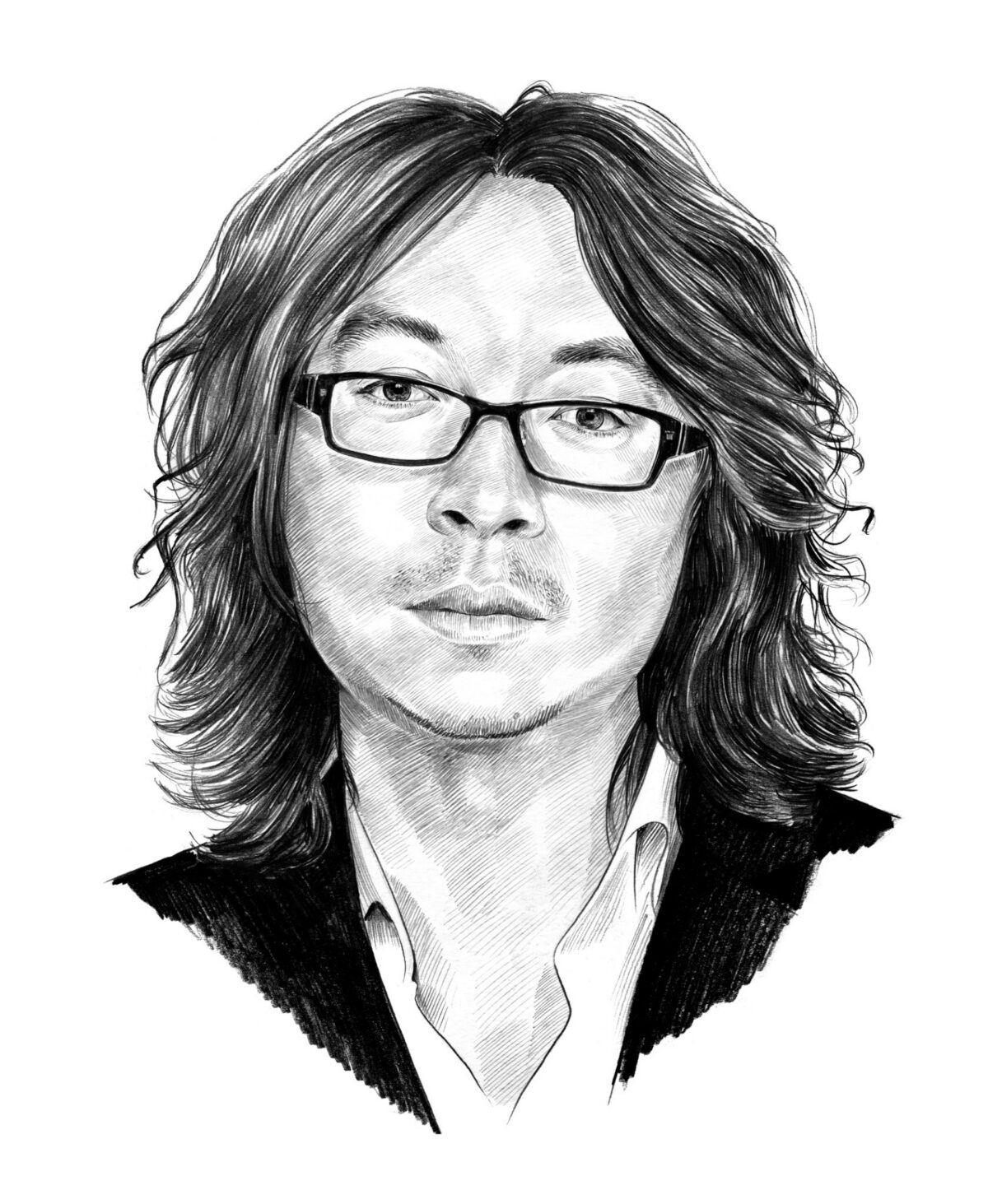
Xu Zhiyuan is a Renaissance man — a “guerrilla” intellectual in his own term. Based in Beijing, he is an author, founder of a bookstore chain, and host of the popular long-form interview program. Xu graduated from Peking University’s computer science department in 2000. A self-described poor programmer, he was instead drawn to journalism, which seemed to offer a life of intellectual freedom. Xu started as a reporter for The Economic Observer (经济观察), a Beijing-based financial weekly, then worked as an editor for Life (生活), a Chinese magazine renowned for its news features, and later as a columnist for The Financial Times’ Chinese site.
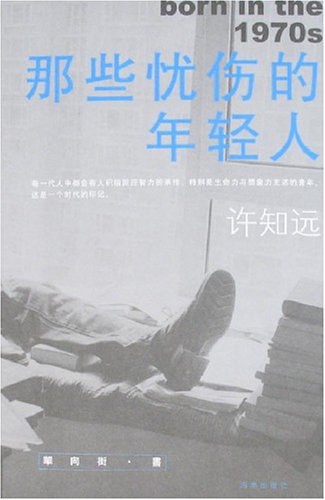
Xu first gained national attention with the 2001 essay collection Those Sorrowful Young People (那些忧伤的年轻人), which explored the idealism, anxieties and confusion of educated young Chinese during the transformations of the 1990s and early 2000s. Since then, he has authored and co-authored scores of books. A 2015 English language collection, Paper Tiger: Inside the Real China (tr. Michelle Deeter, Nicky Harman), samples his profiles, travel writing and reportage from across China. These days, he hosts Thirteen Talks (十三邀), an online interview show entering its ninth season in which he talks to global cultural and intellectual figures, with two billion views across Bilibili, Youtube and Tencent. He is also the founder of One Way Space (单向空间), a bookstore chain with stores in China and Japan.
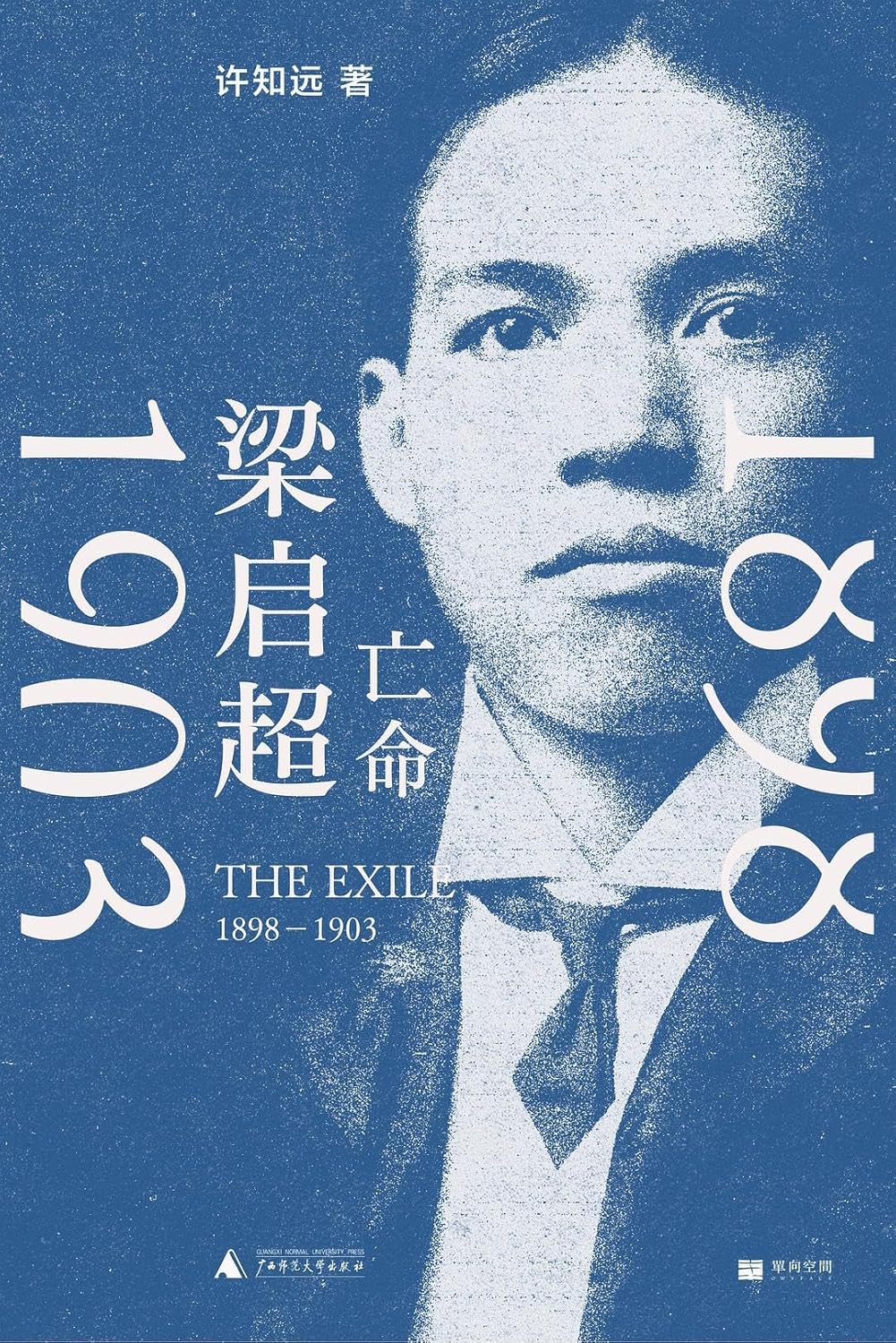
Last year, at a 725 Salon talk at Asia Society in New York, Xu discussed his latest book Liang Qichao (梁启超: 亡命 1898-1903, 2023), a biography of the late Qing dynasty revolutionary and intellectual. The talk sold out, as did copies of his book — the crowd was mostly Chinese diaspora and remarkably young. Shortly after, I met with Xu several times at a café in Midtown Manhattan. We spoke about the spiritual comfort he found in the life of Liang Qichao; self-exiles’ search for a Chinese identity abroad; and Chinese intellectuals’ turn toward historical writing. History, said Xu, is less escapism than a base from which intellectual guerrillas can launch their fight.
Yi Liu: You’ve been a journalist, run a bookshop, written books and hosted an online show. With so many identities, could you introduce yourself?
Xu Zhiyuan: I was a journalist for a long time. I’ve run bookshops for 20 years, though I only really threw myself into the trade around 2010. I’ve been hosting the show [Thirteen Talks] for about nine years. And there’s the writing throughout. Those three identities are the ones that run through my life.
I opened the bookshop [One Way Space] because I think bookstores can serve as “idea houses” for cities, and I felt Beijing needed one. I founded it in 2005. Today we have 10 bookstores, two bars and a hotel, and about 130 staff. It’s a mid-sized company. Beyond the shops, OWspace also publishes a magazine [单读]. I think we count as a major cultural brand among young Chinese readers. Running the bookshops and hosting the show are probably my way of exploring the world. They’re an extension of the journalist’s craft, and they’ve given me a lot of opportunities to travel globally.
In your talk at Asia Society, you said that Li Hongzhang represents power, Lin Yutang represents identity and Liang Qichao represents ideas. You could have written about any of these people. Why Liang Qichao?
I was in a professional bind and needed a deeper subject, one with a more direct relation to the transformation of China unfolding in front of me. First, the predicament Liang Qichao faced and the predicament we’re facing now — the beginning of a Chinese transformation — felt linked. Second, I have always loved biographies. I think biography is one of the richest ways to see a cross-section of an era, and the form carries a lot of drama. So I picked Liang Qichao. Honestly, the choice wasn’t the product of careful deliberation. Once I made it and got into the work, path dependence set in, and turning back wasn’t easy.
Now that you have finished the Liang Qichao book, did you find the answers you were looking for?
I found some energy. I saw that the personal dilemmas of those who struggle in the clutch of history are the same. What matters is that while powerless and under enormous pressure, [Liang Qichao] was able to create new possibilities. I want to highlight that spirit in him. Many people of that period had it, because they were all living through a vast historical transformation, and such moments are extraordinarily activating for thought and feeling. It’s nothing like a normal age.
What do you see as the biggest similarity and the biggest difference between our situation now and Liang Qichao’s at the end of the Qing dynasty and beginning of the Republican era?
We too are facing a historical upheaval — you don’t know which direction the future is heading. The arrival of the AI age, shifts in global geopolitics, globalization possibly ending or facing sudden major challenges. What do these things actually mean?
Living in my own era, I may not be able to see clearly. Sometimes I try to return to Liang Qichao’s age and understand how he faced enormous change. He was an important intellectual at the end of the 19th century, and he too faced a technological revolution, the collapse of traditional political forms, and the collapse of an entire knowledge structure. Take our knowledge structure facing this new AI age — you don’t know what changes it will undergo, what shape it will take. So watching his choices, I draw some encouragement.
I also found out how ignorant I am. When going back to a previous era, you have to grasp its thought and structure. All they had back then was the Four Books and Five Classics (四书五经) or eight-legged essays (八股文), and then suddenly they had to enter an age full of concepts like science, democracy and republicanism — everything was changing. They were the users and the creators of a new vocabulary. Many of the terms and concepts we use today were created in their time, and I have a hard time even understanding them now. In their era, they had no direction, no road map. It was incredibly hard.
Do you think Liang Qichao’s experience offers any lessons for Chinese intellectuals today?
In his era, intellectuals played a more central role in society. We play a more marginal one. The feeling is very different. We can’t really have the kind of sense of mission they had, the conviction that they were intimately bound to their era. We can’t forge that strong a link. We’re more like bystanders, and it’s hard to truly intervene in our era’s changes.
But Liang Qichao’s deepest influence on me is this: you should become a person of action. It may not produce a good outcome — there may be plenty of setbacks — but the act itself adds new dimensions to your thinking and keeps it alive. Researching volumes two and three of my Liang Qichao biography, I felt this very clearly. In the traditional writing about Liang, he comes across primarily as a thinker, or as someone with a great propagandistic talent. But I saw very distinctly that Liang built so many vast organizations, traveled the world, kept running into one situation after another, kept persuading people. He was an astonishing man of action.
I was starting my own business while writing this book. Running a company brings its share of worries, of course, but whenever I saw the things he did, I’d find consolation. In a transformative era, I think most people are deeply confused and don’t know how to respond. But a small minority draws energy from precisely that uncertainty, or is constantly pushing back against the present.
You’ve said that Liang Qichao’s writings still shape China today. Do you see anyone in our era with that kind of influence?
It’s very hard to have someone like that now. For such a figure to emerge, intellectuals have to occupy a central position in their own country. China was like that for about a decade after the 1980s, but intellectuals have become very marginal. I think it’s a shift driven by political pressure and consumer culture. It’s a global trend.
The American historian Barbara Tuchman called history a “distant mirror.” The Song dynasty scholar Sima Guang called his massive history of China a “comprehensive mirror“ ( 资治通鉴). Does anything in the reflections of history unsettle you?
History gives me assurance rather than unease. Because history has never offered a clear road map, and there’s no fixed direction. Every generation is struggling, finding its bearings inside disorder and chaos. The individual, too, is always searching in history for their mission, their destination. So what history really gives me is inspiration. Even in a profoundly confused era, every person can still try to find their own possibility, their own direction.
History isn’t a fixed pattern. Even when you’re badly hemmed in, you can still create a small personal space, a personal kind of freedom. I don’t think a person necessarily has to seek some ultimate meaning. Meaning is more likely to come stage-by-stage. You can keep finding meaning in stages, and life can be lived piece by piece. Each stage has its own meaning. You don’t have to find a complete, unified, ultimate meaning — meaning is itself episodic.
Lately I’ve come to feel that in this era, as intellectuals, as writers, we may need to become guerrillas of ideas or of feeling. In the past there seemed to be a direction like a regular army has — people knew roughly where the future was heading. But that kind of complete, well-defined direction no longer exists. You become more like a guerrilla fighter, opening small skirmishes in various places. You finish one battle, you enter the next. That’s why I really like the film One Battle After Another.
History isn’t a fixed pattern. Even when you’re badly hemmed in, you can still create a small personal space, a personal kind of freedom.
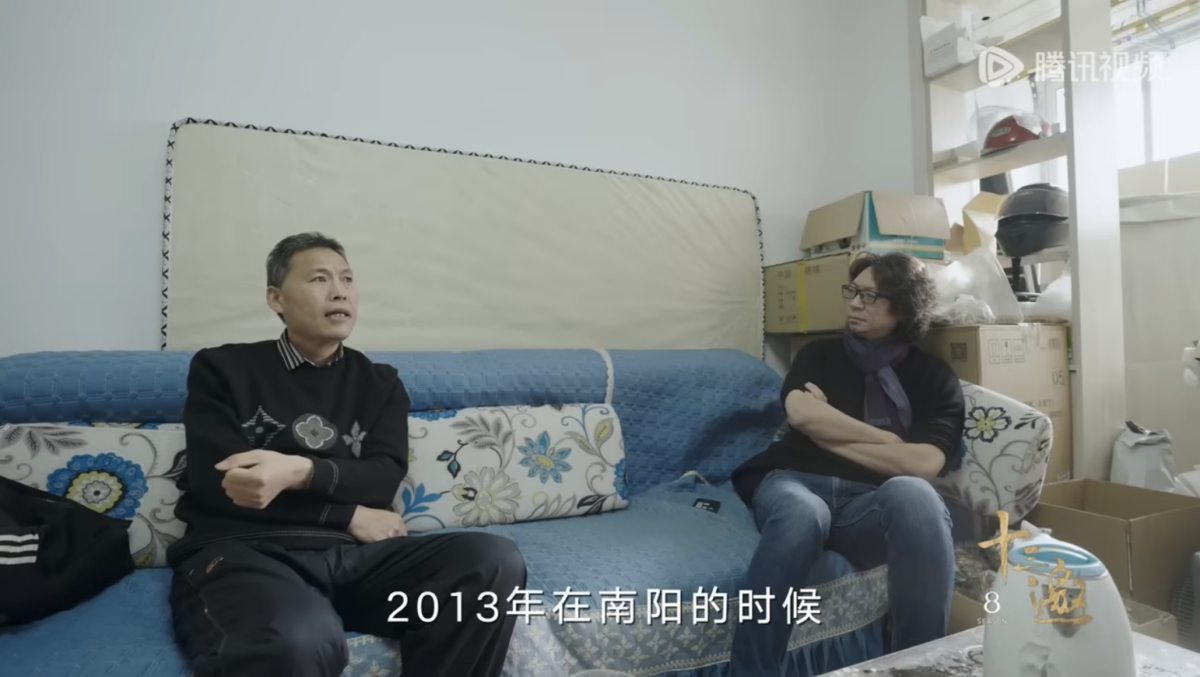
You’re an online celebrity. Since you started hosting the video talk show Thirteen Talks, over 100 episodes you’ve spoken with Chinese intellectuals and cultural figures from very different backgrounds. How have those stories shaped you, moved you, changed you? Has your view of society and of China shifted?
I haven’t actually changed all that much. Maybe it’s that I’m more comfortable with the camera now, more accustomed to that state. Hosting the show is essentially the same as interviewing people. You build up a lot of experience over time, and that experience helps you stay steady — it’s a skill. When I was a journalist and writer, I also traveled all over and met all kinds of ordinary people. So the part of the show I love most is how diverse the people I interview are — of different ages, education levels and backgrounds.
Was there anyone you were especially excited to interview?
Chen Nianxi (陈年喜), a miner poet. I love his whole life story. Writing poetry is his strength, an extension and articulation of his experience. But his experience is so foreign to me. We share a lot of background — we both grew up in the 1990s, reading similar books, like García Márquez — yet our paths in life are so different. That made me very curious.
If you could choose anyone to interview on for your show, living or dead, who would it be?
Hu Shi (胡适). Hu Shi became a leader of the New Culture Movement (新文化运动) in his early 20s. In 1919 he was so full of promise; that was young China then. Thirty years later, the May Fourth Movement had soured. I want to know how he understood that.
Hu Shi then came to New York around the 1950s, and in that period he was actually quite powerless, because China had been through a vast upheaval. I’d love to spend an afternoon with him, to see what he was doing, what he was thinking, how he understood his own present, whether he had a strong sense of failure — because in some sense, half his life’s work was gone. On the surface it looked like he had failed. I want to understand his thinking, because I have a sense of frustration too.
Why do you feel such empathy for Hu Shi?
Because his influence on me runs deep. Our generation has a strong emotional attachment to liberal ideas, to liberalism. But in Hu Shi’s time, liberalism itself was under siege worldwide. The era we live in now is also one in which liberalism faces enormous challenges. I think my empathy for Hu Shi lies there. There’s so much in today’s Chinese society that can’t be clearly articulated. I’m still searching for a new language. So in a way, I think Hu Shi’s era and ours have something in common.
Which topics are the most popular at your bookstores and on your talk show? Have Chinese audiences’ tastes changed over the years?
Travel writing and books on psychology have been popular for the past four or five years. Maybe people are more curious about their inner lives now, and are also more confused, so that inner drive has become important.
This shift shows up even more clearly on my talk show. My sense is that for the past decade and more, China was in a deeply entertainment-driven age. But now our audiences are more interested in historians. Our most popular episode was a conversation with the historian Cho-yun Hsu (许倬云). The audience cares about China’s historical trajectory, as well as personal experiences and attitudes in the face of crisis. Viewers are more interested in conversations like this, and that’s become much more pronounced in the past few years. People are encountering real crises — one is Covid, the other is the current weak economy. There just aren’t as many opportunities anymore.
Recent years have seen a sharp rise in Chinese people who run (润) — emigrating for political and economic reasons. How does this compare with Liang Qichao’s era, when Chinese intellectuals including Liang also fled China to Japan and elsewhere?
It’s quite different. In Liang Qichao’s day, exile was forced, and you’d even be hunted down. I actually opened the OWspace branch in Tokyo because I wanted to be with this group [of Chinese self-exiles in Japan]. They’re a new generation — young people who have had an internationalized, socialized education. They need cultural touchstones overseas. I’m fairly optimistic about this generation. There are a lot of them, and they’re very active. They’re comfortable with mobility. They want cultural identity, but whether they’re in Tokyo or in New York, they aren’t necessarily looking to embrace Japanese or American culture. They’re looking for an identity. Many have found one. I think this represents a new, more internationalized version of the great Chinese revolution.
This is something new. It didn’t exist before. It’s tied to education and material conditions. Earlier generations struggled. From Liang Qichao through to the 1990s, Chinese émigrés explicitly wanted to return to China, or to assimilate into the local society. They held those impulses very strongly. But this new generation has its own independent identity.
In Liang Qichao’s era, Chinese cultural power was immense. Even overseas, Chinese still generally saw themselves as Chinese; they wouldn’t have thought of themselves as Malaysian. The concept of the democratic nation-state was still very weak then, and they had this kind of insistence on Chinese culture. That’s why overseas Chinese communities went to such lengths to set up Chinese-language schools at the time. Now the cultural identification isn’t as strong as it used to be. For the younger generation, this is already a very naturally globalized country, and combined with a certain confidence brought by China’s rise, they’ve formed a new kind of identity.
The anniversary of the May Fourth Movement, which was so formative for Liang Qichao and Hu Shi, was two weeks ago. How is it remembered in China? How should it be?
I haven’t seen much commemoration of May Fourth this year. In the past, in school, it was an extremely important date. There would be many lectures, many books published. We recently interviewed Chen Pingyuan (陈平原), an important scholar of the May Fourth Movement. Professor Chen argues that May Fourth is to China what Rousseau and Voltaire of the Enlightenment were to France. Even 100 or 200 years from now, it will still be a subject of continuous discussion. It has become a key origin of modern Chinese thought, so it should be revisited, debated and offered to contemporary readers as new inspiration.
But this generation of young people may not see it as a particularly glorious naissance. There are periods in history when certain events go silent, undiscussed; in other periods, they get discussed again. The French Revolution isn’t always discussed at high frequency in Western history either — sometimes it’s emphasized, sometimes it is downplayed. It’s an undulating process.
May Fourth wasn’t only an intellectual movement; it was also an age of “feeling” — a moment in which human senses and feelings were opened up. I think on the “feeling” side, May Fourth still needs new writing and new discovery. But none of that has really begun yet. We are not living in an age of ideas.
So what kind of era are we living in now?
We’re living in a very exhausted era. People are facing an economic downturn, the uncertainty of international geopolitics and the enormous impact of AI all at once. People are in a deeply confused state, unable to find a direction, so the space left for the discussion of ideas grows narrower.
We are not living in an age of ideas. We’re living in a very exhausted era. People are facing an economic downturn, the uncertainty of international geopolitics and the enormous impact of AI all at once.
You’ve written over a dozen books. Which one captures a major shift in your thinking — or in the thinking of Chinese intellectuals?
Right after I graduated from college, I wrote my first book [Those Sorrowful Young People]. It was about the confusion and disorientation of a generation of young people [in the 1990s]. Soon afterward I became a journalist, and while working at The Economic Observer I wrote another short book This Generation’s Chineseness (这一代人的中国意识). Back then I was always trying to find big topics. That next book was important to me. People of that generation were quite westernized — they wanted to learn so much from the West, and the book was a kind of discovery about our own country, influenced by Western travel writers.
Fifteen years ago, the “China model” was in vogue. I wrote a book in 2010, The Lure of Totalitarianism (极权的诱惑), describing various problems in China’s transition, including our obsession with the concept of “wealth and power” (富强). I felt that totalitarianism was full of seductions for the individual — the pull to throw yourself into a vast system. At that time I was worried that the individual would vanish into the pursuit of national wealth and power. I’m still worried about that now, but [the concept of] “wealth and power” has disappeared too. Yet very little of a genuine individual spirit has actually awakened.
Can you imagine writers today writing books on such big themes?
I wrote those books because I had the basic training of a journalist — you have to react quickly to current events. I think that work has its historical role. American bookshops are full of books about Trump now — how will we look at those in 10 or 20 years? But they’re important right now.
So if you were writing on current affairs now, what would your subject be?
Today I’d much rather return to the feelings of inner life.
Is that an active shift you made voluntarily, or a passive one you felt pushed into?
Both at the same time. Current-affairs writing requires an encouraging climate, an atmosphere in which ideas can develop. That’s the problem. We feel powerless, useless, and over time that produces a kind of invisibility. It’s a real issue. And it’s a widespread mood — everyone is a little depressed. Our ideas are slowly shaped by our era. The fact that I later spent so much time writing history is probably related to this. History is a flight, but it’s also a fight.
Do you think Chinese intellectuals as a group have shifted their topic choices in this way too?
Many are doing historical writing now. History writing is in a moment of revival, and a lot of these writers came out of journalism — they’re writing about various dynasties: the Yuan, the Ming, the Song.
You mentioned that when you were young, you loved The New York Review of Books, and you cared about how Western intellectuals saw China. You’re no longer interested. Why?
| XU ZHIYUAN’S RECOMMENDATIONS | |
|---|---|
| CHINESE BOOK: | Sinking (沉沦) by Yu Dafu (1921) |
| ENGLISH BOOK: | In the Future of Yesterday: A Life of Stefan Zweig by Rüdiger Görner (2025) |
| MOVIE: | Dead Poets Society by Peter Weir (1989) |
| MUSICIAN: | Elvis Presley |
| ROLE MODEL: | Ralph Waldo Emerson |
I used to care a lot. Now I don’t, not as much. I think the most important thing for me now is to figure out how I should view my own era, my own country. I haven’t talked about this much with the people around me, but I think this kind of indifference is now fairly widespread.
I really dislike viewing things only through a political lens. I was once talking with a reporter from Asahi Shimbun [the Japanese daily newspaper] and I told him: we Chinese readers also care about architecture and music, just like every Japanese reader. Politics matters, but it’s only a small part — and yet now everything is being thought through this one angle. Many friends I admire have also become Trump supporters. That has been a real wound for me.
Speaking of friends who have become Trump supporters reminds me of a recent conversation I had with the Chinese scholar Lin Yao. He argues that some Chinese liberal intellectuals’ support for Trump stems from a kind of “beaconism” (灯塔主义) rooted in the traumatic experience of totalitarianism during the Mao era. They idolized the United States, which in turn grew into hostility toward the “baizuo” or “white left,” Chinese internet slang for left-wingers, as a threat to the American project. Do you agree with this argument?
I agree with it in part. Around the end of the Cold War, people had many romantic ideas about America. The present moment is a breaking apart of those ideas. After the romantic dream shatters, I actually think it’s a good thing. It will help me rethink China’s changes and my own fate, and generate a deeper impulse toward self-searching. If you don’t have an external benchmark, a clear direction, a vector you think you should be moving toward, how do you find your own direction? It forces you to think more deeply about China itself, and about China’s relationship to the world.
A lot of the time, beaconism produces a kind of intellectual laziness. You feel that the direction of travel is already over there, and you just have to run toward it. But that direction has been broken now. So I think it forces people into more self-searching, and into rediscovering their own country, their own history. ∎
Translated from Chinese by Alexander Boyd and Claude.
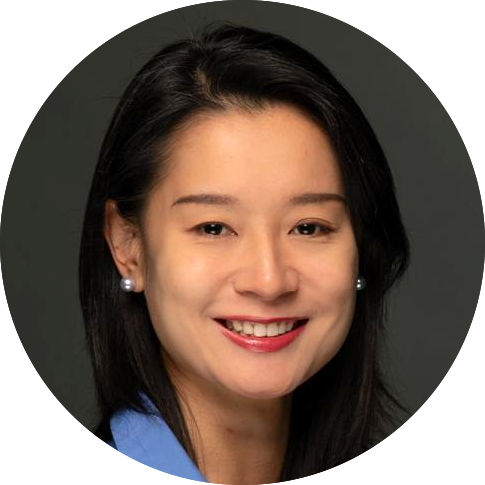
Yi Liu is a bilingual journalist from Chongqing, based in New York. She is a staff writer at China Books Review, and previously worked at The Wire China, The New York Times and The Beijing News. Her articles have also appeared in The China Project, Initium Media and other outlets.