Sign up for our newsletter to be notified of new posts!
This May, Taiwan Travelogue by Yáng Shuāng-zǐ (tr. Lin King) became the first book written in Mandarin Chinese, and the first from Taiwan, to win the International Booker Prize. (Readers might remember it also won our 2025 Baifang Schell Book Prize, and the 2024 National Book Award for Translated Literature.) This was only the second time a Taiwanese novel has been nominated for the Booker; the first was when The Stolen Bicycle by Wu Ming-yi (tr. Darryl Sterk) made the longlist in 2018. That nomination was marred by controversy, after the Booker Prize Foundation, caving to pressure from the Chinese Embassy in London, changed Wu Ming-yi’s listed nationality from Taiwan to “Taiwan, China,” before public outcry prompted them to quickly change it back. This year’s triumph marks something of a full-circle moment: Taiwanese literature brought back into the spotlight by none other than a postcolonial novel.
A Booker win by a Chinese-language novel promises direct implications for both this column and us readers in the not-too-distant future. So make space on your bookshelves now, before the new translations from Chinese start rolling out thick and fast, we hope. Or, if nothing else, to make room to fit in a couple of the recommendations below. In the breadth of their subjects and styles, these five books provide a glimpse of the sheer variety of Sinophone work that’s out there, ripe for translation. So read on for tales of hard work and harder luck, featuring a migrant worker youth; a locomotive full of loco motives; a no-holds-barred imaginarium; S&M transcendence; and the race to the top for a self-loathing bottom.
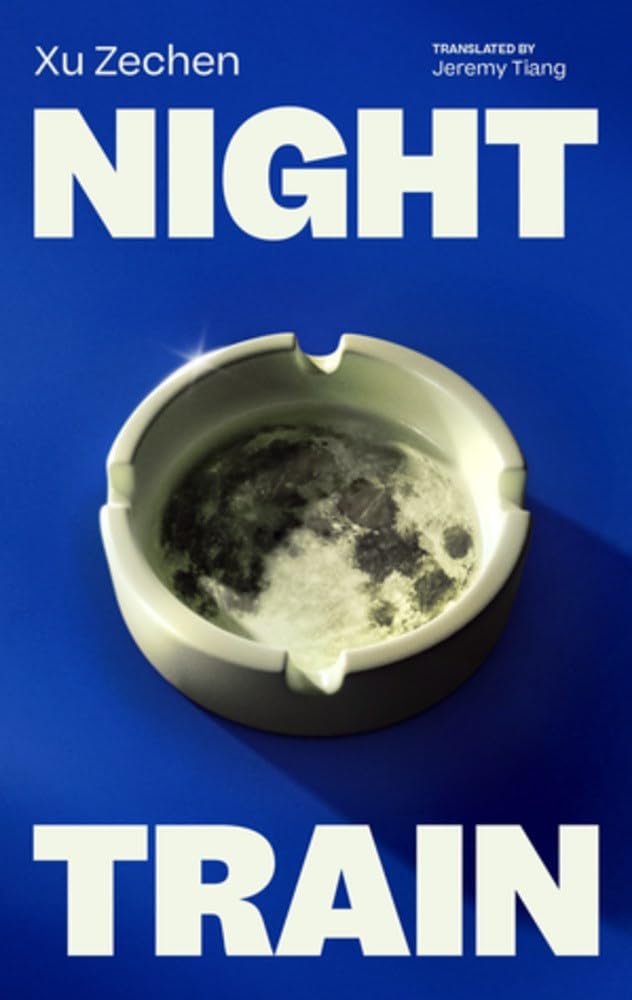
Night Train
Xu Zechen is a fiction writer who made his name writing about migrant workers. Both his previous works in translation, Beijing Sprawl (tr. Eric Abrahamsen, Jeremy Tiang) and Running Through Beijing (tr. Eric Abrahamsen), feature characters scrambling to get by in whatever way they can, mostly after an honest living has been proven an unattainable fantasy. Yet the choices they make tend to hinder rather than help their aspirations. In Xu’s latest novel, Night Train, even the campus setting and a guaranteed spot in a postgraduate program can’t save protagonist Munian from a similar predicament: in a desperate bid to go traveling before his PhD in classical Chinese literature begins, he tells his trishaw-driving dad that he strangled a man and dumped the body in a river, and so needs money to flee. When he returns, this lie has put an end to his future at the school, and there starts a slow downward spiral for Munian and his quirky neighbors — the Van-Gogh wannabe, the flaccid lothario Little Japan, and Munian’s uninterested love interest. It’s maddening how needlessly the lives of this affable bunch fall apart, but Jeremy Tiang’s swaggering translation and Xu Zechen’s crack timing with gags make the novel hard to put down.
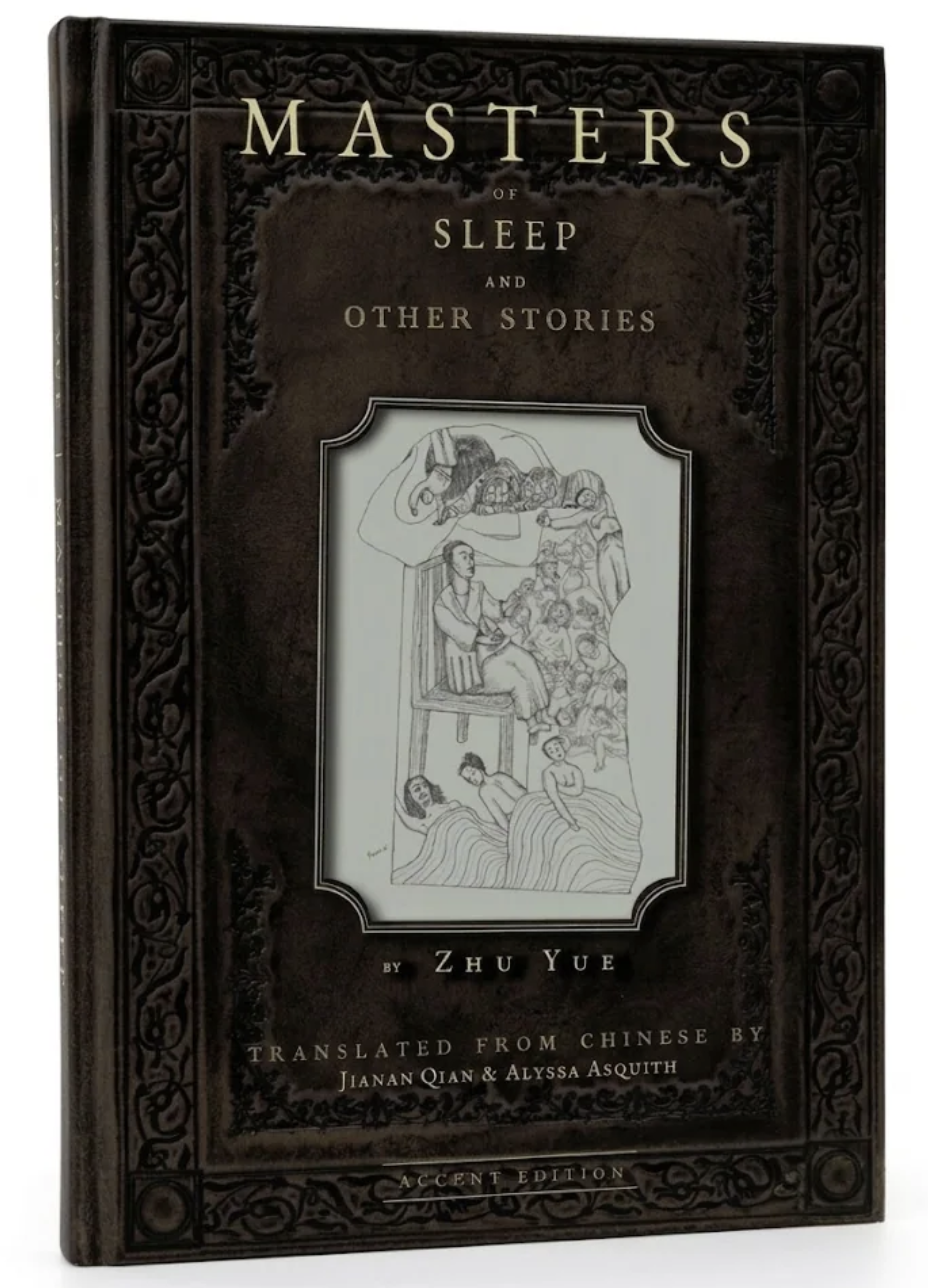
Masters of Sleep
And Other Stories
Put something other than rural misery, urban listlessness and societal discontent at the center of Chinese fiction, and what do you get? An anthology of mind-boggling, planet-hopping and mischievous thought-experiments-slash-stories, which reads like Strange Tales from Liaozhai for the modern day or the uncut version of Everything Everywhere All at Once (and not just because one character leaves surgery with wheat noodles for fingers). Masters of Sleep is the long-awaited culmination of years of work by translator duo Jianan Qian and Alyssa Asquith to bring into English one of China’s most inventive writers. From former lawyer Zhu Yue’s earliest three collections come stories about a man chasing his eye across a barren landscape; a country boy whose dream of escape lands him alone in an alien world; and a compendium of “extreme sleeping” (among much more, some of it available online). As an editor at Beijing-based Post Wave Publishing (后浪), Zhu Yue nurtures genuinely experimental work in a literary ecosystem that usually doesn’t support it. Meanwhile, we have the New York-based Accent Edition (co-founded by our very own columnist Na Zhong) to thank for taking the leap of releasing as its first translated publication a China book that isn’t immediately political.
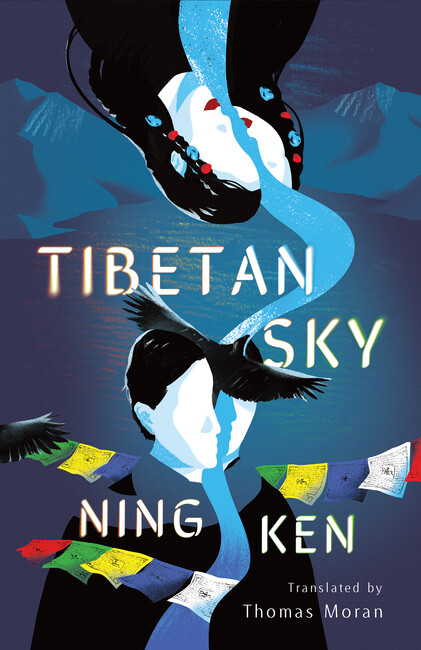
Tibetan Sky
Tibetan Sky is Ning Ken’s fourth novel, the first of his to be translated into English, and his latest to be set in Tibet. Born in 1959, in the same generation as household names Yan Lianke and Mo Yan, Ning is also Han Chinese. That might raise some eyebrows: a Han author writing about Tibet. English literature already furnishes enough problematic depictions of “the Other” to last a reader a lifetime. But Ning Ken knows he’s on shaky ground — he admits, in one of the sometimes pages-long metafictional interjections, “For years I have tried to write about Tibet but to little avail.” Where he does succeed here is in dismantling some of the spiritual exoticism of Tibet as Shangri-La. Wang Mojie, the novel’s Han protagonist, shares his shallow grasp of the enigma. An academic in Beijing trying to leave behind a messy divorce, Wang signs on to a “Teach for China” scheme which assigns him to a rural school outside Lhasa. He’s followed there by the ghosts of events on “the Square,” which only satisfying his masochistic desires can exorcise. Relief finds him in the form of Ukyi Lhamo, a half-Han, half-Tibetan woman trying to connect with her roots after an atheist upbringing in Beijing, who proceeds to pick apart everything Wang thought he knew about Tibet, its history and culture, Buddhism, philosophy.
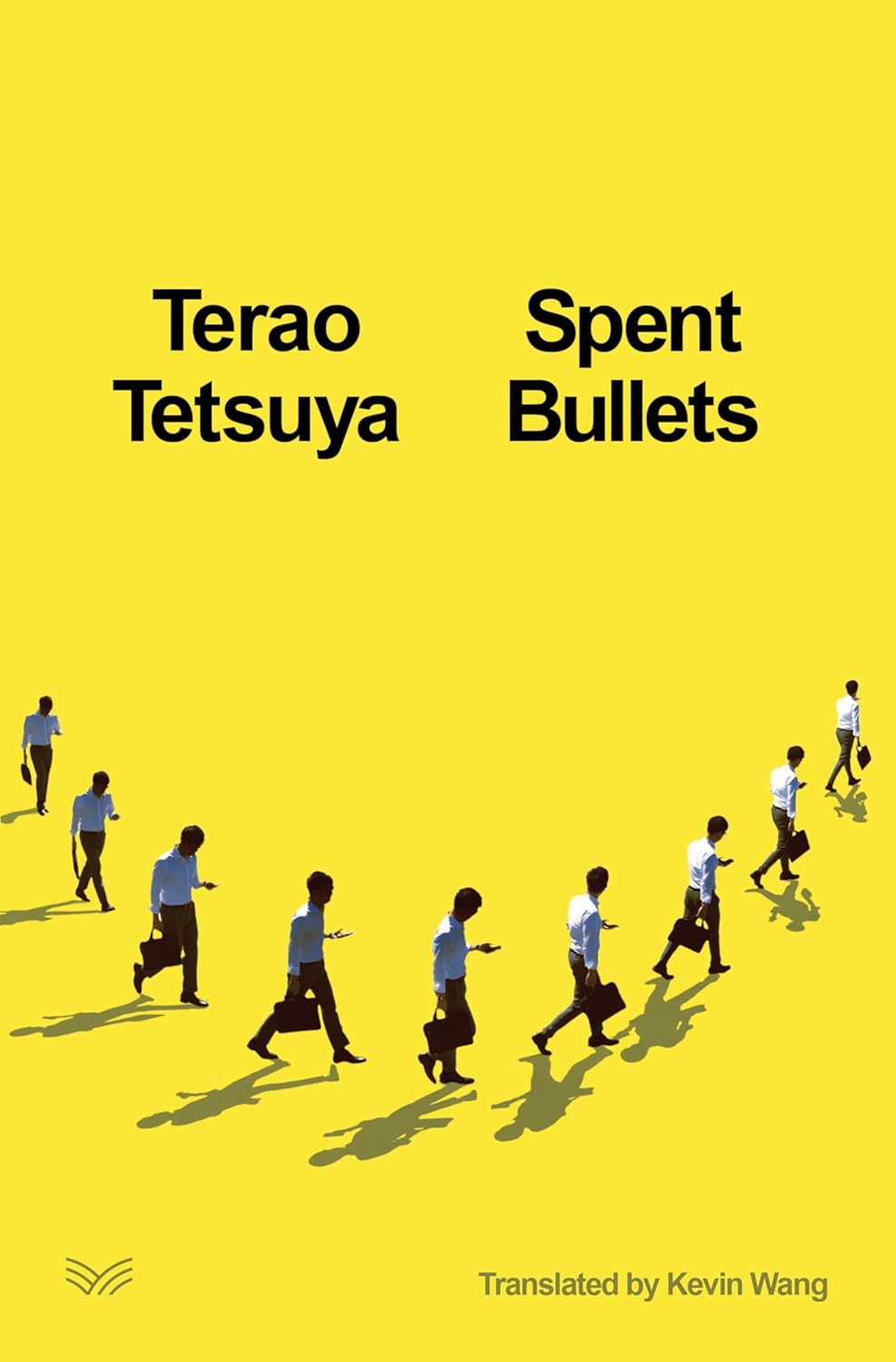
Spent Bullets
Terao Tetsuya, a Taiwanese writer, worked as a programmer at Google for eight years before the intense pressure of the job and the impact it was having on his mental health led him to quit in favor of full-time writing. Spent Bullets, his debut collection of nine interconnected stories, is in part about fiercely ambitious and gifted young people caught in the rat race to the top — who, unlike him, find no way out. The title alone provides a stark metaphor for survival in the hyper-competitive and merciless battleground that is Silicon Valley, evoking shots fired, targets hit and missed, and lives lost. Opening with narrators Yi-Hsiang, Jie-Heng and Ming-Heng meeting in a Taipei boys’ prep school, the collection ends with two of their number returning to the casinos of Las Vegas for the annual memorial of the third, who threw himself off a balcony there despite having achieved everything he’d ever worked for. The other stories fill in the intervening decades, toggling back and forth between Taipei and California, and in between the three queer narrators, whose cavalier (if, in Kevin Wang’s clever translation, intentionally indistinguishable) delivery of the graphic details of sex and violence, both real-life and imagined, only makes them all the more shocking. Strap in for piss play, torture fantasies and a botched suicide.
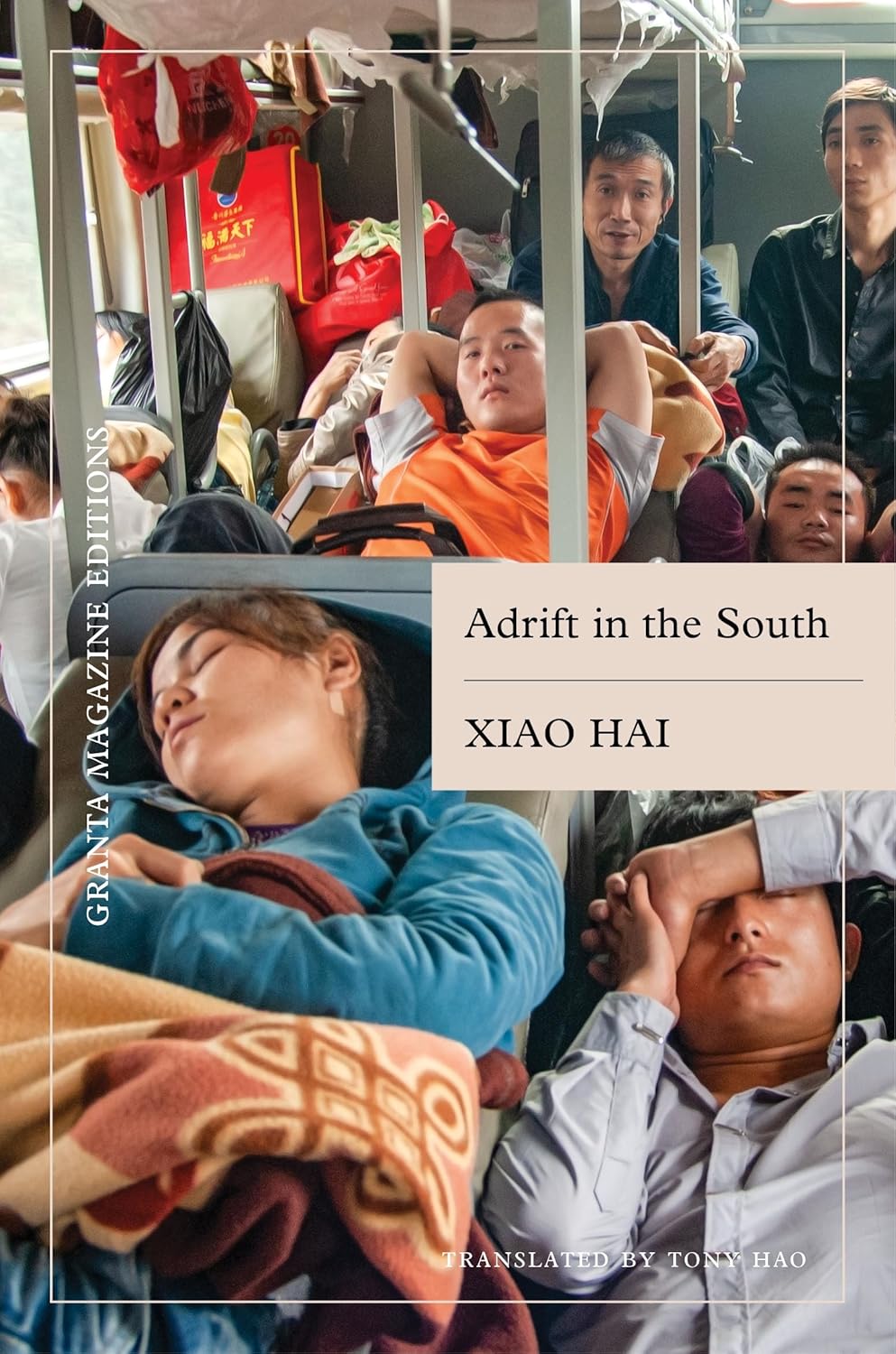
Adrift in the South
Stories of the down-and-out have long found eager readers in China, even before Lu Xun’s Ah Q was written into being in the 1920s. But only in the past decade or so have the best-received accounts of life on the bottom rung come from those who are living it themselves. Migrant workers’ literature, or new workers’ literature, is the diverse output of a small cohort from the country’s nearly 300 million internal migrants, who work for measly wages in cities where they are ineligible for residency and, therefore, healthcare, housing and other basic social protections. Adrift in the South (rightly translated in unvarnished prose by Tony Hao) is the powerful memoir of the poet Xiao Hai, one of the grassroots movement’s most prominent voices alongside viral sensations Fan Yusu, Hu Anyan (I Deliver Parcels in Beijing, tr. yours truly) and Wang Jibing, this year’s winner of the Lu Xun Literary Prize for poetry. For Xiao Hai, who at 15 years old was sent 150 miles from home to learn to be a barber so his parents could afford his younger brother’s education, the China Dream touted by the south’s many economic boomtowns only ever looked like a string of dead-end factory jobs. But he was able to keep ennui and bitterness at bay by finding purpose and community, away from the assembly line, in poetry. ∎
Register now to hear Xiao Hai and translator Tony Hao talk about Adrift in the South and workers’ literature, at Asia Society on Friday October 30, 6:30pm.

Jack Hargreaves is a London-based translator from East Yorkshire. His published and forthcoming full-length works include Winter Pasture by Li Juan (2020) and Seeing by Chai Jing (2023), co-translated with Yan Yan; Mutual Strangers by Gu Qian (2025); I Deliver Parcels in Beijing by Hu Anyan (2025); and The Man Under Water by Xiaoyu Lu (2027). He occasionally contributes to Paper Republic.