Sign up for our newsletter to be notified of new posts!
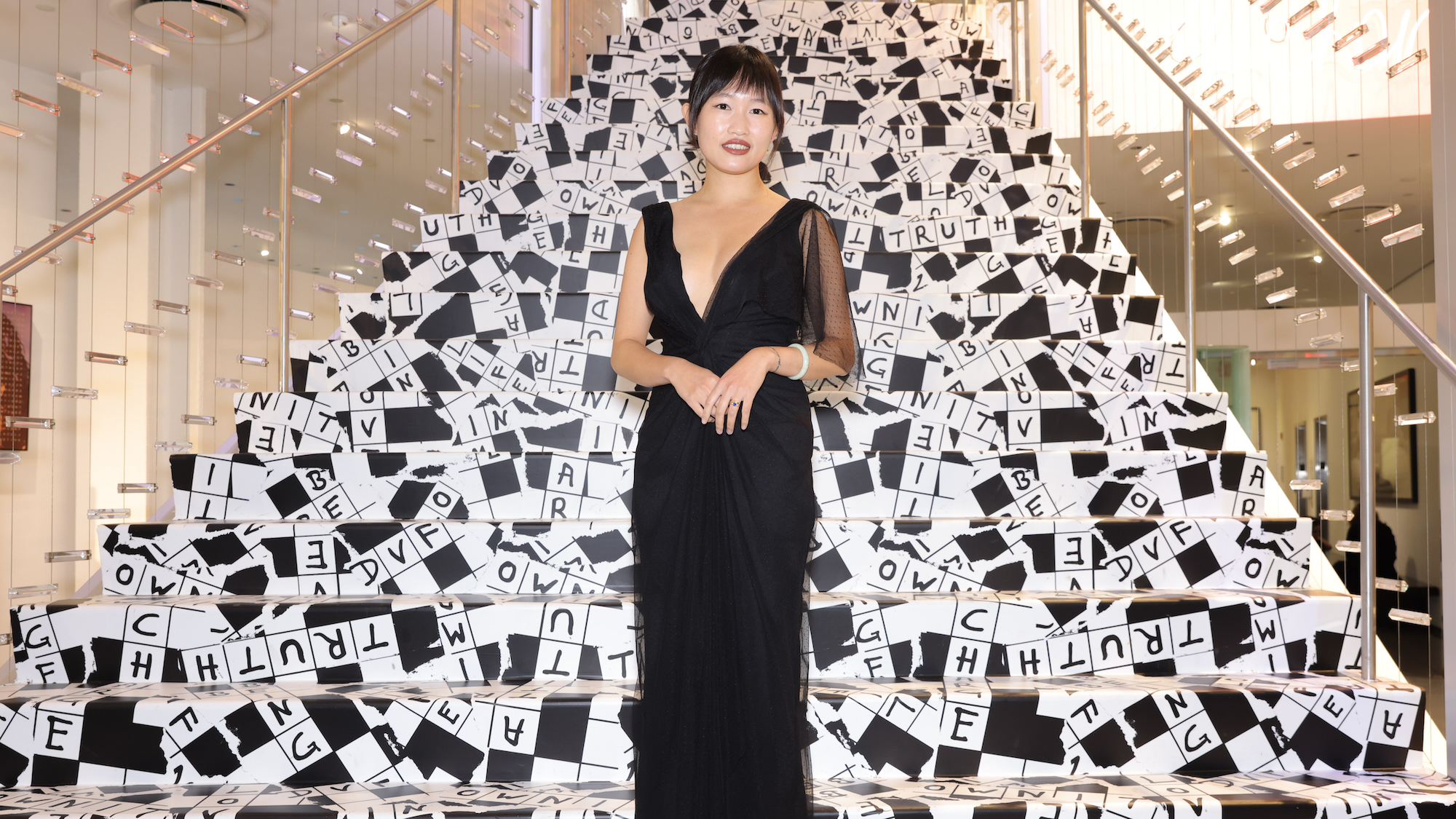
On a rainy autumn day in May, the novelist Rebecca Kuang, better known by her publishing name R.F. Kuang, stepped into a small vegan Italian restaurant in Sydney, Australia. She was in town for the Sydney Writers’ Festival — just one stop on multiple international tours she has made for her bestselling books — and met me for lunch before her panel on the fantasy genre that afternoon.
We ordered the sharing banquet, and the dishes just kept coming: polenta chips, breaded zucchini, vegan carbonara and a pomodoro salad with plant-based feta so convincing Kuang avoided it for half the meal because she thought it was the real deal. Between the two of us, we soon had so many dishes that the restaurant owner moved us to a larger table, one table over from a slim young man with large glasses and ruffled hair reading a book. Kuang sheepishly told me that she ought to mention he was her husband. And so I was introduced to Bennett Eckert-Kuang, clear inspiration for the character Peter Murdoch in her 2025 novel Katabasis, who returned to his book while we talked.
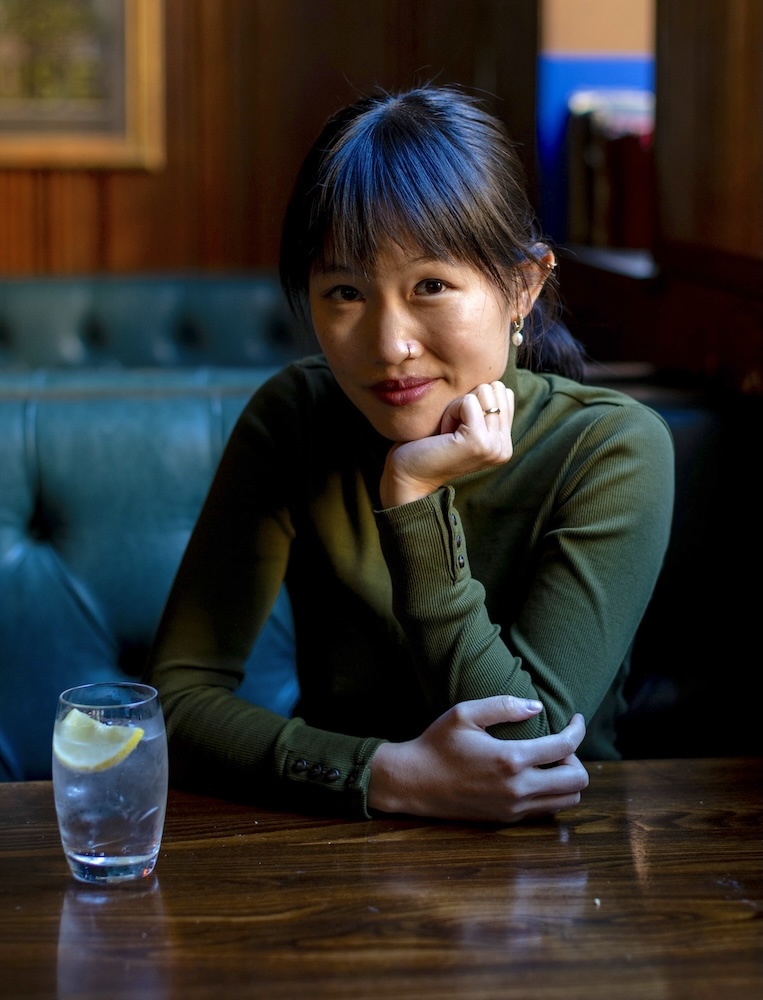
Kuang is sweet and chatty, with a soft voice that belies a sharp, discerning mind and thick blunt bangs that frame a kind but appraising face. We talked about Sydney, veganism, pets, running. Kuang, who turned 30 a week after we met, has sold millions of books worldwide. Her fiction includes the historical fantasy epics of her trilogy The Poppy War (2018-2020); the award-winning Babel (2022), a fantastical look at imperialism through an alternate reality Oxford; a satirical exploration of identity in the publishing world, Yellowface (2023), that has reportedly sold over 1.5 million copies; and an academic take on Dante’s Inferno in Katabasis (2025).
As a writer, Kuang is hard to pin down. Her books span genres, writing styles, time periods, places and themes. For readers of The Poppy War or Babel, she is an anti-imperialist fantasy writer, while for those who found her through Yellowface she is an author of satirical contemporary fiction. She has engaged with race and identity in different ways, but told me that she is “stubbornly resistant to being pigeonholed” in terms of genre or thematic concern. Even so, common threads run through her books: most prominently, a defiant approach to established powers, whether empires, industries or institutions. Her body of work frames her as an author unafraid of tackling complex, sticky topics. But from fantasy to realistic fiction, her engagement with some of the thorniest questions of our times raises the question: who is she writing for, and what do they take away from it?
Kuang has sold millions of books worldwide [but] is hard to pin down. Her books span genres, writing styles, time periods, places and themes.
Kuang’s newest novel, Taipei Story (William Morrow, September 2026), is a break from her previous work. A realistic, semi-autobiographical novel which seems targeted at American college students and young adults, the book follows rising Yale sophomore Lily Chen, who has enrolled in an intensive Mandarin course at National Taiwan University for two months during the summer. The goal is to improve her clunky, childish Mandarin — a guilt at lack of linguistic fluency deeply familiar to many children of the Chinese diaspora — with the ultimate aim of communicating better with her grandparents. As she navigates the summer program, she struggles with culture shock, friendships, the Chinese language and larger questions of identity and belonging.
Much of this plot is reflected in Kuang’s own life story. Lily is a Chinese-American girl born in the U.S. who grew up speaking some Mandarin, but lacks fluency or formal language education. R.F. Kuang was born Kuang Lingxiu (匡灵秀) in Guangzhou, China, in 1996, and moved to the U.S. with her parents when she was four years old. She grew up in Dallas, Texas and then majored in history at Georgetown University. In America her Mandarin grew rusty so in 2023 she, like Lily, enrolled in an intensive two-month language program at National Taiwan University — the International Chinese Language Program (ICLP), which is all but named in the novel. While Kuang was studying in Taipei, her maternal grandfather in China unexpectedly passed away, as does Lily’s in the book’s central plot point.
The loosely autobiographical nature of Taipei Story adds to a general sense of confusion around the levels of self-awareness, satire and sincerity at play in the story. Kuang acknowledged the difficulty of writing fiction with an autobiographical element, noting that if an author admits to a shared background with a character, there follows an assumption that they share that character’s interpretation of events. “It’s just impossible to go through and outline, like this bit is real and this bit is fake,” she told me. Regarding Taipei Story, she says, “the experience of having your grandfather pass and learning some details about his family history and your mother’s history, that’s all very true to what I was going through. But the protagonist that I’ve written … we’re at such different places in our lives.” Indeed, Lily is young, naïve, ignorant about many things, including Taiwan, and as her classmates note, “very insecure about her Chineseness.”

Lily assumes a special responsibility among her American peers due to her Chinese heritage — interpreting, ordering food, handling navigation — even when she has no superior language ability or cultural knowledge. She spends a lot of time trying to project an impression of belonging and competence, or luxuriating in a sense of superiority that she belongs more in Taiwan due to cultural fits such as liking foods described as QQ (a soft, chewy texture that characterizes some of Taiwan’s cuisines). She’s hypercritical of those around her, scoffing at white classmates in the language program who call her “Lily tongxue” (classmate), calling them “inordinately obsessed with Chinese culture.” When not struggling with imposter syndrome, she’s studying, growing increasingly annoyed with her roommate and bemoaning Taipei’s oppressive humidity.
With her classmates, Lily traipses through a flurry of Taipei tourist activities: eating “eighteen fold, twenty-one gram” soup dumplings at a restaurant that is unnamed but obviously Din Tai Fung; queuing to see the Jadeite Cabbage and Meat-Shaped Stone at the National Palace Museum; tasting street food at night markets; taking the elevator up Taipei 101. The book’s cover depicts many of these tourist attractions in a colorful display of chinoiserie so loudly signaling Asia that it is surely (surely?) part of the novel’s satirization of Western stereotypes of Taiwan. Yet even if that’s the intention, it likely only feeds into those stereotypes. Often, Taipei Story reads less like a travel novel and more like a travel guide, with detailed descriptions of foods and places across Taipei, complete with historical trivia about Chiang Kai-shek’s rule and the February 28 Massacre. At one point, Lily numerically lists out the “essential facts one needed to know about Taiwan, as [Lily] understood them,” starting with the Chinese Civil War and ending with the lifting of martial law in 1987.
Unlike in The Poppy War trilogy, where Kuang deftly portrays the historical injustices of China’s 20th century while taking the creative liberties allowed of the fantasy genre, in Taipei Story all of the history is given in a rather rote manner. And because the story is told through Lily’s uneducated perspective, the information that’s shared is often incomplete or lacking nuance. It takes a reader who is already well-versed in Taiwanese history to parse through this, to catch which parts are strictly factual and to catch the humor or significance behind Lily’s personal, at times strange, interpretations. When it comes to Taiwan’s intricate politics and public opinion, besides brief explainers of Taiwan’s geopolitical status and U.S. security promises, Lily has some shallow political conversations with her classmates and teachers — just enough to reveal her ignorance, but not enough to provide a representative or nuanced view of any Taiwanese perspectives. Kuang told me this is a satirical portrayal of “American arrogance and the American compulsion to make the rest of the world fit into neat and tidy historical interpretations.” Just revealing this arrogance, however, falls flat without saying more. Is the purpose of Taipei Story limited to pointing out that Americans view Taiwan incompletely?
Lily and her classmates certainly present versions of the many foreigners who bumble through Taiwan, and the misconceptions they bring, yet the novel suffers from a lack of any non-foreign characters, or better-informed views that could bring a level of truth to counter that “American arrogance.” One of Lily’s classmates, for example, is a white American man named Skipper who plans to work for U.S. Air Force intelligence, is convinced of the U.S. need to prepare for a war across the Taiwan Strait, and recently completed an internship with a “scholar at Harvard who was famous for applying the Thucydides Trap to Sino-American relations,” so clearly a reference to Graham Allison that she might as well have named him. Kuang insisted that none of the characters are “just ridiculous archetypes,” but Skipper has no individual traits or journey beyond his function as a symbol of the defense-centric interest of some Americans in Taiwan.
The loosely autobiographical nature of Taipei Story adds to a general sense of confusion around the levels of self-awareness, satire and sincerity at play in the story.
It’s hard to imagine a more fitting reader of Taipei Story than myself: a mixed Chinese-American woman who grew up visiting family in China, studied for two years in Taipei, pursued an academic and professional focus on Sino-American relations, and whose Chinese grandfather passed away before her limited Mandarin ability could foster real depth of conversation between them. If even I, then, am confused by what Taipei Story is trying to say, who wouldn’t be? Is the novel making fun of foreigners in Taipei, or empathizing with them? Does it encourage a greater understanding of Taiwan than in the narratives Kuang satirizes, or does it strengthen those stereotypes by giving them another foothold in readers’ minds? Does Taipei Story resonate with and relate to diaspora readers, or chide them for not knowing as much Mandarin or Taiwanese history as even Lily does?
At one point Lily judges an older American student, Rayer, for researching queer literature in Taiwan and yet presenting only books about queer people written by straight authors. Kuang also pokes fun at her protagonist for foolishly believing she might find homecoming in Taiwan, despite her heritage being in Guangzhou and, in Lily’s own words, that version of China having “nothing to do with me.” Yet in writing a novel sprinkled with an ignorant character’s flawed statements about Taiwan, with hardly any Taiwanese counterparts to push against them, Kuang may also be inviting this criticism. To show Lily’s language learning process, meanwhile, Kuang decorates the text with traditional Chinese characters, from idiomatic phrases to transliterated loanwords, sometimes without any English translation, further creating an effect of confusing readers instead of educating them.
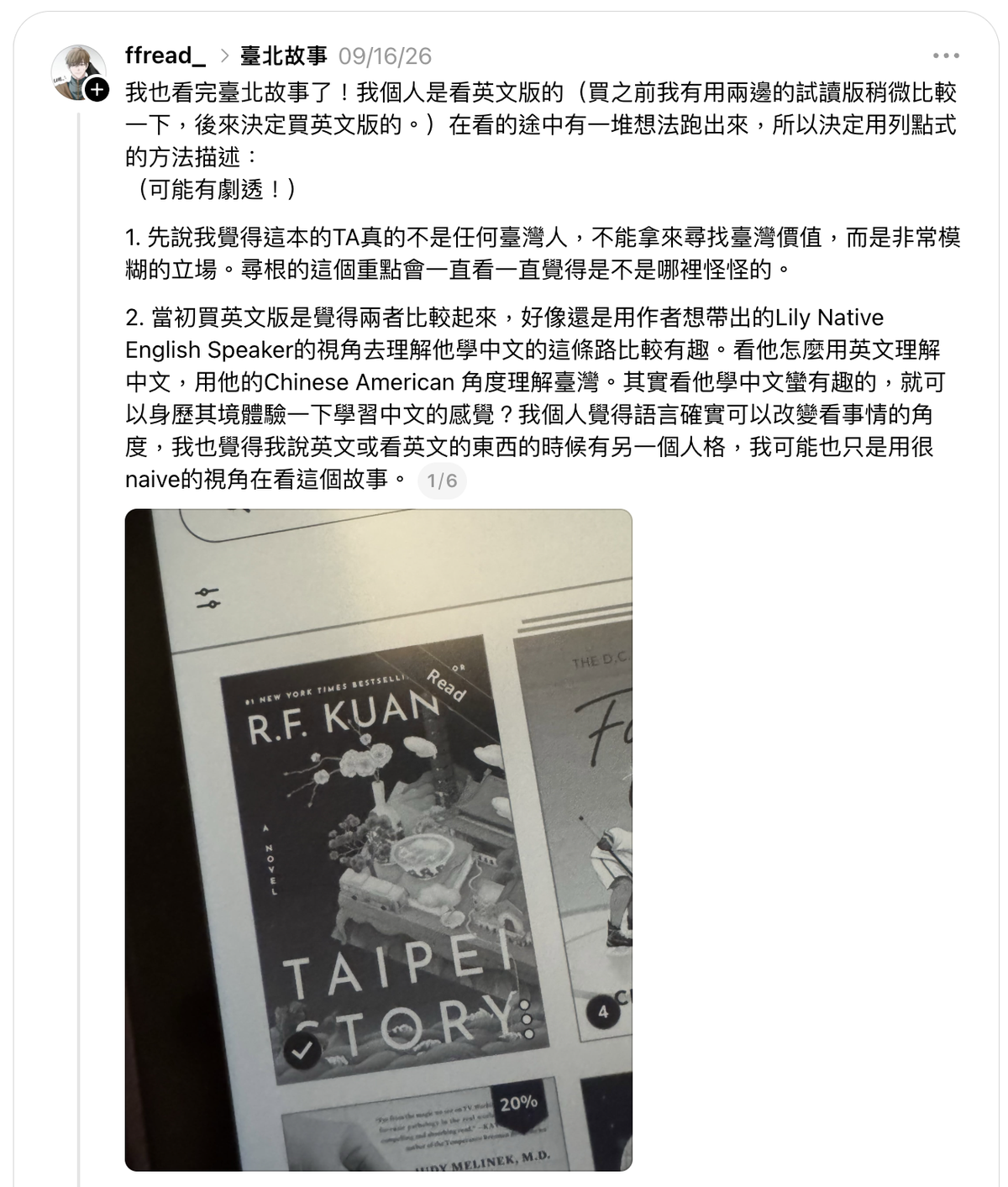
In the author’s note to Taipei Story, Kuang says the book is about “getting things wrong” and features “mistranslation, miscommunication, and misunderstanding.” While the point is well made as it refers to the process of language learning, it also reads as a way to preemptively excuse any poorly or incorrectly communicated aspects of Taiwan. Can she be criticized for her approach to explaining Taiwan if the blame can easily lie with Lily? As one Taiwanese reader posted on Threads: “After reading this, I’m a bit worried about how the book will affect readers’ views of Taiwan, since RFK is such a widely read author.” Kuang’s intention, I believe, is to encapsulate through fiction a personally poignant summer of learning and loss, not to represent Taiwan in any particular way. But the execution, wherein Taipei is endlessly described but never captured, its history and politics stated but never engaged with, detracts from the story and the themes she’s writing about.
The strengths of the novel center around Lily’s reckoning with the grief of her grandfather passing away. She’s plagued by regret for not improving her Mandarin sooner, for missing out on the opportunity to pursue a deeper relationship with her grandparents. Her grandfather’s death makes her question her choice to study in Taiwan instead of China (largely as the visa was easier to get), as well as why she didn’t try to connect with her grandparents with the language ability she already had. In one particularly moving section, Lily lists out the questions she would have wanted to ask her grandfather, followed by a short, if somewhat disjointed, biography of his life. This is the novel’s strongest message: that later is never guaranteed, and it is better to try to connect with a family member now, in an imperfect way, than to wait to find the perfect thing to say.
Kuang’s intention, I believe, is to encapsulate through fiction a personally poignant summer of learning and loss, not to represent Taiwan in any particular way.
Given the centrality of identity as a theme in R.F. Kuang’s work, I was keen to ask about her own self-identification. While she said it’s “factually accurate” to call her a Chinese American author, she is irked by the greater conversation around identity, or at least resistant to the idea of being pigeonholed into anything, whether that be identity, genre or thematic area. In Taipei Story, Lily struggles to make sense of what it means to be Chinese American in Taiwan, and seems to expect to find her roots or feel a connection with Taiwan that never really materializes. Kuang said of her own language study program in Taiwan: “I left still feeling like an outsider, but almost as equally an outsider as I feel in mainland China. I’m not attached to one culture or the other.” She continued: “There’s that inevitable distance of diaspora where it’s like I will always be an outsider in this place, and it’s cool that I speak the language, but I really don’t have a claim on it.”
Kuang did voice frustration with how Asian American authors are lazily lumped together in popular literary criticism. “Everything is an update of Amy Tan or Maxine Hong Kingston or Cathy Park Hong or Chang-rae Lee,” she said. “Everything is this lineage of how Asian American literature has been writing itself in circles about this empty hole of what is Asian American identity.” The science fiction writer Ted Chiang, for example, is read for “some sort of essential Asian Americanism, or Chinese Americanism” in his work when most of his stories are clearly not interested in that. For Kuang, this can be especially frustrating when she gets geopolitical questions about the U.S.-China relationship while doing press for her novels. “Are you asking me that because the book is about that? Because, it’s not,” she said, referring to press for Katabasis, a fantasy novel set in Cambridge University and hell. “Or are you just asking me that because of my last name?”
Much of the attention is because Kuang’s books have had significant commercial success, with Babel and Yellowface making the New York Times bestselling list (Taipei Story also currently sits at the top of China Books Review’s own bestsellers list). With such success inevitably comes criticism, and Kuang has become a divisive author in some circles. The internet, from Substack articles to BookTok reels, delights in debating the quality of her writing, the creativity of her fantasy, her personal views and motivations, the list goes on. Kuang tries not to pay attention to the public’s perception of her, positive and negative alike: “I believe that if an artist spends a lot of time thinking about themselves or their reception, it makes their art really boring. … Being a good writer demands being really curious about other people and sort of forgetting yourself.” She also has no plans to ever respond to criticism of her work: “You can write something with all of your intentions, and you know what you meant by every single word. But at the end of the day, a piece of art … requires two to tango.” She added: “If you’re going to write something worth reading, you just have to be okay with losing control.”
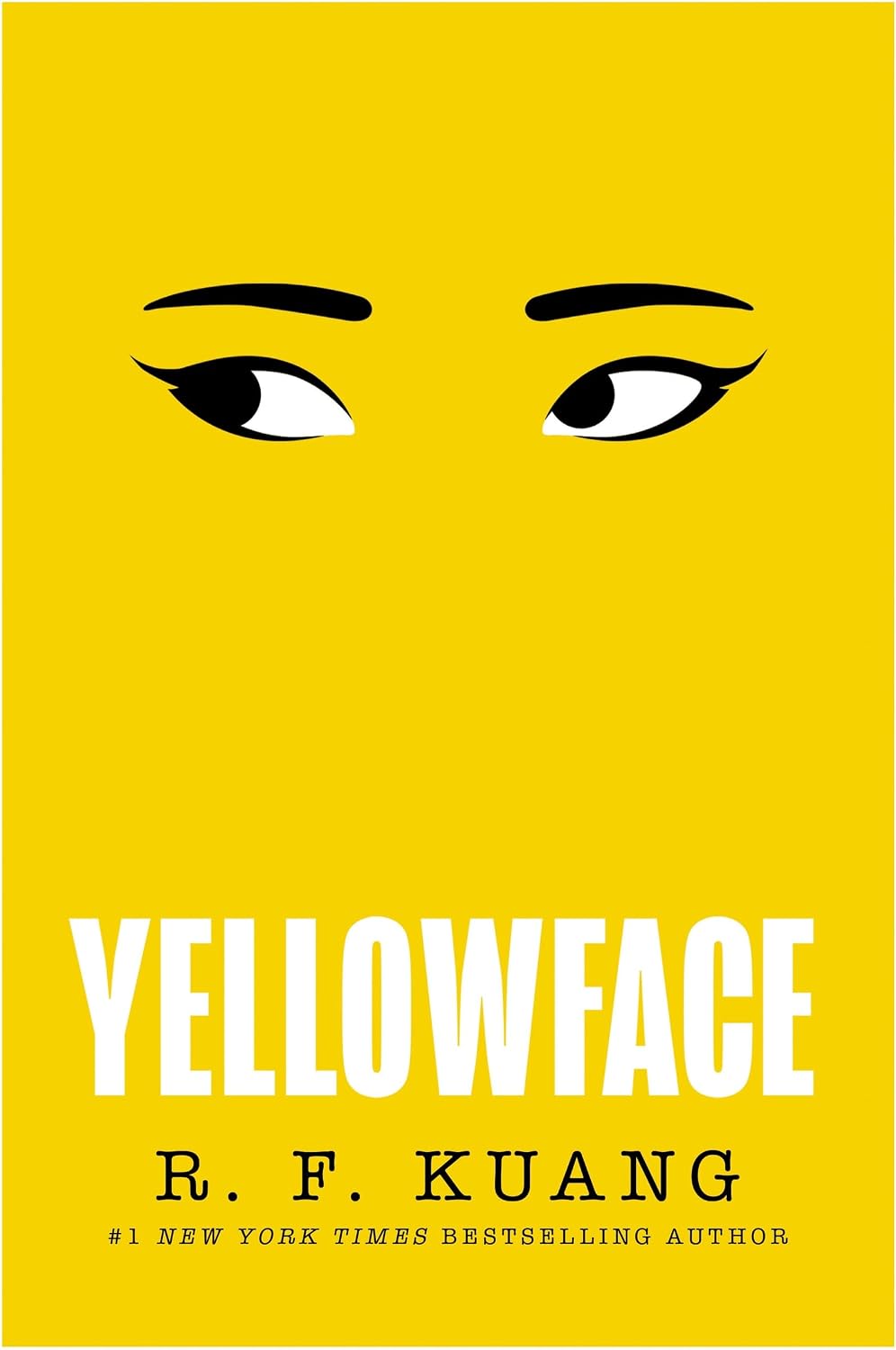
Kuang’s best-selling novel to date, Yellowface, is a satirical thriller that explores plagiarism, cultural appropriation and racism in the publishing industry. It follows a white writer, June Hayward, who is jealous of the sparkling literary career of her Chinese American former classmate, Athena Liu. When Athena dies unexpectedly, June takes credit for an unpublished manuscript of Athena’s under a racially ambiguous pen name, Juniper Song, which allows her to imply an Asian heritage she does not possess. (Ironically, the premise is similar to the 2021 novel The Plot by Jean Hanff Korelitz, without the racial component.) Yellowface plays with assumptions about who is entitled to tell certain stories, including through the act of being a Chinese American author writing a white character trying to pass as Chinese. The novel explores the ways the publishing industry tokenizes authors of color and how some white authors believe they are at a disadvantage due to their race, despite evidence that the publishing industry remains disproportionately white.
The critical reception to Yellowface was divided, with one critic praising its satirical takedown of the publishing industry, while another chided that it “fails to conclude anything besides the painstakingly obvious.” Zoe Hu in The Washington Post mused that its commercial success could be due to either the “tokenizing of an Asian American author who has written about the tokenizing of Asian American authors” or “very good PR.” Kuang has spoken about how the character of Athena Liu is her “worst nightmare,” a representation of everything she hopes not to be: commodifying Asianness and Asian stories as a means to personal advancement. Perhaps it is this desire not to become Athena that explains her reluctance to talk about identity, despite it being a core theme of her work.
Kuang said it’s “totally conceivable” that a white author could have written Yellowface. But would the novel have met with the same reception? “I hope so,” Kuang replied, then went on a long aside about standpoint epistemology, citing Olúfẹ́mi O. Táíwò’s 2022 book Elite Capture and Emily C.R. Tilton’s 2024 academic article “‘That’s Above My Paygrade’: Woke Excuses for Ignorance” to argue that representation happens through an author’s research and intention to be accurate, not through their own identity. She believes it would be “terrible for literature” should authors be relegated to only writing about their own group. It’s hard to disagree with this, but it is also hard to imagine that Yellowface would have met with the same critical and popular success had it not been validated, essentially, by Kuang’s presumed personal experience navigating the publishing world as a Chinese American author.
As the critic Zoe Hu wondered, is Kuang not benefiting from the very tokenization of Asian American authors in the publishing industry that she satirizes in Yellowface? Does leaning into Western stereotypes of Taipei in Taipei Story help market the book instead of correcting them? For an author whose books have often bluntly stated their central message, satire is tricky territory, and runs the risk of imparting only surface-level messages.
If you’re going to write something worth reading, you just have to be okay with losing control.
R.F. Kuang
Somehow, alongside seven published novels, and an announced two more on the way, Kuang has managed to pursue an academic career alongside her writing one. She holds an M.Phil from Cambridge University in Chinese studies, an M.Sc. in Contemporary Chinese Studies from Oxford, and is pursuing a Ph.D. in East Asian languages and literatures at Yale University while also being the inaugural Millard Distinguished Writer in Residence at the College of the Holy Cross. Even in her fiction it is clear that Kuang has an academic mind that loves to dive into niche areas, from the discussions of translation theory and colonial history in the Oxford of Babel to the logic puzzles and philosophical mazes in the underworld of Katabasis. Even in Taipei Story, Kuang “self-translated” Lily’s Mandarin dialogue into English for the text, to make it sound more authentic.
After spending a couple hours with Kuang, it is abundantly clear how curious she is about the world: about literature, language, philosophy and growing as a writer and a person. She is one of a kind in her ability and willingness to hop genres, going where her interests take her. This unrestrained approach means that readers will never quite know what to expect from her next publication. “Every few years or so I just get a different set of aesthetic and philosophical and historical interests,” she told me, “and I just create whatever project lets me jump down all those rabbit holes.”
Ahead of Taipei Story’s publication, Kuang wrote a Substack article in which she suggests that “it’s good for us to spend a few hours every week feeling like a fool.” So much of the process of learning a new language, skill or subject is shedding a layer or two of self-consciousness and being OK with making mistakes, looking stupid, saying the wrong thing. For Kuang, she gets her weekly dose of foolishness by going to figure drawing sessions. “I’m awful at it,” she told me, but was “looking for ways to create without public perception.” As we came to the end of our many vegan Italian courses, she started to describe the ways in which life drawing helps her with her writing process, then quickly self-corrected to say she is just trying to relax. It makes sense that a mind as productive as hers, always looking toward the next project, would have trouble turning off. But I do find myself wondering if she’s really so awful at drawing as she claims. Something tells me she’s not. ∎
Feature image: R.F. Kuang attends the Girls Write Now Awards in 2024, New York City. (JP Yim/Getty)

Taili Ni is a research associate at the Lowy Institute, based in Sydney. Formerly she was Senior Program Officer at the Asia Society Center on U.S.-China Relations and Assistant Editor of China Books Review. She holds a master’s degree from National Chengchi University, and is a Fulbright Taiwan alumna.