Sign up for our newsletter to be notified of new posts!
Welcome back to What China’s Thinking, our interview column with Chinese public intellectuals and authors on the ideas that impassion them, the books they’re writing and their insights into contemporary China. Our first Q&A was with Zhang Feng.
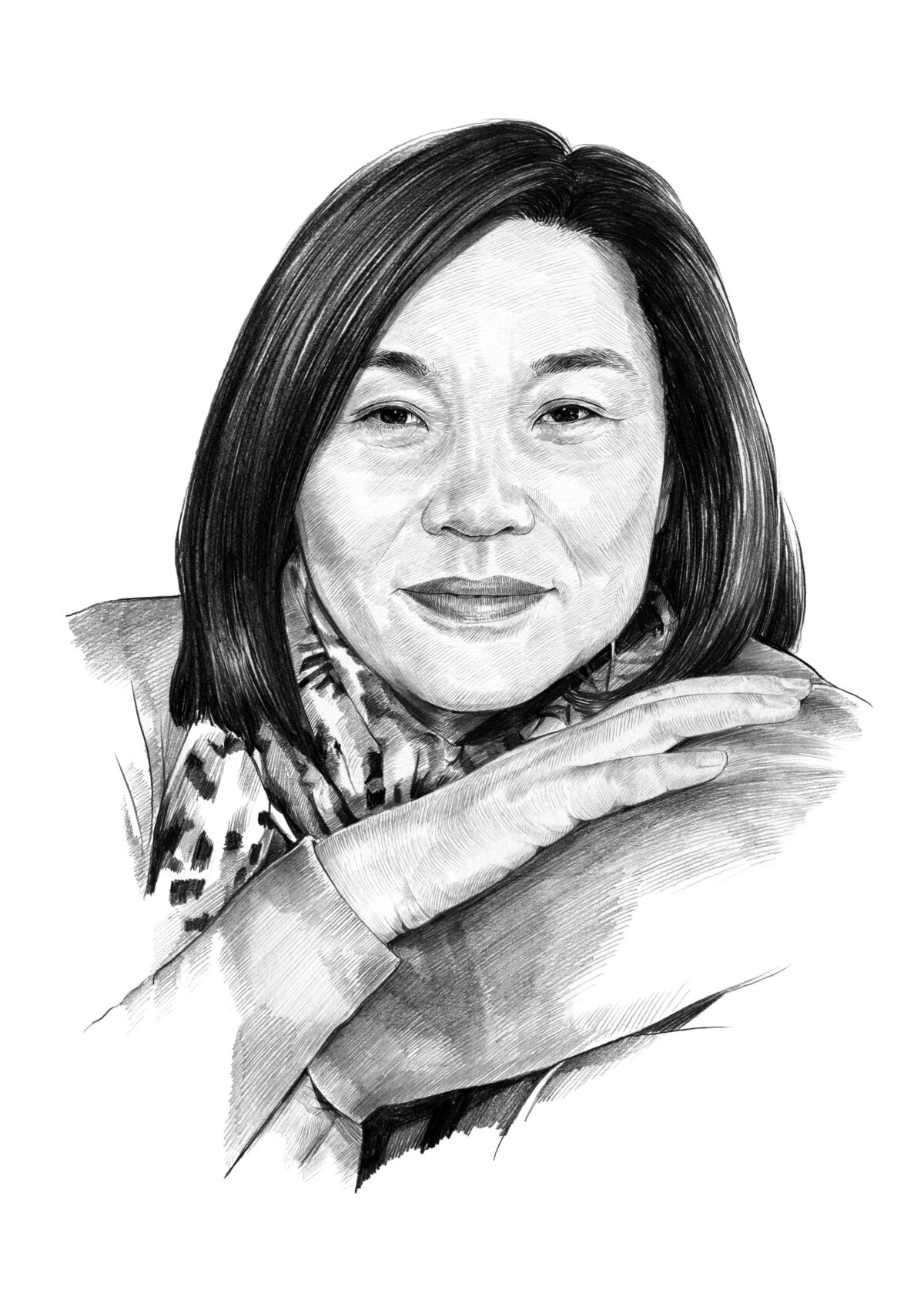
Liang Hong, a professor of literature at Renmin University in Beijing, was born in 1973 in a poor rural village near Zhengzhou, Henan province. She first came to national prominence for writing a series of nonfiction books about that village, Liangzhuang, where in the summer of 2008 she began interviewing her former neighbors, as well as visiting them in the cities where they had gone to work as migrants. That summer of research became China in One Village (中国在梁庄, 2010, tr. Emily Goedde, 2021). Further explorations followed: Leaving Liangzhuang (出梁庄记, 2016) and Liangzhuang: Ten Years (梁庄十年, 2021), as well as the novels The Light of Liang Guangzheng (梁光正的光, 2017) and Four Images (四象, 2020). The success of these books has made Liangzhuang a bellwether of change in rural China during the 21st century.
Now Liang has shifted her focus to the mental health of Chinese youth, which she told me is “a continuation of that thinking” on rural life. In September 2025, she published Let There Be Light (要有光), a literary investigation of China’s adolescent mental health crisis. For the book, Liang interviewed school dropouts in three anonymous cities: one large, one medium and one small. What she found was shocking. At a youth psychological counseling center in the Beijing district of Haidian — home to many of China’s most elite educational institutions — she found counselors working around the clock to treat patients dealing with self-harm, suicidal ideation and dread over school. She found similar stories elsewhere; some 15–20% of Chinese adolescents are reportedly depressed. Children, Liang told me, are “the nerve endings of society: society’s crises manifest within them first.” The dramatic transformations of the new century that gripped Liangzhuang have also had profound effects on the nation’s young.
I spoke to Liang Hong over the phone for several hours. She is warm and direct. When speaking about the suffering of her subjects, she sometimes falls into brief silence, her voice dropping; when talking about parental neglect and how we misunderstand children, her voice rises almost involuntarily, revealing her anger. Below is a transcript of our conversations, translated from Chinese and edited for length and clarity.
Yi Liu: Could you give me a rough overview of how you went from Liangzhuang to Beijing, to your current work and writing?
Liang Hong: I was born and raised in a very ordinary village in Henan province. Both my parents were farmers. My mother got sick young — she died young. We were a big family with six children, so we were quite poor. But my father was a very open person. He always insisted we go to school. Looking back, that’s what I’m most grateful for. He believed education was inherently important. At the time, that was an extraordinarily open-minded and determined decision, because schooling cost money, and every child in school was one fewer laborer for the family. But my father was insistent — as long as you can go to school, go to school. So I kept going. I went through middle school. At that point, I took the exam for a vocational teachers’ college. Vocational school was a big deal back then — once you got in, especially a teaching program, you’d receive a small monthly food stipend and a little money. That gave me a way to support myself. I was 15 when I enrolled.
I wasn’t the kind of person who paid much attention to the outside world. I’ve always been more focused on my inner world — on my life, my thoughts. Because in a large family with many kids, nobody really notices me, so you end up being a relatively solitary, self-contained person — inward-looking. That was my state at the time. After vocational school, I taught Chinese in elementary school for three years. But I always hoped to continue studying. That desire was always very important to me. Very naturally, I felt that if I ever had the chance to keep studying, I would. I hoped my life could have broader horizons. As for what I’d do with it, I had no idea. I just liked literature. I didn’t know what path it would lead me down.
When I learned there was an opportunity for a continuing education program for teachers, I went for it, took the exam and got into a junior college program. In 1997, I was admitted to the graduate program in the Department of Chinese Language and Literature at Zhengzhou University, and subsequently pursued a doctoral degree in literature at Beijing Normal University. In 2003, I became a faculty member at the China Youth University of Political Studies. Later, I joined Renmin University as a teacher, where I remain to this day.
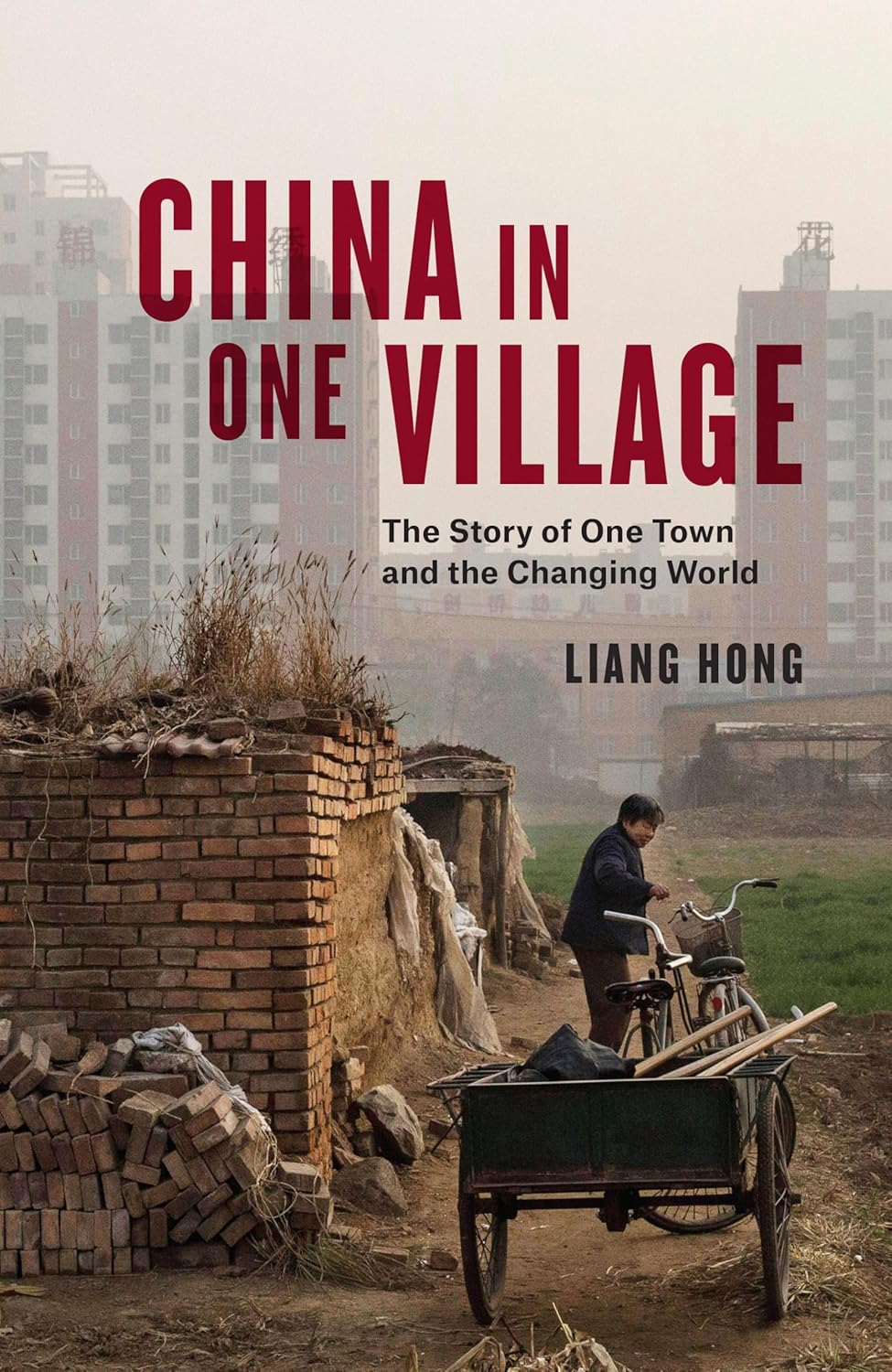
You’re famous for your books on Liangzhuang. After leaving your hometown, why did you begin writing about it?
Until 2008, I’d been teaching at university. But by then, I’d started to question my life and work. I was feeling pretty low. Every day I taught classes and wrote academic papers, but it all felt contrived — a life very far from the land and the reality that had nourished it. I even felt ashamed. Every day I was teaching, talking grandly, spending nights writing articles that did not really mean anything. It all seemed meaningless. I felt this wasn’t real life — not the kind of life that reflects what it truly means to be human.
I’m someone who came from the village. I’d been doing Chinese folk literature research all along, so there’s always been this impulse — wanting to find a sense of what’s real in life, what really exists, what does the countryside actually look like? I had this intense desire to know. This was an important idea for me — I wanted to know what was actually happening in China’s townships, what life was actually like.
At that time, China was also undergoing a shift from rural to urban areas, a transformation driven by urbanization. These changes in the substance of Chinese life — for instance, China used to have no electronic media, no mobile phones — [create] the kind of uneasy attitude that everyone knows deep down inside. I think literature’s way is to present it through a specific narrative.
Since you often go back to Liangzhuang, can you compare the Liangzhuang of today with that of your childhood?
First, regarding the land: many people in Liangzhuang are no longer farmers in the traditional sense of “cultivating their own land.” The land has gradually shifted to a corporate operation model — for example, being leased by companies for large-scale tobacco cultivation. If villagers continue doing agricultural work, it’s often on their own land, but they’re essentially “working for the land-leasing companies” — the companies rent their land and then hire them as day laborers. Some people grow vegetables more freely, but this no longer counts as true “farming” in the traditional sense.
As for family structures, changes in ordinary Chinese villages haven’t been that rapid. It’s basically still grandparents taking care of grandchildren while young people work away from home. Economic conditions may be somewhat better than before, and there are more new houses than in the past — these are the more noticeable changes in rural areas. I also feel the village’s environment is much better than before. For instance, there are now trash cans. That’s the most visible change.
Can you say what rural China is losing today, or what new things are forming?
I can’t really sum it up in one sentence. But I think the countryside is definitely moving forward along with China’s development. It’s keeping pace with urban society across the board — internet use, smartphones, Douyin, everything. The only difference is that rural areas still have farmers who go out for migrant work. That’s probably hard to change anytime soon. Going out for work means their children are probably still at home, attending a rural boarding school or a county boarding school. In other words, parents and children are still largely separated.
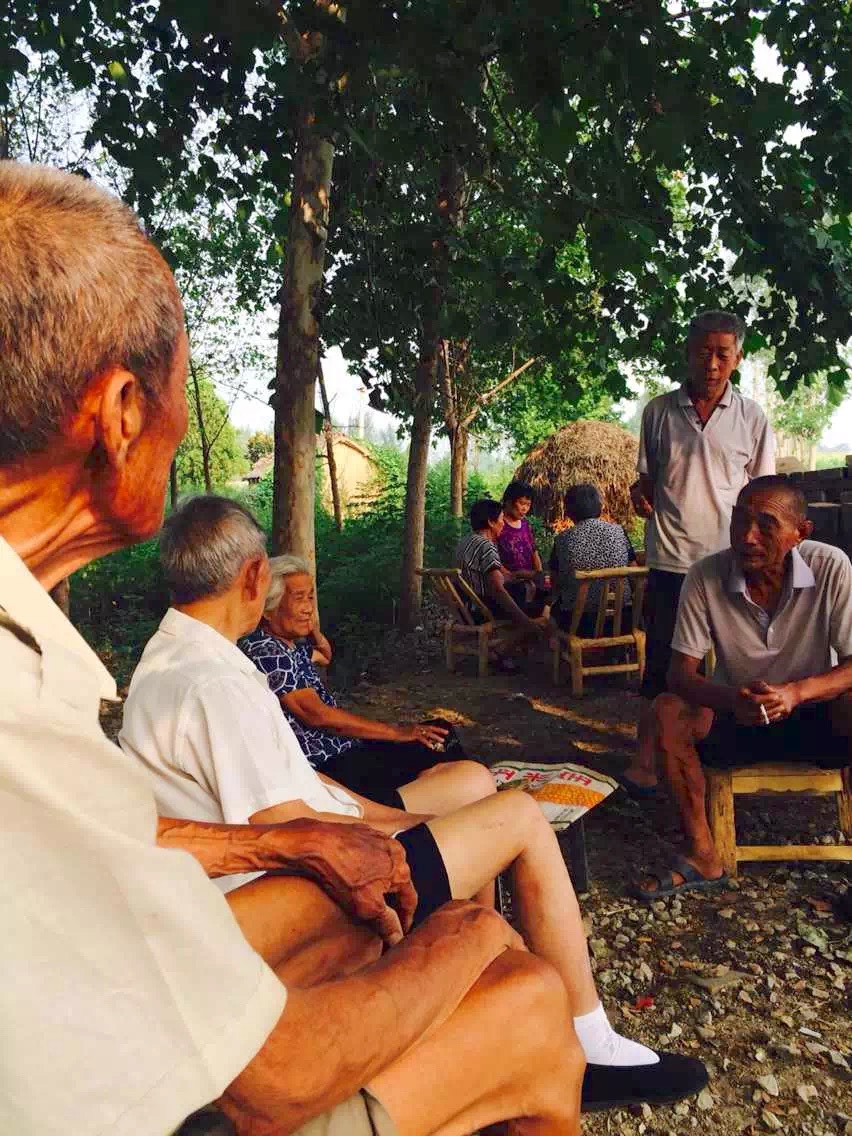
You’ve been writing about Liangzhuang for 10 years now. How are the people from those books doing now? Will you write another book about Liangzhuang in the near future?
Some of them are growing old. Some are slowly finding new opportunities and ways to live. They’re all living very ordinary lives, but each is doing their best, moving in different directions. That’s what I appreciate — I think human life is like a long river. It may not follow some grand model of creating an era. I want to write more about the women of Liangzhuang. I’ve been preparing for years to write about one elderly woman. I might start writing this year. I was truly drawn to her optimism, her humor. I’m not writing to prove some point about women or to validate their existence. It’s her inherent magnetism, her life force itself.
I’d been doing Chinese folk literature research all along, so there’s always been this impulse to ask: What does the countryside actually look like?
When I was in college, I read your Liangzhuang books. I feel like Liangzhuang was a case study for the changes of our entire society. Let There Be Light, your new book on adolescent mental health, gave me the same feeling — seeing China through teenagers’ eyes. Do you think the two are related?
If there must be a connection, it’s probably that both are a kind of writing about Chinese life. But honestly, when I was writing, I wasn’t thinking about the relationship between them. I wasn’t thinking they necessarily had to be linked. But a reporter asked me this the other day, and I said, actually, when it comes to children — in Leaving Liangzhuang and Liangzhuang: Ten Years I wrote a great deal about children, their situations, how they go to school in China. That concern has been with me for a long time. It’s just that the Liangzhuang books cast such a wide net that children were only one part of it. So this book, in a way, is a continuation of that thinking. As a writer whose intellectual compass has always pointed toward the interior of Chinese life, I naturally notice certain things — the great migrations and so on.
But why did you shift directly to adolescent mental and emotional health? When did you realize this wasn’t an isolated phenomenon — that it might be a larger, era-defining problem?
I think it’s related to my own life. I’m a mother, and during the process of raising children, I experienced confusion and pain. At the same time, I saw many other parents going through this, and you gradually realize it’s not isolated — it’s become almost a phenomenon. It’s not one or two children with ordinary growing pains. Some stop going to school because of emotional issues, some need psychologists, some need to be hospitalized. And this is not just one or two kids. This doesn’t seem to be something that we would normally consider a natural part of growing up.
It’s been several years now [since I started writing the book], and while raising my own child, I started looking at the data. That’s when I realized. In the preface, I included some statistics — these are publicly released national figures. [In her book, she writes that the depression rate among adolescents under 18 is 15–20%. The National Health Commission puts the rate at 2%.] So as a writer, your antennae go up — what’s going on here? Parents seem to have woken up to the importance of child-rearing, and at the same time you see that between parents and children, something has gone haywire internally. When you see those numbers, you feel a jolt, because it’s no longer one or two people — it’s become a huge proportion. That must mean something is wrong with our inner lives, our logic, our emotions, right?
I think every adult, every parent, carries some sense of crisis — you see how exhausted you are, yet you’ve probably never truly stopped to ask what’s going wrong. As a writer, as someone attuned to the interior of daily life, to the spiritual state of Chinese life, you start asking questions and slowly develop the impulse to write.
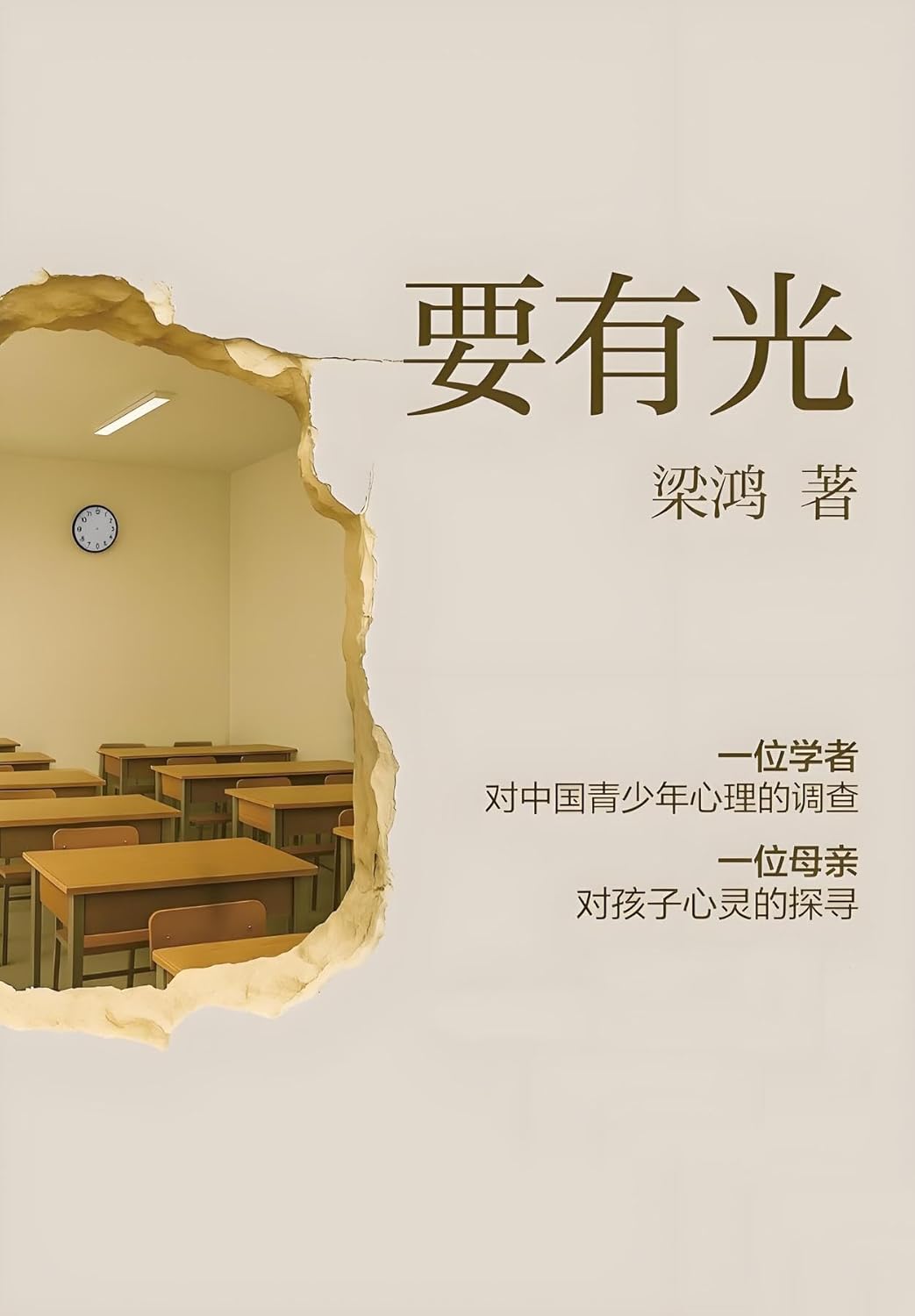
In your book, you write that behind every sick adolescent is a sick family. So how would you describe these Chinese families? What exactly is the illness?
That’s a line many therapists have told me. Behind every emotionally troubled child are one or two troubled parents. That’s a consensus among many therapists, a widely shared view, especially now, that there’s a direct link to parents and adults. But I’ve always said I don’t want to use language like“indicting the family of origin.” I’ve never liked that framing. What I’m saying is that something has gone wrong with our way of thinking, and as parents we’re the people closest to, and most responsible for, our children. So what’s happened to us? That’s the angle I come in from.
The reason I wrote about each child and each family in such detail is precisely to remind everyone: there is no single solution and no single type of problem. The situation within Chinese life is extremely complex. Big cities, mid-size cities and small cities all have completely different circumstances. Even though the children are all experiencing emotional problems, the underlying causes vary enormously.
Over the past 10 or 20 years, many urban parents have genuinely begun to awaken. They want to nurture their children, they’re willing to spend more time with them. But precisely because of this, conflicts have begun to surface. It’s not that spending time with your children is bad — that’s absolutely good, but how we accompany our children has become the real problem. For urban families, the issue is often how we love and how we show up — those need rethinking. I think this is a deeper issue. The previous generation of parents was so busy working, they had multiple children, they couldn’t pay attention to each one. Everyone grew up rough during that era of economic development. Now that parents are paying attention to their children, this is actually a sign of individual consciousness awakening. And in this era of awakening, the conflicts begin. I think that in fact, on a more fundamental level, this problem is a collective product of all these individuals grasping their way forward.
That’s a really important point. In the previous era, if your kid misbehaved, parents would just give them a beating. This generation doesn’t really do it that way anymore.
So when our generation of parents begins to awaken, that’s precisely when the problems start. I actually think this is an opportunity — for the spiritual life of the Chinese people, for their psychological makeup. It’s a tremendous opportunity, because now everyone is grappling with this question: How do we treat our children? How do we live alongside them? This opportunity exists because we’ve recognized the growing pains.
What are the differences in psychological challenges faced by urban and rural youth?
Urban and rural youth really are different. In cities, it’s mostly that parents are overly attentive — we could use the term “excessive attention.” They exercise very strict control over their children — over their thinking, their academic performance, their standards. In this process, the act of love, the act of parenting, becomes distorted.
In rural areas, I think it’s more about the absence of parental affection and parental presence, including the neglect of children’s mental health. Ultimately, it comes back to the absence of familial affection. Parents are entirely ignorant about their children’s psychological issues — or rather, I should say they are in a blank space, as “entirely ignorant” seems controversial. In rural areas, parental awareness of the importance of being present is still quite weak. Being there for their children hasn’t really been factored into parents’ survival plans or work plans. And the systemic support for it is also minimal. Right now, the main concern is earning enough through migrant work to maintain a basic family life, but rarely do parents factor in their children’s psychological health or emotional needs.
This requires raising awareness across all of society — whether it’s excessive control or absent emotional bonds, both point to the need for greater awareness around mental health. The awareness itself, and how to nurture a healthier, more complete life — all of that needs rethinking. What does a healthy life look like? What does a life with real vitality look like? The key point is that perhaps society as a whole — modern society, I mean — has developed what you might call diseases of civilization. I think it’s the same in Europe and the United States. It has a great deal to do with the overall cultural condition of a society, including the very conditions of survival and everyday life.
It’s a tremendous opportunity — for the spiritual life of Chinese people, for their psychological makeup — because now everyone is grappling with this question: How do we treat our children? How do we live alongside them?
You’re talking about a collision between our generation and our children’s generation — a collision of worldviews. Can you describe what this collision looks like?
Over the past two decades, with China’s economic development and urbanization — especially among urban parents — there has indeed been a growing awareness and a desire to spend more time with their children. But it is precisely at this point that conflicts have become more visible. How should one accompany a child? Very often, the ways of accompanying children, and the ways of loving them, need to be rethought.
I can give a simple example. I was born in the countryside, and my childhood was extremely poor — we did not have enough to eat or wear. At that time, we held a firm belief: if a child was willing to study, they must get into university, move from a rural household registration to an urban one. This was a powerful motivation and a historic mission for the entire family. We completed that mission through our own struggle and came to live in Beijing. We felt deep pride, a strong sense of value and inner stability. So naturally, we believed that hardship and struggle were necessary.
But that line is useless in this generation. They’ve grown up with their material needs already met. Material satisfaction doesn’t translate into spiritual satisfaction for them. Their starting point is fundamentally different from ours. We felt an enormous sense of accomplishment just earning a little money and making it to the city. We came from the countryside and felt genuinely proud — we made it through our own effort, life in Beijing is pretty decent. But for these kids, they’ve been in Beijing since birth. So they think: Why should I live like this? Why should I exist this way? Why should I study like this? Being fed and clothed no longer constitutes a sense of value for them. It doesn’t equal fulfillment. That’s the most basic gap, the most basic collision. So when you lecture them that way, those words hold no power over them. After you’ve gone on and on with your tale of hardship, the child sits there stone-faced. The spiritual distress of these children is genuine — real, concrete suffering. When we dismiss it like that, we’re still using our own values to judge them, without truly recognizing the pain inside them.
It’s an inevitable adolescent trauma, an inevitable trauma of the era. Everyone carries the trauma of their era, the trauma of their family. But how do we understand our own historical trauma, and how do we understand our children’s? They belong to different eras, especially in a China developing this fast — every 10 or 20 years, life changes enormously. You have to recognize that the space in which children grow up is different from ours, so their consciousness may be different too. That’s when you realize a lot of our experience may simply be irrelevant. You have to change your approach, let the child enter the conversation, and think about what’s actually happening — why your experience meets such silence on the other side.
Our civilization and its current state — this is global. I really do think that these conditions aren’t exactly friendly toward reproduction. We always say reproduction is a human instinct, an animal instinct. Naturally, when we reach a certain age, we get married and have children. But this civilizational anxiety inflicts enormous spiritual distress on the younger generation. They don’t know what the meaning of having children is. And what’s most immediately pressing is their feeling about the world — of course it’s not entirely hopeless, but it is extremely difficult. If I have a child, what kind of life will they lead? They feel it’s futile — they can’t see hope or meaning. And you look at America now — I think it’s the same. The values are so opposed, so fractured. It was supposed to be a multiracial country, a nation of immigrants, but now the racial antagonisms have been stirred up.
After this book was published, were there any reactions from your readers, or from parents, educators and government officials, that particularly surprised you or were especially memorable?
I have always believed that Let There Be Light and the Liangzhuang series, although based on many real interviews, are fundamentally works of literature. Literature is a way of thinking about complexity and reflection. It does not tell you that things are definitively one way; it suggests that they may not be, that there are countless possibilities. Searching for solutions is not literature’s task. Literature’s task is to move us — and, after being moved, to begin thinking.
After reading the book, the head of a municipal Women’s Federation immediately wanted her colleagues to read it as well. She hoped to establish a family-centered psychological counseling center and began thinking through practical questions: how the space should be designed, how the building could function better and how to create a professional setup. She began proactively inviting people to discuss the matter and visited several mental health counselors, moving at a relentless pace. If this book inspires someone to take action, I truly believe that would be a wonderful thing.
Does that give you a sense of hope?
I think it’s possible. I don’t know about some grand hope, but I believe every hope begins with an individual’s awakening and self-reflection. If we as individuals are reflecting on our own lives, that will inevitably form some kind of voice, right?
Children are, in a sense, the nerve endings of society: society’s crises manifest within children first. This is why this issue goes far beyond China.
Can you say more about this current wave of adolescent mental health crisis in China? Has it peaked? Is it still growing? What direction do you think it’s heading?
I think this is actually very difficult to judge. I would rather say that we are now at a very important moment. People are beginning to think together: What is happening to our children? What has happened to the relationship between parents and children? How should we rebuild that relationship? I believe a considerable number of parents have begun to awaken and reflect. Many of them are also leaders in different sectors of society — teachers, principals, administrators — and shifts in their thinking may gradually create some loosening, and perhaps improvement.
Where this will ultimately lead is still hard to predict. There is a powerful social inertia at work. Society does not always change simply because people keep calling for change; sometimes major shifts only happen under certain contingent conditions. At the very least, judging from the public response and discussion generated by this book, I can feel that parents have begun to recognize the seriousness of the problem and are eager to do something. That alone suggests we have reached a moment that can no longer be avoided.
| LIANG HONG’S RECOMMENDATIONS | |
|---|---|
| CHINESE BOOK: | China Along the Yellow River by Cao Jinqing |
| ENGLISH BOOK: | Evicted by Matthew Desmond |
| WECHAT ACCOUNT: | Harvest (收获); The Livings (人间) |
| FAVORITE MOVIE: | Pickpocket (小武) by Jia Zhangke |
| FAVORITE MUSICIAN: | Leonard Cohen |
I also want to stress that mental illness and psychological crises are not problems unique to China. I tend to see them as manifestations of a broader, global sense of civilizational confusion and conflict. The pain of civilization is concentrated on the young generation, making it unfriendly to reproduction. [Only 7.92 million babies were born in China in 2025, a decline from 9.54 million in 2024.] Global instability has placed enormous psychological pressure on young people, leaving them uncertain about the meaning of having children, or about what kind of world children should live in, and unable to see hope.
We often say that reproduction is a human instinct. But when civilization itself falls into distress, when what were once considered universal values begin to erode, people experience deep anxiety and disorientation. Children are, in a sense, the nerve endings of society: society’s crises manifest within children first. This is why this issue goes far beyond China. What will life look like in the future? I think much of this anxiety comes from the overall uncertainty of a particular stage of civilizational development. With the arrival of the AI era, for example, people begin to ask: What are we supposed to do now? This is anxiety about children, but also anxiety about society and the direction of civilization itself.
Within families, this anxiety often takes very concrete forms: What will happen to my child’s future? Do they still need to get into a good university and find a good job? If these paths no longer work, what alternatives are there? These questions have suddenly been placed before every parent. As for how to respond, each family will inevitably choose different approaches, shaped by parents’ personalities, values and ways of understanding. But this widespread anxiety has already become a reality that can no longer be ignored.
Do you think America could learn something from China’s adolescent mental health crisis?
All I can say is that regardless of race or society, a growing life needs love, attention, genuine emotional connection and equality. I imagine American society is also a society debating how to love — and that debate is probably ongoing, right? It’s hard to say what insight I could offer, because I don’t fully know its current state. Some people may feel they’re already giving their children plenty — that they don’t have that inequality, that control. But what love really means, in any society and any race, is always a subject worth discussing. How we treat a developing life, a life still growing — what we as parents should provide, how we should attend to them, how we should protect their growth — that’s something we all need to think about together. I think some of the examples in my book might provoke some reflection. ∎
Translated from Chinese by Alexander Boyd and Claude.

Yi Liu is a bilingual journalist from Chongqing, based in New York. She is a staff writer at China Books Review, and previously worked at The Wire China, The New York Times and The Beijing News. Her articles have also appeared in The China Project, Initium Media and other outlets.