Sign up for our newsletter to be notified of new posts!
There are so many pages missing from my childhood. Memory is a tricky thing: you think because you lived through something, therefore you must have the record of the events somewhere in your head, waiting to be recalled at the right moment. But more often than not, what you remember is what has been spared, fragments that have not been torn away by the invisible hand of time. What I want to tell you now is perhaps much simpler to see and grasp: the torn-up books of my childhood.
I was eight when I first received torn books in secret, as a series of precious loaners from my neighbor, Auntie Zou, when I lived in a giant courtyard compound in Beijing many years ago. It was the height of the Cultural Revolution. Auntie Zou was not related to my family in the strictest sense, but in China we call women of our parents’ generation Auntie, out of respect. Men we call Uncle. The same goes for elders of our grandparents’ generation; we call them Grandpa or Grandma, even when we don’t know them personally, just passing them on the street.
Auntie Zou, however, was no stranger. She lived next door to us with her two daughters and husband. I don’t remember anything about her husband and can’t even recall his face. Her elder daughter was called Xiao Yan, or Little Swallow; her younger daughter was called Xiao Shuang, or Little Double. They were babies when Auntie Zou’s family moved in next door. Auntie Zou was tall and slender, perhaps ten years younger than my mom, smiling and laughing as she swiftly moved about to unpack and tidy up her household belongings. She used the very narrow corridor that separated our flats as her outdoor kitchen.
Every family in the courtyard compound had exactly two rooms to live in. During that period in Beijing, housing was allocated by our parents’ work units according to their rank within the Party, marriage status and the number of years they had worked there. All our neighbors worked for different branches of the Beijing municipal government. All of them were of middle rank and were families with children, which translated into two rooms per family. This traditional style of multiple-courtyard compound was built during the Qing dynasty by one rich court official. Just imagine that the entire compound where over one hundred families lived in my childhood used to belong to a single family!
“Ming, I think you would like to read this novel,” Auntie Zou said to me in a quiet voice one afternoon, while I was sweeping the yard next to her kitchen. A novel! My heart jumped to my throat. I was surprised that Auntie Zou knew I liked to read, and that she had selected a novel for me. I had overheard my parents saying that Auntie Zou was a librarian who worked at the Workers’ Club, about twenty blocks away. It was a modern multi-leveled building surrounded by a metal fence, and the finely carved copper nameplate of the club was inlaid on the marble pillar of the gate. But the place was deserted, without any sign of activity ever since the beginning of the Cultural Revolution. We had passed by the locked gate of the club multiple times, on our way to a movie theater on the next block, always wondering what it was like inside.
I gulped down the remaining pages, consumed as much as I could digest at a time when everyone else had no access to readable books.
The Cultural Revolution, which lasted from 1966 to 1976, was a period of general chaos in the social order. Many unusual things happened, too many to explain here. One of them was the total lack of interesting books. Because it was a revolution of culture, almost all previously published books were forbidden to be reprinted or read; some of them were even burned. There were hardly any new books published except communist leaders and thinkers’ written works — which to me, as an eight- or nine-year-old, were all boring and meaningless. All day long, we studied quotations from these boring books at school. I was dying to read more interesting written work, especially some good stories: a novel, novella or fairy tale!
Auntie Zou went inside her home. I dropped the broom to the ground and wiped my hands as clean as possible on my pants, eagerly waiting to see what novel she would bring me. She emerged, handing me a newspaper-wrapped package with a twinkle in her eyes:
“Bring it inside your room and read it as fast as you can, and return it to me before Saturday morning; that’s when I have to return it to the club’s library.”
The package was heavy — it must be a big book, I thought. I longed to read big books, to bury myself inside a story and live other people’s lives for as long as possible. Saturday! I thought. I must return the book to Auntie Zou on Saturday, but today is Thursday already, so I must finish it in less than two days! I hurried away with the package without even thanking Auntie Zou. As I reached the door, Auntie Zou lowered her voice and added:
“Don’t tell anyone about this.”
I turned and searched her eyes. Auntie Zou was still smiling, but I knew she was serious as she nodded to me significantly. OK, this is a secret, I will keep her secret and earn her trust in return. I nodded back firmly.
In my room, which I shared with my big brother Dawei, there were two curtains around each of our single beds. Mine was further back, near a small north-facing window, and Dawei’s bed was near the big south-facing windows next to the door. During the day the curtains were pushed aside, so there was lots of light. Between the two beds was our dining area: a large square table, on which we also did our homework, read, played cards or chess, and everything else.
“What do you have there?” Dawei asked when I hurried in and put my package down on the table.
He was busy with his wood-carving project and barely glanced in my direction. Dawei was so good at drawing, writing and singing. He had been carving Chairman Mao’s portrait in a military uniform with a Red Guard band on the arm for several days now, and I could see he was nearly finished. His hands were stained with red ink as he was at the final stage of printing the wood carving on paper.
“Oh, nothing, just some pamphlets Auntie Zou brought home from work.” I wanted to make sure his red hands wouldn’t touch my book. Besides, it was a secret between me and Auntie Zou.
I carefully opened the newspaper wrapper. Inside was a torn book, two inches thick but stripped of its front and back covers, with pages missing from the front and back too. My eyes fell on the first complete page:
Sitting in the drawing room and listening to this talk and gossip among the old men, Princess Marya understood nothing of what she heard; she was thinking only of whether the guests had noticed her father’s hostile attitude towards her. She did not even notice the special attention and courtesy shown her during that dinner by Drubetskoy, who was already visiting their house for the third time.1
I wondered who Princess Marya was and why her father didn’t like her. The air seemed thicker at the mention of Boris Drubetskoy’s third visit. Had he fallen in love with the princess? I could not wait to find out more, but it was already late in the afternoon. I needed to wash and chop vegetables for Dawei to stir fry for our evening meal. Our housekeeper’s son became a father and needed her help for the month, so Dawei and I needed to cook for ourselves. I hurried to prepare dinner so that I could get back to the story of Marya and Boris.
I don’t remember if I did complete that thick book by Saturday, but I must have returned it to Auntie Zou on time and kept my vow of secrecy. From then on, she provided me with an ample supply of torn books from the library of the Workers’ Club.
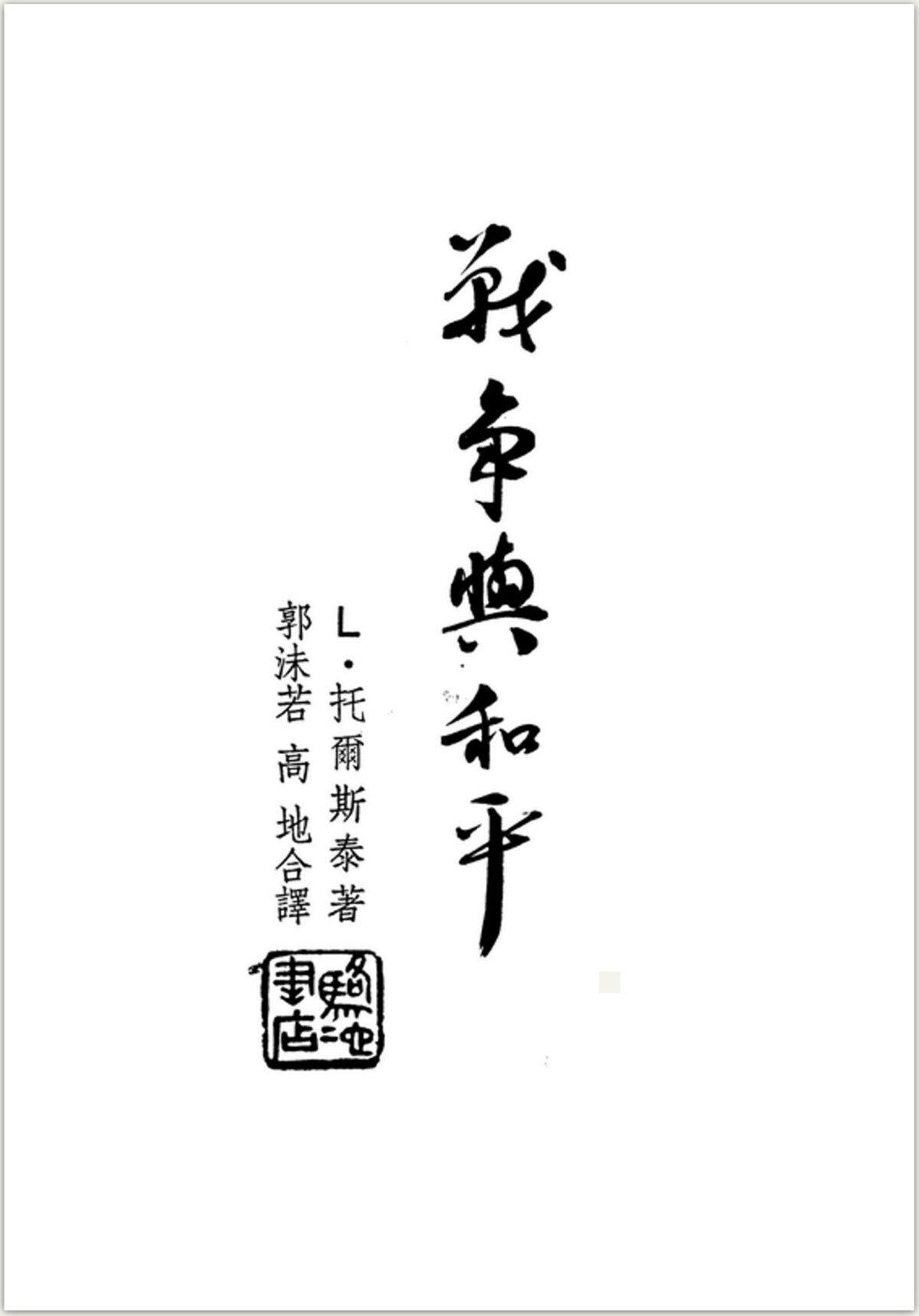
I read about Anna Karenina’s black velvet dress and Kitty’s lavender dress; someone called Robinson cast adrift on a faraway island; a man who travels the world in a balloon; countries where either giants or tiny people live; a policeman chasing a bread thief; a group of hideaways in the middle of a plague; shining jewels that stick to meat carried off by giant eagles on a treasure island; magic fish in shimmering colors that turn into people; a clever hedgehog and an arrogant hare; the little prince who loves his rose; a girl lighting matches and dreaming of fat geese; another girl who lost her crystal slipper; a gray-eyed goddess who leapt from her father’s head; a pretty lady who was a monster wrapped in painted skin; and unforgettable banquets with a cornucopia of cakes, stews and a whole pig, stuffed and roasted!
My world expanded with each torn book. I gulped down the remaining pages, consumed as much as I could digest at a time when everyone else had no access to readable books. During the Cultural Revolution, we were not so much starved for food as we were starved for words. I loved colorful words; they made me see images in my head. I liked juicy words too — they made my mouth water. I skipped Chinese characters I didn’t know — there was no time to check the dictionary — while guessing what they meant by their context, making up their pronunciations in my head. Even to this day, I have the embarrassing habit of mispronouncing many words in Chinese, a permanent stain from this rough-and-tumble, ferocious word-acquisition period.
I had never seen a real jewel before I read those words in the torn books. Nor a black velvet dress or ballrooms or chandeliers. But somehow, I felt I knew them by heart. I could imagine the worlds described in those books, while in reality I lived in an old courtyard with gray walls where everyone wore blue or gray Mao suits, or military uniforms of grassy-green hue. There were red banners, red armbands. There were yellow sunflowers, and yellow tiles on the roof of the Forbidden City, a few blocks from home. No one wore any jewelry, even though I noticed Grandma had pierced ears. No one wore any dresses; men and women both wore pants, with the exception of summer skirts for young girls like me.
Because of this reading binge, my reading speed and my vocabulary both went up. I never stopped to think about the missing pages in these books, or of the authors, or even to question what I had read. I believed that whatever I read must be real, just as we learned in school that Chairman Mao’s or Marx’s instructions were the truth itself. All the stories merged in my head as one giant story lived and told by someone in a parallel world. I had no idea where and when all these lives had been lived. Their lives were so different from mine, and that’s what made them fascinating. I was not quite ten years old.
During the Cultural Revolution, we were not so much starved for food as we were starved for words.
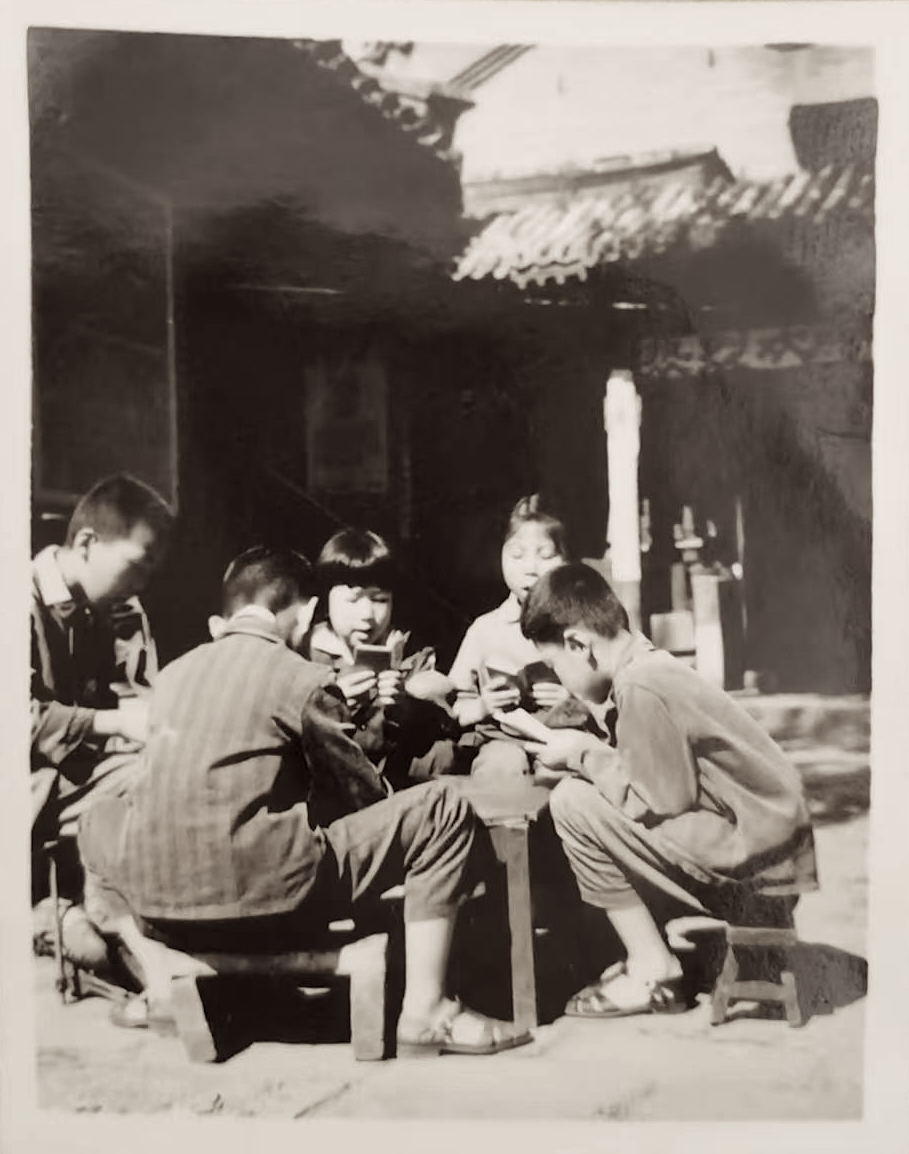
By the time I was 12 or 13, I could read fast enough to finish the weekly book loan in two days, so I had time to spare before returning it to Auntie Zou. By then I had made a good friend, Yu Ping, who loved reading too. Her home was three blocks from mine. I would bicycle to her place and deliver the book to her. Yu Ping would read day and night to finish the book and return it to me before the due date. We would keep the book wrapped in old newspapers, so that we could read in class without getting into trouble, while our teachers repeated the same quotations from Mao, week after week. Both Yu Ping and I were top students in our class. Yu Ping was particularly good at writing lyric composition and was always praised by our Chinese teacher, Mr. Chen.
Once in a while, a teacher would notice that we were reading “extracurricular” books and demand that the book be handed over to be checked. Since the books were torn, without covers or front and back pages, neither we nor the teachers knew what we were reading, so they wouldn’t know how to report us. Besides, reading extracurricular books in class caused them no trouble in comparison with the other students, who constantly talked or fought in the classroom out of sheer boredom. So they let us read, especially Mr. Chen.
I never asked Auntie Zou why all the books were torn, without title pages and back pages. In those days, asking too many questions could get you in trouble. Questions from a child — a girl in particular — were frowned upon. But as you may have guessed, we were reading banned books.
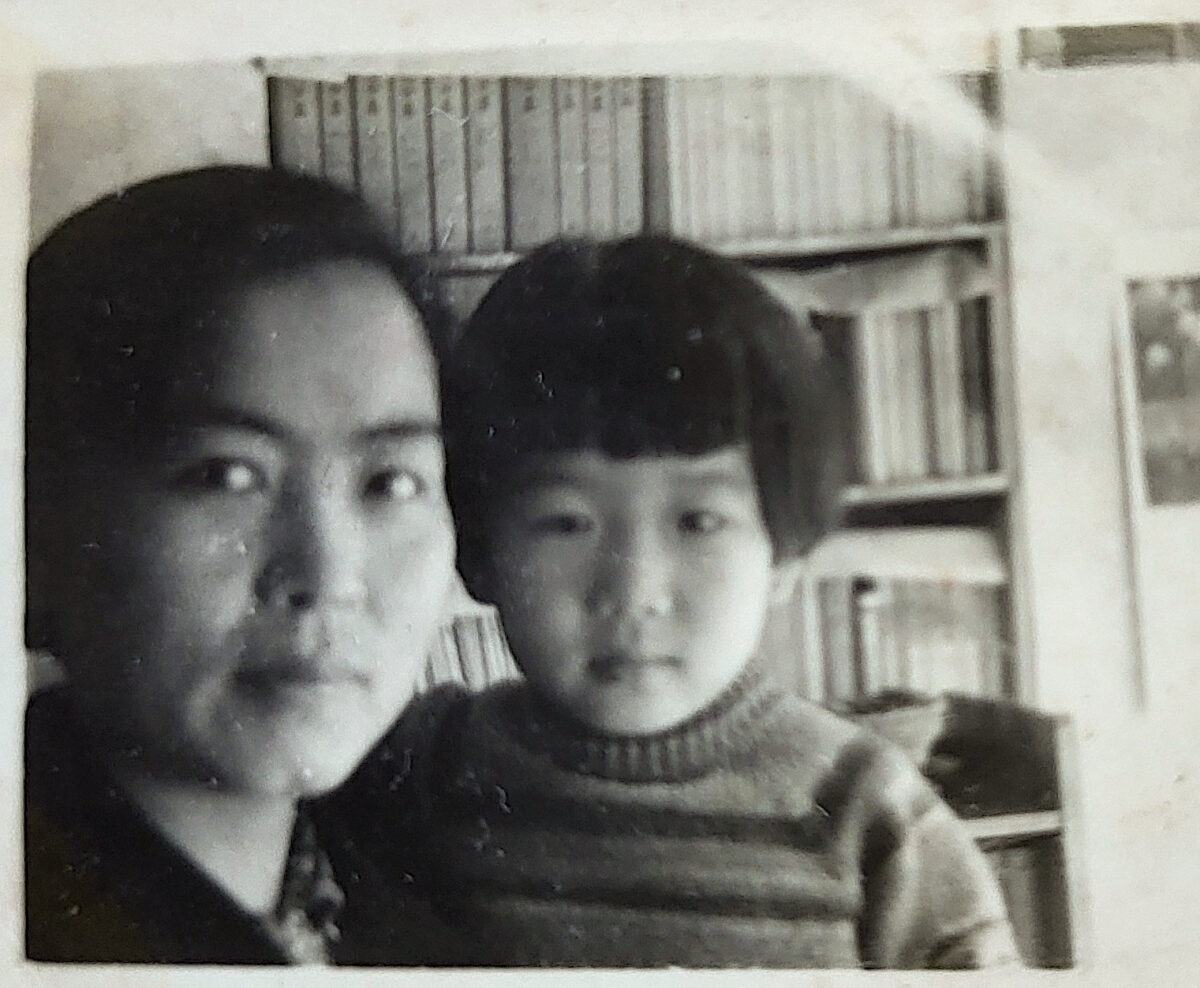
Auntie Zou must have had the job of purging and destroying forbidden books from the library of the Workers’ Club. She must have had to tear their hardcovers off, then tear a few more pages at the front and back where the library seal of the Workers’ Club could be found. Then she must have hidden all the torn books, rather than destroy them completely. I always imagined a dark and secret underground cellar where Auntie Zou kept her treasures, behind the locked gate of the Workers’ Club. She would go down a flight of dusty stairs with a flashlight, wrap the chosen book up as quickly as possible and sneak it out, just like the underground anti-fascist fighters did with their printed flyers and pamphlets.
But I never asked about this. I just looked forward each week to receiving another book from her, keeping my mouth shut — all the way until now.
Years later, when I left China and started to read world literature more systematically, I realized that I had in fact read many fragments of the standard canon without knowing it, thanks to the Workers’ Club and Auntie Zou. Now I can finally read all the missing pages. I can read the books again, in the right order, and connect them with their countries, authors and periods on the map of literary history.
Occasionally I miss that magical world of my childhood, where characters sprung from their pages and interwove with each other’s lives. Where all the books belonged to one story: a true story of mankind, with its missing pages and lost chapters arranged in a random order of time and space. ∎
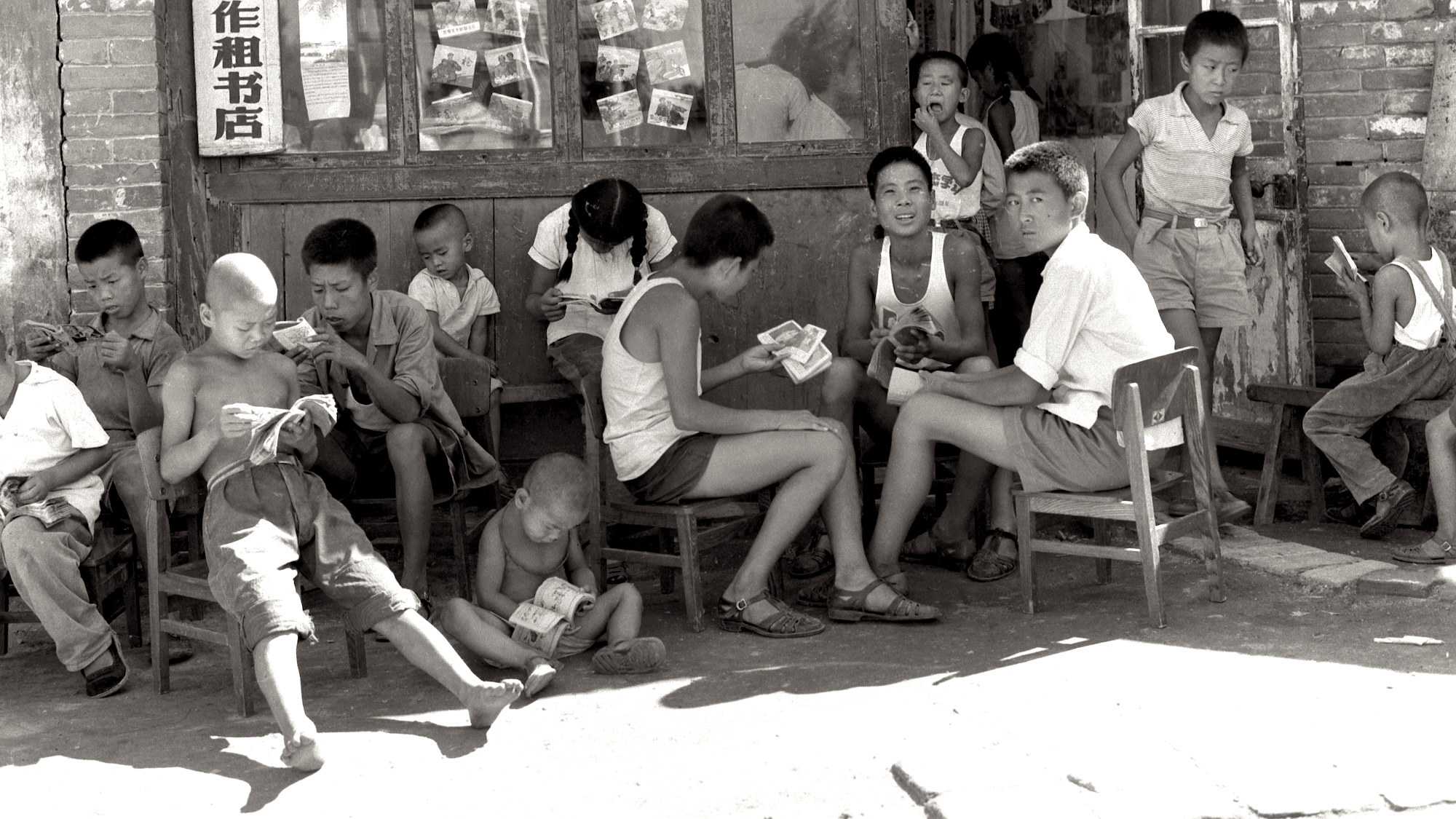
Header: Children read comics about socialist heroes outside a bookstore in Beijing at the start of the Cultural Revolution, September 1966. (AFP/Getty)
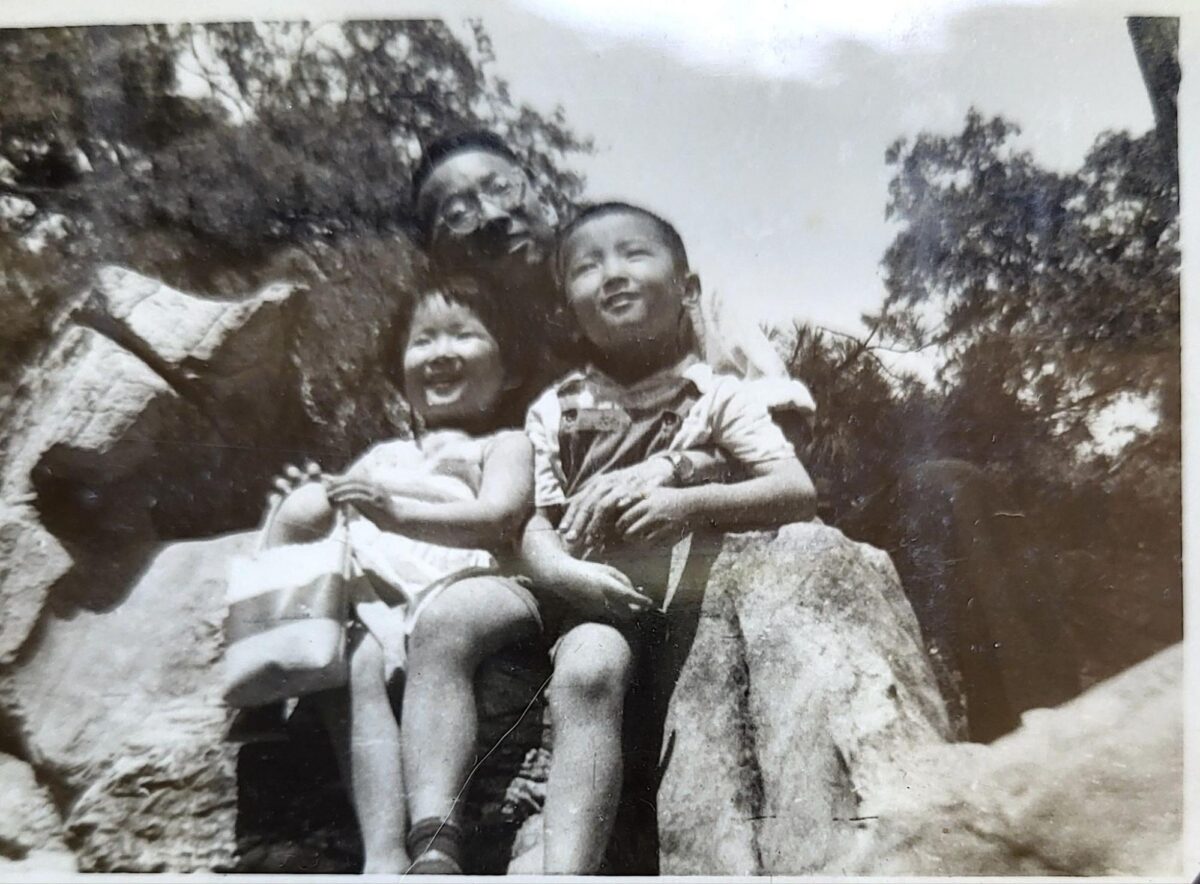
Other images courtesy of Zhang Er.
- “War and Peace” by Leo Tolstoy, tr. Richard Pevear and Larissa Volokhonsky ↩︎
Zhang Er is a poet and writer. She was born in Beijing, and moved to the United States in 1986. Zhang is the author of seven collections of poetry in Chinese, most recently Sea Volts and Bullets Twirl (海跳起,子弹婉转). Her selected poems in translation appear in First Mountain, So Translating Rivers and Cities and Verses on Bird. She has translated American poet John Ashbery into Chinese, and writes opera libretti in English. Her memoir Missing Pages is forthcoming from Caption 1928.