Sign up for our newsletter to be notified of new posts!
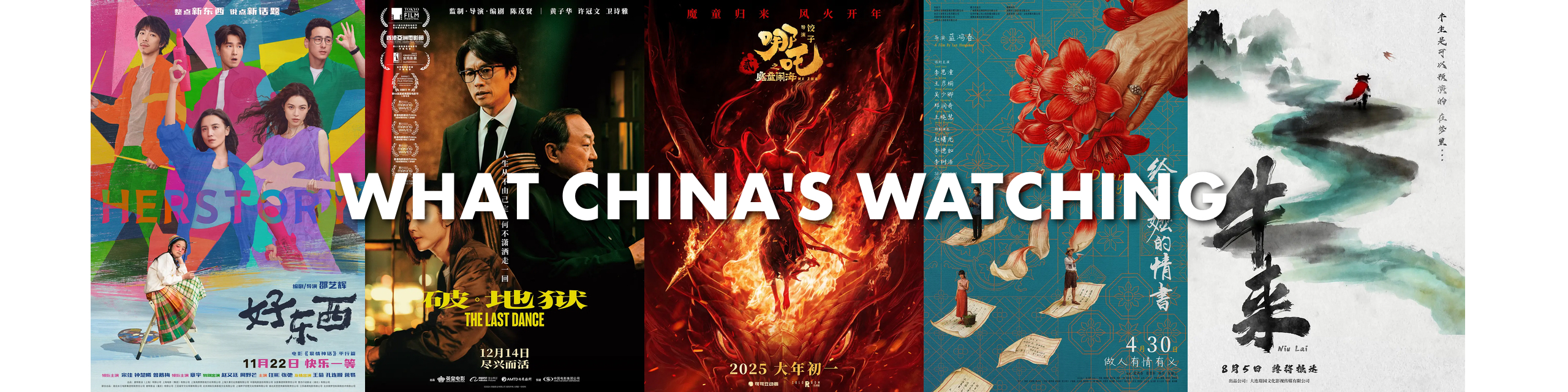
In her 2013 essay collection The Water Level of Ideas (观念的水位), Chinese writer and political scientist Liu Yu describes social reforms as like boats rising with the water of public opinion. When public opinion grows, she argued, reforms naturally follow. Movies, as an artistic medium, have no obligation to propel reforms or represent public opinion. But they are a useful barometer for sensing the national mood: what’s popular, what’s controversial, what’s allowed. By keeping an eye on the kind of movies being made, watched and discussed in China, we can gauge where the country is at culturally, get a sense of what strikes the public’s nerves, and maybe even guess where the water levels are rising.
In this first installment of “What’s China Watching?” — an occasional addition to China Books Review’s other columns about what China’s reading, thinking and listening to — I’ve singled out five films from China that have generated notable public discourse, for reasons familiar or surprising, covering a range of genres and trends in the current Chinese cinematic landscape. They include a star-studded feminist comedy; a grief drama featuring a traditional Hong Kong funeral rite; an animated fantasy epic about a child-like semi-god; a Teochew family tale with an all-amateur cast; and a micro-budget animation that exploded in popularity overnight, for all the wrong reasons.

Her Story
好东西
When Wang Tiemei (Song Jia) moves into a new building with her nine-year-old daughter after a recent divorce and a career pivot, she begins to bond with her twenty-something female neighbor, Xiaoye (Zhong Chuxi), a singer who is more troubled than she appears. With its witty dialogue and relatable urban characters, Her Story became a quick hit, one of the most highly rated and highest-grossing Chinese films of the year. Compared to director Shao Yihui’s 2021 debut B for Busy (爱情神话), which also explores contemporary sexual politics in Shanghai, Her Story centers on the quotidian lives and problems of the three female protagonists and the quasi-family they build, as they alternately play the roles of mother, child and friend. The resounding reception to the film by Chinese audiences attests to the demand for diverse and modern female characters, while the playfulness with which the film addresses stigmas against female sexuality, calls out stereotypes about single mothers, and teases toxic masculinity and performative males ensures its cultural relevance.
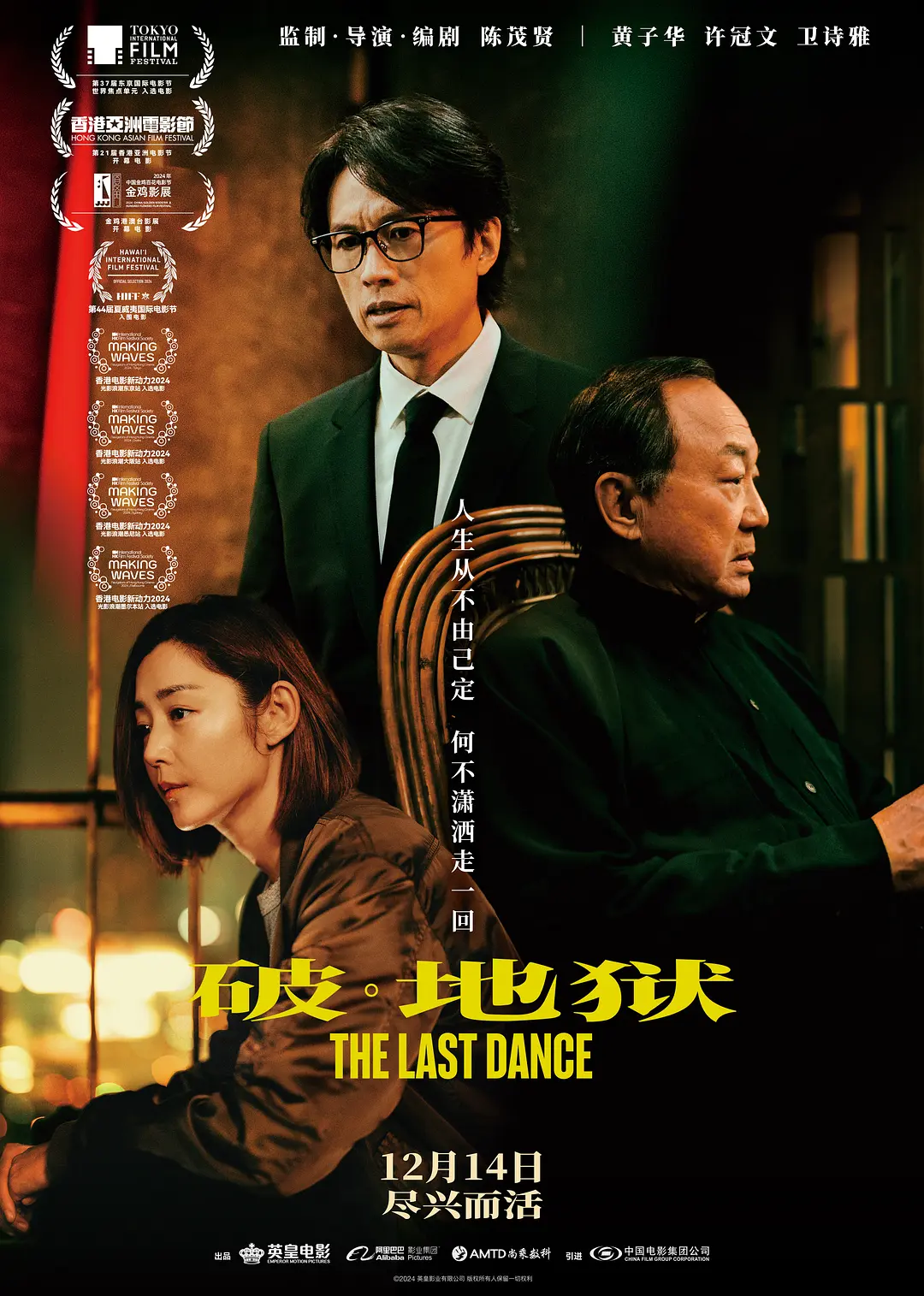
The Last Dance
破·地狱
Set in post-pandemic Hong Kong, The Last Dance follows a financially struggling wedding planner-turned-funeral agent (Dayo Wong), who must win the recognition of an austere Taoist priest (Michael Hui) to succeed in his new career. The film’s Chinese title, literally “Breaking Hell’s Gate,” refers to a traditional funeral rite widely practiced in Hong Kong and Cantonese regions, where a Taoist priest smashes ceramic tiles on the ground to free the dead’s soul from hell. Starring two legendary Hong Kong comedians in an emotional drama taking place mostly between crematoriums, morgues and a coffin shop, the film tackles universal themes of filial piety, end-of-life care, the tension between tradition and modern life, and how transcendence is sought on behalf of both the dead and the living. Since its release in late 2024, the film has garnered both critical acclaim and mass appeal, becoming the highest-grossing local title at the Hong Kong box office and the region’s international Oscars entry (Hong Kong, China, and Taiwan have separate selection committees for the Academy of Motion Picture Arts and Sciences.)
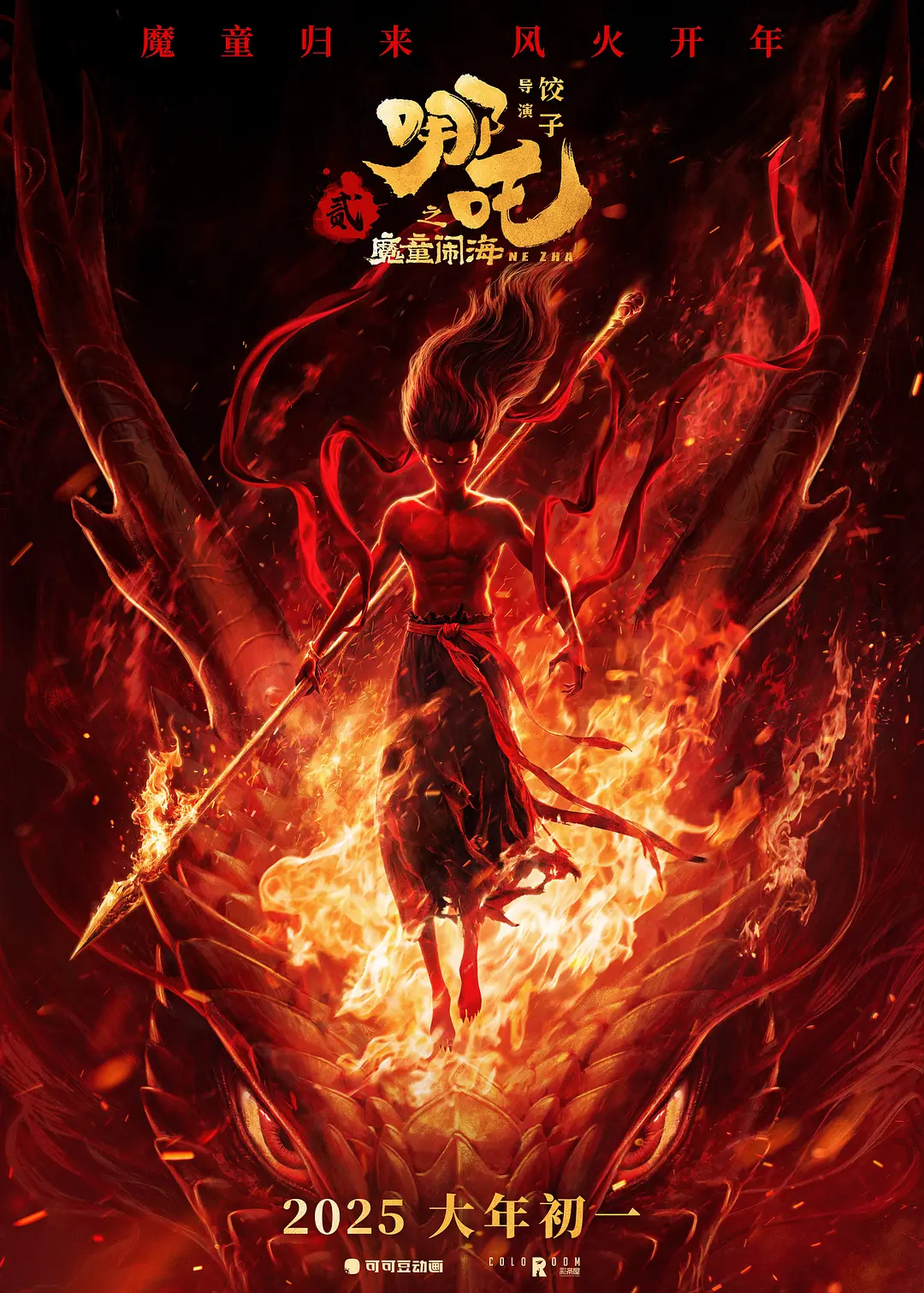
Nezha 2
哪吒 2
A maximalist sequel to the wildly popular 2019 animation Nezha 1, Nezha 2 follows a childlike semi-god figure in Chinese mythology (popularized by Ming dynasty novels Investiture of the Gods (封神演义) and Journey to the West (西游记), and imagined in Chinese cinema since 1927) on a series of trials and battles with demons and mythological creatures to restore the physical body of his pal, Aobing. Featuring complex set designs and visually stunning battle sequences with input from over 4000 domestic animators from 138 companies, Nezha 2 marked an artistic and industrial milestone in Chinese animation. It was also a box office triumph: with over $2.2 billion in global box office, on a budget of $80 million, the movie became the highest-grossing animated film and non-English film in history, making the director Yang Yu, a medical school dropout and self-taught digital animator, the top-grossing Chinese director of all time. With its contemporary reimagining of an ancient Chinese tale, technical and artistic proficiency, and acclaim from critics and audiences alike, it’s no surprise that Nezha 3 is already slated for 2030.
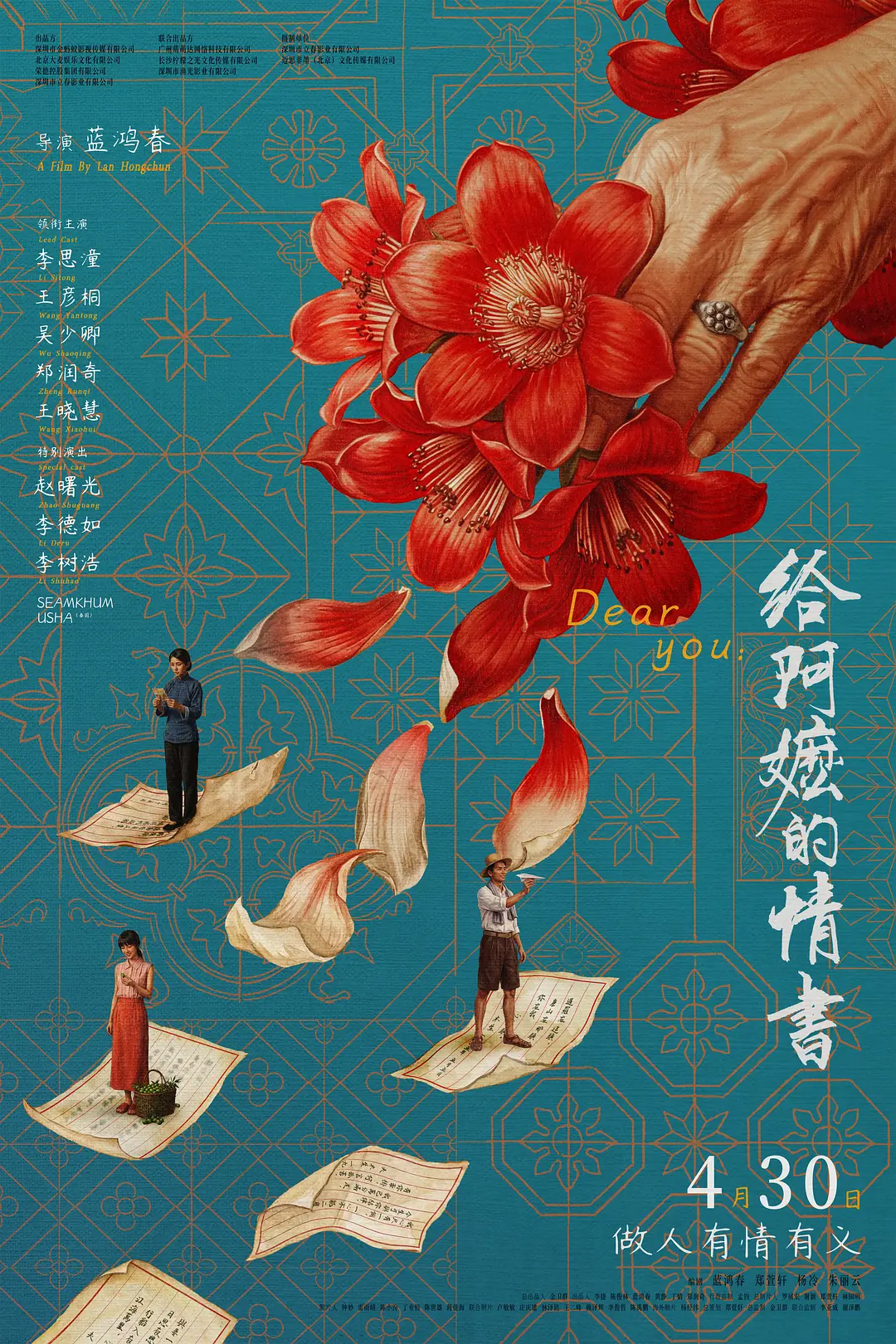
Dear You
给阿嬷的情书
The most discussed and highly rated film in China in the first half of 2026 has no star attached to it, and is not even in Mandarin. Drawing on first-hand interviews, archival documents and his own experience growing up in the Chaoshan region of eastern Guangdong province, director Lan Hongchun has crafted a moving family tale told entirely in Teochew dialect. Shot on a shoestring budget, the film spans three generations, two countries and half a century, through the perspective of the grandson in a Chaoshan family, who goes to Thailand in search of his migrant grandfather, only to discover that the absent patriarch has long passed while another woman has been sending home qiaopi letters with money (侨批) in his name. With little marketing, the film grew popular through word of mouth on social media and in private group chats. It is refreshing to see an independent production with a mostly non-professional cast and crew soar to the top through the power of the grassroots: a testament to the enduring appeal of heartfelt, original storytelling that does not require star power, expensive marketing or spectacular visual effects.
Niu Lai
牛来
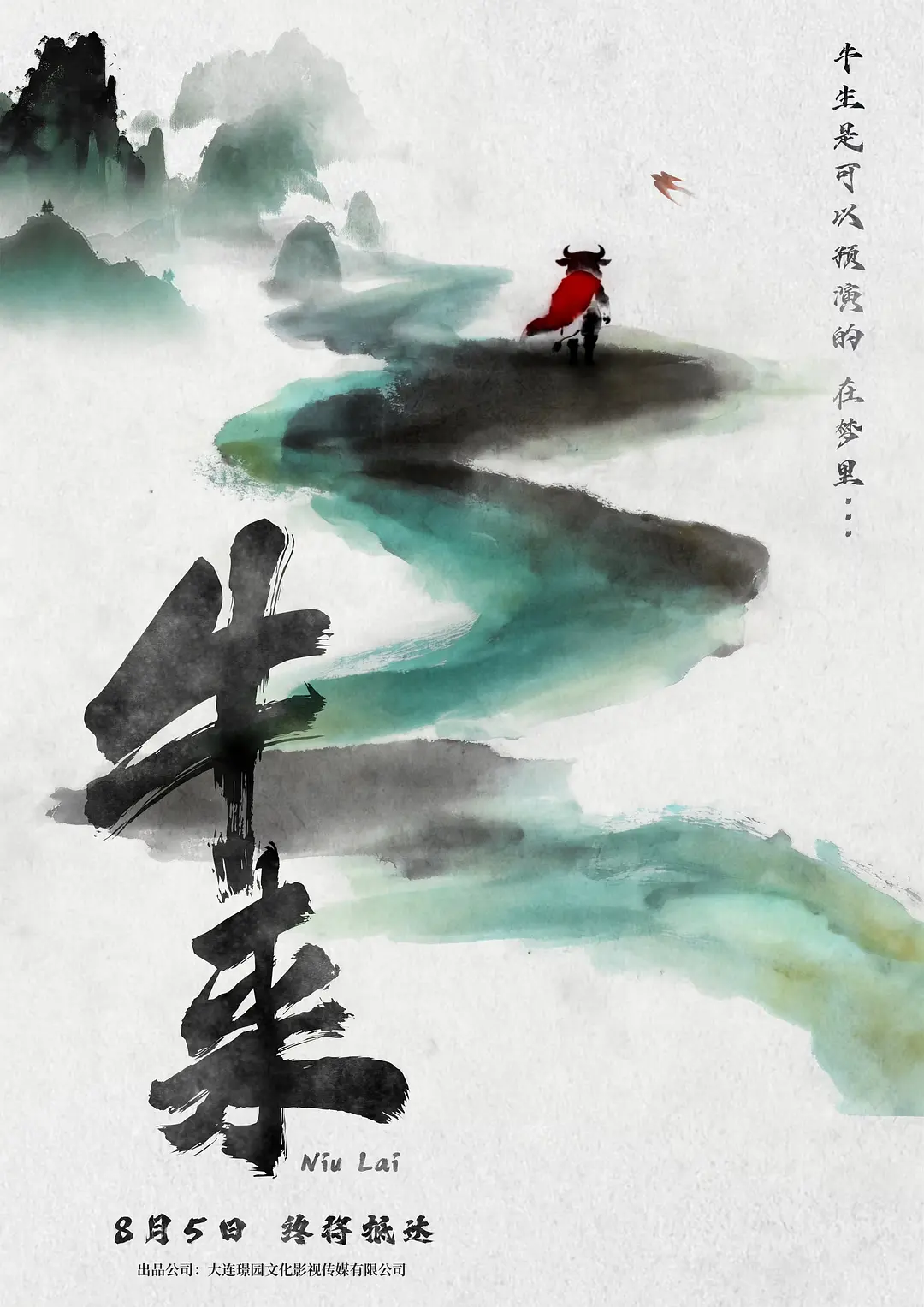
Can a film be so bad it becomes so good? A recent animation by first-time director and amateur animator Xin Yumeng (with help from his mother, Sun Lifang) is a perfect example. Niu Lai, literally “The Bull Is Coming,” has been dubbed by Chinese movie-goers as “disaster-level” and an “epic piece of trash.” Telling the coming-of-age story of an eponymous young calf, the film features a baffling plot, crude animation and outlandish character design (think bipedal cows). After a negligible reception in its first ten days of release, the box office surged as movie-goers flocked to see exactly how bad the film was. Some reportedly bought tickets because Niu Lai sounds similar to niu shi lai (牛市来), “the bull market is coming,” wishing for auspices in the stock market. Others went out of rebellion, to show support for an indie underdog in a market dominated by unadventurous mainstream fare, and an animation whose creative process did not involve A.I. Most went just for the fun. With a reported budget ranging between $200 and $22,000, yet a $9.6 million box office, Niu Lai has become a defining cultural phenomenon of the year. ∎

Kathy Ou is a Chinese bilingual writer and journalist currently living in Brooklyn. She covers Asian and Asian diaspora cinema, culture and politics at large. Her bylines include Dissent, Documentary Magazine, Brooklyn Rail and more.