Sign up for our newsletter to be notified of new posts!
In 1981, the Indian writer and poet Vikram Seth traveled from Nanjing, where he was studying literature, to his hometown of Delhi. Moving by train across China to Gansu, then hitchhiking southwest through Qinghai and Tibet, it was an itinerary that makes sense when a traveler has a surfeit of curiosity but a shortage of funds. Armed with half-decent Mandarin, a fistful of foreign exchange certificates, and a scrap of paper authorizing his route, he negotiated China just as it was emerging from the Maoist era. No WeChat. No Trip.com. No Google Translate. Just a student improvising his way home before his travel pass expired: fording rivers in rickety trucks, suffering altitude sickness, dealing with roadside thieves and the occasional military checkpoint.
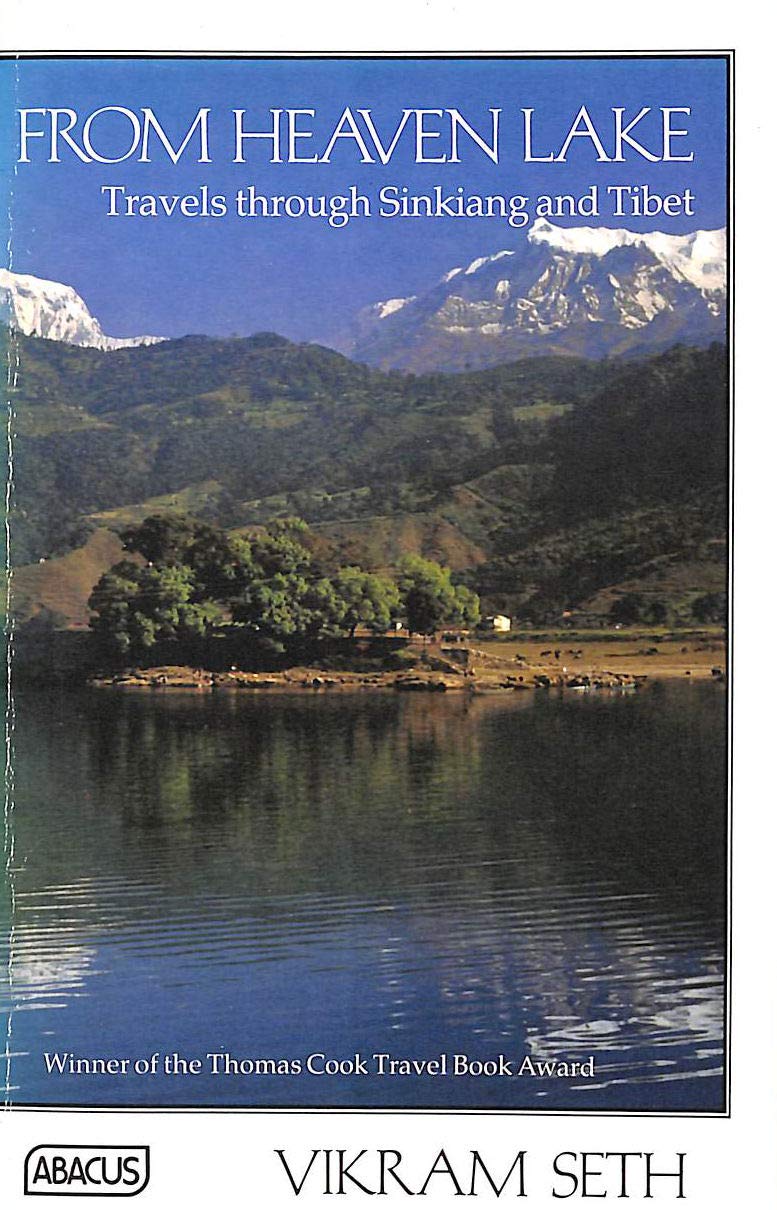
Seth’s account of his reform-era summer sojourn, From Heaven Lake: Travels through Sinkiang and Tibet (1983), is a time capsule travelogue that remains a fascinating firsthand account of the changes sweeping China in the heady days of the early 1980s. Vikram Seth belonged to one of the earliest cohorts of foreign students to enter China as it slowly reopened its doors to the world after the death of Mao in 1976. He spent two years studying at Nanjing University from 1979-81 — where his classmates included the American journalist John Pomfret — before setting off on his journey home.
Spurning his parents’ expectation that he would fly home from Hong Kong, Seth took the hardest possible route, overland through Western China and Tibet, then south across the Himalayas into Nepal. It was late summer, and the expiration date on a hastily arranged travel pass for Seth to cross Tibet added urgency to his travels. From Heaven Lake, his memoir of the trip, is also a broader meditation on the future of China at the time. Seth intuited that the reform era was a pivotal moment in that country’s history. There were promising signs for China’s development ahead, but Seth’s progress through Tibet was anything but smooth.
In the remoter parts of the country, Seth encountered intransigent officials who still hadn’t got the memo about reform, let alone opening. They were still programmed to prevent the kind of interprovincial, unsupervised wandering that Seth was blithely attempting. He writes:
The status of a ‘foreign friend’ or ‘foreign guest’ in China is an interesting if unnatural one. Officialdom treats the foreigner as one would a valuable panda given to fits of mischief. On no account must any harm come to the animal. On the other hand, it must be closely watched at all times so that it does not see too much, do too much on its own, or influence the behaviour of the local inhabitants.
Even with all the obstacles, Seth was perhaps fortunate to have done his trip 40 years ago. A Chinese official in 2025 would view a solo traveler wandering in China’s Western regions less as a panda to be valued and more like a raccoon under the floorboards of your house — spreading disease, gnawing through the wiring and starting fires.
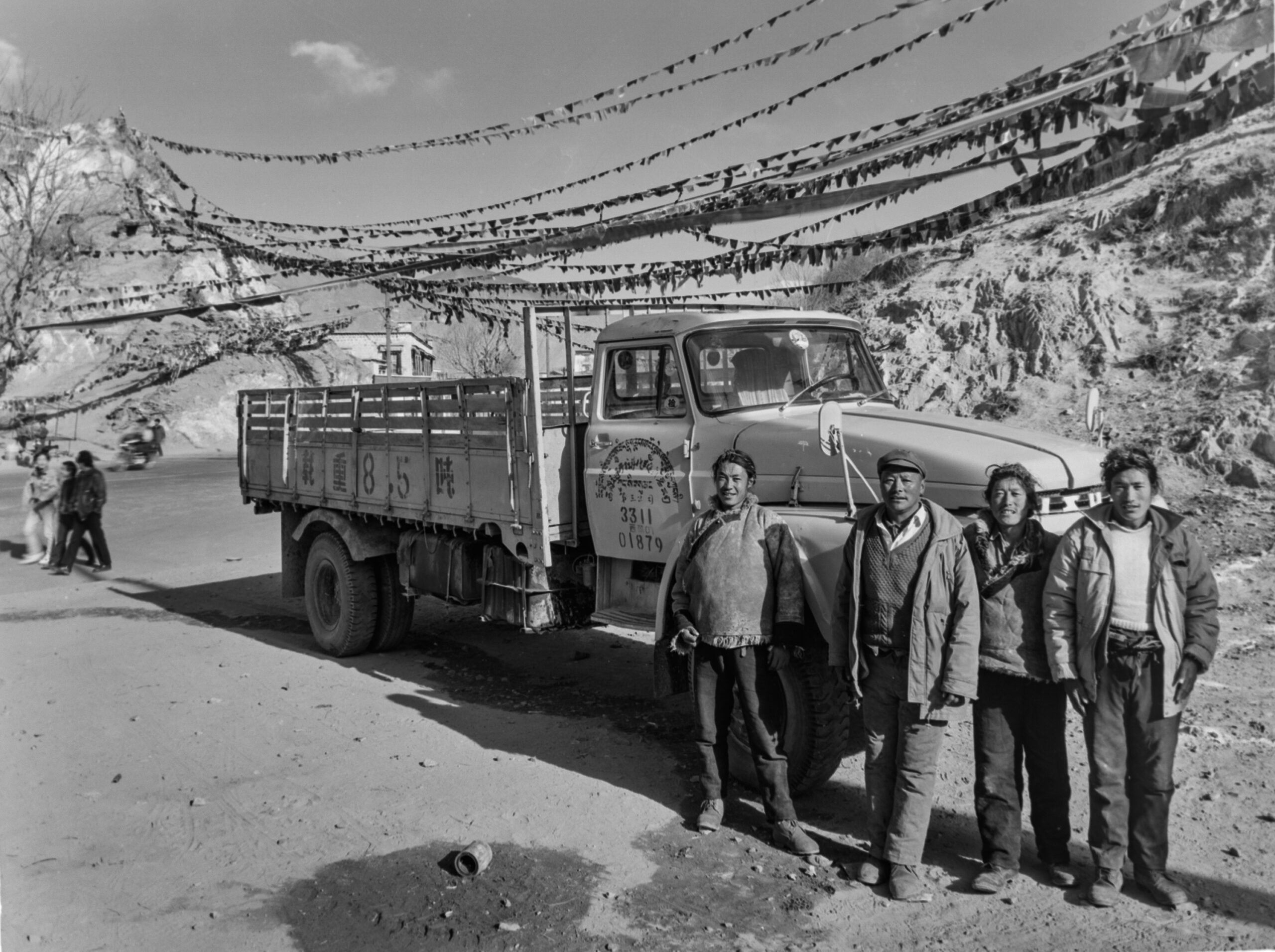
From Heaven Lake won the Thomas Cook Book Award for travel writing in 1983. Vikram Seth went on to have a prolific career, including the novel A Suitable Boy; a translation of classical Chinese poetry into English, Three Chinese Poets (1992); and his own award-winning poetry collections. While something of an outlier in the Seth catalog, From Heaven Lake deftly weaves reportage, cultural insights and even snippets of poetry, both short translations from the Chinese canon and Seth’s own, such as this verse at the end of Chapter 9, as Seth and his companions spend an uncomfortable night on the slopes of the Tanggula Range, not far from the source of the mighty Yangtze:
Cold in the mudlogged truck
I watch the southern sky:
A shooting star brings luck;
A satellite swims by.
The Silver River flows
Eventless through the night.
The moon against the snows
Shines insular and bright.
Here we three, cooped, alone,
Tibetan, Indian, Han,
Against a common dawn
Catch what poor sleep we can,
And sleeping drag the same
Sparse air into our lungs,
And dreaming each of home
Sleeptalk in different tongues.
The book fits neatly on the shelf next to other travelogues through Central Asia. Like any journey worth taking, it is the people along the way who make the trip truly memorable. Seth’s Chinese is good enough to make conversation, an important skill when spending hours crammed in the cab of a truck or the car of a train, where the only other diversion is chain-smoking cigarettes. (This is not a book for anyone thinking of quitting a nicotine addiction.)
Spurning his parents’ expectation that he would fly home from Hong Kong, Seth took the hardest possible route, overland through Western China and Tibet, then south across the Himalayas into Nepal.
What distinguishes these scenes from similar books by Western writers is that Seth is Indian (although in Lhasa he disguised himself as a local to visit the Potala Palace without the permits and supervision usually required for foreign tourists). The locals he meets along the way treat him as a foreigner but not a Westerner, and this takes their conversations in novel directions. The Indian actor and director Raj Kapoor is praised. Russians are discussed (and denounced). The comparative systems of finding employment in China and India are debated, as are the relative merits of the two nations’ approaches to population management.
But India is not China. Many of the people he meets on trains, buses and trucks are startled by the frankness with which Seth criticizes India’s official birth control program, and how he talks about being homesick while candidly listing the problems and challenges facing his nation. Seth is generally bullish on China’s future, and while he can be occasionally perplexed, frustrated and impatient with life on the road, it is refreshing to read a non-Western perspective on China’s development in this transitional period. For example, he writes:
I remember reading a question in an economics textbook: ‘If you were to be born tomorrow, would you prefer to be born in China or India?’ If I could be guaranteed the lucky place in the Indian sweepstakes that I at present occupy, there is no question as to what my answer would be; even if I were poorer than the average Chinese child, I would still prefer to be in India. But if I were born to the inhuman, dehumanising misery in which the poorest third of our people live, to the squalor and despair and debility that is their life, my answer would not be the same.
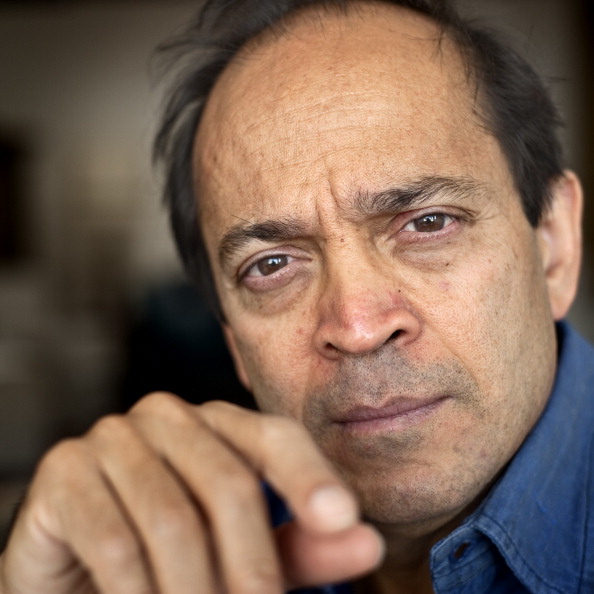
Seth’s status as a foreigner-but-not-Westerner encourages equal candor from the Chinese he meets and converses with. There is talk about the Gang of Four trial, lamentations about vandalism and the excesses of the Cultural Revolution, and grumbling about ongoing poverty in Western China. One bitter young Han Chinese describes his exile to Western China as being “sent to New Zealand for life,” except in this case, New Zealand (新西兰 Xinxilan) is an acronym that describes being stuck in China’s Western regions of Xinjiang, Xizang (Tibet) or Lanzhou (Gansu province). A former soldier, on learning Seth’s origins, recalls the chaotic politics of the Sino-Indian border conflicts in 1969: “You couldn’t tell where the border was. One day it was here, another day there. We retreated, they occupied, and vice versa.”
Seth’s main companion is a driver named Sui, one of the few Han people Seth meets who isn’t privately contemptuous of minorities. For Sui, Tibet is home, not exile. When Seth asks about the Cultural Revolution, Sui responds: “All decency died. Half the cultural heritage of China was destroyed. People now care only for themselves.”
Crossing through Tibet is the highlight of Seth’s book. He writes about the region with nuance that is often missing from Western writing on the subject, perhaps because of his Indian perspective:
I think about what the two countries have done for their people in the course of the last thirty years. One overwhelming fact is that the Chinese have a better system of social care and of distribution than we do. Their aged do not starve. Their children are basically healthy. By and large, the people are well clothed, very occasionally in rags. Most children in the eastern provinces go to school for at least five years; this is in practice, not just (as in India) on paper. Tibet will take a long time to achieve the standard of living of other parts of China; however… I have not, for instance, seen signs of malnutrition.
Seth is not unaware that Tibet was struggling to emerge from two decades of devastation and disruption under Chinese rule. He sees the contradictions, including people wearing both Mao badges and amulets bearing a picture of the 14th Dalai Lama. Worshippers line up to enter the Potala Palace, while in Shigatse and elsewhere, blackened walls and foundation stones are all that remain of former monasteries and temples (structures that in 2025 have been rebuilt and repackaged for Han tourists and unsuspecting foreign travelers).
There was still a lot of bitterness. One young Tibetan man cannot contain his anger, telling Seth:
My father spent thirteen years in prison, and I spent twelve, because of them. He looks at me with the arrogance of sorrow, then continues. An uncle of mine was killed when they invaded Tibet — and then their Cultural Revolution — you can’t imagine what it did to our family. Our lives were ruined.
Despite the challenges of crosscountry travel, rickety buses, poor roads and difficult bureaucrats, he arrives at the Tibetan border before his travel documents expire, although the final crossing is not without its own peril. Seth treks through mountain forests and negotiates slippery river banks before crossing into Nepal and facing the final boss: An overzealous immigration officer, in this case a Nepalese bureaucrat with an exaggerated sense of duty and some sticky fingers when it comes to packs of foreign cigarettes. Seth eventually reaches Kathmandu and, road weary, flies the remaining leg of his journey back to Delhi.
Seth’s frank depictions of life in China’s western regions in the 1980s — which still lag behind the coast and harbor resentment toward policies designed to sinicize them — remain strikingly relevant today. Yet his hard bargaining over foreign exchange certificates, the depictions of his pre-digital isolation and the memory of when a foreign student could hitch a ride to Lhasa now feel as distant as Marco Polo.
More than 40 years later, a foreigner would have a better chance of getting Xi Jinping to do balloon animals at their kid’s birthday party than to hitchhike through Tibet. Show up at a rail depot in Gansu with your thumb out and you’re not starting an adventure; you’re triggering a surveillance alert. The gaps in the system that Seth exploited are long gone. But while China has changed, Seth’s curiosity and willingness to take risks — in both his itinerary and his conversations — remain an inspiration to all who journey there, and all who hope that such days of open travel in western China will return. ∎

Jeremiah Jenne is a writer and historian who taught late imperial and modern Chinese history in Beijing for over two decades. He earned his Ph.D. from the University of California, Davis, and is the co-host of the podcast Barbarians at the Gate.