Sign up for our newsletter to be notified of new posts!
As someone who makes their living as a literary translator, I am asked with ever more insistent frequency about the threat that AI poses to my profession. I get it: translators everywhere are losing work. What work they have sometimes comprises polishing translations churned out by machines, the literary equivalent of handing a condemned man a shovel. But until recently, I have always responded that because of the stylistic and emotional complexity it involves, the area I work in the most, literary translation, is safe.
I had underestimated the greed and pervasiveness of the corporate mindset. At the end of 2024, a subsidiary of Simon & Schuster announced that it would use machine translation for “commercial fiction” releases, and I had to ask myself if I had been monumentally naïve. It had never occurred to me that a publisher might not know why people read literature — for escapism and learning, yes, but also for the human connection with that writer they love, with that translator they love.
Do publishers know something we translators don’t about this technology and its creative, generative, empathic potential? Can AI feel what the author felt when they wrote a scene? Can it comb a bookstore to find a book overlooked by local prizes, and make the creative leap to imagine a whole new readership back home? Does it care about the culture from which the literature comes, and into which it translates? Give up any of those — and many other, often unacknowledged, translator roles — for the sake of cutting costs and a false notion of efficiency, and literature suddenly becomes a lot less human.
So, here are five books written by five humans, translated into English by six different humans, edited and copy-edited and proofread by dozens more humans, and recommended to you by a human for their powerful insights into what it is to be human. They tell us how we respond in crises; how we value our freedoms; how little we really know about our universe; what it’s like to feel regret and disappointment; and what it takes to live true to ourselves.
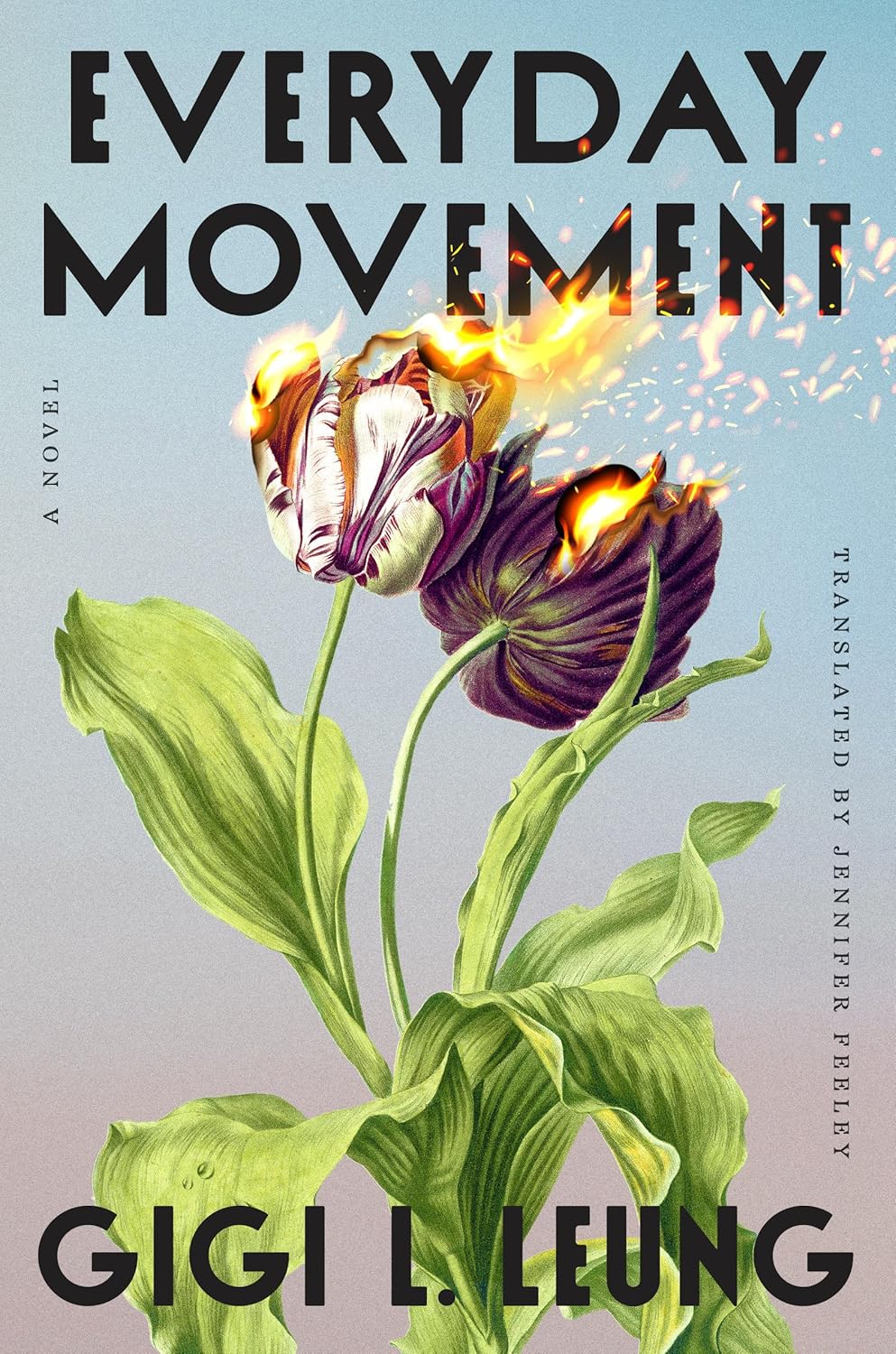
Everyday Movement
In 2019, a proposed bill to allow extraditions to mainland China drew millions of Hong Kongers onto the streets for months of protest. Everyday Movement by Gigi L. Leung, a Hong Konger who now lives in Taiwan, is a fictional account of that period of unrest. It places us alongside protesters in the middle of the action and in their day-to-day lives, as they work out how to live under threats both political and personal. Panda and Ah Lei, two young college students who take center stage among the large cast of characters, are polar opposites in how they process one early ordeal: while Panda puts on makeup to go for brunch, Ah Lei stares at the ceiling and tries to block out the insistent image she has in her head of a “severed finger covered in blood, tumbling onto the cold, glossy marble floor.” In Jennifer Feeley’s rallying translation, juxtapositions like these drive home with arresting force the tensions and internal conflicts that pro-democracy protesters must have wrestled with — a sense of courage and duty versus fear and distraction, community versus consumption, and one person’s approach to making a difference versus another’s.
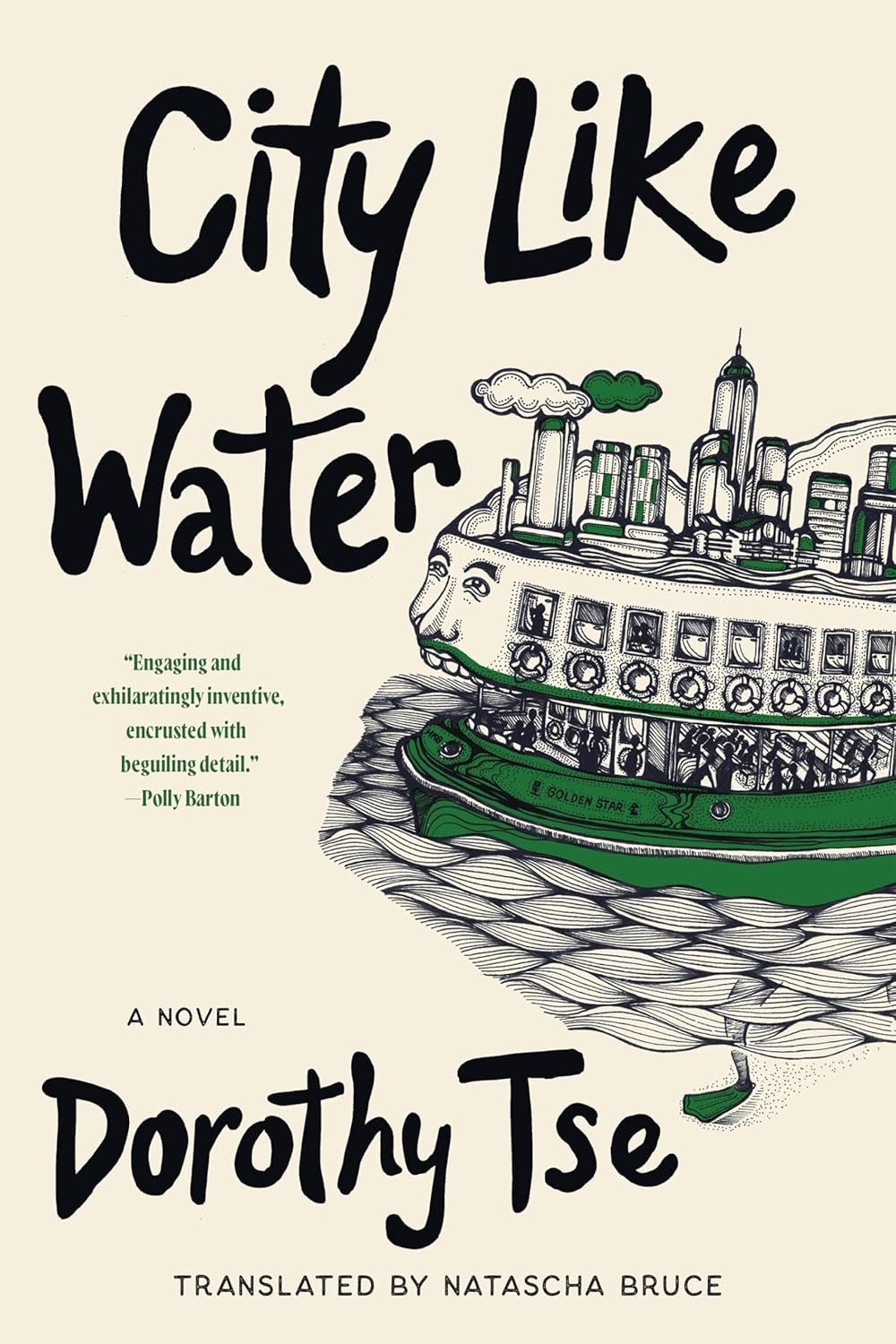
City Like Water
A Novel
City Like Water by Dorothy Tse also deals with the societal and democratic erosion of Hong Kong. Owlish, the previous work from formidable author-translator team Tse and Natascha Bruce, was one of our best books of 2023, and there’s a lot about this new novel-in-vignettes that’s similar. Much as Owlish’s protagonist, Professor Q, ricochets out of control around the fictional city of Nevers, the unnamed narrator of City Like Water takes readers on a frantic tour of a thinly-veiled stand-in for Hong Kong. Only, he does so in a cascade of questionable memories of a changing city that flow with nostalgic references to “neon signs,” “monstrous air-conditioner creatures” on building sides, and “meat-red plastic bags” tied to fans to keep out flies. He’s sifting through the memories before they disappear over the edge — along with the hotel floors, days of the year, and people that have vanished without anyone so much as blinking. That’s another similarity with Owlish, Tse’s palpable anger at people’s willful obliviousness to the erasure and violence happening around them. Tse retaliates with her signature experimentation and brilliantly imaginative prose, as well as an irreverent, mordant humor directed mostly at the corrupt “po-po.”
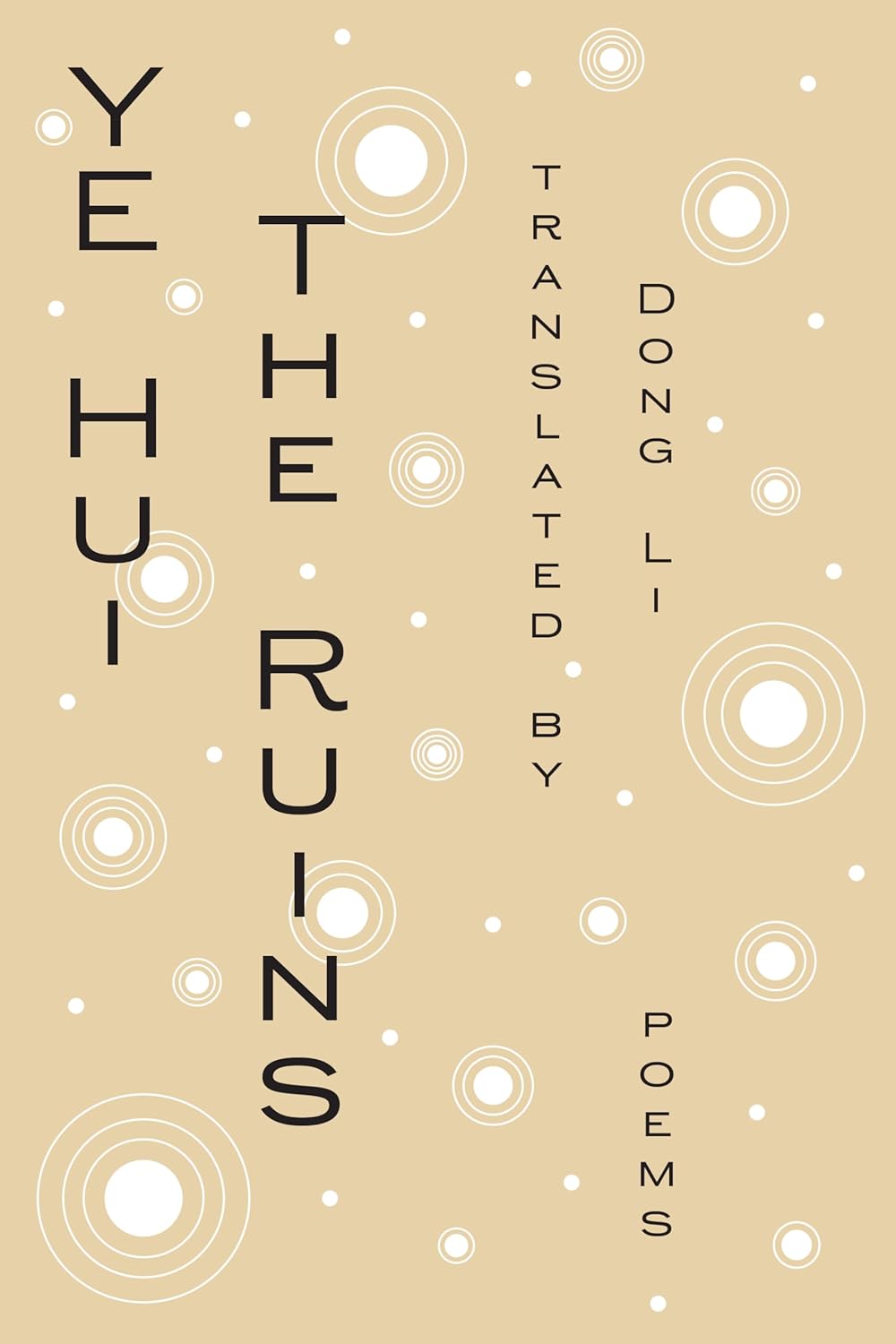
The Ruins
Poems
In the eponymous piece in The Ruins, Ye Hui’s first full poetry collection to have an English translation, he poses a question: “Are these the ruins / Or an unfinished castle / Perhaps I have arrived too early”. Essentially — is there more to life than we have the vision to see? It’s a question the sexagenarian poet and architect, who lives in his childhood village on the very outskirts of Nanjing, undoubtedly knows the answer to. Ye — whose design works highlight the sustained life force of forgotten and salvaged materials — has made it his vocation to observe the world around him and remind others that, despite what we might want or think, the universe carries on without us according to its own set of rules. This is nowhere clearer than in these poems, a metaphysical patchwork of natural imagery, where birds perching in a tree means snow is on the way, and very little else happens as we expect. But while Ye Hui sees the underlying connections between things, the revelations he channels through the medium of Dong Li’s telescopic translation aren’t meant to reassure. When “the truth comes into view”, he tells us, “there aren’t unicorns or swords / But the void”.
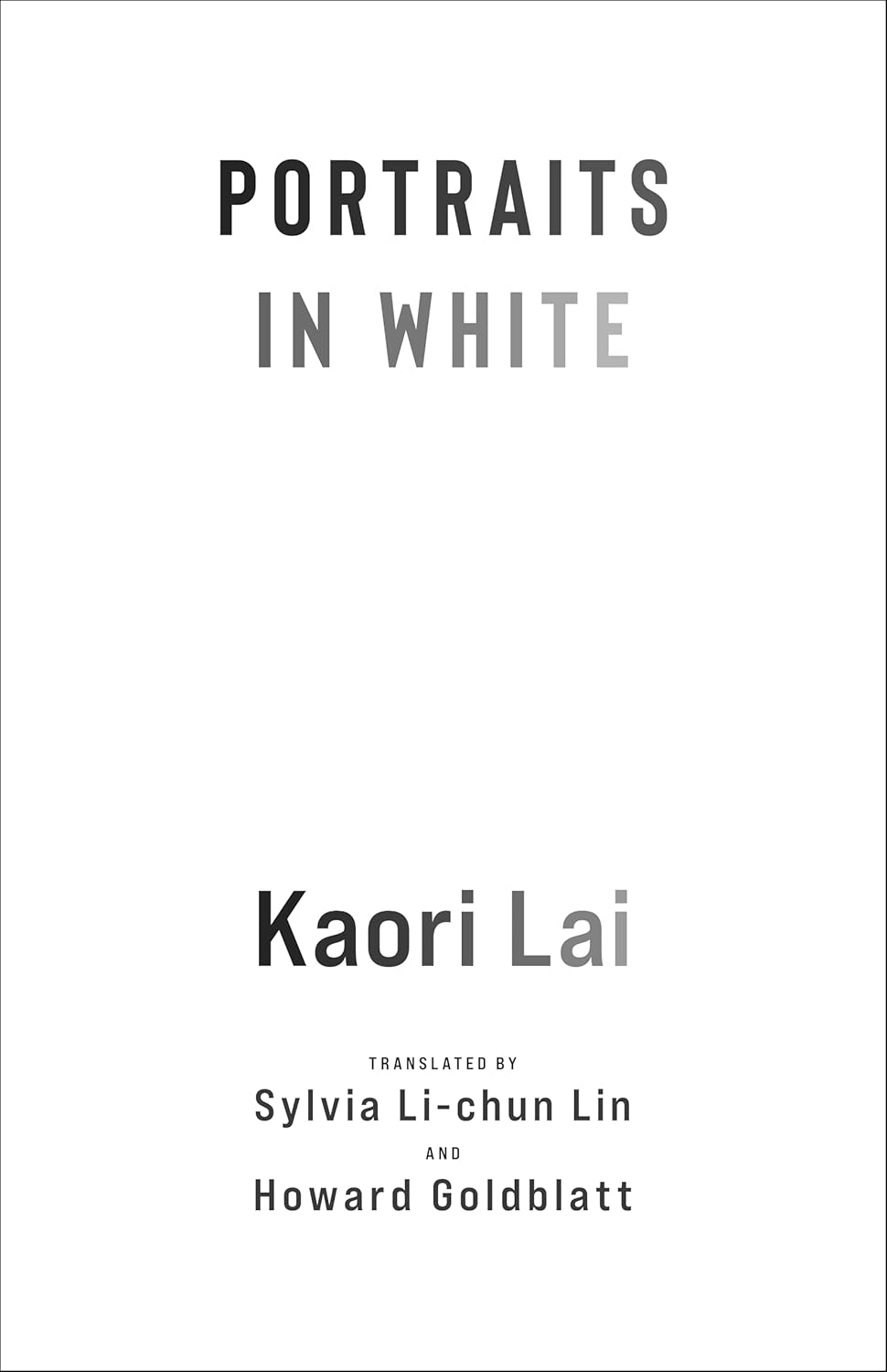
Portraits in White
For four decades, from the mid-20th century until 1987, the Taiwanese people lived under martial law. The ruling Kuomintang, after fleeing mainland China, suppressed any criticism of its governance of Taiwan and even executed some of those it suspected of dissidence and leftism. Writer Kaori Lai, born in 1969, is part of the generation who reached adulthood after censorship had been lifted, when accounts of this period, which came to be known as the “White Terror,” could be openly shared. Her 2022 Taiwan Literature Award-winning Portraits in White, here in Sylvia Li-chun Lin and Howard Goldblatt’s expert translation, brings together three novellas whose different central characters lived through that time and are reflecting on what led them to where they are now. We hear about thwarted ambitions, lost loved ones and the struggle to make ends meet. Only occasionally do we feel the intrusions of the overarching political context, as when Ms. Wen-hui’s knowledge of Japanese becomes a problem after WWII. Yet the characters each feel, in some way, that their life has been uneventful, and that they have missed out — even Miss Casey who moved abroad to live in Paris, then Berlin, where Kaori Lai is now based. Still, the negative space created by what goes unsaid in these stories remains a menacing, looming presence.
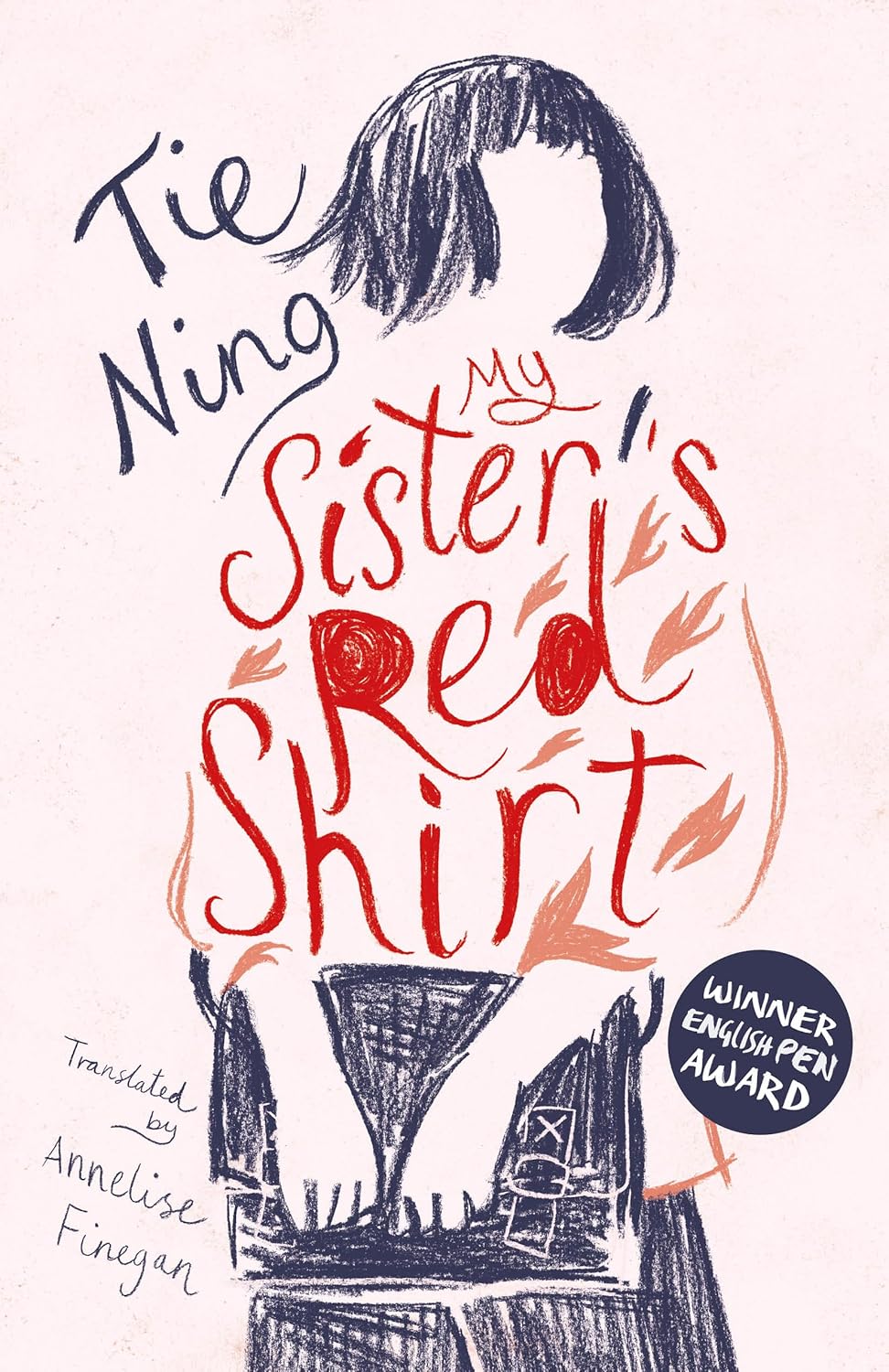
My Sister’s Red Shirt
While best-known in the English-speaking world for her 2012 novel The Bathing Women, the author Tie Ning is renowned at home as the first woman to become president of the China Writers Association, and as a member of the Central Committee of the Chinese Communist Party. Which is to say she’s come a long way since My Sister’s Red Shirt first came out in 1984. Now in English, in Annelise Finegan’s lively translation, this coming-of-age novella is a window into what life was like for the girls and young women of China when Tie Ning was one herself. It follows two sisters: the older, inhibited narrator, Anjing, and the free-spirited 16-year-old Anran, whose youth makes Anjing reflect on the world of the Cultural Revolution when Mao Zedong was still in power. The buttonless red shirt of the title, with a zipper up its back (which Anjing buys for her sister to much disapproval from teachers) symbolizes Anjing’s wish to live vicariously through her young, firebrand sister and also protect her from the harsh reality that will come with trying to be her own woman. ∎

Jack Hargreaves is a London-based translator from East Yorkshire. His published and forthcoming full-length works include Winter Pasture by Li Juan (2020) and Seeing by Chai Jing (2023), co-translated with Yan Yan; Mutual Strangers by Gu Qian (2025); I Deliver Parcels in Beijing by Hu Anyan (2025); and The Man Under Water by Xiaoyu Lu (2027). He occasionally contributes to Paper Republic.