Sign up for our newsletter to be notified of new posts!
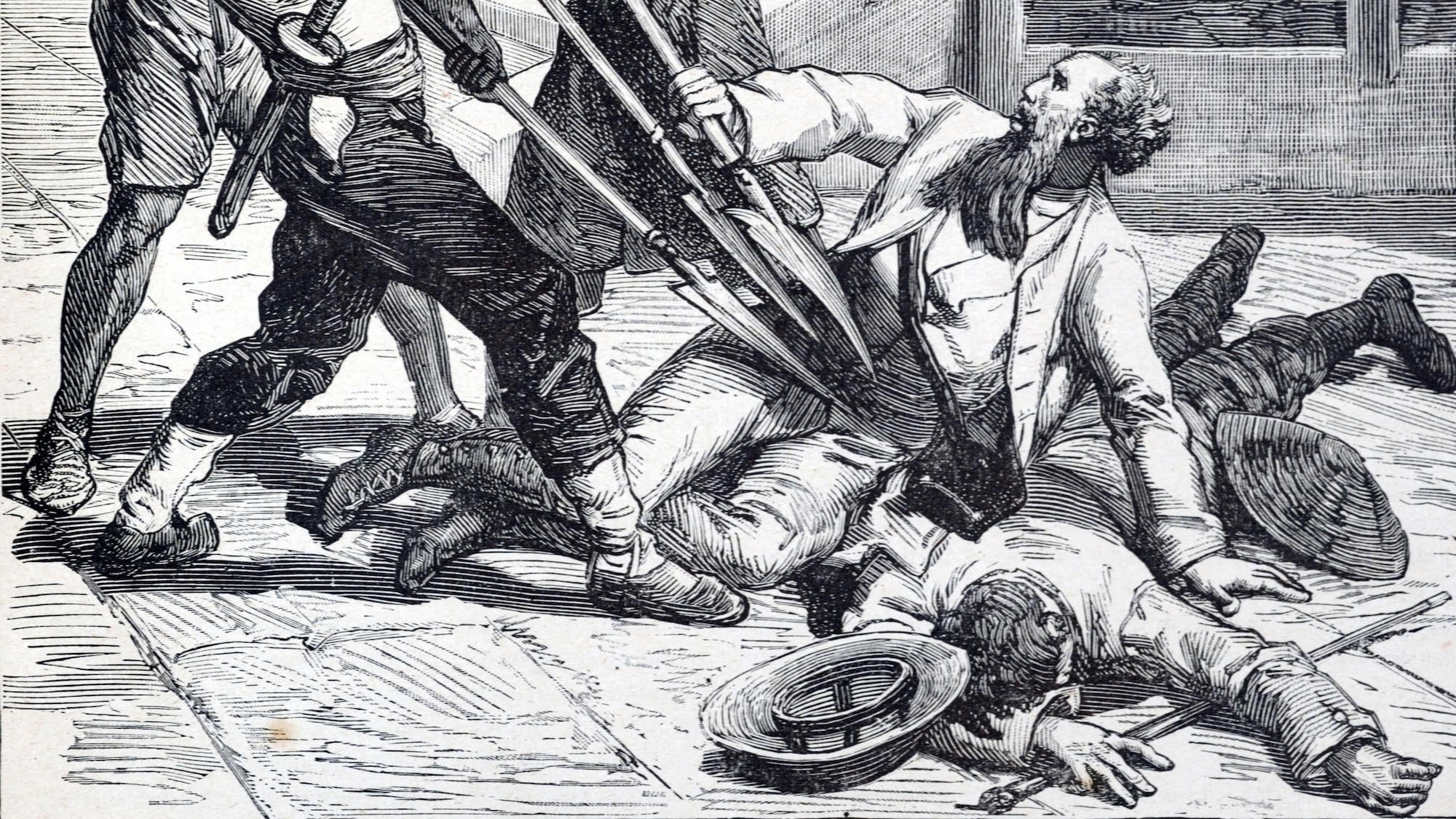
Reviewed: A Murder in Yunnan: The Unsolved Killing of a British Diplomat on China’s Southwestern Frontier by David Leffman (Blacksmith Books, January 2026).
As David Leffman observes in A Murder in Yunnan, the southwesterly province’s role in the grand story of China is often relegated to small player status. A largely independent kingdom for much of its history, even after Yunnan’s incorporation into the Celestial Empire in the 13th century, the province remained cut off from the rest of China until the late 20th century by a string of snow-ridged mountains. The further west one traveled, writes Leffman, “the less ‘Chinese’ the landscape and people became.”
He should know. Leffman first visited China in 1985, and co-authored several China guidebooks over four decades of travel and exploration. As any travel writer will testify, Chinese history books might marginalize Yunnan, but the Southwest, with its wild topography and tapestry of ethnic groups, is invariably the meatiest chapter of a guidebook. Leffman, having not arrived as a teacher or trader, has a perspective different from those whose careers began in the metropolises of the eastern seaboard, a niche he has exploited since transitioning from backpacker to historian.
Leffman’s first book, The Mercenary Mandarin (2016), told the story of an eccentric British runaway from the island of Jersey, William Mesny, who was involved in the Qing dynasty’s campaigns to suppress a Miao ethnic uprising in Guizhou province. After publishing an illustrated book about Chinese woodblock prints, Paper Horses (2022), he returns his attention to China’s southwest. Although its subtitle, “The Unsolved Killing of a British Diplomat on China’s Southwestern Frontier,” might make A Murder in Yunnan sound like a whodunnit, it is more of a history of the convoluted last decades of the Qing Empire — when an insulated and technically backward China succumbed to the aggressive ambitions of colonial Europeans.
While other books about the late Qing often play out in Beijing or along the treaty-port-studded eastern seaboard, Yunnan is more associated with botanists and ethnographers such as George Forrest, Joseph Rock and Peter Goullart, who helped cultivate an alluring “Shangri-La” mythology distinct from the misfortunes of the old empire. Leffman rips this rosy stereotype apart, revealing that Yunnan was no more exempt from rebellion, banditry and imperialism than its southern neighbours of Guangdong — frontline in the first Opium War (1839-1842) — or Guangxi, birthplace of the Taiping Rebellion (1850-1864).
The story begins with the first skirmishes of the Panthay Rebellion (1856-1873), a Muslim uprising in Yunnan which “devastated the province and caused the deaths of over a million people.” Yunnan’s Muslim population had arrived in the 13th century as soldiers in the Mongol conquest of China. Over time they integrated into Chinese culture, while maintaining their own religion and customs. The Hui (回族), as they became known, were well-established in the region when the population explosion of the 18th and early 19th centuries in China’s heartland (the Qing Dynasty population went from 100 million in 1700 to 430 million by 1850) prompted Han Chinese to migrate into Yunnan.
In 1845, violent clashes between the two ethnic groups began in Yongchang, a caravan town along the Dali-Burma road. Lin Zexu, one of China’s top officials, unsatisfactorily resolved the situation by relocating Yongchang’s Hui population. A decade later, Du Wenxiu led a mass Hui uprising amid further inter-ethnic strife. The provincial capital of Kunming was besieged and torched, while Du made the western city of Dali “capital of the independent Islamic state of Pingnan Guo, ‘Southern Land of Peace,’ with himself as its sultan,” writes Leffman.
It is onto this chaotic stage in 1868 that a British expedition led by Major Edward Bosc Sladen (“an experienced Anglo-Burmese War veteran”) stumbles. The British, who were in the process of taking control of Malaya and Burma at this stage, wanted to explore Yunnan to establish new trade routes, document regional geography and assess the feasibility of a railway from Burma to Yunnan. They were also keen to get ahead of their rivals the French who, unbeknown to them, had already reached Kunming (and would ultimately beat the Brits in the railway race with the completion of the Yunnan–Haiphong Railway in 1910).
The expedition departed from Mandalay aboard the Burmese king’s personal riverboat, traveling through Du Wenxiu’s Southern Land of Peace — a fledgling sultanate populated by Hui, Han, Tibetans, Lisu, Bai, Bulan and Kachin, each with their own chieftain, religious traditions and regional loyalties. Yunnan was still smoldering with the fires of the rebellion, and many of the formerly prosperous stopovers on the mule caravan routes from Burma to China were ruined. That year’s rainy season was particularly savage, with enormous downpours causing landslides and an “ever-present danger of banditry” as the men slogged their way down the same roads used by soldiers and brigands. It was perhaps inevitable that the Sladen Expedition didn’t make it to Dali, seat of the rebel Muslim sultanate:
The British had achieved everything possible given the circumstances: they had reached Tengyue, met and befriended the Muslim administration, and investigated the state of trade. As there was no chance of pressing further on to Dali and the rest of China, it was time to head back.
Leffman concludes that the expedition had been a partial success, in terms of reconnaissance. Sladen, in his own account of the trip, wrote that “commerce would blossom the moment obstructions to trade were removed,” and advocated that a 130-mile road or railway should be built between Bhamo and Tengyue “to effectually tap the resources of Yunnan.”
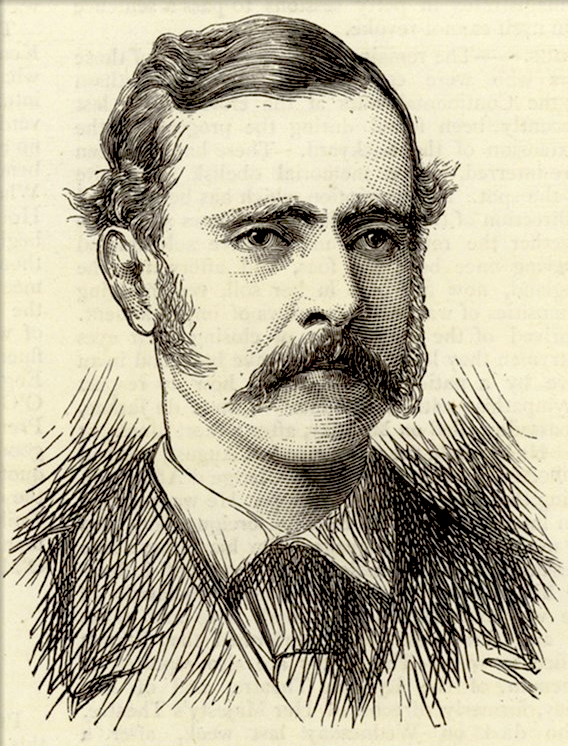
A second British expedition set out in January 1875 to open the region to trade, led by the old-Burma-hand Colonel Horace Browne, “a fine-looking man” with a thick moustache. This time the British took no chances: “Having learned their lesson from Sladen’s hastily-assembled expedition of 1868, made without Chinese approval,” Leffman writes, they applied to Beijing for “poster-sized documents stamped all over with vermilion seals from the British Minister and the Chinese Ministry of Foreign Affairs” — that period’s closest approximation to a travel visa.
They also enlisted Augustus Raymond Margary, a British official fluent in Mandarin who had served in Beijing, Taiwan, Shandong and Shanghai before receiving the surprise notice that he had been appointed as the expedition’s interpreter. Although he might have sailed from Shanghai to Rangoon, Margary instead embarked on a 3,000-kilometer, five-month journey up the Yangtze River and through Yunnan into Burma. His epic overland trip was delayed by disease and the poor conditions of the Chinese interior, but he managed to reach the Browne Expedition in Bhamo, Northeast Burma, in January 1875.
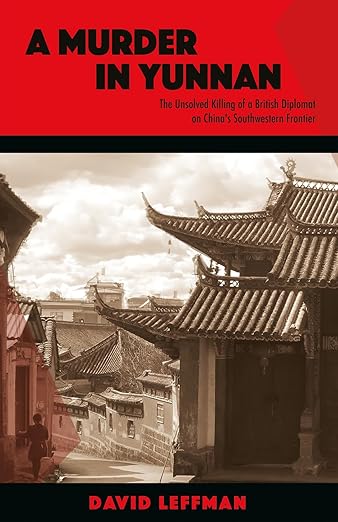
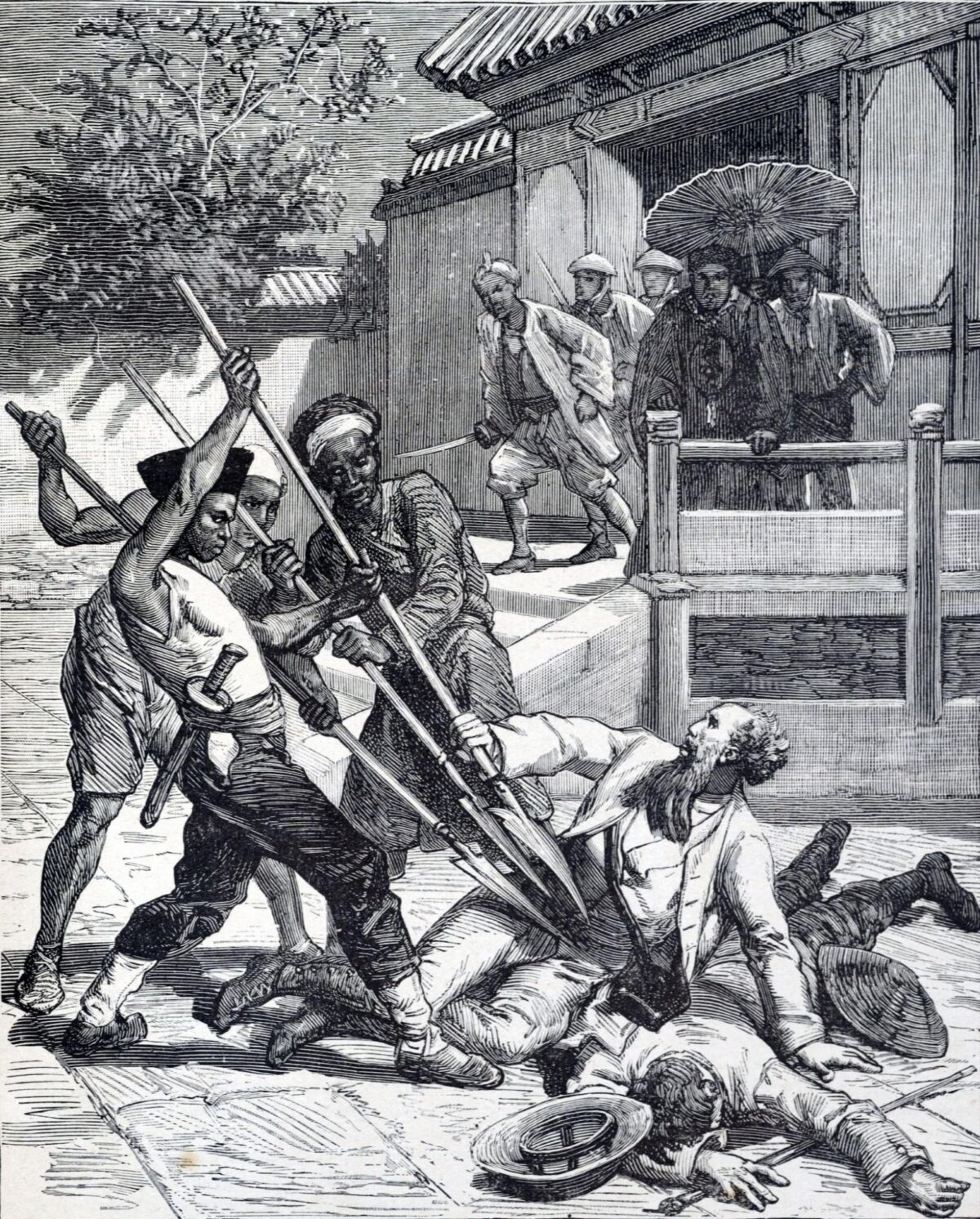
By then, Yunnan was back under Qing control after a bloody suppression of Du Wenxiu’s sultanate in 1873. In theory, with their passports and a Chinese-speaker in their company, the British could hope for an easier time than Sladen’s expedition. In reality, war-ravaged Yunnan proved even more challenging than the previous expedition had experienced. Ripped off, robbed and lied to by just about everyone they encountered, Browne’s men were ultimately set upon by a company of soldiers outside the southwestern town of Tengchong, on the way to hot springs in the hills. The group survived the skirmish, but Margary, who had gone on ahead of the main group, was found killed.
The British, who were in the process of taking control of Malaya and Burma at this stage, wanted to explore Yunnan to establish new trade routes.
The death of a British diplomat and interpreter on a dangerous expedition in the frontier zones of the Qing Empire might sound like a minor tragedy. But the tabloid Anglophone press in London, India and the colonial treaty ports stirred up a “Yunnan Outrage” regarding the “Margary Affair,” as the killing became known. The British government demanded a proper investigation, under threat of war. Who had killed Margary? Were they regular Chinese soldiers, lawless bandits, tribal “savages,” former Muslim rebels, a civil militia? They might have been acting independently, led by a warlord, under orders from the Chinese provincial governor, or obeying the wishes of the Burmese king. This is the mystery that the book sets out to solve.
Browne himself, leader of the expedition, speculated:
Did the Peking Government […] send secret orders that we were to be opposed … Or did the Viceroy of Yunnan [Cen Yuying], who Mr. Wade describes as an anti-foreign official, take it upon himself to disregard the orders from Peking?
Collusion of the Burmese, who had sent two elephants to Beijing as tribute just ahead of Browne’s expedition, is also inferred:
King Mindon [of Burma] might have had plenty of valid reasons for wishing the British to fail, but had he really connived with the Chinese authorities to slaughter the expedition? And had the Burmese elephant envoys been used to spread lies about the British, to encourage a rising against them?
Leffman notes that “the British authorities only wanted to find evidence of a carefully-planned conspiracy against them,” to use as political leverage. Meanwhile, “the Chinese hoped for a solution which excused their officials of any responsibility,” in order to avoid further humiliation at the hands of an aggressive colonial power.
A protracted saga of high-stakes diplomacy ensued — resulting, perhaps predictably, in Beijing paying dearly for Britain’s inflated sense of ignominy. The Chefoo Convention of 1876 (known in Chinese as the Yantai Treaty 烟台条约) settled the Margary Affair with a fine of 200,000 ounces of silver, the opening of four more Chinese cities to foreign trade as Treaty Ports, a guarantee that foreigners could travel unmolested through the interior of China (known informally as “The Margary Proclamation”), and an official mission of apology to Britain in 1877.
Reading about the fallout from these knotty colonial-era politics, it’s clear that A Murder in Yunnan is distilled from an immense amount of research conducted both in the field and in the library. The book is so dense in information — even to someone who has traveled and written about Yunnan — that regular tea breaks (Pu’er, of course) proved essential to digest the copious details served in the book. Leffman’s minimalist prose helps the reader navigate an extremely complicated place and time, and at a little over 200 pages, the book is short when compared with the chunky tomes of Chinese history one is usually charged with reading.
Yet while many scholarly books are oversized, Leffman’s is a tad too lean. For a veteran travel writer, he seldom spends the paragraphs required to paint a picture on the ground. We never get to smell or taste Yunnan, to feel what it might have been like to negotiate passage through the Chinese borderlands in such treacherous times. Characters in the book get the same restrained treatment: we know their names, appearance and a bit of their backstory, but when Margary dies it isn’t particularly shocking, as no emotional connection has been established. If Leffman allowed himself to reach a little more liberally from the storyteller’s toolkit, he’d have made a good book great.
A good book it remains — one that wrestles the narrative of this period away from China’s East Coast, deftly bringing Yunnan out of the shadow of its mountains and placing its diverse peoples under the spotlight, just as the region was hemmed in at the confluence of empire. ∎

Thomas Bird is a travel writer focused on Asia, where he has been based since 2005. He is a regular contributor to the South China Morning Post, and has written for publications including BBC Travel and Geographical Magazine. Bird has co-authored more than 20 guidebooks, and is author of Harmony Express (2023). He likes craft beer and the teachings of Zhuangzi.