Sign up for our newsletter to be notified of new posts!
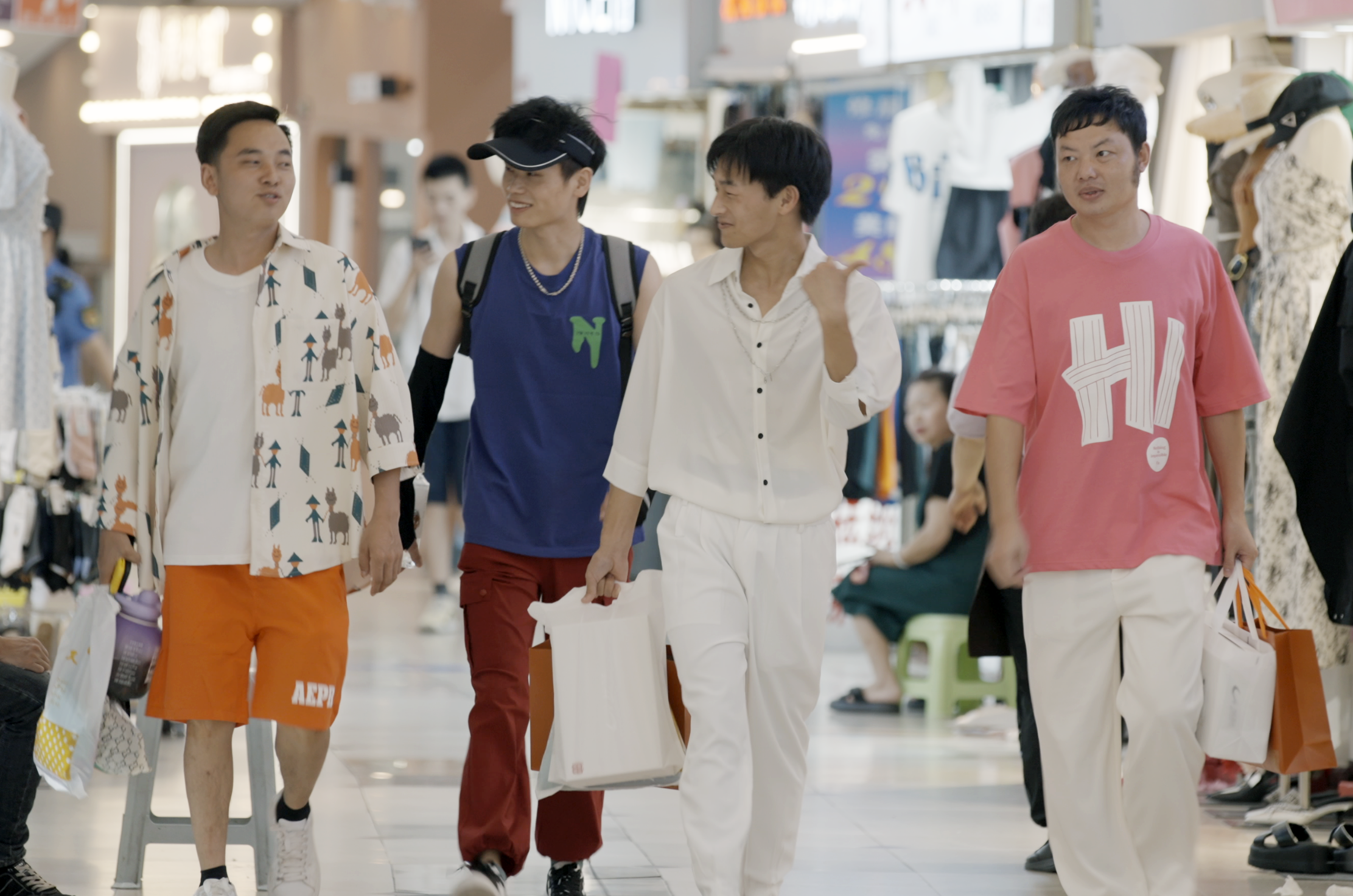
Reviewed: The Dating Game, dir. Violet Du Feng (December 2025, Mandarin, English subtitles).
In spite of its title, Chinese-American filmmaker Violet Du Feng’s The Dating Game is not the happy-go-lucky “boys meet girls” romp one might expect. The 90-minute documentary, which follows three bachelors in present-day Chongqing as they try to catch women’s eyes with pickup artist tactics learned from a dating coach, offers something far deeper. The film is a thoughtful and nuanced look at how China’s One Child Policy, traditional values and other social factors handicapped many rural men, leaving them preemptively defeated in the game of love.
The film begins with a simple statement: “Nine years after the One Child Policy officially ended, China is left with more than 30 million more men than women.” This extreme gender imbalance, driven by a cultural preference for boys, is daunting for any man looking for a partner in modern China. But it’s even worse in rural areas. According to China’s latest census in 2021, in rural areas there are 120 marriageable men in their 20s for every 100 women. In cities, there are 107 marriageable men for every 100 women. The brutal marriage math leaves many rural hopefuls turning to outside help for a leg up: dating coaches.
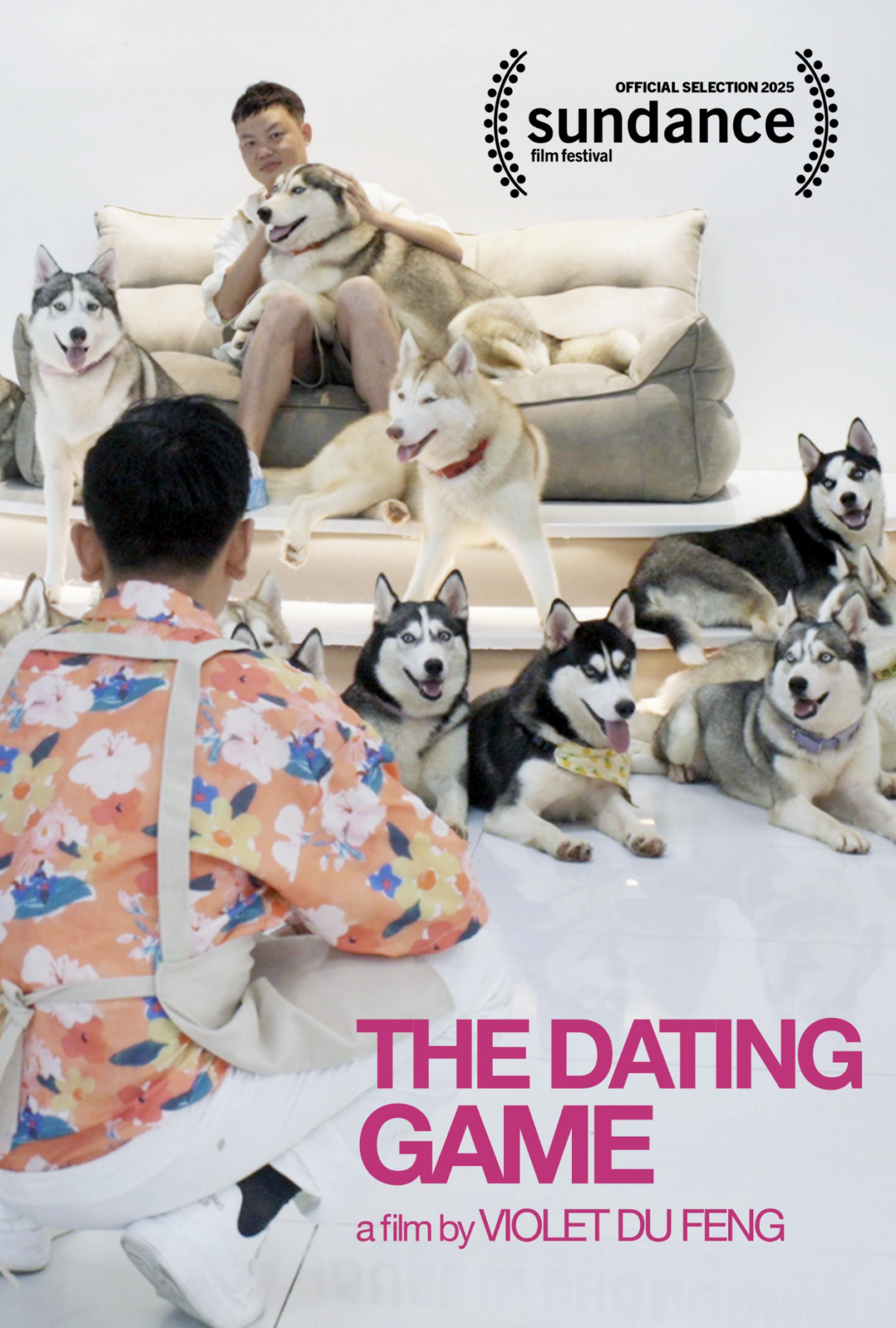
The film follows three nerdy, working-class, rural bachelors in their 20s and 30s — Zhou, Wu and Li — through an intense seven-day camp offered by a dating coach, Hao. (All the documentary’s subjects are introduced by last name only, to shield them from cyberbullying.) Hao, an entrepreneur in the business of love, left his rural upbringing and built a marriage consultancy to help others follow in his footsteps, then married an attractive and well-educated woman. Hao promises his customers that they will secure a date after just a few days of skills building in pickup artistry and online chatting.
On day one of the boot camp, we watch the three bachelors follow Hao through a busy shopping center. Clad in bright purple and pink T-shirts, and red pants that make them look like strangers to themselves, they cut a contrast with their slickly groomed and ultra-confident coach. They submit themselves to a complete makeover to finally land a date.
Low on the socio-economic totem pole and short on resources, the three face a host of stumbling blocks. Zhou is the keenest of the three to find a wife but, at 36, he knows that women in his hometown consider him over the hill. He had relied on matchmakers to find potential brides but the expense daunted him: $150 per introduction, not to mention dinner and clothes for the young women he met. “Each date costs about $300, with no promise that she will like you,” says Zhou, who only makes about $600 a month. Zhou signed up for Hao’s camp in desperation.
Fees are only part of Zhou’s dating woes. More crippling is that he is trapped between his parents’ old-world view of gender roles within marriages and the rapidly changing, increasingly women-centered urban attitude toward love and dating. In a recent in-person interview in New York, director Violet Du Feng told me that at one point Zhou had an independent-minded girlfriend he planned to marry but gave up because his father, “being from a small town and very old-fashioned, opposed the marriage.” His father prefers a daughter-in-law who would care for him. “But where do you find such a girl nowadays?” said Feng.
Freed from sibling rivalry and the traditional preference for sons in the countryside, urban young women who grew up under China’s One Child Policy are educated, employed and uninterested in playing nursemaid in rural villages. Growing societal emphasis on gender equality, coupled with social media and global influences like the #MeToo movement, have further heightened Chinese women’s awareness of fairness between the sexes. Young women are not only shunning traditional gender roles, but increasingly confronting the patriarchy head on, according to Feng. “I feel we have probably reached a peak of an awakening period, where women are doing their utmost to rebel, as if they’ve woken up to this past [male chauvinist] practice that they feel is totally wrong,” she said.

Social ineptitude with the opposite sex, as the film shows through background interviews, is also the result of village youths growing up as “left-behind children” without emotional support. In the 1990s, China underwent a massive construction boom. Millions of rural residents streamed into cities, eager to make money doing factory and construction work, leaving their children behind because the hukou system would deny their kids access to education in the city. The result: children raised by grandparents or other relatives, often disabled, who were unequipped to nurture or supervise them.
Wu, 27, and Li, 24, both grew up with absentee parents. They admit they are clueless about how women feel or think, having “interacted only with boys” in villages with severe gender mismatches. Wu, a particularly sensitive man, is haunted by memories of seeing baby girls left abandoned on the roadside at the height of the One Child Policy. His mother left when he was five, a traumatic experience that fuels his anxiety as an adult. During the dating camp training, he stands out as the most guarded and withdrawn of the three bachelors, refusing to engage in any of the online chatting suggested by Hao, sabotaging his chances of meeting potential dates. “A lot of young men are unable to find brides not because of their own personal failings, but the social status they are born with,” Feng said during our interview.
Zhou is trapped between his parents’ old-world view of gender roles within marriages and the rapidly changing, increasingly women-centered urban attitude toward love and dating.
Violet Feng is an intense but reflective filmmaker born and raised in Shanghai but trained in broadcast journalism at Berkeley. She is best known for her thoughtful 2022 documentary Hidden Letters, which explores the revival of a secret women-only language, nüshu, written and spoken in Hunan for approximately a millennium until mid-20th century. That film examined the gender challenges faced by modern Chinese women; this one turns her talents to the men.
Her team spent six months gaining the trust of Coach Hao. At first, Feng envisioned modeling The Dating Game after the reality TV format used in the Netflix series “Indian Matchmaking,” replete with high fashion shots and drone photography. But once her camera started rolling, she began to worry she was “reinforcing the stereotypes that the three are losers.” Hao, the dating coach, voiced a similar concern. Instead, she adopted a feature film approach to “present the psychological traumas and some of the other societal factors in their backgrounds that have contributed to their challenge.” Feng and her team went back and retraced their steps, altering their entire approach to the film.
The Dating Game picks up momentum when it focuses on Coach Hao’s efforts to improve the three men’s self-image and sex appeal, essentially stepping in to fill a vacuum they felt from their childhoods. Hao has a keen understanding of the pervasive negative self-image among rural men. He sees confidence building as a priority. In one exercise he takes the three men to a busy street and orders them to randomly chat up women and get as many of their WeChat IDs as possible, “regardless of how fat or thin they are.” His logic is simple: “If you can be confident with an ordinary-looking girl, then you will have better luck with the prettier ones.” The bachelors, shy and clueless, forget their pickup lines and retreat. Hao pushes them back into the crowd repeatedly, insisting that chickening out is not an option. Little by little, they get the hang of it.
Hao’s curriculum also focuses on what he terms “strategic deception” in online flirting. These include “push-pull” tactics (offering a compliment, taking it back, then redoubling effort with more praise) and “cut off” maneuvers (stopping texting in the middle of an engaging conversation) to see if the woman really likes you. Hao’s adoption of “PUA” strategies — widely condemned as exploitative both in China and the West — tears away the civilized veneer of the Chinese dating market. Behind it we see desperation: lower-strata men smooth-talking and peacocking while choosy women mistake superficial criteria for genuine socioeconomic success.
Hao also dresses up the three men’s online dating profiles by staging photos at landmarks and tourist spots (including with a pack of blue-eyed huskies). Here we see the incipient conflict between the coach and the trainees over the question of honesty. Hao, in his eagerness to boost his clients’ perceived “value,” wants them to “overstate the truth,” such as claiming to own property they don’t and to be golfers when they don’t know how to hold a club. Hao justifies these fabrications as the only way to attract young women’s interest. And doesn’t everyone cheat a bit online?

Some women might prefer the illusion. In The Dating Game, Feng claims that Chinese women prefer AI boyfriends to real-life partners because virtual companions speak to them more respectfully. At least 10 million Chinese women now play Love and Deepspace, a 3D immersive otome game developed by a Shanghai video game studio. Otome games are story-based romances targeted at unmarried women where the goal is to develop a romantic relationship with a digital bachelor. The demanding work schedules of professional women, and compatibility problems with men, have further fueled them to seek emotional satisfaction with 3D lovers instead.
The three bachelors are unconvinced. How can one find true love by starting with a virtual lie? Worse, if they’re presenting unreal versions of themselves, can they trust women who might be doing the same thing? As the three dive deeper into Hao’s course, they confront an existential question about courtship in the digital age: if society has already discounted men like them in real life, will superficial quick fixes make a difference?
In so many words, the film suggests that Hao’s strategies won’t make a difference in the long run, because the disparity between the men’s substantive capabilities and their fabricated online identities will instantly be exposed. This is not to say Hao’s courses are entirely without merit. In an algorithmic era where photos and tags matter most, strategic self-presentation at least grants them the opportunity to be seen. In the digital age, that should count for something.
While Zhou ultimately rejected Hao’s tactics, Li and Wu gained confidence through practice. Yet the true value of the boot camp for the three is a sense of camaraderie — a notion that they are not alone in this struggle, which helps to alleviate their feelings of low self-esteem, loneliness and anxiety. Zhou, Wu and Li are completely unguarded about their feelings, vulnerability and sense of powerlessness, which is quite touching.
The film covers a lot of ground, including a subplot about Hao’s own relationship with his wife and their different views about male-female relationships. At times, this makes the documentary feel stretched and overly ambitious, forgivable issues with a work of such empathy and insight. Feng and her team have succeeded in revealing how China’s lopsided dating market is a reverberation of the One Child Policy, which ran from 1980 to 2016. At its inception, it was the disappeared young girls who paid the heaviest toll. Yet the aftershocks will continue to haunt Chinese society for years to come, with impoverished single men from the countryside paying the steepest price for now. ∎
All images are stills from “The Dating Game,” courtesy of Violet Du Feng.
“The Dating Game” is available to stream now on PBS.

Karen Ma is a New York-based writer and film scholar specializing in Chinese cinema and literature. Raised in Hong Kong and Japan, she is the author of the novel Excess Baggage (2013) and a book of interviews with young Chinese film-makers, China’s Millennial Digital Generation (2022). Her articles have appeared in NPR, The New York Times, South China Morning Post and The Japan Times, among others. Ma is a lecturer of Chinese language and film and gives frequent talks on China’s film trends.