Sign up for our newsletter to be notified of new posts!

Reviewed: Autocracy 2.0: How China’s Rise Reinvented Tyranny by Jennifer Lind (Cornell University Press, November 2025).
Is dictatorship superior to democracy? The question is often posed, and its answer has generally been a resounding no. Dictatorships have a poor record when it comes to the welfare of their populations. Their economies — constrained by restrictions and riddled with corruption — tend to underperform. In the absence of the rule of law and independent judiciaries, property rights and contracts are vulnerable to predation by self-dealing officials. Entrepreneurs are forced to pay access money to bureaucrats. Political unpredictability is high, and leadership successions are uncertain. Dictatorships are prone to military adventurism, personality cults and mass mobilization campaigns. Surrounded by yes-men, their leaders receive a filtered version of reality, allowing problems to fester out of sight until they erupt into crisis. Over time, dictatorships are inexorably fated to fall behind democracies — or so went the dominant narrative, for decades.
Enter China. In less than five short decades, the People’s Republic has gone from an economic wasteland at the time of Mao’s death in 1976 to the largest economy in the world. It has also displayed remarkable political stability, made enormous strides in reducing poverty, urbanized most of its population while avoiding the build-up of shantytowns, and become a major scientific and technological power, with top-ranking universities and impressive military capabilities. Far from falling behind, China seems to be not merely closing the gap with the democratic West but to be on the verge of surpassing it in many areas. And while it is legitimate to question whether China’s autocratic system is as resilient as it appears, Western democracies are displaying unmistakable signs of political decay and economic decline.
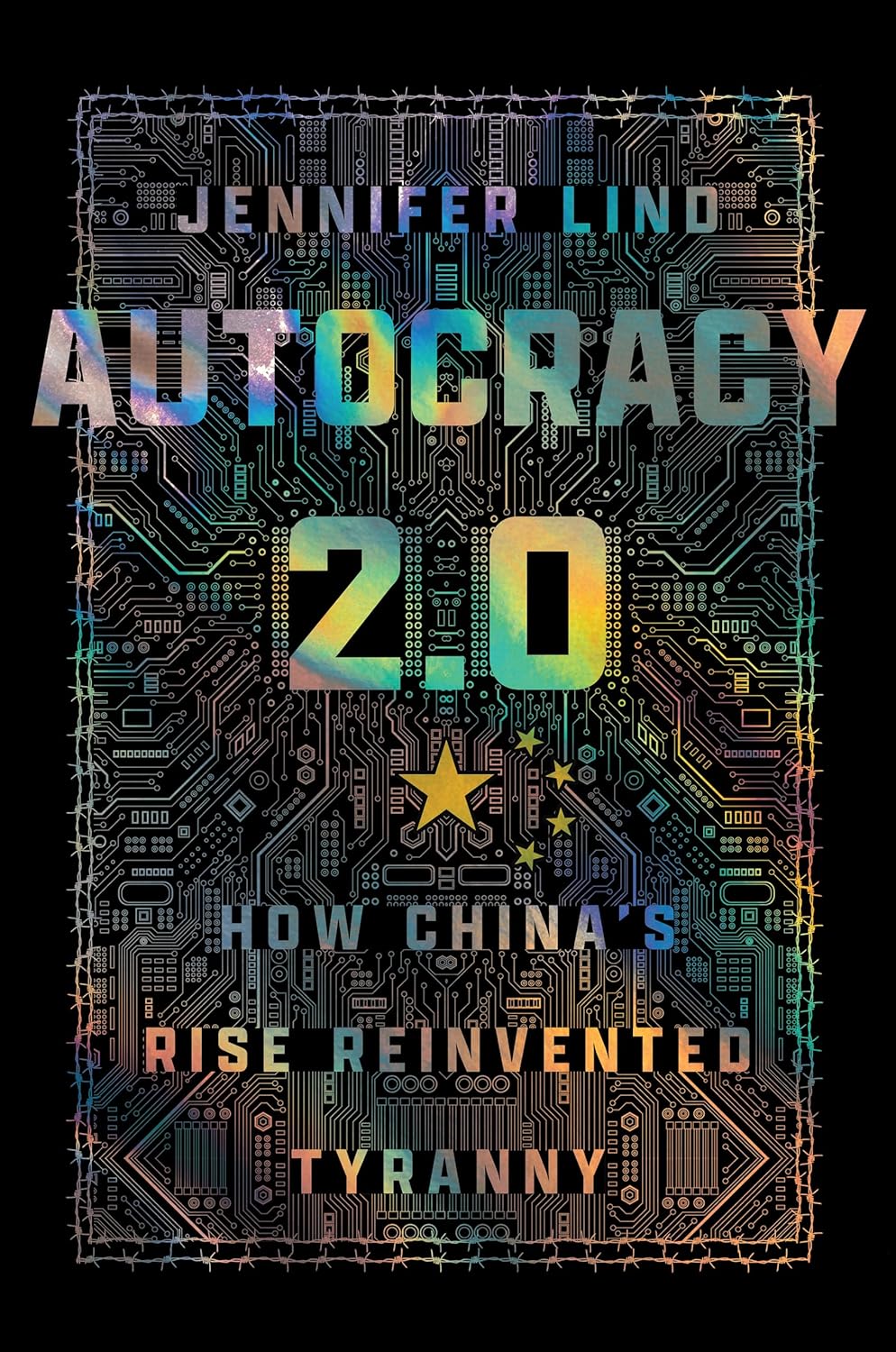
In Autocracy 2.0: How China’s Rise Reinvented Tyranny, Jennifer Lind, a political scientist at Dartmouth College, attempts to pin down the magic formula that enabled China to rise to Great Power status while avoiding many of the pathologies typically associated with authoritarian rule. The secret to the regime’s success, she argues, lies in its embrace of innovation as the central engine of economic development and modernization. Contrary to the dominant view that China climbed the value chain by becoming an export powerhouse (while importing and replicating foreign technology), Lind contends that Beijing has maintained a delicate equilibrium amid rapid economic and social changes: allowing sufficient space and autonomy for innovation to take place, while retaining enough political dominance to tightly control Chinese society, maintain the Party’s monopoly on power, and convert expanding economic capacity into enhanced state capability.
“Smart authoritarianism,” as Lind calls this system, is primarily about ensuring that political repression doesn’t smother innovation. This requires granting a modicum of autonomy in society, while the state busies itself with long-term development plans, the development of critical infrastructures, directing massive subsidies to key industrial sectors and national businesses, investing in a STEM-focused education system, and periodically allowing the private sector to lead in emerging industries.
Lind shows that China has placed innovation at the center of its politico-economic system for decades. To the counterargument that no new technologies such as mRNA vaccines or AI chatbots originated in China, Lind responds that innovation does not solely mean new inventions. The term itself (both the Latin innovatio and the Chinese chuangxin 创新 convey a sense of renewing, improving or reconfiguring, rather than creating ex nihilo) implies that innovation takes place at many levels, including “firms seeking to shave off a few seconds or a few dollars in their production or distribution process” and entrepreneurs who “create products and apps or introduce them to new functions or markets.” She writes:
China has excelled in what is called process innovation: activities neglected by many observers whose image of innovation is dominated by science-based ‘invention’ activities in which China has been weaker.
Lind also discounts the significance of the United States’ enduring position as leader in several areas of frontier innovation, such as semiconductors, aerospace, advanced defense, biotechnology and AI. “China is not the world’s top performer, and indeed may never overtake the United States,” she writes. But it does not need to be “in order to engage the United States in a dangerous security competition.”
While China is by far the most successful example of “smart authoritarianism,” Lind points out that most successes registered by authoritarian countries around the world, from Singapore to the Gulf monarchies, can be traced back to the same formula:
In response to the advent of the information age and other late twentieth-century trends, many authoritarian leaders recognized a growing tradeoff between the extractive institutions that kept them in power and the conditions necessary to foster growth and innovation. Smart authoritarians adapted by pursuing more inclusive economic policies and governing through low-intensity repression.
Lind attempts to pin down the magic formula that enabled China to rise to Great Power status while avoiding many of the pathologies typically associated with authoritarian rule.
Despite the evidence that Lind marshals towards her thesis, it remains unclear whether China has really “reinvented tyranny,” as the book’s title purports, or if it is not so much preserving the conditions for innovation as perfecting its system of surveillance and social control — including through the harnessing of new technology, from blanket video surveillance to predictive policing. As Lind acknowledges, under Xi Jinping the securitization of everything, including the economy, is starting to display the classic ailments of innovation-stifling autocracies.
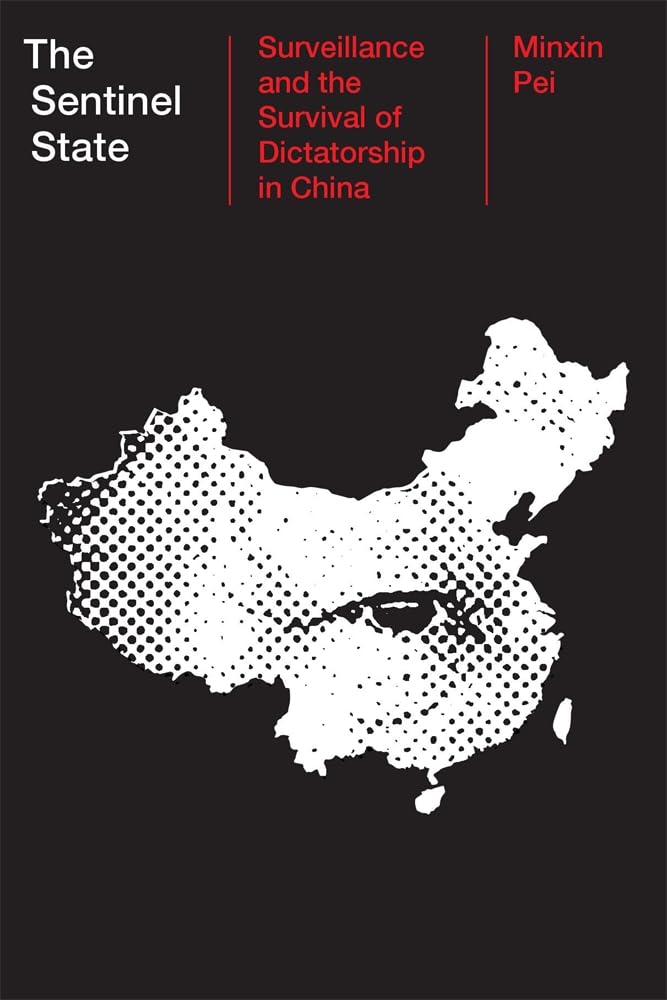
Whether China should be characterized as “low-intensity repression” will also invite arguments. It is not Bashar al-Assad’s Syria for sure. Yet the United Nations has concluded that the crackdown in Xinjiang may have amounted to crimes against humanity, while many activists and more than a few scholars accuse Beijing of genocide against the Uyghur people. Moreover, as the veteran political scientist Minxin Pei has argued in The Sentinel State (2024), repression has not so much decreased as moved upstream, toward a regime of “preventive repression” assisted by an unrelenting system of surveillance.
That so much of China’s repression takes place before violence breaks out on the streets is chiefly due to the high capacity of the Chinese state, and the size and sophistication of its security apparatus. A precondition for authoritarianism to be “smart,” in Lind’s sense, seems to reside in the state’s ability to read social conditions accurately and in real time, so as to judge when and where control can be loosened without risk and when it must be reasserted. Regimes that lack this capacity tend to face sudden bursts of social unrest, and have to resort to brute force to deter and terrorize their populations. In this light, China’s pursuit of innovation-conducive conditions has as much to do with a repressive logic as with a pro-growth one.
In the end, crediting China’s success to a single formula is always bound to be unsatisfactory. China’s rapid economic ascendancy was in large part due to fortunate timing (being a cheap exporter in the age of globalization), the size of its domestic market, and its ability to tap into a large entrepreneurial diaspora. China’s modernization has been striking for its scale, but is similar to that of other Asian “tigers” (Hong Kong, Singapore, South Korea, Taiwan) irrespective of whether they are democratic, autocratic or in-between. China’s authoritarian character was perhaps most critical in ensuring a supply of pliant rural laborers to urban manufacturing centers, denying them equal status and preventing the emergence of labor movements.
It remains unclear whether China succeeded because it is authoritarian, or whether authoritarianism looks successful because of China. Lind challenges the West’s idea that if today’s world doesn’t reflect the superior economic efficiency of democracies, at least theory says it does. In The Narrow Corridor (2019), Daron Acemoglu and James A. Robinson, recipients of the 2024 Nobel Prize in Economics, present a convincing case for how nations balance having enough state capacity to ensure stability, and a strong enough society that prevents the state from veering into stasis. But while they acknowledge that innovation is “much harder to usher in under the stern gaze of the Despotic Leviathan,” they do not claim that it is impossible.
Innovation in China might not be as nimble and lightning-fast as in Silicon Valley, but it is good enough to hold its rank as a Great Power. Beijing has not ceded control of its finance and banking systems to private multinational companies. Unlike in today’s America, it has not allowed private interests to dictate legislation, embraced unscientific beliefs or ignored the destabilizing impact of algorithmic social media. Emulating the China model takes a lot more than simply being authoritarian or repressive.
Lind concludes that China’s success is neither an illusion nor an accident. Dismissing it as unsustainable authoritarianism is both intellectually lazy and strategically dangerous. As for the West’s competitive advantage in innovation, it will need to be earned rather than assumed. The oft-repeated quip that “the best thing to happen to China was President Trump” is a fair warning. As powerful new technologies emerge with the capacity to profoundly reshape the balance between citizens, states and corporations, abandoning restraint and accountability in the name of competition with China risks forfeiting democracy’s real advantage: a free deliberation of what the common good should look like. ∎
A Chinese police escort on motorbikes drives ahead of U.S. President Donald Trump’s motorcade in Beijing, May 14, 2026. (Pedro Pardo/AFP/Getty Images)

Nicholas Bequelin is an analyst of China’s politics and society. He is Senior Fellow at Yale Law School’s Paul Tsai China Center, and Fellow at Asia Society’s Center on U.S.-China Relations. He previously served as Asia Regional Director at Amnesty International.