Sign up for our newsletter to be notified of new posts!
The mid-20th-century English literary critic Cyril Connolly once categorized novelist W. Somerset Maugham as an “Incorruptible Observer.” Maugham was an unimaginative writer, it is true, but his observational powers were formidable, and his ear for dialogue and eye for character made up for any deficit of imagination. Maugham himself wrote: “Most people cannot see anything, but I can see what is in front of my nose with extreme clearness; the greatest writers can see through a brick wall.”
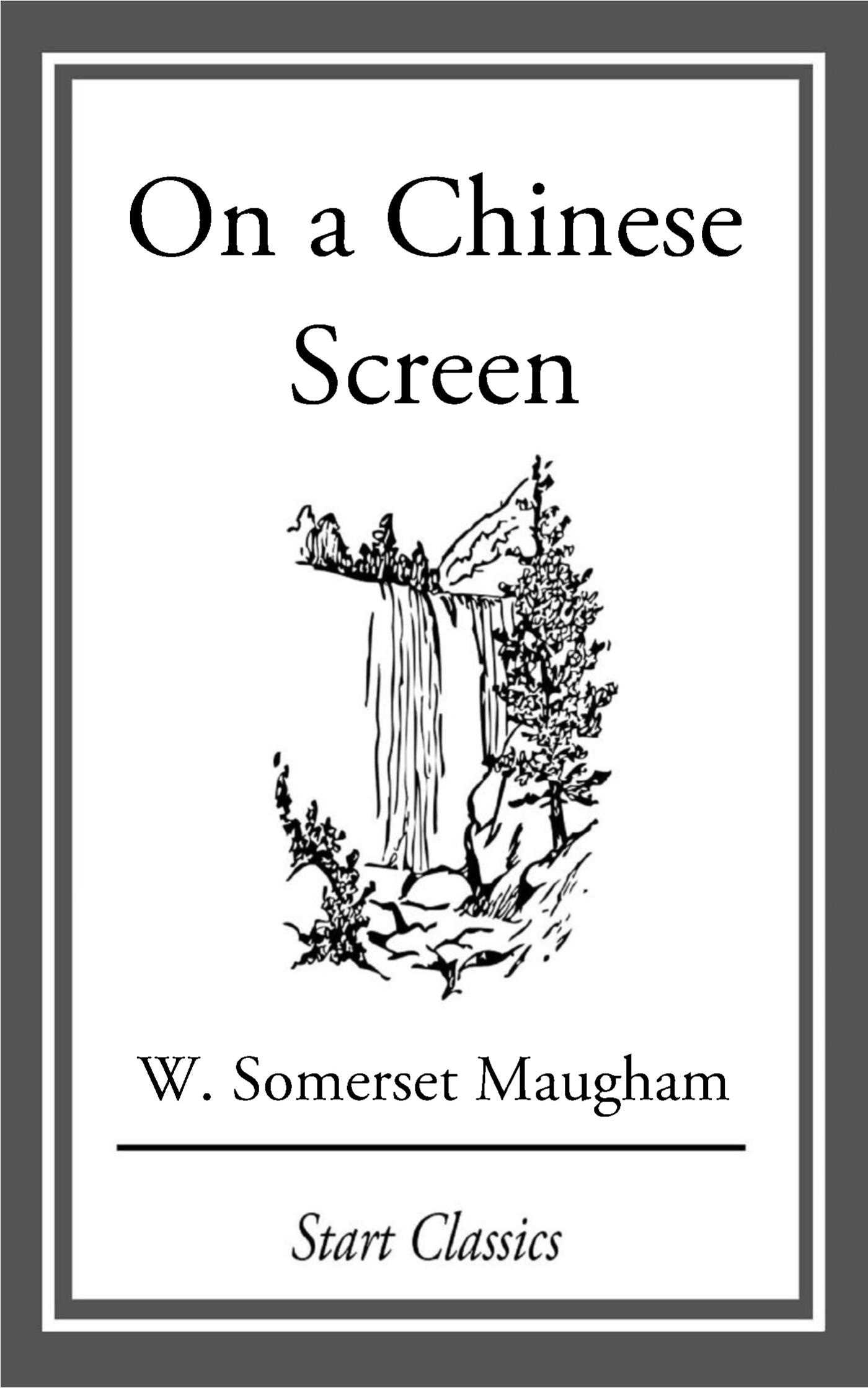
On a Chinese Screen (1922) is a travelogue, a notebook of observations made during a trip to China between autumn 1919 and spring 1920, which also supplied material for the novel The Painted Veil (1925) and the play East of Suez (1922). According to Maugham’s biographer Selina Hastings in The Secret Lives of Somerset Maugham (2010), Maugham wrote to his agent Golding Bright that his trip to China had been productive, and that “I have got a good deal of material in one way and another (besides having a very good time).”
The peripatetic Maugham was aware from early in his life that he would never be content to stay in one place, especially if that place was England. Maugham’s alter ego in his most famous novel, Of Human Bondage (1915), considers his future:
Life was before him and time of no account. He could wander, for years if he chose, in unfrequented places, among strange peoples. … He did not know what he sought or what his journeys would bring him; but he had a feeling he would learn something new about life and gain some clue to the mystery.
Meanwhile, in other novels such as The Razor’s Edge (1944), the protagonist travels far and wide, ever believing that the mystery — of life, fulfillment, happiness, or freedom — could be found at the end of an itinerary.
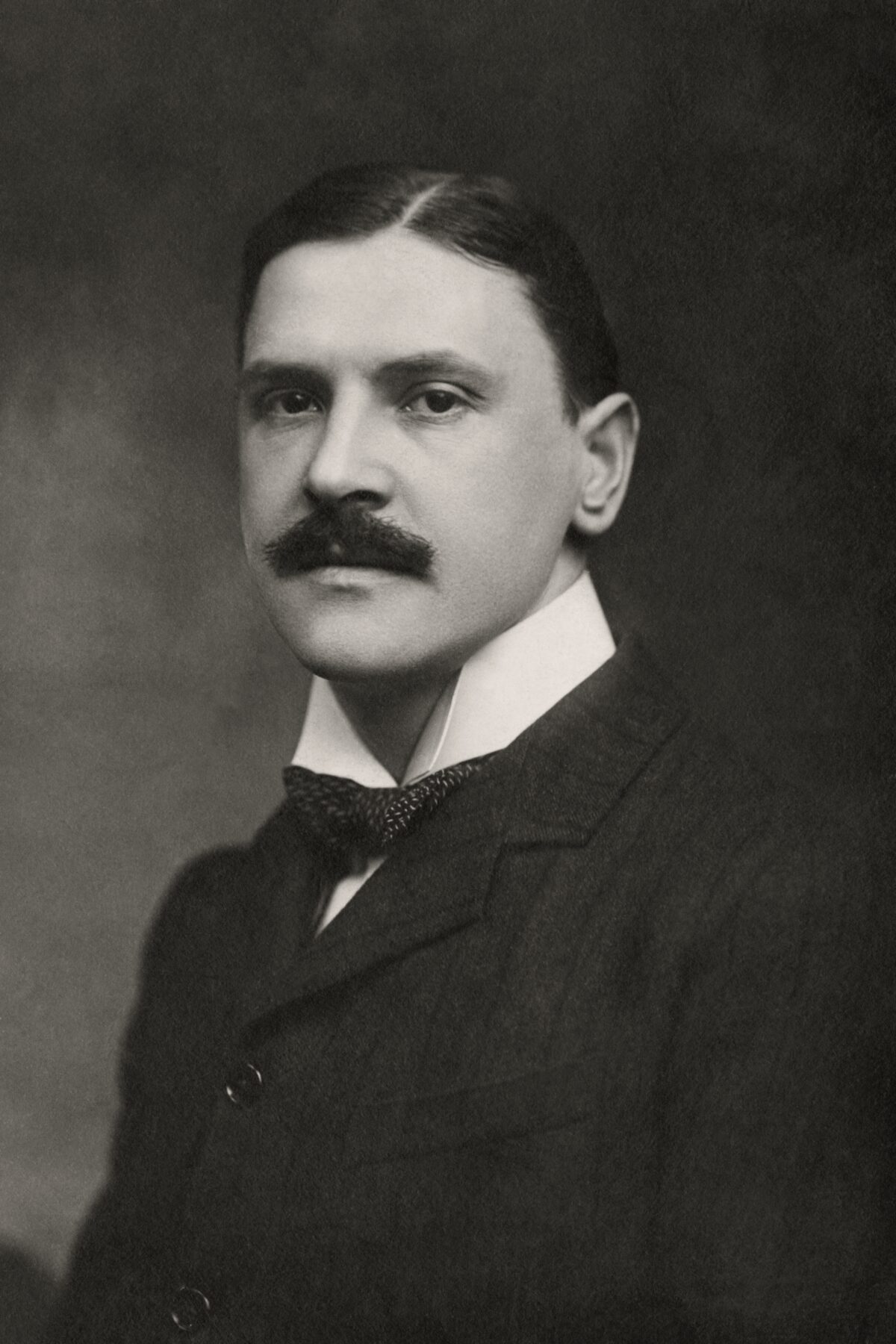
It is unsurprising that Maugham, forced by circumstances to trade the love of a doting mother and the vibrant comforts of Paris for the bleak austerity of his uncle’s parsonage in the town of Whitstable in Kent, and then for the tedium and terror of a British public school, would yearn to escape. Born in France in 1874 to British parents, Maugham was orphaned at age ten. He trained as a physician in London, drawing on his experiences working among the city’s poor to write his first novel, Liza of Lambeth (1897). That book’s success convinced Maugham to abandon medicine for writing. By 1908, Maugham had four plays running simultaneously in the West End. Of Human Bondage was a semi-autobiographical account of his unhappy years in Whitstable and established his literary reputation as a serious author.
Money followed acclaim, and Maugham used his wealth to spend much of the next two decades in motion, gathering material and inspiration during long sojourns, especially across the South Pacific, China and Southeast Asia to fuel his novels, plays and short stories. His travels were also driven by fear and desire. Maugham was bisexual. He had an unhappy marriage with his wife Syrie, made even more tempestuous by his infidelity and his attachment to the love of his life, Gerald Haxton, who accompanied Maugham on most of his journeys. He also came of age during the Oscar Wilde scandals of the late 19th century and was circumspect about his public image. As such, Maugham had much in common with other gay and bisexual men who sojourned in Asia, living thousands of miles removed from the legal sanctions against homosexuality.
Another reason for Maugham’s travels was that Gerald Haxton was banned from Britain, having been declared an undesirable as a result of an earlier incident in which Haxton was caught with another man. Greece was a popular spot for Maugham, Haxton and other gay men. It was just far enough away from British laws (and Maugham’s wife Syrie), but close enough that he could return to London if he were needed to assist the rehearsals of one of his plays. But when the Greek islands proved too crowded, too passé or too easy for a spouse to check up on her philandering husband, escaping east was the logical next step. The British aesthete Harold Acton and fabulist Edmund Backhouse, and the American writer George Kates, were all fixtures in Beijing during the interwar years and chose that city, in part, because of its relatively relaxed attitudes toward homosexuality at the time. Maugham and Haxton shared with these aesthetes a sense of adventure and an appreciation (if not always admiration) for China, and On a Chinese Screen gives the reader a sense that they would be an exceptionally fun hang in a Beijing hutong bar.
When we accompany Maugham behind his Chinese screen, we find ourselves in a room full of foreigners.
Maugham arrived first in Hong Kong, traveled to Shanghai and Beijing, and then began a cruise up the Yangtze River. On a Chinese Screen is a patched-together collection of sketches of the people he met on his journey; some are quite short, others longer, all evocative in their own way. These are reflections from a certain kind of traveler on a certain kind of journey: one motivated less by the pull of a particular place than by the push of escape. But one must justify the escape, and so many of Maugham’s subjects (and, one suspects, Maugham himself) are on a journey of immersion and experience. In reality, most of Maugham’s fellow travelers in the book are like tourists crammed onto a glass-bottomed boat: floating on the surface, occasionally glancing down at the kaleidoscope of life just below, asking if it’s dangerous instead of fully appreciating it. It is a book about China in which the people of the country are represented only as a backdrop until they have something interesting to say about foreigners.
Maugham describes drawing rooms where foreigners talk endlessly of “racing and golf and shooting” because “China bored them all … they only knew just so much about it as was necessary to their business, and they looked with distrust upon any man who studied the Chinese language.” These expats have traveled thousands of miles, yet remain bored. Maugham writes of one long-term resident: “It has never occurred to him that he lives a life in which the possibility of adventure is at his doors.” Instead, he re-reads pulp paperbacks featuring heroes of the American West or adventures on the South Seas to “stir his blood.”
When we accompany Maugham behind his Chinese screen, we find ourselves in a room full of foreigners. Maugham’s sketches are of taipans, diplomats, memsahibs and missionaries. There is the lady who decorates her parlor with a carpet she was obliged to buy in China but “managed to get one that looked so like an Axminster that you would hardly know the difference,” boasting that her remodel “doesn’t look like a room in London … but it might quite well be a room in some nice place in England, Cheltenham, say, or Tunbridge Wells.”
The foreign community (with its privileges still protected by treaties) provided Maugham with the creature comforts he enjoyed while traveling, but he seems to implicitly deplore them, out of habit, conscience and a tinge of reverse snobbery — an almost Gallic disdain for the middle- and-upper-class British society that patronized his plays and bought his books. After watching one of Britain’s consular officials in action, Maugham writes:
They are strange people the British. If their manners were as good as their courage is great they would merit the opinion they have of themselves.
Maugham viciously describes dinner parties where the bored British denizens of Beijing’s Legation Quarter kvetch and gossip, pretending to ignore (or being ignorant of) their great privilege and pomposity, filling days of tedium with evenings of drinking and the not-so-clandestine swapping of mates:
On the whole it made little difference to them in what capital they found themselves, for they did precisely the same things in Constantinople, Berne, Stockholm and Peking. … They dwelt in a world in which Copernicus had never existed, for to them sun and stars circled obsequiously round this earth of ours, and they were its centre.
These are Maugham’s preferred quarry. Hunting for characters, dialogue and details, he leaves Beijing and stalks China like a hound in search of game. As a writer, Maugham is brilliant at cleaning and gutting his prey, serving it up en plumage as dramatis personae for next year’s West End audiences. On a Chinese Screen is the writer’s notebook in which Maugham scribbled his impressions and observations, each vignette rich with description and Maugham’s impeccable ability to capture the essence of a character. The British Legation secretary who “only knew the right people and the right books.” (“You wished with all your hearts that he would confess a liking for something just a little vulgar.”) The not-so-young damsel who bounced around the treaty ports in search of adventure and matrimony. (“She was a blonde and she was thirty.”) The nun who saved children and then put them to work making lace. (“The orphans were very quick with their fingers and they were industrious.”)
Maugham is amused by the louche detritus of European society in China’s foreign legations and treaty port clubs. He takes the piss out of them, for sure, but after all these are his own people, cut like seedlings uprooted and transplanted in a climate and soil for which they are ill-suited, yielding a stunted and grotesque harvest. For the other great population of foreigners living in China — the missionaries — Maugham has nothing but disdain: “They may be saints, but they are not often gentlemen.” One missionary laboriously tells Maugham of his proselytizing, love and devotion to the Chinese people. Meanwhile Maugham — whose superpower is an almost preternatural ability to weaponize his emotional insight — sees that deep in this missionary’s heart, his interlocutor “hated the Chinese”:
When he walked through the teeming streets of the city it was an agony to him, his missionary life revolted him, his soul was like the raw shoulders of the coolies and the carrying pole burnt the bleeding wound.
To be fair, there are some Chinese characters in On a Chinese Screen. Yet, with one notable exception, most of China’s local inhabitants are captured the same way a tourist might take a picture of a particularly interesting face: from a distance, with a special lens, while passing through a scene. The opium den that reminds Maugham of the beer-houses of Berlin where working men spent their evenings. There is the “Mongol Chief” and a chapter about human laborers entitled “The Beast of Burden.” (“You see a string of coolies come along, each with a pole on his shoulders…You watch their faces as they pass you. They are good-natured faces and frank, you would have said, if it had not been drilled into you that the oriental is inscrutable.”) The Cabinet Minister whose venality contributed to the degradation of his own country, even as he reveled in the beauty of a lapis lazuli vase.
Maugham is amused by the louche detritus of European society in China’s foreign legations and treaty port clubs.
Before we condemn Maugham as just another unreconstructed white man writing about Asia who is a touch too comfortable with colonialist tropes and casual racism, it’s worth noting that On a Chinese Screen also contains large stretches of Maugham at his finest. Riding on a boat on the Yangtze River, writing in his notebook in the smallest hours, he describes a night that
was not dark, for though it was cloudy the moon was full, but the river in that veiled light was ghostly. A vague mist blurred the trees on the further bank. It was an enchanting sight, but there was in it nothing unaccustomed and what I sought was not there. I turned away. But when I returned to my bamboo shelter the magic which had given it so extraordinary a character was gone. Alas, I was like a man who should tear a butterfly to pieces in order to discover in what its beauty lay.
In moments like these, the Westerner Maugham pokes through the gossamer threads of a far away culture, channeling a scene that Li Bai or Zhuangzi might just as easily have contemplated.
There is another reason to read this book over a century after it first appeared in print. China today is hardly the country through which Maugham traveled from 1919 to 1920, but the attitudes of Westerners toward China, and the resentment that those attitudes engender, seem ominously fresh. For example, Maugham describes an American who
seemed under the impression that the Chinese were very simple people, and because they did not know the same things that he did he thought them ignorant. He could not help showing that he looked upon himself as superior to them. The laws they made were not applicable to the white man, and he resented the fact that they expected him to conform to their custom.
In one extended encounter with the eccentric Chinese scholar Gu Hongming, educated in Edinburgh, Paris and Leipzig, Gu rants to Maugham that he had “more use for American petroleum than for American philosophy.” Gu was something of a walking anachronism in his own time, out of step with the intellectual trends of the New Culture era, but Maugham recorded his warning — which might have sounded laughable when China was, by all measures, a failed state, yet today it carries more than a whiff of prophecy. For centuries, Gu argues, the Chinese
sought to rule this great country not by force, but by wisdom. And for centuries we succeeded. Then why does the white man despise the yellow? Shall I tell you? Because he has invented the machine gun. That is your superiority. We are a defenceless horde and you can blow us into eternity. You have shattered the dream of our philosophers that the world could be governed by the power of law and order.
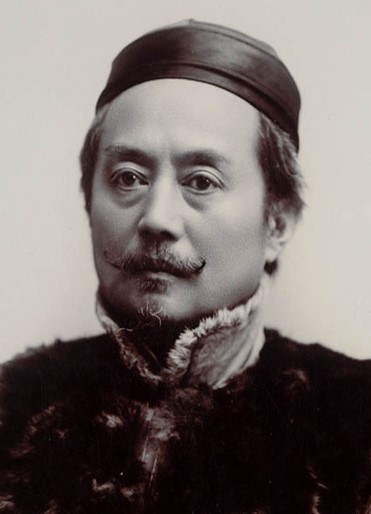
What, Gu asks Maugham, “will become of your superiority when the yellow man can make as good guns as the white and fire them as straight? You have appealed to the machine gun and by the machine gun shall you be judged.” Maugham recreates his conversation with Gu Hongming in East of Suez, giving the speech to the play’s antagonist, Lee Tai Cheng, a character seemingly engineered to stoke a British audience’s anxieties about China.
On a Chinese Screen is a worthy addition to the China archive not only because it is full of wonderful one-liners — deadpan sarcasm, occasionally creaky, delivered with wry humor and just the right wisp of amused malice — or because it is one of the most evocative travelogues written in English about China, but because Maugham’s sketches do more than provide material for satire: they hold up a mirror to the West’s relationship with China in 2026, just as in 1922. ∎

Jeremiah Jenne is a writer and historian who taught late imperial and modern Chinese history in Beijing for over two decades. He earned his Ph.D. from the University of California, Davis, and is the co-host of the podcast Barbarians at the Gate.