Sign up for our newsletter to be notified of new posts!
Reviewed:
• Immunity on Trial: Ethiopian Courts, Chinese Corporations, and Contestations over Sovereignty by Miriam Driessen (University of California Press, February 2026).
• Made in Ethiopia, dir. Max Duncan, Xinyan Yu (2024, streaming on PBS).
Early one morning in December 2023, I met a group of elite Ethiopian marathoners for a workout in southeast Addis Ababa. Our meeting point was an unlikely training ground: the Kilinto Special Economic Zone industrial park. At dawn, the roads inside the park were quiet. Security gates were closed, factory shifts had not yet begun, and the wide, paved streets — built for trucks transporting goods — were empty enough for runners to move freely. In a city where potholes and traffic make long-distance training difficult, the smooth pavement felt like a luxury.
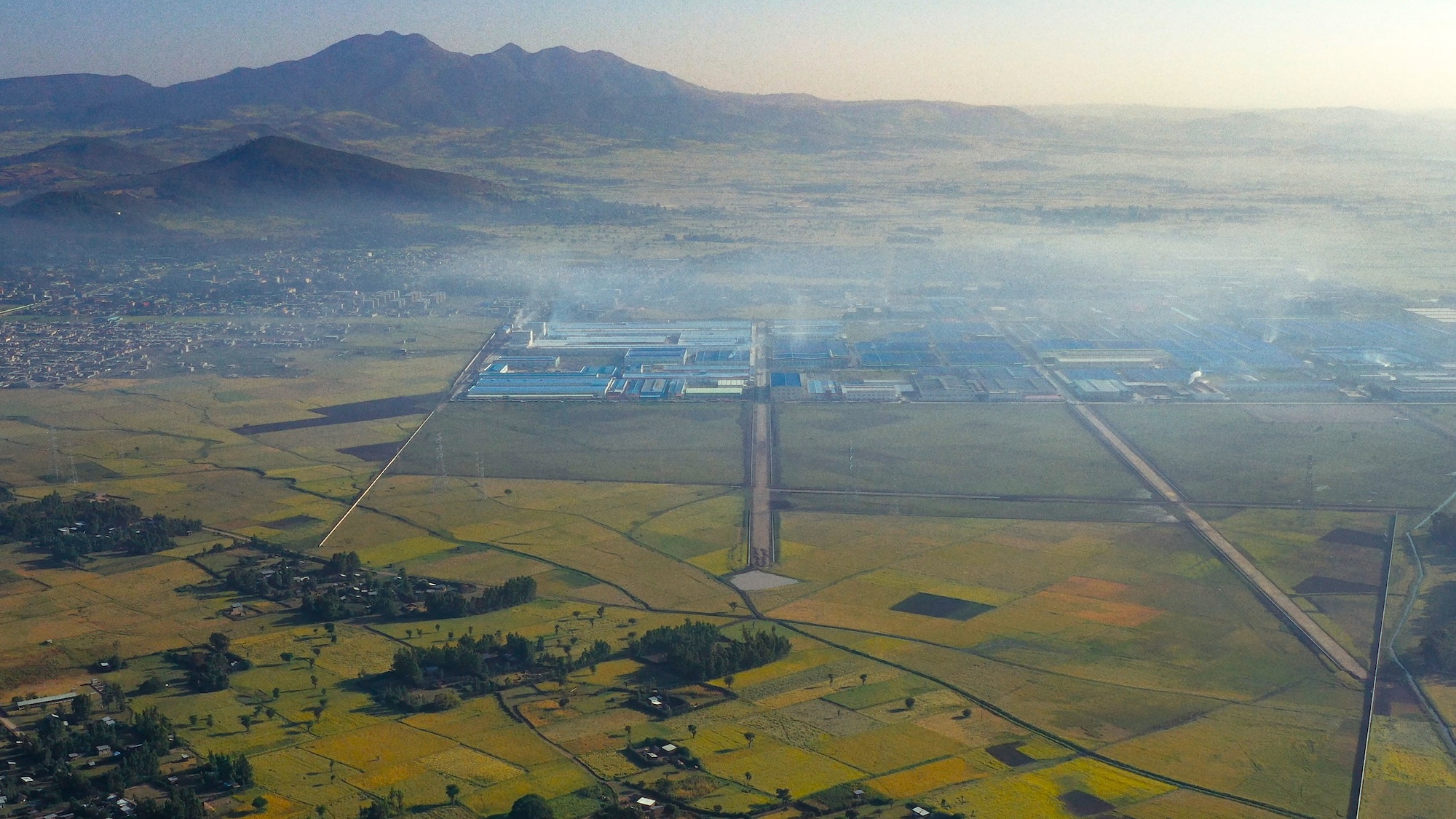
The athletes have their own name for this training location: “China Camp.” Kilinto is one of a network of industrial parks established by the Ethiopian government over the past decade, many of them built with Chinese investment in mind and operated through partnerships with Chinese firms. To the runners, the park is simply a place to log miles. But to workers, managers and government officials, it represents something much larger: Ethiopia’s attempt to transform itself into a manufacturing hub in the global economy.
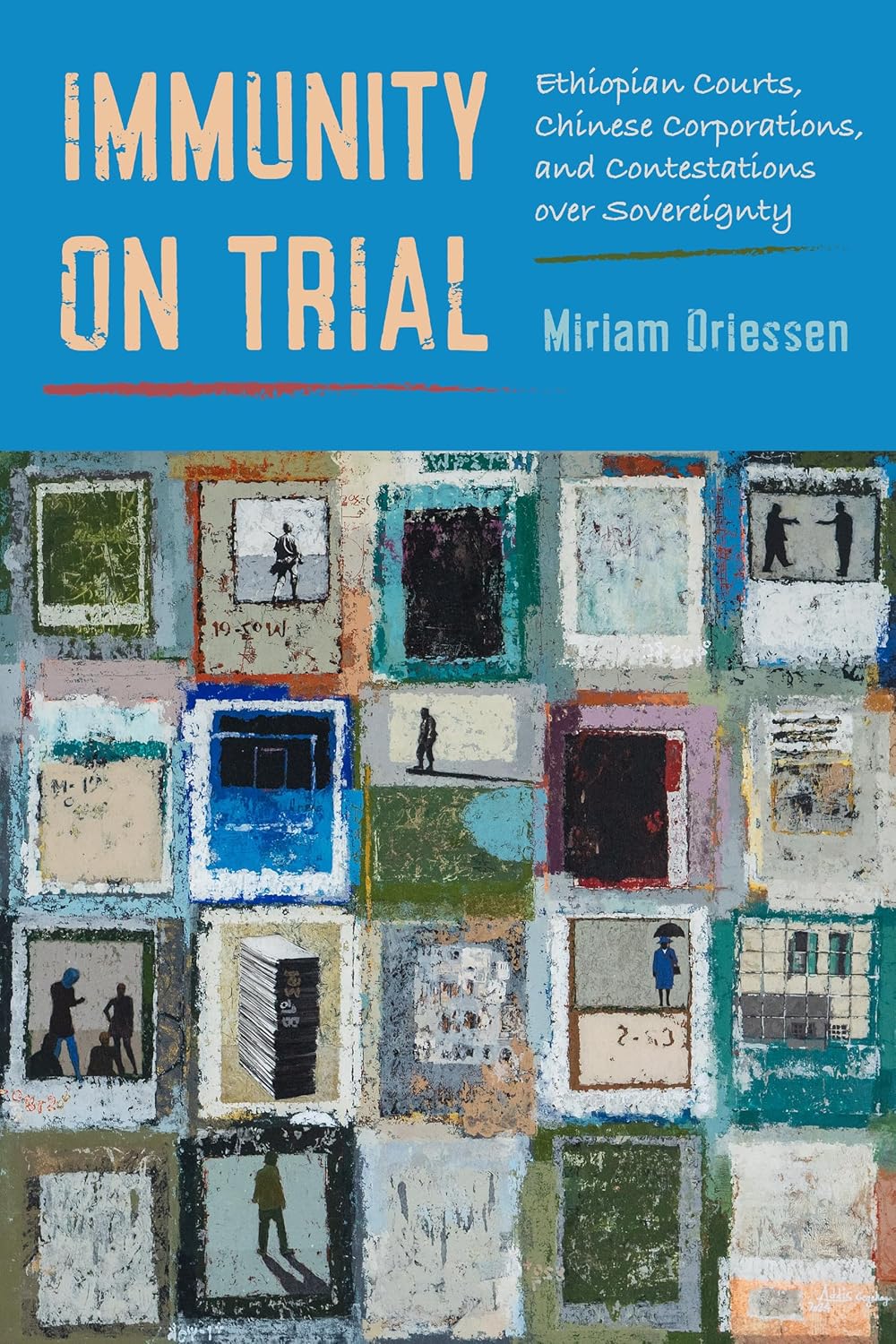
This attempt is at the center of anthropologist Miriam Driessen’s new book Immunity on Trial: Ethiopian Courts, Chinese Corporations, and Contestations over Sovereignty, which examines an extraordinary wave of litigation brought by Ethiopian workers against Chinese companies. Through the story of these lawsuits, Driessen shows how special economic zones (SEZs) operate both territorially (in and around industrial parks) and legally (with Chinese individuals and firms seeking legal immunity in labor violations). These zones have become arenas where deeper questions about sovereignty, dignity and the meaning of development are contested.
Ethiopia’s ambitious strategy of export-oriented industrialization built around SEZs was, indeed, directly drawn from China’s example. The most famous of these zones in China — which offer regulatory and logistical incentives designed to attract foreign manufacturers — is Shenzhen, which had a population of just over 300,000 before becoming an SEZ in 1980. Today it has roughly 18 million residents and a similar GDP to Norway.
Given this success, it’s no surprise that when China began to invest in Africa in the late 1990s and early 2000s, Beijing sought to form SEZs and other types of special zones, for which it supplied $170 billion in loans from 2000 to 2022. Here the Chinese could more seamlessly finance railways, dams and industrial parks intended to anchor export-oriented manufacturing. Supporters of this strategy, both domestic and international, saw the zones as engines of development. Critics worried they would create enclaves where labor protections and public accountability can be weakened. Driessen’s ethnography suggests that the reality on the ground has been more complicated, showing how Chinese investment in Africa sought exceptions to normal diplomatic relations.
Immunity on Trial begins with the court cases. Driessen, a lecturer at Oxford University, focuses on lawsuits filed by Ethiopian citizens against Chinese companies operating in and around the country’s industrial parks. Many disputes originate in seemingly ordinary conflicts — workplace injuries, labor disputes or disagreements over contracts. Some are more harrowing, including manslaughter. Driessen opens her book with the story of Benli Li, a Chinese 26 year-old supervisor, who accidentally ran over an Ethiopian worker with a construction loader on a work site in 2016. Although Li was eventually sentenced to four years and five months in prison in 2018, his company had already bought him a plane ticket home, and he faced no real consequences.

Another case Driessen focuses on concerns an Ethiopian crane operator, Berihun, who worked for a Chinese state-owned enterprise building a bridge over the Abay or Blue Nile River. After challenging his supervisors about skimping on safety specifications (the Chinese were accused of using old concrete), Berihun was fired. He filed a complaint with Ethiopia’s Bureau for Labor and Social Affairs, and eventually took the case to court. Like other plaintiffs, he framed his grievance not simply in legal or economic terms but through the language of dignity — kibir in Amharic. Berihun felt a sense of pride in the bridge, which was being constructed in his hometown of Bahir Dar. But he claimed that safety measures, such as fluorescent vests and hard hats, were used only when a government official or Chinese manager visited the site. He was forced to hand both back the next day. “It’s just for show,” he said. “They do not care about safety.”
Berihun’s case is still not decided, but his emphasis on worker dignity expands the meaning of labor conflict. As Driessen writes, plaintiffs situate their claims beyond the workplace in opposition to the “all-consuming realm of capitalist accumulation,” not only contesting wages and contracts but asserting a moral vision of the respect and social worth they are owed. Through litigation, they articulate grievances that extend beyond individual disputes to collective questions about dignity, citizenship and national pride. In some cases, they describe mistreatment by Chinese managers not merely as personal injustice but as a broader insult to Ethiopian identity, transforming workplace conflicts into claims of national humiliation. In short, once these disputes reach the courts, they raise much larger questions about national sovereignty.
There is an ironic parallel between contemporary China-Ethiopian relations and 19th century European-China relations. From the 1840s, China endured what is sometimes known as “semi-colonialism,” where coercive treaties between China and the British opened Chinese cities to foreign trade, treaty tariffs and extraterritorial legal protection for foreigners. This period, often referred to in China as the “Century of Humiliation” (百年国耻), parallels some of the contemporary dynamics of China’s trade with and investment in Ethiopia, including claims of legal immunity for Chinese workers and companies there.
Yet Chinese managers often interpret the same conflicts through a different moral and historical framework. Many express frustration with Ethiopia’s strict regulatory environment and the frequency of litigation, viewing its legal system as overly rigid. Some attribute China’s rapid development to the absence of such legal constraints during earlier periods of industrialization, and emphasize cultural values associated with Chinese work ethic.
Driessen draws here on themes from her earlier book Tales of Hope, Tales of Bitterness: Chinese Road Builders in Ethiopia (Hong Kong University Press, June 2019), which examined the experiences of Chinese road builders working in Ethiopia. In Chinese, enduring hardship is often described as “eating bitterness” (吃苦), conveying the idea that the sacrifice of personal comfort is a necessary step toward economic advancement. For some Chinese expatriates in Ethiopia, labor discipline and the endurance of hardship represent the cultural foundations of China’s development success. Ethiopian workers, however, often evaluate their employment through expectations about dignity, compensation and life-work balance. The result is not simply a clash of interests but a clash of moral economies.
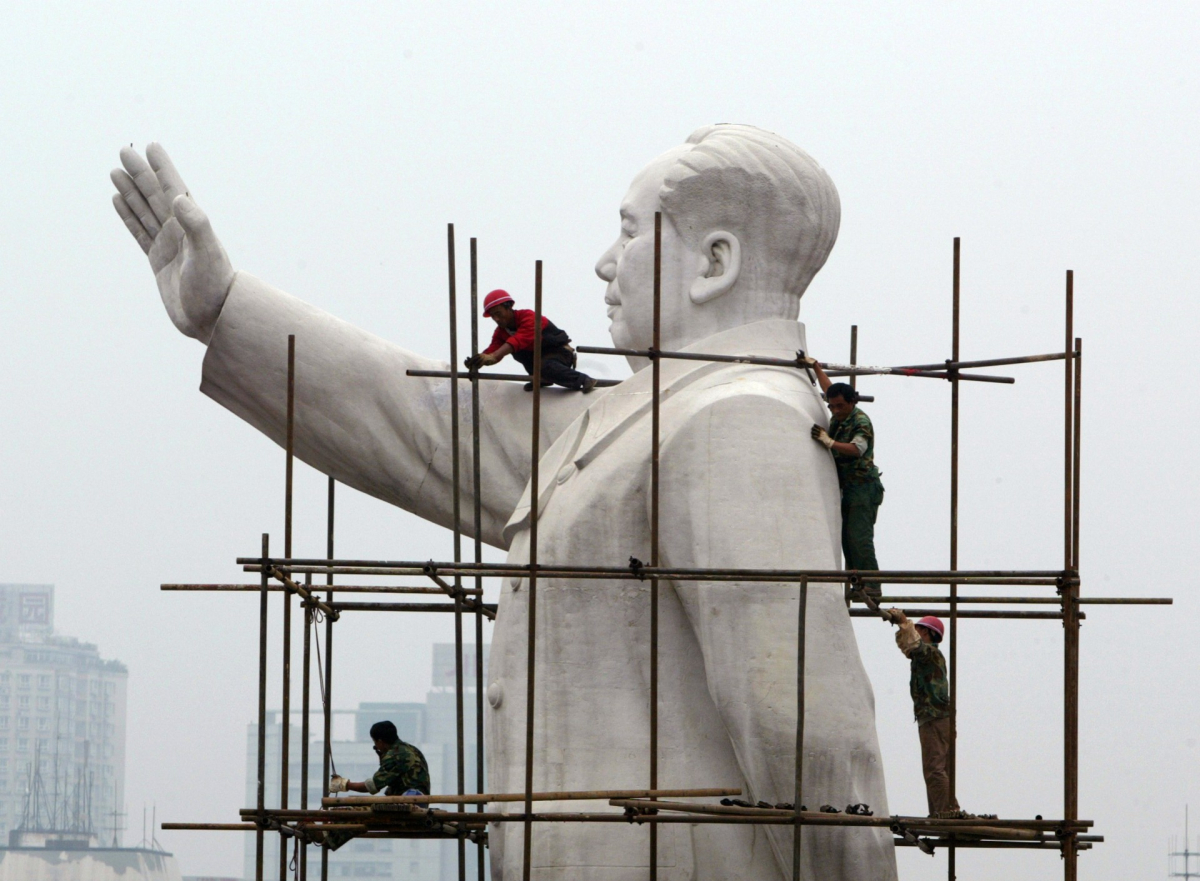
There is an ironic parallel between contemporary China-Ethiopian relations and late 19th century European-China relations.
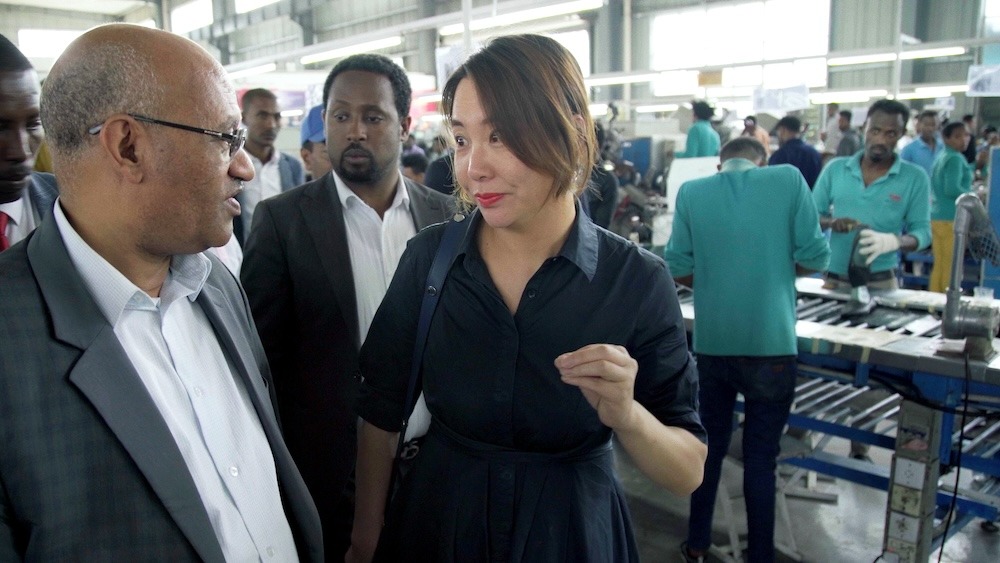
While Driessen’s analysis unfolds largely in courtrooms and legal disputes, similar tensions appear on factory floors themselves. These dynamics are vividly captured in the 2024 documentary Made in Ethiopia, directed by Max Duncan and Xinyan Yu, which follows a Chinese company’s efforts to expand Ethiopia’s Eastern Industrial Park (EIP), also an SEZ and one of the country’s largest manufacturing zones. Rather than portraying one national viewpoint to be superior, the film shows that while the promise of development can get disparate parties to join forces, if the wages and working conditions are not transformative, true progress is difficult to achieve.
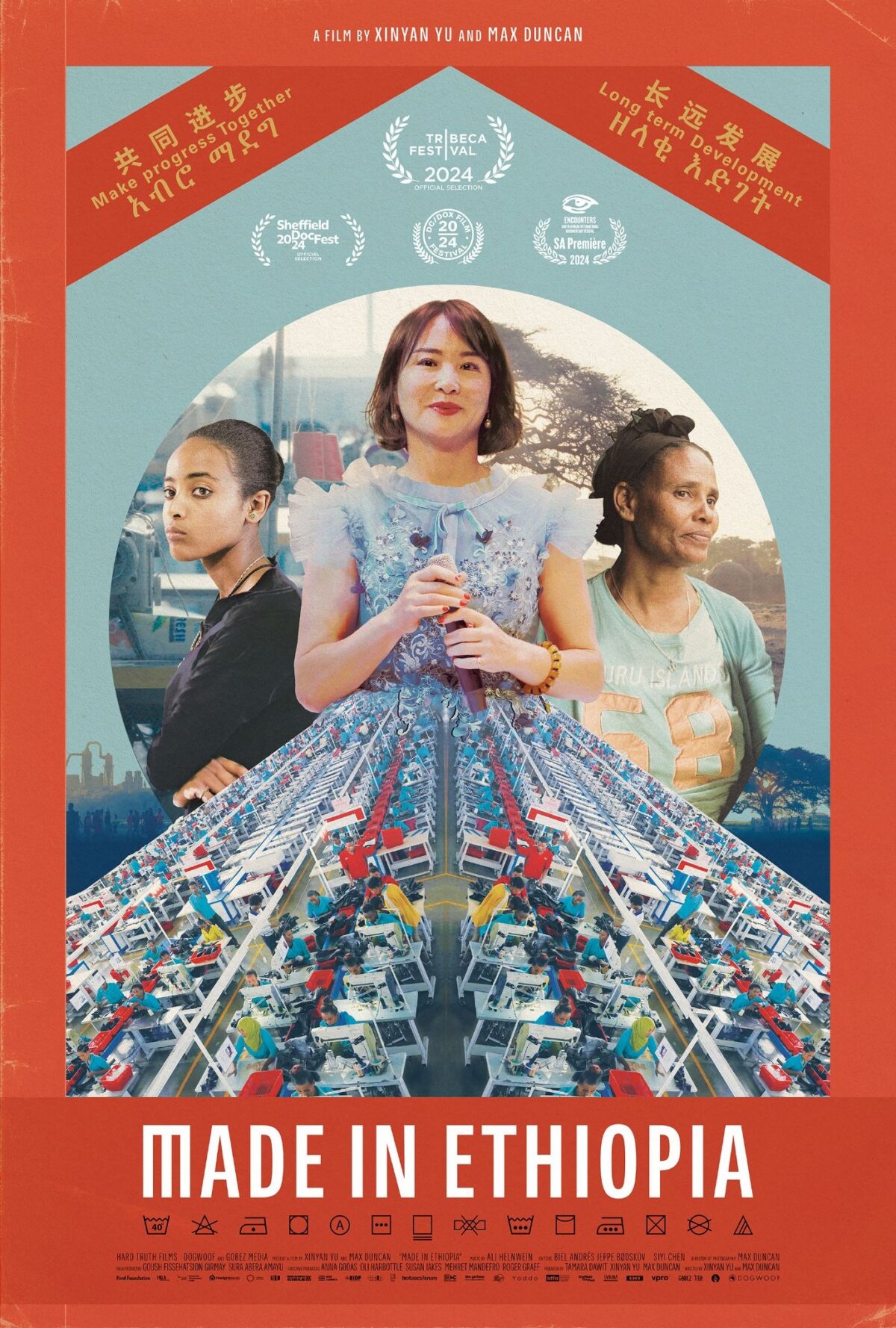
One of the central figures in the documentary is Motto Ma, a Chinese factory director working to attract foreign investors in order to expand the park. Having spent years in Ethiopia, Motto represents the ambitions of developers who envision industrial parks as engines of economic transformation. She guides potential investors through massive factory complexes where Ethiopian workers produce garments, shoes and other consumer goods destined for global markets. Motto frequently tells stakeholders — workers, managers, farmers, investors, government officials — that everyone can “win.” But her optimism is obstructed by Ethiopian workers, farmers and government officials’ continuous claims to dignity.
Beti, a young Ethiopian woman employed at one of the park’s garment factories, earns wages that barely cover her basic living costs. The film captures moments of quiet resistance among workers who question whether intensified labor will meaningfully improve their lives. They argue with another Chinese manager that the requested output is impossible, and threaten to stop working unless they are given more rest. “The Chinese work ethic is admirable,” Beti remarks at one point, “but we Ethiopians have our own way. We work, but we enjoy ourselves.”
Her comment highlights a recurring tension throughout the documentary. Chinese managers often criticize Ethiopian workers as lacking discipline, and Chinese workers in Ethiopia, many of whom left their families behind in search of better work abroad, do not understand why the Ethiopian workers are unwilling to “eat bitterness.” Many Ethiopian workers, however, see no need to hustle when it’s not to their benefit, and the sacrifices demanded by factory labor — long hours, low wages, strict supervision — do not align with their expectations of a dignified life. “You don’t see any change in your life, you just work and work,” one woman says in the film, reflecting that her salary does not increase when she works harder.
Immunity on Trial provides a fresh framework for understanding these conflicts. Driessen notes that Ethiopian women working in industrial zones sometimes turn to strikes or collective protest to express grievances, while male workers more often pursue litigation. In both cases, labor disputes become vehicles for broader political claims, including accusations of Chinese exploitation, racism and colonialism. Workers also make political claims about Ethiopian sovereignty and what the Ethiopian state owes its citizens.
This is particularly evident in cases involving corporate immunity. Some Chinese companies operating in Ethiopia claim protections based on diplomatic arrangements or international agreements. Ethiopian plaintiffs and their lawyers challenge these claims, arguing that companies must remain subject to Ethiopian law when operating within the country’s borders. Courtrooms become arenas where the authority of the Ethiopian state, the rights of workers and the privileges of foreign investors are renegotiated. Legal proceedings thus transform everyday labor conflicts into debates about development and a contest over sovereignty.
Much public discussion of Chinese investment in Africa occurs at the level of geopolitics, framed either as benevolent cooperation or as a form of debt-trap diplomacy. Yet these big-picture questions often overlook the everyday social relationships through which development projects actually unfold. By foregrounding the lived experiences of workers and managers navigating industrial expansion, Immunity on Trial and Made in Ethiopia challenge the idea that industrial parks and special economic zones function as politically neutral spaces.
SEZs helped propel China’s extraordinary economic transformation by carving out exceptional spaces in which new relationships among capital, labor and the state could be tested. As that model travels abroad, however, the meaning of the experiment changes. With Chinese corporations expanding overseas, Ethiopian workers sometimes find themselves making strikingly familiar claims to China’s own when it was a victim of colonial powers: that a foreign economic power should not place corporations or individuals beyond the reach of national law. The historical circumstances are radically different, but the resonance matters. The very language of sovereignty that has been so important to China’s account of its own emergence as a global power is now being mobilized by those people negotiating the consequences of Chinese power abroad. ∎
Feature image: Aerial view of the Eastern Industry Park, Oromia region, Ethiopia. (Hard Truth Films)

Hannah Borenstein is an anthropologist and Professor of Anthropology at Florida International University. Her research and writing focus on the intersections of labor, race, gender and global capitalism, with a particular focus on Ethiopia.