Sign up for our newsletter to be notified of new posts!
The rules for the evening were simple. A party of Chinese painters, poets and associated freeloaders, gathered in a room in Suzhou in the 1790s, agreed that there were four conversational taboos guaranteed to kill their buzz. According to their host Shen Fu in his 19th-century autobiography Six Records of a Life Adrift (浮生六记), these were “discussing promotions, doing office work, composing examination essays, and gambling with cards or dice.”
Such topics were unlikely to be talked about anyway by a group of young men who had abandoned the ever-narrowing path of study to become an official that constituted the only acceptable career path for a Qing dynasty gentleman in the last days of the Qianlong era. They had chosen a life of parties, poetry and louche poverty. For Shen Fu, a ne’er-do-well scion of a local literati family, his lack of official success didn’t matter much when there was art and games, wine and food. His wife Chen Yun, Shen wrote with regret later, sacrificed her own belongings to keep the party going:
Yun would even remove her own hairpins and pawn them to buy us wine without batting an eye, for such lovely scenes were not lightly passed up. But now we all live in different corners of the world, scattered like so many clouds in the wind. And Yun is now shattered jade and buried incense. I cannot bear to look back on all this now!
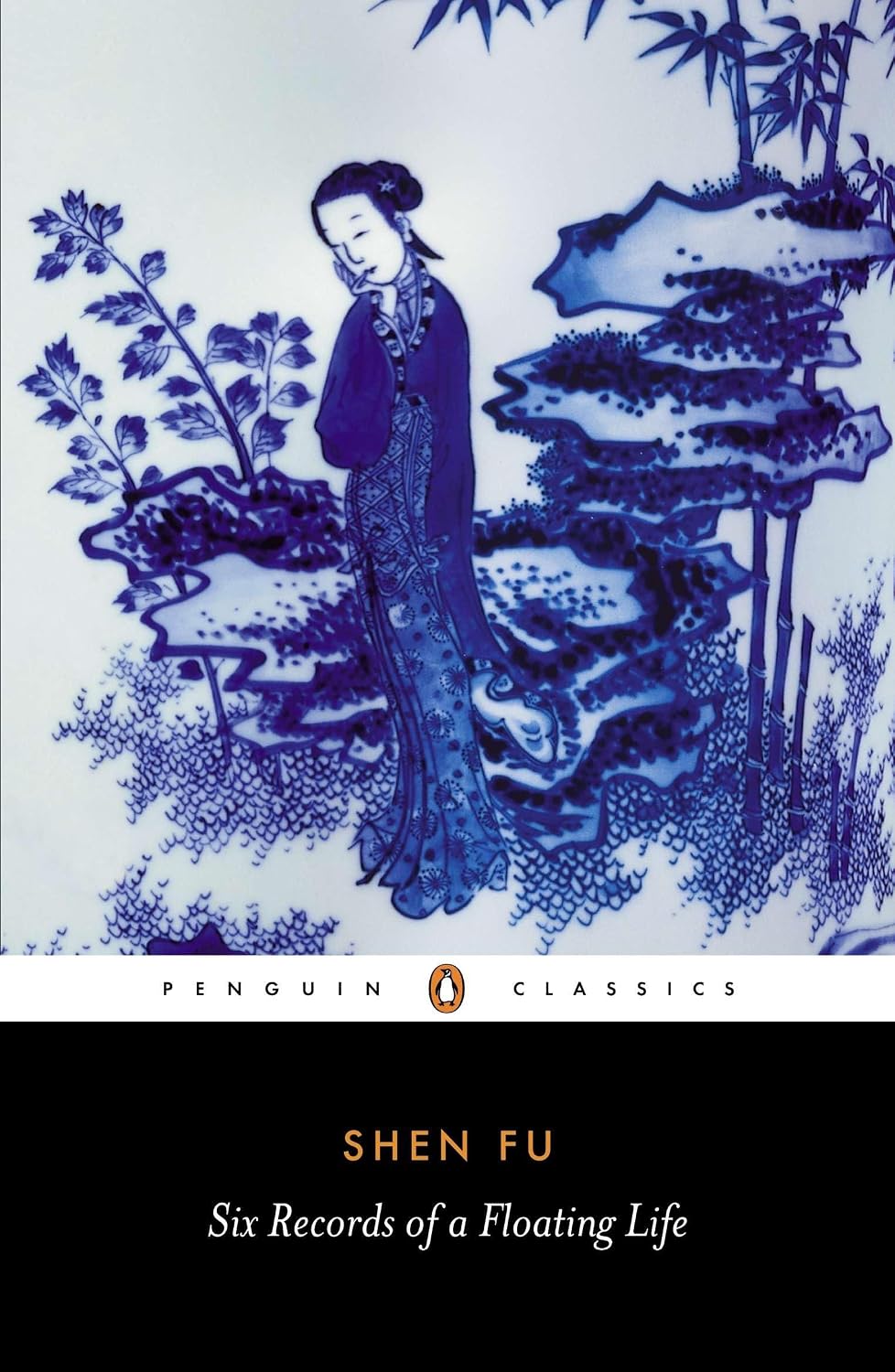
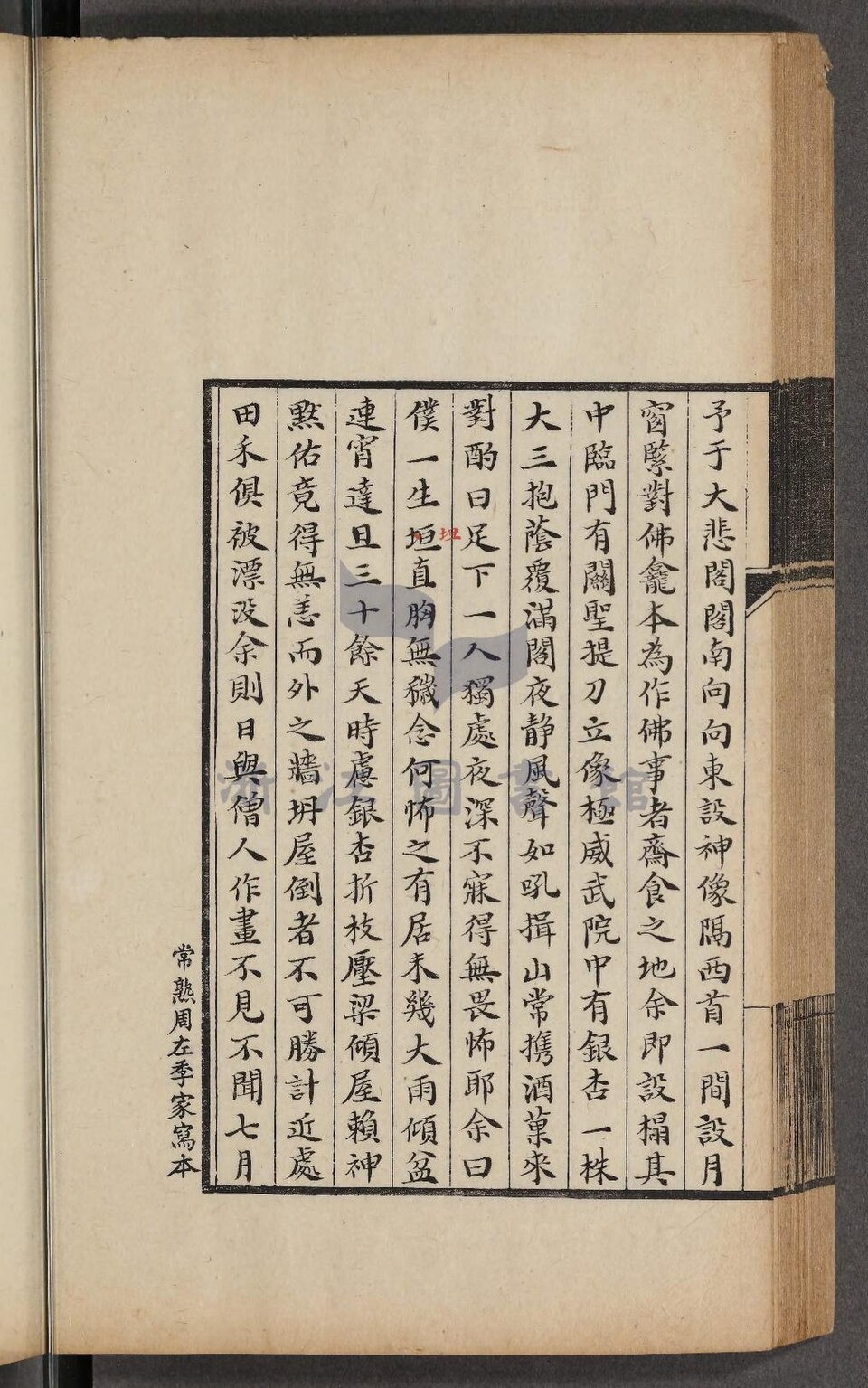
Shen Fu began composing Six Records of a Life Adrift (浮生六记) after Yun’s death in 1803, though it wasn’t published until 1877, long after Shen died in 1825. The book is at once a confessional, a heartbreaking eulogy, a travelogue, a gardening manual and one of China’s best-loved romantic tales. For modern readers, Shen Fu also offers a glimpse into the lives of a Qing dynasty social class literate enough to write their own story, but not successful enough to leave a mark in the Qing archives. In fact, everything we know about Shen Fu and his family comes from his own ink brush.
Born in Suzhou in 1763, Shen Fu grew up next door to Suzhou’s Canglang Pavilion (沧浪亭), one of the city’s great cultural landmarks. An impressive address, but the Shen family was clinging by their fingernails to what was left of their elite status. Exam success and official careers had eluded Shen Fu’s father and uncles, as the number of candidates for each round of the exams had increased in step with a population boom. The result was a glut of scholars who were overeducated, underemployed and frustrated in their ambitions, a situation wickedly satirized in the 1750 novel The Scholars (儒林外史).
Those who couldn’t ascend the lofty heights of the Qing official ladder resigned themselves to the gig economy, in dead-end secretarial and clerical positions, or else chose to lie flat and sponge off declining family fortunes. Many of the men in Shen Fu’s family pursued the former, but he and his friends opted for the latter. Shen Fu failed the first round of official examinations at age 16, gave up trying by 20, and for the rest of his life worked only intermittently. What money he had was cadged by foisting his paintings or seal carvings on friends in exchange for cash, receiving handouts from friends and family, and taking loans (few of which he ever repaid). But what makes his memoir so readable, even today, is that despite all of his hardships, Shen Fu is so often able to find beauty in the small things in life that the ambitious and career-minded might otherwise miss.
Shen Fu offers a glimpse into the lives of a Qing dynasty social class literate enough to write their own story, but not successful enough to leave a mark in the Qing archives.
The joy in the book stems from the one good life choice Shen Fu seems to have made: insisting, at the age of 11, that he would marry his cousin Chen Yun (referred to as Yun in the book) or no one. When Yun is later exiled from the family for seemingly trivial infractions, Shen also sided with his wife rather than his parents. Their relationship, rather than Shen Fu’s picaresque lifestyle, is why the book is famous in China today. Yun is Shen Fu’s soulmate, his companion when everyone else in their family has turned their backs on the couple, and the muse behind his efforts to bring beauty to humble lodgings. Shen Fu was estranged from his family for long periods and forced to make do without financial support, but poverty and exile only sharpened their creativity.
Chen Yun’s death at the age of 40 is the book’s central tragedy. A reader could argue that she, rather than Shen Fu, is the main character of the first three records (functionally the same as chapters): “Wedded Bliss,” “The Little Pleasures of Life” and “Sorrow”. Shen Fu is so devoted to her story that we don’t learn they had children until nearly midway through the book: a son, apprenticed young and who died young, and a daughter married off a few pages later. He describes his wife as slender and attractive, with a slight overbite (which he took to be an inauspicious sign, but married her anyway). She is literate and fond of poetry, though self-conscious about her abilities. More than just hairpins are pawned to provide for the family, and she also earns money as a seamstress. Yun seems to take extraordinary pains to preserve the intimate serenity of their straitened circumstances by stretching the budget to decorate their home and provide food and drink for their parties.
Yun’s own feelings for Shen Fu are visible only through her husband’s gaze. Yet Shen leaves her sexuality ambiguous, describing the intimate bond between Yun and Hanyuan, the 16-year-old daughter of a courtesan she met on a pleasure boat. Yun, twice Hanyuan’s age and already a mother of two, hatched a plan that Hanyuan would join their household as Shen Fu’s concubine and Yun’s sworn sister. When she pitched the idea to Shen Fu, he asked “Are you trying to reenact Li Yu’s play Loving the Fragrant Companion?” referring to a 17th-century play in which a wife falls in love with a younger woman. “That’s right,” she replied. Scholars have debated whether Shen Fu’s description reflected Chen Yun’s actual attraction to women, or if it was projection and fantasizing on his part. At the very least, Yun developed a strong emotional attachment to Hanyuan, and continued corresponding with the young woman even after Hanyuan was snatched up by a wealthier suitor instead. It was around this time that Yun’s fragile health declined precipitously and led to her death.
The subsequent passing of Shen Fu’s father, with whom he had a difficult relationship, followed by the sudden and untimely death of his teenage son, left him so bereft that he considered hermitage. In the end, he settled for a geographic cure, taking to the road as a D-list hanger-on in the entourages of wealthier patrons. Those final journeys are folded into the fourth record (records five and six have been lost), “The Joys of Travel,” a winsome travelogue covering 30 years of scenic spots, taverns and dinner parties through the eyes of a peripatetic and semi-employed scholar, organized less around any itinerary or coherent chronology than around the pleasures found along the way.
The last event dated in the book is when his latest patron was sent to the Hanlin Academy, which took Shen Fu to Beijing in the autumn of 1807. That is the last we hear of him. No reliable record of his death or known grave exists, and he left no other writings.
The book is at once a confessional, a heartbreaking eulogy, a travelogue, a gardening manual and one of China’s best-loved romantic tales.
Shen Fu’s life would have been forgotten but for a Suzhou man named Yang Yinchuan who, sometime in the 1870s — many decades after the events recorded in the book — found the incomplete manuscript in a second-hand book stall. Yang’s brother-in-law, the pioneering journalist Wang Tao, arranged for the publication of Shen Fu’s manuscript in 1877, adding his own postface. Since then, the book has had a somewhat tortured history. A Shanghai press published a “complete” edition in 1935, adding supposed fifth and sixth records that were almost certainly forgeries, including an account of Shen Fu’s visit to the Ryukyu Islands that was cribbed entirely from another source.
Another version of the fifth record appeared in 2005, when a book dealer found a manuscript of notes by the Qing scholar Qian Yong that contained passages Qian cited as coming from Shen Fu’s account of an 1807 state visit to Ryukyu. Whether the manuscript accurately reflects Shen Fu’s lost record remains disputed, but the discovery made headlines for Shen Fu’s description of the Diaoyu Islands — the focus of a long-running territorial dispute between China and Japan — as being outside the boundaries of the Ryukyu Kingdom. Leaving aside the question of authenticity, relying on Shen Fu to resolve the Diaoyu Islands question is a bit like enlisting Dickens’ character Mr. Micawber to navigate Brexit.
Whether an actual (unforged) fifth and sixth record ever really existed is unknown. It would be just like the author for Shen Fu to title a document Six Records of a Life Adrift, write four of them, then quit to the nearest wine shop, leaving the last two unfinished.
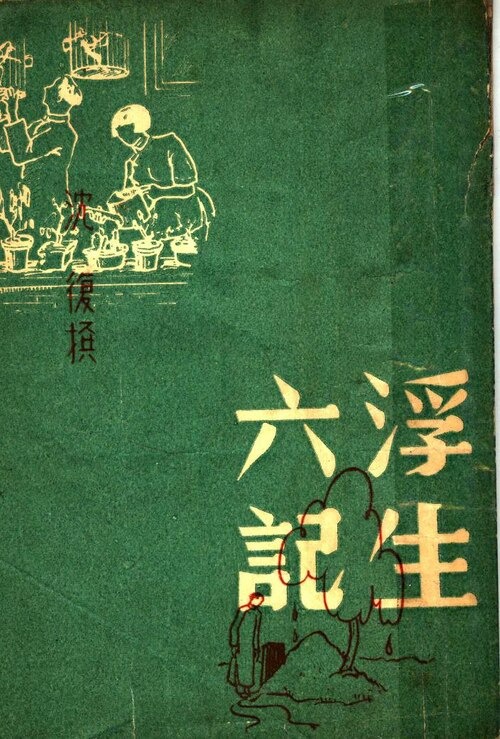
Three complete English translations of Shen Fu’s manuscript have been published: Lin Yutang’s bilingual edition, published in 1939; Leonard Pratt and Chiang Su-hui’s 1983 Penguin Classics translation, which was the standard translation for many years; and Graham Sanders’ Six Records of a Life Adrift in 2011, which is by far the most readable of the three and benefits from maps, a reconstructed timeline of events (Shen Fu’s chronology is not always clear), a family tree, a list of known associates and copious annotations with enough detail to enthrall serious readers of Chinese history and literature. That the book can be enjoyed even without glancing at the footnotes is a testament to the broader appeal of Shen Fu’s record beyond Sinologists.
As is often the case, the three translations’ choices are fascinating to compare side by side. Compare, for example, how each renders a scene in which Chen Yun dreams of a cottage where someday she and Shen Fu would finally have a home. She would sew while he would paint. Shen Fu mourns the death of this dream of home and hearth, a symbol of his relationship with Yun. The Chinese term Shen Fu uses is zhiji (知己), meaning “the one who knows me,” a term usually reserved for the rare friend who understands you completely. Lin Yutang renders the line: “Now the place is still there, while my bosom friend is dead. Alas! Such is life!” The Penguin edition has: “The cottage is still there, but now I have lost my most intimate friend. It is enough to make one sigh deeply.” Sanders is bolder: “Now the place is still there, but the one who knew me is gone and I can do nothing but sigh deeply.” Only Sanders’ translation keeps the full meaning of zhiji, and with it preserves what makes the relationship between Shen Fu and Yun such a cornerstone of Chinese literature.
The book has its longueurs. The second record goes full Gardeners’ World, with page after page of pruning, grafting and flower arrangement. The fourth record lacks the emotional punch of the other chapters. At times, Shen Fu can seem like the sad-sack old guy at the bar whose life is a litany of unfair near-misses, tragedies, betrayals, bad timing and worse luck. The kind of person who leaves a fellow patron (or a reader of this book) wondering, not unreasonably, if the problem might be Shen Fu. Take out the sentiment, and Six Records of a Life Adrift could be read as the story of a drunken philanderer who borrowed money from friends and relatives and rarely paid them back, let his parents throw his wife out of the family home twice (although he went with her each time), handed off his children when they became inconvenient and, despite his heartbreak and mourning following Chen Yun’s death, spent the money he had been saving to buy her a proper coffin to pay off a drinking buddy’s bar tab. That Shen Fu loved his wife is beyond question, but it’s entirely appropriate to ask if she deserved better.
Nevertheless, it is hard not to be carried away by the irrepressible love story at the heart of this book, and Shen Fu’s belief that one day his luck might change. He spent his life building smaller worlds — close enough to touch, never meant to last, but which survive in his record of a life spent drifting through an unpredictable and often unkind world. ∎

Jeremiah Jenne is a writer and historian who taught late imperial and modern Chinese history in Beijing for over two decades. He earned his Ph.D. from the University of California, Davis, and is the co-host of the podcast Barbarians at the Gate.