Sign up for our newsletter to be notified of new posts!
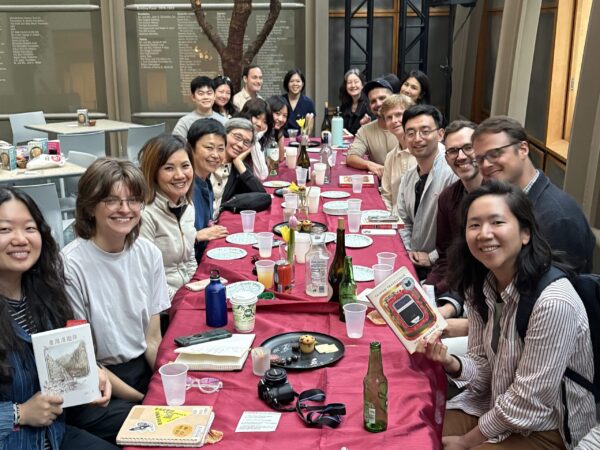
Join our bimonthly book club for spirited discussion of the latest literature from or on the Sinophone world. China Books Review editors host sessions in New York City (at Asia Society’s café) and Washington, D.C. (at Calico bar). We meet five times a year (Jan, Mar, May, Sep, Nov) in the early evening on weekdays — featuring introductory context and story summaries, freewheeling conversation and light refreshments (free in New York), plus plenty of time for mingling.
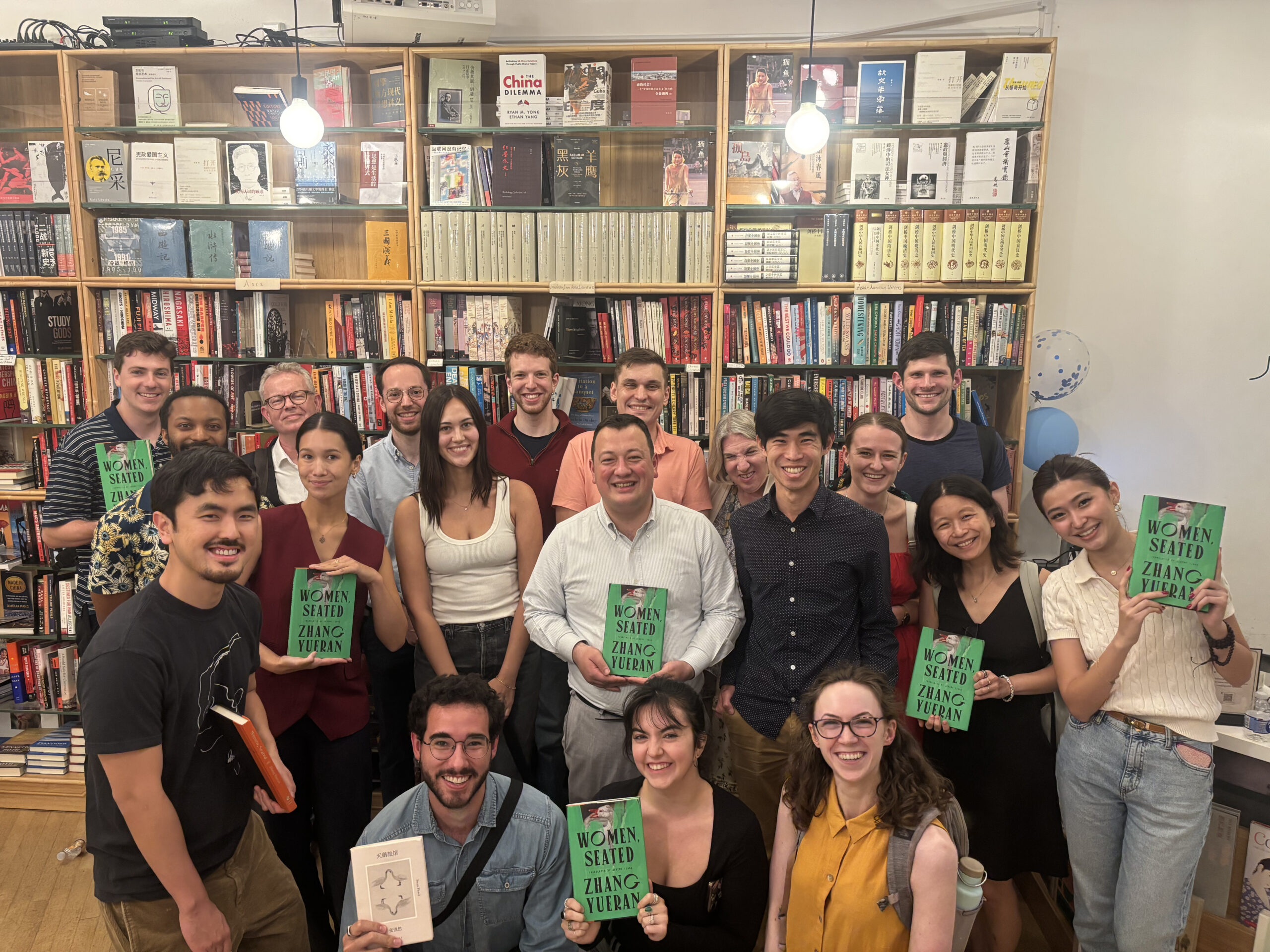
To join our next session (see details of the book below), RSVP at the link below for your city — remote participation is not possible at this time. We ask that all book club members purchase and read your own copy in advance if you’re joining.
If you’d like to be added to our invite list to be notified of future book club sessions, just email us at info[at]chinabooksreview.com, including the city you live in and a brief bio.
November book club:
• New York (RSVP) — Tue Nov 3, 5:30-7pm (Asia Society, 725 Park Avenue, New York, NY)
• Washington, D.C. (RSVP) — TBD, 6-7:30pm (location upon RSVP, Washington, DC)
November book:
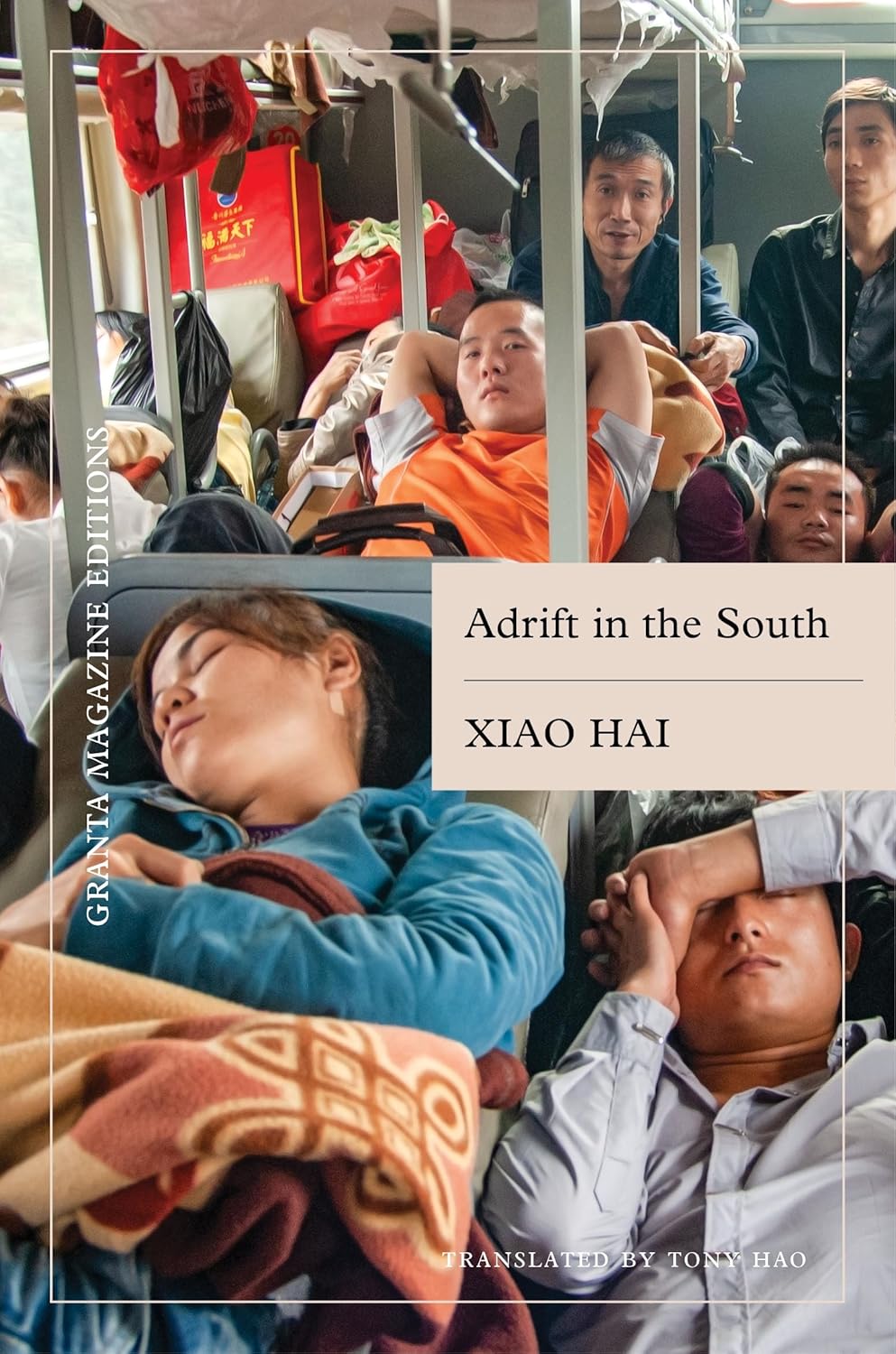
Adrift in the South
Migrant workers’ literature, or new workers’ literature, is the diverse output of a small cohort from the country’s nearly 300 million internal migrants, who work for measly wages in cities where they are ineligible for residency and, therefore, healthcare, housing and other basic social protections. Adrift in the South (rightly translated in unvarnished prose by Tony Hao) is the powerful memoir of the poet Xiao Hai, one of the grassroots movement’s most prominent voices alongside viral sensations like Fan Yusu. For Xiao Hai, who at 15 years old was sent 150 miles from home to learn to be a barber so his parents could afford his younger brother’s education, the China Dream touted by the south’s many economic boomtowns only ever looked like a string of dead-end factory jobs. But he was able to keep ennui and bitterness at bay by finding purpose and community, away from the assembly line, in poetry. Don’t miss our double review of the book alongside Hu Anyan’s I Deliver Parcels in Beijing, a previous book club pick.
Past reads:
Time Tunnel
Stories and Essays
Migrant workers’ literature, or new workers’ literature, is the diverse output of a small cohort from the country’s nearly 300 million internal migrants, who work for measly wages in cities where they are ineligible for residency and, therefore, healthcare, housing and other basic social protections. Adrift in the South (rightly translated in unvarnished prose by Tony Hao) is the powerful memoir of the poet Xiao Hai, one of the grassroots movement’s most prominent voices alongside viral sensations like Fan Yusu. For Xiao Hai, who at 15 years old was sent 150 miles from home to learn to be a barber so his parents could afford his younger brother’s education, the China Dream touted by the south’s many economic boomtowns only ever looked like a string of dead-end factory jobs. But he was able to keep ennui and bitterness at bay by finding purpose and community, away from the assembly line, in poetry. Don’t miss our double review of the book alongside Hu Anyan’s I Deliver Parcels in Beijing, a previous book club pick.

Waiting to Be Arrested at Night
A Uyghur Poet’s Memoir of China’s Genocide
Winner of the National Book Critics Circle John Leonard Prize, and the Moore Prize for Human Rights Writing, this memoir focuses on the 2010s but takes in the whole recent history of the persecution of the Uyghurs. In 1996, Tahir was imprisoned for three years for trying to leave Xinjiang to study abroad. Two decades later, he witnessed a ramping-up of the campaign to “harmonize” the region, including the mass internment of Uyghurs in camps, taken from their families in the night. A prominent poet and intellectual, Tahir could tell he was next. In 2017, he managed to flee Xinjiang with his wife, and wrote this story of the cultural destruction of his homeland from exile in America. More than just a memoir, it is a call for the world to wake up to what is still the reality in Xinjiang, and a tribute to those Uyghur voices that, unlike him, can no longer speak out. Don’t miss our own review of the book.
Everyday Movement
What does the end of democracy smell like? In Gigi L. Leung’s kaleidoscopic novel of the 2019 Hong Kong protests, its tear gas, scorched skin, piss, puddles and rotting fruit — but also mother’s shampoo, roses and the asphalt on which demonstrators chant “revolution of our times!” Grand in scope, Everyday Movement is human in scale. Leung, a Taipei-based Hong Konger, shares the stories of overlapping lives. Two roommates at an unnamed university — Panda, brash and sure of her convictions, and Ah Lei, meek and uncertain — are the stars of the narrative. In the background, sometimes surging into center stage, are the anti-extradition protests, which drew over 2 million people (of Hong Kong’s 7.5 million) into the streets to protest mainland China’s attempt to control the city. But this is not merely a political novel. Leung has a light touch that explores the temptations of consumerism, mother-daughter relationships, friendship and romance — translated by the felicitous pen of Jennifer Feeley.
I Deliver Parcels in Beijing
For decades, Hu Anyan floated between odd jobs on the outskirts of China’s megalopolises: stocking warehouses, waiting at hotels, selling bikes, delivering packages and more. Then in 2017, suffering from insomnia after graveyard shifts in a Foshan warehouse, he began to write seriously. I Deliver Parcels in Beijing, a profound collection of autobiographical essays on the nature of work, human endurance and the crush of modernity, is the result. The memoir follows Hu’s peripatetic life, chronicling the absurdities, tragedies and triumphs of a life on the edge. A self-taught “wild” writer, Hu’s prose is propulsive and readable. With nearly two million copies sold in China, Parcels, as CBR columnist Na Zhong put it, is about “how our minds and bodies are chipped away by numbers” in pursuit of another day’s freedom. Rendered into English by Jack Hargreaves (author of CBR’s translated fiction column), Parcels is the latest great work of “amateur literature” (素人文学) to come from China.
City of Fiction
The master is back. Yu Hua, famed for the classic novel To Live (2003), has done it again with his latest novel, City of Fiction. The plot starts simply enough: a northern Chinese man with a child strapped to his back walks south, seeking a city that doesn’t exist in hope of finding the woman who left him. This epic tale is set against the convulsive upheaval of early 20th century China: a world of brigandry, revolution, missionary schools and dynastic collapse. It’s an immersive story about a world on the edge of modernity, but still governed by ancient fears and traditions. But the tale of the man and his daughter ends abruptly, and part two centers on the vanished woman commences in a parallel past, taking us inside her psyche as she leaves behind both daughter and husband. Sweeping, daring and tender, City of Fiction is a story about an age not so different from our own. Read Sabina Knight’s review of the book, taking in Yu Hua’s wider oeuvre, in China Books Review.he time and place for our next session, info and publisher/purchase link for the book we’ll be talking about, and previous books we’ve discussed.
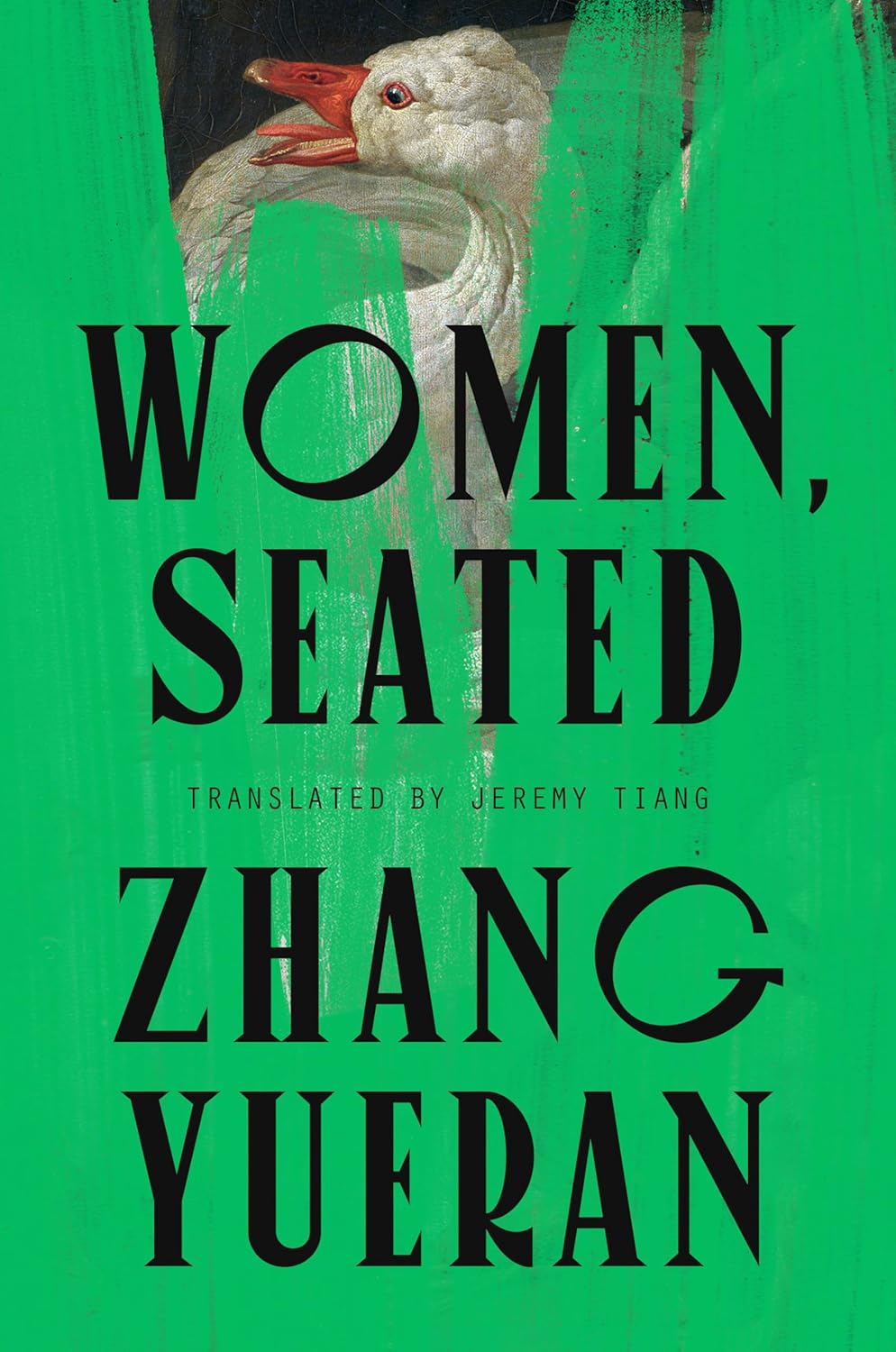
Women, Seated
At surface, Women, Seated is a crime thriller: a trusted nanny kidnaps the child of a top official. Zhang Yueran’s intrepid storytelling turns this sleek 208-page novel into a greater story of power and prestige in contemporary China, and the pressures that build along the fault lines of hidden pasts. In her What China’s Reading column for China Books Review, Na Zhong wrote that the Chinese original, Swan Hotel (天鹅旅馆), explores the forces that “shape and distort relationships between the haves and have-nots.” The book’s English translation is a happy confluence of three writers, both Zhang and her translator Jeremy Tiang, as well as its acquiring editor, Han Zhang, the New Yorker (and China Books Review) contributor here making her first foray into bringing the latest and greatest in Chinese literature to international audiences for Riverhead. Though streaked with characters’ deceit, Women, Seated tells as true a story about China today as the best reportage.
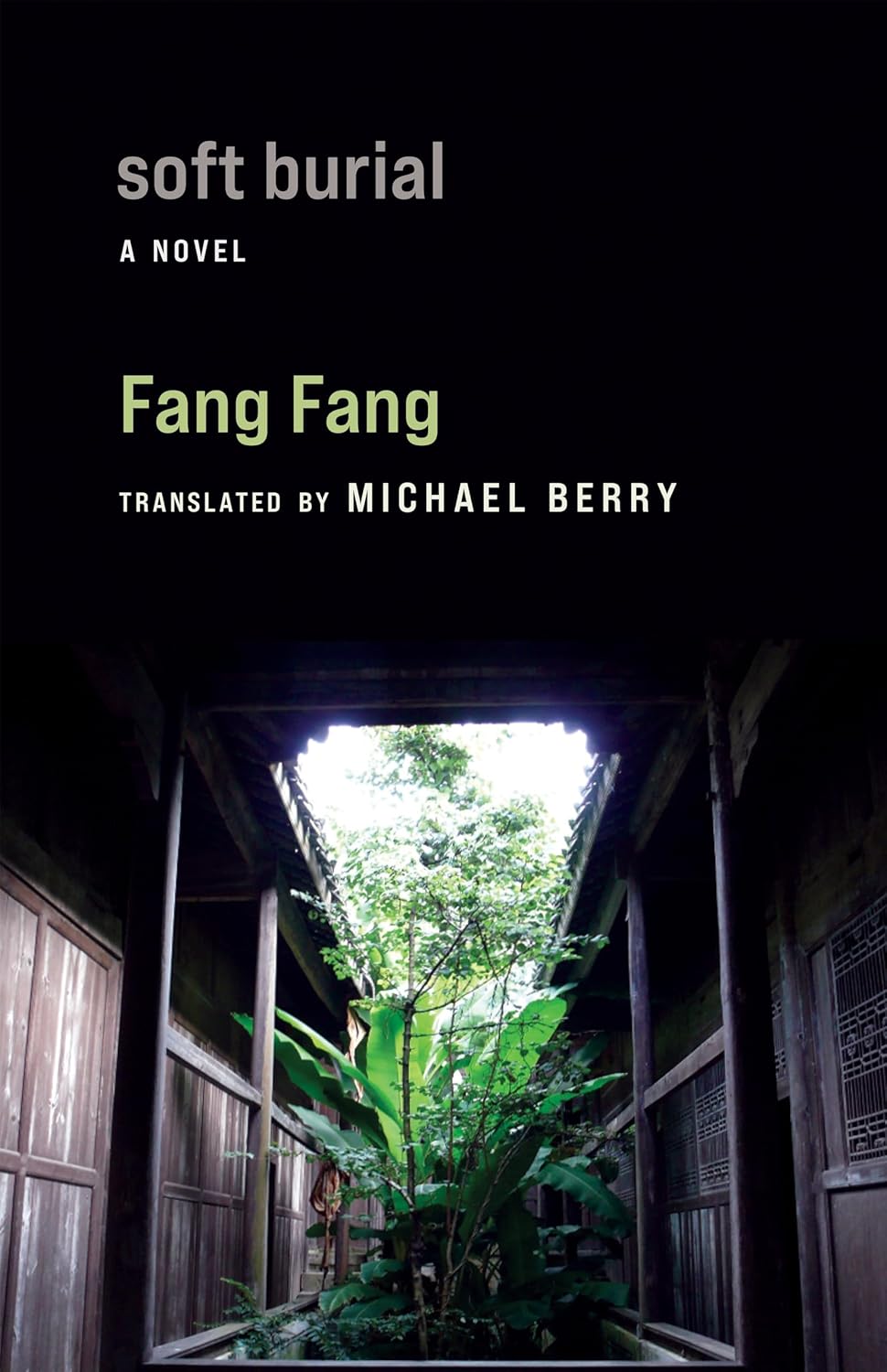
Soft Burial
A Novel
Soft Burial follows the aftermath of the bloody land reform campaign of the late 1940s and early 1950s. The story opens with the mysterious, then-nameless protagonist pulled out of a river in an amnesiac state, near-to-death. As the story unfolds, the protective cocoon of amnesia that her subconscious wove around her begins to give way, revealing glimpses of her previous life and the unspeakable trauma that she suffered. First published in 2016, Soft Burial initially received critical acclaim but attacks from ultra-leftists featuring resurrected Cultural Revolution-era slogans — “Soft Burial is a terrible poisonous weed!” — followed. By 2017, the novel was banned and taken off of bookstore shelves. A strikingly salient examination of the toll of unearthing a long-buried past, the novel is an enjoyable read, too, due to its mellifluous translation.
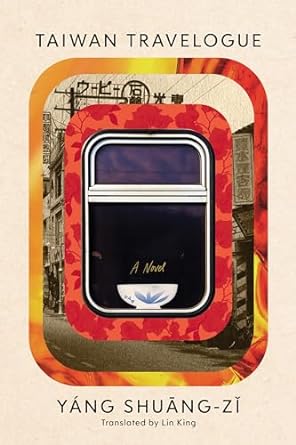
Taiwan Travelogue
A Novel
Taiwan Travelogue is a novel disguised as a translation of a rediscovered Japanese text. Set in 1938, it follows Japanese novelist Aoyama Chizuko’s trip to Taiwan. Uninterested in banquets thrown by the colonial Japanese government, or its imperial agendas, Chizuko seeks out “the real Taiwan.” Accompanied by a young Taiwanese interpreter, Ō Chizuro (the two names share characters), Chizuko the novelist travels Taiwan — becoming infatuated with the island’s cuisine and her young translator in the process. But Ō Chizuru keeps her distance, what keeps the two apart? In a review published to China Books Review in February, “Found in Translation,” Michelle Kuo wrote, “Myriad questions, at root political, abound in the book.” The book deals with themes of same-sex love, colonialism, gender relations, and the meanings of food culture. Beyond politics, Taiwan Travelogue is a work of mouth-watering prose translated with exquisite delicacy.

Granta #169: China
The Magazine of New Writing
One of many short stories in Granta #169: China, “Hunter” by Shuang Xuetao (tr. Jeremy Tiang) was the focus of our first book club. The story follows the self-described “fifth-rate actor” Lu Dong after a chance encounter with an art house director allows him a chance to salvage his precarious career by playing a contract killer named Dick. Shuang Xuetao, a leading figure in a new generation of writers from China’s northeast known for their realism, earthy language and industrial settings, writes with a taut menace. Tiang’s translation is precise and cool as Dick’s marksmanship. Though not technically set in the northeast, “Hunter” is a fine example of a “Dongbei Renaissance” work, the term for the explosively popular pieces of literature, film and television coming out of China’s former industrial heartland.