Sign up for our newsletter to be notified of new posts!
Welcome back to What China’s Thinking, our interview column with Chinese public intellectuals, thinkers and creators on the ideas that impassion them.
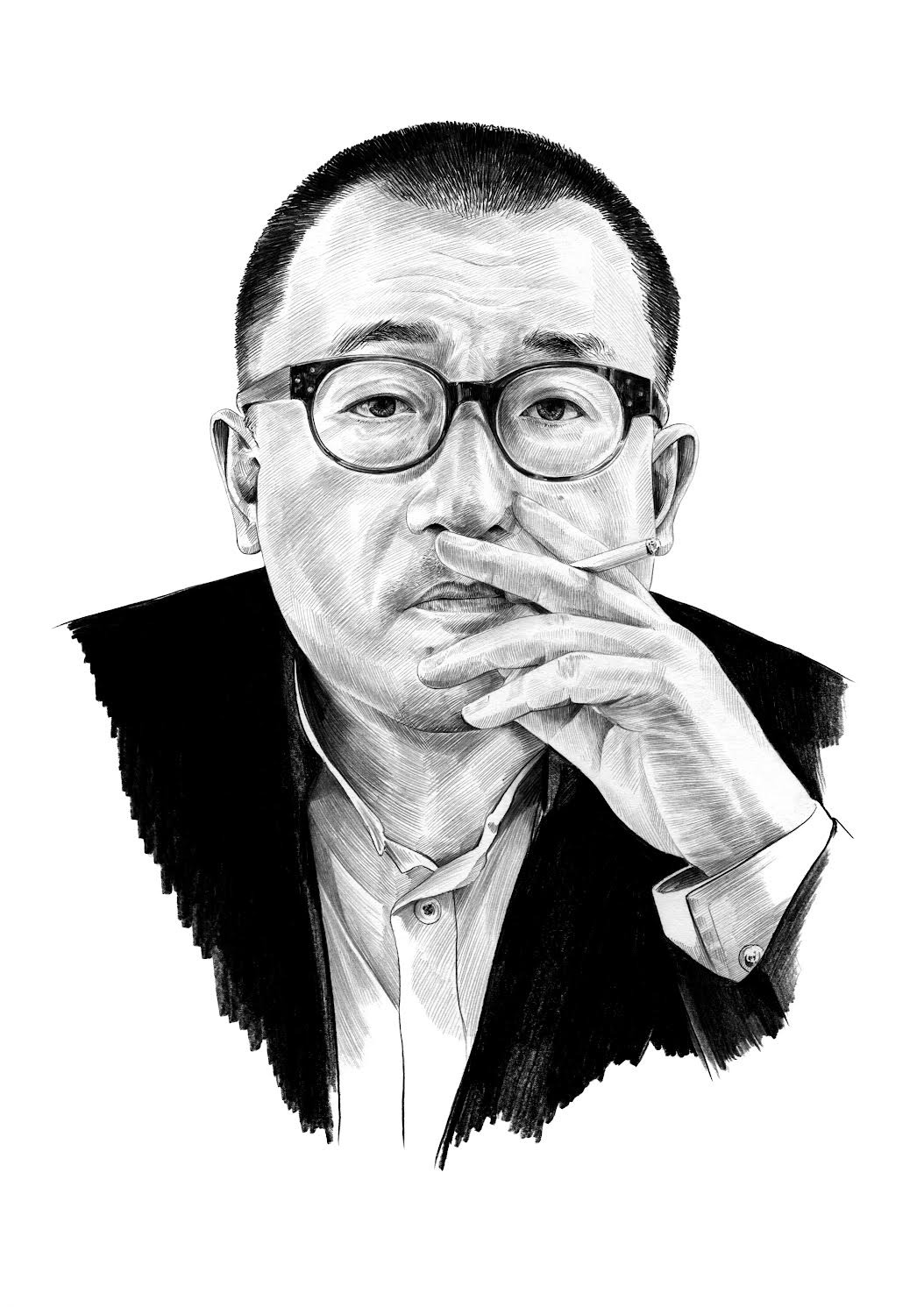
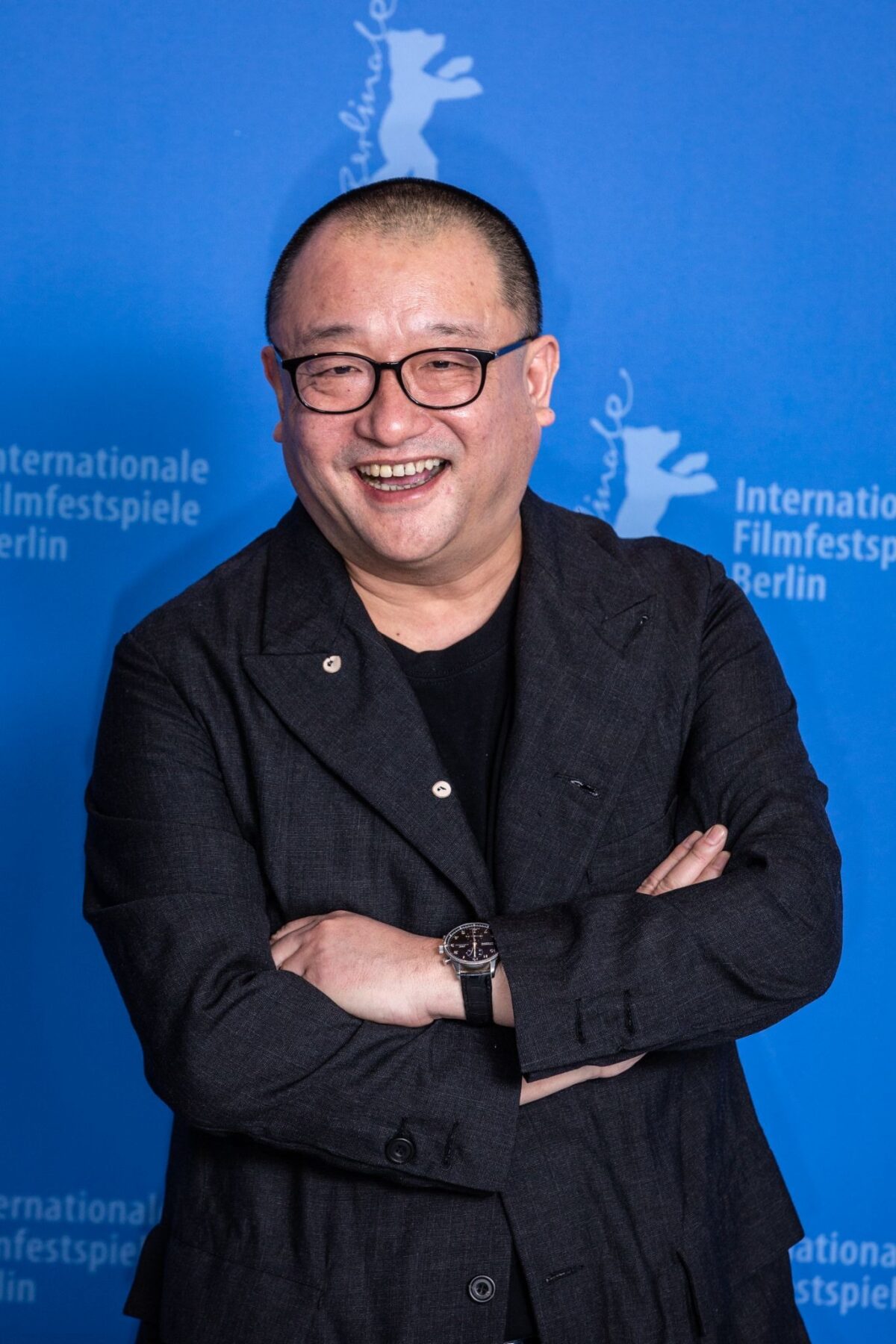
Wang Xiaoshuai is a leading Chinese filmmaker and a pivotal figure in the “Sixth Generation” of Chinese cinema. Born in Shanghai in 1966, Wang grew up in Guizhou, where his parents worked on the Third Front, Mao’s quixotic campaign to move China’s industrial base to the mountainous interior. After graduating from Beijing Film Academy in 1989, Wang was assigned to work at a provincial film studio in Fujian. A few years later, he quit and returned to Beijing, where he produced his first independent film: The Days (冬春的日子, 1993), a black-and-white psychodrama about young married intellectuals in Beijing. A decade-long run outside the state-run system followed — several of his films were either banned or denied a theatrical release in mainland China.
Wang’s acclaimed works include Beijing Bicycle (十七岁的单车, 2001), Shanghai Dreams (青红, 2005), 11 Flowers (我11, 2011) and So Long, My Son (地久天长, 2019). His films often explore historical traumas through the eyes of children. His latest film, Above the Dust (沃土, 2024), follows a young boy in rural Gansu who — guided by his grandfather’s ghost — hunts for buried familial treasures only to uncover the history of land reform in the 1950s.
I talked to Wang Xiaoshuai this spring at Asia Society in New York, where he was screening a retrospective of his work. He isn’t naturally talkative or easygoing, but once he opened up, the conversation started flowing. Wang reflected on his years as a “banned filmmaker.” He described how, over the past three decades, Chinese directors have constantly negotiated with the authorities, testing and pushing the boundaries of censorship. Our conversation touched on a range of topics: his latest film, the film industry’s transition to the free market, Iranian cinema, Chinese audiences and how artificial intelligence might change everything. Near the end of our conversation, he compared filmmaking under censorship to running the hundred-yard dash in chains. “Naturally,” he added, “we hope the shackles will be loosened.”
Yi Liu: The first film of yours I ever saw was Shanghai Dreams (2005), when I was growing up in Chongqing. Recently I also watched your newest film, Above the Dust, about land reform in the 1950s. That history is taboo; there aren’t many ways to learn about it in China. The writer Fang Fang wrote about it in her novel Soft Burial (软埋, 2016), but that book was banned too. What’s the status of Above the Dust inside China right now?
Wang Xiaoshuai: This is just where things stand: a theatrical release is impossible, it never cleared review. And I haven’t gone back to reopen the question, to ask whether it could be released, or what the censors’ final verdict would be. Things have reached the point they’ve reached, and the situation right now has changed quite a lot, I think. On this front, [the authorities in] China are not going to lose much sleep over a single film. So as far as I’m concerned, what’s past is past.
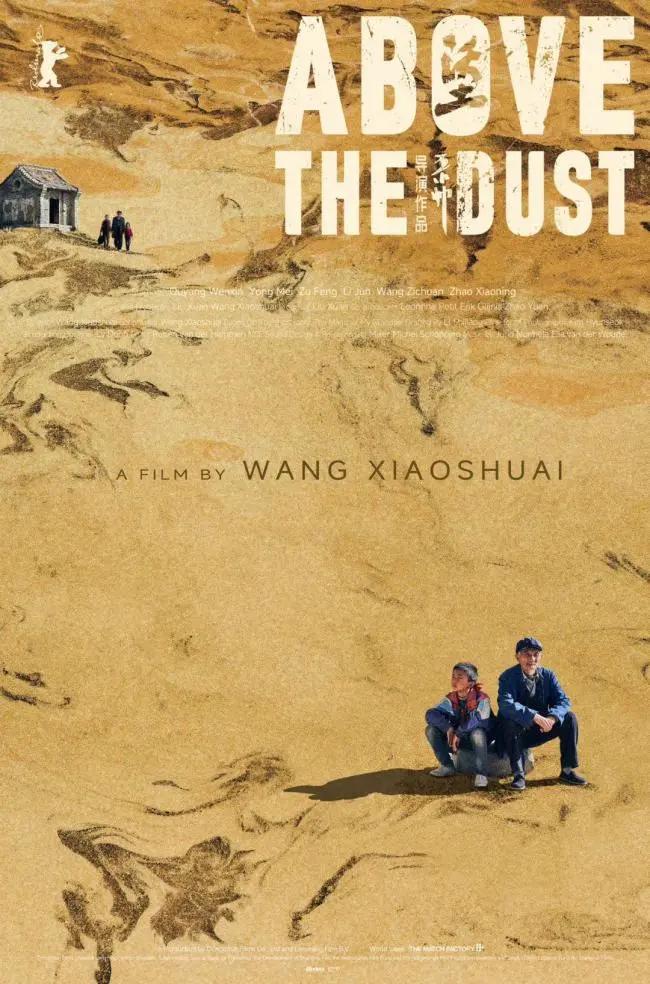
It’s a real shame for the film itself. When I was making Above the Dust, I actually knew that for foreign audiences it would be relatively hard to follow, hard to understand — you know how little foreigners understand about China. And for Chinese viewers, many of them simply never knew that history. But I think every film has something it wants to focus on, something it wants to say, and this time it happened to be land reform — which, to me, is a crucial source of everything that has made Chinese society what it is today. That makes it worth filming. Because look at China now: the countryside has emptied out, urbanization and all the rest — these are things worth reflecting on. So I think, if Above the Dust had been allowed through, there really would have been people inside China who felt something watching it, who came away moved, who understood what it was about. We did show it privately to a few people, in their homes — which, honestly, took some nerve.
In recent years the official attitude toward Chinese cinema has, I think, grown more and more monolithic. It used to be that you could still talk it out. You broke one of their rules but you could still reopen the discussion. Back then, they too were looking for ways to reset the system and the rules, to improve them or to reform them. But these past few years it’s become one solid, immovable slab. So I figure, forget it. For all these years I poured so much energy into hoping all of this could change and develop in what I believed was the more correct direction. Now that the channels of communication are cut off, and the film has ended up like this, I think I’d rather turn my mind in another direction. This was supposed to be something we built together — a better, more reasonable space and direction to grow in. That’s gone now, cut off. I’m a single individual; there’s nothing I can do.
When did that connection — between directors and the authorities — get cut off? What was it that made you feel it had been severed?
There isn’t really a concrete way to put it. What we run into is — in words, everything’s permitted. On paper, on policy, they tell you: don’t worry, anything goes. But when it comes to the specifics, to the actual practice, for years all we’ve wanted is for them to spell it out clearly, to lay it down in actual clauses, to make it concrete. That’s exactly why for years we’ve been pushing for a film rating system. There isn’t one. If there were, everyone could act according to the law. Without one, it’s all empty: in words anything goes, but in reality everyone is guessing, everyone is self-censoring. So the single biggest trait of people who’ve made films in China all these years is that someone floats an idea or a story, and immediately everyone starts censoring themselves — “that’s impossible,” “that’ll never get through,” “this part won’t fly” — and it just goes round and round.
But if there’s never been such a system, then why do you feel it’s become more and more of an immovable slab in recent years?
When we pushed for ratings, what we got instead was legislation [the Film Industry Promotion Law of the People’s Republic of China, which took effect on March 1, 2017]. We assumed this “law” would come with specific clauses — but again, it doesn’t. The message we got was: you can’t shoot a film without permission. You can’t do what we used to do — make an independent film on your own and then, if it fails to clear review, take it to a festival. That’s been the situation these past few years.
The law isn’t a set of clear clauses — it isn’t “you may not do this, you may not do that.” The actual content is still blank. That’s how it’s always been with film in China. They now say plenty of private capital can come in and make films, but there’s a control mechanism built into the Chinese system: every time you make a move, every action you take, you need approval. When you apply, they grant you approval for the project; once the project’s approved, you put in the investment; once the director finishes the film, it goes to review; and after review they hand you a verdict. So there’s a problem of shifting standards from start to finish: your script and story might be fine when you submit them, but once you’ve finished shooting, when a different set of people comes to review it, or someone one level up, they decide it won’t do. So it’s all murky.
For years we’ve been pushing for a film rating system. There isn’t one. If there were, everyone could act according to the law. Without one … everyone is guessing, everyone is self-censoring.
The films you made back in the 1990s couldn’t be released then, and Above the Dust can’t be released now. From the 1990s to 2026, the outcome is the same. But over the course of that stretch, has anything changed?
That’s a good question. On the surface, it looks like I hit this problem once before and I’m hitting it again — like I’ve gone in a circle. But the way I understand it, it might be more of an ascending spiral. Back in the 1990s we hadn’t yet lived through the changes that development has brought; everyone was feeling their way through. When we did what we did, it was still inside the old planned economy. We were young, I didn’t understand much, and we weren’t afraid — we just poked straight through the paper window. Maybe others thought that the paper window ought to be poked through, then we naively poked it through ourselves. Private filmmaking meant there was no process of review, no approval or disapproval; private citizens just went ahead and shot. And that act itself was incompatible with the old rules.
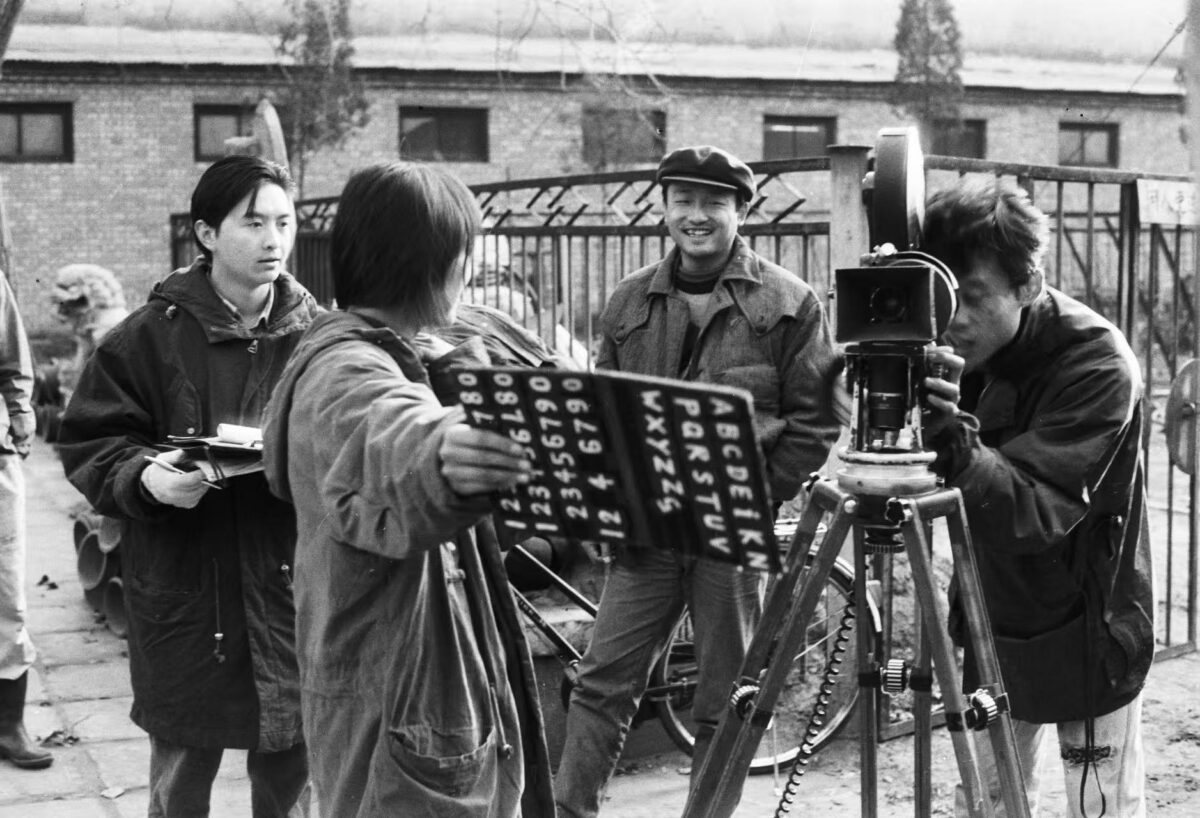
The truth is, Chinese cinema in the 1990s was, I think, relatively behind. From the late 1970s, in the era of so-called reform and opening, many sectors were experimenting with a market, with all kinds of new behavior — companies doing acquisitions, that sort of thing, all being tried out. So back then, not knowing any better, we thought: you could set up a stall and sell shoes now; you could paint a picture and hold an exhibition; you could pick up a guitar and get onstage and sing. In the Cultural Revolution all that would have been unimaginable. So we thought, making films should be fine too. But when we did that, it probably fell outside the rhythm [of opening up] they had designed. Which is how we ended up on blacklists, with punishments and pronouncements, barred from making films.
But through all of that, China in the 1990s was still changing. The mood was buoyant, hopeful, upward. We could express ourselves. We wrote to the Film Bureau with proposals, about censorship, about a rating system. Now, the way I see it, the people who could do that kind of thing have grown old. There’s also been a bigger shift: Chinese cinema became market-driven too.
Once marketization kicked in, everything swung sharply. Everything was decided by market feedback and market results. At which point our kind of film naturally got pushed to the margins again. Before 2000 the question was whether what you did conformed to the rules, whether your content met the requirements. Later, once marketization arrived, in principle everyone could have competed — our kind of film isn’t for the mass audience, but there could still have been a space for it — except that capital chases profit, and bit by bit it flung us aside again. In China now it’s box office above all. And when the box office is the only thing that counts, of course you crank up the entertainment value and take your lessons from Hollywood.
The highest-grossing films of recent years are still patriotic movies like The Battle at Lake Changjin (长津湖, 2021) and Wolf Warrior 2 (战狼2, 2017).
Now everyone’s abuzz over the same type of film — Wolf Warrior 2 was a smash hit, and everyone is following in its footsteps. 1.4 billion people, thousands of years of cultural tradition, and in the end, once capital comes in and plays it safe, everyone can only walk this one road.
Which brings us back to what I was saying — why the voices from when we were young, when we used to argue these things out together in the early days [of the reform era] have slowly vanished. Because those voices aren’t [commercially viable] and administrators want unity, they want everything folded into one. To me, that’s the biggest change lately. These past few years amount to a demand to reunify thought. For years, everyone was doing their own thing, each director, each author expressing his own individuality, making the culture more plural and richer. But now it’s all supposed to be one unified thought.
What does “unifying thought” mean?
In the state our society is in right now, they don’t want you to entertain wild ideas about things you personally find worthwhile, but instead to fall in line within one overall, nationalist, socialist value system, or one particular thing or another that the administrators want you to portray and reflect. It’s a bit like going back to the years right after liberation [in 1949], it becomes propaganda. There is no longer art, no longer individuality — and art is by nature individual, various. In the old days you had to reflect the workers, peasants and soldiers, right? They’d say it has to fit a national direction and policy for arts and letters, from that angle. Then we came through the Cultural Revolution, and by the 1980s and 1990s people finally felt that genuine plurality might be possible. Now, it seems, we’ve circled back. The way it feels to me is: there are meetings to attend, and at the meetings you’re meant to grasp what should be filmed now, what should be reflected now — what this society needs you to reflect.
China in the 1990s was still changing. The mood was buoyant, hopeful, upward. We could express ourselves. … Now, the way I see it, the people who could do that kind of thing have grown old.
Could you walk us through how, starting in the 1990s, Chinese cinema went from state control to a degree of marketization?
We started making so-called “independent” films around 1992 or 1993, and did so for a full decade until 2003. Only later did the powers-that-be push for reform, with the marketization of the Chinese film industry. Each studio used to have quotas. A studio as big as Beijing Film Studio could only make 20 films, no more. And no fewer, either, or you had failed to carry out orders. A small studio like the Fujian Film Studio, where I was based, might get one or two a year. Back then Chinese film ran on seniority: only people who had already made films were qualified, and the young ones needed “training” first — that’s the Chinese tradition. But a few of us outside the system were stirring things up; we were little rascals.
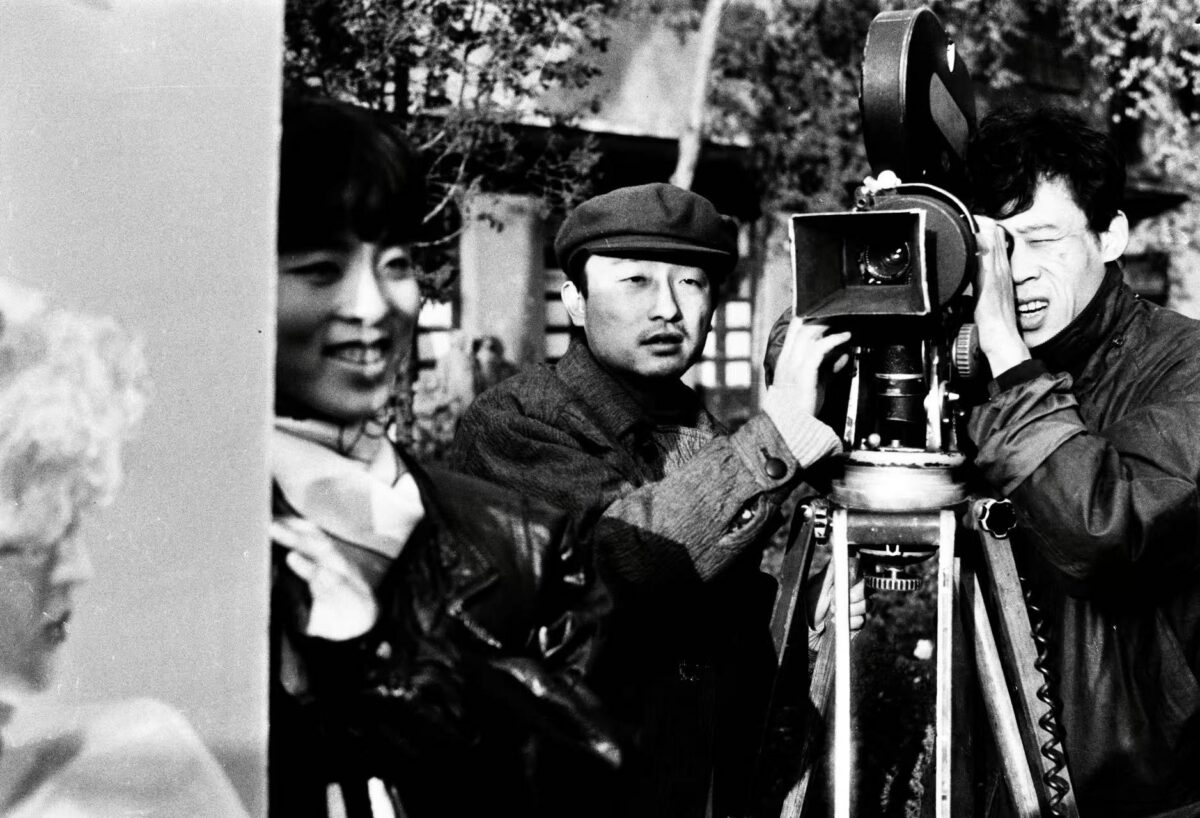
China’s planned economy wasn’t formally loosened until 2003, but by the late 1990s we were already in a transitional phase: there were still film quotas, but studios started to have no money to invest — state funding had fallen short — so they were allowed to partner with private money. For instance, when I made So Close to Paradise (扁担·姑娘) in 1996, outside money came in. Beijing Film Studio put up no cash but ceded a film from its quota. A private company could operate under the Beijing Film Studio name as a co-producer but with the private company footing the bill — the studio was selling a quota and we were buying one.
Exactly which year quotas were formally abolished, I’m not sure. Private companies could be set up and you could make films on your own. [Ed.: Starting in 2002, private enterprises in China were no longer required to purchase quotas and were allowed to independently invest in and produce films.] Around then the Film Bureau summoned us to a meeting. This was their first time formally sitting down with us. It wasn’t a discussion, really. They were there to share their views and evangelize the new national policy, which was basically: “No holding the past against you, what’s done is done. You can make films now. We hope you’ll do great things and respond to the call of the state’s new policy. Everything’s been opened up.”
I wouldn’t have been able to shoot Shanghai Dreams without that 2003 meeting. As soon as that meeting wrapped, I started looking for private money. In the past, finding private money all hinged on whether a studio would agree to sell you a quota, which was a huge hassle. Now private money could come straight in. Shanghai Dreams was essentially the first film made with no studio involvement at all.
What has it been like to have your films censored and banned? Comparing Shanghai Dreams with Above the Dust, say — 20 years on, is the review process any different?
With Shanghai Dreams, given the climate and the mood back then, people felt buoyant and upbeat. We spent maybe 10 or 20 days on the edit, and as soon as it was cut we rushed it to review. The deputy bureau chief at the time was on good terms with us; we talked a few times, he had us tweak a few things, we wrapped it up quickly. The whole process, production time included, was about two or three months. That is utterly incomparable to Above the Dust, which I finished shooting in 2021 and submitted for review in October 2022. Over 15 months we revised it three or four times, but the wait for their replies was long, and that’s what wears you down — the sheer uncertainty. In the end it still wasn’t approved, so we sent it straight to the festival in Berlin in February 2024.
The problem is that there’s no clear legal clause. Take ratings: abroad they can spell out what an over-eighteen audience can see, whether nudity goes to the waist or the whole body, how much intimacy can be shown, how far a violent scene can go. At least those things can be stated clearly. With our films, it’s all things that can’t be spoken. At a minimum [a ratings system] is a matter of common sense — even for a commercial film, now that marketization means lots of parents take their kids along, certain images come up on screen and a child sees them and gets frightened — and they won’t even solve the common-sense problems.
In the early 1990s there really were directives. I was in my twenties, and getting them scared the hell out of me. The central Film Bureau would send notices down to local film bureaus across the country saying that you may not collaborate with so-and-so or you must not let such-and-such make films, all stamped with the great red seal of the Ministry of Radio, Film and Television. These were direct orders. There are no such documents now, but I can’t presume to guess what exactly they’re thinking.
It has turned into a gray zone. The “hand” is still there, but it’s gone invisible. It used to manage things out in the open; now the real decider has become the market and capital. Your investment runs to 200 million yuan at the drop of a hat — tens of millions counts as small — and you need nearly two billion at the box office just to break even. So everyone self-censors to be safe, and the “hand” slowly becomes invisible. The upside is that there’s no red-letterhead document forbidding you to shoot films anymore. But because it’s gone invisible, and the market decides everything, everyone knows they’re in a state of “pending review,” of uncertainty, and no one dares make a rash move. You might ask a leader [for approval] and the leader says “welcome back,” but the moment you actually go looking for investment, the other side wonders whether you have the paperwork, and the market can’t guarantee your commercial return — so you’ve placed yourself inside a soft, uncertain limbo.
This is really a chicken-and-egg problem. The upshot is that they give you no explicit rules, and yet you run into no end of obstacles.
Right. Writing a script isn’t free, for instance, but they’ll go half a year, one year, two years, three years without giving you a reply [to approve it]. Then when the reply still doesn’t come, the money walks. Nobody wants to run that risk. It may be a clever method: leaving you to work it all out yourself, to self-censor. If they issued an explicit ruling the way they used to — the kind of thing [celebrated film director] Lou Ye ran into — the whole world would blow up, saying, after all these years of reform and opening, how are we going backward? So they won’t do it that way.
In an interview at the Berlin festival, when you were asked about Above the Dust being unable to screen in China, you said it was like a romantic relationship — one side putting in all the effort just doesn’t work. Do you think that captures your relationship with this system?
It used to be that kind of relationship. Early on, in the 1990s and 2000s, they wanted to change and we wanted to work — like a courtship, both people pushing hard. Then the system changed, settled into that other state, and there was no point in being the only one carrying the load. Since you care so little, why should I go on fretting day and night over Chinese film and culture? No good. It’s like a love affair: you don’t love me anymore, or it was one-sided on my part all along, and you won’t even acknowledge me. There’s no point. It gets dressed up as “letting Chinese film go out into the world”; we went out and won glory for you, and you ignore and suppress us — so forget it. Above the Dust was the last straw. Forget it.
In the early 1990s there really were directives. I was in my twenties, and getting them scared the hell out of me.
I’ve noticed that my friends, and young Chinese generally, don’t go to the cinema anymore — a lot of them watch short videos instead, which are fast and always within reach. Have you observed this too?
I’ve heard that filmgoers used to be in their twenties — over 18 and under 25, that was the core audience. Now that short video and self-media have taken off, young people find those more fun, and the filmgoing audience seems to have shifted upward, to 25, 30 and above.
This change is something you can’t help. Society has developed, Chinese film has gone to market, everyone has rushed off to make money there, and young people like watching Hollywood films or animation. So you study it, and once you’ve studied it you want only commercial success, and off you go in that direction. So if I’m going to criticize them, they should have known better than to stampede all in one direction. Even granting that the market should be the main thing, from an administrator’s standpoint you could at least give the law a nudge — you can’t have a 10-screen cinema showing a single film, say, because everyone wants to make money and everyone shows the same one. You should reserve at least three screens for so-called art films, right? But they don’t bother with that either.
So now that short video and self-media have surged and everyone has plunged headlong over to them, film has lost its young audience — and it serves them right. You could have seen society’s trajectory early, could have built in a little cushion and eased into it. Instead you’re caught flat-footed: cinemas close, or everyone stops making films.
I’ve seen some young people comment that they don’t watch films because there aren’t any worth watching.
Everyone became homogeneous. You make an animated film, I make an animated film, and we all converge. Faced with censorship, everyone starts self-censoring, because they discover that this kind of thing both has a market and seems to carry no censorship risk — so all at once, that’s what everyone shoots. Once you’re homogeneous, of course the audience tires easily.
Take Ne Zha (哪吒之魔童降世, 2019) — what does it get you to follow the herd with that? After another two years, maybe the trend won’t necessarily keep going. As long as it’s animation, as long as you throw money at it, you can make money, so everyone stays in that lane. That’s how it is. Some creators feel the kind of confusion we felt back in our day — except today it’s a double pressure. The severity of film administration is still there, and at the same time the resistance of the market is right here too, so for a lot of people the pressure is enormous.
| WANG XIAOSHUAI’S RECOMMENDATIONS | |
|---|---|
| BOOK: | Winter Swimming (冬泳) by Ban Yu, 2018 |
| FOOD: | Good Japanese food when I can get it; at home, thin-sliced fatty beef seared a few seconds per side in a dry pan and dipped in soy sauce |
| HOBBY: | Drinking with good friends |
| TRAVEL: | Thailand |
Of course, we’ve talked a lot about censorship, which is unavoidable. But Iran’s censorship is even stricter than ours, so why are their films better than China’s?
I think that argument is wrong too. You can’t say: I also have censorship, and Iran’s plight is even worse. Plenty of their directors get thrown in prison, that’s true. But when a few good works emerge under those conditions, it’s because, under pressure, one or two people of tremendous talent and courage may leap out with a work or two. In that situation the international world pays even more attention to what comes out — that’s not wrong. But that can’t be taken to mean that, because a few works can get made, the controls are therefore proven to be good, right? The former Soviet Union had superb literary giants and films too — but you can’t use that to argue, “See, to produce good work I have to bind your hand and foot and then set you to it.” That’s wrong. As for Iran, if Iran really could open up further, [its cinema and culture] might be even better than it is now.
You mean Iranian films are good, but the question is also whether they can sustain the output?
They do have a few directors right now who keep producing. They’re brave, unafraid of prison and talented. In Iran, as far as I know, it’s relatively better as long as you don’t touch the theocracy. This is not intended as a defense of Iran. I’m only saying that some people who argue with me say, “Look, stop complaining about your environment — their environment is worse and they still produce [films]!” I say, fine, I’m not as formidable as they are, but let’s first free up the environment. If we get the environment right, China has such a rich seam of stories to tap, unbelievably rich. Out of that rich seam you might get the huge blockbusters that everyone watches and which have mega box office returns. Once you have those, you’ll surely also have the little arthouse films made by normal people. There’ll be festivals, there’ll be club showings and fan screenings, and it’ll become tiered. A 300 million yuan film can gross five billion, and [the ecosystem] will also be able to support films made for three, five or 10 million yuan, so those people can survive too.
Everyone’s always lamenting how audiences have changed, how the shape of the film market has changed, or debating how the global economy is in chaos, wars and so on — everyone discusses this as if that is what is affecting the film industry. Is there an effect? There is. But our situation may be genuinely different from that: we have long had something binding our creative hands and feet, and that’s the root of it. A lot of people are unwilling to tell the truth, or don’t dare. “What’s the point of bringing it up?” they say.
We’re running the hundred-yard dash in leg irons and handcuffs. When the gun goes off, others can freely sprint, while we run the whole way in shackles.
Suppose China had no restrictions overnight — would good films come out tomorrow?
Some people who are ready would surely emerge, but it would still take time. Young people are still learning. It’s not like we could open today and start shooting films tomorrow. Developing talent and securing funding takes a few years, it can’t happen overnight. But the unshackling has to come first. We take these films to festivals, sometimes we win a small prize, sometimes we don’t — and then people sneer at us. I remind them: We’re running the hundred-yard dash in leg irons and handcuffs. When the gun goes off, others can freely sprint, while we run the whole way in shackles. Naturally we hope the shackles will be loosened — that’s not to say that then we’ll outrun the others, but at least there’d be some give. It’s a chicken-and-egg problem.
So do you still plan to make films on Chinese subjects going forward?
That isn’t a question of whether I want to — it depends on the circumstances. China is constantly shifting. Sure, the system seems monolithic, but there are subtle changes during each period. Recently, I heard of a deputy [film] bureau chief who, within half a year of starting his role, released a whole batch of films that had been held back. Afterward, apparently, his own position became precarious and he had to write a lot of self-criticisms. Some films may have been freed, passed and released in that three or four months while a warm breeze blew but the wind shifted fast — one round of criticism against him and he tightened restrictions again, and next thing you know you have missed the window.
What film are you working on now?
I’m planning to shoot one this year, but in Canada. We’re adapting a short story called “Child’s Play” by Alice Munro.
Is this your first English-language film? Why start making films in English?
Yes, it is. Because you can’t go back [to China] and shoot. The whole climate, the whole trend right now has no space for it. On top of which, costs and capital keep tightening and the pressure keeps mounting. If you’re going to go back and make films, then you’d still have to pivot. People might take a swing at it, but if you don’t pivot, well, it’s been 30 years now of trying, through film itself, to test the market and reach the audience while censorship and control bear down on you the whole time. So think about it, how could money, capital, be so foolish? It won’t run that risk, and the risk keeps growing.
This film has actually been years in the making. The pandemic and so on cost us several years. If Above the Dust hadn’t turned out this way, or the environment hadn’t been like this, normally you’d have plenty of plans inside China, things couldn’t just stall. As it is now, as someone who makes films, whatever the changes bring, this could be my last film, or I could keep going for a bit. And if one day AI rises up and the whole film industry vanishes, then I’ll retire. There’s no help for it — you can’t hold back the tide. ∎
Translated from Chinese by Alexander Boyd and Claude.

Yi Liu is a bilingual journalist from Chongqing, based in New York. She is a staff writer at China Books Review, and previously worked at The Wire China, The New York Times and The Beijing News. Her articles have also appeared in The China Project, Initium Media and other outlets.