Sign up for our newsletter to be notified of new posts!
Welcome back to What China’s Thinking, our interview column with Chinese public intellectuals, thinkers and creators on the ideas that impassion them.
China is among the world’s least religious countries, if the statistics are to be believed: only 10% of Chinese adults say they adhere to a faith. But if asked about their more general beliefs, a different picture of faith in China begins to emerge. Nearly half of Chinese people believe in fengshui, a traditional form of geomancy, and over 24% of Chinese adults plan important life events for “auspicious days.” Someone who proclaims not to be religious might still go to a temple to burn incense before their child takes the gaokao exam; flip through the Yellow Calendar (黄历, a divination guide) before their marriage; venerate their ancestors on Tomb-Sweeping Day; or pray to a spirit for deliverance upon running into trouble.
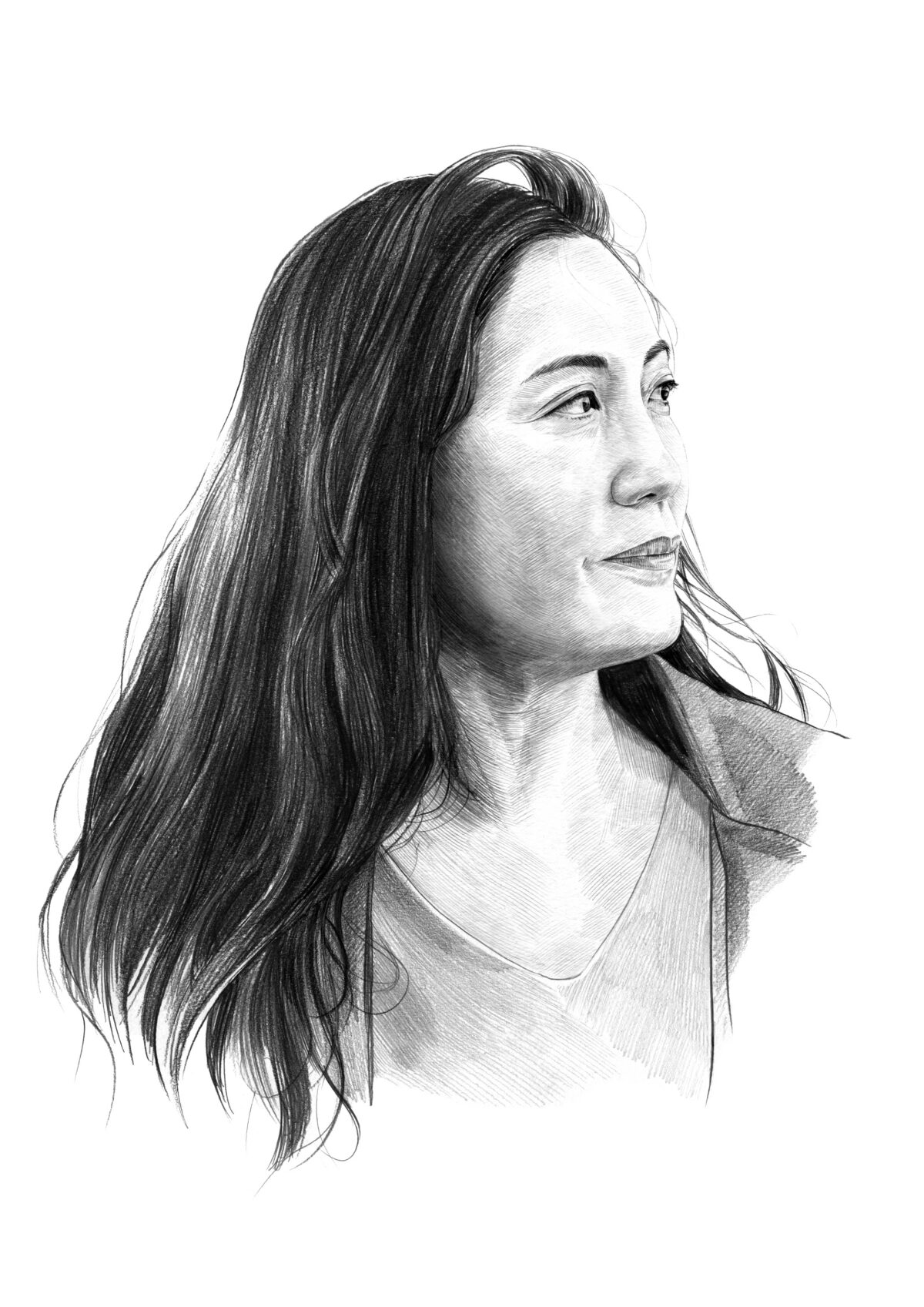
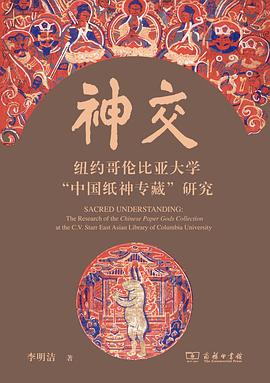
So what do Chinese people actually believe? I asked Li Mingjie, a former professor of Chinese language and cultural anthropology at East China Normal University [ENCU], now an adjunct instructor in NYU’s Department of East Asian Studies. Trained as a linguist, Li’s study of internet slang led her to explore social change in contemporary China. In 2017 she started to research Chinese “paper gods,” cheap printed texts and images that serve as portals to the divine. Li’s research became the basis for her Chinese-language book Sacred Understanding: The Research of the Chinese Paper Gods Collection at the C.V. Starr East Asian Library of Columbia University (神交: 纽约哥比亚大学“中国纸神专藏”研究, Commercial Press, 2025), which uses paper gods to explore how Chinese people have expressed their ideas about family, fate and the unknown. Li studied paper gods in their two most common iterations: door gods (门神) and zhima (纸马) or “paper horses.” The former guard gateways; the latter are burned as offerings to the nether world.
Li Mingjie and I spoke a number of times in New York about faith and belief in China. She is easygoing and bubbly, and always smiled as we talked. Our discussion ranged widely from paper gods to a poetry journal she founded with the inmates of Tilanqiao Prison in Shanghai. In one of our conversations, I asked her what she thought about the new youth trend in China of praying to the Buddha. She did not think it was evidence of a genuine religious revival. Instead, she believes prayer has become an outlet for private speech amid a notable decline in freedom of expression: “Say a prayer, worship a god. At least there’s someone you can say it to, and say it to safely.”
Yi Liu: Your academic career has taken a few twists and turns. Why did you choose linguistics and then folklore studies? Does it have to do with how you grew up?
Li Mingjie: My family is originally from Ningbo, in Zhejiang. My grandparents moved to Shanghai — all the top industry and commerce people in Shanghai at the time came from Ningbo, and my family made its money there. A lot of dialects were spoken in my house. My parents spoke Shanghainese; my father, an executive and engineer, spoke Ningbo dialect with his sister and his parents; and many of his colleagues and the workers spoke Wuhan dialect. So I speak Shanghainese and Wuhan dialect and Ningbo dialect and Mandarin. I also speak Henan dialect, and Cantonese because I worked in Hong Kong.
There were also particular reasons [for my studying linguistics]. My father thought I was too sensitive for literature, and that linguistics might be a better alternative. Having been born into a capitalist family, he worried a great deal about my getting too caught up in literature, ideology and politics. I entered East China Normal University in 1987 and stayed until 2023, growing from an undergraduate into a professor, all at ECNU.
In 2017 I came across the “paper gods” material at Columbia University and began going back and forth to New York, to study it. By the time I retired in 2023, New York had come to exert an enormous cultural pull on me. I had become interested in New York’s archives of Chinese folk culture, and in the work devoted to introducing Chinese folk culture to America.
For me, the thread running from linguistics to folklore studies to cultural anthropology is a consistent one. What I have always cared about is this: how the customs, rituals and images expressed through language present our memory and expression of the past and of the present. That expression is in fact our everyday practice — how a person settles himself through daily practice, understands the world, and then copes with social change.
Across your whole academic shift — from language to folklore to cultural anthropology — it seems to me you’ve been answering one question the entire time: how you understand the world, and your own relationship to it.
I don’t emphasize myself that much; I’m not important. What I’ve been trying to understand all along is human existence as such — how a person situates themself within social ideas. In the end, that’s what this research is looking at too: how, in a profoundly uncertain world (and from my own vantage as a professor it has been very uncertain, in the wild surf of an era), a person stays steady inside themself and does no harm.
This probably has to do with my own experience. Both my parents were “stay-out-of-it” types during the Cultural Revolution, which was rare. They were very important designers at a large plant. But they came through it safely, because they knew early on that harming people was wrong, that persecuting people has no dignity in it, that you cannot treat human beings that way. So I learned fairly early to hold honor and disgrace, rise and fall, a little lightly — and also that within those rises and falls there is the true and the false, things you can let go of and things you must not. Which is also why I would go on to study why people have faith, and what faith is.
You recently published Sacred Understanding. What exactly are China’s paper gods? And why did you write this book?
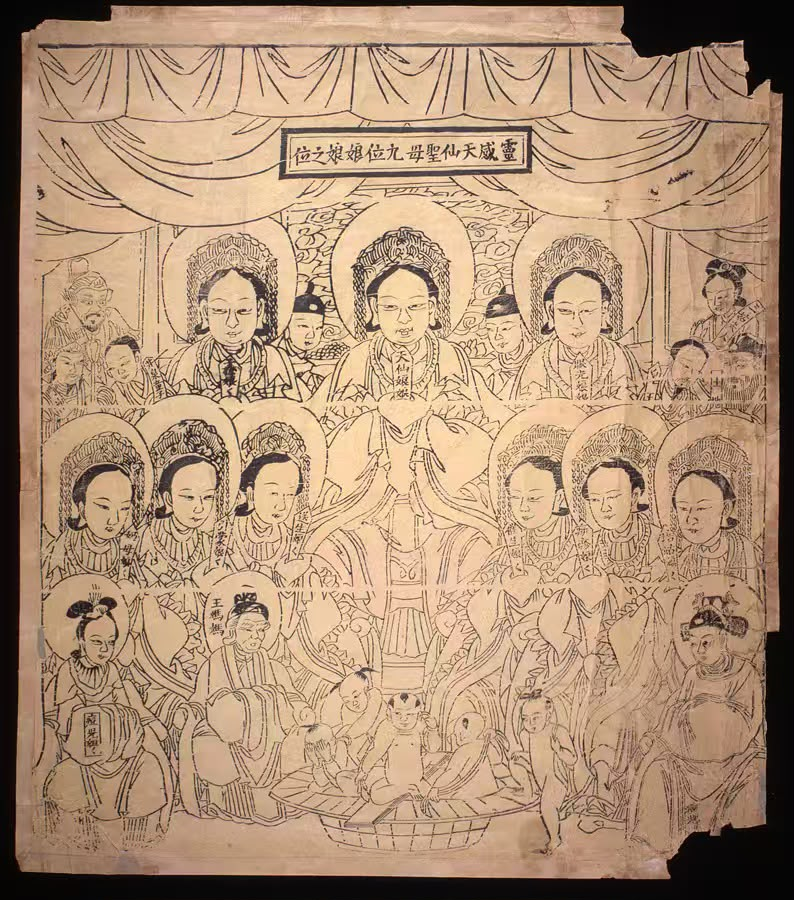
In 2017, after I transferred from ECNU’s Chinese department to the Institute of Folklore, I wanted to open up some new ground and do comparative urban folklore. New York was the obvious case to set against Shanghai. As it happened, Jim Cheng, then director of Columbia’s C.V. Starr East Asian Library, introduced me to Columbia’s Chinese Paper Gods Collection. In 1930 an American woman, Anne Swann Goodrich, came to Beijing for the second time, following her husband, with three children in tow. The following year she bought up every paper god in the Renhe paper shop in Beijing — a full panoramic record of the actual state of folk belief in early Republican Beijing. The book is built around that collection.
On page eight I give a definition of the paper god. The concept itself isn’t a Chinese one — Europeans and Americans both like the term “paper god.” In China, though, it means “door gods plus zhima.” Door gods [divine guardians of doors and gates] are easy enough to understand. Zhima, paper horses, are comparatively harder. We used to think of door gods and zhima as two separate things. But it was because of the Europeans, the French above all, that we came to see that door gods and paper horses are both gods. This is all a system of gods that ordinary Chinese believe in. Paper gods — door gods plus zhima — is our pantheon. It is the pantheon of the common people, the pantheon of Chinese folk religion. Not Daoist, not Buddhist.
These beliefs can only be seen from the standpoint of the other. Much of Chinese academia, and ordinary Chinese too, have never heard of paper gods, and assume the foreigners must have gotten it wrong — a misreading. But the thinking of the other is not necessarily all misreading. Set against zhima, the door-god system is relatively simple: generally historical figures and immortals. Shenshu and Yulü, say, who are immortals out of the Classic of Mountains and Seas (山海经), or Qin Qiong and Yuchi Gong who are historical figures. We know that Chinese people will elevate historical figures, people who made important contributions, into gods.
With urbanization moving so fast in China, the rise of the middle class and the growth of the internet — how widespread is the paper gods tradition in China now?
Because economic and cultural conditions differ from place to place, it’s uneven across regions. In Yunnan province, for instance, you can buy zhima at any grocery store; they’re an ordinary everyday item. Or take Nantong [in Jiangsu province, next to Shanghai] — they are also an entirely common item there. In Shanghai they may survive in the form of “intangible cultural heritage”: woodblock-and-watercolor prints, say, sold as tourist souvenirs and no longer objects of belief. But that doesn’t mean they’ve disappeared. When you hand out a red envelope at New Year, that too is a mutation of the paper god; only the medium has changed. China is too vast.
But can you say with confidence that any Chinese person knows what these are?
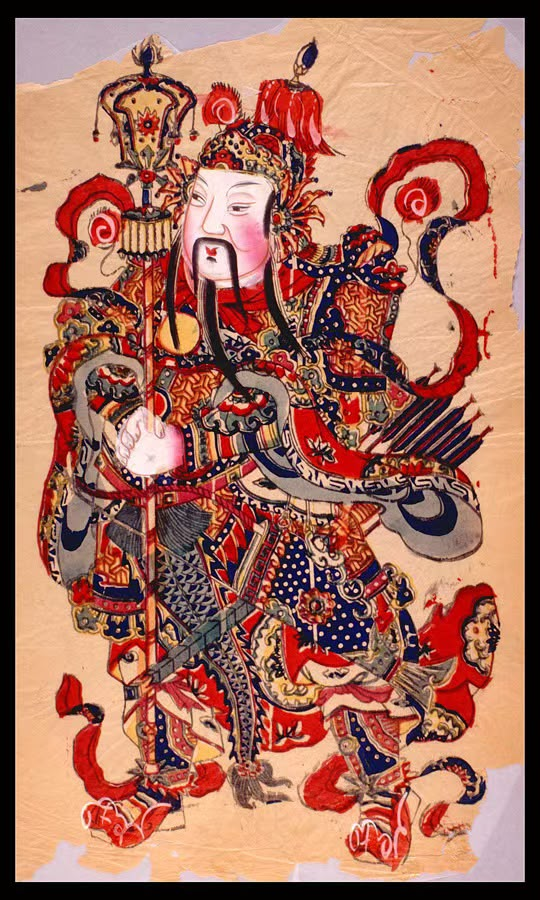
Of course — everyone has seen them. But there’s another point: what survives overseas is more extensive still. In New York, the larger Chinese supermarkets all have a dedicated counter selling zhima. Hong Kong Supermarket in Manhattan’s Chinatown has an enormous counter for zhima and folk-worship supplies. And another one, Huale Supermarket, has several whole floors of zhima.
So in plain terms, zhima are a kind of Chinese belief and blessing — hopes printed onto paper — or a visualization of how Chinese people imagine the gods.
It is a human deity. In the Qin and Han dynasties it was connected to burial sacrifice. Back then the aristocracy sacrificed real horses — buried real horses alive, as grave goods. Later that came to seem too extravagant, too wasteful, and so they made a horse out of paper. You can still see this kind of paper horse today in the funerary paper shops of Manhattan’s Chinatown. Look at Sun Yat-sen’s funeral: paper horses appear there.
Why are the paper horses burned?
How do you go about getting a wish to reach the gods? The simplest method is to burn it, because when you burn it the smoke goes up. Chinese people are both very romantic and very concrete: if you want to tell a god something, how do you make sure he receives it? You burn it for him.
So the smoke is the means of transmission, something like a telephone line?
It’s express delivery. Among the god images there is even a god for exactly this: Sanjie Zhifu Shizhe (三界直符使者), who holds a box in his hands; you put your words in the box, and he carries them up for you. Even today, in China’s Central Plains, the kitchen god (灶君) sacrifice before Spring Festival keeps the custom alive — after the offering [of sweet treats] you scatter a handful of soybeans across the roof, and their rattling is the sound of hooves.
Why do Chinese people place their belief in paper, fragile as it is?
Because it isn’t a courtly aesthetic or an elite one. It’s thoroughly of the common people — it belongs to the bottom, to ordinary people. Paper is the medium an ordinary person can most easily get hold of, the cheapest and simplest, and it can be burned too. That fits the Chinese imagination of the gods: immortals ride the clouds and mists, they’re all up above.
Paper gods are the pantheon of the common people, the pantheon of Chinese folk religion. Not Daoist, not Buddhist.
Zhima are fascinating, but they’re a small part of Chinese folk culture. Could we talk about the broader history of Chinese folklore and religion?
Chinese folk belief is very old. It begins with the worship of nature gods: the Queen Mother of the West (西王母), the God of Mount Tai (泰山神), the Duke of Thunder (雷公) and the Mother of Lightning (电母). This is the kind of nature worship every country and every people has some version of.
But what we see today in China, what in some sense is still alive today, is a conception of ancestor worship that became systematic after the Ming and Qing dynasties. In my book I quote a passage from the scholar Anne Swann Goodrich:
The Chinese were conscious that the problems of life were too great for human beings to solve by themselves, so they turned to the spirits of the dead, who, having been human, would understand the problems, and being spirits, had supernatural power to help. They were conscious of the reality of spiritual, supernatural forces in everyday life, that influenced their own lives individually. Each person worshipped the god he thought would help him most. Belief in the supernatural is one of the foundations of Chinese culture. Without belief in the continuation of life after death, resulting in ancestor worship, China would have developed a different society.
Chinese folk belief recovered very quickly after Reform and Opening. Why did it come back so fast? You once recommended to me the scholar Adam Yuet Chau’s book Miraculous Response: Doing Popular Religion in Contemporary China (2005), that laid out three explanations. First, that the organizational mechanisms of popular religion reproduce secular ways of living, so it recovers easily. Second, that village elites treat temples as political, economic and symbolic capital, so the growth of popular religion is closely bound up with the emergence of a new kind of local elite. Third, local government. Do you accept those three explanations, and are there examples of it?
Entirely reasonable. Let me give an example: the Miaofengshan temple fair [a traditional
cultural event in the mountains to the west of Beijing], which has a very long tradition. Since the Ming and Qing dynasties it has been dedicated to Bixia Yuanjun (碧霞元君), an extremely important fertility goddess for women — a little like Mary in Western religion. First of all, it’s a tradition. Even after people weren’t permitted to believe [during the Cultural Revolution], they might practice their belief not by way of “going to burn incense” but by way of climbing the mountain, and so it carried on. If a family held a wedding, or a wedding or a funeral, people mobilized and organized very easily. That’s how it works.
Climbing the mountain, spring outings, ascending the heights, excursions — they all end up at the temple. That’s its first organizing principle. Including going as a village, together. They organize by village, township, pilgrimage association or social organization, and the connections run extraordinarily wide. It’s stubborn. The roots go deep and fine, and are very hard to clear out. The organizational capacity of the folk didn’t disappear because religious belief was disallowed. It is isomorphic. Or understand it this way: religious organization and the social-mobilization organization at the base of folk society are isomorphic — they are one organization.
Then there’s the government’s “culture sets the stage, the economy performs the play.” China put forward that slogan. The Miaofengshan fair has become a local tourism brand, an economic brand. I went to observe it a couple of years ago: business was booming, spirits were high, and under the banner of going to the fair to worship the gods people also got a spring outing out of it. It combines the various Chinese habits of belief very neatly. Toward folk belief the government is, if anything, supportive. There is one thing I’m not sure it’s convenient to say — what the Chinese government worries about most is Christianity. A great deal of Christian activity is controlled.
Across all these years of repeated maneuvering with politics, folk religion has turned out to be an extremely adroit player. It isn’t an institutional religion, so the ruling class doesn’t worry about it as intensely. An institutional religion has strict organization — a pope, a church — whereas a folk temple fair looks unorganized. So the governing apparatus isn’t on guard against it. And when there’s a larger “enemy” — Christianity, say, an institutional religion it feels it needs to guard against — it will encourage the one and suppress the other. Which makes folk religion something the government often uses, and even assists.
In the years when it was absent on the mainland, Taiwan and Hong Kong — and [the diaspora] overseas, Malaysia included — served as a mirror of Chinese society, and it survived there. In that sense we even have a surviving strand. It persisted at the base, it’s grass that wildfire can’t burn out: the roots are there and all you’ve done is cut off the top. Hong Kong’s intangible heritage, for instance — Hong Kong folk custom — is entirely an expression of folk belief, preserved whole, never broken. It’s a cultural lineage.
China has more than 1.4 billion people. People must find a place for their spiritualism. But by the statistics, China’s rate of religious belief is very low. So do Chinese people have faith? And if they do, what is it they believe in?
They do. It’s a belief diffused through life — dissolved into life. A belief that I should do something, that life should be made better, that all of life’s troubles should be dealt with. What ordinary people care about is whether this religion is useful. Does it solve an actual problem? That is the essence of Chinese folk religion. Efficacy, efficacy, efficacy — it has to be efficacious, and efficacious means useful. So Chinese gods are very concrete. There’s a god for getting rich and a god for having children — my book discusses childbirth, and the fertility gods are extremely specific: one for conception, one for hastening labor, all different gods.
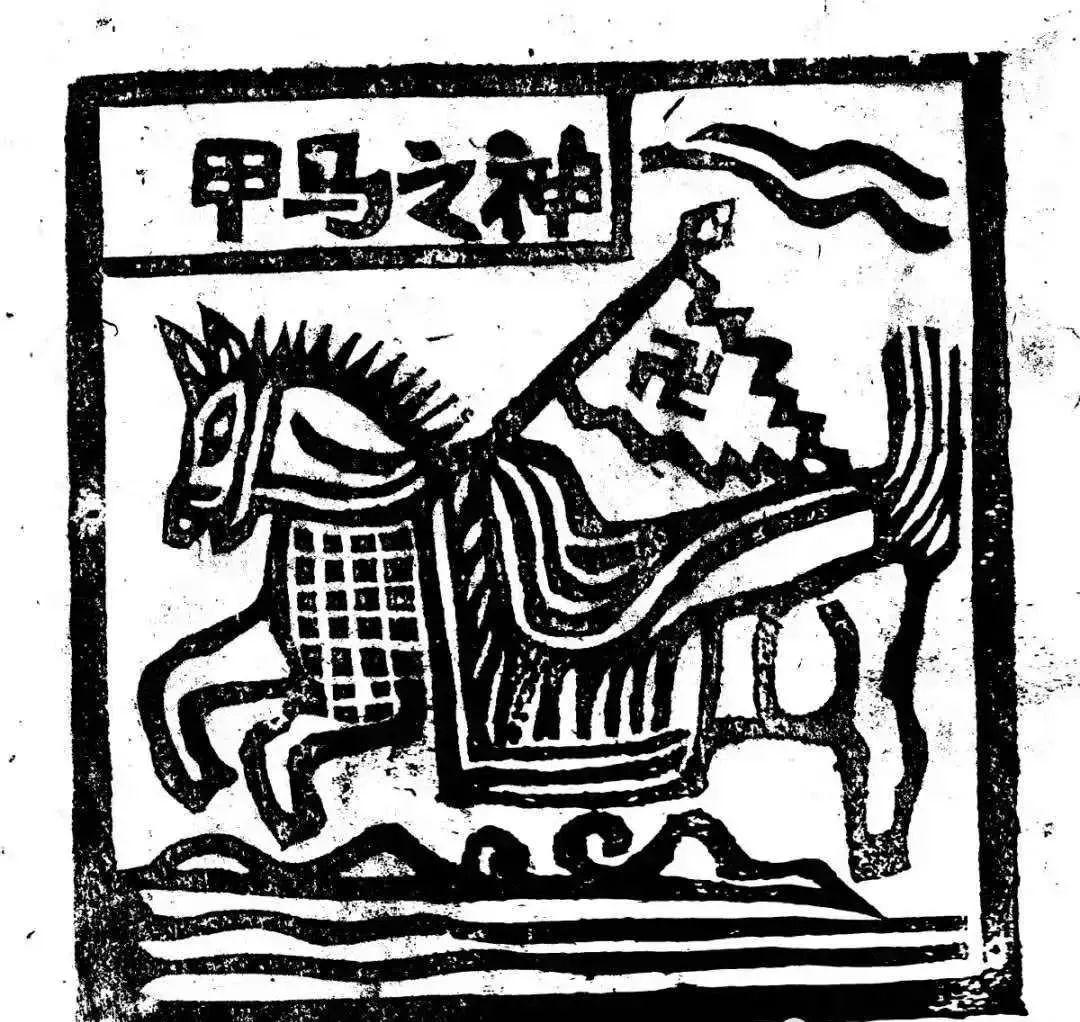
A paper horse (zhima or jiama) from Dali, Yunnan province. (最大理/Zhihu)
Chinese belief doesn’t necessarily show up first as “what religion do I believe in” but rather as “how do I handle uncertainty in daily life.” We can’t simply answer the question “what does a Chinese person believe” — gods, ancestors, morality, relationships. More precisely, the structure of Chinese belief is usually not organized around an exclusive doctrinal system. It is diffused through family, ancestors, local society, ethical order, festival ritual, trade organizations, everyday life. Chinese people look as though they believe in nothing, in the sense that it isn’t centered on an independent church, fixed doctrine and a clearly marked believer’s identity. A person may never say “I am an adherent of such-and-such a religion,” but that doesn’t mean he has no structure of belief. Much of Chinese belief comes through doing — Adam Chau has a concept for it, “doing religion.” It is doing: you have to do it, your body has to be in place, you have to show up, the money has to show up. If those aren’t there, your intent is a fake.
So we can’t say that Chinese folk belief has no system. Its system doesn’t take the form of religious organization familiar to Westerners; its order is hidden inside daily life. Like salt going into water, and water going into life. In folk religion, many elements come from Buddhism, from Daoism, and even from elsewhere — Matteo Ricci, for instance, is also a god in folk religion. Within the Chinese religious sphere, Ricci is no longer a Catholic. He’s the patron god of the clock and watch trade, because precision timepieces came from abroad [in the late Ming] and at that time the greatest foreigner Chinese people knew of was Matteo Ricci.
Why is Chinese belief so very different from organized religion in the West?
History, geography, ethnicity — it’s far too complex. The differences among the 56 ethnic groups are too great. Down in the southwest people follow Buddhism, Islam, even Mormonism. Religion in Quanzhou, in Fujian, was extraordinarily developed in the Ming; every religion in the world gathered there, so Quanzhou has temples of every kind, different two paces apart.
Second, our illiteracy rate used to be very high, which made organizing and disciplining thought difficult. A great deal of our knowledge was transmitted through opera and drama — things passed from mouth to ear are very hard to systematize. A religious system requires singing hymns and reading scripture. There was no way to manage it.
The structure of Chinese belief is usually not organized around an
exclusive doctrinal system. It is diffused through family, ancestors, local
society, ethical order, festival ritual, trade organizations, everyday life.
On Chinese social media I’ve noticed a lot of young people starting to pray to gods and worship the Buddha.
Young people going to temples, buying amulets, taking part in intangible-heritage events doesn’t necessarily mean they’ve become religious believers in the traditional sense. A great deal of the time they are looking, inside a life that is intensely competitive, intensely mobile and intensely uncertain, for somewhere to put their feelings, for a cultural belonging and a touchable sense of order — even if the emotional relief lasts only a moment.
Does that count as a revival of belief?
| LI MINGJIE’S RECOMMENDATIONS | |
|---|---|
| BOOKS: | Course in General Linguistics by Ferdinand de Saussure (1916); Tractatus Logico-Philosophicus by Ludwig Wittgenstein (1921) |
| FILMS: | Farewell My Concubine, dir. Chen Kaige (1993); The Godfather, dir. Francis Ford Coppola (1972) |
| MUSIC: | Édith Piaf; Jacqueline du Pré |
| HOBBIES: | Keeping company with plants and with rivers, lakes and seas — and talking to them |
No. It’s a collusion of politics and economics. So many questions can’t be discussed in China now, but a nationalist revival under the name of patriotism can be, and it dresses itself up as patriotism. With the economy in difficulty and foreign trade increasingly obstructed, this is the only direction left to move in. That’s the negative reading, of course. The positive reading is that after 40 years of Reform and Opening, China’s culture has established itself further, and people are starting to feel that wearing huafu — Tang and Han dynasty dress — is no longer ridiculous. In fact the media took part in that, too. So it’s a collusion of media and politics. And it’s permitted: wear Tang or Han dress and nobody says anything to you; be openly gay and people will have something to say; wear a kimono and you’ll still be abused for it. So this doesn’t even deserve to be called a revival. From the standpoint of scholarly observation I’d go further: this so-called revival strikes me as dangerous.
For instance, Xi Jinping went to Suzhou [in 2023] to try his hand at local woodblock New Year prints. But that culture is only a performance. It’s a collusion of economics and politics, because he wanted to stimulate Suzhou’s economy and needed a representative for it. In reality the craft is already dead. Nobody in Suzhou uses it now and nobody carves it — probably fewer than ten people can carve at all, and they’re inside art academies.
Your view differs from what Ian Johnson observes in The Souls of China: The Return of Religion After Mao (2017). In that book he thinks a revival of belief is underway in China.
That book was written before the pandemic. Before and after the pandemic are two different worlds. The political ideology isn’t the same either. Before the pandemic, China and the United States cooperated; they were important trading partners. Now that’s changed — China’s relationship with Russia, China’s relationship with the whole world, have all changed.
The more the economy falters and the more uncertainty people face, the more easily belief becomes the only current thing and the only floor beneath them, because there is nothing else to choose. So the paper god is a medium for handling our unstable relationship with the world. You may not print zhima any more, but you’ll take up a religion, say a prayer, worship a god — and you’ll ask more concretely: give me a child, find me a job. At least there’s someone you can say it to, and say it to safely.
Speaking of the pandemic reminds me of an infamous exchange back then. Officials enforcing a Covid lockdown threatened a young man, telling him that his compliance with pandemic controls would affect his children’s future. The young man’s answer was: “We’re the last generation, thanks.” That video shocked a great many Chinese people at the time.
It was extremely shocking. When your ancestor dies they become a god who protects you. A great many Chinese still think this way — that once mama’s she will still watch over you. But that young man’s line means that, at the root of it, in order to spare his child your fear, he has cut himself away from Chinese tradition, from folk belief, entirely. A total severance. Social contradiction had reached its peak at that moment.
When these young people say “there’ll be no next generation,” I can feel their pain, because in fact they have placed themselves in the position of a ghost: I’m willing to be a ghost, and still I won’t cooperate with you. That is utter despair. Chinese expectations of descendants and of wealth are extremely stubborn, it’s fair to say. If something that important gets abandoned, you can see how thoroughly the policy had lost the people. Life in China is very hard. Modern Chinese history has never been good. If that sliver of possibility didn’t exist, I think Chinese life would have collapsed altogether.
I remember being utterly shaken when I saw that video online. But when I shared it with my American colleagues, they clearly weren’t as shocked as I was.
Because in Western culture each life answers to God alone, and so it’s a life that can be celebrated. But for a Chinese person, I am not returning to heaven, to God — I am to become an ancestor who watches over the next generation. In that sense a Chinese person is a person inside social relations. They aren’t an independent individual; they are a point within a social order. They may belong to a guild, to a community, to a family. So if you dig that person out of those relations, they suffer terribly. Which is why “may you be the last of your line” (断子绝孙) is the most vicious curse in the Chinese language.
They are looking inside a life that is intensely competitive, mobile and
uncertain, for somewhere to put their feelings, for a cultural belonging
and a touchable sense of order.
In an interview, you mentioned that you still regularly teach poetry classes to inmates serving long sentences in a prison in Shanghai. How did that begin?
A student of mine killed a man. His wife was having an affair — she was in my class too, I was their counselor — and he killed the man his wife was living with. That was the situation. Prison reformed him, and then he put my name forward, asked me to run a poetry society with him, to give lectures. So from 2009, after I went to see him, I agreed to lecture on poetry, to run activities for them, a kind of cultural salon. The prisoners who behaved well could take part, and for that half-day they wouldn’t have to work. Prison [in China] is a place of heavy physical labor. A lot of our export orders are made by them. Light bulbs, shoe soles — they make all of it, because it’s fast and cheap, and they have to be kept in there anyway, so: labor, hard labor.
How often do you go, and how many people are there?
The poetry society has more than 50 members. But every session is networked, so they can listen online too, sitting in their own cells. Sometimes they hold a full assembly, 300 or 400 people, or everyone comes, [up to] 1800 people, all sitting below, face to face. Back then I went to lecture on poetry about once every three months. I’ve lectured on Feng Zhi’s sonnets, on Shakespeare. Most recently, in 2025, when I went I also met Chen Nianxi, the miner poet [who once worked as a poetry teacher in the prison]. Whenever I’m back [in China], I go.
Was there anything that particularly stood out to you in this class?
There was a murderer in his twenties who couldn’t write. After taking the class, he asked someone else to write down his words and composed a poem called “To My Mother.” It was beautifully written.
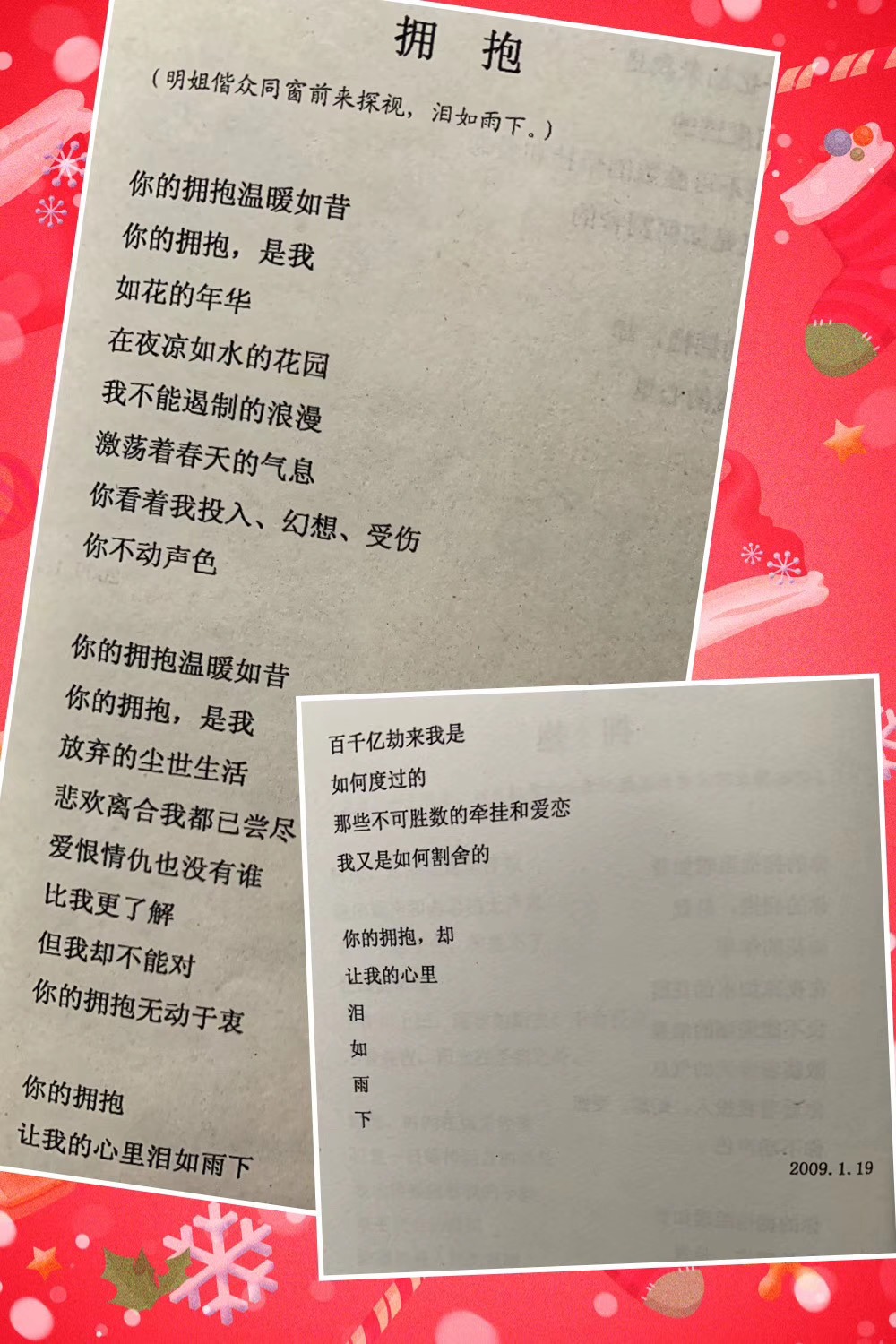
He also wrote a poem called “Embrace.” He originally said that Confucius taught us to repay injury directly — if someone treats me badly then I have to kill him. That’s what Confucius said [he thought]: repay injury with injury, I can’t repay injury with kindness. And he refused to repent, refused to admit fault. When I saw him that time there was nothing worth saying to him, so I gave him a hug. What was there to urge on him? What he did was a grave crime. On the question of good and evil, right and wrong, there is no compromise. But he could still be loved. What I mean is: Tilanqiao prison holds long-sentence convicts, not ordinary ones — it’s a men’s prison for serious offenders. Even in the most severely constrained circumstances, a person still needs language, needs expression, needs to meet face to face.
They cry every time. Whole rows of them crying, rows of tears, always. Some of them cry from start to finish. Think about it: this is reform through labor, a policy of compulsory reform, where the officers call people by their numbers. Everyone is a number. So to be treated as a person, for one afternoon out of several months, is an enormous opportunity. ∎
Translated from Chinese by Alexander Boyd and Claude.

Yi Liu is a bilingual journalist from Chongqing, based in New York. She is a staff writer at China Books Review, and previously worked at The Wire China, The New York Times and The Beijing News. Her articles have also appeared in The China Project, Initium Media and other outlets.