Sign up for our newsletter to be notified of new posts!
This is an episode of the China Books Podcast, from China Books Review. Follow us wherever you listen to podcasts, including Apple Podcasts and Spotify, where a new episode lands on the first Tuesday of every month. Or listen to this episode right here, where we also post the transcript.
On this episode of the China Books Podcast, we are delighted to be joined by Na Zhong, a columnist for China Books Review who writes the “What China’s Reading” column, a deep dive into the Chinese-language books that are popular across the Sinosphere. The column is an essential guide to dark horse books out of Douban, bestsellers that are spicing up literary salons in Beijing and a host of other titles that we are delighted to share with you, often for the first time in English.
So listen in for a wide-ranging conversation as we discuss Na Zhong’s various other literary endeavors, including her bestselling translations of Sally Rooney into Chinese, her new novella, Three, and the general process of writing across languages, whether in English or Chinese:
One of my goals is to highlight what Chinese women, especially a younger generation of Chinese women writers, are creating — what kind of stories they’re telling, what kind of experiences they’re covering, and what we can learn from that.
Na Zhong
Guest
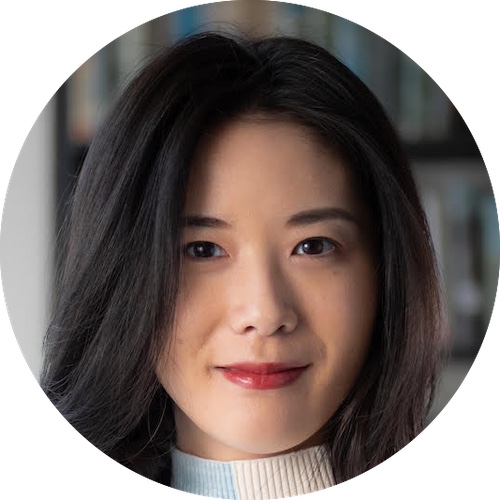
Hailing from Chengdu, Na Zhong is a New York-based fiction writer and literary translator. She is author of the novella Three (2026). Her work has appeared in Guernica, A Public Space, Lit Hub and others. Na co-founded the bilingual creative community, Accent Society, and co-hosts the Mandarin literary podcast 跳岛FM. Na is a 2021-2022 Center for Fiction Emerging Writers Fellow, and a 2023 MacDowell Fellow.
Transcript
Alexander Boyd: So, Na Zhong, where are you from, and how did your interest in literature begin?
Na Zhong: I was born and raised in Chengdu, where I lived until I was 18. My mother majored in Chinese in college, so there were always books in my house, and a lot of classics, a lot of translated literature. Since I was little, I think I was a really annoying child, always asking her to teach me how to read. And I think one day, out of frustration, she just threw me a bunch of comic strips and also newspapers. So that’s how I started to learn how to read, which made me a little bit more advanced than other students in my class when I entered primary school, and that sort of gave me confidence, I guess. And I started writing, and I started to read even more actively, and one thing led to another, and eventually I became a reader of literature.
And this love of literature and reading of literature — how did you begin translating? And what did you begin writing?
Well, I can always say that I wrote my first story, my first fairy tale, when I was a little girl. But I studied translation in college, and then I did my first master’s in English literature. And then I decided to study creative writing, and I applied to a couple of schools in New York City, got admitted, and that’s how I started to write in English more seriously.
At the same time that you were starting to experiment with English, you were reaching great heights in the world of Chinese translation. Specifically, you translated Sally Rooney’s first three novels, Conversations with Friends (2017), Normal People (2018), and Beautiful World, Where Are You (2021), into Chinese. How did that come about? Do you know Sally?
Well, when Sally Rooney’s Chinese publisher reached out to me, I was in the first year of my MFA program, and I definitely wouldn’t say I’ve reached any heights in translation. It’s just that the protagonist of her first novel, Conversations with Friends, is a young woman who’s interested in literature and who performs spoken word. So probably the publisher saw some connection between my personal experience and the protagonist, and they were also looking for a translator who’s roughly around the same age as Sally Rooney. But back then, when Conversations with Friends first came out, Sally Rooney wasn’t as big a name as she is now. So when the publisher and I started working on the translation of her first novel, none of us had any idea of the scale of popularity that she would eventually reach. So back then it was just another translation project that I took on after I graduated from college. But I would say it was a very foundational experience for me, not only as a translator, but also as a writer.
Because when I was trying to find a voice for Sally Rooney in Chinese, I was also trying to discover my own voice in English. And I have to say, her prose is such a great example to follow when you try to write in a foreign language. Her prose is deceptively simple, but it’s also very emotionally rich. It’s straight to the point and unpretentious. It can be very lyrical, but it also has the ability to carry humor. So it really emboldened me. Because when you first start writing in a foreign language, you get very self-conscious about the simplicity of your prose, the limited vocabulary that you have access to. But translating Sally Rooney made me realize that it’s not about the fancy words that you use. It’s about the subject matter, what really interests you, the human relationships and the emotional experience, et cetera.
As you alluded to, your Rooney translations were wildly popular in China, even if you hadn’t foreseen that when you started the project. Why do you think they resonated with Chinese audiences so much?
That’s a good question. She’s very popular around the world, and I think it’s because her work is so focused on interpersonal relationships, and also she firmly believes in the power of being sincere, of communication and also love. This might sound a little bit old-fashioned nowadays, but I do think we have passed the age of being sarcastic and ironic and cynical. We have arrived at an age where we yearn for earnestness, and there’s something earnest about her writing, and her insistence on the importance of human relationships, that makes people see themselves in her books, in her characters. They want to experience the emotional range that the characters went through. And I think the reason that Chinese readers, especially Chinese female readers, resonate with her books is of course because of her excellent portrayal of female friendship, of female experiences, but also, I think her male characters are really very charming and very respectful in the way they interact with female characters. I think female readers in China also feel respected, and they see a different kind of relationship that one can aspire to.
That’s quite an interesting point. Are there not healthy relationships modeled within Chinese literature? Or is this more that many Chinese women are perhaps unhappy with the state of gender relations in Chinese society at present, and that Rooney offered an alternative model? Or is it that in Chinese literature these themes aren’t explored enough?
Well, I think in general East Asian societies are more patriarchal than Western societies, especially when it comes to gender and gender expectations. So I definitely would say that a lot of the relationships that Chinese women experience in real life are probably not like those portrayed in Rooney’s books. But again, even the relationships that she portrays in her books are pretty high standards here in Western societies as well. But definitely there’s this dissatisfaction among Chinese female readers about the relationships that they have, or the ones that they see portrayed in media and also in literature.
And when it comes to literature, before the younger generation of Chinese female writers emerged, a lot of literature lovers in China only had access to books written by old Chinese male writers, and they’re not necessarily known for good sex writing or writing about healthy relationships, because of course they went through a different time than their readers, especially the younger readers. But I also have to say their own conceptions of gender and of healthy relationships are a little bit behind the times.
Well, that brings us to the column that you write for us here at China Books Review, called “What China’s Reading.” In this column, you cover all literature from the Sinosphere, not just mainland China, both literature and literary nonfiction, and it’s a really wonderful addition to the site. My question for you is, what is your goal with this column? It sounds like you think really intently about what Chinese audiences are thinking about, what Chinese writers are thinking about. Is there a thread that connects each column you write, or a general goal with the column?
Yeah. So when Alec [Ash] mentioned the concept of this column to me, I was really pleasantly surprised. I know that China Books Review has a wide range of book lists. There are books about China written in English, books that are translated from Chinese into English. But the books that I cover have yet to be translated into English, which means that most of the readers of the site probably won’t be able to read any of the titles that I cover anytime soon. Which makes it really interesting, and makes me wonder — one of the goals of book lists and book reviews is to lead people to the books mentioned. So if people can’t necessarily have access to the titles that I mention, then what goal does this list serve? In my first piece for the column, I think I titled it “Overheard Conversations.” Most of the books that I pick are actually not the bestsellers in China. And I also have to put out this disclaimer that it really reflects the preferences of me, this very specific reader. So I wouldn’t say it’s very comprehensive coverage of what China is reading, but it is a list of books that I think reflect something interesting about China, about things that are happening on the ground.
For example, I cover a lot of books written by women, which is a phenomenon that I have been following for the past few years. Because a lot of the time, translations of Chinese literature into English are sponsored by the state, which means that a lot of the resources go into established, institutionalized male writers. So we rarely see English translations of works by female writers. So one of my goals in putting together a column piece is to highlight what Chinese women, especially a younger generation of Chinese women writers, are creating — what kind of stories they’re telling, what kind of experiences they’re covering, and what we can learn from that.
And I’ve always been a fan of writing about the contexts in which the books are happening. So I hope for each piece that I write, I’m able to place the production and circulation of the books against a sociohistorical context. Because no books are written, published or read in a vacuum.
Well, let’s make this really specific for readers. Your latest column highlights five titles, and it absolutely focuses on those themes. One of the most interesting is the first title that you feature, Ethereal Bonds That Never End — in Chinese, 永结无情游 — about two young women whose friendship develops in this tight academic ennui. How would you describe it, and what is the social context that gives this book its meaning?
So yeah, first of all, I have to say that the title that I managed to come up with is probably inadequate, because Yongjie wuqing you is taken from a poem by the legendary Tang Dynasty poet Li Bai. But it definitely touches upon some of the themes of this novel, which is friendship. I would say the novel is not about two women, but about just one woman reflecting on the past two decades of her life. Especially, she reflects upon a very experimental educational experience that she participated in. I would say it’s probably the kind of education that was quite popular in the early 2000s across China. A lot of schools were coming up with new ways to cultivate the future elites. So they select exemplary students and throw them together, and sort of immerse them in an environment that allows them to explore their potential in a less conventional way. Which means that they’re probably not using the textbooks designed for the rest of their classmates. They probably have more advanced classes. They learn faster. They probably score higher in tests, and probably their goal is to get admitted into elite universities in advance, which means probably a few months ahead of the college entrance examination.
So it’s definitely an experiment aimed at creating excellence. But it also comes at a cost. And for the rest of the novel, the woman reflects upon her past, upon the disconnection between her and her friends, the complicated relationship she came to have with her mentor — the mastermind behind this experiment — and also his failure, the ups and downs of his career. It’s really a reflection about her own generation, about how their hopes for the future are thwarted, about how their ambitions never come to fruition. And there are so many reasons, so many factors behind these failures and frustrations. What Zhou Jianing (周嘉宁) does with this novel is that she never tries to be prescriptive, to say this is what they should have done, this is why they failed in this particular way. She captures the emotional ambiguity of the characters so well. I have to say, Zhou Jianing’s characters are known for their slightly passive and inward-looking qualities. So when China started its economic development, a lot of them lagged behind because they were a little bit out of sync with the rhythm the society back then was immersed in. As a result, they always felt a little bit like outliers in society. And when they reached middle age, when they look back on missed opportunities, all the wealth that they failed to gather, all the material success that they failed to strike, it really reflects a little bit of poignancy and makes their frustrations feel more universal.
Yeah, it’s a very complicated novel to summarize, because it spans multiple decades. And for each decade, there are different things happening. For example, there are decades when it’s all about modernization, all about economic advancement. But it slowly moves forward, and when it comes to the years of the pandemic, suddenly the upward trajectory is interrupted, and people realize that they were stranded and they were not as free as when they were young. Which is why, even though quite a few books have covered the pandemic and its effect on society — a lot of which I have already mentioned in my column — this novel’s portrayal of the pandemic is quite unique, because it’s never spelled out explicitly, but embedded in the characters’ sense of ennui and failure. And interestingly, I think this has been a recurring theme in Zhou Jianing’s work. She has felt this sense of loss, I think, earlier than a lot of people in China, which makes her latest novel suddenly very relevant — at least more relevant to me than her previous works.
In the review, you say it’s a window into understanding the lost generation of China, and you just mentioned that sense of loss. What is the sense of loss, if you could put your finger on it? Is it purely material loss, or is there a broader sense of loss, from perhaps an inward turn within China?
Yeah, I’m wary of using books to diagnose society, especially when for every list I only cover five titles. I really love having this excuse to stay connected to Chinese literature, but obviously I don’t read widely enough to confidently say that this is a common thread among Chinese literature. But I can answer your question about the sense of loss. I think the sense of loss comes from failed friendship, failed attempts to change one’s life, to realize one’s potential, to be the person that you want to be, to stay pure, to stay young. So I think the sense of loss is not just political or historical. It’s actually very universal. It’s something that comes naturally to every one of us as we age. And I think Zhou Jianing is particularly good at interweaving the personal and the political, especially in this book.
Yeah, I’d say those themes you just touched on are not even uniquely Chinese in any sense either, right? They’re themes explored in all great literature. And that’s one thing I love about your column: you tie China into global currents, and global currents back into China, really beautifully. So a question that I have for you is, how do you find all these books? When I mention you to my Chinese friends, they say the equivalent of: Oh my God, she’s Douban famous. Do you use Douban, which is a social media site similar to Goodreads? Or how do you keep track of Chinese literature?
Douban is definitely my home base when it comes to gathering information about the Chinese publishing industry, because like Substack or Instagram, where a lot of editors are looking for new talent, Douban is the place where a lot of Chinese editors sort of hang out to scout potential translators, potential writers to publish. So naturally, I am very active on Douban. I visit it daily to follow what people are reading, what has been recently published, what books have been recently acquired, what kind of conversations the literary community on Douban is having.
And Douban is also known for being this last corner of the internet for weirdos, and I would definitely count myself as one of those weirdos. It’s a place where people can be themselves, and a lot of writers are actually very active on Douban, sometimes under pseudonyms, sometimes under their pen names. It’s a very democratic place. It’s decentralized, which means the feed that shows up on my end is chronologically arranged instead of powered by algorithms. So it’s really lovely to see someone with 20 followers posting about something that’s juxtaposed with someone with 20,000 followers, and they can have conversations as equals. And sometimes Douban would even amplify people with fewer followers just because what they say is interesting. So yeah, I really love hanging out there.
I love it too. So you follow Douban a lot, but another thing you’ve done is found Accent Sisters in New York City, which is a bookstore, an event space, a salon, now also a publishing house, and many other things as well. Why did you choose to do that? What void were you hoping to fill, and how’s it going?
Yeah. So I co-founded it with my friend Jiayang Li, who is a poet. Back then I was studying creative writing at The New School, and she was studying creative writing at NYU. Both of us were the only non-native English speakers in our programs, and that can be very isolating. We actually met on Douban — we first started talking to each other on Douban. After a year or so, we wanted to launch this online community for people like us, Chinese people who are writing in English. Gradually we started to offer workshops and classes online. And probably two or three years after Accent was founded, Jiayang met another poet in New York City who was interested in opening a bookstore. So they partnered together and opened Accent Sisters. So I would say I was involved more in Accent Society back then — that’s what we called it. Jiayang founded Accent Sisters, and together we formed this Accent universe. And eventually, when the bookstore relocated from New Jersey to Union Square, the online space and the offline space sort of merged together. And it’s doing well, yeah. We just published an English translation of the Chinese writer Zhu Yue’s (朱岳) short story collection, translated by Jianan Qian and Alyssa Asquith. It’s a wonderful collection, which has also been covered by China Books Review, so thanks for that.
Yeah, it’s Masters of Sleep and Other Stories (2026), and it’s super fascinating. I highly recommend anyone listening to the pod go check it out, or just read Jack Hargreaves’ review of it in “Translated Chinese Literature: Hard Work,” a recent column. But this all brings me to the whole reason that we’re here today, which is that you have published your debut novella, Three, which is written in English. So let’s start there. Why did you write in English? What sort of expressive abilities did it give you?
You know, that’s the question that you have to ask yourself again and again, especially in the first few years: Why am I doing this to myself? But the answer is really simple. It’s because I live here now. I live in an English-speaking country, and I want to have interaction with the people who live here. Also, I think my fascination with English began with my accidental discovery of a biography of Virginia Woolf. I think it’s called Becoming Woolf or Becoming Virginia, probably. It’s an academic book about Virginia Woolf’s life, with very detailed analysis of the characteristics of her prose, especially To the Lighthouse (1927), and it was the first time that I came across Woolf’s name. So after finishing the biography, I read her novels, and I was really entranced by how nimble and how beautiful her prose is, and that sort of tempted me to join this great tradition that her writing is part of. Since then, I realized that I have this seed in myself, which is that I want to explore my voice in English, because it’s a language that fascinates me.
But I didn’t really start writing in English until I knew that I was coming here to join my husband. I feel like you sort of need a hard excuse to start something that’s really difficult and challenging. So I would say it’s both a personal reason as well as a beautiful encounter with one of the greatest English writers in history. And the more I learned about “exophonic writing,” which means writing outside of one’s mother tongue, the more I felt like it’s not as crazy as it first sounds. People take for granted that we should write in our mother tongue, but a lot of writers who write in their second or even third languages have often said that as writers, you shouldn’t feel comfortable in any language. You should always be a foreigner in the language that you are working with, and you should always try to find your own language. So that’s something that really encourages me to continue with my journey, and also to explore what’s possible with this new language.
Well, it’s a really, really rewarding exploration for the reader. I was absolutely entranced by Three. I don’t want to spoil too much, because I want everyone to go and buy the book themselves and read it. But it’s a family drama that extends through generations, and it begins on this incredibly eerie note of a joking story that the woman who’s probably the main character of the book, although she remains unnamed, enjoys telling her daughter as the daughter grows up, about when the woman’s grandmother came to visit and nobody recognized her at the train station. It’s a poignant illustration of how people’s change over time is not something that you can necessarily predict, and there’s this sense of alienation — physical alienation. It’s a theme, I think, that runs through the novel: how time changes relationships, changes people. As someone who lives maybe far from family, I’m slightly familiar with it, in that I live in the United States and half my family lives in Belgium. They all certainly change and grow, and I change and grow, often in shocking ways when we see each other, even if it’s only been a few years. What were you hoping to explore there, and why was that theme one that inspired you?
I think what you mentioned about the little anecdote at the very beginning of the novella — the first thought that I had is, it’s the pre-smartphone era. That can only happen before people have smartphones and can video chat with each other all the time. And you’re absolutely right. Time and its ability to encroach on a relationship, to shape it, to change it, to eat into it, is really a recurring theme and something that I wanted to capture with this novella. I wrote it after I came back from a long-overdue visit to China. Before I returned, I thought I was going to have this very difficult time with my mother, because I hadn’t been back for five years during the pandemic, and a lot of miscommunication had happened. There were a lot of wounds. But once I was there, I realized that it was actually very easy to talk to her, to be with her, and both of us sort of appreciated the time we had together. After a two-week stay, I left with a feeling of having accomplished a difficult reconciliation, and it gave me a sense of satisfaction for sure, but it also made me feel a little bit sad, because it felt like the conclusion of a chapter. So once I came back to New York, I started writing right away, just to capture this sense of loss.
And I think time has always been a subject matter that fascinates many, many writers, and I’m just one of them trying to have my own spin on this theme. When my editor was editing the manuscript, she mentioned that there were a lot of destructions happening in the novella. A lot of buildings were pulled apart. A lot of businesses shut down. The places that were sort of landmarks in my childhood were gone when I went back and tried to revisit the sites. So I think what remains unchanged in this novella is how things are constantly changing, and that’s definitely something very unique about China, especially over the past few decades. A lot of things happen. A lot of things change. People move. Some people stay. Some buildings stay, but some buildings are scraped off the earth. The tension between what’s left and what’s gone is really what fueled the writing of this novella.
I think it does an excellent job, and as you say, it’s a very Chinese experience. One of the strengths of this novella for me as a reader: we read so many Chinese books or books about China at China Books Review, and so many of them are either by English writers from outside of China writing about China, or by Chinese writers but rendered in English translation, so not necessarily in their own original words. And this is such a unique view, because it’s not all about China, of course. It’s a universal novel. It’s about the relationships between people. But you also get these glimpses of China — of factories shutting down, of classrooms and academic relationships — that are interior in a sense, not in the interiority of the writing, but in that they’re not written by an outsider, yet they’re rendered in such natural English. That’s really just a joy, because it doesn’t feel like China’s getting translated to you. You’re just getting told a story. You’re not getting a translated story of China.
Oh, thank you so much.
The novella spans generations and different epochs in Chinese history, and often does so in really touching ways. One is a wedding photograph that I found very poignant, but I won’t spoil it for readers. The other is that the year 2008 is an important year in the novella. It’s the year the main character takes her undergraduate entrance examination, the gaokao. It’s also the year of the Wenchuan earthquake in Sichuan — and of course you’re from Chengdu, so I can only imagine how large that looms in your memory — in which 69,000 people lost their lives, more were injured and millions were displaced. And it was also the Beijing Olympics. I’ve always found it a fascinating year in Chinese history. It’s the year that I started to get into China, as a young tween watching the Beijing Olympics. Why did you write about 2008, and what does 2008 mean to you?
It was a life-changing year. First of all, the earthquake happened weeks before the college entrance examination. Back then we were knee-deep in testing ourselves, doing as many exercises as we could. We had given up all of our time. But then suddenly the earthquake happened, and the test became not that important anymore. And we suddenly had this experience of camping outside the buildings. Personally, I went to live with a couple of my classmates who rented an apartment near campus, because we were worried about the aftershocks, and the buildings were probably not that safe to stay in, especially the dormitory buildings. But we didn’t sleep. We were told not to completely fall asleep when there was still a danger that another earthquake might come. But a few days later, we were told to go back home to our parents.
So I went back to my hometown to stay with my parents, and the apartment building that we lived in at that time was probably also a little bit dangerous to live in. So my parents and I, together with the rest of the community, camped in the parking lot of our neighborhood. At night you could hear people playing mahjong next to you, and we got hundreds of mosquito bites. So yeah, it was definitely an unforgettable experience. And the reason that I am able to reflect on it with calmness is because Chengdu, where I lived, wasn’t severely affected by the earthquake. We were lucky that we didn’t suffer that much. But that year still left a deep imprint on me, and on my classmates, I’m sure. One of the consequences of the earthquake is that the college entrance examination that year was easier than usual, and that created a lot of surprises. People who normally wouldn’t perform so well performed very well. People who usually performed very well sort of underperformed. And because the college entrance examination is so fundamental in every student’s life, it became a life-changing moment for a lot of us.
And in terms of the Olympic Games, I think it happened right after the college entrance examination, and you had plenty of time all of a sudden. All you did was watch TV and text with your friends.
Well, there you go. Na Zhong, final question for you. I know you read a lot of books. Do you have a favorite Chinese book that you might recommend to listeners of this podcast?
Oh my God. Oh my God. So difficult. Well, I’m going to give a really cliché answer. My favorite Chinese books are definitely any book by Eileen Chang. I’m a diehard fan of hers. I would read her essay collections, her short story collections, her novels. But if I have to recommend one title from Eileen Chang, I would say it’s The Rice-Sprout Song (秧歌), which is a novel published in 1955. It’s Eileen Chang’s first attempt at writing fiction in English, although she later translated it into Chinese herself, and it’s the Chinese version that I’m recommending, because her Chinese prose — I have to say, it’s so much better. It’s so much richer and more sensual than her English. It’s a novel about land reform — against the land reform that happened under the communist regime. It’s very short, but I would say it has the best description of how it feels to be hungry that I’ve ever encountered in literature. I would recommend it to anyone who’s interested in finding out how to describe how hungry you are.
That’s perfect, and I hope it’s fodder for hungry readers as well. Na Zhong, thank you so much for joining us and dedicating your time and erudition to the podcast and to this column and everything you do for China Books Review.
Thank you so much for having me. ∎

Alexander Boyd is Associate Editor of China Books Review. He served as a Peace Corps volunteer in Guizhou, China, from 2018-20, and was a contributor to The China Project, Politico and the ChinaTalk podcast. He was previously Senior Editor at China Digital Times.