Sign up for our newsletter to be notified of new posts!

This is an episode of the monthly China Books Podcast, from China Books Review. Follow us wherever you listen to podcasts, including Apple Podcasts and Spotify, or listen to this episode right here, where we also post the transcript.
You might have heard of the “DeepSeek moment,” China’s arrival at the frontier of artificial intelligence in 2025. But have you heard of Akeso, the biotech company that heralds China’s rise to the top of global medical research? It might be more significant, not least for its new drug that might cure lung cancer, and is just one example of how China has leapfrogged ahead of the curve in biotech and other medical technologies, even while its healthcare system remains wanting.
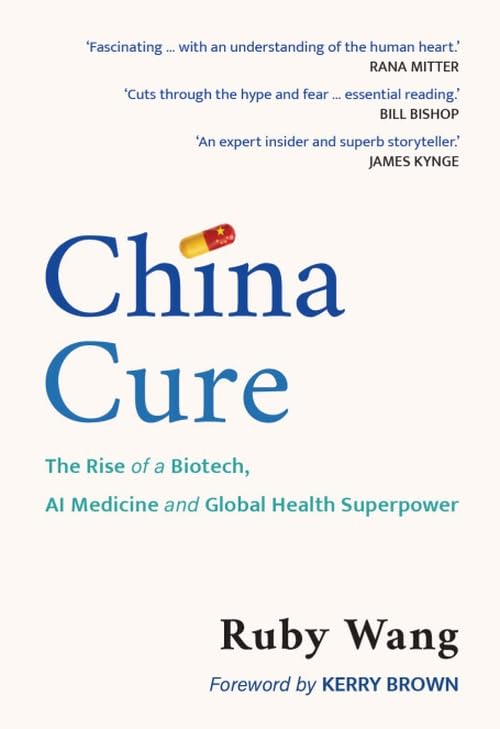
On this episode of the China Books Podcast, we discuss the healthcare revolution in China with the help of Dr. Ruby Wang, a London-based physician and author of China Cure: The Rise of Biotech, AI Medicine and a Global Health Superpower (Agenda Publishing, October 2026). Ruby joined us to discuss AI-driven breakthroughs in diagnostics, China’s public health policy making, the experience of Chinese physicians, the lessons China can share with the globe, and Ruby’s experience serving in the British Embassy in Beijing during the pandemic:
This is China in a sentence. You have remarkable progress in health care and services, some of the shiniest innovations that we’ve talked about. But at the same time really huge inequalities in access and care.
Ruby Wang
Guest

Dr Ruby Wang is a practicing physician, strategy consultant and author of China Cure (2026). She is the founder of a healthcare strategy consultancy LINTRIS Health. Ruby is the 2026-27 Alistair Horne Visiting Fellow at St Antony’s College, University of Oxford, Fellow in Global Public Health at the Asia Society’s Center for China Analysis, and Digital Health Council at the UK Royal Society of Medicine.
Transcript
Alexander Boyd: All right, let’s start with the good news and complicate things as we go. So what is Akeso, the company I mentioned in the intro, and why is its lung cancer treatment so significant?
Ruby Wang: So Akeso is a Chinese biotech company, and back in 2024 or so, they had an oncology drug, which was tested head-to-head with the market-leading immunotherapy at the time for first-line lung cancer, which was made by Merck, one of the largest multinational pharma companies in the world. So Merck’s Keytruda was a global success, sort of market leader and first-line therapy for this specific type of lung cancer.
But seemingly out of nowhere, this drug from China, which had always been a landscape perceived to only be able to produce generics or drug ingredients or copycats at most, had somehow risen up to produce an innovative, high-quality drug that was beating the world gold standard at the time. So you can imagine the media uproar this caused.
We know that biotechnology and medicine is such a complex scientific sector that requires very sophisticated expertise to build and discover. So the idea that China, not only in AI and in EVs and in some other industries, but now sort of the final frontier of complexity, which is biotechnology — a Chinese company had managed to rise up. It was really a groundbreaking moment. I mean, for those in the industry, this had been a long time coming. They’d seen different examples of other Chinese companies, you know, not only growing in quality, expanding in terms of numbers of clinical trials, numbers of presentations at international conferences, but this was a particularly special moment because it was China and Western head-to-head. So it made for a really interesting story, and it opened the doors to then the flurry of other examples since then.
So as you say, there’ve been a host of other breakthroughs, which we could list. There’s been PANDA, which is a pancreatic cancer imaging diagnostic, built using a large language model created by Alibaba. And there’s a host of other just therapeutic drugs. What is driving this innovation in China? For many Americans, I think it’s news to them that China’s both so innovative and so diverse in its research.
It’s really interesting because, you know, as the world changes, we’ve seen innovation take root across all sectors. But in health care, it’s probably one of the hardest because the risks are so high. You can’t just innovate wildly and make mistakes because mistakes have such great consequences, potentially human lives or well-being on the line.
And so health is so strictly regulated and really clearly defined boundaries of what can be tried and what can’t be. But the interesting thing is that even in this very complex landscape where not only China but the rest of the world is, you know, very slow to take up technology in the health care sector — it’s difficult to see digital health apps succeed or device companies really monopolize the market because the sort of traditional pathways of health care delivery still hold so strong, and it’s hard to break them down. But even in this sector, China has been able to transform so quickly, and in chapter one of my book, I talk about how there are different parts to why this speed was so astonishing.
So I think firstly, urgency driven by pressure. I talk about China’s vast scale, its aging population, which is aging faster than the rest of the world. I think by 2030, there’s going to be 350 million people over the age of 65, which is greater than the population of the whole of the US. It’s a huge number of people who are older, more frail, have more diseases, that require more health care services, accelerated by things like the one-child policy, of course. And then also because of the demographic variation, urban-rural gaps, lack of access, uneven quality of care exacerbating those challenges. But in China specifically, there have been various blips in the timeline in recent decades, so crises to do with the health sector, which include SARS, of course, in 2003, and then expired vaccine scandals, tainted melamine milk scandals, leading to iterative regulatory reform, which has been really important.
And then, of course, the Covid pandemic, from 2020 to ’22 and onwards. As well as, I think, something that all health systems are struggling with, which is a growing and better-informed population which expects and demands better care.
And I think the reason why China’s been able to integrate technology is really because it sees that there’s no other way. From the governance point of view, you know, we’ve seen kind of really strong drive towards technology in all sectors and all parts of daily life, including, you know, smart cities, using phones and devices for access and convenience for every part of life. And so, of course, health is seen to be expected to be part of that journey, rather than — oftentimes we see, definitely here in the UK and Europe and in the US too — trying to add on, like, shiny tech tools onto a very rusty health system infrastructure. In China, there are these digital rails, whether that’s to do with payment or delivery of medicines or diagnosis and treatment and access to the professionals on online tools that can connect those pathways in a much easier way.
So then that kind of drives change in health faster too. And then, you know, there are these other more cultural or societal elements I think are equally important. Many people might have seen the film The Farewell, where Awkwafina’s grandmother is diagnosed with late-stage cancer, and the family actually doesn’t tell her so that she hopefully has better quality in her last days. And this realm of consent and confidentiality, which are really strict medical ethics pathways we have in the West. As a doctor in the UK, we don’t say our vows on the Hippocratic Oath or anything like that. I don’t know if you do that in the US, but certainly the idea of confidentiality to protect the patient’s medical information to themselves only and not even share with their family is universal here.
Whereas in China, oftentimes still today, the family is seen to hold the collective duty for the mental and physical care of the patient, and they often sign consent forms instead of the patient for, you know, a surgery or a treatment or a procedure. And they may very well, like Awkwafina’s character did in The Farewell, decide not to tell the patient because they have their best interests at heart.
So that idea of duty and the collective too, I think, interacts really interestingly in the health landscape and with technology, which of course in China — the ease with which people share their face to scan to pay for groceries, or the ease with which they just, you know, share bits of their data. Ways in which I think here in the West most people would be horrified at doing. In my book I talk about the AI doctors in Ant Afu (蚂蚁阿福), which is the health company of Ant Group. These Chinese doctors who are seniors, the best in their field, they’ve willingly partnered with this big tech company to upload anonymized patient records, their own health care expertise, so that AI avatars can be created under their doctor’s license to then deliver care on their behalf.
We can talk about the caveats of that dystopian reality, because actually if you read between the lines, it’s actually not as crazy as you might think. There are very strict regulatory pieces behind the scenes that protect both the patient and the doctor. But I think even the concept or the branding of something like that would face really strong reactions somewhere in the West instead. So really interesting reasons why I think health and innovation have interacted in such a rapid way in China.
So to talk about family culture, you write quite movingly about a number of different family medical episodes throughout China’s history, from your father’s arm getting set poorly by a barefoot doctor, all the way to one piece that I found quite moving about your mom’s mother, who was diagnosed with a rare stomach cancer in 2003. And then through a series of minor miracles, she was able to access this Swiss leukemia drug, Gleevec, and ultimately recovered.
That was 23 years ago. In the book, you write of Gleevec that “innovative medicines remained distant, unaffordable, and unevenly accessible for millions.” And this was dramatized in the 2018 film Dying to Survive (我不是药神), which told of a hustler basically smuggling these drugs into China to save all these cancer patients. It was a huge hit. But now just six years later, after Dying to Survive’s mass popularity, you have The Wall Street Journal writing about cancer patients flying to Shanghai to receive treatment. So, where are we today with cancer treatment in China? How does it work?
My grandmother’s story — she was diagnosed, you know, with months to live essentially when I was nine years old. It was definitely the spark for why I wanted to study medicine and become a doctor in the first place, and why I work in health care today. But really, her diagnosis, her being based in China, and then my parents having this very unique setup where my mother was doing a PhD in the UK, my father was still in China. So then through internet forums and various miracles and strokes of luck, we were able to find a Chinese student studying for a PhD in Switzerland, doing an internship with Novartis, the Swiss pharma company which produced Gleevec, this medicine that at the time was only for a different type of cancer, blood cancer, but then was being trialed for my grandmother’s specific type of cancer.
We were able to connect the dots in a way that other grandmothers, patients in China would never have had the chance to, and ensure that she had access to the only drug that could have saved her. You know, this incredible miracle that means that she’s still alive today. But in a world today that she is still alive in, the direction of travel has reversed.
So not only are Chinese-origin drugs and health innovations now of good enough quality, as well as competitive cost and scale and speed of manufacturing, dominating global out-licensing deal pipelines, really sought after by global biopharma multinational companies who are under kind of pressure of patent cliffs in the next few years, and their business model is simply to find the best science around the world and commercialize it. Now, those assets are coming from China and will likely soon reach grandmothers in the UK, in the US too. I think the factors that enabled it all to happen include things like China’s long-term planning, its public investment, the regulatory reform and standards that I mentioned earlier, with the support of learning from international partners, a lot of it with the US FDA, which is still seen as the global gold standard, the American Food and Drug Administration, as well as Chinese scientists trained abroad and then returning home, so the sea turtles, the haigui (海归), and then building up expertise at home too.
But alongside that, really interesting strategies, which we’ve seen across every industry in China, so industrial parks, that kind of synergy between technical experts and the business side, also linking more closely the scientists with the clinicians and the health providers, because doctors and scientists have very different KPIs and what they think is important, and that misalignment can really slow things down in kind of drug development. And then these very large, dense networks of specialist tertiary hospitals with access to, you know, China’s billion population, which is a huge and very rich patient pool to drive forward clinical trial progress fast. But this has taken a bit of a longer time than some of the other sectors, because not only is health complicated and difficult, but to test and iterate something is not only something that works, but its risks too. So longer-term side effects, what happens two years, three years down the line? How do doctors diagnose a patient and give them the right thing? So all of that landscape is still at the moment developing. I would say China’s not strong in producing a cancer medicine that’s ready to go. The late-stage commercialization and the development piece is still not there yet, which is also why China’s partnering so much with global multinationals to get the drug asset to the end-stage treatment.
But the earlier-stage stuff, we’re really dominating in terms of global stats. So I think from 2015 to 2026, it’s a 55-times increase. And even up to October — well, this month in 2026, we’ve already surpassed last year’s number of out-licensing deals, I think nearly 140 billion. So really, really big stats.
And you know, we’ve been talking a bit about cancer drugs, oncology medicines. I would say this is an area where China’s doing really well because it’s been practicing for a long time now. Firstly through, as we said, developing and copycatting from the Western partners that were accessing the market in China. But now also slowly building up expertise and building pipelines in other areas which are more complex, where everyone’s learning at the same time.
I just wanna return to something you said earlier. You put a great deal of stock in China’s ability to make long-term plans for public health, and that this long-term planning has had huge dividends in biotech research, in general public health planning. So what advantages does China’s political system confer for health governance? And it would be wonderful if you could compare and contrast that with, say, the NHS.
Ruby Wang: So the UK and the US both have ten-year health plans. It’s just somehow not many of us know about them, and not many of us listen to them. And I guess, you know, the reason that China’s able to lean on and, like, try to implement what its long-term plans aim to do is because of its governance structure. Obviously, it’s a one-party state. The way from top-down to bottom-up, those relationships communicate, accountability mechanisms, for good or for bad, what those pressures mean at local level, at central level. The positive outcome in health care certainly is that responsibility and pressure drives alignment. And so local government, local providers are under pressure to deliver what’s been announced from the top. Whereas obviously — I know the UK most, and I work a lot on US health and its relationship with China too — you might have the same counterpart health ministries, bodies of responsibility, but especially with governments and elections changing potentially through the years, who kind of deems responsibility and who then answers to that is much less clear.
You saw this all up close while serving at the British Embassy and working in a role in, like, health diplomacy, so coordinating health responses between the UK and PRC. And most importantly, you were there through the beginning stages of the Covid pandemic. This pandemic stressed all global health systems. What did you see while you were there? What did you admire about the Chinese response, and where did the Covid pandemic expose the weak points of the Chinese system?
It was such an intense time. I flew in from London to Beijing in the summer of 2020. So the initial first wave globally of Covid, I was actually in London, so I was drafted back to the hospital front lines to do Covid work. I hadn’t been practicing full-time at the time, but they drafted back people like me, retired doctors, medical students. So all hands on deck, and it was an intense time, and then I went to China. There was a touch point when they allowed visas, and so I flew in kind of summer 2020, and then sort of began my work in health policy, health diplomacy between the UK and China, and with kind of counterpart Five Eyes partners, with multilateral organizations, in the eye of the pandemic storm.
So because I come from a clinical background, it was also interesting for me to work in a landscape where politics and science sort of collide, where logic sort of isn’t really good enough some of the time. But obviously, our priority was to build strategies for pandemic preparedness, work with each country’s experts in global health, in infectious disease, collaborations, conversations between the Center for Disease Control and the UK counterparts, working urgently on regulatory training programs between China’s version of the FDA, which is the National Medical Products Administration, and the UK’s version, called the MHRA. So thinking about how to accelerate clinical trials. At the time, the UK’s AstraZeneca was actually the first in the world to develop a Covid vaccine. And then the mRNA vaccine came much later. But all of those points, it was so interesting to be in the room and be part of those conversations, and definitely felt very meaningful.
In terms of how China chose to control Covid outbreaks, I would certainly say for those first two years until end ’22, when everything just erupted even in China and they opened up, it was a strange environment to live in, as well as to work in. Having QR codes to enter any space, and then having that become a norm of daily life almost.
And then even in early 2022, before Shanghai had the outbreak, in Beijing — I’d returned from visiting some family members in Hangzhou, where I’m from, and then that whole city of tens of millions of people had one or two cases. So then my QR code when I returned to Beijing was orange. So I was home quarantined in my apartment for two weeks, and they put a camera on my door. They didn’t tape it up like they did to some of my friends, but I wasn’t able to leave, and there was a magnet there too, so they could tell how many times I opened my door to get food delivery. And there was a WeChat group where I was communicating with whoever was responsible for me, to make sure I kind of kept to the rules for that time.
Even though if you think about it, a city of tens of millions of people having a couple of Covid cases, what’s the chance that I would have it too? But it’s just sort of incredible the level of capacity and resource China was willing to pour into Covid control. But then you compare that with somewhere like the UK or other countries around the world.
One example I’ve mentioned in my book is the UK’s National Health Service tried to implement something called the Covid contact tracing app, and it was, you know, a phone application you could download, and then you could opt in, so choose to say where you’ve been and, you know, whether you had symptoms, whether you’d been tested. But the problem with infectious disease and population monitoring is you need a threshold for the population to be monitored appropriately, but not enough Brits signed up to do this, ’cause they didn’t need to, they weren’t pressured to, and so they didn’t really care enough about the greater good.
And, you know, there’s, again, going back to the culture and how all societal, you know, patterns and how that, like, really impacts population health then — the NHS Covid app was a billion-pound failure. It was actually shelved a while later simply because we couldn’t convince enough people to opt in, and certainly in the UK we weren’t gonna force people to have to do it or even give them the option of opting out.
Whereas somewhere like in China, mandated surveillance — where you are is well known from your phone, from the cell towers, from GPS, wherever. So it was interesting for me to compare what each country’s strategies were, and I think even today, each country — the UK’s doing some kind of Covid inquiry. The US has done that too, with lots of backlash and fingers pointed at different actors for blame. But certainly, how can we reflect on that and think about what should — what is the right strategy? What was the right thing to do, and what was a mistake? It’s really, really hard to say, and it’s not like we can really learn appropriate lessons from that time, for example, if there was a future pandemic.
And I guess that might have been a seed of reason why I was so motivated to write this book, to try to translate this difficult, complex, mysterious, misunderstood landscape.
I think you do a lovely job doing that. One of the things that I also found quite interesting in your book — and that you’re an MD yourself — talking about China’s health landscape, it’s not all roses, particularly when it comes to the experience of physicians, which you write about with particular insight and sympathy.
So I’m gonna read some stats from your book for our listeners, and then I’m gonna ask you a question. So China has only 2.9 doctors per 1,000 people, far below the OECD average of 4.5. That slips to less than two per 1,000 in poorer regions. Average clinicians make 15,000 US dollars a year and often less than $500 a month at the county level. Eighty percent of doctors have experienced workplace violence, and one in four has been attacked by a patient. Perhaps most tellingly, over 75% of Chinese physicians would not want their own children to become doctors. So what’s gone wrong there?
So many things. I start that chapter talking about Chinese doctors, sharing that my own parents never wanted me to become a doctor either, because all they knew about the experience of being a doctor was what it was like in China. They’re not doctors, but they just saw it from afar and thought it was a terrible thing to be. The profession is obviously well respected, but because of the circumstances in which you have to struggle and sacrifice, then it seemed to be a very difficult one, where if you could have the choice not to, then maybe you would choose something much easier and likely better paid.
China’s health system today is public-sector heavy, and that’s part of the reason why doctor wages are so low, certainly in the less developed areas. Obviously, in the urban cities, private hospitals, department heads will be earning more than enough. But there’s so much diversity, and many health professionals are really suffering with basic wages and really bad quality of life and hard work hours, where they’re having to see hundreds of patients a day. On the other side of the scale, though, the US health system, its doctors have a potentially great quality of life.
But we also must caveat with the fact that the US health care model isn’t one that any other health system is running to replicate. It’s expensive for the state, expensive for patients paying out of pocket, and it’s very, very inefficient. So countries like the UK have, you know, a public health system, and that means doctors and health professionals are essentially civil servants, so paid low, having to deal with capped wages and really struggling to deliver for a health system that’s having to face the ever-increasing demands that all around the world are the same.
You write also about doctors making these AI copies of themselves. How is artificial intelligence and tech kind of alleviating both the doctor shortage and also maybe some of the pressures on individual physicians that come with being a hospitalist in China today?
Yeah, so this kind of health landscape in China, which is struggling with such great pressures, is trying to achieve several things at once. So when we talk about health care provision, we often talk about several pillars: affordability to do with cost, efficiency to do with time, quality of care to do with skill and the treatment and diagnosis you’re getting, as well as accessibility — equality of access no matter where or who you are. China’s trying to improve on all of these things very rapidly, and I think on the health professional and provider front, we see that technology is actually doing a lot. So supporting in diagnosis and treatment, including through AI imaging, AI scribes too, helping with efficiency of each consultation, relieving workforce pressure, hopefully. High-tech things like surgical robotics, helping super-boost what clinicians can achieve. As well as back-end things like hospital system efficiency, hopefully, online consultations, the AI doctors we described, wearables at home.
I mentioned earlier there are, you know, caveats to what seems like a wild trajectory of health innovation in China. So with these AI doctors that certainly I think even in five years, ten years’ time might not be implemented in the West, they’re actually sort of protected — like, the boundaries of their safety are protected rather well because in China, the laws stipulate that any first diagnosis or treatment for a patient has to be in person.
And even if you’re chatting to, you know, Dr. Li’s AI avatar, there will come a point where it’ll tell you to go see the doctor or see a different doctor. It doesn’t have to be the actual doctor avatar that you talk to, but you know, it has boundaries within the app, because it’s a regulated medical device, and so there are different rules and modulations required.
Whereas when I think many of us are worried about the safety of AI health tools, it’s more like someone just chatting with Claude or ChatGPT at home, where it’s not actually a medical technology, and you don’t know whether it could go down some pathway that’s less controlled. So you know, what seems to be pretty dystopian is actually bounded on the back end. And I think that is a really interesting method that we sitting in other countries could try to learn from.
Overall, you know, all of these tools are there to super-boost the health system. I don’t think there’s an indication that health professionals will be replaced. This is often another fear we hear when it comes to the integration of health and technology everywhere. But I think if you talk to actual doctors, no matter where they are in the world, we all know what a multidisciplinary job this is. So even if parts of your role are super-boosted, it doesn’t mean we’ll be replaced, and there are always multiple touch points where we can hopefully work better together with the technology to deliver more care to more patients.
Speaking of delivering more care to more patients, one of the things you also write about in China is this regional dualism, where you might have the cutting edge in Shanghai and then immense poverty in provinces west. So in 2019, you went on an international medical aid trip to Guizhou Province, where I also happened to be at the time serving in the Peace Corps. What did you see there, and what were you doing there?
Yeah, this was a really meaningful trip. So I went with a charity called Operation Smile. They’re global, delivering cleft lip and palate surgery, and I was really excited to go because from a young age, I wanted to become a facial reconstructive surgeon, so specifically helping support cleft patients, patients after road accidents, or reconstruction after cancers and things like that.
And to be able to do it in a small town in China just felt really meaningful. But when I got there, I was really shocked. I never actually visited somewhere as impoverished as that before in China. So we had families who had heard about this mission for months in advance, and they queued up from sunrise to sunset in the yard of this very small hospital. They had their kids on their back in baskets. And the thing with cleft surgery, why this is specifically something that’s chosen often for charity missions, is because it’s not life-threatening necessarily, but then it impacts your quality of life so much for the individual because you look so different that you’re often stigmatized and isolated in society and you can’t make friends, you can’t marry, you can’t live a normal life.
So somewhere like in Zunyi, in Guizhou, which is China’s poorest province as a whole, people with cleft lip or palate are likely not going to get that surgery ever and have their life quality really affected. So we were there two days over the weekend to deliver surgery for as many as we could. And it was a really meaningful experience. And then after that, I took the plane and I flew back to Shanghai, where there are all these shiny VIP hospitals around me. And the contrast of that — this was in 2019, and some of the contrast of that will still exist today. So this is really China in a sentence, right?
It’s kind of all these realities at once. You have remarkable progress in health care and services, some of the shiniest innovations that we’ve talked about. China in March of this year approved a brain-computer interface, the first in the world to approve that for commercial use, which is really the frontier of health and tech.
But at the same time, in these small villages, in provinces like in Guizhou, still really huge inequalities in access and care. And I don’t think that these cancel out, but it’s why I think China’s so important to understand, because what’s still changing and what’s unresolved and how this country is using particular strategies to try to overcome and resolve that definitely shows us, no matter where we are — our health systems, our policymakers, even our industry actors — to make the most of that opportunity, like types of ways to try to address the same challenges.
So the method and the strategy of what China’s doing is really important. But actually, I think also, as I write in the book too, these products are coming to our shores too, right? So not just learning from afar and seeing the similarities at home, but also meeting those actual drugs and medical products in our home countries. American grandmothers potentially taking Chinese drugs in the near future. But also already, many American hospitals will have Chinese imaging devices. You know, when I go around different countries, not just the US — I was in Brazil recently this year and in East Africa too — developed and developing countries alike have Chinese medical products like Mindray’s (迈瑞医疗) ultrasound scans, MRI scans in their hospitals.
There was a Nikkei Asia article that came out with stats saying that China’s medical device exports — and this is not drugs, it’s devices — has grown by 370% over the past year, and that 25% of those exports are to the US. All of these Chinese health innovations are already in our own home countries. We shouldn’t really be viewing them as a complete danger or risk or as a complete opportunity, but let’s better understand what they are and where they came from to then better navigate how to implement them most safely at home.
If you could have one lesson that the globe should learn from looking at China, what should the takeaway be? How should we try to change to make our medical systems look more like China’s in order to deliver better care to more people?
That’s such a difficult question. I wouldn’t say do what China’s doing. I think the even more important thing is look at what China’s doing wrong and make sure we don’t make the same mistakes. Look at where it’s really pushing the ethical boundaries of health and technology. Look at where it’s wasting too much, where it’s repeating in the wrong way, where it’s going down the wrong paths.
And where might that be?
For example, the AI doctor piece we just talked about — recognizing that could never happen at home, but then thinking about what could happen instead. One thing I think Western systems should do better — and this is not just China that’s doing this really well — is recognizing that all health systems need to better incorporate technology into the core of health system strengthening. Especially as all parts of our lives are becoming more digital, it seems silly not to innovate and better regulate what technology is doing in health care.
Well, to all of our listeners, I hope you don’t need to go to China for medical treatment anytime soon. But if you do need it, you know where to look. Ruby, thank you so much for joining the podcast.
Thank you so much. ∎
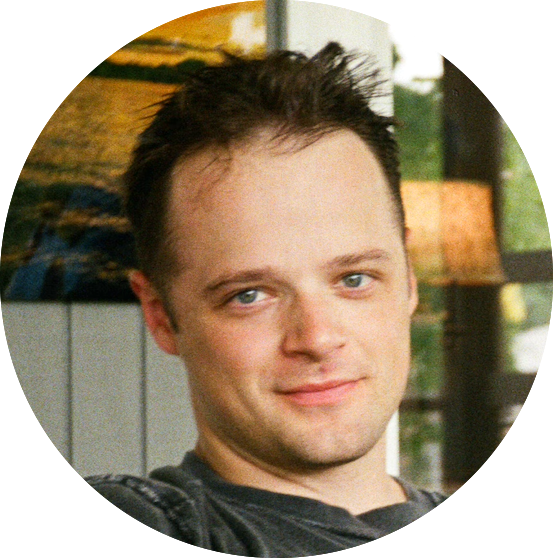
Alexander Boyd is Associate Editor of China Books Review. He served as a Peace Corps volunteer in Guizhou, China, from 2018-20, and was a contributor to The China Project, Politico and the ChinaTalk podcast. He was previously Senior Editor at China Digital Times.