Sign up for our newsletter to be notified of new posts!
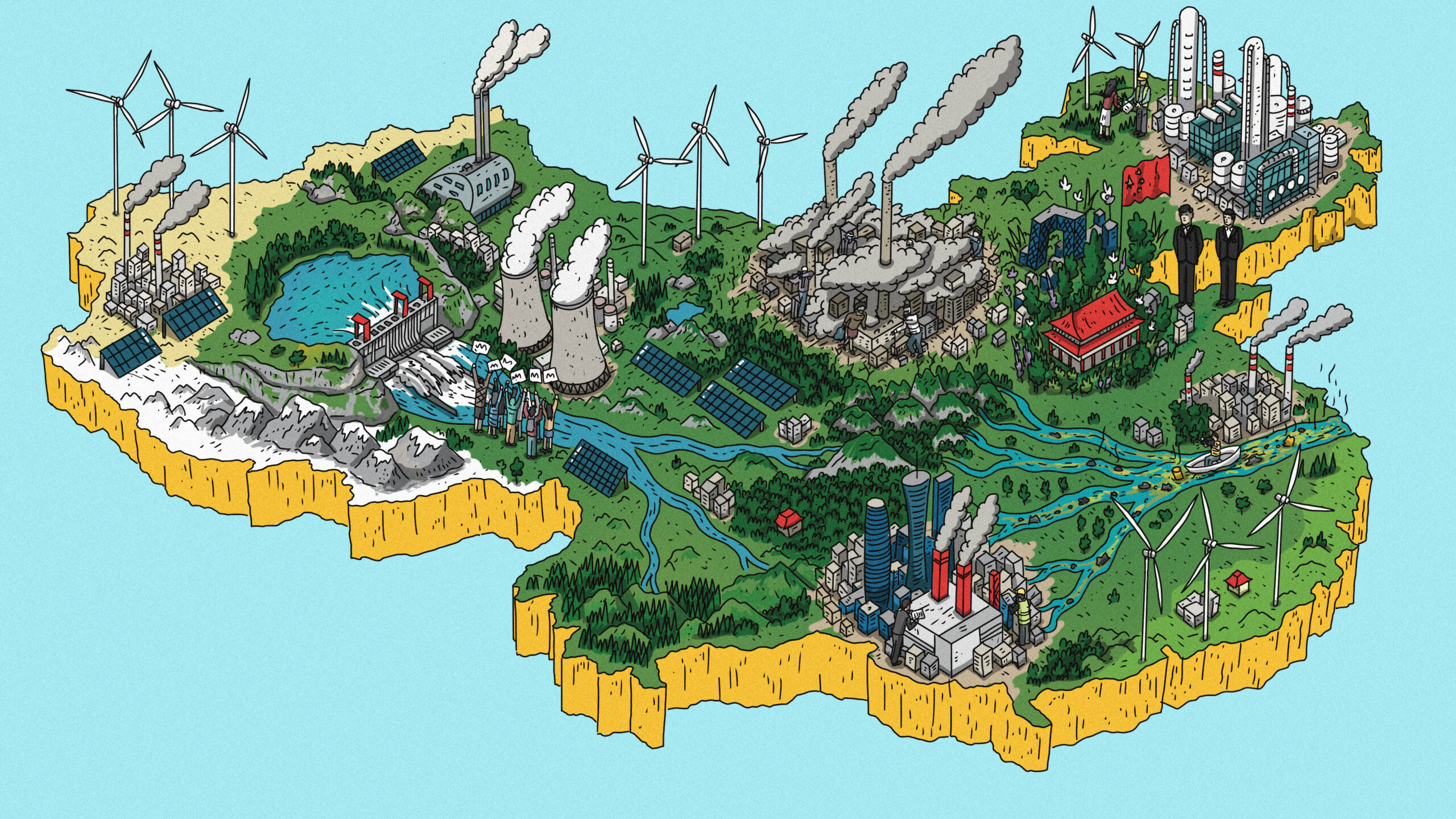
Reviewed: In Search of Green China by Ma Tianjie (Polity, May 2025).
In the late 2000s, a Chinese friend in Beijing liked telling a dark joke. He would try to convince me to smoke with him by gesturing toward the haze above us. “Hey,” he’d say with a wry smile, “at least cigarettes have filters.”
To many of us in the 21st century, it is difficult to imagine industrial development without its negative image of environmental decline. Decades of industrialized comfort have atrophied the memory of why people so desired development in the first place. The deprivations of the pre-industrial world have receded into abstraction, while the dangers of pollution and environmental degradation loom so vivid and present. For the first couple of decades after the establishment of the People’s Republic of China, industrial development was synonymous with improving the welfare of the masses. It meant more things, more national power and independence, more equitable prosperity, a better material life for everyone. During the late 1960s and early 1970s, Chinese leaders and scientists began to recognize that industrialization had all sorts of negative impacts on the environment and public health, but believed they would be able to overcome them and create an environmentally friendly form of socialist development.
Deng Xiaoping’s rise to power in 1978, however, and his commitment to the dictum that “development is the hard truth,” split what had been a single commitment in two. Dengist policymakers had little choice but to promote industrial development with an awkward, self-conscious awareness of its environmental consequences. They navigated this by carving out the notion of “environmental protection” (环境保护) with its own institutions, line in the constitution (now Article 26) and academic journals. This compartmentalizing made it negotiable; Dengist reformers spoke euphemistically of “balancing” between development and environmental protection. They framed environmental degradation as a temporary sacrifice, promising that cleaning up would come later when the country was more prosperous. Qu Geping, an early and highly influential environmental bureaucrat, conveyed this overall logic in 1992 when he proclaimed that it would be a “long period of time” before China could spend money on solving environmental issues as it was still a “developing country … backward in science and technology and tight in finance.”
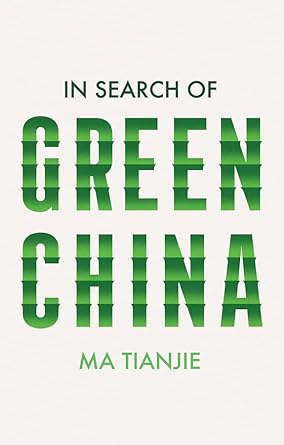
In Search of Green China, an excellent new book by environmental activist and journalist Ma Tianjie, tells the story of the evolution of Chinese environmental politics over that ensuing period. Ma’s intent is to show how, over the past 30 years, China has taken an “unorthodox” environmentalist path, differing in several ways from familiar Western environmental regimes, but nonetheless yielding some positive results. Where Western countries tend to have stronger environmental agencies and weaker industrial ministries, in China the situation is reversed. Where the United States could afford to deindustrialize and shift the pollution caused by manufacturing elsewhere (such as China), China could not. Where Western environmentalism is buttressed by a robust civil society and legal recourse for groups affected by pollution, China has neither in any significant form. And yet, China’s environment has doubtlessly improved in recent years, if unevenly. Water and soil are slowly becoming cleaner. Skies are noticeably bluer, at least in many eastern coastal cities (air pollution levels in the south and west have increased). Perhaps most significantly, China is the global leader of the green energy revolution, dominating supply chains for solar panels, batteries and electric vehicles.
The book arrives at the crest of a wave of diverse English-language scholarship on Chinese environmentalism. This includes Anna Lora-Wainwright’s Resigned Activism (2017), Yifei Li and Judith Shapiro’s China Goes Green (2020), Iza Ding’s The Performative State (2022), Amy Zhang’s Circular Ecologies (2024), Cheng Li’s Contested Environmentalisms (2025), Alex Wang’s Chinese Global Environmentalism (2026) and Revolutionary Natures (2025), ed. Micah S. Muscolino. That so many scholars are converging on the subject at once reflects the enormous scale of China’s environmental crisis, which has long commanded global attention, and the consequently ambitious response — not least Xi Jinping’s elevation of “Ecological Civilization” (生态文明) as the next stage in the evolution of human civilization.
Such grand designs raise the question: How did China get from the nadir of its environmental destruction in the Deng era to its aspirations of green development in the Xi era?
China has taken an “unorthodox” environmentalist path, differing in several ways from familiar Western environmental regimes.
Ma Tianjie’s answer is organized around a chronological procession of ecological crises that drew controversy and drove environmentalist activity at public and institutional levels. Within these chapters, Ma anchors his story in the struggles and perspectives of bureaucrats, journalists, activists, scientists and concerned citizens. It is hard not to see these protagonists as heroic underdogs, fighting against a powerful, shifting coalition of local governments, central planners, businesses and industrial ministries that are unified in their dedication to the higher calling of GDP growth. Ma refers to this group as “the developmental bloc,” which is a useful if sometimes blunt abstraction. These antagonists “den[y] nature any intrinsic value beyond the lifeless mass materials that constitute it, mocking environmentalists for their superstitious sensibilities.” The book recounts this central conflict, with the environmentalists trying to outmaneuver the developmentalists within China’s byzantine bureaucratic mazes and shifting political sands.
Ma is a Chinese journalist and activist who spent two decades working on environmental campaigns with Greenpeace and China Dialogue (now Dialogue Earth) in Beijing. Many of the figures he interviewed for the book are former colleagues and allies. This allows him to capture events in high fidelity, though the granularity can sometimes blur the reader’s focus as they try to keep up with such-and-such policy discussed at this-and-that meeting by so-and-so person representing this, that or the other acronym. Regardless, Ma’s attention to fine-grained machinations reveals how messy, contingent and hard-earned the policy shifts were.
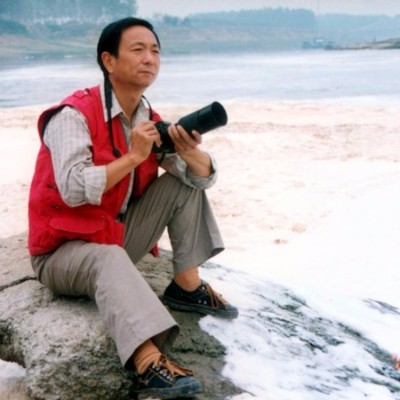
The book begins with the pollution of the Huai River in the 1990s, when newly sprouted township and village enterprises and the monosodium glutamate (MSG seasoning) giant Lotus began dumping toxic waste directly into the water. Local officials plotted with enterprise bosses to hide their discharges from the regulatory eye of central authorities. In one instance, a Lotus boss publicly drank water from the Huai to prove its cleanliness. (The water was certainly clean; it just wasn’t from the Huai.) Checks on abuses came from maverick figures such as Huo Daishan, a local photographer who traversed up and down the river, using his camera to document the Huai’s black, foamy water and the cancer villages on its banks. Huo also called central bureaucrats in Beijing early in the morning to notify them of suspected toxic discharges. Ma is right to celebrate the grassroots pressure generated by figures like Huo, but that pressure was rarer and more fragile than his cast of determined protagonists indicates. Huo’s abnormal persistence and relative success against the system contrasts with many of the figures in Anna Lora-Wainwright’s Resigned Activism (a revised text of which came out in 2021), who occasionally protested and petitioned, but who also often had little choice or power but to take small private measures to limit the harm, in effect normalizing pollution as a permanent fact of life.
At the center, early pressure came from Xie Zhenhua of the State Environmental Protection Administration (SEPA) and his mentor Qu Geping at the National People’s Congress. While Xie led dramatic raids to enforce shutdowns, Qu strategized that a strict cap on total pollution in the river would force local governments to fit their plans within that limit. The State Council adopted the policy in 1996, a moment Ma underlines as “the first attempt by China’s environmental policymakers to translate the biophysical limits of nature into a policy target to regulate the intensity of economic activities.” Qu also championed the 2002 passage of the Environmental Impact Assessment (EIA) Law, which mandated environmental reviews for economic projects.
This early era (the 1990s to 2000s) was noisy, messy and full of grassroots energy. A patchwork alliance of activists aggregated around pressing issues. Liang Congjie — grandson of Liang Qichao and founder of China’s first environmental NGO, Friends of Nature — idealized these people as “green citizens” (绿色公民). In Ma’s chapter on the fight over the construction of a hydropower dam on the Nu River in the early 2000s, villagers worked alongside journalists, academics, downstream groups in Thailand and environmental technocrats to oppose dam plans backed by the National Development and Reform Commission, the Yunnan provincial government and the hydropower industry. This configuration of the “developmental bloc” viewed every free-flowing river inside China’s borders as latent kilowatts needed for the soaring electricity demands of eastern China. The EIA Law forced a stalemate that lasted until 2016, when the bloc finally abandoned the dams in favor of Hilton hotels, mass tourism and a national park. The Nu River remains “China’s last free-flowing big river,” though not free from commercialization (hence Xi Jinping’s motto “Lucid waters and lush mountains are gold and silver mountains” 绿水青山就是金山银山).
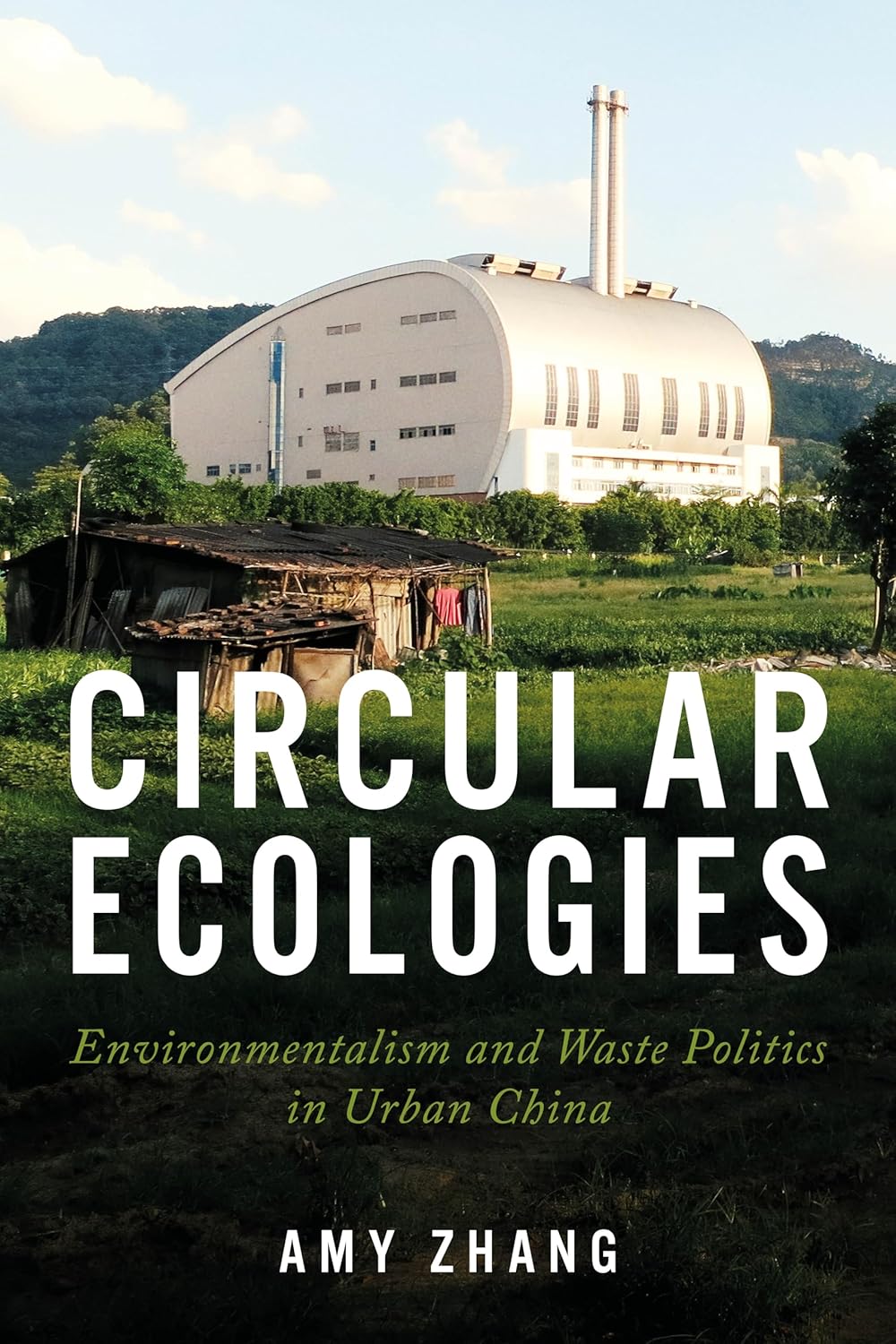
China’s enormous growth in urban waste was another defining environmental issue of the late 2000s and 2010s. As cities grew, landfills occupied valuable land and polluted groundwater. Waste incineration was an attractive alternative. Ma describes how residents of Panyu, a Guangzhou suburb, organized against a planned incinerator in 2009; they marched to the gates of the municipal government to force a temporary suspension. But the project edged forward again once the attention died down. The residents, who knew a second street protest would not be tolerated, turned instead to the more “legally and politically permissible” tactics of EIA procedure, launching technical campaigns against incineration. Pressed by activists and by leaders worried about a rising tide of “environmental mass incidents,” ministries expanded environmental transparency and public participation after 2012. But local officials learned to honor the procedural forms and nod along politely in public consultation sessions, while relocating projects to quieter peripheries. As one anti-incineration activist put it, the government gave more responses while the results changed less. “Public participation is not equivalent to ‘decisions made by the public,’” one official explained. By 2023, incineration had become the dominant method of municipal waste disposal in China, handling almost 80% of waste.
Amy Zhang’s Circular Ecologies examines these Guangzhou incinerator fights in more detail, reading them as a window onto the limits of China’s technocratic environmentalism. By treating waste-to-energy as a neat way to turn garbage into electricity, the state also turned the political problem of consumption into the engineering solution of a circular economy. As Zhang explains, though, the material characteristics of waste, like its wetness or its variety, often resisted this circularity, in turn opening new problems around which people could organize. Through these narrow openings residents could win some concessions by challenging the state on technical grounds, like contesting emissions figures and safety standards, though Zhang shows that this also depoliticized opposition into “technicized” forms that the state could more easily manage.
In one instance, a Lotus boss publicly drank water from the Huai to prove its cleanliness. The water was certainly clean; it just wasn’t from the Huai.
Recent visitors to major cities in eastern China will notice that air pollution, typically easier to deal with than water and soil pollution, has seen the most progress. During Beijing’s January 2013 “Airpocalypse” the concentrations of PM2.5 — inhalable airborne particles smaller than 2.5 micrometers in diameter — exceeded 700 micrograms per cubic meter (70 times the WHO’s recommended levels). This prompted Xi Jinping to make air quality a priority. The enforcement tools came from efforts to clear Beijing’s skies for the 2008 Olympics. Scientists led by He Kebin at Tsinghua University had built air-quality models that tracked how pollution from surrounding provinces drifted into Beijing. These models could also calculate specific tradeoffs, like how shutting down X million tons of steel production in Hebei province would reduce PM2.5 in Beijing by Y percent.
According to Ma, this signified a “new reality underpinning central-local interactions on environmental issues.” Sophisticated tools developed at elite universities had given the center “technological superiority over local governments in designing, monitoring, and adjusting policy interventions.” The political life of data is a theme that runs through the book. Pollution figures could persuade officials and citizens either that all was well or that action was needed, but because numbers were ammunition, people also learned to distrust and manipulate them.
Xi also backed emission reduction mandates, tying cadre evaluations to air quality, dispatching inspection teams to provinces and encouraging “democratic life meetings” (民主生活会) where officials confessed that their obsession with GDP was a “distorted view about what counts as political achievements.” Meanwhile, civil society environmental activism, so crucial to the victories of the previous two decades, began facing further restrictions in the 2010s. For instance, when journalist Chai Jing’s famous anti-smog documentary Under the Dome went viral in 2015, it was removed from the internet within days.
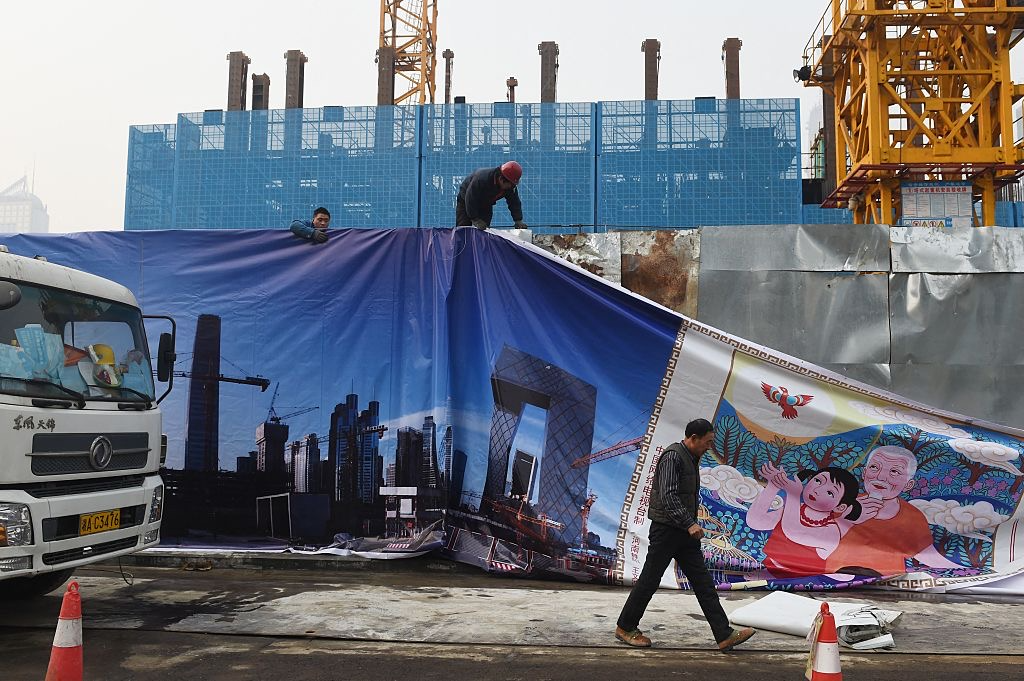
This gradual convergence of the developmental bloc with some environmentalist values under Xi Jinping’s rule is the destination of In Search of Green China. In 2014 Xie Zhenhua, now at the National Development and Reform Commission, helped broker a U.S.-China climate deal that broke years of deadlock — a story Ma tells in a chapter aptly titled “The Peak,” about China’s commitment to peak its carbon emissions by 2030 and achieve carbon neutrality by 2060. American skepticism about China’s ability to reduce its emissions has softened partly because of new research showing that China’s colossal domestic market can drive down the costs of low-carbon energy technologies like solar panels and batteries faster than anywhere else. If China is proactive, it can green its economy, dominate global supply chains of clean-energy tech and so lead the next stage of industrial civilization.
Ma shows that China’s tremendous gains in green energy capacity relied significantly on its alignment with other goals such as energy security, industrial strategy, geopolitical competition and regime legitimacy. There are few recent instances of an insubordinated environmentalism that does not need to justify itself in the light of political or economic priorities. Even so, China’s green energy revolution is ongoing, with more green energy sources created in 2025 than the rest of the world combined, and coal and oil consumption near their peaks. Coal’s share of China’s overall energy mix is now shrinking (though absolute coal consumption has only shown signs of potential flattening since 2025). Since March 2024, CO2 emissions have also possibly entered a plateau and China may even hit its carbon peak before 2030. Major cities are eerily quiet as electric vehicles hum to and fro.
The French historian Jean-Baptiste Fressoz observed in his 2024 book More and More and More that societies do not “transition” from one energy source to another, so much as accumulate new sources on top of old ones so that total consumption of everything keeps climbing. The world, for example, burns more wood than ever before in absolute terms. That is due to increasing global population, but also a per capita energy use that has outpaced it. From this perspective, renewables are more supplementing fossil fuels than replacing them. Global coal usage continues rising, and China still burns much more coal than the rest of the world combined. Still, electricity generation from coal burning declined 1.6% in 2025 as renewable and nuclear additions covered growth in electricity demand. We will only know whether this is a genuine peak or a sort of undulating plateau when we look back years from now.
Consider also what economists call the Khazzoom–Brookes Postulate. It holds that gains in energy efficiency historically lower the effective price of that source of energy, which tends to stimulate more total energy use rather than less. Imagine a car getting better gas mileage but driving more miles. Even as China’s overall energy intensity has fallen due to efficiency gains, electricity’s share of that mix has climbed in an expanding economy. China now consumes more than double the electricity of the United States. An abundance of cheap renewable electricity has not so much displaced coal as created a whole new category of power usage, like AI data centers and the factories that make solar panels, batteries and EVs.
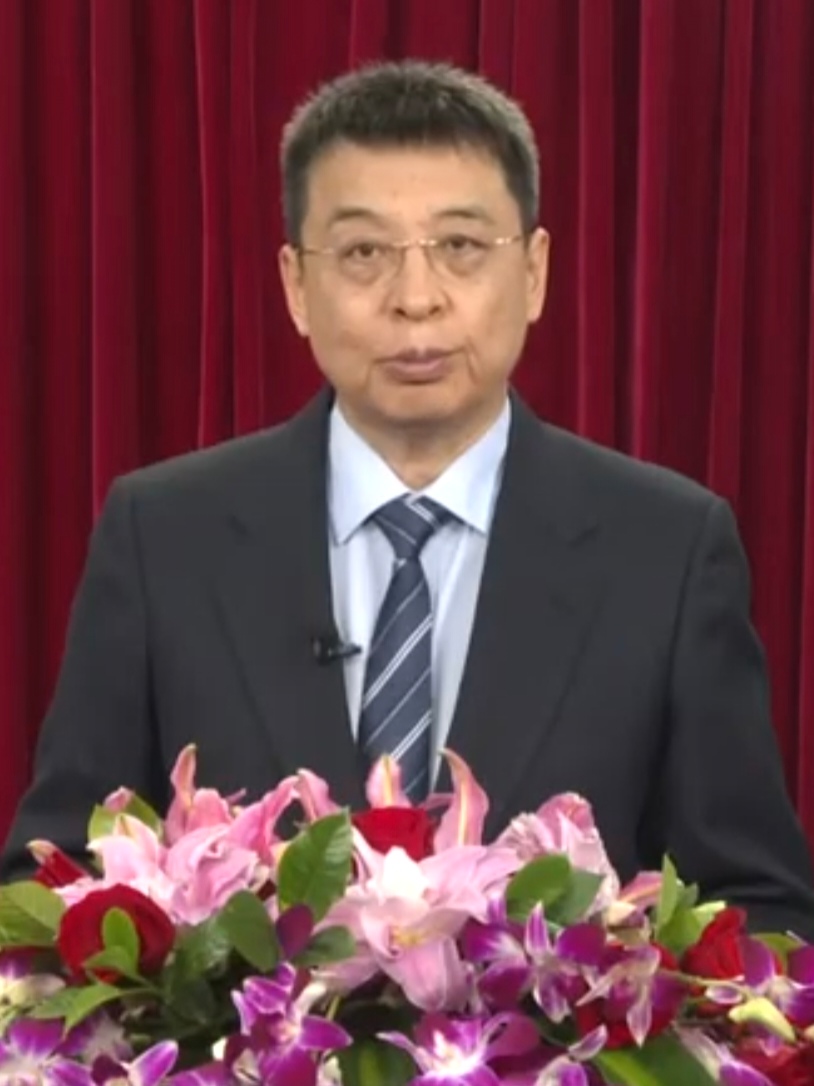
As Ma notes, a central figure in the evolution of China’s environmental politics was the charismatic and iconoclastic official Pan Yue (潘岳), formerly deputy director at the State Environmental Protection Administration. Though the term “Ecological Civilization” (生态文明) emerged in Chinese intellectual discourse in the 1980s, in the 2000s Pan further theorized the concept, which was formally introduced as Party ideology under Hu Jintao in 2007 and enshrined by Xi Jinping in 2012. A harsh critic of unbridled growth, Pan launched a “green hurricane” in the mid-2000s, temporarily halting billions of yuan in industrial projects, earning him the nickname “Hurricane Pan.” But a petrochemical explosion in Jilin province in 2005 left Pan exposed, after his patron Xie Zhenhua resigned to take responsibility for SEPA’s handling of the incident. Pan was eventually sidelined, his roadblocks swept away by the massive economic stimulus following the 2008 financial crisis, and in 2016 he left his environmental work to take positions at the United Front and National Ethnic Affairs Commission.
Though the concept does not itself get sustained treatment, the arc of In Search of Green China is a journey toward “Ecological Civilization.” The doctrine claims that environmental stewardship and economic development need not be opposed, but can be synthesized into a higher unity under socialist governance. Pan also gave it a civilizational veneer, drawing selectively from classical Chinese traditions to suggest that the seeds of modern environmentalism had been buried somewhere in Chinese culture all along. His motivations were environmentalist, but also competitive and nationalist: he feared that Western countries would erect barriers once they gained advantage in green development. With China a world leader in clean energy today, Pan might be satisfied that those fears are now reversed. Even he is likely surprised that the United States has so rapidly dismantled its climate and clean-energy push under the second Trump administration. China can now watch the United States wrestle with Iran for control of oil shipping in the Strait of Hormuz with an equanimity it could not have managed a decade ago.
If China is proactive, it can green its economy, dominate global supply chains of clean energy tech, and so lead the next stage of industrial civilization.
Ma Tianjie is skeptical about whether China’s imagined horizon of Ecological Civilization is inevitable or even approaching. In his view, the nation is
still far from completely transcending the political economy at the root of much environmental devastation, let alone offering a brand-new progressive alternative to the capitalist economic formula.
China remains the biggest total source of CO2 in the world (though much less than the U.S. per capita). Ma is emphatic that despite China’s socialist political roots, “there is little evidence to suggest that the Chinese state is pursuing a comprehensive eco-Marxist agenda.” Instead, it remains “inextricably embedded in the globalized liberal economic order, as the ‘World’s Factory.’”
Embedded as it is in global capitalism, China’s transition to a greener economy cannot be a purely national project. For example, the environmental costs of mining lithium and other minerals for its EVs and batteries have shifted to Chinese mines in Central Asia and Africa, “leaving behind a not-so-trivial environmental footprint.” Alex Wang’s Chinese Global Environmentalism shows another side of this story, where even as the environmental costs of China’s attempt to transition to greener development shift abroad, Beijing is working to improve perceptions of its growing global influence through climate diplomacy, greener Belt and Road Initiative (BRI) lending, and development aid to the Global South. For Wang, taking leadership of global green development is a way for China to recast how the world sees its power, shoring up its legitimacy at home and abroad.
Meanwhile, the money for the green transition still depends on revenue from the very industrial activity that it is meant to restructure. Local governments remain debt-ridden as they are pressed to transition to greener production. Ma likens this to “trying to remove wooden blocks from a tumble tower to make it lighter, only to risk destabilizing the whole structure.” As one environmental lawyer quoted near the end of the book warns, local governments can now achieve basic compliance thanks to surveillance from the center, “but you always have to watch out for their impulse to develop that ignores the complexity and vulnerability of the ecosystem.”
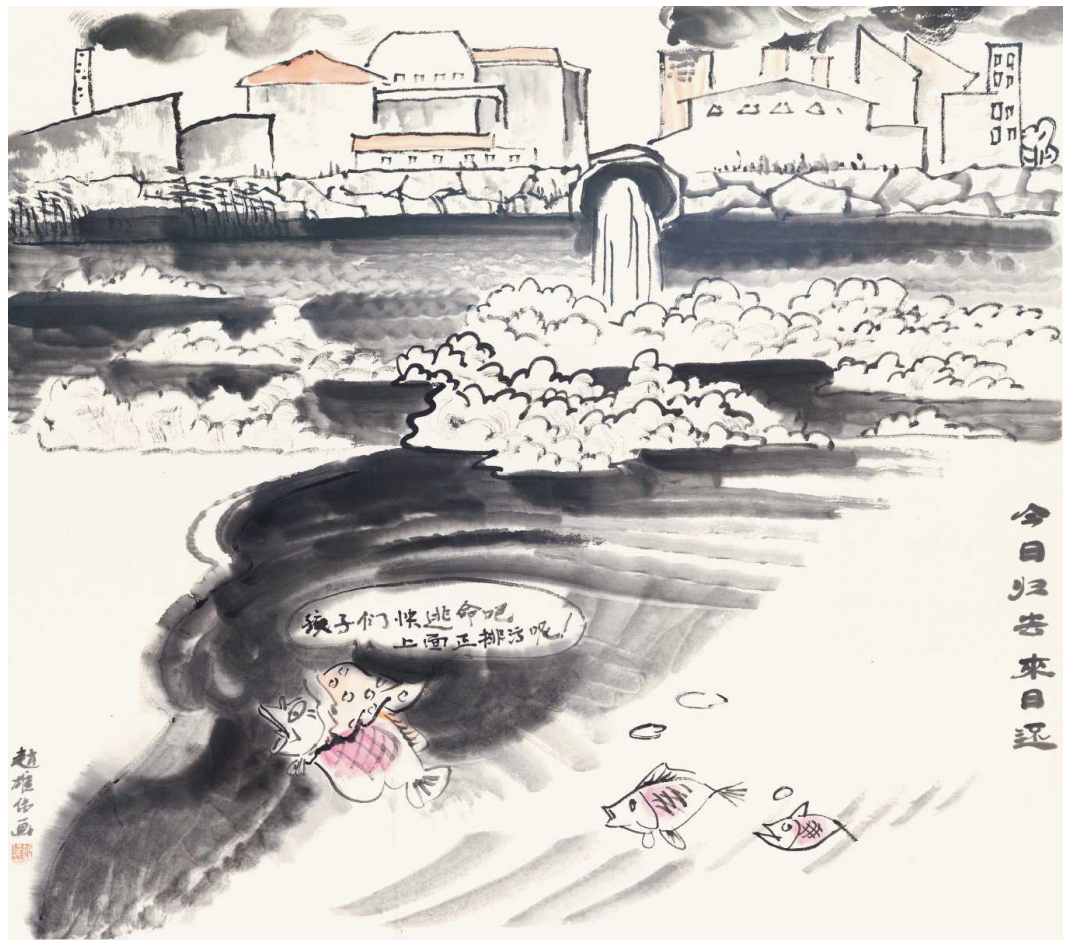
In Search of Green China makes clear that China’s recent environmental progress was formed from the brackish in-between where grassroots pressure met state capacity. In recent years, though, the Party has systematically narrowed the channels through which that bottom-up environmentalist pressure first built. As recently as 2020, the NGO Friends of Nature forced a Yunnan hydropower project to halt construction, arguing that the dam would pose a major risk to the habitat of the endangered green peafowl. But the unauthorized environmental activism that Ma shows was so effective at initially forcing the state’s hand has been curtailed and cowed. China’s first Ecological and Environmental Code, passed in March 2026, now only allows NGOs to sue after harm has been proven, not simply because of the potential risk of harm. Even before the Code, civil society organizations were filing less than 5% of environmental public interest cases. Ma calls this broader constriction of grassroots environmental activism a “paradigm shift in China’s environmental approach: the model that incorporated strong public oversight gave way to one that bypassed it.”
To this, Beijing might claim with some evidence that it has internalized environmental values, and so graciously relieves citizens of the need to demand them. This bypassing of public opinion is one expression of the Party’s insistence on being the “leader of all” (党是领导一切的), a protagonist that is ahead of and shaping history, not chasing it as the Soviets fatally found themselves. Ecological Civilization is one form of trying to take the “historical initiative” (历史主动) — an attempt to bend the present to a vision of the future where there is harmony between humanity and nature. Xi considers it a vital component of the larger plan to build a “beautiful China” by 2035 and a “completely beautiful China” by the middle of the century.
But history arrives fast. Staying ahead of it requires restless labor. Xi has warned Party cadres that their work is never done, reminding them that the Party’s strict self-governance and self-revolution must be “forever on the road” (永远在路上). An old joke comes to mind, as told by German historian Reinhart Koselleck:
‘Communism is already visible on the horizon,’ declared Khrushchev in a speech.
Question from the floor: ‘Comrade Khrushchev, what is a horizon?’
‘Look it up in a dictionary,’ replied [Khrushchev].
At home the questioner found the following explanation in a reference work: ‘Horizon, an apparent line separating the sky from the earth, which retreats as one approaches it.’
The idea of ever fully resolving the contradiction between development and environmental protection is like that horizon. The great contribution of In Search of Green China is to show that so much of the distance traveled on the march toward it depended not on China’s leaders grasping the historical initiative, but on the initiative of ordinary people, like the activist Huo Daishan and the villagers of the Nu River. ∎

Brian Spivey is a historian of modern China. He holds a PhD in History from the University of California, Irvine, and is currently a postdoctoral fellow at the Australian Centre on China in the World. Spivey is currently writing a book about Maoist environmentalism in China.