Sign up for our newsletter to be notified of new posts!

When Damascus fell to Syrian rebels in October 2024, bringing an end to a civil war that raged for over a decade, an unlikely group entered the city alongside the triumphant fighters: Uyghur militants under the light blue flag of the Turkistan Islamic Party (TIP). How did these Uyghurs, a traditionally Muslim ethnic group indigenous to western China, come to fight in Syria’s civil war? And why?
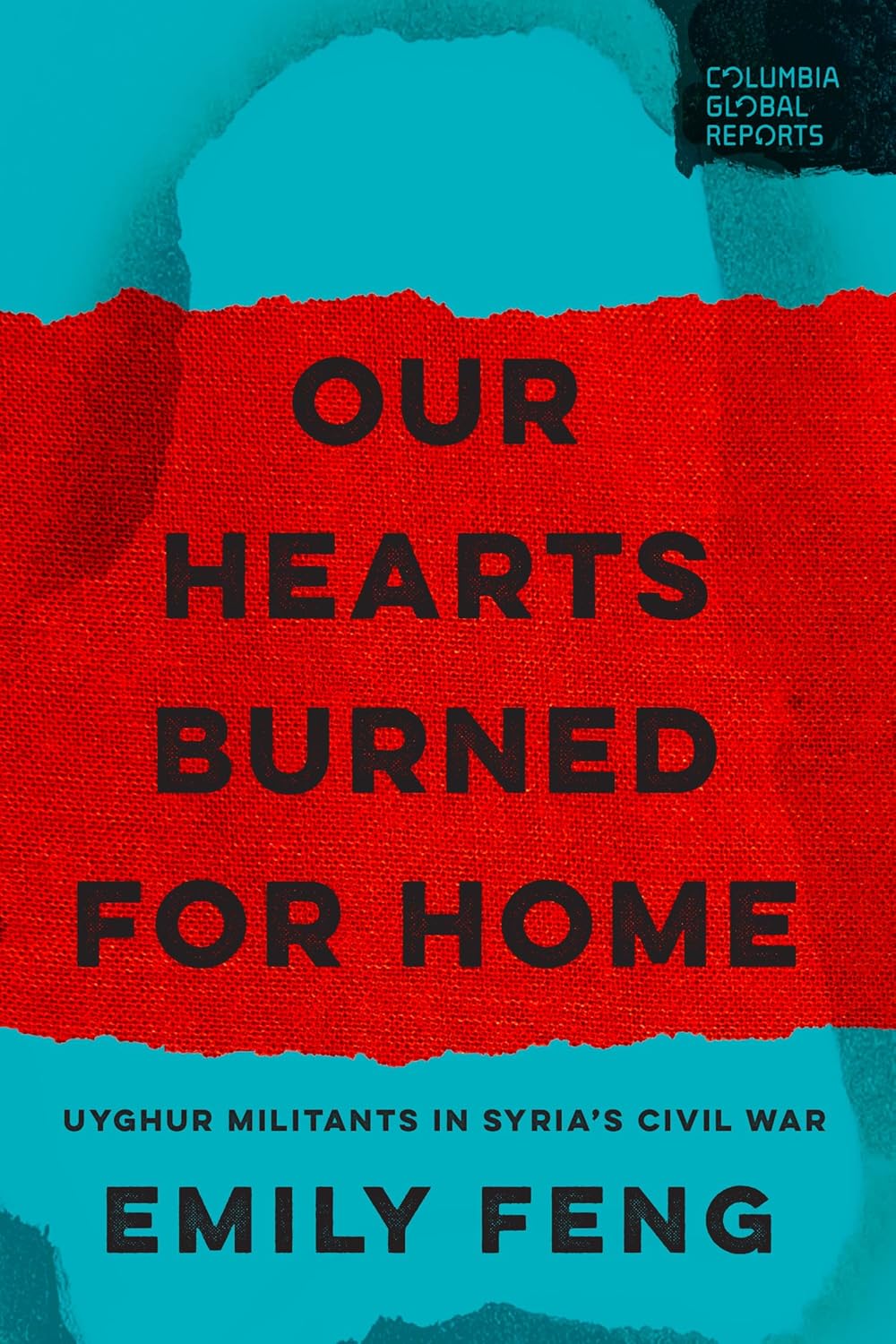
To find out, Emily Feng, then NPR’s foreign correspondent returning from a long stint covering China and Taiwan, went to Syria. Feng interviewed Uyghur fighters who’ve been incorporated into the Syrian army; Uyghur women who’d left medical and academic careers to marry fighters; and Syrian Arabs who fought alongside them. Her investigation became Our Hearts Burned for Home: Ughur Militants in Syria’s Civil War (October 2026, Columbia Global Reports), an excerpt of which ran in this magazine. Feng’s reporting tells a complicated tale about the global war on terror, the aftermath of China’s campaign of mass internment of Uyghurs and the ever-shifting politics of the Middle East.
In October, we were delighted to host Emily Feng at Asia Society in New York to discuss Our Hearts Burned for Home in a conversation moderated by Mike Forsythe, an investigative journalist for The New York Times:
The Uyghurs may just be another one of these exile communities that put down very deep roots in the Middle East.
Emily Feng
Speakers
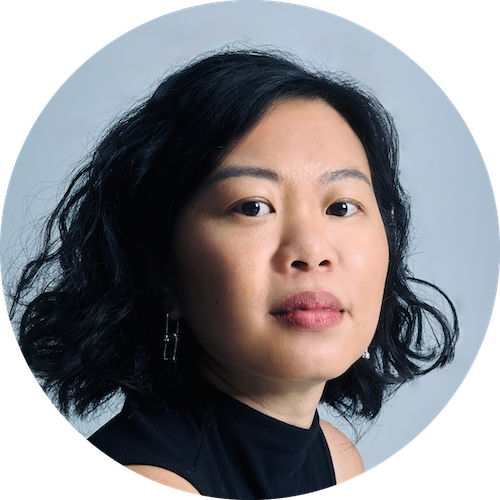
Emily Feng is an award-winning international correspondent for NPR covering China, Taiwan and beyond. Previously a foreign correspondent for The Financial Times, she lived in Beijing from 2015 to 2022, and then Taiwan from 2022 to 2024. Recipient of the Daniel Schorr Journalism Prize and the Shorenstein Journalism Award, Feng is the author of Let Only Red Flowers Bloom (Crown, 2025). She lives in Washington D.C.

Michael Forsythe is an American journalist. He is an investigative reporter for The New York Times, and was formerly Beijing correspondent for Bloomberg News in the 2010s. Forsythe is the coauthor with Henry Sanderson of China’s Superbank (2013).
Transcript
The below transcript is an AI-generated transcript. It may contain errors.
Mike Forsythe: Congratulations, Emily. Why don’t you tell everybody a little bit about your book?
Emily Feng: The book came about completely by accident. I had been living in Taiwan for two years, and I was moving back to the U.S. after a decade abroad. Sometime in, I think it was, October 2024, as I was getting ready to put all my stuff in a shipping container and ship it to D.C. from Taiwan, my editor said, “Do you want to go to Lebanon?” And I said, “Yeah, of course. I haven’t been, but sure. I’ll do a month there.”
I landed in Beirut, and two days later the Assad regime fell in Syria. And my editor said, “Do you want to go to Syria?” And I said, “Yeah, sure. I’ve never been.” And thus commenced about two months of reporting in the Levant. It was just reporting about Syria. It was like, what is going on with this place that was inaccessible to us for almost 14 years?
But while I was in Syria and doing a lot of these breaking news reports, I noticed that there were a significant number of foreign fighters, and some of these foreign fighters were very clearly Uyghur. I did put in an interview request to the new Syrian government — I mean, they were brand new, they were like two weeks old — and said I would love to interview these Uyghur fighters, and I’ve been made aware that one of them has now been appointed to your new government. Can I interview him?
So would it be Jalalidin or that guy or the other one?
It’s a guy named Abdulaziz. And they said no.
So I went back home, moved to the U.S. and immediately started trying to find other ways to reach the Uyghurs in Syria. That’s how I got involved working with Abduweli Ayup, who’s the Uyghur linguist and activist who’s a co-author on the book. Through Uyghur diaspora networks, we managed to reach the Uyghurs in Turkey and in Syria. They had to talk about whether they wanted to finally open up after about 12 years of basically near-total isolation from the outside world. And eventually they decided yes: come over, when can you make it to northern Syria? That was about May of last year.
So when you went to Syria for the first time, this would have been late 2024, I guess?
I went in January 2025. The regime fell December 8, 2024.
Right. And you had no idea that there were Uyghur fighters there, or you’d kind of heard about this?
I had heard, and I feel like we all kind of heard, right? It was one of those reasons, kind of low down on the list, that Beijing would cite every so often for why they had begun another round of detentions and arrests of Uyghurs in China, in the Xinjiang region. But no one could go to Syria. It was in the middle of a civil war. The Uyghurs, as I found out, were intentionally trying to hide their presence in Syria for a while. So I was never able to pursue it. I was really, really surprised to find so many of them walking arm in arm with clearly Syrian Arab fighters in Syria, and, as I later found out, they had played a really pivotal role in the civil war.
When you say so many, give us an idea of how many Uyghurs, and Uyghur fighters with their families and children, are in Syria.
I saw only about a handful when I was in Syria for the first time. But when I started interviewing them, I found out there are about 20,000 Uyghur men, women and children living in Syria. About half are children, and a lot of them have been born in Syria in the last decade. Of the fighters, there are about 3,000 to 4,000 trained men of fighting age, above the age of 18. More than a thousand of them died during the civil war. So it was a very, very deadly war for them, with a very high casualty rate. The main reason they were killed was Russian bombardment throughout the war. They were at the very front lines for the most intense part of the fighting, and also during the final offensive that took Damascus.
You describe this in your book, but tell us a little bit about what kind of people decided to go to Syria. What were they doing in Xinjiang when they grew up, when they went to school? What made them decide to take this very different turn in life?
They were all sorts of people. This was what was really interesting. I thought it would be a lot of disaffected young men, but they ranged across socioeconomic backgrounds and educational backgrounds. There were very well-educated people who came. There were people who had not graduated from high school. There were big-time, multimillionaire entrepreneurs. There were farmers who had decided to cross. There were people who worked white-collar office jobs. There were migrant workers. Some people came from religious families. A lot of people came from secular families. Women came on their own. Families came with their children. Men came on their own. People came with their siblings — it was often sisters, or a sister and a brother, who would cross together. A lot of them came between 2013 and 2016. There was a bit of a loosening in passport policy in 2015.
A really important question for the reporting was to figure out why. Why leave everything behind and go to a war that is not yours, in a country where you mostly don’t speak the language? Almost everyone, to a T, cited the events of July 5, 2009, in Urumqi as their turning point.
A lot of the Uyghurs had been somewhat involved politically. Maybe as students they had tried to organize a peaceful protest after the factory lynching, essentially, of two Uyghur men in southern China in 2009. Or they had been Uyghur nationalists quietly printing pamphlets in Kashgar. Or they were starting to get more interested in Islam and had their school closed down in Xinjiang. Many people had tried to start businesses and somehow been, in their eyes, defrauded or cheated out of their businesses. So all the Uyghurs had tried different ways, in their eyes, to secure their future in Xinjiang.
But after these race riots in July 2009, in which both Han Chinese and Uyghur Chinese were killed, the Uyghurs I interviewed said, “None of this is working. Peaceful coexistence is impossible. We need to find some way to build a life outside of China.” That’s when they started migrating to Southeast Asia, to Turkey. But they encountered all sorts of issues there as well. They couldn’t get residency in Turkey. They couldn’t enter university or find good jobs. They were afraid of being deported back to China. And there was a small number — I would say a large minority — who left China specifically with the idea of going to Syria via Turkey, because they had heard that there were maybe a couple hundred Uyghur fighters already there. But that number really swells in 2015 and 2016, and that’s also when the Uyghurs start participating in some of their major battles.
It’s really interesting that you say that, because the 2009 event was during the Hu Jintao era. It wasn’t the Xi Jinping era. In the book, there are some people who do look at Xi Jinping with great animus. But the really serious crackdown that we’ve all written about under Xi Jinping didn’t start until around 2017, right? So this was all before the very, very harsh crackdown that happened later. Were there any people coming over after 2017, or did it become almost impossible to get a passport?
Yeah. There were a lot of people who wanted to leave, but they couldn’t.
What was interesting is that the events of 2017 onwards made the Uyghurs in Syria feel vindicated for doing what they did. And what they did — choosing armed resistance, deciding on violent opposition, basically forming your own militia — was a really controversial choice. These Uyghurs are controversial in the Uyghur community in China and in the diaspora. On the surface, Beijing can use their existence as a way to justify repression at home. I don’t think that’s correct, but it is an argument that Beijing has made.
The events of 2017, the mass detentions in Xinjiang, really vindicated the Uyghurs in Syria, and I think made them feel like their years of hardship in Syria were worth it. Their argument to me was, “We know that Beijing sees us as terrorists, but they have used violence against us. We have tried protesting. We have tried foreign policy and lobbying. None of it has worked, and so we need to reply in kind. The kind of terror that they’ve inflicted on us in Xinjiang from 2017 onwards needs to be met with the same kind of force.” That’s what they have been trying to build up in Syria, and it gave them even more motivation to continue fighting.
How did they get trained? And why did they choose to fight on the side of the jihadists, the anti-Assad forces? Why weren’t they fighting for Assad? What made them do that?
At first they were working mostly with whoever they could find who would take them in. And it was through a fluke of geography: because they were going to Turkey first and then crossing Turkey’s border into Syria, they were crossing into northern Syria. That was where, by 2013 or so, the Sunni Muslim rebel alliance that later overtook the capital in 2024 had established a growing enclave. So just by chance, in some ways, the Uyghurs fell in with these rebel groups, who really needed all the men they could get.
Very quickly the Uyghurs learned from the Syrians they were training with, and from the Chechens and the Uzbeks they were often living next to and fighting with. There were a ton of foreign fighters also coming in — what the media were calling jihadis at the time — who were flying in from Jordan, from Tajikistan, who were all looking for some kind of conflict to, I don’t know, get their ears wet. The Uyghurs were learning from these people as well. Within about a year, the Uyghurs were experienced enough to start training themselves. Now they have a specific unit in what’s now called the 84th Brigade of the Syrian army, which is mostly ethnic Uyghurs. They have their own training unit, and they’ve come up with their own military doctrine and training regimen. There’s a training regimen of 90 days or so, and they make everyone do a refresher course basically once a year.
But most of their training — and the Uyghurs will say this too — was just at the front lines. Particularly from 2015 to 2020, the men were on the front lines for 20 days at a time, with three days’ rest in between, and then back on the front lines for 20 days. They described fighting so intense at times that they were often dozens of meters away from regime troops, regime tanks, often Hezbollah fighters. The most dangerous thing was aerial bombardment from the Russians. So they said it was really tough. They had almost no financial resources. There were times when they were making their own mortars, which would sometimes explode in their faces, and that killed a couple dozen people. But it was free training.
You say they had no financial resources, but there were some of these millionaire Uyghurs coming over. And something really struck me in the middle of your book. You were describing one of the battles, and all of a sudden you mentioned the Uyghur tanks. And I was like, wait, the Uyghurs have tanks? Tell me about this.
Whenever they defeated a regime battalion, they would take its equipment, and they were often essentially breaking into regime positions to steal their equipment. A lot of the stuff was super old. It was really hardy but rusty Soviet-era stuff, from back when the Assad regime, which has always been nominally socialist, was allied with the Soviet Union. But a lot of the time they made their own munitions. A lot of Uyghurs liquidated all of their assets and brought that money with them to Syria, and that’s how they paid some of their initial costs up front. The Uyghurs also started a number of business ventures during the war, some more successful than others. They were harvesting olive groves and selling the produce. They tried running gas stations. There was a failed mining venture at one point. After one battle in 2015, they managed to seize a power plant that was in disrepair. It was not functioning anymore. So instead of fixing it, which they kind of regret now, they tore it down and sold the scrap metal.
But they were in dire straits. By about 2019, they were really running out of money. Some of the Uyghurs we interviewed had actually gone to Syria and then left, because they were so disillusioned with the lack of progress in the Syrian civil war, and they didn’t have enough money to survive. They ended up going back to Turkey.
Okay, but I’ve got to go back to the tanks. So they learned to drive tanks? I was just shocked.
They have their own sniper unit. They have people who specifically do anti-aerial tactics. They have people who only do infantry. They have what they call special operations, people who are trained to operate only at night. They became very, very specialized. They have their own drone unit and mechanics unit. It’s amazing.
They’ll say, “We basically developed our own state during the war,” because especially at the beginning there were no social services. They didn’t have relations with local Syrian groups as robust as they do now. Now they’re part of the government. So they had to create their own healthcare, transportation, food delivery, social services and residential services for the growing number of Uyghur families who were coming, and also having more children during the war.
There’s one riveting scene in the book — there are many riveting scenes in the book, but one of them was about an operation they did to take a town, and they actually tunneled under the road. Can you tell us a little bit about that?
In September 2024, the Uyghurs, I learned, were essentially invited to a war council. Ahmed al-Sharaa — now we know he’s the president of Syria — called a war council near the Turkish border. He had been largely Turkish-funded, so this made sense. He invited the Uyghurs and five other rebel groups to take part in an offensive he was planning to take Aleppo, which is one of the biggest cities in Syria. When the rebels had lost Aleppo about four years earlier, it was a huge blow. But Sharaa said he had intelligence that the regime was going to make moves, and that they could preemptively try to retake Aleppo. He wanted the Uyghurs to take part, and specifically to cut off regime supply chains to regime positions around the city. The Uyghurs agreed.
They started planning an operation with a water tunnel that they said they had discovered a few months earlier. I’ve been to the tunnel. It’s about three kilometers long, and it is extremely narrow. It’s a concrete sewage tunnel that’s now dry, about three feet high. They decided they were somehow going to go through this tunnel, drill a hole in the top and use that to get behind enemy lines. So they trained up a whole special operations unit who were used to operating at night. They outfitted different types of equipment so they could ship munitions through the tunnel. They had to carry oxygen tanks with them when they were trying to dig their way up through the tunnel, because at certain points they completely ran out of oxygen. There were some mishaps, but long story short, they ended up being successful.
I don’t know if people remember the headlines at the time, but there were these breathless headlines about how the rebels had taken Aleppo in two days. As we know now, from reporting from both Syrian sources and Uyghur sources, the offensive to take Aleppo went so well that there was a split-second decision among the Syrian leadership — among al-Sharaa and his now foreign minister, Asaad al-Shaibani — to continue on to Damascus. And the Uyghurs were among the people who said, “Let’s keep going. Let’s keep marching south.” And now we know what happened. They did. The Uyghurs were among the militants, among the foreign fighters, among the rebel fighters, period, who were in the vanguard — the first to enter Damascus.
So this was a big deal for them, to join al-Sharaa, because before they really wanted to be autonomous and separate from the other fighting groups, right?
They never officially joined al-Sharaa’s coalition, Hayat Tahrir al-Sham (HTS). But despite that, they were among his most loyal supporters. When you talk to Uyghurs, both at the civilian level and at the officer level, they have incredible respect for him. They wanted to remain independent because their goal, publicly, is still to establish their own Uyghur state, not to be part of a Chinese state or a Syrian state.
But they observed how al-Sharaa took what was essentially an offshoot of al-Qaeda, merged it with other Sunni militant groups and formed a government that provided things like clean water, education and paved roads in Idlib. They ran a government, reformed themselves somewhat politically and became more welcoming to outside groups who weren’t dyed-in-the-wool ideologues. And the Uyghurs thought they needed to do the same. So there was a parallel professionalization within the Uyghur forces as well, both to be more supportive of Uyghur families and provide more services to the Uyghur community, and to welcome Uyghurs of different backgrounds who are not necessarily as religiously and socially conservative as the first wave of Uyghurs who got to Syria. They look to al-Sharaa, even to this day, as someone who sets the pace for the kind of institution-building and leadership they want for their own community.
And because they have remained so loyal to al-Sharaa, he has rewarded them. He has been their political patron now that he’s president of Syria, giving them access to public education, land to buy, housing to settle into and positions in the new Defense Ministry.
Another thing I found very striking about the book was the affinity or sympathy or admiration that the Uyghurs seem to have toward Zionism, and the whole idea of Zionism. Tell us a little bit about that.
They are fully aware of the contradictions in their movement. The Uyghurs in Syria don’t fit into any easy classification as a militant group or political organization, and they certainly don’t fit into any neat categorization ideologically. They are overwhelmingly very, very pro-Palestinian. They’re really closely following what happens in Palestine and Israel. They follow news all over the Middle East, which is how they decided they would take part in the December offensive for Aleppo. But at the same time, they have really closely studied the history of Zionism, and they feel a very strong parallel between the experiences of Jewish nationalism and Uyghur nationalism.
They have been very open in their attempted outreach, let’s say, to different officials and governments around the world now that there is no civil war in Syria. They are not anti-American or anti-West. They’re aware of how vulnerable their position is in Syria right now. Sharaa is their primary benefactor and protector, and there have been multiple assassination attempts against Sharaa. So they have been trying to shore up their position in the Middle East. They started out with a couple hundred fighters, and now they’re 20,000 people, mostly women and children. Despite all of their rhetoric, and indeed a lot of their efforts to continue to expand and train this essentially standing Uyghur army in Syria, a lot of the work their political class is now invested in is just figuring out how to guarantee the political survival of this growing community in Syria.
There was a point in the book, toward the end, where you describe a group of so-called Chinese tourists who went to one of the towns where the Uyghurs were. The Uyghurs suspected that they were not tourists, that they were gathering information about them, and they beat them bloody, basically. So that gets to you. You are Emily Feng. Feng is a Chinese name. It is a Han name. You are a Chinese speaker. How did you break the ice with them to get them to open up to you? Were they suspicious of the fact that you were Chinese, and did you speak Mandarin with them eventually?
I was really nervous about making sure that everyone felt comfortable and that they could speak openly with me. I went with Abduweli, who was our in-the-field translator if people wanted to speak in their mother tongue, Uyghur. I also went with someone who could translate Levantine Arabic to English, because a lot of the Uyghurs, particularly the commanders and the officers, now speak Arabic fluently. And if people were comfortable, I was also ready to speak Mandarin with them. We also spent a lot of time explaining what our project was, the kind of access we wanted and the people we were bringing, including who I was and the interests I had had in my journalistic career.
I was really surprised when I got there by just how open people were. I knew they had essentially been isolated, even from Syrians, during the civil war, and they suddenly started speaking to an outsider, an American reporter, about their time during the war. I think they were really proud of their accomplishments during the war, and they had never gotten a chance to speak publicly about it before. So there was a lot of trauma and suffering, and also pride, that they wanted to get across. Because a lot of these Uyghurs were really well educated, they spoke beautiful Mandarin Chinese. By the third and fourth week of spending time with these people, some of the interviews I did were purely in Chinese. Some people wanted to do the interviews in English. Most people did their interviews in Uyghur. We had in-the-field interpretation, but when you’re writing the book, you have to check all the word-for-word translations afterward against the audio recordings. In the moment, I wanted to be prepared for all contingencies.
I was also surprised that so many Uyghurs had really good memories of their time in China. They obviously missed Xinjiang, but a lot of them had worked in east coast Chinese cities, or they had gone to high school and university in cities like Beijing, Shanghai, Shenzhen and Tianjin. They had good friends who were Han Chinese. They missed the cities they had lived in. They were eager to practice Mandarin again, because a lot of them hadn’t had the chance to speak it in ten or 12 years. They cooked Chinese food at home. There was a pretty clear distinction between the Chinese Communist Party, which they blamed for the policies that had ruined their lives, and Chinese people. But there’s also a lot of fear and paranoia — well-justified paranoia — about Chinese government surveillance now that the war is over and borders are a little bit more permeable in Syria. They’ll often cite the Chinese tourists who showed up unannounced at one of their villages as an example. Those tourists were eventually handed over to Syrian intelligence.
One thing I noticed in your book is that — obviously a lot of them come from secular families, as you said — but some of the Uyghurs also seemed quite conservative, especially toward women. Were you able to interview a lot of women? I know you profiled a lot of men. How did you find that access?
I wish I could have interviewed more women. It took longer to meet women. One thing I didn’t realize was that both my interpreters were men, and in this very conservative society they could not sit in the same room and interpret. So I could only interview women who spoke Mandarin or English, which a lot of them did. But it took much longer to meet women and to make them feel comfortable accepting an interview. Unlike the men, I couldn’t interview them in public spaces. I would go into their homes, and then it became a whole thing: we had to have lunch together, and then I had to meet their children and all their friends. So it just took much more time to interview the women. But because I only interviewed women I shared a language with, in some ways it also felt more direct, and I could have more intimate, personal conversations with them. The people I keep in touch with now that the reporting is over are overwhelmingly the women, who are more interested in still sharing monthly updates about how their lives are going in northern Syria.
To get to your point about this being a very, very conservative society: part of the reason I think they became so religious is, one, they were adapting themselves to northern Syria. Everyone around them in that part of Syria is just more conservative than in the rest of the country. So this became a common religious language they could use to build alliances with other Sunni groups they needed support from. The other is that a lot of Uyghurs felt like they had been denied the chance to really explore religion at home. Now that they were in Syria, they wanted, in their eyes, to seize the opportunity to explore a pure version of Islam that had not been adulterated by Chinese cultural or Confucian or Buddhist influences. Islam in China is fascinating, but it’s really evolved into its own religious practice. So they embraced a very, very fundamentalist version of Islam that is just far more conservative than what most Syrians practice.
Simply to make people feel comfortable, and so that Syrians wouldn’t stare at me, I covered my hair the entire time I was in northern Syria — not in Damascus, not in Aleppo, but certainly in Idlib. Most of the women, including the Syrian women in Idlib, now wear the full niqab, so only their eyes are showing. And the Uyghurs prefer to take it one step further. They wear gloves, so that even the skin on the back of their hands doesn’t show.
Now that the war is over, and the Uyghurs in Syria are starting to reach out to Uyghur communities outside the Middle East, they’re very aware that there are Uyghurs who share the same political goals they do who are not as religious, or perhaps are atheists, completely secular. It’s an ongoing conversation how to bridge that divide, and also how to bridge the divide with other Syrians. One thing we haven’t talked about yet is that a big part of our reporting was also interviewing Syrians who had lived next to or fought alongside the Uyghurs over the course of the Syrian civil war. The Uyghurs tend to have a very rosy perception of what Syrians think about them. But there is a cultural and a linguistic gap. There were instances where the Uyghurs said, “We got along great with these Christians. They loved us.” And then you would interview the Christians by themselves, and they would say, “We were terrified of these Uyghurs, and we thought they were going to kill us.” That fear, and a general antipathy toward foreign fighters who have not left Syria even though the war is over, has only increased to this day.
That’s a good segue into this bigger question. I found it remarkable that there are actually more Uyghurs with combat experience than in the entire People’s Liberation Army (PLA). In fact, as far as I know, there’s nobody in the PLA who has any real combat experience. And yet it’s such a tiny force. They said this throughout the book: there’s obviously no hope for them right now to invade or whatever. But that was the goal — to train an army so that someday, like the Jews going back to Israel, they could go back to Xinjiang, maybe when there’s chaos there. But now there’s no war. So what are they doing? Do they have a sense of hopelessness? How long are they going to have to wait? Are they thinking it’s going to be their children, their grandchildren, their great-grandchildren? How do they feel? Are they a little bit disillusioned?
Many of them were disillusioned. A couple of years into the civil war, a lot of them said, “Why are we still here?” And so they left. But when the Uyghurs, and indeed the entire Syrian rebel alliance, were able to do the impossible and kick out the Assad regime, that gave the Uyghurs a huge boost. A lot of them will say, “Well, we did the impossible in Syria, so maybe we can do the impossible in China.” When you really drill into exactly what they think they can do vis-à-vis China, though, that’s where things start to get a little fuzzy.
They believe the only way they can be taken seriously as a political negotiator is if they have an army behind them. They are also fully aware that, despite having a lot of front-line experience, they are woefully under-resourced compared to the PLA. This is maybe 4,000 men, with no ability to actually travel to China, no air cover and Soviet-era tanks. It’s nothing compared to the second-biggest military in the world. So a lot of them will say, “Well, maybe not in our lifetime, but in our children’s lifetime there will be a chance when China is overextended, when they’re feeling politically vulnerable, and we can sit down and be taken seriously across a negotiating table because we’ve got an army behind us.”
Then you run into the issue, though, of whether the next generation will care that much about trying to, in their eyes, liberate Xinjiang. Already you see in the second and third generations of Uyghurs born in Syria that they consider Syria their home. Even today, one parent was saying to me, “I don’t think my children care as much about going back home, because they’ve never seen it like I do.” She is certainly very motivated to one day go back to Xinjiang. But her children go to Syrian school. They speak Arabic, in some cases better than Uyghur. All their friends are Syrian. They’ve never seen Xinjiang. So I think it’s an open question what the future of these people will be. I suspect they will become one of the many minority communities that already call Syria their home.
So kind of like the immigrant experience in America, in a way — people assimilate and lose that.
The same way that the Druze made their way to southern Syria, and the Armenians made their home in Lebanon and Israel and Syria. The Uyghurs may just be another one of these exile communities that put down very deep roots in the Middle East.
That leads me to the last question: what is China’s strategy here? Obviously China has enormous economic leverage over Syria. I don’t know this for sure, but I’m guessing China is probably Syria’s largest trading partner now.
Not anymore. They were before the war.
Before the war, and it has not bounced back.
Right.
But it may bounce back. Obviously it’s a very influential country. They obviously don’t want these Uyghurs to come back to China. So what is the strategy?
China could have huge economic leverage over Syria. They have not been very active in pursuing economic ties or, say, investing in the reconstruction of Syria, unlike the Gulf countries. It’s really been driven by the Emiratis and the Qataris, and mostly the Saudis, in Syria. China has been really hesitant, both at the level of state companies and with private companies. But they could play a much, much bigger role. The Uyghurs’ presence in Syria is one of the main reasons why Chinese investors feel like Syria is not a very stable place to dip their toe in the water again.
Beijing’s strategy is to really contain the Uyghurs in Syria. Despite some reporting that Beijing has asked Syria to deport the Uyghurs back to China, that’s just absolutely not true. China does not want 20,000 Uyghurs who have been living in Syria and fighting in a civil war in their country. They want them to stay in Syria, but they want guarantees from the new Syrian government that these people remain muzzled and are unable to travel to China.
So that’s kind of how it’s going to play out over the next few years?
That strategy: under what political conditions can the Uyghurs remain in Syria that everyone would accept? The Syrians also know that the Uyghurs are not going to go quietly. They also need to give the Uyghurs a say in the matter. Again, they’re the largest contingent of heavily armed and heavily trained foreign fighters in the Syrian military. If you wanted to kick those people out, they’re not going to go quietly either. And the new government, despite having maintained control and power under really difficult circumstances, is facing a lot of challenges, and they don’t want the Uyghurs to be a destabilizing factor.
It’s so fascinating. I just learned so much reading your book, and it was so easy to read. If you haven’t read it yet, read it. Like Alec said, it takes just a few hours, because it’s a page-turner. I think we can probably open up for questions now.
Audience member: I was curious: did these Uyghurs have any sort of fear of Beijing when they lived in Syria? We see that Beijing has had operatives working against the World Uyghur Congress in Munich. They have a history of executing operations overseas against religious organizations they deem anti-Beijing. Was that anything in the back of their minds in Syria? Did they feel any safer than they would have in Western countries, perhaps?
They are very on edge now that more Chinese businessmen are coming to Syria, and there have been two Chinese state delegations that have visited Syria since the end of the war. Even as a Syrian, you still cannot just walk up to a Uyghur village and go in without permission ahead of time. They’re more open now, and they are starting to live a little less clustered together in Syria, but for security reasons they still prefer to live with their own. And I think for good reason. There was the Anthropic disclosure report a couple of weeks ago that had hundreds of examples of suspicious activity on Claude. Some of the examples they cited were security contractors linked to the Chinese state who were using Claude and querying it for location data and contact information for Uyghurs in Syria.
Is there any intermarriage going on there? Have they really joined with the Syrian community, or have they kept separate?
There is intermarriage, but to a pretty limited extent. I’ll also note that there have been a lot of divorces in such marriages. The Uyghurs will say, particularly about the first generation of Uyghur adults who went, that there is a really, really big cultural gap between Syrian Arabs and Uyghurs. So they still mostly marry within the community. There has been intermarriage. It’s just a minority of families.
Have these people thought about going back into China, underground, and making trouble — attacking the PLA in Xinjiang, those kinds of activities?
Not that I know of. And they are very strategic. First of all, how would they do that? They don’t have passports. Would they walk? Would they hitchhike? They would have to go through all these Central Asian countries that are part of the Shanghai Cooperation Organization, which is run by Beijing as essentially a transnational Interpol for the express purpose of containing militant activity in Afghanistan and Syria. And if they did that and had some kind of limited success, they know it would invite retribution on them in Syria. Syria’s new government has promised that it will not let the Uyghurs use Syrian territory to harm Chinese national interests. So there’s already a tacit bargain between the Syrian government and the Uyghurs that they are not going to mount these kinds of guerrilla attacks, for now.
How does the strength of the Uyghur community in Syria compare with the strength of the other diaspora communities? And is there any movement from other diaspora communities into Syria in order to support what’s going on there?
When you say strength, you mean strength in numbers and influence?
I mean relations with the host countries in which they are located. Are they more or less secure in Syria than they are in Turkey, or wherever else the Uyghur diaspora is?
They’re more secure than the diaspora in Turkey, but they’re still feeling very vulnerable about the political situation in Syria. Again, their main benefactor is al-Sharaa, and he’s one guy who is living in a very turbulent region. They have had a lot of Uyghurs come in from Turkey since the end of the war. Thousands of Uyghurs have crossed the border since 2025. It’s really interesting. Which is an issue for the new Syrian government. They’re kind of late to the ball in monitoring that. They’ve got other problems, but they’ve started to note it.
The Turks are probably quite happy.
Yes, Turkey has tacitly encouraged this.
Congrats, Emily, on the book, and thanks to you both for doing this. You talked a little bit about how China is approaching the issue of the Uyghurs in Syria. What do the Uyghurs who are now part of the Syrian government want from their government’s relationship with China?
Syrians are pretty split. It’s not their top concern. Their concern still lies with their neighbors. Just two days ago, Jordan bombed Syria and killed eight civilians. Israel is a big concern for Syrians. And Syria is also incredibly diverse, so it really depends on which community.
Oh, the Uyghurs. Pursuing relations with China has not been a big priority of the new Syrian government. They still haven’t established formal ties. There are Syrian representatives in Beijing, but they haven’t reopened their embassy there. So the Uyghurs are not very concerned, but they are concerned about more Chinese private investment coming in in the future. It hasn’t really happened yet, but it’s going to be higher than it was during the war, when it basically shrank to zero. But again, the level of trust they have in al-Sharaa is astonishing. They really do believe that he will protect them.
I can’t wait to read the book. My question is, what do you think the Uyghur diaspora in the United States, or in other Western countries, thinks about the Uyghur diaspora in Syria? As you said, they’ve often taken up a very conservative, fundamentalist form of Islam. There are ties to the Turkistan Islamic Party, which has claimed credit for terrorist attacks in China, and the stabbing of an imam, I think ten years ago. There are ties to the Taliban and al-Qaeda over the years as well. What do Uyghurs outside of Syria make of these developments?
Mostly their opinions are negative, and they feel like these Uyghurs in Syria are detrimental to their political cause of securing greater civil liberties and protections for Uyghurs who are still living in China. I think that opinion is softening a little now that the war is over and there is more interaction between Uyghur diaspora groups, and especially now that Uyghurs in the diaspora have understood the extent of the military victories and capabilities these Uyghurs in Syria have achieved. There’s begrudging admiration for that. But there is just a huge — I dare say cultural — difference between Uyghurs who are living in Virginia and Uyghurs in Syria. And there’s still sometimes, understandably, a feeling that they’re almost two separate movements of people. They’ll talk about how there are different types of Uyghurs: there’s us in the Middle East, then there are the Uyghurs in Europe, then the Uyghurs in North America, then the apolitical Uyghurs, then the secular Uyghurs. So you do see some splintering that’s maybe even deepening since the end of the war.
What was interesting to me in terms of the reception to this reporting and this book is that I was expecting to get a ton of backlash online, and I have not gotten any. This is not an invitation for trolls and bot activity. But there has been an explosion of commentary, some authentic, some inauthentic — in the hundreds of very detailed posts written in Uyghur about this reporting. What that says to me is where Beijing sees that it can respond to this reporting. At this point, the public relations story about their repression of Uyghurs in China has long since sailed. That’s over. I think most of the world thinks it’s resoundingly bad. They can’t win that PR campaign anymore. But what they can do is use the Uyghurs in Syria as a way to further divide the Uyghur diaspora community — divide and control. So there’s been a lot of activity online, only in the Uyghur language, not in Mandarin, not in English, about this book and this reporting. That material is probably not written by Uyghurs. Some of it seems to be written by human beings. Some of it is just copied and pasted or rehashed from other authentic posts. That’s been interesting to me.
That’s really interesting.
I’m interested in the communities they’ve set up in Syria. You talk about schools and self-help groups and getting the right food, et cetera. How was that organized? Was it all done by the women who weren’t fighting? And did they have to get any permission at all from the government, or could they just do what they wanted?
They just did what they wanted. It was kind of everyone for themselves. The women certainly played a part, but there were specific units within the Turkistan Islamic Party that dealt with services. At the very beginning they were incredibly strict. They were a militant organization, but militaristically strict. Socialist in a way that might hearken back to 1950s China. Everything was rationed. If you were assigned a job, you did that job, no questions asked. What the leaders decided had to be obeyed to a T. The family was underemphasized. The main social unit at the beginning for the Uyghurs in Syria was your fighting unit, not family.
A couple of years in, the Uyghurs started realizing that if they wanted to sustain this community, sustain morale and stop Uyghurs from defecting to other militant organizations, including ISIS, or leaving Syria altogether, they had to provide some kind of stable living environment for people. That’s when they started softening their approach religiously, politically and in terms of discipline. They allowed people to spend more time with family. People could take more time off from the front lines to see their children. They started welcoming Uyghurs and Syrians who are not as religious as the first Uyghurs were. They distanced themselves from the few Uyghurs who remained in Afghanistan. They distanced themselves from al-Qaeda. That was more because they were mirroring what HTS was doing under al-Sharaa, but it worked for Sharaa, so the Uyghurs did it as well. So they have also changed and reformed themselves politically over the years by studying other Middle Eastern organizations. They’ve had a huge impact on Syria, but they’ve also closely observed Syrians and Syrian institutions and taken best practices to change themselves.
It’s fascinating.
You mentioned that the Uyghurs now have political positions within the new Syrian government. Do they still believe in statehood for the Uyghurs as a realistic goal, or are they potentially shifting toward staying in power as part of the new regime or system?
I think they’re two sides of the same coin. They see having military power, and also having political leverage within the new Syrian government, as ways they can get China to take them seriously as a negotiating party in the future. Again, publicly, the unifying principle for all these Uyghurs in Syria is that they believe in Uyghur statehood. One of the challenges the Uyghur political class now has — one of the commanders described it to me — is that the Uyghur community was like trying to build a stone house with stones that were all different shapes. Some of them had five sides, some had three, some had eight. Trying to stack all of these stones together to form a stable house is really difficult. One of the ways they drew Uyghurs together and kept them organized and disciplined over so many years in Syria was through religion, and also through this organizing principle: first and foremost, we believe in Uyghur statehood.
So publicly, that’s still their mission. But in terms of what the average Uyghur in Syria spends their time on, it’s not that. It’s building businesses in Syria now, which is highly encouraged. It’s trying to get a better house for your family. It’s trying to earn enough money to send your kids to a private Syrian school, because there are Uyghur schools, but they’re not as well resourced as Syrian schools. Really practical, everyday concerns about trying to raise a family in Syria.
Thanks so much, Emily. I’m wondering if you can talk a little bit about your title. I keep wanting to stick in “burn for a home,” but it’s “burn for home.” I was just wondering if you could talk about that.
It’s a direct quote from a secondary character who actually ended up leaving Syria about halfway through, because he was really unhappy with how the Syrian civil war was going and with corruption he perceived among Syrian fighting groups. He’s since returned. He was describing how they kept up morale and discipline, in contrast to Syrian groups, who he felt were undisciplined and often took advantage of the Uyghurs at the beginning. He said it was because “our hearts constantly burned for home. Our hearts burn for home.” That’s why, he said, they fought with such intensity.
I also chose this title because one of the themes that emerged in my reporting, when I sat down to write and was digesting all of this material, was the role that trauma, for better or worse, plays in the Uyghur community in Syria. We’ve already talked about how the second generation is not as wedded to the idea of Uyghur statehood, or even to going to Xinjiang ever again. That’s because, their parents will say, “Despite living through a civil war, they are not as traumatized as we are. As parents, that’s for the better. Our children who were born here especially are just happier and more confident than our children who we brought over from China.” But trauma was also a strength of the Uyghurs. They channeled it in very productive ways, and it’s kept the flame alive for this Uyghur community for 14 years and counting. So trauma was a total double-edged sword, and that’s also part of the reason I chose the title.
[Question inaudible on the recording.]
That is a great question. I am still trying to figure that out. Everyone says to me, “It’s great that you’re coming in with fresh eyes.” And I’m trying to figure out how best to make sense of American politics and add something new to the conversation, given — despite the decline in traditional American media — the plethora of journalistic attention focused on the White House, which is what I now cover. I always value being in the field and on the ground and talking to ordinary people, and that’s something I’ve tried to bring to this new beat.
It is a different style of getting information, though. In foreign reporting, a lot of the challenge is just figuring out how to get to a place and find the person who has the information you want. I’ve found political reporting in the U.S. is less about that — everyone’s online. It is about finding the right person, but it’s also about figuring out their web of relationships and their interest in speaking to you. There’s very little actual physical movement. It can be a really sedentary job. Being abroad for all these years, despite the style and approach of reporting being so different, the thing I do bring with me is to always expect things to change quickly, and to expect the unexpected.
Follow-up question: would you consider going back to China, or to a foreign country again? I’m assuming the time you were in China was a richer era for media and for foreign journalists there. What kind of conditions would you want before you make a decision to go back?
Absolutely. If they gave me a visa to go back, I would go back. I think it would be fascinating to report there in ten to 15 years’ time, just so enough time has passed to make a comparison between my first stint in China and maybe, in the future, my second. I’m not counting on it. But yes, I would love to report again in China, and I would also love to report on an entirely different country or region.
I think we’ve got to wrap it up here. Thank you so much, Emily. Absolutely fascinating. ∎
The video of this talk was also published at Asia Society.