Sign up for our newsletter to be notified of new posts!

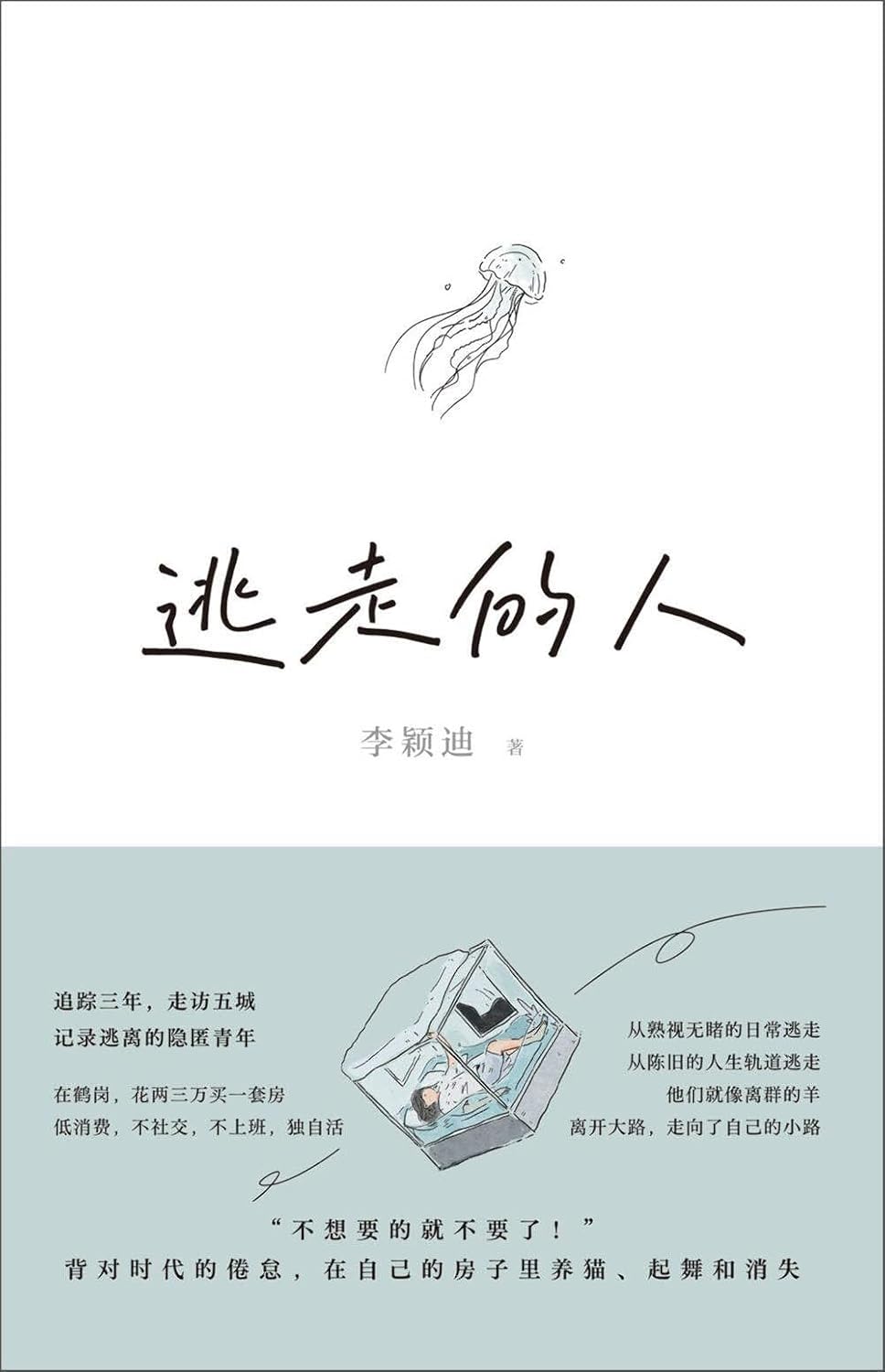
Reviewed: The Runaways《逃走的人》by Li Yingdi 李颖迪 (Wenhui Press 文汇出版社, August 2024, Chinese edition).
When Li Yingdi (李颖迪), a Chinese magazine journalist, arrived in Hegang in late October, 2022, it was already fading from the public eye. A small mining city in China’s northeast province of Heilongjiang, near the border with Russia, Hegang (鹤岗) had gone viral on Chinese social media in 2019 for its ultracheap housing prices. In major Chinese cities, buying a home often drowns generations of family savings. Yet in Hegang, a newly-furbished two-bedroom apartment sold for under 50,000 yuan (around $7,000).
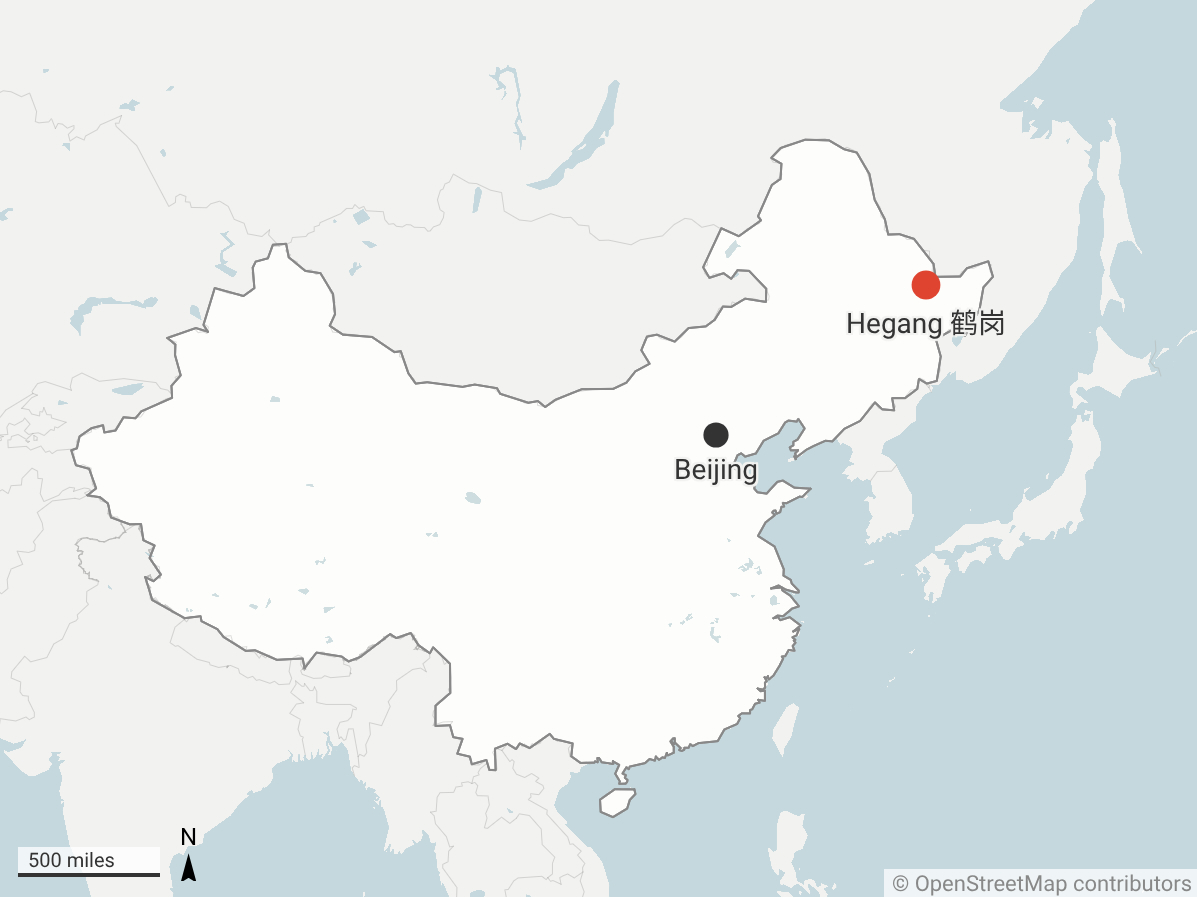
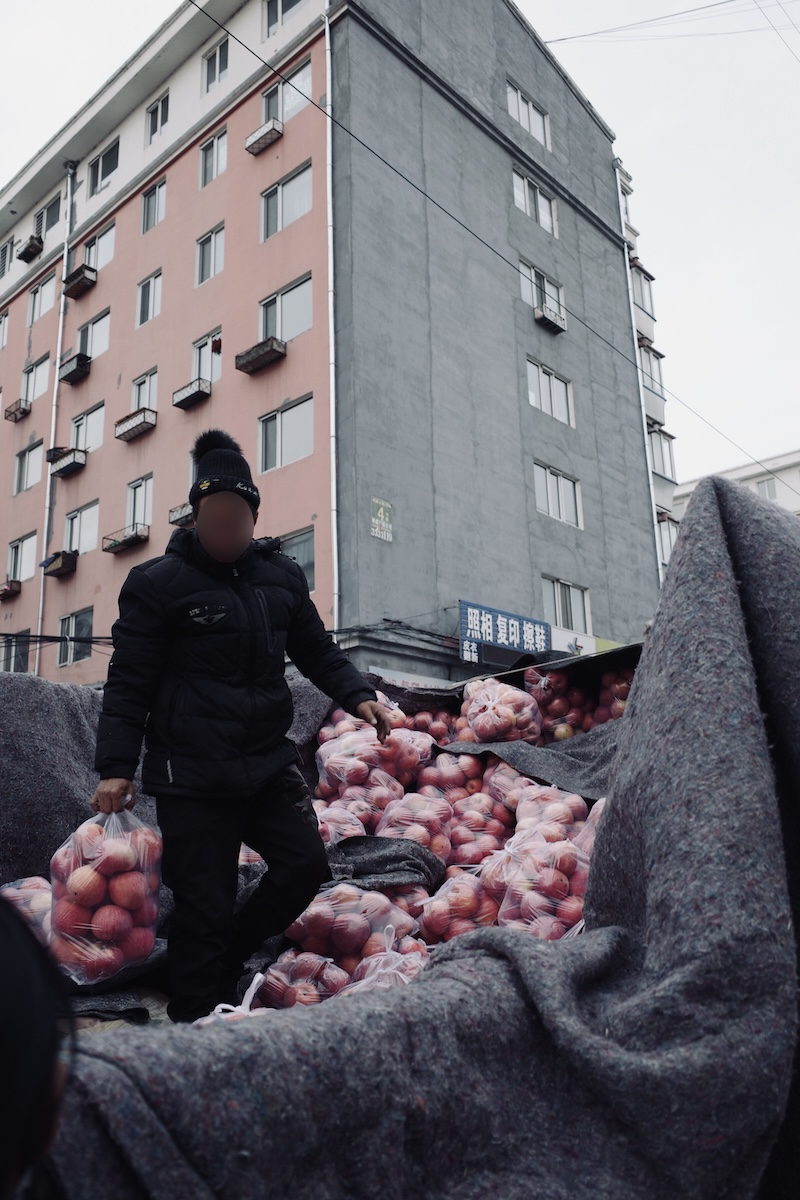
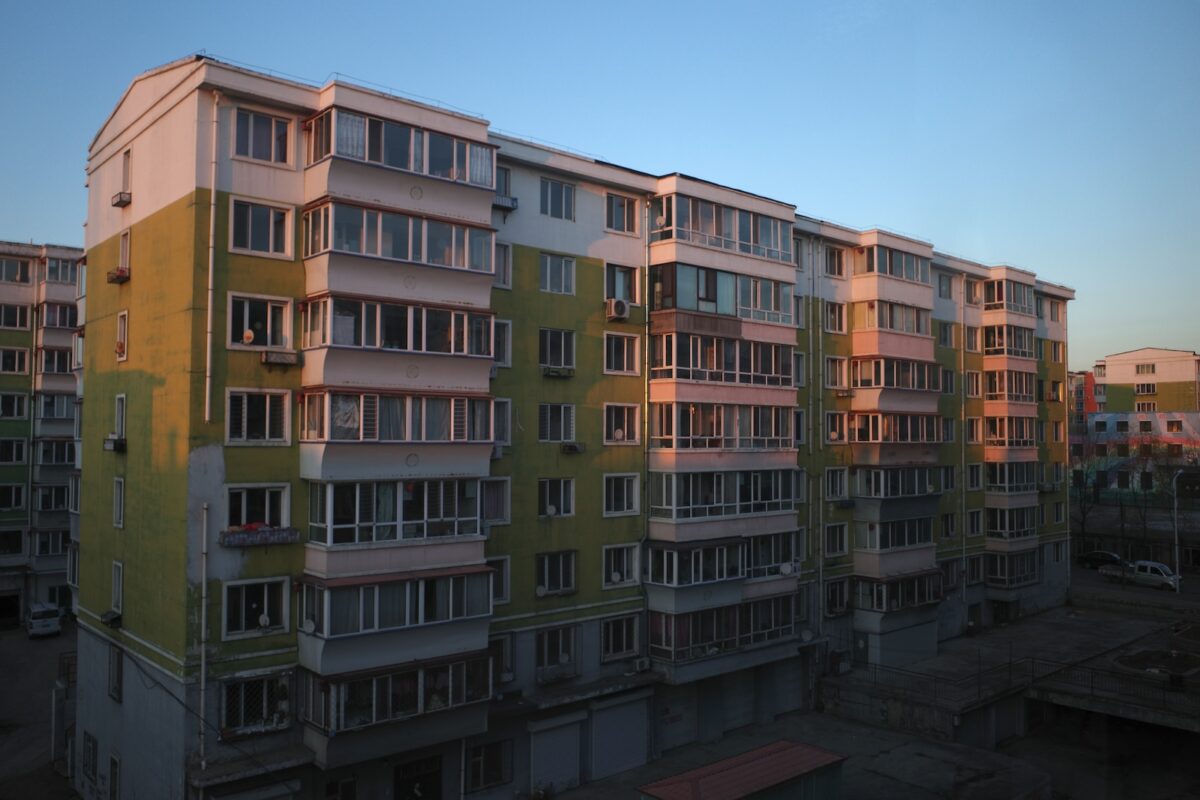
A steady trickle of buyers arrived. In their 20s and early 30s, lightly packed and mostly single, they handed over 10,000 or 20,000 yuan — often all of their savings — as down payments, and moved into their new homes. Hegang wasn’t much to look at: a dilapidated rust-belt town dotted with drab Soviet-style compounds and ghostly new developments. Heavily bundled against the icy Siberian winds, the new arrivals blended into the city’s sooty exteriors. On social media, however, their arrival was giving Hegang a new reputation, turning it from a symbol of China’s planned economy to that of its post-reform malaise. The city was dubbed the capital of “lying flat” (躺平), a trend in which young people, in response to economic stagnation and societal pressure, opt out of the rat race to focus on simpler pleasures and personal wellbeing.
When Li first read on internet forums about these young people who moved to remote cities, she grew intrigued. She visited five of those cities, and spent a winter living in Hegang. In her 2024 book The Runaways (逃走的人), she documented what she had learned. The individuals that emerge from her profiles have little in common with their image in mainstream discussions — that of breezy, self-indulgent youth whose rejection of commitment and toil has their parents wringing their hands. Those young people have fueled the rise of everything from milk-tea chains to collectible plushies, as well as bringing into vogue leisure sports and low-budget traveling. If they have a mecca, it is not Hegang but Dali in Yunnan province, whose open-minded, easy-living ethos earned it the nickname “Dalifornia.”
In contrast, the runaways to Hegang and other less glamorous locations leave little trace in society. To find possible destinations to move to, they visit online forums where they exchange information on cities with rock-bottom housing prices. Like Hegang, many of these towns are former industrial hubs that have suffered economic decline. They dot China’s Northeast and Central Plains: Fuxin and Fushun in Liaoning province; Hebi in Henan; Changzhi in Shanxi; Huainan in Anhui; Yanjiao in Hebei. Once settled in their new homes, the runaways trade the de facto anonymity of their previous jobs — waiters, security guards, assembly-line workers — for the real anonymity of the internet by taking up new lines of remote work: customer service representatives, cryptocurrency traders, gamers for hire.
Even for an observer as keen and unobtrusive as Li — a slight woman in her 20s with long, wavy hair — the runaways remain elusive. They flit in and out of her narrative, coming briefly into focus when on rare occasions they agree to meet her for hot pot or a round of a murder mystery roleplaying game (剧本杀). They are strangers to one another too; seldom does one runaway learn another’s real name, much less their past. Eventually, in bits and pieces, Li uncovers some of their stories. In spare and thoughtful prose, she traces the runaways’ struggles not just to a lack of opportunity in China’s economic slowdown, but to more intractable social ills from the economic boom years.
It should come as no surprise that the runaways see themselves as loners and misfits. For almost all of those Li spoke to, that sense of isolation took hold at a remarkably early age. Many of them grew up in rural areas, or small towns relatively untouched by the transformations that economic growth had brought to big cities. Life was static and listless. Their parents migrated to the cities for work, leaving them behind due to national policies that made it hard, if not impossible, for them to attend urban schools. These “left-behind children,” often cared for by aging grandparents, totaled 67 million as of 2020, and are shown by studies to have worse academic performance, as well as physical and mental health, than their urban counterparts.
One of these left-behind children, a 29-year-old woman whom Li calls “C” (all interviewees in the book are anonymous), grew up in rural Chongqing, where she did not meet her migrant parents until she was four years old. When they did visit home, her mother often beat her. “It was as if those were the only times she remembered I was there,” she told Li. After working briefly in a printing factory, C started a business that hired out online gamers to help customers climb levels. Now she runs it from her apartment in Hegang. “I don’t develop deep relationships with people,” she said.
Other women recalled difficult childhoods in families that had been holding out for boys. Although gender attitudes are changing as China’s birth rate plunges, the preference for sons has held fast in the countryside until recently. In Hegang, Li met a 25-year-old woman she calls Huahua, who lived there with her 10-year-old sister. The girls were born in rural Jiangxi province to a mother with a mental disability. Growing up, Huahua recalled the contempt of other villagers because her family lacked a son. After her father died in an accident in 2020, her uncle tried to drive her out of her home by insisting that she get married. Huahua spent a short stint at a clothing factory in Ganzhou, a city in southern Jiangxi, before moving with her sister to Hegang in the summer of 2022, where she makes a living through online streaming.
Individuals like C and Huahua populate Li’s narrative: young people whose rough upbringing dimmed the world for them before they fully stepped into it. Fitting into the world often meant dimming themselves in return. “When I try to think what the people who come to Hegang have in common,” Li reflects, “it is not just their backgrounds and social status. It is something to do with their spirits.” Li’s interviewees rarely dwell on the trials of their pasts. Instead, they seem to find solace in describing themselves as unremarkable. When Li asks a 26-year-old woman who moved from Nanjing to Hegang to introduce herself, she gives an answer typical for the runaways, saying that she “went to an ordinary school, studied an ordinary major, had ordinary looks [and] was the type that can’t be spotted in a crowd.”
Like most small town youth, those who moved to Hegang had first gone to large cities to try their luck. But the meanness of locals made them wince. Many called it quits after one too many arguments with an unforgiving boss or a stingy landlord. Others said navigating the constant flux of the job market left them feeling unmoored. After bouncing among several assembly lines in Guangdong’s manufacturing hubs, and a stint in an electric appliance market, one 33-year-old former BYD car mechanic said to Li that a sense of apathy took over him. He felt he was being carried along from one job to the next by sheer inertia. He managed to break it by moving to Hegang, the first life decision he said he made out of his free will.
None of the runaways Li spoke to regretted their decisions to move to Hegang. Holing up in a warm, lit place of their own in the city’s long, dark winters feels soothing compared to standing under the harsh glare of fluorescent lights on a factory floor, or manning the reception desk in a noisy, cigarette smoke-filled karaoke parlor. Observed from distance, however, the runaways’ desire for an anchor in life is often mistaken for a lack of grit. When Hegang made national headlines, commentators wagged their fingers at the fragility of young people who couldn’t stomach the common grind of big city life. The Hegang youth, they lamented, are symptomatic of the entitled, work-shy attitude of their generation.
She traces the runaways’ struggles not just to a lack of opportunity in China’s economic slowdown, but to more intractable social ills from the economic boom years.
As I read Li’s book in Beijing, the city where I grew up and live, such criticisms seemed oddly off the mark. All around me, the 20- or 30-something city natives who prefer to take it easy are doing so in style, thanks to parents whose financial resources allow them to coast through the current economic doldrums. In smaller cities, where personal relationships undergird economic life, parents can often leverage local connections to help children land cushy jobs. Few runaways have such cushions, and some went to Hegang to escape difficult families. Compared to their coddled big-city peers, a streak of fierce independence runs through those whom Li spoke to. After all, they chose to move to a frigid border town on their own, and many are still hustling just as hard inside their apartments.
The dominant narrative about young Chinese today tells the woes of overeducated college graduates who have the misfortune of coming of age in a terrible economy. Yet theirs is a rat race of which the runaways have never been a part. Perhaps being subsumed into a narrative not their own suits them just fine. But invisibility, both in the physical world and in public narratives, carries its own peril.
After Li left Hegang, one of the runaways she befriended there went missing. The woman, whom she called Wang Li, was in her late 20s, and made a living by running an online service that translates Japanese manga into Chinese. Wang lived by herself. Her Hegang acquaintances noticed her disappearance after she failed to respond to repeated text messages. Li organized a search team, which eventually reached Wang’s family in Shanxi. Wang’s father, a 55-year-old miner, and her 22-year-old brother, were initially reluctant to contact the police: Wang had been estranged from her family since she left home eight years ago. When pressured by the search team, father and son eventually contacted the local police in Hegang. The police broke into Wang’s home to find that she had committed suicide by gassing herself, two and half months ago.
Li later learned that nearly none of what Wang had told her about herself was true. She had no pushy mother nagging her to get married; her mother had passed away when she was 14. Her hometown was in Datong, on China’s arid northern plain, not in Luzhou, a river town in Sichuan where she had gone to school. Why did Wang lie to her? Thinking back on her interviews, Li wondered, did Wang send out distress signals, however weak? Or are these just the signals from the runaways who are “bound to be missed, misunderstood, and eventually disappear?” ∎
Header: A man walks to Hegang, Heilongjiang province (Li Yingdi).
All quotations from the book are translated by Helen Gao.

Helen Gao is a freelance writer based in Beijing, who writes about Chinese society and culture. She is a former contributing writer to The New York Times opinion page, and her work has also appeared in Foreign Policy, The Atlantic, Prospect Magazine and others.